

Certified Romanian Document Translation
Professional Romanian translations accepted by USCIS, the UK Home Office, Canada IRCC, and Australian immigration. Certified translations of certificat de naștere, certificat de căsătorie, diplome, and legal documents for international use.
TrustpilotSelect Languages
Drag & drop your documents here
or
PDF, JPEG, PNG, WebP — Max 10MB per file. Word documents: please save as PDF first.
Certified translators · Accepted by governments, courts & universities worldwide · View sample
Select a destination country to view pricing
How Romanian Certified Translation Works
Submit Your Documents Securely
Upload clear scans of your Romanian or foreign-language documents through our encrypted portal. We accept PDF, JPEG, and PNG formats. Romanian documents frequently contain special diacritics (ă, â, î, ș, ț) and official stamps (ștampile), so our intake team verifies that all text, annotations, and marginal notations are fully legible before translation begins.
Professional Translator Assignment
Your documents are matched with a Romanian language specialist experienced in the specific document type. For Romanian civil status documents (acte de stare civilă), we assign translators with deep knowledge of Romania's vital records terminology and the formatting conventions used by Direcția Generală pentru Evidența Persoanelor. Each translator holds professional credentials verified before every assignment.
Translation with Certification
The assigned translator produces your certified translation with a formal statement of accuracy, their professional credentials, signature, and date. A second qualified linguist reviews the translation for correct rendering of Romanian legal terms, proper handling of diacritics and proper nouns, and completeness. The certification confirms the translation faithfully represents the original Romanian document.
Delivery with Full Documentation
Receive your certified translation as a high-resolution PDF for immediate use, with the original signed hard copy shipped via tracked international courier. For documents requiring apostille certification, DoVisa coordinates the process through Romania's designated competent authorities — Prefectures for civil status documents, Tribunals for court documents, and Chambers of Notaries for notarial acts.
Romanian Translation Service Specifications
Popular Language Pairs
We support all languages — 100+ language pairs available for Romanian documents.
Common Documents
- Birth certificates (certificat de naștere)
- Marriage certificates (certificat de căsătorie)
- Death certificates (certificat de deces)
- Divorce decrees (hotărâre de divorț)
- Academic diplomas and transcripts (diplomă de bacalaureat / diplomă de licență / foaie matricolă)
- Criminal record extracts (cazier judiciar)
- Driver's licenses (permis de conducere)
- Identity documents (carte de identitate / pașaport)
- Employment references and contracts (adeverință de muncă / contract de muncă)
- Notarial deeds and powers of attorney (act notarial / procură)
Turnaround Time
Certification Details
Romanian Translation Requirements & Regulatory Framework
Embassy Acceptance
Notarization Process
Apostille Information
Legal Framework
Common Scenarios for Romanian Document Translation
US Immigration with Romanian Documents
Romanian nationals and residents applying for US visas, green cards, or citizenship must submit certified English translations of all Romanian-language documents to USCIS. Common documents include the certificat de naștere (birth certificate), certificat de căsătorie (marriage certificate), cazier judiciar (criminal record extract), and academic diplome. USCIS requires a translator's certificate of accuracy — DoVisa's certified translations meet this standard without requiring a Romanian traducere autorizată.
UK & Irish Visa Applications
The UK Home Office (UKVI) and Irish Naturalisation and Immigration Service require professional certified translations of all non-English documents for visa and settlement applications. Romanian documents commonly submitted include birth certificates, marriage certificates, divorce judgments (hotărâre de divorț), police clearance certificates, and employment contracts. Our translations include the translator's credentials, a signed statement of accuracy, contact details, and date — meeting all UKVI requirements.
Canadian Immigration & Express Entry
Canada IRCC accepts certified translations for Express Entry, Provincial Nominee Programs, family sponsorship, and citizenship applications. Romania has a large diaspora community in Canada, and common translations include certificat de naștere, cazier judiciar, academic diplome and foaie matricolă (transcripts), and employment references. DoVisa handles Romanian-to-English and Romanian-to-French translations for Canadian immigration purposes.
Academic Credential Evaluation
Romanian diplome, foaie matricolă (transcripts), and supliment la diplomă (diploma supplement) submitted to credential evaluation services such as WES, ECE, and NACES members in the United States, or UK ENIC in the United Kingdom, require certified English translations. Our academic translators are familiar with the Romanian higher education system including the Bologna Process structure of licență, master, and doctorat degrees, and ECTS credit framework.
International Family Law Proceedings
Cross-border divorce, child custody, and inheritance cases involving Romanian documents require certified translations of hotărâre de divorț (divorce decrees), certificat de căsătorie, acte notariale (notarial deeds), and testament (wills). Romanian family court documents use specialized legal terminology that requires careful translation. DoVisa's legal translators handle complex Romanian civil procedure terminology for use in US, UK, Canadian, and Australian courts.
Australian Skilled & Partner Visa Applications
The Australian Department of Home Affairs requires certified translations of all non-English documents for skilled worker visas (subclass 189, 190, 491), partner visas (subclass 820/801), and other immigration categories. Romanian nationals applying for Australian visas submit translated birth certificates, police clearance certificates, academic qualifications, and employment references. DoVisa provides translations meeting DHA requirements, with apostille available through Romania's competent authorities.
Romania's Authorized Translator System: Traducător Autorizat
Romania operates a traducător autorizat (authorized translator) system governed by Legea nr. 178/1997 pentru autorizarea și plata interpreților și traducătorilor. Under this law, the Ministerul Justiției (Ministry of Justice) is the sole authority responsible for authorizing translators and interpreters who provide services to courts, prosecutors, notaries public, lawyers, and the Ministry itself. The authorization procedure requires candidates to hold Romanian or EU citizenship, possess a university degree demonstrating specialization in the relevant foreign language, or hold attestation as a translator from the Ministerul Culturii (Ministry of Culture) for the legal sciences specialty.
Once authorized, a traducător autorizat must register at the tribunal (county court) in the district where they reside within 60 days of receiving authorization. The Ministry of Justice maintains an official registry — the Lista traducătorilor și interpreților autorizați — which is publicly searchable on the Ministry's website and updated monthly. Authorized translators produce traduceri autorizate (authorized translations) that carry legal force before Romanian domestic authorities. When the translator's signature is additionally certified by a notar public (public notary), the resulting traducere legalizată (legalized translation) can be apostilled by the relevant Chamber of Notaries.
DoVisa provides certified translations for international use — a distinct service from Romanian traduceri autorizate. Our certified translations are accepted by immigration authorities in the US (USCIS), UK (Home Office), Canada (IRCC), and Australia (DHA), countries that do not require Romania's authorized translator system. For documents being submitted to Romanian domestic authorities such as prefectures, courts, or the Direcția Generală pentru Evidența Persoanelor, a traducere autorizată by a Ministry-registered translator is required. DoVisa can coordinate sworn translations through our network of Romanian traducători autorizați upon request.
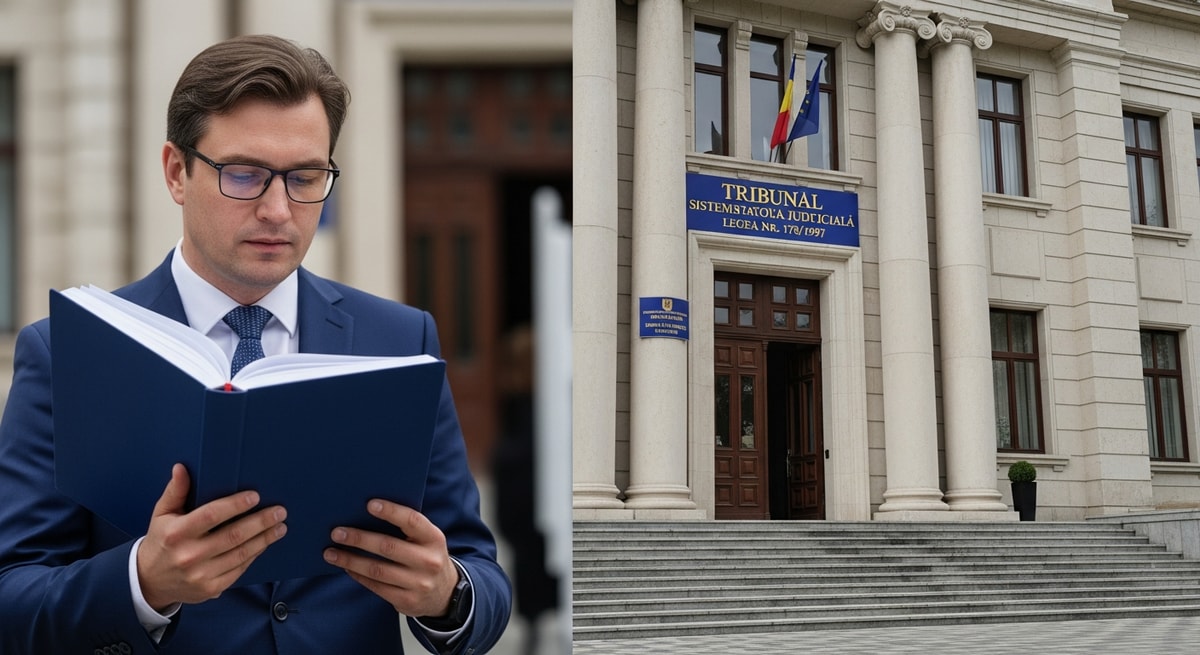
Romanian tribunals maintain the local registers of authorized translators (traducători autorizați) accredited by the Ministry of Justice
Romania's Apostille System: Three Competent Authorities
Romania has been a Contracting Party to the Hague Apostille Convention since 7 June 2000. Unlike many countries that designate a single competent authority, Romania distributes apostille competence across three categories of institutions, each responsible for different document types. Understanding which authority handles your document is essential to avoid delays — the most common problem in Romanian apostille applications arises from submitting a document to the wrong institution.
Prefectures (Instituția Prefectului) — all 42 county prefectures and the Bucharest Municipality Prefecture — are the competent authorities for civil status documents. These include certificat de naștere (birth certificate), certificat de căsătorie (marriage certificate), certificat de deces (death certificate), cazier judiciar (criminal record extract), and certificates of fiscal residence. Only documents in the new format issued after 1 January 1998 can be apostilled directly by prefectures. Tribunals (Tribunale) — 42 courts across Romania — apostille court documents, judicial decisions, and extracts from court registries. Chambers of Notaries (Camerele Notarilor Publici) — 15 chambers nationwide — apostille notarial acts drafted in compliance with Legea nr. 36/1995, including notarized translations (traduceri legalizate), authentic documents, documents with certified signatures, and powers of attorney.
Romanian apostilles take the form of a printed sticker bearing the handwritten signature of an authorized official, an official seal, and a security hologram. Documents submitted by Romanian nationals through diplomatic missions or consular posts abroad are routed to the Prefectura Municipiului București (Bucharest Prefecture), which issues the apostille and returns the documents through diplomatic channels. DoVisa coordinates the complete apostille process, identifying the correct competent authority for your document type, managing submission, tracking, and courier delivery of the apostilled document.

Romania designates 42 Prefectures, 42 Tribunals, and 15 Chambers of Notaries as competent apostille authorities
Romanian Civil Status Documents: Acte de Stare Civilă
Romania's civil registration system (stare civilă) records all major life events — births, marriages, divorces, deaths, and name changes. The system is administered locally by the Serviciul de Stare Civilă (Civil Status Office) within each municipality or commune, operating under the supervision of the Direcția Generală pentru Evidența Persoanelor (DEPABD), which is part of the Ministerul Afacerilor Interne (Ministry of Internal Affairs). Civil status records are maintained in two copies — one held by the local office and a duplicate held by the county Direcția de Evidență a Persoanelor.
The most commonly translated Romanian civil status documents include the certificat de naștere (birth certificate), certificat de căsătorie (marriage certificate), certificat de deces (death certificate), and extras de pe actul de naștere/căsătorie/deces (extract from the birth/marriage/death record). Romania also issues the certificat de stare civilă (civil status certificate) confirming a person's current marital status. For those born or married before 1998, documents may be in the older format, which requires additional attention during translation due to differences in layout and terminology.
Romanian civil status documents contain specific elements that translators must handle carefully: the mențiuni (annotations) recording subsequent events such as divorce, adoption, or name changes; the CNP (Cod Numeric Personal — personal numeric code, Romania's national identification number); and official stamps and signatures from the local Serviciul de Stare Civilă. The documents use distinctive Romanian terminology with diacritics that must be preserved accurately — născut(ă) (born), căsătorit(ă) (married), decedat(ă) (deceased), domiciliul (domicile), and cetățenia (citizenship). DoVisa translators maintain specialized expertise in Romanian stare civilă terminology and formatting conventions, ensuring accurate translations for USCIS, the UK Home Office, IRCC, and Australian immigration.
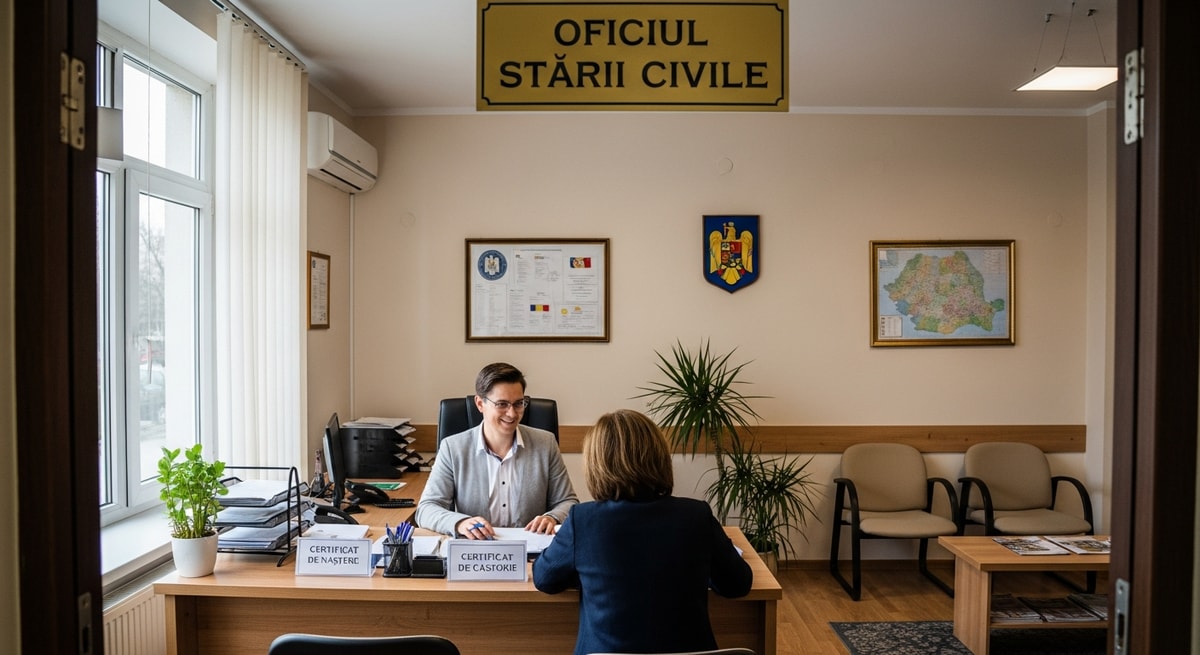
Romania's civil status offices (Serviciul de Stare Civilă) issue the vital records most commonly translated for international use
"Needed my Romanian certificat de naștere and certificat de căsătorie translated for a US green card application. DoVisa delivered both translations in 4 days. USCIS accepted everything without a single RFE. The translator handled all the Romanian diacritics and mențiuni perfectly."
"Romanian university diplomă de licență and foaie matricolă translated for WES credential evaluation. The translator understood Romania's Bologna Process degree structure and rendered the academic terminology correctly. WES processed my evaluation without requesting clarifications."
"Romanian birth certificate and divorce decree translated for my UK spouse visa. The Home Office accepted both translations without issues. Giving 4 stars because standard delivery took the full 6 days, but the translation quality was excellent throughout."
"Translated my Romanian cazier judiciar and certificat de naștere for a Canadian Express Entry application. IRCC accepted both on first submission. The legal terminology was rendered precisely — my immigration consultant confirmed everything was in order."
"Five Romanian documents translated for an Australian partner visa: birth certificate, marriage certificate, police clearance, degree, and employment reference. All five accepted by the Department of Home Affairs. Excellent attention to detail with the Romanian diacritics."
"Romanian notarial power of attorney translated to English for a property transaction in the US. The translator handled the complex Romanian notarial terminology and legal phrasing accurately. My American attorney confirmed the translation was clear and professionally done."
"Romanian birth certificate translated for New Zealand immigration. The initial translation had a minor error in the transliteration of a place name. DoVisa corrected it within a few hours after I flagged it. Immigration New Zealand accepted the revised version without questions."
"Romanian academic transcript and diploma translated for a graduate school application in the United States. DoVisa captured the Romanian grading system and ECTS credits accurately. The admissions office processed my application without any follow-up about the translations."
"Needed a certified translation of my Romanian hotărâre de divorț for a family law matter in Canada. The translator handled the specialized Romanian court terminology professionally. My Canadian lawyer said it was one of the best translated court documents she had seen."
"Romanian marriage certificate and birth certificate translated for an Australian skilled visa application. Department of Home Affairs accepted both without issues. Good quality, fair pricing, and the translator preserved all the Romanian special characters correctly."
"Romanian medical diploma translated to English for a professional licensing application in the UK. The GMC accepted the translation without revisions. The translator understood Romanian medical education terminology and the structure of the diploma. Very specialized work done well."
"Needed my Romanian certificat de naștere and certificat de căsătorie translated for a US green card application. DoVisa delivered both translations in 4 days. USCIS accepted everything without a single RFE. The translator handled all the Romanian diacritics and mențiuni perfectly."
"Romanian university diplomă de licență and foaie matricolă translated for WES credential evaluation. The translator understood Romania's Bologna Process degree structure and rendered the academic terminology correctly. WES processed my evaluation without requesting clarifications."
"Romanian birth certificate and divorce decree translated for my UK spouse visa. The Home Office accepted both translations without issues. Giving 4 stars because standard delivery took the full 6 days, but the translation quality was excellent throughout."
Romanian Document Translation FAQs
What types of Romanian documents can DoVisa translate?
We translate all types of Romanian documents including certificat de naștere (birth certificate), certificat de căsătorie (marriage certificate), certificat de deces (death certificate), hotărâre de divorț (divorce decree), cazier judiciar (criminal record extract), diplomă de bacalaureat (high school diploma), diplomă de licență (bachelor's degree), foaie matricolă (academic transcript), permis de conducere (driver's license), contract de muncă (employment contract), act notarial (notarial deed), and procură (power of attorney). All translations are certified and accepted by international immigration authorities.
Do I need a traducător autorizat (sworn translator) for my Romanian documents?
It depends on where you are submitting the documents. For submission to Romanian domestic authorities — courts, prefectures, the Direcția Generală pentru Evidența Persoanelor, or other government agencies — a traducere autorizată produced by a traducător autorizat registered with the Ministerul Justiției under Legea nr. 178/1997 is required. However, for submission to international authorities such as USCIS (United States), UK Home Office, IRCC (Canada), or Australian Department of Home Affairs, DoVisa's certified translations are accepted and a Romanian traducere autorizată is not required. If you need a sworn translation for Romanian authorities, DoVisa can coordinate this through our network of Ministry-authorized translators.
Are DoVisa translations the same as Romanian traduceri autorizate?
No. DoVisa provides certified translations for international use. Romanian traduceri autorizate (authorized translations) are produced by traducători autorizați registered with the Ministerul Justiției under Legea nr. 178/1997. These sworn translations are required by Romanian domestic authorities including courts, prefectures, and notaries. DoVisa's certified translations serve a different purpose: they are accepted by USCIS, UK Home Office, IRCC, Australian DHA, and other international authorities that do not require Romania's authorized translator system. If you need a traducere autorizată for a Romanian authority, you must use a registered traducător autorizat.
How long does Romanian document translation take?
Standard certified translation of Romanian documents is delivered within 4-6 business days. Express processing is available for 2-3 business days, and rush delivery within 24 hours is offered for select single-page document types such as birth and marriage certificates. Turnaround depends on document length, complexity, and language pair. Apostille processing through Romania's competent authorities requires additional time — typically 7-15 business days depending on the issuing authority and document type.
What languages can Romanian documents be translated to and from?
DoVisa offers 100+ language pairs for Romanian documents. The most common pairs include Romanian to English, Romanian to German, Romanian to French, Romanian to Spanish, Romanian to Italian, Romanian to Hungarian, and Romanian to Dutch. We also handle translations from these languages into Romanian. Our network of professional translators covers every major world language, ensuring your Romanian documents can be translated for use in any country.
Will DoVisa translations be accepted by USCIS and the UK Home Office?
Yes. USCIS requires certified translations with a translator's certificate of accuracy — DoVisa's certified translations meet this standard for all immigration application types including family-based petitions, adjustment of status, and naturalization. The UK Home Office (UKVI) requires professional translations with the translator's credentials, a signed statement of accuracy, contact details, and date — our translations include all required elements. Neither USCIS nor UKVI requires a Romanian traducere autorizată. Our certified translations are also accepted by Canada IRCC, Australian DHA, and New Zealand Immigration.
Is Romania a member of the Hague Apostille Convention?
Yes. Romania has been a Contracting Party to the Hague Apostille Convention since 7 June 2000. Romania designates three categories of competent authorities: Prefectures (42 offices) for civil status documents such as birth and marriage certificates; Tribunals (42 courts) for court documents and judicial records; and Chambers of Notaries (15 chambers) for notarial acts and notarized translations. Romanian documents bearing an apostille are recognized in all 125+ Convention member states without further legalization. DoVisa coordinates apostille processing through the appropriate Romanian authority.
What is an apostille and do I need one for my Romanian documents?
An apostille is a certificate issued under the Hague Convention of 5 October 1961 that authenticates the origin of a public document for use in another Convention member country. You need an apostille if the destination country requires document authentication beyond certified translation — for example, many countries require apostilled birth certificates for marriage registration or visa applications. Romania's apostille is a printed sticker with a handwritten signature, official seal, and hologram, issued by the competent authority for the specific document type. DoVisa can arrange apostille processing as an add-on service alongside your translation.
How much does certified Romanian translation cost?
DoVisa's Romanian translation pricing follows a transparent per-page structure with volume discounts that apply automatically for larger projects. Pricing varies based on document length, language pair, and processing speed. Express and rush service options are available for time-sensitive projects. Apostille processing through Romania's competent authorities is quoted separately. Upload your documents on our order page to receive an instant, detailed quote — no hidden fees.
Can DoVisa translate handwritten Romanian documents?
Yes. We regularly translate handwritten Romanian documents including older civil status records issued before 1998, court documents, personal correspondence, and historical records. Handwritten Romanian documents often present additional challenges due to older orthographic conventions and less legible penmanship. Our intake team assesses legibility upon upload and will notify you if any sections require clarification. We recommend providing the highest quality scan possible — at least 300 DPI — to ensure accurate translation of handwritten content.
What format will I receive my translation in?
You will receive your certified translation as a high-resolution PDF delivered via email, suitable for immediate digital submission to immigration authorities and other agencies. The PDF includes the full translation, the translator's certification statement, credentials, signature, and date. A physical hard copy with original wet-ink signature is shipped via tracked international courier. For documents paired with apostille service, the apostilled document is shipped separately once processed by the Romanian competent authority.
What is a CNP and how is it handled in translation?
The CNP (Cod Numeric Personal) is Romania's 13-digit personal identification number assigned to every Romanian citizen and resident. It appears on virtually all Romanian official documents — birth certificates, identity cards, marriage certificates, and government correspondence. The CNP encodes information including gender, date of birth, county of birth, and a check digit. In certified translations, the CNP is preserved as-is (it is a numerical code, not translated) and identified with an explanatory note as Romania's national identification number. Immigration authorities such as USCIS and the UK Home Office expect to see the CNP reproduced accurately in the translation.
How do I get apostille processing for my Romanian documents?
DoVisa coordinates apostille processing as an add-on service. The process depends on your document type: civil status documents (birth, marriage, death certificates) are apostilled by Prefectures; court documents by Tribunals; and notarial acts by Chambers of Notaries. Processing typically takes 7-15 business days depending on the authority and current volume. Documents must be in original or certified copy form. For documents held abroad, Romanian consular missions route apostille requests through the Bucharest Prefecture. Select apostille processing when placing your order, and DoVisa manages the full process from submission through tracked delivery.
Get Your Romanian Documents Translated Today
Professional certified translations of Romanian documents accepted by USCIS, UK Home Office, Canada IRCC, and Australian immigration