

Certified Italian Document Translation
Professional Italian translations accepted by USCIS, the UK Home Office, Canada IRCC, and Australian immigration. Certified translations of certificati di nascita, certificati di matrimonio, diplomi di laurea, and legal documents for international use.
TrustpilotSelect Languages
Drag & drop your documents here
or
PDF, JPEG, PNG, WebP — Max 10MB per file. Word documents: please save as PDF first.
Certified translators · Accepted by governments, courts & universities worldwide · View sample
Select a destination country to view pricing
How Italian Certified Translation Works
Submit Your Documents Securely
Upload clear scans of your Italian or foreign-language documents through our encrypted portal. We accept all standard formats including PDF, JPEG, and PNG. For Italian documents containing official stamps (timbri), handwritten annotations common in older civil registry records from the Comune, and special formatting from the Ufficio di Stato Civile, our intake team verifies that all text is legible before translation begins.
Professional Translator Assignment
Your documents are matched with an Italian language specialist experienced in the specific document type. For Italian civil status documents (atti di stato civile), we assign translators with expertise in Italy's municipal registration system and terminology used by the Comune and Ufficio di Stato Civile. For legal documents involving the Tribunale or Procura della Repubblica, we assign translators with Italian legal terminology expertise. Each translator holds professional credentials and is verified before every assignment.
Translation with Certification
The assigned translator produces your certified translation with a formal statement of accuracy, their professional credentials, signature, and date. A second qualified linguist reviews the translation for terminology accuracy, proper rendering of Italian legal terms and proper nouns, and completeness. The certification statement confirms the translation faithfully represents the original Italian document. This is a certified translation for international use — distinct from the Italian domestic traduzione giurata process.
Delivery with Full Documentation
Receive your certified translation as a high-resolution PDF for immediate use, with the original signed hard copy shipped via tracked international courier. For documents requiring apostille certification, DoVisa coordinates the process through Italy's competent authorities — the Prefettura for administrative documents or the Procura della Repubblica for judicial and notarial documents. Apostilles are issued in paper format and shipped via tracked courier alongside your translation.
Italian Translation Service Specifications
Popular Language Pairs
We support all languages — 100+ language pairs available for Italian documents.
Common Documents
- Birth certificates (certificato di nascita / estratto dell'atto di nascita)
- Marriage certificates (certificato di matrimonio)
- Death certificates (certificato di morte)
- Family status certificates (certificato di stato di famiglia)
- Residence certificates (certificato di residenza)
- University degrees (diploma di laurea / certificato di laurea)
- High school diplomas (diploma di maturità)
- Criminal record certificates (certificato del casellario giudiziale / certificato penale)
- Driver's licenses (patente di guida)
- Citizenship certificates (certificato di cittadinanza)
Turnaround Time
Certification Details
Italian Translation Requirements & Regulatory Framework
Embassy Acceptance
Notarization Process
Apostille Information
Legal Framework
Common Scenarios for Italian Document Translation
US Immigration with Italian Documents
Italian nationals and residents applying for US visas, green cards, or citizenship must submit certified English translations of all Italian-language documents to USCIS. Common documents include the certificato di nascita (birth certificate), certificato di matrimonio (marriage certificate), certificato del casellario giudiziale (criminal record certificate), and diploma di laurea (university degree). USCIS requires a translator's certificate of accuracy — DoVisa's certified translations meet this standard without requiring an Italian traduzione giurata.
UK Visa Applications with Italian Documents
The UK Home Office (UKVI) requires professional certified translations of all non-English documents for visa and settlement applications. Italian documents commonly submitted include birth certificates, marriage certificates, police clearance certificates, academic qualifications, and employment references. Our translators produce translations with the translator's credentials, a signed statement of accuracy, contact details, and date — meeting all UKVI requirements for Italian-to-English translations.
Canadian Immigration & Express Entry
Canada IRCC accepts certified translations for Express Entry, Provincial Nominee Programs, family sponsorship, and citizenship applications. Italian nationals frequently need translations of their certificati di stato civile for Canadian immigration purposes. Common documents include the certificato di nascita, certificato del casellario giudiziale, diploma di laurea, and certificato di residenza. DoVisa handles Italian-to-English and Italian-to-French translations for Canadian immigration.
Academic Credential Evaluation
Italian diplomi di laurea, pagelle scolastiche, and certificati di laurea submitted to credential evaluation services such as WES, ECE, and NACES members in the United States, or UK ENIC in the United Kingdom, require certified English translations. Our academic translators are familiar with the Italian higher education system, including the Laurea Triennale (3-year degree), Laurea Magistrale (2-year master's), and the older Laurea Vecchio Ordinamento (pre-reform single-cycle degree). We translate Italian academic terminology in a way that credential evaluators expect.
Australian Skilled & Partner Visa Applications
The Australian Department of Home Affairs requires certified translations of all non-English documents for skilled worker visas (subclass 189, 190, 491), partner visas (subclass 820/801), and other immigration categories. Italian nationals applying for Australian visas submit translated birth certificates, police clearance certificates, academic qualifications, and employment references. DoVisa provides translations meeting DHA requirements, with apostille available through Italy's Prefettura or Procura della Repubblica for additional authentication.
Italy's Unique Sworn Translation System: Asseverazione
Italy's sworn translation system — known as traduzione giurata, traduzione asseverata, or simply asseverazione — is unique among European countries because it imposes no formal qualification requirement on the translator. In Germany, sworn translators must be state-certified (beeidigte Übersetzer); in France, they must be registered with a Cour d'appel (experts-traducteurs). In Italy, the legal validity of a sworn translation comes entirely from the court procedure itself, not from the translator's credentials.
The process works as follows: the translator prepares the translation and a sworn statement (verbale di giuramento). They then appear in person at the Ufficio Asseverazioni, Perizie e Traduzioni of the local Tribunale — the dedicated office for sworn statements, expert reports, and translations. Before a cancelliere (court clerk), the translator takes an oath (giuramento) declaring: "Giuro di aver bene e fedelmente tradotto il documento" (I swear to have translated the document well and faithfully). The translation is then stamped with revenue stamps (marca da bollo — EUR 16 per every 4 pages), registered in the court's official register of sworn translations (registro delle asseverazioni), and given a registration number.
DoVisa provides certified translations for international use. Our certified translations are accepted by immigration authorities in the US (USCIS), UK (Home Office), Canada (IRCC), and Australia (DHA) — countries that do not require the Italian sworn translation procedure. For documents being submitted to Italian domestic authorities such as the Comune, Prefettura, Questura, or Tribunale, a traduzione giurata with in-person asseverazione at an Italian court is required.

Italian Tribunali house the Ufficio Asseverazioni where translators swear the giuramento oath for traduzioni giurate
Italian Civil Documents: The Comune and Stato Civile System
Italy's civil registration system is administered at the municipal level by each Comune (municipality) through its Ufficio di Stato Civile (Civil Registry Office). Each of Italy's approximately 7,900 Comuni maintains its own civil status records for events occurring within its territory. The ufficiale di stato civile (civil registrar) is responsible for recording births, marriages, deaths, and related events.
Italian civil documents come in several forms that translators must understand. A certificato is a certificate that summarizes key facts (such as a certificato di nascita stating name, date, and place of birth). An estratto is a more detailed certified extract from the official register — for example, an estratto per riassunto dell'atto di nascita provides a summary extract of the full birth record, while a copia integrale dell'atto di nascita is a complete verbatim copy. The certificato di stato di famiglia is a distinctly Italian document listing all members of a household registered at the same address — it serves a similar function to a family record but is tied to residence rather than blood relation.
Italian civil documents contain specific formatting elements: official stamps (timbri) from the Comune, the signature of the ufficiale di stato civile, and sometimes handwritten annotations in older records. Marginal notes (annotazioni marginali) record subsequent events such as marriage, divorce, or death on the original birth record. Since Italy joined the EU multilingual forms system, some documents may include multilingual standard forms — but these are only accepted within the EU and are not sufficient for US, UK, Canadian, or Australian immigration authorities. DoVisa translators maintain specialized expertise in Italian stato civile terminology and the formatting conventions expected by USCIS, the UK Home Office, IRCC, and Australian immigration.
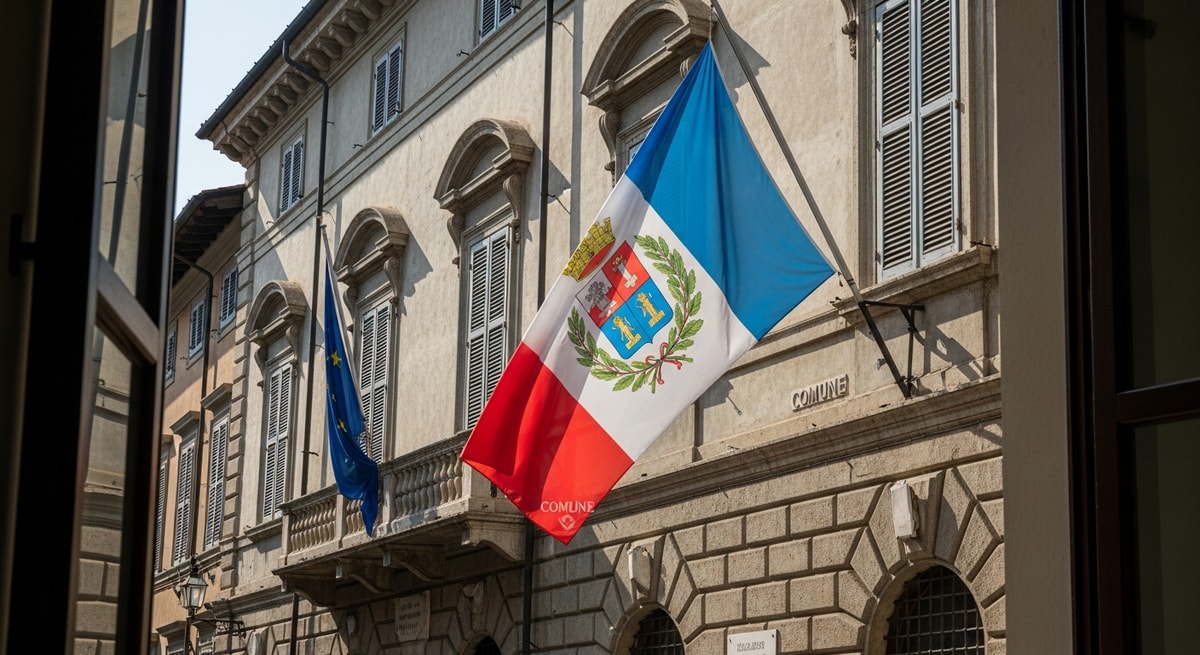
Italy's approximately 7,900 Comuni each maintain their own Ufficio di Stato Civile for civil status records
Italy's Dual Apostille Authorities: Prefettura and Procura della Repubblica
Italy is unusual among Hague Convention members in designating two separate categories of competent authorities for issuing apostilles, divided by document type rather than geography. Understanding which authority handles your document is essential for efficient apostille processing.
The Prefettura — Ufficio Territoriale del Governo (Prefecture) handles apostilles for all administrative documents. Since a 2011 notification to the HCCH, this includes all civil status documents (atti di stato civile) — birth, marriage, and death certificates — which were previously handled by the Procura della Repubblica. The Prefettura also apostilles educational documents, residency certificates, and other administrative records. The relevant Prefettura is determined by the province where the document was issued.
The Procura della Repubblica presso il Tribunale (Public Prosecutor's Office at the Court) handles apostilles for judicial and notarial documents. This includes criminal record certificates (certificato del casellario giudiziale), court judgments, divorce decrees, and any document signed by an Italian notaio (notary public). The relevant Procura is determined by the Tribunale in whose jurisdiction the document or the notary is located. Two regional exceptions exist: in Valle d'Aosta, the Presidenza della Regione handles apostilles, and in Trentino-Alto Adige, the Commissariato del Governo for the provinces of Trento and Bolzano serves as the competent authority.
DoVisa coordinates the complete apostille process by identifying the correct authority for your specific document type and submitting through the appropriate Prefettura or Procura della Repubblica. Apostille processing in Italy typically takes 5-15 business days depending on the specific office's workload. All Italian apostilles are issued in paper format and shipped via tracked international courier alongside your certified translation.
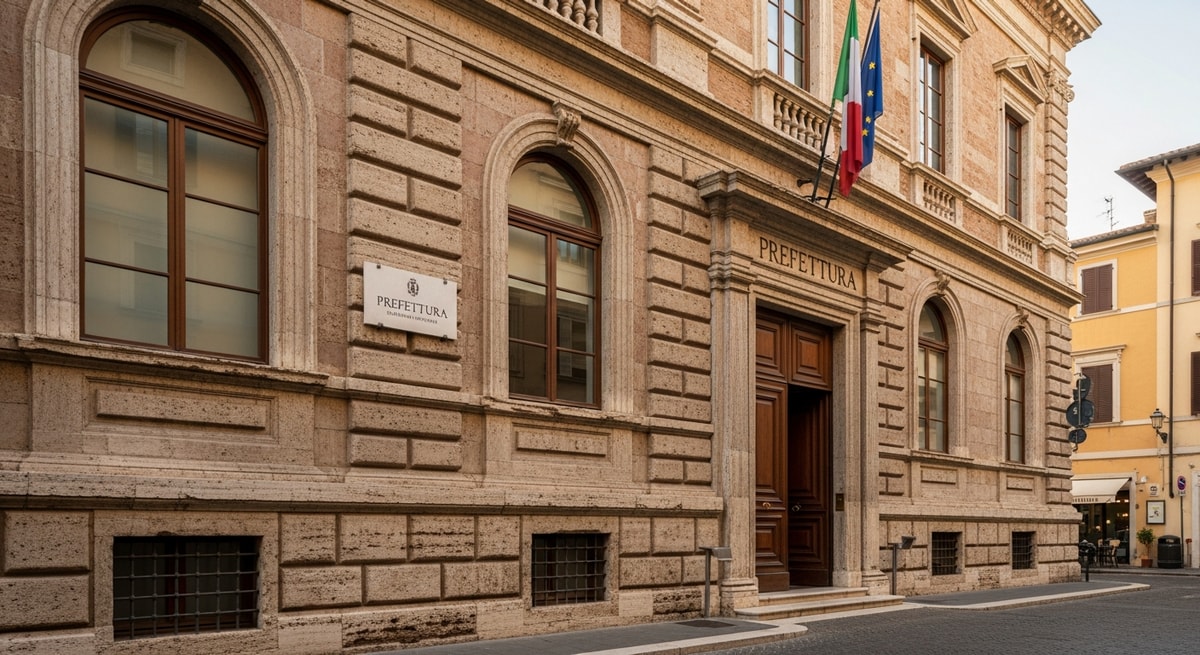
Italian Prefetture handle apostilles for administrative and civil status documents, while the Procura della Repubblica handles judicial acts
"Needed my Italian certificato di nascita and certificato del casellario giudiziale translated for a US green card application. DoVisa delivered both translations in 4 days. USCIS accepted everything without a single RFE. Excellent handling of the annotazioni marginali on my birth certificate."
"Italian diploma di laurea and certificato di laurea translated to English for WES credential evaluation in the United States. The translator understood the Italian university system and rendered the Laurea Magistrale terminology correctly. WES processed my evaluation without any issues."
"Five Italian documents translated for my Australian partner visa — birth certificate, marriage certificate, criminal record, degree, and employment references. The Department of Home Affairs accepted all translations. Professional service from start to finish."
"Italian birth certificate and marriage certificate translated for my UK spouse visa. The Home Office accepted both translations without questions. Giving 4 stars because standard delivery took the full 6 days, but the translation quality was very good."
"Translated my Italian certificato di nascita and certificato di matrimonio for a Canadian Express Entry application. IRCC accepted both translations on first submission. The legal terminology was rendered with real precision — my immigration consultant was impressed."
"Italian-to-English translation of my certificato di stato di famiglia for a New Zealand partner visa application. The translator included helpful context about what this uniquely Italian document represents. Immigration New Zealand accepted it immediately."
"Italian university transcript from Politecnico di Milano translated for a graduate school application in the United States. DoVisa captured all the academic grading terminology and credit details accurately. My university processed the application without follow-up questions."
"Italian certificato del casellario giudiziale translated to English for an Australian skilled visa. The Department of Home Affairs accepted the translation. Good quality and fair pricing. Would recommend for anyone needing Italian document translations."
"Italian certificato di matrimonio translated to English for a USCIS family-based petition. The initial delivery had a minor formatting issue with a date field. DoVisa corrected it within a few hours and USCIS accepted the final version without any problems."
"Needed my Italian diploma di maturità and pagella scolastica translated for a credential evaluation with ECE. The translator handled the Italian grading system terminology perfectly. ECE completed the evaluation without requesting any clarifications."
"Italian notarial deed (atto notarile) translated to English for a property-related legal matter in Canada. The translator handled complex Italian notarial terminology professionally. My Canadian lawyer confirmed the translation was accurate and clear."
"Italian birth certificate with apostille from the Prefettura translated for a UK settlement application. DoVisa coordinated both the translation and the apostille process. The Home Office accepted everything on first submission. Very professional service."
"Needed my Italian certificato di nascita and certificato del casellario giudiziale translated for a US green card application. DoVisa delivered both translations in 4 days. USCIS accepted everything without a single RFE. Excellent handling of the annotazioni marginali on my birth certificate."
"Italian diploma di laurea and certificato di laurea translated to English for WES credential evaluation in the United States. The translator understood the Italian university system and rendered the Laurea Magistrale terminology correctly. WES processed my evaluation without any issues."
"Five Italian documents translated for my Australian partner visa — birth certificate, marriage certificate, criminal record, degree, and employment references. The Department of Home Affairs accepted all translations. Professional service from start to finish."
Italian Document Translation FAQs
Are DoVisa translations the same as an Italian traduzione giurata?
No. DoVisa provides certified translations for international use. An Italian traduzione giurata (sworn translation, also called traduzione asseverata or asseverazione) is a specific legal procedure where a translator appears in person at the Ufficio Asseverazioni of a Tribunale, swears an oath (giuramento) before a cancelliere that the translation is faithful, and the translation is registered with revenue stamps. This procedure is required by Italian domestic authorities including the Comune, Prefettura, Questura, and Tribunale. DoVisa's certified translations are designed for a different purpose: they are accepted by USCIS, the UK Home Office, Canada IRCC, and Australian DHA — authorities that do not require the Italian sworn translation procedure.
What types of Italian documents can be translated?
We translate all types of Italian documents including certificati di nascita (birth certificates), certificati di matrimonio (marriage certificates), certificati di morte (death certificates), certificati di stato di famiglia (family status certificates), certificati del casellario giudiziale (criminal record certificates), diplomi di laurea (university degrees), diplomi di maturità (high school diplomas), patenti di guida (driver's licenses), certificati di residenza (residence certificates), and notarial deeds. All translations are certified and accepted by international government agencies.
Do I need a sworn translator for Italian documents?
It depends on where the translated document will be submitted. If you are submitting translated Italian documents to USCIS, the UK Home Office, Canada IRCC, Australian immigration, or New Zealand immigration, a certified translation from DoVisa is fully accepted — no traduzione giurata is required. However, if you need to submit a translated foreign document to an Italian domestic authority (Comune, Prefettura, Questura, Tribunale), a traduzione giurata with in-person asseverazione at an Italian court is required. Italy's system is unique in that no formal translator qualification is required — the legal validity comes from the court oath procedure, not the translator's credentials.
Is Italy a member of the Hague Apostille Convention?
Yes. Italy was one of the original signatories of the Hague Apostille Convention, having signed on 15 December 1961. Italy ratified the Convention on 13 December 1977, and it entered into force on 11 February 1978. Italian documents bearing an apostille are recognized in all 125+ Convention member states without further legalization. Italy designates two competent authorities: the Prefettura for administrative and civil status documents, and the Procura della Repubblica for judicial and notarial documents.
How long does Italian certified translation take?
Standard certified translation is delivered within 4-6 business days. Express processing is available for 2-3 business days, and rush delivery within 24 hours for select single-page document types such as birth, marriage, and death certificates. Apostille processing through the Prefettura or Procura della Repubblica adds an additional 5-15 business days depending on the specific office's workload. DoVisa provides real-time status updates throughout the process.
What languages do you translate Italian documents to and from?
We offer Italian translation to and from 100+ languages. The most common pairs include Italian to English, Italian to German, Italian to French, Italian to Spanish, Italian to Portuguese, Italian to Arabic, Italian to Chinese, and Italian to Japanese. We also handle translations from other languages into Italian. Each translation is handled by a specialist with expertise in both the source and target language as well as the specific document type.
Will my Italian translation be accepted by USCIS and the UK Home Office?
Yes. USCIS requires certified translations with a translator's certificate of accuracy — DoVisa's certified translations meet this standard for all immigration application types including family-based petitions, adjustment of status, and naturalization. The UK Home Office (UKVI) requires professional translations with the translator's credentials, a signed statement of accuracy, contact details, and date — our translations include all required elements. Neither USCIS nor UKVI requires an Italian traduzione giurata. Our certified Italian translations are also accepted by Canada IRCC, Australian DHA, and New Zealand Immigration.
Do I need notarization with my Italian translation?
For most international immigration applications, DoVisa's certified translation alone is sufficient — USCIS, the UK Home Office, Canada IRCC, and Australian DHA do not require additional notarization beyond the translator's certification statement. However, some receiving institutions (certain universities, professional licensing boards, or specific legal proceedings) may request notarized translations. DoVisa offers optional notarization as an add-on service. For use within Italy, the domestic traduzione giurata process at a Tribunale serves as Italy's form of official authentication.
What is an apostille and do I need one for Italian documents?
An apostille is an international certification under the Hague Convention that verifies the authenticity of a public document for use in another member country. Italy issues apostilles through two authorities: the Prefettura handles administrative documents (birth, marriage, death certificates, residency documents), while the Procura della Repubblica handles judicial and notarial documents (criminal records, court judgments, notarial deeds). Whether you need an apostille depends on the receiving country's requirements — many immigration authorities accept certified translations without an apostille, but some legal and educational institutions require it. DoVisa can coordinate apostille processing through the appropriate Italian authority.
How much does certified Italian translation cost?
DoVisa's Italian translation pricing follows a transparent per-page structure with volume discounts that apply automatically for larger projects. Pricing varies based on document length, language pair, and processing speed. Express and rush service options are available for time-sensitive projects. Apostille processing through the Prefettura or Procura della Repubblica is quoted separately. Upload your documents on our order page to receive an instant, detailed quote — no hidden fees.
Can you translate handwritten Italian documents?
Yes. Many older Italian civil status documents, especially those issued before the 1990s, contain handwritten entries. Records from Comuni in smaller Italian towns may include handwritten annotations, stamps, and abbreviations specific to Italian civil registration practice. Our translators are experienced with historical Italian handwriting styles and administrative abbreviations. For best results, upload the highest-resolution scan possible. If any text is illegible, our team will contact you before proceeding to ensure accuracy.
What format will I receive the Italian translation in?
You will receive your certified translation as a high-resolution PDF delivered via email — suitable for immediate digital submission to immigration authorities, universities, and employers. The PDF includes the full certified translation with the translator's credentials, signature, and certification statement. A signed hard copy is also shipped via tracked international courier for authorities that require original documents. If you ordered an apostille, the apostilled document is included with the hard copy shipment.
Get Your Italian Documents Translated Today
Professional translations of Italian documents accepted by USCIS, UK Home Office, Canada IRCC, and Australian immigration