

Certified Spanish Document Translation
Professional certified translations of Spanish documents accepted by USCIS, the UK Home Office, Canada IRCC, and Australian immigration. Certificados de nacimiento, matrimonio, títulos universitarios, and libro de familia translated for international use.
TrustpilotSelect Languages
Drag & drop your documents here
or
PDF, JPEG, PNG, WebP — Max 10MB per file. Word documents: please save as PDF first.
Certified translators · Accepted by governments, courts & universities worldwide · View sample
Select a destination country to view pricing
How Spanish Certified Translation Works
Submit Your Documents Securely
Upload clear scans of your Spanish or foreign-language documents through our encrypted portal. We accept all standard formats including PDF, JPEG, and PNG. For Spanish documents containing official stamps (sellos), handwritten annotations, and characters with diacritics (á, é, í, ó, ú, ñ, ü), our intake team verifies that all text is legible before translation begins. Documents from Spain's Registro Civil, universities, and notarial offices are all accepted.
Professional Translator Assignment
Your documents are matched with a Spanish language specialist experienced in the specific document type. For Spanish civil registry documents (certificados del Registro Civil), we assign translators with expertise in Spain's estado civil system and the terminology used by the Ministerio de Justicia. For academic documents, translators familiar with Spain's university system and the Espacio Europeo de Educación Superior framework are selected. Each translator holds professional credentials and is verified before every assignment.
Translation with Certification
The assigned translator produces your certified translation with a formal statement of accuracy, their professional credentials, signature, and date. A second qualified linguist reviews the translation for terminology accuracy, proper rendering of Spanish legal terms, proper nouns, and completeness. The certification statement confirms the translation faithfully represents the original Spanish document. This certified translation is distinct from a traducción jurada, which is produced by sworn translators appointed by the MAEC.
Delivery with Full Documentation
Receive your certified translation as a high-resolution PDF for immediate use, with the original signed hard copy shipped via tracked international courier. For documents requiring apostille certification, DoVisa coordinates the process through Spain's competent authorities — the Secretarios de Gobierno de los Tribunales Superiores de Justicia for judicial documents, the Decanos de los Colegios Notariales for notarial documents, or the Ministerio de Justicia for administrative documents.
Spanish Translation Service Specifications
Popular Language Pairs
We support all languages — 100+ language pairs available for Spanish documents.
Common Documents
- Birth certificates (certificado de nacimiento / partida de nacimiento)
- Marriage certificates (certificado de matrimonio)
- Death certificates (certificado de defunción)
- Family record booklets (libro de familia)
- Criminal record certificates (certificado de antecedentes penales)
- University degrees and transcripts (título universitario / certificado académico)
- Municipal census registration certificates (certificado de empadronamiento)
- Driving licenses (permiso de conducir)
- Foreigner identity number documents (NIE — Número de Identidad de Extranjero)
- Notarial deeds (escritura pública)
Turnaround Time
Certification Details
Spanish Translation Requirements & Regulatory Framework
Embassy Acceptance
Notarization Process
Apostille Information
Legal Framework
Common Scenarios for Spanish Document Translation
US Immigration with Spanish Documents
Spanish nationals and residents applying for US visas, green cards, or citizenship must submit certified English translations of all Spanish-language documents to USCIS. Common documents include the certificado de nacimiento (birth certificate), certificado de matrimonio (marriage certificate), certificado de antecedentes penales (criminal record certificate), and títulos universitarios (university degrees). USCIS requires a translator's certificate of accuracy — DoVisa's certified translations meet this standard without requiring a Spanish traducción jurada.
UK Visa Applications with Spanish Documents
The UK Home Office (UKVI) requires professional certified translations of all non-English documents for visa and settlement applications. Spanish documents commonly submitted include birth certificates, marriage certificates, divorce judgments, police clearance certificates, and employment references. Our translators produce translations with the translator's credentials, signed statement of accuracy, contact details, and date — meeting all UKVI requirements for Spanish document translation.
Canadian Immigration & Express Entry
Canada IRCC accepts certified translations for Express Entry, Provincial Nominee Programs, family sponsorship, and citizenship applications. Spanish speakers from Spain and Latin America frequently need translations of their civil registry documents for Canadian immigration. Common documents include certificados de nacimiento, certificados de matrimonio, títulos universitarios, and certificados de antecedentes penales. DoVisa handles Spanish-to-English and Spanish-to-French translations for all Canadian immigration programs.
Academic Credential Evaluation
Spanish títulos universitarios, certificados académicos (academic transcripts), and suplementos europeos al título submitted to credential evaluation services such as WES, ECE, and NACES members in the United States, or UK ENIC in the United Kingdom, require certified English translations. Our academic translators are familiar with Spain's higher education system including the Bologna Process framework, the Espacio Europeo de Educación Superior (EHEA), and the Spanish grading scale from aprobado to matrícula de honor.
Australian Skilled & Partner Visa Applications
The Australian Department of Home Affairs requires certified translations of all non-English documents for skilled worker visas (subclass 189, 190, 491), partner visas (subclass 820/801), and other immigration categories. Spanish nationals applying for Australian visas submit translated birth certificates, police clearance certificates, academic qualifications, and employment references. DoVisa provides translations meeting DHA requirements, with apostille available through Spain's competent authorities.
Spain's Traductor Jurado System: MAEC Appointment and the Oficina de Interpretación de Lenguas
Spain operates a traductor-intérprete jurado (sworn translator-interpreter) system that is among the most structured in Europe. Sworn translators are appointed exclusively by the Ministerio de Asuntos Exteriores, Unión Europea y Cooperación (MAEC) through the Oficina de Interpretación de Lenguas (OIL), the government body responsible for regulating, examining, and registering sworn translators in Spain. The current regulatory framework is established in Real Decreto 724/2020 of 4 August, which replaced the original Real Decreto 2555/1977 and its subsequent modifications under RD 79/1996 and RD 2002/2009.
To become a sworn translator, candidates must pass a rigorous multidisciplinary examination convened by the MAEC. The exam tests fluency in both working languages, command of legal and administrative terminology, practical translation skills in both directions, and in many sessions includes an oral consecutive interpretation component. An alternative pathway exists for holders of a Spanish university degree in Translation and Interpretation (Grado en Traducción e Interpretación), subject to specific conditions. A major change under RD 724/2020 was the separation of the former unified title into two distinct professional designations: Traductor Jurado (for written translations) and Intérprete Jurado (for oral interpretation). Only these appointed professionals may produce traducciones juradas that carry carácter oficial (official character) before Spanish courts and administrative bodies.
DoVisa provides certified translations for international use. Our certified translations are accepted by immigration authorities in the US (USCIS), UK (Home Office), Canada (IRCC), and Australia (DHA) — countries that do not require the Spanish sworn translator system. For documents being submitted to Spanish domestic authorities such as the Registro Civil, Oficinas de Extranjería, or Juzgados, a traducción jurada by an MAEC-appointed traductor jurado is required. DoVisa's certified translations are designed for taking Spanish documents abroad, not for submitting foreign documents to Spanish institutions.
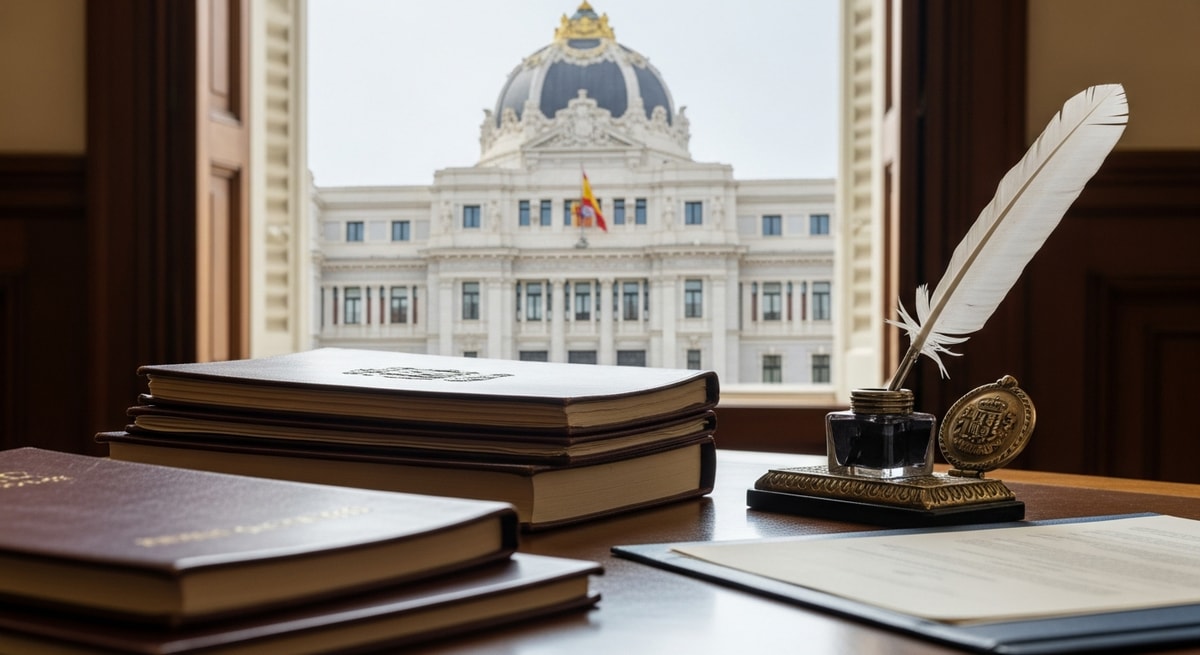
The MAEC through the Oficina de Interpretación de Lenguas maintains the official registry of all appointed traductores jurados in Spain
Spain's 2025 Digital Reform: Electronic Signatures for Sworn Translations
On 26 February 2025, the Spanish government published Orden AUC/213/2025, a Ministerial Order that formally authorized sworn translators to use qualified electronic signatures (firma electrónica cualificada) for certifying their translations. This reform, issued by the Ministerio de Asuntos Exteriores, Unión Europea y Cooperación, represents a significant modernization of Spain's sworn translation procedures, allowing the entire certification process — from signing and submission to archiving — to be completed entirely online.
Under Orden AUC/213/2025, sworn translators and interpreters may certify their work with a qualified digital certificate recognized under the eIDAS Regulation (EU 910/2014). The certification and the required text box (casilla de certificación) must follow the legally prescribed format set out in Annexes I through III of the Order. Both digital and handwritten signatures with the physical stamp (sello) remain legally valid, giving sworn translators flexibility in how they deliver certified work. This dual-validity approach ensures backward compatibility while embracing digital workflows.
The practical impact is significant for international document flows. Spanish sworn translations can now be produced, signed, and delivered electronically without the need for physical stamps or courier delivery of paper originals. For clients outside Spain who need a traducción jurada for submission to a Spanish authority, the process is faster and more accessible. DoVisa coordinates with MAEC-appointed sworn translators who operate under this new digital framework when clients require traducciones juradas alongside our standard certified translations for international use.
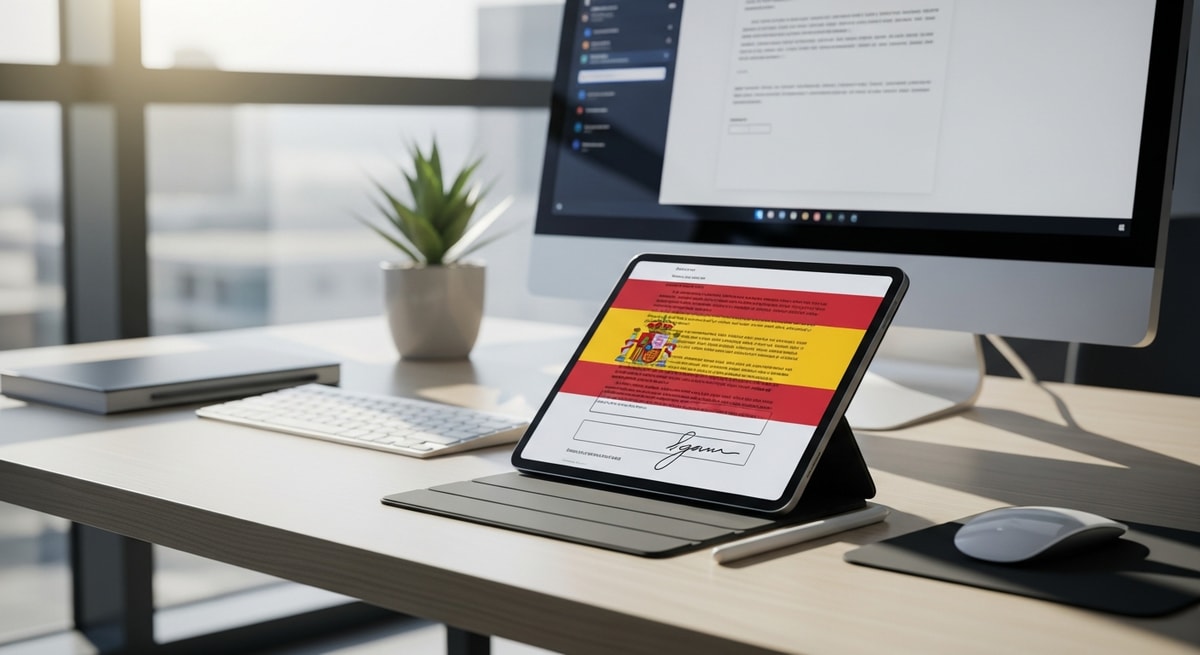
Orden AUC/213/2025 allows Spanish sworn translators to certify translations using qualified electronic signatures under the eIDAS framework
Spanish Civil Registry Documents: Registro Civil and the Libro de Familia
Spain's Registro Civil (Civil Registry) is a public registry administered by the Ministerio de Justicia through the Dirección General de Seguridad Jurídica y Fe Pública. It records all major life events for Spanish citizens and residents — births, marriages, deaths, and related changes such as divorce, adoption, and name changes. Each municipality has a local Registro Civil office, typically attached to the Juzgado de Paz or Juzgado de Primera Instancia. The Registro Civil Central, located on Calle de la Montera, 18 in Madrid, handles events that cannot be registered at a local office and serves as a national-level registry. The system is governed by Ley 20/2011, de 21 de julio, del Registro Civil.
The most commonly translated Spanish civil registry documents include the certificado literal de nacimiento (full birth certificate containing all registered data), the certificado de matrimonio, the certificado de defunción, and the libro de familia — a uniquely Spanish document issued at the time of marriage or birth of a first child that serves as a comprehensive family record booklet. The libro de familia records births, marriages, deaths, and other major family events across its pages, similar to the French livret de famille. While Spain has been modernizing its civil registry system and the libro de familia is being phased out in favor of individual digital records, millions of existing libros remain in circulation and are frequently required for immigration applications abroad.
Spanish civil registry certificates can be requested online through the Sede Electrónica of the Ministerio de Justicia. Certificates are issued free of charge — civil registry proceedings in Spain are not subject to any tax or fee. The certificado de empadronamiento (municipal census registration certificate) is a separate administrative document issued by the Ayuntamiento (municipal government) and is commonly translated for immigration and residency applications abroad. DoVisa translators maintain specialized expertise in Spanish estado civil terminology, ensuring translated documents meet the formatting and content expectations of USCIS, the UK Home Office, IRCC, and Australian immigration.
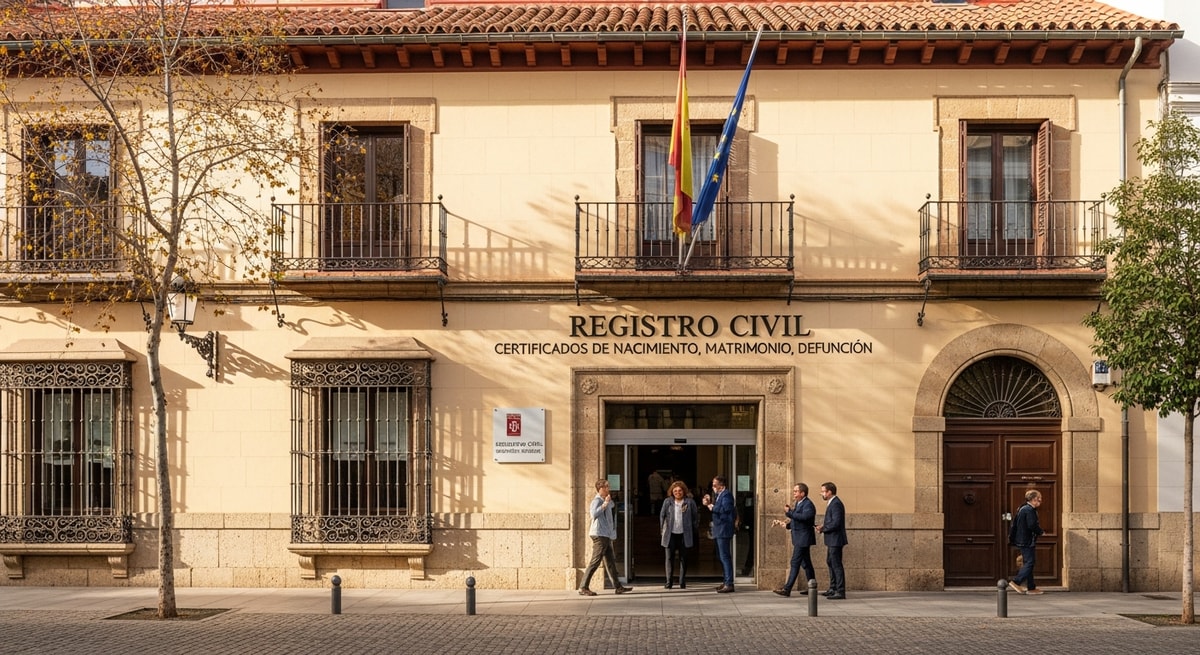
Spain's Registro Civil offices issue vital records certificates that are among the most commonly translated Spanish documents for international use
"Needed my Spanish certificado de nacimiento and libro de familia translated for a US green card application. DoVisa delivered both in 4 days. USCIS accepted everything without a single RFE. The translator handled the libro de familia formatting perfectly."
"Spanish título universitario and certificado académico translated to English for WES credential evaluation. The translator understood Spain's grading system and rendered the degree terminology correctly. WES processed my evaluation without any questions."
"Spanish birth certificate and marriage certificate translated for my UK spouse visa. The Home Office accepted both translations on first submission. Standard delivery took the full 5 days, but the quality was solid throughout."
"Translated my Spanish certificado de antecedentes penales and certificado de nacimiento for a Canadian Express Entry application. IRCC accepted both on first submission. The legal terminology was translated with real precision."
"Five Spanish documents translated for an Australian partner visa — birth certificate, marriage certificate, police clearance, degree, and employment reference. DHA accepted all five without requesting corrections. Excellent turnaround time."
"Spanish university transcript from the Universidad Complutense translated for a graduate school application in the US. Good rendering of the Spanish academic grading terminology. Fair pricing with the volume discount for multiple pages."
"Spanish certificado de matrimonio translated to English for a New Zealand partner visa. Immigration New Zealand accepted the translation immediately. The translator included helpful contextual notes about the libro de familia reference in the certificate."
"Spanish birth certificate translated for a USCIS application. The initial delivery had a minor error in the transliteration of a compound surname. DoVisa corrected it within a few hours and USCIS accepted the revised version without issues."
"Needed my Spanish certificado de empadronamiento and NIE document translated for a UK skilled worker visa application. The Home Office accepted both. DoVisa understood exactly what these Spanish administrative documents are and translated them clearly."
"Spanish escritura pública translated for a legal matter in Canada. The translator handled complex Spanish notarial terminology professionally. My Canadian lawyer confirmed the translation was accurate and thorough."
"Spanish certificado de defunción and certificado de últimas voluntades translated for an inheritance case in the United States. The legal terminology was rendered precisely. The US attorney handling the estate was impressed with the quality."
"Spanish permiso de conducir and certificado de nacimiento translated for an Australian skilled visa. The Department of Home Affairs accepted both translations. Reliable service with clear communication throughout the process."
"Needed my Spanish certificado de nacimiento and libro de familia translated for a US green card application. DoVisa delivered both in 4 days. USCIS accepted everything without a single RFE. The translator handled the libro de familia formatting perfectly."
"Spanish título universitario and certificado académico translated to English for WES credential evaluation. The translator understood Spain's grading system and rendered the degree terminology correctly. WES processed my evaluation without any questions."
"Spanish birth certificate and marriage certificate translated for my UK spouse visa. The Home Office accepted both translations on first submission. Standard delivery took the full 5 days, but the quality was solid throughout."
Spanish Document Translation FAQs
Are DoVisa translations the same as a Spanish traducción jurada?
No. DoVisa provides certified translations for international use. Spanish traducciones juradas (sworn translations) are produced by traductores jurados officially appointed by the Ministerio de Asuntos Exteriores, Unión Europea y Cooperación (MAEC) under Real Decreto 724/2020. These sworn translations are required by Spanish domestic authorities including the Registro Civil, Oficinas de Extranjería, and courts. DoVisa's certified translations are designed for a different purpose: they are accepted by USCIS, the UK Home Office, IRCC (Canada), the Australian DHA, and other countries that do not require the Spanish sworn translator system. If you need a traducción jurada for a Spanish authority, you must use an MAEC-appointed traductor jurado.
What types of Spanish documents can DoVisa translate?
We translate all types of Spanish documents including certificados de nacimiento (birth certificates), certificados de matrimonio (marriage certificates), certificados de defunción (death certificates), libros de familia (family record booklets), certificados de antecedentes penales (criminal record certificates), títulos universitarios (university degrees), certificados académicos (academic transcripts), certificados de empadronamiento (municipal census certificates), permisos de conducir (driving licenses), NIE documents, escrituras públicas (notarial deeds), and all other official Spanish documents. All translations are certified and accepted by international immigration authorities.
How long does Spanish document translation take?
Standard certified translation of Spanish documents is delivered within 4-6 business days. Express processing is available for 2-3 business days, and rush delivery within 24 hours is offered for select document types such as single-page vital records (birth, marriage, death certificates). Turnaround time depends on document length, complexity, and the language pair. Apostille processing through Spain's competent authorities requires additional time beyond the translation itself.
What languages can Spanish documents be translated to?
DoVisa offers Spanish document translation to and from 100+ languages. The most common language pairs include Spanish to English, Spanish to German, Spanish to French, Spanish to Arabic, Spanish to Chinese, Spanish to Portuguese, and Spanish to Italian. We also translate from other languages into Spanish. All translations include a formal certification statement regardless of the language pair selected.
Will DoVisa translations be accepted by USCIS and the UK Home Office?
Yes. USCIS requires certified translations with a translator's certificate of accuracy — DoVisa's certified translations meet this standard for all immigration application types including family-based petitions, adjustment of status, and naturalization. The UK Home Office (UKVI) requires professional translations with the translator's credentials, a signed statement of accuracy, contact details, and date — our translations include all required elements. Neither USCIS nor UKVI requires a Spanish traducción jurada. Our certified translations are also accepted by Canada IRCC, Australian DHA, and New Zealand Immigration.
Do I need a sworn translator (traductor jurado) for my Spanish documents?
It depends on where the translation will be used. If you are submitting documents to a Spanish authority — such as the Registro Civil, an Oficina de Extranjería, or a Spanish court — you need a traducción jurada by an MAEC-appointed traductor jurado. If you are submitting Spanish documents to authorities outside Spain — such as USCIS, the UK Home Office, Canada IRCC, or the Australian Department of Home Affairs — a certified translation from DoVisa is sufficient and fully accepted. DoVisa can also coordinate traducciones juradas through our network of MAEC-appointed sworn translators when needed.
Do I need notarization with my Spanish translation?
For most international immigration applications, notarization of the translation itself is not required. USCIS accepts certified translations without notarization. The UK Home Office similarly does not require notarization of the translator's work. However, if the receiving authority in the destination country requires additional authentication, DoVisa can arrange notarization as an add-on service. For documents being used in Hague Convention member countries, an apostille from the appropriate Spanish competent authority may be the relevant authentication rather than notarization.
Is Spain a member of the Hague Apostille Convention?
Yes. Spain has been a Contracting Party to the Hague Apostille Convention since 25 September 1978 (instrument deposited 27 July 1978). Apostille competence in Spain is divided among multiple authorities depending on the document type: Secretarios de Gobierno de los Tribunales Superiores de Justicia for judicial documents, Decanos de los Colegios Notariales for notarial documents, and officials of the Ministerio de Justicia for administrative documents, as established by Real Decreto 1497/2011. Spanish documents bearing an apostille are recognized in all 125+ Convention member states.
How much does certified Spanish translation cost?
DoVisa's Spanish translation pricing follows a transparent per-page structure with volume discounts that apply automatically for larger projects. Pricing varies based on document length, language pair, and processing speed. Express and rush service options are available for time-sensitive projects. Apostille processing through Spain's competent authorities is quoted separately. Upload your documents on our order page to receive an instant, detailed quote — no hidden fees.
What is a libro de familia and how is it translated?
The libro de familia is a uniquely Spanish document issued by the Registro Civil at the time of marriage or the birth of a first child. It serves as a comprehensive family record booklet, recording births, marriages, deaths, and other major family events across its pages — similar to the French livret de famille. While Spain is phasing out the libro de familia in favor of individual digital records, millions remain in circulation and are commonly required for international immigration applications. When translating a libro de familia, DoVisa includes explanatory context so that foreign immigration officers understand its purpose. USCIS, the UK Home Office, and IRCC all accept our certified translations of the libro de familia.
Can DoVisa translate handwritten Spanish documents?
Yes. DoVisa translates handwritten Spanish documents including older civil registry entries, historical records, and personal correspondence. Older Spanish vital records from the Registro Civil may contain handwritten entries in traditional calligraphic styles that require specialized reading skills. Our translators experienced with Spanish handwriting conventions can interpret these documents accurately. For best results, upload the highest quality scan possible — at least 300 DPI resolution — to ensure all handwritten text is legible for the translator.
What format will I receive my translated Spanish document in?
You will receive your certified translation in two formats. First, a high-resolution PDF is delivered via email for immediate use — suitable for digital submissions to USCIS, the UK Home Office, or other authorities that accept electronic documents. Second, the original signed hard copy with the translator's wet signature, credentials, and certification statement is shipped via tracked international courier. For apostilled documents, the apostille certificate is included with the physical delivery. Both the digital and physical versions are legally valid certified translations.
Get Your Spanish Documents Translated Today
Professional certified translations of Spanish documents accepted by USCIS, UK Home Office, Canada IRCC, and Australian immigration