
Certified Mexican Document Translation
Professional Spanish translations of Mexican documents accepted by USCIS, the UK Home Office, Canada IRCC, and Australian immigration. Certified translations of actas de nacimiento, actas de matrimonio, CURP documents, and academic credentials for international use.
TrustpilotSelect Languages
Drag & drop your documents here
or
PDF, JPEG, PNG, WebP — Max 10MB per file. Word documents: please save as PDF first.
Certified translators · Accepted by governments, courts & universities worldwide · View sample
Select a destination country to view pricing
How Mexican Certified Translation Works
Submit Your Documents Securely
Upload clear scans of your Mexican or foreign-language documents through our encrypted portal. We accept all standard formats including PDF, JPEG, and PNG. For Mexican documents containing official stamps (sellos), handwritten annotations, and special characters with diacritics (á, é, í, ó, ú, ñ, ü), our intake team verifies that all text is legible before translation begins. Documents issued by the Registro Civil, SEGOB, or state authorities are all accepted.
Professional Translator Assignment
Your documents are matched with a Spanish language specialist experienced in the specific document type. For Mexican civil registry documents (actas del Registro Civil), we assign translators with expertise in Mexico's vital records system and terminology used across Mexico's 32 state-level civil registries. For CURP documents and cédulas profesionales, translators with knowledge of Mexican government formatting conventions are selected. Each translator holds professional credentials verified before every assignment.
Translation with Certification
The assigned translator produces your certified translation with a formal statement of accuracy, their professional credentials, signature, and date. A second qualified linguist reviews the translation for terminology accuracy, proper rendering of Mexican legal terms and proper nouns, and completeness. The certification statement confirms the translation faithfully represents the original Mexican document in its entirety.
Delivery with Full Documentation
Receive your certified translation as a high-resolution PDF for immediate use, with the original signed hard copy shipped via tracked international courier. For documents requiring apostille certification, DoVisa coordinates the process through the appropriate Mexican authority — SEGOB for federal documents or the relevant state-level authority for state and municipal documents. Mexico's e-Register system allows electronic verification of apostilles issued at the federal level.
Mexico Translation Service Specifications
Popular Language Pairs
We support all languages — 100+ language pairs available for Mexican documents.
Common Documents
- Birth certificates (acta de nacimiento)
- Marriage certificates (acta de matrimonio)
- Death certificates (acta de defunción)
- Divorce certificates (acta de divorcio)
- CURP documents (Clave Única de Registro de Población)
- Professional degrees (título profesional)
- Professional licenses (cédula profesional)
- Academic transcripts (certificado de estudios)
- Criminal background checks (carta de antecedentes no penales)
- Voter ID cards (INE / credencial para votar)
- Military service booklets (cartilla del Servicio Militar Nacional)
Turnaround Time
Certification Details
Mexico Translation Requirements & Regulatory Framework
Embassy Acceptance
Notarization Process
Apostille Information
Legal Framework
Common Scenarios for Mexican Document Translation
US Immigration with Mexican Documents
Mexican nationals applying for US visas, green cards, or citizenship must submit certified English translations of all Spanish-language documents to USCIS. Common documents include the acta de nacimiento (birth certificate), acta de matrimonio (marriage certificate), carta de antecedentes no penales (criminal background check), and academic títulos profesionales. USCIS requires a translator's certificate of accuracy — DoVisa's certified translations meet this standard without requiring a Mexican perito traductor translation.
Canadian Immigration & Express Entry
Canada IRCC accepts certified translations for Express Entry, Provincial Nominee Programs, family sponsorship, and citizenship applications. Mexican nationals frequently need translations of their actas del Registro Civil, CURP documents, and academic credentials for Canadian immigration. Common documents include the acta de nacimiento, certificado de estudios, and carta de antecedentes no penales. DoVisa handles both Spanish-to-English and Spanish-to-French translations for Canadian immigration purposes.
Academic Credential Evaluation
Mexican títulos profesionales, cédulas profesionales, certificados de estudios, and constancias de estudios submitted to credential evaluation services such as WES, ECE, and NACES members in the United States, or UK ENIC in the United Kingdom, require certified English translations. Our academic translators are familiar with the Mexican higher education system including SEP-regulated institutions, the cédula profesional issued by the Dirección General de Profesiones, and the distinction between título profesional and carta de pasante.
UK Visa Applications with Mexican Documents
The UK Home Office (UKVI) requires professional certified translations of all non-English documents for visa and settlement applications. Mexican documents commonly submitted include birth certificates, marriage certificates, divorce records, police clearance certificates, and employment references. Our translators produce translations with the translator's credentials, signed statement of accuracy, contact details, and date — meeting all UKVI requirements for Mexican document submissions.
Australian Skilled & Partner Visa Applications
The Australian Department of Home Affairs requires certified translations of all non-English documents for skilled worker visas (subclass 189, 190, 491), partner visas (subclass 820/801), and other immigration categories. Mexican nationals applying for Australian visas submit translated birth certificates, police clearance certificates, academic qualifications, and employment references. DoVisa provides translations meeting DHA requirements, with apostille available through Mexico's SEGOB or state authorities for additional authentication.
International Business & Corporate Use
Mexican companies expanding internationally and foreign businesses operating in Mexico frequently need certified translations of corporate documents. Common needs include poderes notariales (powers of attorney), escrituras públicas (public deeds), actas constitutivas (articles of incorporation), and RFC registration documents. DoVisa's business translators handle complex Mexican commercial and corporate terminology for use with international partners, banks, and regulatory bodies outside Mexico.
Mexico's Perito Traductor System: Federal and State Authorization
Mexico operates a perito traductor (expert translator) system that is embedded within the judicial branch at both federal and state levels. Unlike countries with a single national registry, Mexico's dual system reflects its federal structure — translators are authorized separately by federal and state judicial authorities, each maintaining their own roster of qualified professionals.
At the federal level, the Consejo de la Judicatura Federal (CJF) — the administrative body of the federal judiciary — authorizes peritos traductores through annual convocations (convocatorias). Federal peritos are registered in the CJF's official roster of expert witnesses and are qualified to provide translations for federal court proceedings, federal administrative agencies, and matters involving federal jurisdiction. The CJF publishes its roster and requirements through official channels.
At the state level, each of Mexico's 32 states maintains its own roster through the Tribunal Superior de Justicia (TSJ) of that state. For example, in Mexico City, translators are authorized by the Tribunal Superior de Justicia de la Ciudad de México (TSJCDMX). Each state sets its own requirements for admission to the lista de peritos, which may include professional degrees, demonstrated language competence, and examination. State-authorized peritos traductores produce translations with validez legal (full legal validity) for use before state courts, notaries, civil registries, and administrative agencies within that state.
DoVisa provides certified translations for international use. Our certified translations are accepted by immigration authorities in the US (USCIS), UK (Home Office), Canada (IRCC), and Australia (DHA) — countries that do not require the Mexican perito traductor system. For documents being submitted to Mexican domestic authorities such as INM, Registro Civil, SAT, or Mexican courts, a traducción por perito traductor authorized by the CJF or the relevant state TSJ is required.
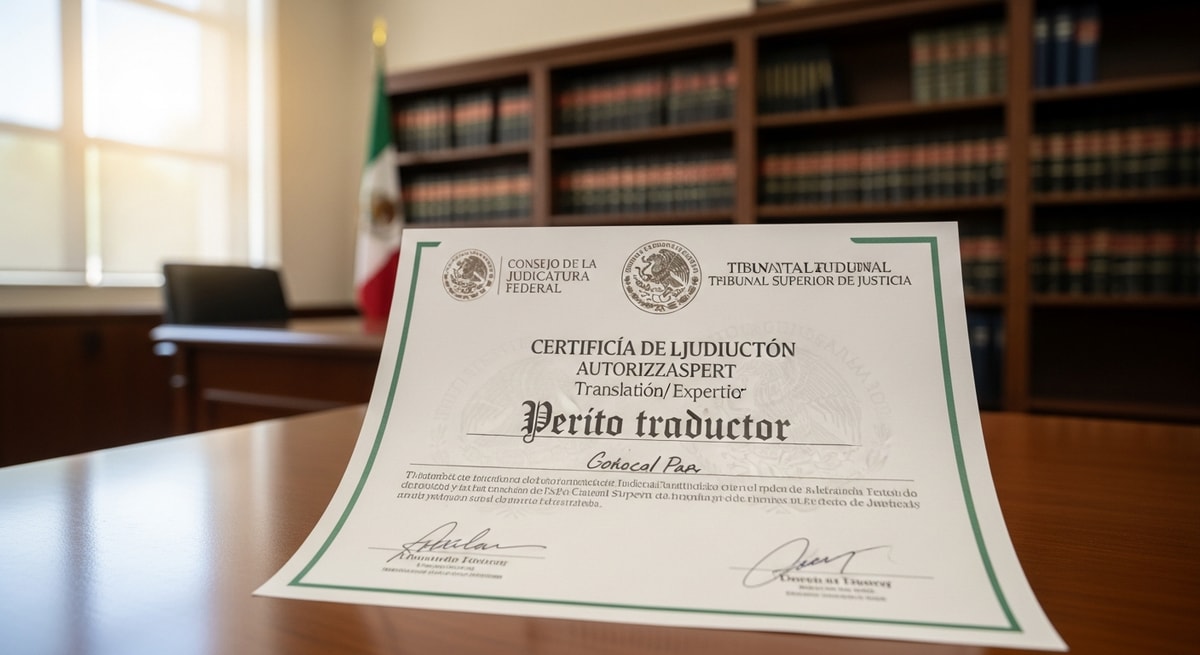
Mexico's Consejo de la Judicatura Federal and 32 state Tribunales Superiores de Justicia maintain separate rosters of authorized peritos traductores
Mexico's Apostille System: SEGOB, State Authorities, and the e-Register
Mexico's apostille system reflects the country's federal structure, with different authorities handling apostilles depending on whether a document was issued at the federal or state level. Understanding which authority to approach is essential for obtaining a valid apostille on any Mexican document.
For federal documents — those issued by federal government agencies such as SEGOB, the SRE, SEP, SAT, or federal courts — the competent authority is the Secretaría de Gobernación (SEGOB), specifically the Unidad de Gobierno, Dirección de Coordinación Política con los Poderes de la Unión. SEGOB operates from its offices in Mexico City and handles all apostille requests for documents originating from the federal government. A common misconception is that the Secretaría de Relaciones Exteriores (SRE) issues apostilles — the SRE handles passports, consular services, and nationality matters, but is not the apostille authority.
For state and municipal documents — including vital records (actas del Registro Civil such as birth certificates, marriage certificates, and death certificates), notarial documents, and state-issued educational certificates — each of Mexico's 32 states designates its own competent authority. This is typically the Secretaría de Gobierno or an equivalent office at the state level. A birth certificate issued in Jalisco, for example, must be apostilled by the Jalisco state authority, not by SEGOB.
In February 2010, SEGOB launched a state-of-the-art e-Register of Apostilles through the HCCH e-Apostille Pilot Programme (e-APP). SEGOB issues PDF-based apostilles with electronic signatures, and recipients can verify any federal apostille by entering its date and code into the online verification portal. Mexico was notably the first country to extend the e-Register to also cover legalizations, not just apostilles. DoVisa coordinates the complete apostille process through the appropriate authority — SEGOB for federal documents or the relevant state authority for state and municipal documents.
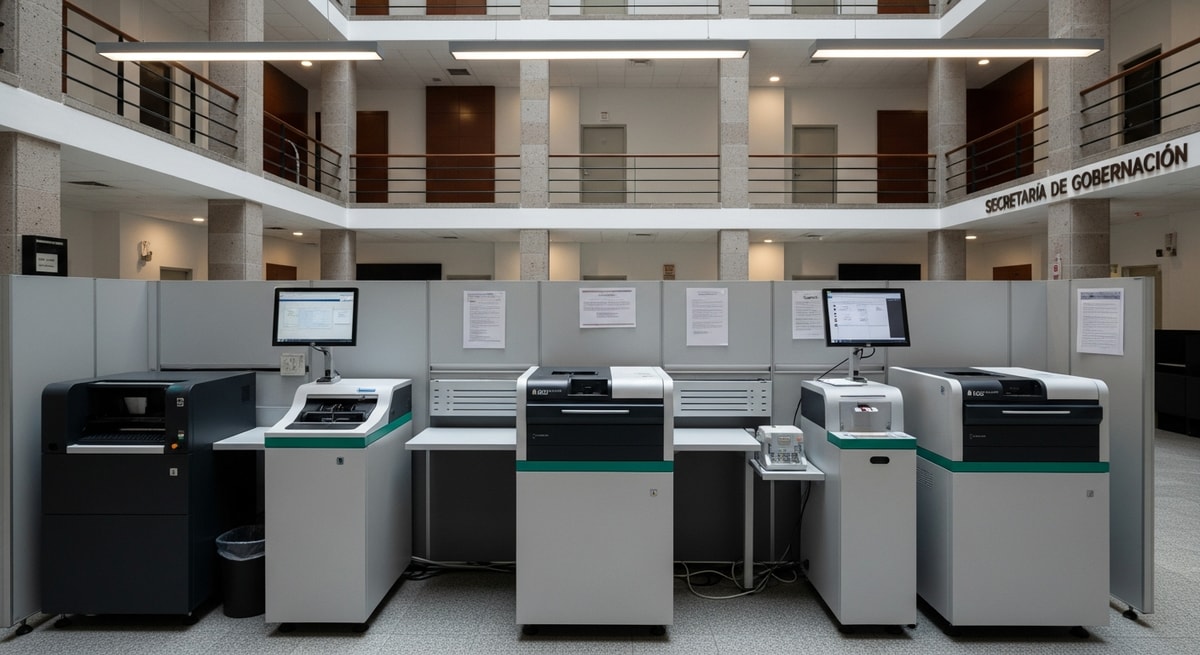
SEGOB issues federal apostilles with electronic verification, while 32 state authorities handle state and municipal documents
Mexican Civil Registry: Actas del Registro Civil and the CURP System
Mexico's Registro Civil (Civil Registry) system records all major life events — births, marriages, deaths, and divorces — across the country's 32 states. Each state operates its own civil registry offices, which issue the actas del Registro Civil that serve as the primary vital records for Mexican citizens. These are the most commonly translated Mexican documents for international use.
The acta de nacimiento (birth certificate) is the foundational identity document in Mexico, required for virtually every official procedure both domestically and internationally. Mexican birth certificates follow a standardized format that includes the full names of both parents, the place and date of birth, and the registration details. The acta de matrimonio (marriage certificate) and acta de defunción (death certificate) follow similar formats specific to their respective events. The acta de divorcio records the judicial dissolution of a marriage and includes details of the court ruling.
Complementing the Registro Civil system is the CURP (Clave Única de Registro de Población) — an 18-character alphanumeric code that serves as a unique population identifier for every person registered in Mexico, including both citizens and foreign residents. The CURP was introduced to prevent duplicate registrations and streamline government services. It is derived algorithmically from the person's name, date of birth, sex, and state of registration. The CURP document itself — while not a vital record — is frequently requested alongside the acta de nacimiento for immigration and identification purposes. CURP information can be verified through the official portal at gob.mx/curp.
Other commonly translated Mexican documents include the título profesional (professional degree) and cédula profesional (professional license) issued under the oversight of the Secretaría de Educación Pública (SEP) through the Dirección General de Profesiones, the carta de antecedentes no penales (criminal background check), and the cartilla del Servicio Militar Nacional (military service booklet). DoVisa's translators maintain specialized expertise in Mexican civil registry terminology and the formatting conventions expected by USCIS, the UK Home Office, IRCC, and Australian immigration.
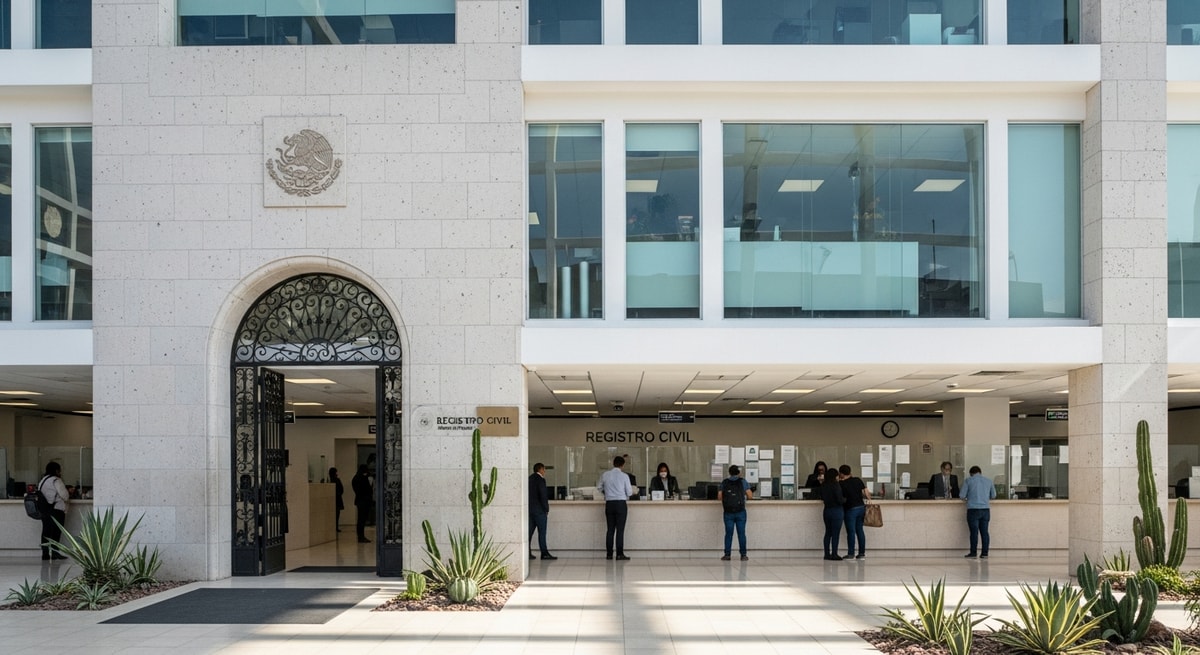
Mexico's 32 state-level civil registries issue the vital records most commonly translated for international immigration and legal proceedings
"Needed my acta de nacimiento and acta de matrimonio translated for a US green card application. DoVisa delivered both translations in 3 days. USCIS accepted everything without a single RFE. The translator handled all the Registro Civil formatting perfectly."
"Mexican título profesional and cédula profesional translated to English for WES credential evaluation in the United States. The translator understood the SEP credentialing system and rendered the degree equivalencies correctly. WES processed my evaluation without clarification requests."
"Mexican birth certificate and CURP translated for my UK spouse visa application. The Home Office accepted both translations without issues. Only 4 stars because standard delivery took the full 5 business days, but the quality was excellent."
"Translated my acta de divorcio and acta de nacimiento for a Canadian Express Entry application. IRCC accepted both translations on first submission. The legal terminology was translated precisely — my immigration lawyer confirmed the accuracy."
"Three documents translated for an Australian partner visa: birth certificate, marriage certificate, and police clearance. The Department of Home Affairs accepted all three certified translations. Excellent turnaround and clear communication throughout."
"Mexican university certificado de estudios translated for a graduate school application in the UK. DoVisa captured all the academic grading terminology accurately. The university processed my application without any follow-up questions. Good value for money."
"Needed my carta de antecedentes no penales and acta de nacimiento translated for a USCIS family-based petition. Both translations were accepted immediately. The translator was clearly familiar with Mexican government document formats."
"Mexican acta de matrimonio translated to English for a New Zealand partner visa. The initial delivery had a minor error in a date field. DoVisa corrected it within a few hours after I flagged the issue. Immigration New Zealand accepted the final version without problems."
"Moved from Mexico to Canada and needed five documents translated: acta de nacimiento, acta de matrimonio, carta de antecedentes no penales, título profesional, and employment references. IRCC accepted all five for my PR application. Impressive service."
"Mexican cédula profesional and academic transcripts translated for a professional licensing application in Australia. The Department of Home Affairs accepted the translations. Pricing was fair and the process was straightforward from upload to delivery."
"CURP document and acta de nacimiento translated for my USCIS naturalization application. The translator included helpful context about what the CURP represents since there is no direct US equivalent. The immigration officer accepted everything at my interview."
"Mexican poder notarial and escritura pública translated to English for a property-related legal matter in the United States. The translator handled complex Mexican notarial terminology professionally. My US attorney confirmed the translations were accurate and clear."
"Needed my acta de nacimiento and acta de matrimonio translated for a US green card application. DoVisa delivered both translations in 3 days. USCIS accepted everything without a single RFE. The translator handled all the Registro Civil formatting perfectly."
"Mexican título profesional and cédula profesional translated to English for WES credential evaluation in the United States. The translator understood the SEP credentialing system and rendered the degree equivalencies correctly. WES processed my evaluation without clarification requests."
"Mexican birth certificate and CURP translated for my UK spouse visa application. The Home Office accepted both translations without issues. Only 4 stars because standard delivery took the full 5 business days, but the quality was excellent."
Mexican Document Translation FAQs
What types of Mexican documents can DoVisa translate?
DoVisa translates all types of Mexican documents including actas de nacimiento (birth certificates), actas de matrimonio (marriage certificates), actas de defunción (death certificates), actas de divorcio (divorce certificates), CURP documents, títulos profesionales (professional degrees), cédulas profesionales (professional licenses), certificados de estudios (academic transcripts), cartas de antecedentes no penales (criminal background checks), INE / credencial para votar (voter ID cards), cartillas del Servicio Militar Nacional (military service booklets), poderes notariales (powers of attorney), and escrituras públicas (notarial deeds). All translations are certified and accepted by international government agencies.
Do DoVisa translations substitute for a Mexican perito traductor?
No. DoVisa provides certified translations for international use. Mexican peritos traductores (sworn translators) are authorized by the Consejo de la Judicatura Federal (CJF) at the federal level or by the Tribunal Superior de Justicia (TSJ) at the state level. Translations by peritos traductores carry validez legal (full legal validity) before Mexican domestic authorities including INM, Registro Civil, SAT, and Mexican courts. DoVisa's certified translations are designed for a different purpose: they are accepted by USCIS, UK Home Office, IRCC, and Australian DHA — countries that do not require the Mexican perito traductor system. If you need a traducción por perito traductor for a Mexican authority, DoVisa can coordinate this through our network of court-appointed translators upon request.
How long does Mexican document translation take?
Standard certified translation is delivered within 4-6 business days. Express processing is available for 2-3 business days, and rush delivery within 24 hours is offered for select single-page documents such as actas de nacimiento, actas de matrimonio, and CURP documents. Processing time depends on document length, complexity, and the language pair. Orders placed before 10:00 CST are eligible for same-day rush service on qualifying documents.
What languages can Mexican documents be translated to?
DoVisa translates Mexican documents from Spanish to English and over 100 additional language pairs. Popular language combinations for Mexican documents include Spanish to English, Spanish to French (for Canadian immigration), Spanish to German, Spanish to Portuguese, Spanish to Japanese, Spanish to Korean, and Spanish to Chinese. We also translate documents from any language into Spanish for Mexican nationals who need foreign documents translated.
Will USCIS and the UK Home Office accept DoVisa Mexican translations?
Yes. USCIS requires certified translations with a translator's certificate of accuracy — DoVisa's certified translations meet this standard for all immigration application types including family-based petitions, adjustment of status, and naturalization. The UK Home Office (UKVI) requires professional translations with the translator's credentials, a signed statement of accuracy, contact details, and date — our translations include all required elements. Neither USCIS nor UKVI requires a Mexican perito traductor translation. Our certified Mexican translations are also accepted by Canada IRCC, Australian DHA, and New Zealand Immigration.
Do I need notarization with my Mexican document translation?
It depends on the receiving authority. For USCIS, certified translation with a statement of accuracy is sufficient — notarization is not required. For UK UKVI and Canada IRCC, professional certified translations meet the standard without notarization. Some private institutions, state agencies, or foreign courts may request notarization as an additional authentication step. DoVisa can arrange notarization upon request. For documents destined for countries outside the Hague Convention, consular legalization may be required instead of or in addition to apostille.
Is Mexico a member of the Hague Apostille Convention?
Yes. Mexico acceded to the Hague Apostille Convention, with entry into force on 14 August 1995. Mexico operates a dual apostille system: the Secretaría de Gobernación (SEGOB) issues apostilles for federal documents, while 32 separate state-level authorities handle apostilles for state and municipal documents. It is important to note that the SRE (Secretaría de Relaciones Exteriores) is not the apostille authority — this is a common misconception. Mexican documents bearing an apostille are recognized in all 125+ Convention member states without further legalization.
How much does certified Mexican document translation cost?
DoVisa's Mexican document translation pricing follows a transparent per-page structure with volume discounts that apply automatically for larger projects. Pricing varies based on document length, language pair, and processing speed. Express and rush service options are available for time-sensitive projects. Apostille processing through SEGOB or state authorities is quoted separately. Upload your documents on our order page to receive an instant, detailed quote — no hidden fees.
Can DoVisa translate handwritten Mexican documents?
Yes. Many older Mexican documents, particularly actas del Registro Civil issued before the digitization of civil registries, contain handwritten entries. Our translators are experienced with handwritten Spanish scripts and the formatting conventions used in Mexican civil registries across different time periods. For legibility purposes, we recommend uploading the highest-quality scan possible. If any portion of a handwritten document is illegible, our team will flag it before translation begins and work with you to resolve the issue.
What format will I receive my Mexican document translation in?
You will receive your certified translation as a high-resolution PDF delivered via email, suitable for immediate submission to immigration authorities, credential evaluation services, and other institutions. The PDF includes the full translation, the translator's certification statement, signature, and credentials. A physical hard copy with original wet signatures is shipped via tracked international courier for authorities that require original documents. Both digital and physical copies are included in the standard service.
What is a CURP and how is it translated?
The CURP (Clave Única de Registro de Población) is Mexico's unique population registration code — an 18-character alphanumeric identifier assigned to every person registered in Mexico, including both citizens and foreign residents. The CURP is derived algorithmically from the person's name, date of birth, sex, and state of registration. There is no direct equivalent in English-speaking countries. When translating a CURP document, DoVisa includes explanatory context so that foreign immigration officers and legal professionals understand its purpose and significance. USCIS, the UK Home Office, and IRCC all accept our certified translations of CURP documents with the appropriate contextual notes.
How does Mexico's apostille process work for birth certificates?
Mexican birth certificates (actas de nacimiento) are issued by state-level Registro Civil offices, which means they are state documents — not federal documents. Therefore, they must be apostilled by the competent authority of the state where the birth was registered, not by SEGOB. For example, a birth certificate from Jalisco must be apostilled by the Jalisco state authority. Each of Mexico's 32 states has its own designated office and procedures. DoVisa coordinates the complete apostille process through the appropriate state authority, handling submission, tracking, and delivery on your behalf.
Get Your Mexican Documents Translated Today
Professional translations of Mexican documents accepted by USCIS, UK Home Office, Canada IRCC, and Australian immigration