

Certified Brazilian Document Translation
Professional Portuguese translations of certidões de nascimento, casamento, diplomas, and históricos escolares. Accepted by USCIS, UK Home Office, Canada IRCC, and Australian immigration for all application types.
TrustpilotSelect Languages
Drag & drop your documents here
or
PDF, JPEG, PNG, WebP — Max 10MB per file. Word documents: please save as PDF first.
Certified translators · Accepted by governments, courts & universities worldwide · View sample
Select a destination country to view pricing
How Brazilian Certified Translation Works
Submit Your Documents Securely
Upload clear scans of your Brazilian documents through our encrypted portal. We accept PDF, JPEG, and PNG formats. Brazilian civil registry documents such as certidões de nascimento and certidões de casamento often contain handwritten annotations, official stamps (carimbos), and embossed seals from cartórios — our intake specialists verify that all text and markings are legible before translation begins.
Professional Translator Assignment
Your documents are matched with a Portuguese language specialist experienced in the specific document type. For Brazilian civil registry documents (certidões do registro civil), we assign translators with expertise in Brazil's cartório system and the terminology used by cartórios de registro civil across all 26 states and the Distrito Federal. Each translator holds professional credentials and is verified for active status before every assignment.
Translation with Certification
The assigned translator produces your certified translation with a formal statement of accuracy, their professional credentials, signature, and date. A second qualified linguist reviews the translation for terminology accuracy, proper rendering of Brazilian Portuguese legal terms, proper nouns, and completeness. The certification statement confirms the translation faithfully represents the original Brazilian document.
Delivery with Full Documentation
Receive your certified translation as a high-resolution PDF for immediate use, with the original signed hard copy shipped via tracked international courier. For documents requiring apostille certification, DoVisa coordinates the process through Brazil's authorized cartórios operating under the Conselho Nacional de Justiça (CNJ). Brazilian apostilles are available in electronic format (e-Apostille) with QR code verification through the SEI-Apostila system.
Brazilian Translation Service Specifications
Popular Language Pairs
We support all languages — 100+ language pairs available for Brazilian documents.
Common Documents
- Birth certificates (certidão de nascimento)
- Marriage certificates (certidão de casamento)
- Death certificates (certidão de óbito)
- Divorce certificates (certidão de divórcio)
- Academic diplomas (diploma)
- Academic transcripts (histórico escolar)
- Criminal background certificates (atestado de antecedentes criminais)
- Driver's licenses (Carteira Nacional de Habilitação — CNH)
- Powers of attorney (procuração)
- Notarial deeds (escritura pública)
Turnaround Time
Certification Details
Brazilian Translation Requirements & Regulatory Framework
Embassy Acceptance
Notarization Process
Apostille Information
Legal Framework
Common Scenarios for Brazilian Document Translation
US Immigration with Brazilian Documents
Brazilian nationals and residents applying for US visas, green cards, or citizenship must submit certified English translations of all Portuguese-language documents to USCIS. Common documents include the certidão de nascimento (birth certificate), certidão de casamento (marriage certificate), atestado de antecedentes criminais (criminal background certificate), and academic diplomas. USCIS requires a translator's certificate of accuracy — DoVisa's certified translations meet this standard without requiring a Brazilian tradução juramentada.
UK Visa Applications with Brazilian Documents
The UK Home Office (UKVI) requires professional certified translations of all non-English documents for visa and settlement applications. Brazilian documents commonly submitted include birth certificates, marriage certificates, divorce certificates (certidão de divórcio), police clearance certificates, and proof of employment. Our translators produce translations with the translator's credentials, signed statement of accuracy, contact details, and date — meeting all UKVI requirements.
Canadian Immigration & Express Entry
Canada IRCC accepts certified translations for Express Entry, Provincial Nominee Programs, family sponsorship, and citizenship applications. Brazilians frequently need translations of their certidões do registro civil for Canadian immigration. Common documents include the certidão de nascimento, atestado de antecedentes criminais, academic diplomas, and históricos escolares (transcripts). DoVisa handles both Portuguese-to-English and Portuguese-to-French translations for Canadian immigration purposes.
Academic Credential Evaluation
Brazilian diplomas, históricos escolares (academic transcripts), and certificados de conclusão submitted to credential evaluation services such as WES, ECE, and NACES members in the United States, or UK ENIC in the United Kingdom, require certified English translations. Our academic translators are familiar with the Brazilian higher education system including degrees awarded by universities regulated by the Ministério da Educação (MEC). We translate academic terminology in a way that credential evaluators expect to see.
Australian Skilled & Partner Visa Applications
The Australian Department of Home Affairs requires certified translations of all non-English documents for skilled worker visas (subclass 189, 190, 491), partner visas (subclass 820/801), and other immigration categories. Brazilian nationals applying for Australian visas submit translated birth certificates, police clearance certificates, academic qualifications, and employment references. DoVisa provides translations meeting DHA requirements, with apostille available through Brazil's e-Apostille system for additional authentication.
International Business & Corporate Documents
Brazilian companies expanding internationally need certified translations of contratos sociais (articles of association), procurações (powers of attorney), escrituras públicas (notarial deeds), and financial statements. DoVisa translates corporate documents issued by Brazilian cartórios and Juntas Comerciais for use in international business transactions, corporate filings abroad, and regulatory compliance in foreign jurisdictions.
Brazil's Tradutor Juramentado System
Brazil operates a tradutor juramentado (sworn translator) system that is among the most regulated in the Americas. The official designation is tradutor público e intérprete comercial (public translator and commercial interpreter). Originally established by Decreto nº 13.609 of 21 October 1943, the profession is now governed by Lei nº 14.195 of 26 August 2021, Chapter VII (Articles 18-27), which modernized the regulatory framework while preserving the core concurso público requirement.
To become a tradutor juramentado, a candidate must pass a concurso público (competitive public examination) administered by the Junta Comercial (Commercial Board) of their state. These examinations are notoriously infrequent — historically occurring at intervals of approximately 20 years — and consist of written translation tests in both directions (Portuguese to foreign language and vice versa) plus an oral interpretation component. Test materials typically include powers of attorney, notarial deeds, certificates, and legal documents. Under the 2021 reform, candidates who hold C2-level proficiency certification on the Common European Framework of Reference for Languages (CEFR) may qualify for an exemption from the concurso.
Once approved, the tradutor juramentado is registered with the state Junta Comercial and their translations carry a legal presumption of faithfulness and accuracy (fé pública). Only tradutores juramentados may translate documents for presentation before Brazilian public entities, courts, and notarial services — this is mandated by Article 192 of the Código de Processo Civil (CPC). DoVisa provides certified translations for international use. Our certified translations are accepted by immigration authorities in the US (USCIS), UK (Home Office), Canada (IRCC), and Australia (DHA) — countries that do not require the Brazilian sworn translator system. For documents being submitted to Brazilian domestic authorities, a tradução juramentada by a registered tradutor público is required.
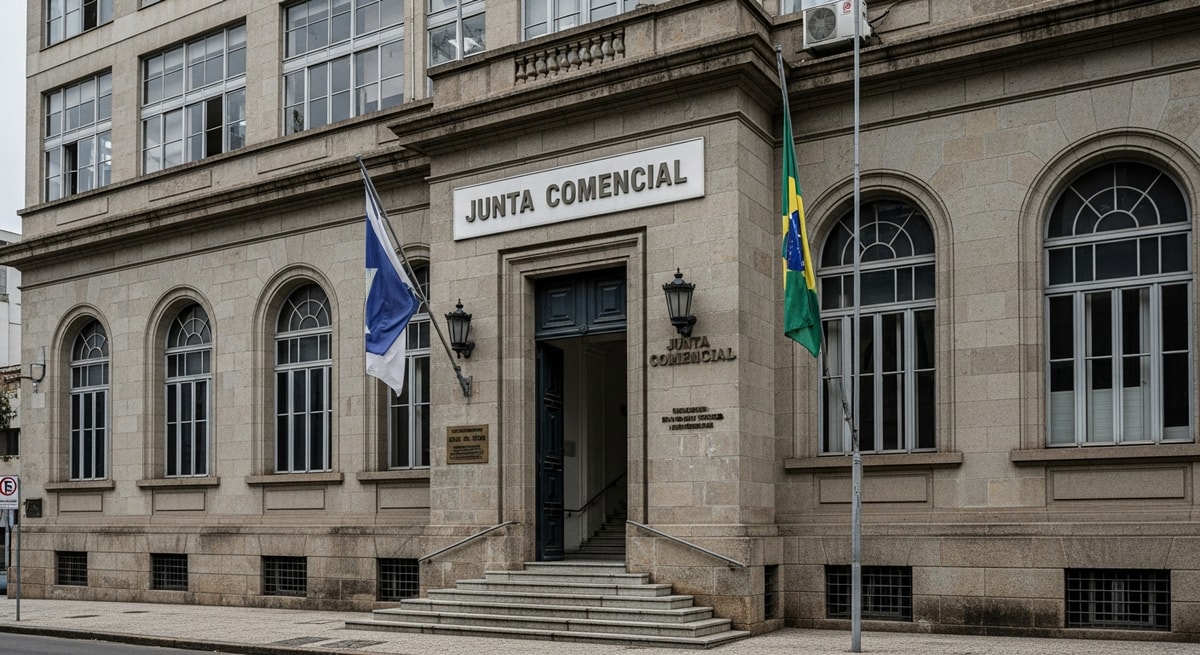
State Juntas Comerciais administer the concurso público and maintain the official register of tradutores juramentados
Brazil's e-Apostille Revolution: The SEI-Apostila System
When Brazil acceded to the Hague Apostille Convention on 2 December 2015 (entry into force 14 August 2016), it implemented one of the most technologically advanced apostille systems in the world. The Conselho Nacional de Justiça (CNJ), designated as the competent authority under Article 6, developed the SEI-Apostila (Sistema Eletrônico de Informações e Apostilamento) in partnership with the Colégio Notarial do Brasil (CNB). The Convention was domestically promulgated by Decreto nº 8.660/2016, with implementation governed by Resolução CNJ nº 228/2016 and Provimento CNJ nº 62/2017.
The SEI-Apostila system enables electronic apostilles (e-Apostilles) for digitally issued documents. Each e-Apostille includes a QR code for instant verification, and apostilles can also be confirmed by entering an alphanumeric code on the verification portal. Over 200 competent authorities across all 28 states (including the Distrito Federal) are authorized to issue apostilles, with cartórios in all 5,560 Brazilian municipalities participating. This extensive network makes Brazil's apostille infrastructure one of the most geographically accessible in any Hague Convention member state.
For paper documents, the process requires presenting the original at an authorized cartório, where the notary verifies authenticity and affixes the apostille. For electronic documents, the apostille is issued in fully digital format through the SEI-Apostila platform. DoVisa coordinates the complete apostille application through authorized cartórios, handling document preparation, submission, and delivery of the apostilled document or e-Apostille certificate for use in any of the 125+ Hague Convention member states.
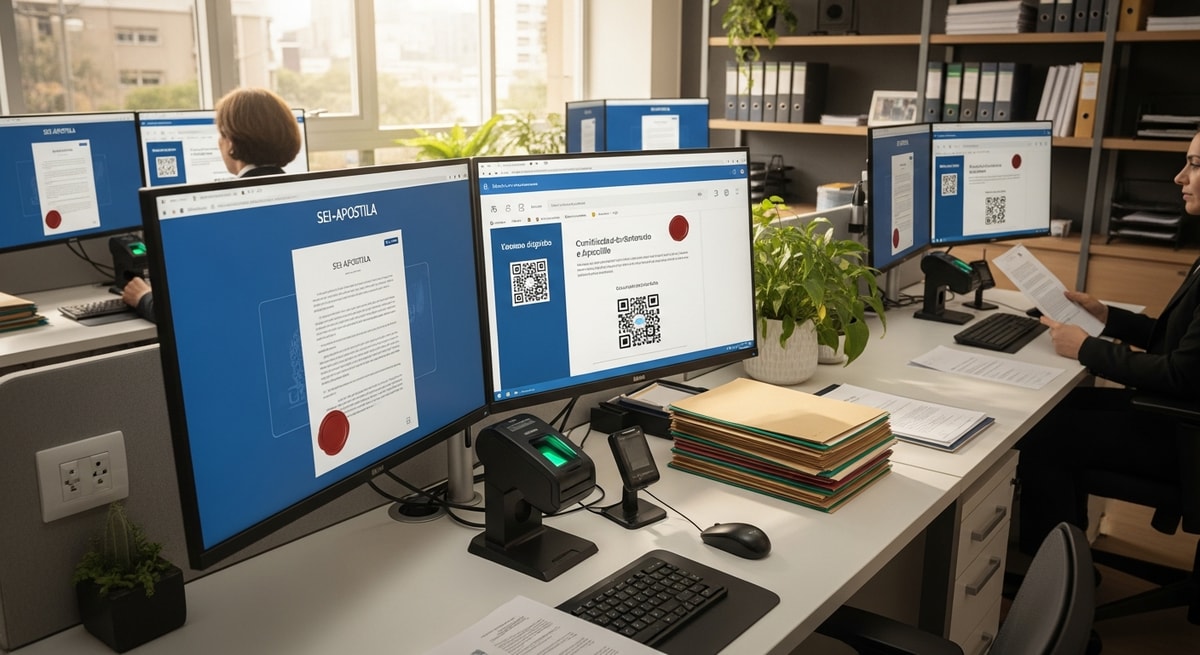
Brazil's SEI-Apostila system enables e-Apostilles with QR code verification through over 200 authorized authorities
Brazilian Civil Registry Documents: The Cartório System
Brazil's civil registry system operates through cartórios de registro civil (civil registry offices) — privately operated but publicly regulated offices that record births, marriages, deaths, and other vital events. There are approximately 7,500 cartórios de registro civil across Brazil, each serving a specific territorial jurisdiction. The system is governed by Lei nº 6.015/1973 (Lei de Registros Públicos — Public Records Law) and supervised by the judiciary through the Corregedorias Gerais de Justiça in each state.
The most commonly translated Brazilian civil documents include the certidão de nascimento (birth certificate), the certidão de casamento (marriage certificate), the certidão de óbito (death certificate), and the certidão de inteiro teor — the full, unabridged certificate that contains all annotations, corrections, and marginal notes (averbações). The certidão de inteiro teor is particularly important for immigration applications because it records subsequent events such as name changes, marriage annotations, divorces, and legal recognitions of paternity, making it a comprehensive life record similar to France's copie intégrale.
Brazilian civil documents contain formatting elements that translators must handle carefully: the matrícula (registration number), the livro and folha (book and page references), averbações (marginal annotations recording subsequent events), and official stamps (carimbos) and embossed seals (selos) from the cartório. Many older certificates feature handwritten text in a distinctive Brazilian notarial hand. DoVisa translators maintain specialized expertise in Brazilian registro civil terminology and the formatting conventions expected by USCIS, the UK Home Office, IRCC, and Australian immigration, ensuring your translated documents meet the receiving authority's standards.
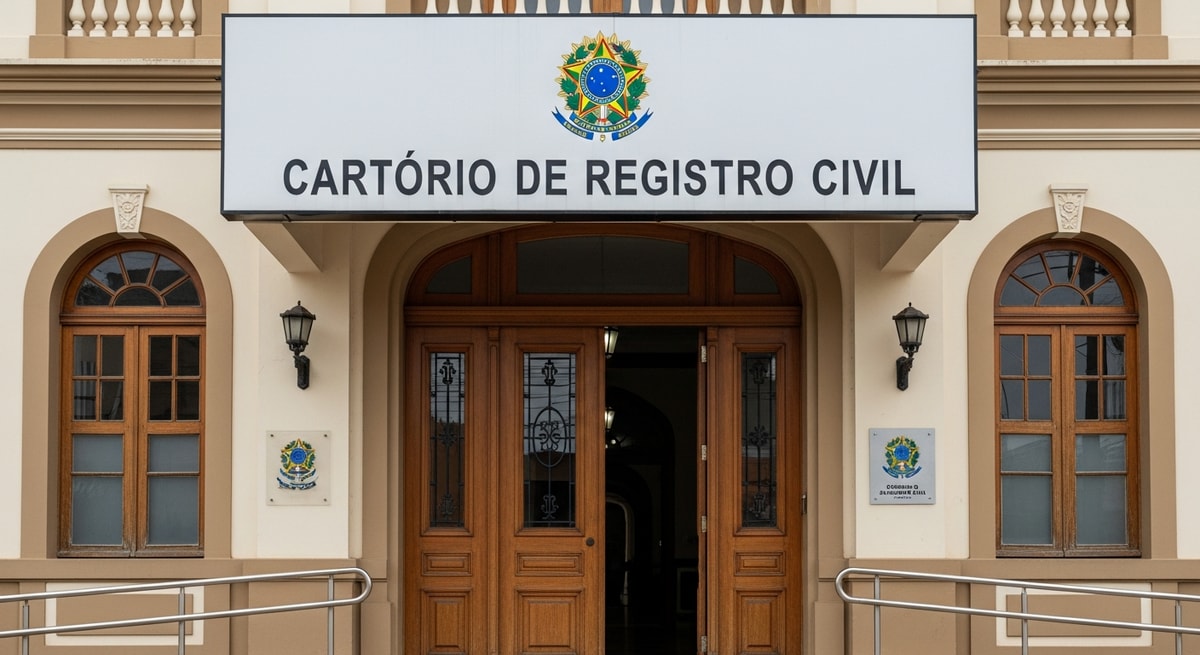
Brazilian cartórios de registro civil issue the certidões de nascimento, casamento, and óbito most commonly translated for international use
"Needed my certidão de nascimento and certidão de casamento translated for a US green card application. DoVisa delivered both translations in 3 days. USCIS accepted everything without a single RFE. The translator handled all the averbações and matrícula details perfectly."
"Brazilian diploma and histórico escolar translated to English for WES credential evaluation. The translator understood the Brazilian university system and rendered the grading terminology correctly. WES processed my evaluation without any follow-up questions."
"Birth certificate and marriage certificate translated for my UK spouse visa application. The Home Office accepted both translations. Only giving 4 stars because standard delivery took the full 5 days, but the translation quality was excellent."
"Translated my certidão de divórcio and certidão de nascimento for a Canadian Express Entry application. IRCC accepted both translations on first submission. The legal terminology was precise — my immigration consultant was impressed with the quality."
"Portuguese-to-English translation of my certidão de inteiro teor for an Australian partner visa. The translator captured every averbação and marginal note accurately. The Department of Home Affairs accepted the translation without questions."
"Brazilian atestado de antecedentes criminais translated for a New Zealand work visa. Immigration New Zealand accepted the translation promptly. Good quality overall and fair pricing for the service provided."
"Had my Brazilian nursing diploma and academic transcript translated for a UK NMC registration application. DoVisa's translator understood Brazilian healthcare education terminology. The NMC processed my application without requesting any revisions to the translations."
"Certidão de nascimento translated for USCIS. The initial delivery had a minor error in the cartório name spelling. DoVisa corrected it within a few hours and USCIS accepted the final version. The issue was resolved quickly, but it should have been caught in review."
"Moved from São Paulo to Melbourne and needed five documents translated: birth certificate, marriage certificate, criminal background check, degree, and employment references. All five were accepted by Australian DHA for my skilled visa. Excellent turnaround."
"Brazilian contrato social and procuração translated for a business registration in Japan. The translations were accurate and professionally formatted. The Japanese authorities accepted both documents without any issues. Solid professional service."
"Translated my Brazilian escritura pública and certidão de casamento for a property-related legal matter in Canada. The translator handled complex cartório terminology and notarial language beautifully. My Canadian lawyer confirmed the translations were accurate and clear."
"Brazilian CNH and certidão de nascimento translated for a USCIS family-based petition. The translator included helpful contextual notes explaining Brazilian document formats. USCIS adjudicator accepted the translations without questions. Reliable service."
"Needed my certidão de nascimento and certidão de casamento translated for a US green card application. DoVisa delivered both translations in 3 days. USCIS accepted everything without a single RFE. The translator handled all the averbações and matrícula details perfectly."
"Brazilian diploma and histórico escolar translated to English for WES credential evaluation. The translator understood the Brazilian university system and rendered the grading terminology correctly. WES processed my evaluation without any follow-up questions."
"Birth certificate and marriage certificate translated for my UK spouse visa application. The Home Office accepted both translations. Only giving 4 stars because standard delivery took the full 5 days, but the translation quality was excellent."
Brazilian Document Translation FAQs
Are DoVisa translations the same as a Brazilian tradução juramentada?
No. DoVisa provides certified translations for international use. Brazilian traduções juramentadas (sworn translations) are produced exclusively by tradutores públicos e intérpretes comerciais (public translators and commercial interpreters) who have passed a concurso público administered by the state Junta Comercial and are registered under Lei nº 14.195/2021, Chapter VII. These sworn translations are required by Brazilian domestic authorities including cartórios, courts, and the Polícia Federal. DoVisa's certified translations are designed for a different purpose: they are accepted by immigration authorities in the US (USCIS), UK (Home Office), Canada (IRCC), Australia (DHA), and other countries that do not require the Brazilian sworn translator system. If you need a tradução juramentada for a Brazilian authority, you must use a registered tradutor público.
What is a tradutor juramentado and how are they appointed?
A tradutor juramentado (or more precisely, tradutor público e intérprete comercial) is a translator officially appointed through a concurso público (competitive public examination) and registered with the Junta Comercial of their state. The profession is governed by Lei nº 14.195/2021, Chapter VII (Articles 18-27), which replaced the earlier Decreto nº 13.609/1943. The concurso includes written translation tests in both directions and an oral interpretation component. Under the 2021 reform, candidates with C2-level proficiency certification (CEFR) may qualify for an exemption from the examination. Their translations carry a legal presumption of faithfulness and accuracy (fé pública) and are the only translations accepted by Brazilian courts and government agencies, as mandated by Article 192 of the Código de Processo Civil.
What types of Brazilian documents can be translated?
We translate all types of Brazilian documents including certidão de nascimento (birth certificate), certidão de casamento (marriage certificate), certidão de óbito (death certificate), certidão de divórcio (divorce certificate), certidão de inteiro teor (full unabridged certificate), diploma (academic degree), histórico escolar (academic transcript), atestado de antecedentes criminais (criminal background certificate), Carteira Nacional de Habilitação (CNH) (driver's license), procuração (power of attorney), escritura pública (notarial deed), contrato social (articles of association), and all other official documents issued by Brazilian cartórios, courts, and government agencies.
How long does certified Brazilian translation take?
Standard certified translation is delivered within 4-6 business days. Express processing is available in 2-3 business days for documents up to 5 pages. Rush delivery within 24 hours is available for select single-page vital records such as birth, marriage, and death certificates with orders placed before 10:00 CET. Turnaround times begin once we receive clear, legible scans of your documents. Older Brazilian documents with handwritten text or faded cartório stamps may require additional time for careful translation.
What languages do you translate Brazilian documents to and from?
We translate Brazilian Portuguese documents to and from 100+ languages. The most requested language pairs for Brazilian documents include Portuguese to English, Spanish, French, German, Italian, Japanese, Chinese, Korean, Arabic, Dutch, and Russian. We also handle translations between Portuguese and less common language pairs. All translations include full certification regardless of the language combination.
Will my Brazilian translation be accepted by USCIS and the UK Home Office?
Yes. USCIS requires certified translations with a translator's certificate of accuracy — DoVisa's certified translations meet this standard for all immigration application types including family-based petitions, adjustment of status, and naturalization. The UK Home Office (UKVI) requires professional translations with the translator's credentials, a signed statement of accuracy, contact details, and date — our translations include all required elements. Neither USCIS nor UKVI requires a Brazilian tradução juramentada. Our certified Brazilian translations are also accepted by Canada IRCC, Australian DHA, and New Zealand Immigration. Our current acceptance rate is 98.7%.
Do I need notarization with my Brazilian translation?
For most international immigration applications (USCIS, UK Home Office, IRCC, Australian DHA), a certified translation is sufficient — notarization is not required. However, some receiving authorities, courts, or private institutions may request notarization or apostille as an additional authentication layer. If your destination authority requires an apostille, DoVisa can coordinate apostille certification through Brazil's authorized cartórios under the Conselho Nacional de Justiça (CNJ). We recommend checking the specific requirements of the authority receiving your translated documents.
Is Brazil a member of the Hague Apostille Convention?
Yes. Brazil acceded to the Hague Apostille Convention on 2 December 2015, with entry into force on 14 August 2016. The Convention was promulgated domestically by Decreto nº 8.660/2016. The Conselho Nacional de Justiça (CNJ) serves as the competent authority, and apostilles are issued by authorized cartórios across all 5,560 Brazilian municipalities. Brazil also offers e-Apostilles through the SEI-Apostila system with QR code verification. DoVisa coordinates apostille processing through authorized cartórios for Brazilian documents intended for use in any of the 125+ Convention member states.
How much does certified Brazilian translation cost?
DoVisa's Brazilian translation pricing follows a transparent per-page structure with volume discounts that apply automatically for larger projects. Pricing varies based on document length, language pair, and processing speed. Express and rush service options are available for time-sensitive projects. Apostille processing through authorized cartórios is quoted separately. Upload your documents on our order page to receive an instant, detailed quote — no hidden fees.
Can you translate handwritten Brazilian documents?
Yes. Many Brazilian documents — especially older certidões issued by cartórios before widespread computerization — contain handwritten text in a distinctive notarial hand. Our translators are experienced with Brazilian handwritten documents and the specific formatting used by cartórios de registro civil. For best results, upload a high-resolution scan (at least 300 DPI) that clearly shows all handwritten text, stamps, and seals. If any portion of the document is illegible, our intake team will notify you so we can work together to ensure a complete and accurate translation.
What format will I receive the Brazilian translation in?
You receive your certified translation in two formats: a high-resolution PDF delivered via email for immediate use with digital applications and uploads, and a physical signed hard copy shipped via tracked international courier. The PDF includes the complete certified translation with the translator's certification statement, signature, and credentials. The physical copy is suitable for in-person submissions. Both formats are accepted by USCIS, the UK Home Office, IRCC, and Australian DHA.
What is a certidão de inteiro teor and why is it important?
A certidão de inteiro teor is the full, unabridged version of a Brazilian civil registry certificate. Unlike the standard short-form certificate, the inteiro teor includes all original registration details plus every subsequent annotation (averbação) — such as marriages, divorces, name changes, and legal recognitions of paternity. Immigration authorities often prefer the certidão de inteiro teor because it provides a comprehensive record of all events linked to that registration. DoVisa translates all averbações and marginal notes, preserving the complete legal record as required by USCIS, the UK Home Office, and other international authorities.
Get Your Brazilian Documents Translated Today
Professional translations of Brazilian documents accepted by USCIS, UK Home Office, Canada IRCC, and Australian immigration