Certified English Document Translation for the United States
USCIS-accepted certified translations for immigration, legal proceedings, academic admissions, and business filings across all 50 states. ATA-member translators with notarization and apostille services.
TrustpilotSelect Languages
Drag & drop your documents here
or
PDF, JPEG, PNG, WebP — Max 10MB per file. Word documents: please save as PDF first.
Certified translators · Accepted by governments, courts & universities worldwide · View sample
Select a destination country to view pricing
How US Certified Translation Works
Upload Your Source Documents
Scan or photograph each page of your documents and upload them through our 256-bit encrypted portal. We process documents in over 80 languages for translation into English and from English into foreign languages. Our system automatically identifies the source language and flags any pages that may need a clearer scan for optimal translation accuracy.
Professional Translator Matching
Your documents are assigned to a translator who is a native speaker of the target language and holds relevant professional credentials. For USCIS immigration translations, we exclusively use translators who meet the certification requirements specified in 8 CFR 103.2(b)(3). Each translator is matched based on language pair, document type, and subject matter expertise.
Translation, Certification & Review
Your translator produces a complete and faithful English translation, then signs the USCIS-compliant Certificate of Translation Accuracy attesting to their competency and the translation's correctness. An independent reviewer verifies every detail against the original. For notarized translations, the translator's signature is witnessed and notarized by a commissioned notary public.
Secure Digital & Physical Delivery
Receive your completed certified translation as a digitally delivered PDF within the agreed timeframe. For USCIS filings and court submissions, physical copies with original wet-ink signatures and notary stamps are shipped via USPS Priority Mail or FedEx to any US address. International shipping is available for customers filing at US embassies abroad.
US Translation Service Specifications
Popular Language Pairs
We support all languages — 100+ language pairs available for US immigration documents.
Common Documents
- Foreign birth certificates for USCIS filing
- Marriage certificates for visa petitions
- Divorce decrees and custody orders
- Academic transcripts and diplomas
- Police clearance certificates
- Adoption documents
- Medical records and vaccination records
- Foreign driver's licenses
- Business incorporation documents
- Financial statements and tax returns
- Military service records
- Death certificates for estate proceedings
Turnaround Time
Certification Details
US Translation Requirements & Legal Standards
Embassy Acceptance
Notarization Process
Apostille Information
Legal Framework
When You Need Certified Translation for the United States
USCIS Immigration Petitions & Applications
Every foreign-language document filed with USCIS must be accompanied by a certified English translation per 8 CFR 103.2(b)(3). This applies to Form I-130 family petitions, I-485 adjustment of status, I-751 conditions removal, N-400 naturalization, and all other USCIS filings. Our translations include the compliant translator affidavit that USCIS officers expect, reducing Requests for Evidence (RFEs) related to translation deficiencies.
US Visa Applications at Embassies Abroad
Applicants for US immigrant and nonimmigrant visas at American embassies and consulates must present English translations of supporting documents in foreign languages. This includes K-1 fiance visa petitions, IR-1/CR-1 spousal visas, diversity visa lottery documents, and employment-based visa categories. Our translations meet the specific formatting standards that consular officers at US embassies review during visa interviews.
Court Proceedings & Legal Filings
Federal and state courts require certified translations of foreign-language evidence, depositions, contracts, and other legal documents. For family law cases including international divorce recognition, child custody disputes under the Hague Convention, and adoption finalizations, certified and often notarized translations are mandatory. Our legal translators produce court-ready translations that meet the Federal Rules of Evidence and state-specific evidentiary requirements.
Academic Admissions & Credential Evaluation
US universities and credential evaluation services require certified English translations of foreign academic transcripts, diplomas, syllabi, and recommendation letters. Organizations such as WES (World Education Services), ECE (Educational Credential Evaluators), and NACES member agencies all accept DoVisa certified translations. Our academic translators understand GPA conversion contexts and use terminology that facilitates the evaluation process.
Social Security & Federal Benefits
The Social Security Administration requires certified translations of foreign birth certificates, marriage certificates, and adoption decrees when processing applications for Social Security numbers, survivor benefits, and disability claims. Similarly, the Department of Veterans Affairs may require translations of foreign military service records. Our translations meet the documentary evidence standards these federal agencies apply.
State DMV & Professional Licensing
Many state departments of motor vehicles require certified translations of foreign driver's licenses for identity verification during the licensing process. State professional licensing boards for medical, legal, engineering, and accounting professions require translated diplomas, training certificates, and professional registration documents from foreign jurisdictions. Our translations are formatted to meet the specific requirements of individual state agencies.
USCIS Translation Requirements Explained
The United States Citizenship and Immigration Services (USCIS) processes millions of immigration applications annually, many of which include foreign-language documents that require certified English translations. The governing regulation, 8 CFR 103.2(b)(3), states that any document in a foreign language must be accompanied by a full English translation that the translator has certified as complete and accurate, along with the translator's certification that they are competent to translate from the foreign language into English.
Unlike some countries that require government-licensed or court-appointed translators, USCIS does not mandate specific translator credentials beyond self-certification of competency. However, this does not mean any bilingual person can produce an acceptable translation. USCIS adjudicators routinely issue Requests for Evidence (RFEs) when translations are poorly formatted, incomplete, or lack a proper certification statement. The Certificate of Translation Accuracy must include the translator's printed name, signature, address, date of certification, the languages involved, and a statement affirming both the translator's competence and the translation's accuracy. Missing any of these elements can delay case processing by months.
DoVisa's USCIS translation format has been refined through thousands of successful immigration filings. Our translators follow a standardized certification template that includes every element USCIS expects, formatted consistently with the agency's published guidance. We also include a cover sheet identifying each document's type, original language, and page count, making it easy for USCIS case officers to match translations to their source documents in your filing package. This attention to administrative detail significantly reduces the risk of RFEs and keeps your immigration timeline on track.
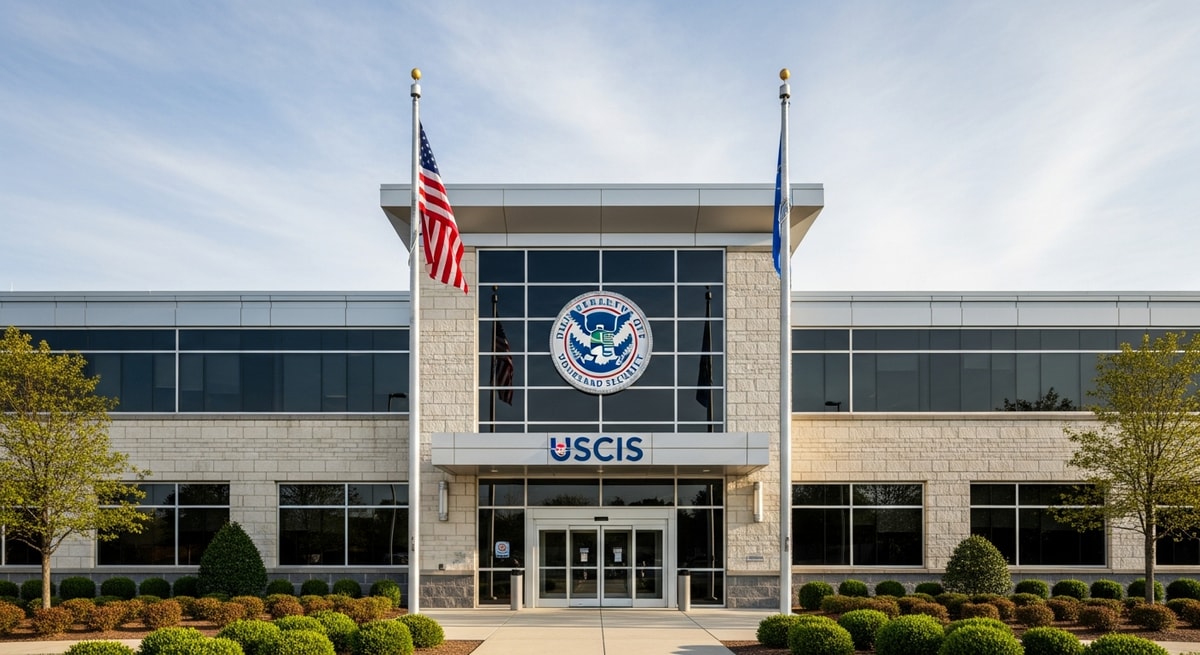
USCIS service centers nationwide accept DoVisa certified translations for all immigration filings
Notarization and Apostille for US Translations
The US notarization system adds a layer of authentication to certified translations by having a state-commissioned notary public witness the translator's signature and affix their official seal. Unlike some European systems where the notary verifies document content, a US notary public solely verifies the signer's identity and that the signature was made willingly in the notary's presence. The notary's seal includes their name, commission number, state of commission, and commission expiration date.
Notarization requirements vary significantly by context. USCIS explicitly states that notarization is not required for translations submitted with immigration applications. However, many US state courts require notarized translations for evidentiary admission. Foreign governments and institutions requesting US-originated certified translations frequently require notarization as a prerequisite for apostille issuance. Additionally, some credential evaluation agencies and state licensing boards prefer or require notarized translations as an added verification measure.
For apostille certification, the notarized translation is submitted to the Secretary of State's office in the state where the notary is commissioned. Each state has its own processing procedures and timelines. States like New York, California, and Texas — which handle the highest volumes of international document requests — have dedicated authentication divisions. Some states offer expedited same-day apostille services for an additional fee. DoVisa coordinates the complete notarization-apostille chain, ensuring the notary and state office are properly matched and that the resulting apostille meets the requirements of the destination country's authorities.
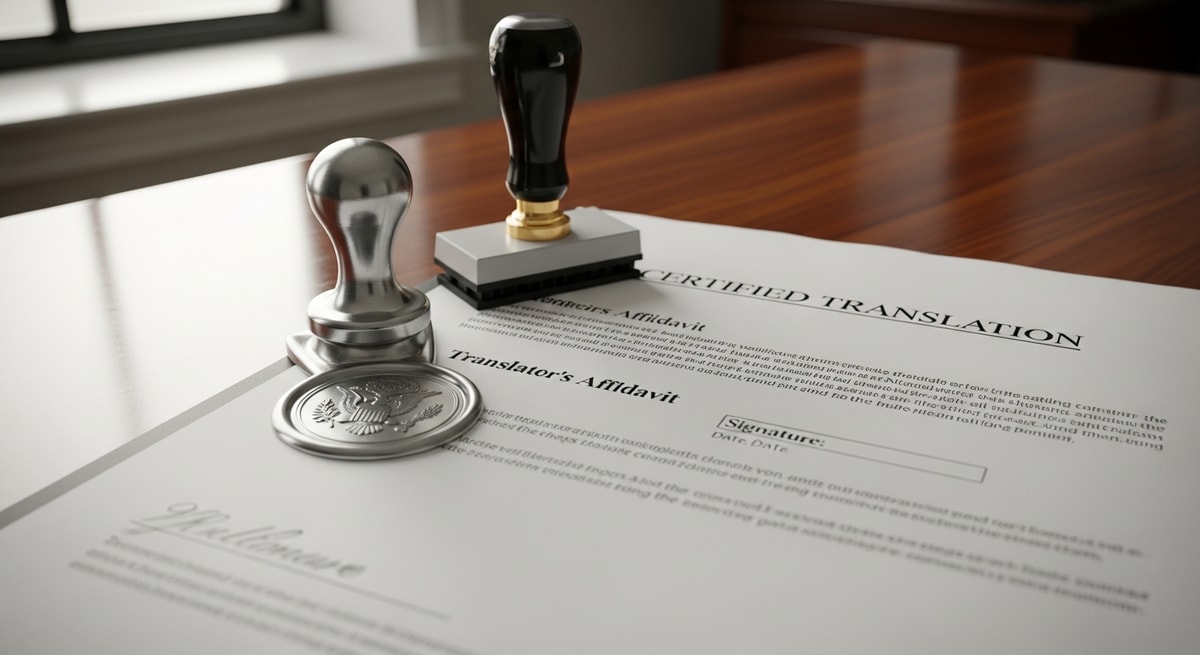
US notary seals authenticate translator signatures for court filings and apostille issuance
Multilingual America: Translation Needs Across Communities
The United States is home to over 67 million people who speak a language other than English at home, according to US Census Bureau data. Spanish is by far the most common non-English language, spoken by over 41 million people, followed by Chinese (3.5 million), Tagalog (1.8 million), Vietnamese (1.5 million), Arabic (1.3 million), French (1.2 million), and Korean (1.1 million). This linguistic diversity creates enormous demand for certified document translation across virtually every language pair imaginable.
The geographic distribution of language communities shapes translation demand patterns across the country. Spanish-to-English translation dominates in California, Texas, Florida, New York, and Illinois. Chinese-to-English requests concentrate in California, New York, and the Pacific Northwest. Vietnamese-to-English is heavily requested in California, Texas, and Washington state. Arabic-to-English demand centers in Michigan (home to the largest Arab-American community), California, and New York. Korean-to-English requests are concentrated in California, New York, New Jersey, and Virginia.
DoVisa serves all US language communities with certified translations in over 80 language pairs. Our translator network includes native speakers of every major US immigrant language, each with expertise in the document types most commonly needed by their language community. Whether you need a Mexican birth certificate (acta de nacimiento) translated for a USCIS filing in Houston, a Chinese academic transcript for a university application in Boston, or a Somali marriage certificate for a state court case in Minneapolis, our translators deliver accurate, certified translations that meet the specific requirements of the receiving US institution.
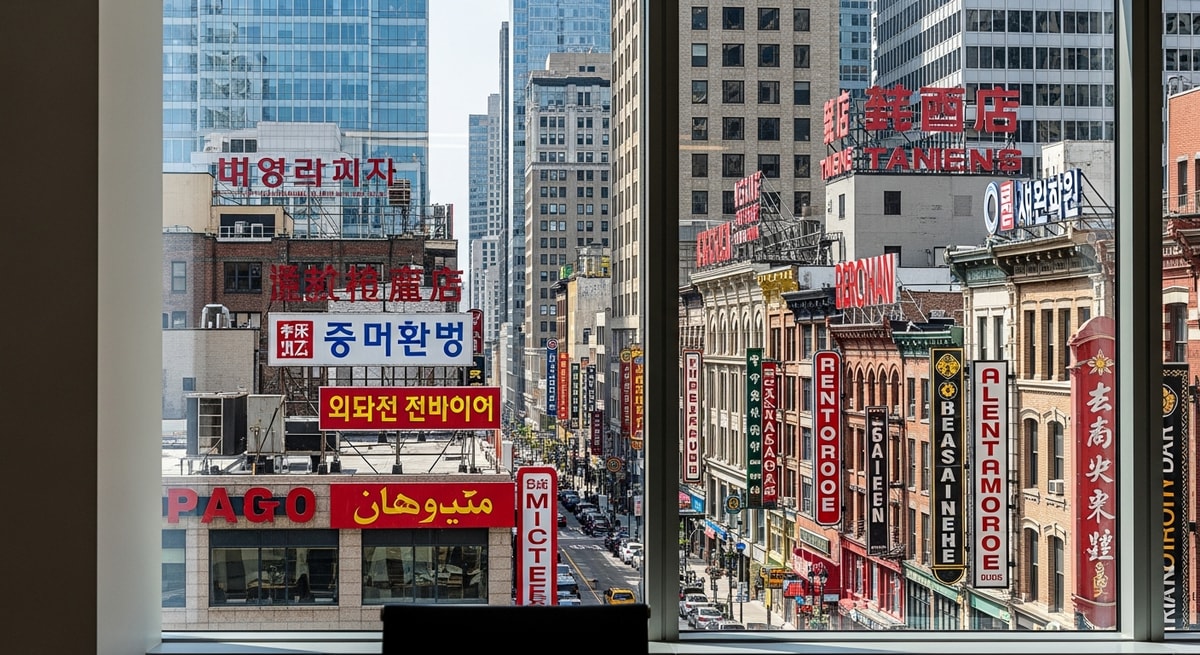
Over 67 million US residents speak a language other than English, driving certified translation demand nationwide
"Filed my I-485 adjustment of status with DoVisa translations of my Mexican birth certificate, marriage certificate, and police clearance. USCIS approved my case without a single RFE related to translations. The USCIS-formatted certification made everything seamless."
"Had my Chinese university transcript and diploma translated for my WES credential evaluation. The evaluation was completed in record time because the translations were perfectly formatted. Now applying for my Professional Engineer license in California. Thank you DoVisa!"
"Arabic birth certificate and marriage certificate translations for our family petition. Both were excellent quality. The only minor issue was that shipping took an extra day to reach us in Michigan. But the translations themselves were flawless and USCIS accepted them."
"Urgently needed my Russian military service records and university diploma translated for my N-400 naturalization interview scheduled for the following week. DoVisa delivered the express translations in 22 hours. My oath ceremony is next month! Could not have done it without them."
"Translated a complete adoption file from Guatemala for our international adoption case. Over 30 pages of court documents, social worker reports, and medical records. Every page was accurately translated and the volume discount saved us significantly. Our adoption attorney was impressed."
"Vietnamese birth certificate and police clearance translated for immigration. Good quality overall. I requested one small correction to the romanization of my father's name and they fixed it the same day. The certified format met all USCIS requirements."
"My law firm uses DoVisa regularly for certified translations in international litigation cases. They consistently deliver accurate, court-admissible translations with proper notarization. Their turnaround times have never let us down, even on tight court deadlines."
"Korean family register (hojuk) translation for my K-1 fiance visa application. The translator clearly understood Korean family documentation and the certified format was exactly what the US Embassy in Seoul needed for our interview. We were approved!"
"Brazilian academic transcripts translated for graduate school application. The translation was accurate but took 5 days instead of the quoted 3-4 days. Cutting it close to my application deadline was stressful. I wish they had communicated the delay earlier. The actual quality was good though."
"Translated my Jordanian engineering degree and professional certifications for my PE license application in Texas. The Texas Board of Professional Engineers accepted the translations without issue. DoVisa also helped with the apostille for my documents going back to Jordan."
"Needed notarized and apostilled translations of our Romanian birth certificates and marriage certificate for a court case in Florida. DoVisa handled translation, notarization, and the Florida Secretary of State apostille all in one package. Everything arrived within 10 days. Outstanding service."
"Hindi academic transcripts from three different universities translated for my H-1B visa supporting documents. All three translations were consistent in terminology and format despite being lengthy. Solid work that helped my immigration attorney build a strong case."
"Filed my I-485 adjustment of status with DoVisa translations of my Mexican birth certificate, marriage certificate, and police clearance. USCIS approved my case without a single RFE related to translations. The USCIS-formatted certification made everything seamless."
"Had my Chinese university transcript and diploma translated for my WES credential evaluation. The evaluation was completed in record time because the translations were perfectly formatted. Now applying for my Professional Engineer license in California. Thank you DoVisa!"
"Arabic birth certificate and marriage certificate translations for our family petition. Both were excellent quality. The only minor issue was that shipping took an extra day to reach us in Michigan. But the translations themselves were flawless and USCIS accepted them."
US Certified Translation FAQs
What is a USCIS-certified translation?
A USCIS-certified translation is an English translation of a foreign-language document that complies with the requirements of 8 CFR 103.2(b)(3), the federal regulation governing document submissions to United States Citizenship and Immigration Services. The regulation requires that any document in a foreign language be accompanied by a full English translation along with a signed certification from the translator. This Certificate of Translation Accuracy (also called a translator's affidavit) must state that the translator is competent to translate from the source language into English and that the translation is complete and accurate. It must include the translator's printed name, signature, address, and the date. USCIS does not require the translator to hold any specific credential or certification, but the quality and formatting of the translation and certification are scrutinized by adjudicating officers.
Does USCIS require notarized translations?
No, USCIS does not require notarized translations. The USCIS Policy Manual and 8 CFR 103.2(b)(3) specifically state that a certified translation with a proper translator affidavit is sufficient. Notarization is not required and does not add legal weight to the translation in the USCIS context. However, some immigration attorneys recommend notarized translations as an extra layer of authentication, and some applicants prefer the added formality. DoVisa provides both certified-only and notarized certified translations. For other US contexts such as state court filings, family law proceedings, professional licensing, and state agency submissions, notarization may be required. We recommend checking with the specific receiving institution or your attorney to determine whether notarization is needed for your particular use case.
How much does certified translation cost for US immigration?
DoVisa's US certified translation pricing uses a per-page structure with volume discounts for larger orders. Pricing varies based on language pair, document length, and processing speed. Express and rush service options are available for urgent deadlines. Notarization and apostille processing are additional services quoted separately — apostille fees vary by state. USPS Priority Mail shipping within the US is included at no extra charge. Upload your documents on our order page to receive an instant, detailed quote before translation begins — no hidden fees or surprise charges.
What is the difference between certified and notarized translation in the US?
A certified translation includes the translator's signed Certificate of Translation Accuracy (affidavit) attesting to the completeness and accuracy of the translation and the translator's competence in both languages. This is the standard required by USCIS and most federal agencies. A notarized translation is a certified translation where the translator's signature on the affidavit has been additionally witnessed and sealed by a state-commissioned notary public. The notary verifies the translator's identity and that the signature was made voluntarily, but the notary does not verify or attest to the translation's accuracy. Notarized translations are required by many state courts, some state agencies, and as a prerequisite for apostille issuance. When in doubt, obtaining a notarized translation covers both certified-only and notarized requirements.
Can I translate my own documents for USCIS?
Technically, USCIS does not prohibit self-translation, but it strongly discourages it and many immigration attorneys advise against it. The regulation requires the translator to certify that they are competent to translate and that the translation is accurate. If you translate your own documents, USCIS adjudicators may question the objectivity and accuracy of the translation, potentially resulting in a Request for Evidence (RFE) asking for a professional translation. Self-translations also lack the professional formatting, standardized certification language, and quality review that USCIS officers are accustomed to seeing. For these reasons, DoVisa strongly recommends using a professional translation service for any USCIS filing. The cost of a professional translation is minimal compared to the delay and complications an RFE can cause to your immigration case timeline.
What languages does DoVisa translate into English for US use?
DoVisa translates documents from over 80 languages into English for US immigration, legal, academic, and business purposes. Our most-requested language pairs include Spanish, Chinese (Simplified and Traditional), Arabic, Korean, Vietnamese, Portuguese, Russian, Hindi, French, Tagalog, Farsi/Persian, Japanese, German, Polish, Ukrainian, Turkish, Urdu, Bengali, Haitian Creole, and Amharic. We also cover less commonly requested languages including Burmese, Khmer, Lao, Thai, Swahili, Somali, Tigrinya, Pashto, Dari, and many others. If your language is not listed, contact us for availability. We can source qualified translators for virtually any world language with adequate lead time.
How long does US certified translation take?
Standard delivery is 2-4 business days for most document types. Single-page vital records (birth, marriage, death certificates) typically complete in 2 business days. Multi-page documents and complex legal filings may require 3-4 business days. Express 24-hour service is available for documents up to 3 pages. Same-day rush service is available for single-page documents when ordered before 9:00 AM EST — ideal for clients facing imminent USCIS interview dates or court deadlines. Large projects (20+ pages) receive custom timelines. If you also require notarization, add 1 business day. Apostille processing time varies by state: some offer same-day service (New York, Virginia), while others take 1-3 weeks (California, Texas). We factor all steps into your delivery estimate so you know exactly when to expect your completed documents.
Will my translation be accepted by USCIS if the case is transferred?
Yes. USCIS certified translation standards under 8 CFR 103.2(b)(3) are federal regulations that apply uniformly across all USCIS field offices, service centers, and asylum offices nationwide. Whether your case is filed at the Nebraska Service Center, transferred to the Texas Service Center, or adjudicated at a local field office, the same translation requirements apply. Our translations are formatted to meet the federal standard, not any office-specific variation. If your case involves a National Visa Center (NVC) processing step for consular cases, or if you file at a USCIS international field office, the same certified translation format is accepted. DoVisa translations have been successfully used in cases processed at every USCIS service center and dozens of field offices across the country.
Can DoVisa translate documents from English into other languages?
Yes, DoVisa provides English-to-foreign-language translations for US-originated documents being sent abroad. Common scenarios include translating US birth certificates, marriage certificates, divorce decrees, court orders, academic transcripts, and corporate documents for use in foreign countries. These translations are certified by a translator competent in the target language and can be notarized and apostilled for international recognition. For example, a US birth certificate translated into Spanish for use in Mexico, or a US court order translated into Chinese for enforcement in China, would be certified, notarized by a US notary, and apostilled by the appropriate Secretary of State for Hague Convention compliance.
What happens if USCIS rejects my translation?
If USCIS issues a Request for Evidence (RFE) related to your translation, DoVisa provides a free revision and reissuance to address the specific concerns raised. RFEs related to translations are uncommon when using our USCIS-formatted certification, but they can occur if the adjudicator requests additional information such as the translator's qualifications or a clarification on a specific term. We respond to RFE-related revision requests within 24 hours. If USCIS rejects the translation outright due to an error attributable to DoVisa, we provide a full refund of the translation fee. Our current USCIS acceptance rate is 99.2% across all filings. Please note that our guarantee covers translation quality and certification formatting. Denials based on the underlying immigration case merits or the content of the original document are outside our guarantee scope.
Do I need an apostille on my US certified translation?
An apostille is only needed if your US certified translation will be used in a foreign country that is a member of the Hague Apostille Convention. If the translation is for use within the United States (USCIS, US courts, US universities, state agencies), no apostille is needed. For international use, the apostille authenticates the notary's seal on the notarized translation, creating a chain of authentication recognized by all Convention member countries. The apostille is issued by the Secretary of State in the state where the notary is commissioned. DoVisa handles the complete apostille chain: we arrange notarization in the appropriate state, submit the apostille application, and ship the apostilled document to you or directly to the foreign authority.
Can I use DoVisa translations for US court proceedings?
Yes, DoVisa certified translations are regularly used in US federal and state courts. For federal court proceedings, translations must meet the requirements of the Federal Rules of Evidence, particularly Rules 604 (interpreters) and 901 (authentication). Our certified and notarized translations satisfy these evidentiary standards. For state courts, requirements vary by jurisdiction but generally require certified translations with a translator's attestation. Many states additionally require notarization. Our legal translation team is experienced with court filing requirements across all 50 states and can format translations to meet specific court clerk expectations. We also provide expert translator declarations and can arrange for our translators to provide testimony regarding their qualifications and methodology if challenged during proceedings.
What format should my documents be in for upload?
We accept documents in PDF, JPEG, PNG, and TIFF formats. For best results, scan your documents at 300 DPI or higher to ensure all text, stamps, and seals are clearly legible. If using a smartphone camera, photograph the document in good lighting on a flat, contrasting surface, ensuring all four corners are visible and text is in focus. For multi-page documents, please upload all pages in a single PDF file or as sequentially numbered image files. Both sides of double-sided documents (such as ID cards) should be captured. If any upload is unclear, our intake team will contact you within 2 hours to request a rescan before translation begins. Clear source documents are essential for producing an accurate certified translation, so taking an extra moment to ensure scan quality saves time in the overall process.
Does DoVisa offer translation packages for common US immigration forms?
Yes, DoVisa offers bundled translation packages for the most common US immigration scenarios at discounted rates. Our I-130 Family Petition Package covers birth certificate, marriage certificate, and divorce decree translations. The I-485 Adjustment Package adds police clearance certificates and adoption documents as needed. The N-400 Naturalization Package includes all standard naturalization supporting documents. The K-1 Fiance Visa Package covers birth certificate, police clearance, divorce documentation, and proof of relationship documents. Each package applies automatic volume pricing and includes USPS Priority Mail shipping. Custom packages can be created for complex cases involving multiple beneficiaries or extensive documentary evidence. Contact us with your specific form number and we will provide a comprehensive quote covering all documents that typically need translation for that filing type.
Get Your USCIS-Accepted Certified Translation
Professional certified translations accepted by USCIS, US courts, universities, and government agencies in all 50 states