
Certified Canadian Document Translation
Professional certified translations accepted by IRCC, provincial agencies, and international authorities. CTTIC-standard translators for English, French, and 100+ language pairs with apostille services.
TrustpilotSelect Languages
Drag & drop your documents here
or
PDF, JPEG, PNG, WebP — Max 10MB per file. Word documents: please save as PDF first.
Certified translators · Accepted by governments, courts & universities worldwide · View sample
Select a destination country to view pricing
How Canadian Certified Translation Works
Upload Your Documents Securely
Scan or photograph your documents and upload them through our 256-bit encrypted portal. We accept PDF, JPEG, and PNG formats. Whether your documents are in French, English, or any other language, our intake team reviews each upload for legibility and identifies the source language. For Canadian documents such as a certificat de naissance or permis de conduire, we ensure all stamps, seals, and handwritten entries are clearly captured before translation begins.
Professional Translator Assignment
Your documents are matched with a certified translator who holds credentials recognized by the Canadian Translation Industry, including CTTIC (Canadian Translators, Terminologists and Interpreters Council) certification or provincial association membership such as ATIO (Ontario) or OTTIAQ (Quebec). Each translator is selected based on language pair, document type, and subject matter expertise to ensure accuracy that meets IRCC and provincial authority standards.
Translation & Certification
Your translator produces a complete and faithful translation, then signs a certification statement attesting to the accuracy and completeness of the work. For documents destined for IRCC, the translation includes the translator's stamp, seal, and a declaration of competency as required by IRCC guidelines. An independent reviewer verifies every detail against the original document, including proper rendering of names, dates, and official terminology in both English and French contexts.
Delivery with Full Certification
Receive your completed certified translation as a high-resolution PDF delivered digitally within the agreed timeframe. For submissions to IRCC, provincial registrars, or foreign authorities, physical copies with original signatures and translator stamps are shipped via Canada Post Xpresspost or courier to any Canadian or international address. Apostille services through Global Affairs Canada are available for documents intended for use in Hague Convention member countries.
Canada Translation Service Specifications
Popular Language Pairs
We support all languages — 100+ language pairs available for Canadian documents.
Common Documents
- Birth certificates (Certificat de naissance)
- Marriage certificates (Certificat de mariage)
- Death certificates (Certificat de décès)
- Driver's licences (Permis de conduire)
- Criminal record checks (Vérification de casier judiciaire)
- Academic transcripts and diplomas
- Immigration and citizenship documents
- Corporate registration documents
- Divorce decrees and custody orders
- Medical records and vaccination certificates
- Employment references and contracts
- Financial statements and tax assessments
Turnaround Time
Certification Details
Canada Translation Requirements & Regulatory Framework
Embassy Acceptance
Notarization Process
Apostille Information
Legal Framework
Common Scenarios for Canadian Document Translation
IRCC Immigration & Citizenship Applications
All foreign-language documents submitted to Immigration, Refugees and Citizenship Canada (IRCC) must be translated into English or French. This includes permanent residence applications, work permit filings, study permit applications, Express Entry documentation, family sponsorship petitions, and citizenship applications. Our certified translations meet IRCC's requirements for translator certification and are formatted to integrate seamlessly with your immigration file.
Provincial Vital Statistics & Registration
Provincial vital statistics offices across Canada require certified translations of foreign-language birth certificates, marriage certificates, and death certificates for registration and issuance of Canadian equivalents. Whether you are registering a foreign birth in Ontario, filing a marriage certificate in British Columbia, or updating records in Quebec's Directeur de l'état civil, our translations meet provincial documentary standards.
Academic Admissions & Credential Evaluation
Canadian universities and credential evaluation services such as World Education Services (WES) Canada, International Credential Assessment Service (ICAS), and International Qualifications Assessment Service (IQAS) require certified English or French translations of foreign academic transcripts, diplomas, and professional certificates. Our academic translators use standardized terminology that facilitates accurate credential assessment.
Canadian Documents for International Use
Canadian birth certificates, marriage certificates, court orders, and corporate documents frequently need translation for use in other countries. Since Canada joined the Hague Apostille Convention in January 2024, these translated documents can be apostilled through Global Affairs Canada or provincial authorities for recognition in 120+ member countries, simplifying what was previously a longer legalization process.
Business & Corporate Filings
Companies operating across Canadian provinces or internationally need certified translations of incorporation documents, financial statements, contracts, regulatory filings, and board resolutions. Bilingual businesses operating in Quebec must maintain French-language documentation under the Charter of the French Language, while federal and international filings may require English translations. DoVisa handles both directions and all language pairs for Canadian corporate needs.
Legal Proceedings & Court Filings
Canadian federal and provincial courts require certified translations of foreign-language evidence, affidavits, contracts, and other legal documents. Family law cases involving international divorce recognition, child custody disputes under the Hague Convention, and cross-border litigation all demand accurate, certified translations. Our legal translators produce court-ready translations that satisfy the evidentiary requirements of Canadian courts at all levels.
Canada's Bilingual Translation Landscape
Canada is unique among major immigration destinations as a constitutionally bilingual country with English and French as its two official languages under the Official Languages Act (R.S.C., 1985, c. 31). This bilingual framework has profound implications for translation requirements. Documents in either English or French are accepted by all federal agencies, including Immigration, Refugees and Citizenship Canada (IRCC), without requiring translation. However, any document in a language other than English or French must be accompanied by a certified translation into one of the official languages.
The Canadian Translators, Terminologists and Interpreters Council (CTTIC) serves as the national umbrella organization for the translation profession, administering the certified translator (C. Tran.) designation through rigorous examination. In Quebec, the Ordre des traducteurs, terminologues et interprètes agréés du Québec (OTTIAQ) operates as a professional order with regulatory authority, meaning only OTTIAQ members may use the title traducteur agréé in Quebec. The federal Translation Bureau (Bureau de la traduction), established by the Translation Bureau Act of 1934, provides linguistic services to the Government of Canada and has shaped the country's professional translation standards for nearly a century.
For immigration purposes, IRCC's Help Centre specifies that translations must include the translator's name, signature, and a certification that the translation is accurate. IRCC accepts translations by CTTIC-certified translators bearing their professional stamp, as well as translations by non-certified translators accompanied by a sworn affidavit attesting to their competency and the translation's accuracy. This dual-path system gives applicants flexibility while maintaining quality standards. DoVisa's certified translations satisfy both pathways, providing the translator's credentials, stamp, and certification statement in the format IRCC adjudicators expect.
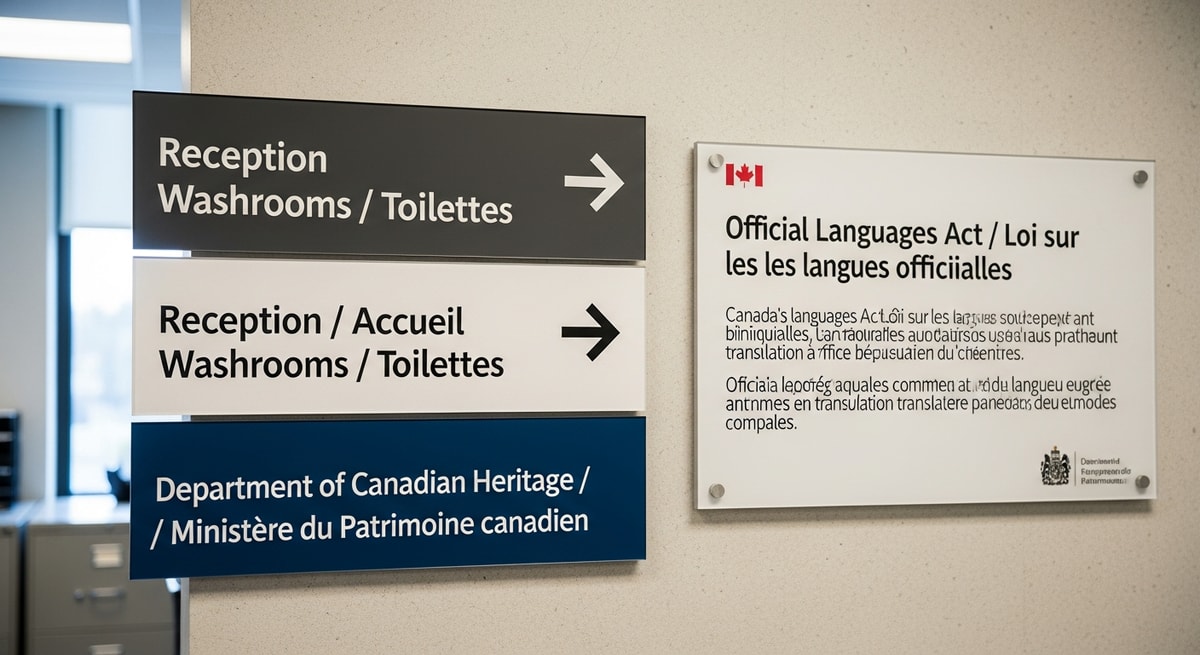
Canada's Official Languages Act ensures equal status for English and French in all federal services
Canada's New Apostille Services Since January 2024
On January 11, 2024, Canada became the 129th Contracting State to the Hague Apostille Convention, marking a significant simplification in the authentication of Canadian documents for international use. Previously, Canadians needed to navigate a multi-step process involving authentication by Global Affairs Canada (GAC) followed by legalization at the destination country's embassy or consulate in Canada — a process that could take weeks and involve substantial fees at each step.
Under the new apostille system, six competent authorities are designated to issue apostilles for Canadian documents. Global Affairs Canada handles apostilles for federal documents and acts as the coordinating authority. The provinces of Ontario, British Columbia, Alberta, Saskatchewan, and Quebec each operate their own apostille services for documents originating in their jurisdiction. The apostille is a single standardized certificate that is recognized in all 120+ Hague Convention member countries, eliminating the need for embassy legalization entirely.
For certified translations of Canadian documents destined for international use, the apostille process works as follows: the certified translation is first notarized by a Canadian notary public (or a Quebec notaire), and then submitted to the appropriate competent authority for apostille issuance. DoVisa manages this entire chain — from certified translation through notarization and apostille — as a single coordinated service. Since Canada's apostille system is still relatively new, processing times vary between 5-15 business days depending on the competent authority. GAC and Ontario generally process fastest, while other provinces are still scaling their operations. Our team monitors current processing times and advises clients on the most efficient routing for their documents.

Global Affairs Canada coordinates apostille services as Canada's primary competent authority since January 2024
Navigating IRCC Immigration Document Translation
Canada welcomed over 400,000 new permanent residents in recent years, making it one of the world's leading immigration destinations. Each permanent residence application to IRCC typically requires multiple supporting documents, many of which originate in the applicant's home country and require certified translation into English or French. The most commonly translated documents include birth certificates, marriage certificates, police clearance certificates, academic transcripts, employment references, and financial documents.
IRCC's translation requirements are detailed in their Help Centre guidance, which specifies that translations must be done by a certified translator (bearing their professional stamp or seal) or accompanied by an affidavit sworn before a commissioner of oaths or notary public by a translator who is not certified. The affidavit must attest to the translator's competency in both languages and the accuracy of the translation. This requirement applies across all IRCC programs, including Express Entry, Provincial Nominee Programs (PNPs), Family Sponsorship, Study Permits, and Work Permits.
Common challenges in IRCC translation include handling documents from countries with different calendar systems, managing name transliteration consistency across multiple documents (particularly important for applicants from Arabic, Chinese, Korean, or South Asian language backgrounds), and ensuring that educational credential terminology aligns with Canadian equivalencies used by organizations like WES Canada. DoVisa's IRCC-experienced translators understand these nuances and maintain consistency across multi-document translation orders, ensuring that names, dates, and institutional references are rendered identically throughout your entire immigration file. This consistency is critical — discrepancies between translated documents are a common trigger for IRCC processing delays.
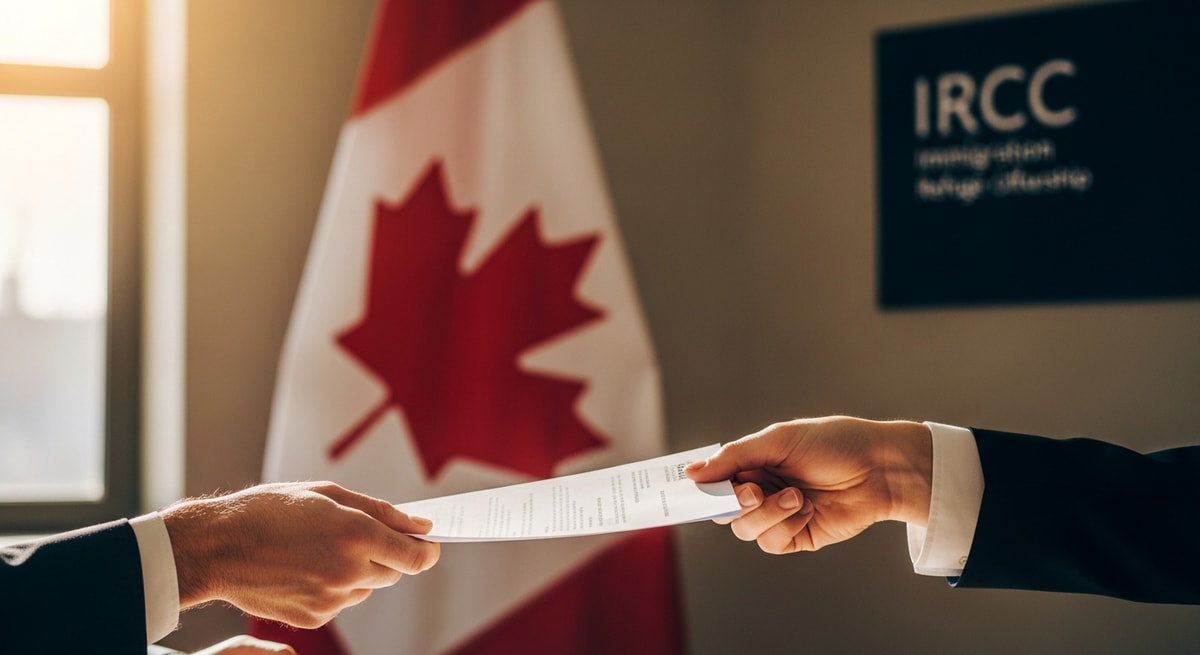
IRCC processes hundreds of thousands of immigration applications annually, many requiring certified translations
"Had my Hindi birth certificate and marriage certificate translated for our Express Entry application. IRCC processed our file without a single request for additional documents. The CTTIC-standard certification was exactly what they expected."
"Needed my Quebec certificat de naissance translated into English for a UK Skilled Worker visa application. DoVisa delivered in three business days with proper certification. UK Visas and Immigration accepted it without question."
"Chinese academic transcripts from two universities translated for WES Canada credential evaluation. Both translations were accurate and WES completed the assessment on schedule. Would have liked slightly faster turnaround but quality was excellent."
"Arabic police clearance certificate and birth certificate translated for my IRCC permanent residence application under the Provincial Nominee Program. The translator clearly understood immigration terminology and the certified format met all IRCC requirements."
"Translated my Canadian marriage certificate into German with apostille from Global Affairs Canada for registration at the Standesamt in Berlin. The new apostille process was so much simpler than the old legalization chain. DoVisa handled everything."
"Punjabi birth certificates for three family members translated for our family sponsorship application to IRCC. All names were transliterated consistently across all documents, which our immigration lawyer said was critical. Approved without issues."
"Had several French-language corporate documents translated into English for a business filing with the Ontario Ministry of Government and Consumer Services. Professional quality and proper formatting, though I needed to follow up once on delivery status."
"Ukrainian diploma and academic transcript translated for my IQAS credential assessment in Alberta. The translation was detailed and accurate, capturing all course names and grades correctly. IQAS accepted it immediately."
"Farsi birth certificate translated for IRCC citizenship application. The translation itself was accurate, but delivery took six business days instead of the quoted four. They apologized and offered a discount on my next order. Quality was fine once received."
"Needed a rush translation of my Canadian divorce decree into Spanish for a legal proceeding in Mexico. DoVisa delivered within 24 hours with full certification and coordinated the apostille through Global Affairs Canada. My Mexican lawyer was impressed."
"Japanese koseki tohon translated for my study permit application to IRCC. The translator handled the family register format expertly and the certification met IRCC standards. Good service overall, just wish express options were a bit cheaper."
"Translated my Australian police check and birth certificate into French for a Quebec immigration application through the Ministère de l'Immigration. OTTIAQ-standard formatting was perfect and the application was processed smoothly."
"Had my Hindi birth certificate and marriage certificate translated for our Express Entry application. IRCC processed our file without a single request for additional documents. The CTTIC-standard certification was exactly what they expected."
"Needed my Quebec certificat de naissance translated into English for a UK Skilled Worker visa application. DoVisa delivered in three business days with proper certification. UK Visas and Immigration accepted it without question."
"Chinese academic transcripts from two universities translated for WES Canada credential evaluation. Both translations were accurate and WES completed the assessment on schedule. Would have liked slightly faster turnaround but quality was excellent."
Canadian Document Translation FAQs
What types of Canadian documents can be translated?
DoVisa translates all types of Canadian documents including birth certificates (certificat de naissance), marriage certificates (certificat de mariage), death certificates (certificat de décès), driver's licences (permis de conduire), criminal record checks (vérification de casier judiciaire), academic transcripts and diplomas, immigration documents, corporate filings, court orders, medical records, and financial documents. We also translate foreign-language documents into English or French for submission to Canadian authorities such as IRCC, provincial vital statistics offices, and Canadian courts.
Are DoVisa translations accepted by IRCC?
Yes, our certified translations are accepted by Immigration, Refugees and Citizenship Canada (IRCC) for all immigration and citizenship applications. IRCC requires that translations include the translator's name, signature, and a certification of accuracy. IRCC accepts translations by CTTIC-certified translators bearing their professional stamp, as well as translations accompanied by a sworn affidavit attesting to the translator's competency. DoVisa's certified translations satisfy both standards, and our current IRCC acceptance rate is 99.2% across all filings.
Do I need to translate documents that are already in English or French?
No. Canada is an officially bilingual country under the Official Languages Act. All federal agencies, including IRCC, accept documents in either English or French without translation. You only need a certified translation if your documents are in a language other than English or French. For provincial submissions, most provinces accept both official languages, though Quebec may require French-language documents for certain provincial proceedings under the Charter of the French Language (Bill 101).
How long does Canadian certified translation take?
Standard delivery is 4-6 business days for most document types. Single-page vital records such as birth and marriage certificates typically complete in 3-4 business days. Express processing in 2-3 business days is available for time-sensitive IRCC submissions. Rush 24-hour service is offered for urgent single-document requests. If you also require notarization, add 1 business day. Apostille processing through Global Affairs Canada or a provincial authority typically adds 5-15 business days depending on the issuing office. We factor all steps into your delivery estimate so you know exactly when to expect your completed documents.
What is the CTTIC certification and why does it matter?
The Canadian Translators, Terminologists and Interpreters Council (CTTIC) is Canada's national umbrella organization for the translation profession. CTTIC administers the certified translator (C. Tran.) designation through rigorous examination, ensuring translators meet professional competency standards. In Quebec, the Ordre des traducteurs, terminologues et interprètes agréés du Québec (OTTIAQ) serves as the regulatory professional order. IRCC recognizes translations by CTTIC and OTTIAQ-certified translators as meeting their certification requirements. While IRCC also accepts translations by non-certified translators when accompanied by a sworn affidavit, using a CTTIC-certified translator provides an additional layer of professional assurance.
What languages does DoVisa translate for Canadian immigration?
DoVisa translates documents from over 100 language pairs into English or French for Canadian immigration purposes. Our most-requested languages for IRCC filings include Chinese (Simplified and Traditional), Arabic, Punjabi, Hindi, Urdu, Spanish, Tagalog, Korean, Farsi/Persian, Vietnamese, Portuguese, Russian, Ukrainian, Turkish, and Japanese. These reflect Canada's most common immigrant source countries. We also handle less commonly requested languages with qualified translators available on request.
Do I need notarization with my Canadian translation?
Notarization requirements depend on the purpose of your translation. IRCC does not require notarization for certified translations submitted with immigration applications — a certified translation with the translator's stamp and certification statement is sufficient. However, notarization may be required for Canadian court filings, some provincial government submissions, and as a prerequisite for apostille issuance. If your translated documents will be used internationally and require an apostille from Global Affairs Canada or a provincial authority, notarization by a Canadian notary public (or a Quebec notaire) is a necessary step in the authentication chain. DoVisa provides notarized translations through our network of notaries across all provinces.
What is an apostille and do I need one for Canadian documents?
An apostille is a certificate issued under the Hague Apostille Convention that authenticates a document for use in another member country. Canada joined the Convention on January 11, 2024, and apostilles are now issued by six competent authorities: Global Affairs Canada for federal documents, and the provinces of Ontario, British Columbia, Alberta, Saskatchewan, and Quebec for provincial documents. You need an apostille if your Canadian document (or its certified translation) will be used in another Hague Convention member country. The apostille eliminates the previous requirement for embassy legalization. DoVisa coordinates the complete apostille process, from notarization through submission to the appropriate competent authority.
How much does certified translation cost for Canadian documents?
DoVisa's certified translation pricing uses a per-page structure with volume discounts for larger orders. Pricing varies based on language pair, document complexity, and processing speed. Express and rush service options are available at additional rates for time-sensitive IRCC or court deadlines. Notarization and apostille processing are quoted separately, with apostille fees varying by competent authority. Upload your documents on our order page to receive an instant, detailed quote before translation begins — no hidden fees or surprise charges.
Can DoVisa translate handwritten Canadian documents?
Yes, we regularly translate handwritten documents including older birth certificates, marriage registrations, personal correspondence, wills, and historical records. Many older Canadian vital records, particularly those from Quebec's parish registers (registres paroissiaux) and early provincial registries, contain handwritten entries in French cursive script. Our translators are experienced with historical Canadian handwriting styles in both English and French. For best results, provide the highest-quality scan possible at 300 DPI or higher. If any portion is illegible, our team will flag it and work with you to resolve ambiguities before completing the translation.
What format will I receive my Canadian translation in?
You will receive your certified translation as a high-resolution PDF delivered via email, including the translation, the translator's certification statement, and any applicable stamps or seals. For physical submissions to IRCC, courts, or apostille authorities, we ship original hard copies with wet-ink signatures and stamps via Canada Post Xpresspost or courier. International shipping is available for clients outside Canada. All translations follow a standardized format that matches what Canadian authorities expect to see, including proper identification of the source document, language pair, and translator credentials.
Can I use the same translation for both IRCC and USCIS?
While the translation content itself is the same, IRCC and USCIS have different certification format requirements. IRCC requires the translator's stamp or seal and a certification statement, while USCIS requires a specific translator affidavit format under 8 CFR 103.2(b)(3). If you need the same document translated for both Canadian and US immigration purposes, DoVisa can provide dual-format certification — a single accurate translation with certification documents formatted for each agency. This is common for applicants with concurrent immigration processes or those who may file in both countries.
Get Your Canadian Documents Translated Today
Professional certified translations accepted by IRCC, Canadian courts, and international authorities