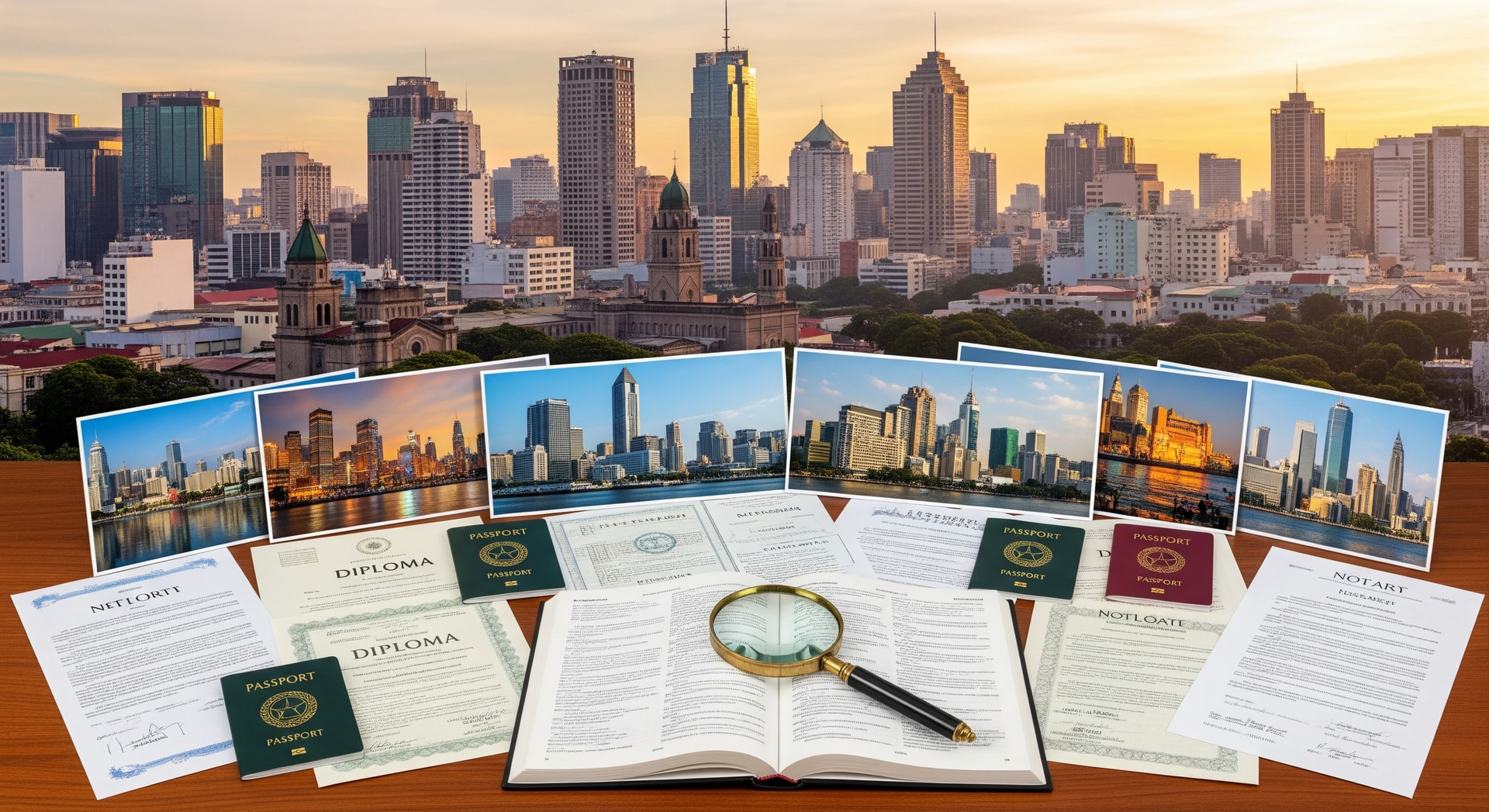
Certified Philippine Document Translation Services
Professional certified translations of PSA certificates, NBI clearances, academic transcripts, and all Philippine documents. DFA apostille coordination, notarization, and 100+ language pairs for Filipino and English documents.
TrustpilotSelect Languages
Drag & drop your documents here
or
PDF, JPEG, PNG, WebP — Max 10MB per file. Word documents: please save as PDF first.
Certified translators · Accepted by governments, courts & universities worldwide · View sample
Select a destination country to view pricing
How Philippine Certified Translation Works
Upload Your Philippine Documents
Scan or photograph your Philippine documents and upload them through our 256-bit encrypted portal. We accept PSA certificates, NBI clearances, CHED-authenticated transcripts, PRC licenses, TESDA certificates, and all other Philippine document types. Our system supports PDF, JPEG, and PNG formats, and our intake team reviews each upload within 2 hours to ensure all text, stamps, and security features are legible for accurate translation.
Expert Translator Assignment
Your documents are matched with a translator who specializes in Philippine documents and is fluent in both the source and target languages. For Filipino-to-English translations, we assign native Filipino speakers with expertise in Philippine legal and civil registry terminology. For translations into German, Japanese, Korean, Arabic, or other languages, we pair a Philippine document specialist with a native speaker of the target language to ensure both accuracy and natural phrasing.
Translation, Certification & Quality Review
Your translator produces a complete certified translation and signs a Certificate of Translation Accuracy attesting to its completeness and correctness. An independent reviewer cross-checks every detail against the original Philippine document, verifying PSA security paper references, registry numbers, and proper romanization of Filipino names. For documents requiring notarization, the translator's signature is witnessed by a commissioned notary public.
Digital Delivery & Physical Shipping
Receive your completed certified translation as a high-resolution PDF delivered digitally within the agreed timeframe. Physical copies with original wet-ink signatures and certification stamps are shipped via tracked international courier to any address worldwide. For clients in the Philippines needing DFA apostille coordination, DoVisa can arrange the complete authentication chain including notarization, CANA certification from the Regional Trial Court, and DFA apostille processing.
Philippines Translation Service Specifications
Popular Language Pairs
We support all languages — 100+ language pairs available for Philippine documents.
Common Documents
- PSA Birth Certificate (Sertipiko ng Kapanganakan)
- PSA Marriage Certificate (Sertipiko ng Kasal)
- PSA Death Certificate (Sertipiko ng Kamatayan)
- NBI Clearance (National Bureau of Investigation)
- CENOMAR (Certificate of No Marriage Record)
- PRC Professional License (Professional Regulation Commission)
- TESDA Certificate (Technical Education and Skills Development Authority)
- Form 137 (Permanent School Record)
- Transcript of Records (TOR) from CHED-recognized institutions
- Overseas Employment Certificate (OEC)
- Philippine passport and PhilSys National ID
- Barangay clearance and police clearance certificates
Turnaround Time
Certification Details
Philippines Translation Requirements & Regulatory Framework
Embassy Acceptance
Notarization Process
Apostille Information
Legal Framework
Common Scenarios for Philippine Document Translation
Immigration & Visa Applications
Filipinos applying for immigration visas to the United States, Canada, Australia, Japan, South Korea, and European countries need certified translations of PSA birth certificates, marriage certificates, NBI clearances, and CENOMAR documents. While Philippine documents are in English, many destination countries require translations into their official language. Our translations meet USCIS, IRCC, and Australian Department of Home Affairs standards.
Overseas Filipino Worker (OFW) Documentation
The Philippines deploys hundreds of thousands of OFWs annually to countries across the Middle East, Asia, and Europe. Workers need certified translations of employment contracts, TESDA certificates, PRC professional licenses, NBI clearances, and medical records into Arabic, Japanese, Korean, Chinese, and other languages. DoVisa provides fast, certified translations that meet the documentary requirements of destination country labor ministries and the Philippine Department of Migrant Workers (DMW).
Marriage & Family Documentation
Filipinos marrying foreign nationals or processing family reunification petitions need translated PSA marriage certificates, CENOMAR (Certificate of No Marriage Record), birth certificates, and baptismal certificates. For fiance visa petitions such as the US K-1 or Japanese spouse visa, translations must be certified and formatted to meet the specific requirements of the receiving immigration authority.
Academic & Professional Credential Evaluation
Philippine academic transcripts (TOR), diplomas, Form 137 records, and CHED-authenticated documents require certified translation for credential evaluation by organizations such as WES, ECE, and NACES members. Professional licenses from the PRC (Professional Regulation Commission) for nurses, engineers, teachers, and other regulated professions also need translation for licensing applications in destination countries.
Dual Citizenship & Consular Transactions
Under Republic Act No. 9225, Filipinos who have acquired foreign citizenship can retain or reacquire Philippine citizenship. This process requires translated birth certificates, naturalization documents, and identification records. Philippine consulates worldwide process these applications and often require translations of foreign documents into English or Filipino for their records.
Business & Corporate Filings
Philippine businesses expanding internationally need certified translations of SEC registration documents, articles of incorporation, board resolutions, financial statements, and BIR tax clearances. Foreign companies establishing Philippine operations require translations of local permits, contracts, and regulatory filings. DoVisa handles corporate translation projects with confidentiality agreements and dedicated project managers.
The Philippine Civil Registry System and PSA Documents
The Philippine Statistics Authority (PSA), established under Republic Act No. 10625, serves as the country's central civil registry and the sole authorized source of birth certificates (Sertipiko ng Kapanganakan), marriage certificates (Sertipiko ng Kasal), death certificates (Sertipiko ng Kamatayan), and CENOMAR (Certificate of No Marriage Record) documents used in international transactions. PSA certificates are printed on security paper (SECPA) with multiple anti-fraud features including watermarks, microprinting, and unique serial numbers.
When translating PSA documents for international use, translators must accurately render all security references, registry numbers, annotations, and marginal notes that appear on the certificate. Philippine civil registry documents frequently contain annotations — official corrections, legitimation notes, changes of name under Republic Act No. 9048, or late registration remarks — that carry significant legal weight and must be precisely translated. A birth certificate annotation noting legitimation under Article 177 of the Family Code, for instance, directly affects the individual's legal status for immigration purposes.
DoVisa translators specializing in Philippine documents are trained to handle PSA security paper formatting, correctly reference civil registry annotations, and maintain the official document structure that immigration authorities and credential evaluators expect. For clients needing DFA apostille on their translated PSA documents, DoVisa coordinates the complete authentication chain from notarization through CANA certification and DFA apostille issuance.
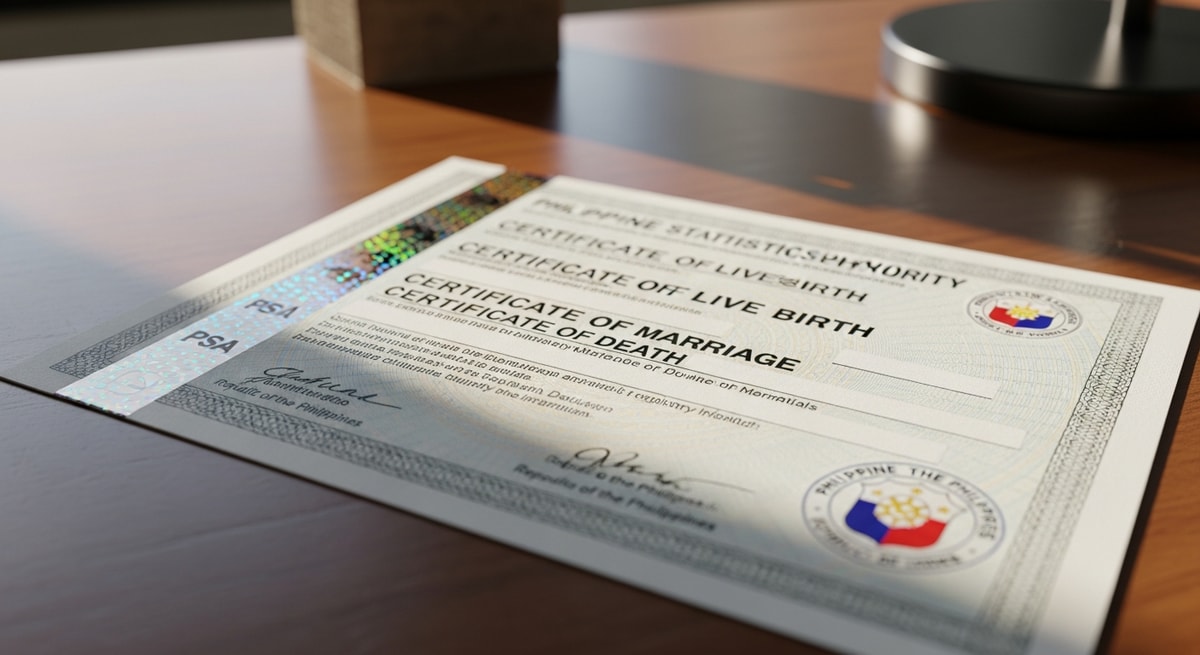
PSA certificates are the authoritative source of Philippine vital records for international use
Philippine Documents for Overseas Employment and Migration
The Philippines is one of the world's largest sources of migrant workers, with the Department of Migrant Workers (DMW) overseeing the deployment of hundreds of thousands of Overseas Filipino Workers (OFWs) annually to destinations across the Middle East, East Asia, Europe, and North America. This massive labor migration generates substantial demand for certified document translation, as destination countries require Philippine credentials to be translated into their official languages before employment processing, professional licensing, or residency applications can proceed.
Key documents requiring translation for overseas employment include the Overseas Employment Certificate (OEC), TESDA National Certificates (Technical Education and Skills Development Authority), PRC professional licenses from the Professional Regulation Commission, NBI clearances from the National Bureau of Investigation, and POEA/DMW-verified employment contracts. For healthcare workers — nurses, physical therapists, medical technologists, and caregivers — professional license translations must accurately reflect the PRC board examination results, license validity dates, and specialty designations that foreign licensing authorities evaluate.
The translation direction for OFW documents is distinctive: because Philippine documents are primarily issued in English, the most common need is translating from English into the destination country's language — Japanese for workers heading to Japan, Korean for South Korea, Arabic for Gulf Cooperation Council countries, and German for those in Germany's healthcare and skilled worker programs. DoVisa maintains specialized translator teams for each of these high-demand language pairs, ensuring that Philippine professional credentials are accurately rendered in the terminology that destination country authorities recognize and accept.

Hundreds of thousands of OFWs require certified document translations for employment abroad each year
DFA Apostille and Authentication for Philippine Documents
Since the Philippines joined the Hague Apostille Convention on May 14, 2019, the Department of Foreign Affairs (DFA) has served as the country's sole competent authority for issuing apostilles. The DFA's Office of Consular Affairs, Authentication Division processes apostille requests at its main office in Pasay City (DFA Aseana), DFA Manila, and select consular offices across the country. The apostille certifies the authenticity of the notary public's signature and seal on a notarized document, enabling its recognition in all Hague Convention member countries without further legalization.
The Philippine apostille process follows a specific chain: (1) the document is notarized by a commissioned notary public under the 2004 Rules on Notarial Practice, (2) the notarized document receives a Certificate of Authentication and/or Notarization Act (CANA) from the Regional Trial Court that commissioned the notary, and (3) the DFA issues the apostille. In March 2024, the DFA launched the e-Apostille system at e-app1.apostille.gov.ph, initially covering PSA-issued documents. The e-Apostille allows digital verification of apostille authenticity and streamlines the process for civil registry documents.
One critical exception affects Filipinos sending documents to Germany: Germany filed an objection to the Philippines' accession to the Apostille Convention, meaning the treaty is not in force between the two countries. Philippine documents destined for use in Germany must still undergo the traditional consular legalization process through the German Embassy in Manila. DoVisa advises clients of this exception and coordinates the appropriate authentication path — DFA apostille for Convention member countries, or consular legalization for Germany and other non-accepting states.
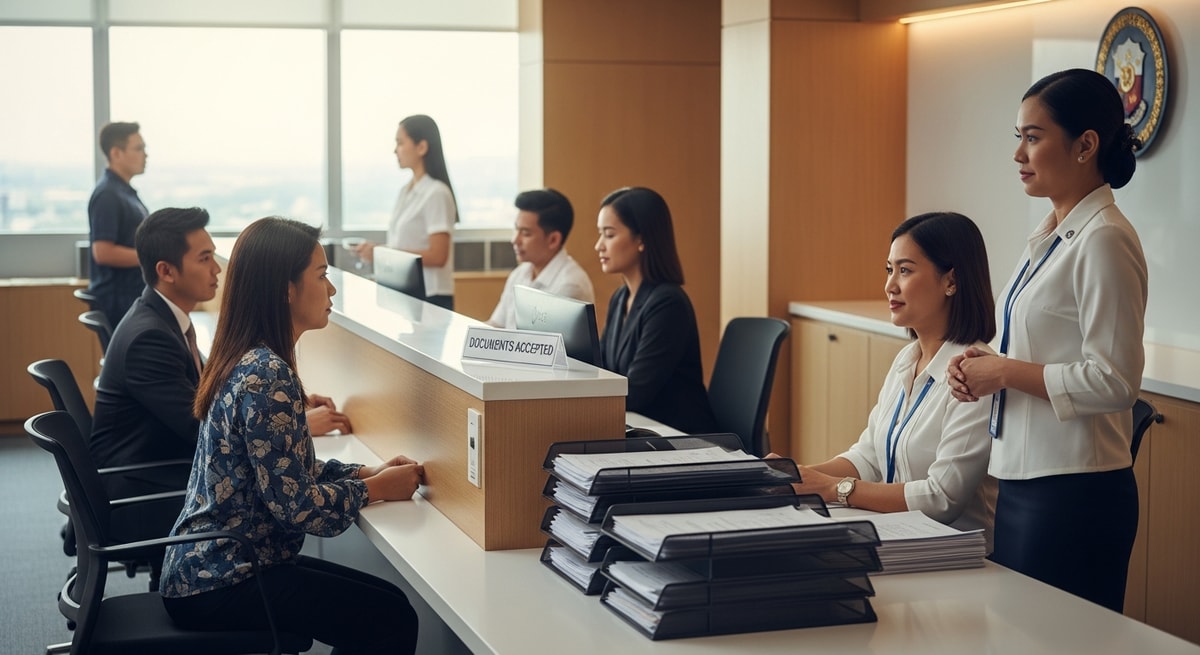
The DFA Authentication Division processes apostilles for Philippine documents at offices nationwide
"Had my PSA birth certificate and CENOMAR translated into Japanese for my spouse visa application. The Japanese immigration office in Tokyo accepted everything without questions. Fast turnaround and very professional service."
"Translated my PRC nursing license and NBI clearance into Arabic for my hospital job in Saudi Arabia. My employer confirmed the translations met their requirements perfectly. DoVisa even coordinated the DFA apostille for me."
"PSA marriage certificate and birth certificates for our family petition to IRCC Canada. Good quality translations and the certified format was exactly what our immigration lawyer needed. Recommended for Filipino documents."
"Needed my TESDA certificate and transcript of records translated into Korean for my work visa in Seoul. The translator clearly understood Philippine academic terminology. Delivered in 3 business days as promised."
"My Australian skilled worker visa required certified translations of my PRC engineering license and university diploma. The Australian Department of Home Affairs accepted the translations on first submission. Excellent quality."
"Translated our PSA birth certificates and NBI clearances for a US immigration filing. USCIS approved our case with no RFEs related to the translations. Solid work and reasonable pricing for multiple documents."
"DoVisa translated my Form 137 school records and TOR into German for my university application in Munich. They handled the DFA apostille as well. Very thorough service from start to finish."
"Had my OEC and employment contract translated into Japanese for my employer in Osaka. The translations were accurate and well-formatted. Would have liked a slightly faster turnaround but the quality was excellent."
"Urgent translation of my PSA marriage certificate and CENOMAR for a K-1 fiance visa interview at the US Embassy in Manila. DoVisa delivered the rush order in under 24 hours. Made my interview date with no issues."
"NBI clearance and birth certificate translated for UK visa application. The translations were accurate but delivery was delayed by two days due to a courier issue. DoVisa resolved it quickly and the UK Home Office accepted the documents."
"Translated my CHED-authenticated diploma and transcript for WES credential evaluation in Canada. WES processed my evaluation without requesting any revisions to the translations. Professional and reliable service."
"Had my dual citizenship documents translated under RA 9225 requirements. Birth certificate, naturalization papers, and supporting documents all translated and certified. Philippine consulate in Los Angeles accepted everything immediately."
"Had my PSA birth certificate and CENOMAR translated into Japanese for my spouse visa application. The Japanese immigration office in Tokyo accepted everything without questions. Fast turnaround and very professional service."
"Translated my PRC nursing license and NBI clearance into Arabic for my hospital job in Saudi Arabia. My employer confirmed the translations met their requirements perfectly. DoVisa even coordinated the DFA apostille for me."
"PSA marriage certificate and birth certificates for our family petition to IRCC Canada. Good quality translations and the certified format was exactly what our immigration lawyer needed. Recommended for Filipino documents."
Philippines Document Translation FAQs
What types of Philippine documents can be translated?
DoVisa translates all types of Philippine documents including PSA birth certificates (Sertipiko ng Kapanganakan), PSA marriage certificates (Sertipiko ng Kasal), PSA death certificates, CENOMAR (Certificate of No Marriage Record), NBI clearances, PRC professional licenses, TESDA certificates, Form 137 school records, Transcripts of Records (TOR), Overseas Employment Certificates (OEC), barangay clearances, police clearances, court documents, and corporate filings. We handle both Filipino-language and English-language Philippine documents for translation into any target language.
Are Philippine document translations certified?
Yes. Every translation includes a signed Certificate of Translation Accuracy in which the translator attests to the completeness and accuracy of the translation and their competency in both languages. This certification format is accepted by USCIS, UK Visas and Immigration, IRCC (Canada), the Australian Department of Home Affairs, Japanese and Korean immigration authorities, and credential evaluation agencies worldwide. The Philippines does not use a sworn translator system — instead, translations are authenticated through notarization under the 2004 Rules on Notarial Practice, followed by CANA from the Regional Trial Court and DFA apostille when required for international use.
How long does Philippine document translation take?
Standard delivery is 4-6 business days for most Philippine document types. Single-page PSA certificates and NBI clearances typically complete in 3-4 business days. Express processing is available for 2-3 business day delivery, and rush service within 24 hours is available for select single-page documents. Multi-page academic transcripts and corporate document sets may require the full standard timeline. If you also need DFA apostille coordination, add 5-10 business days for the notarization, CANA, and DFA processing chain.
What languages can Philippine documents be translated into?
DoVisa translates Philippine documents into over 100 languages. Since Philippine documents are primarily issued in English, the most common translation direction is English into the destination country's language. Our highest-demand language pairs for Philippine documents include English to Japanese, English to Korean, English to Arabic, English to German, English to Spanish, English to French, English to Chinese, and English to Italian. We also translate Filipino-language documents into English and other languages. Contact us for any language pair not listed — we can source qualified translators for virtually any world language.
Will my Philippine document translation be accepted by immigration authorities?
Yes. Our certified translations of Philippine documents are accepted by immigration authorities in all major destination countries for Filipino migrants, including USCIS in the United States, IRCC in Canada, the Australian Department of Home Affairs, UK Visas and Immigration, Japan's Immigration Services Agency, and South Korea's immigration offices. Our current acceptance rate for Philippine document translations is 98.7% across all filing jurisdictions. Each translation is formatted to meet the specific certification standards that these authorities expect.
Do I need notarization for my Philippine document translation?
Notarization requirements depend on where the translated document will be used. For USCIS filings, notarization is not required — a certified translation with the translator's affidavit is sufficient. For use in Hague Convention member countries, translations typically need to be notarized as the first step in the apostille authentication chain. Under the Philippine 2004 Rules on Notarial Practice, a commissioned notary public authenticates the translator's signature and certification. The notarized translation then requires a CANA from the Regional Trial Court before the DFA can issue an apostille. DoVisa can arrange the complete notarization and apostille process upon request.
What is a DFA apostille and do I need one for my Philippine documents?
A DFA apostille is an authentication certificate issued by the Philippine Department of Foreign Affairs under the Hague Apostille Convention, which the Philippines joined on May 14, 2019. The apostille authenticates the notary's seal on a notarized document, enabling its recognition in all Convention member countries without further legalization. You need a DFA apostille if your Philippine document or its translation will be used in another Hague Convention member country (over 120 countries). The process requires: (1) notarization, (2) CANA from the Regional Trial Court, and (3) DFA apostille issuance. Important exception: Germany objected to the Philippines' accession, so documents for Germany require traditional consular legalization instead of an apostille.
How much does certified translation of Philippine documents cost?
DoVisa uses a per-page pricing structure with volume discounts for larger orders. Pricing varies based on the language pair, document complexity, and processing speed selected. Express and rush services are available at additional rates for urgent deadlines. Notarization and DFA apostille coordination are quoted as separate add-on services. Upload your Philippine documents on our order page to receive an instant, detailed quote before translation begins — there are no hidden fees or surprise charges.
Can DoVisa translate handwritten Philippine documents?
Yes. DoVisa translates handwritten Philippine documents including older civil registry records, church baptismal certificates, barangay certifications, and historical school records. Handwritten Filipino documents present unique challenges due to regional script variations and the use of both Filipino and Spanish terminology in older records (Philippine civil registration was conducted in Spanish through the early 20th century). Our translators experienced with Philippine documents can decipher these handwriting styles. For best results, upload the clearest possible scan at 300 DPI or higher so all handwritten text is legible.
What format will I receive my Philippine document translation in?
You will receive your certified translation as a high-resolution PDF delivered digitally via email. The PDF includes the complete translation, the signed Certificate of Translation Accuracy, and a copy of the original document for reference. For filings that require physical documents — such as court submissions, embassy appointments, or apostille processing — we ship hard copies with original wet-ink signatures via tracked international courier to any address worldwide. Standard shipping to Philippine addresses takes 5-7 business days; express options are available.
Are most Philippine documents already in English?
Yes. Under the 1987 Philippine Constitution, Article XIV, both Filipino and English are official languages. Most Philippine government documents — including PSA certificates, NBI clearances, court records, academic transcripts, and professional licenses — are issued in English or in a bilingual English-Filipino format. This means Philippine documents are often accepted internationally without translation for English-speaking countries. However, when submitting to non-English-speaking jurisdictions such as Japan, South Korea, Germany, France, or Arab countries, certified translation into the destination country's language is required.
Does the DFA e-Apostille cover all Philippine document types?
Not yet. The DFA launched the e-Apostille system in March 2024, but it is currently limited to PSA-issued documents — birth certificates, marriage certificates, death certificates, and CENOMAR. The e-Apostille can be verified electronically at e-app1.apostille.gov.ph, providing a faster and more secure authentication process for these civil registry documents. Other document types, including NBI clearances, court orders, academic records, and notarized translations, still require the traditional paper-based apostille process at DFA offices. DoVisa monitors the expansion of the e-Apostille program and will update our services as additional document types become eligible.
Get Your Philippine Documents Translated Today
Professional certified translations of PSA certificates, NBI clearances, and all Philippine documents — accepted worldwide