

Certified Arabic & English Document Translation
Professional translations for UAE government submissions, MOFA attestation, court filings, and international use. Arabic–English and 100+ language pairs with full legal certification.
TrustpilotSelect Languages
Drag & drop your documents here
or
PDF, JPEG, PNG, WebP — Max 10MB per file. Word documents: please save as PDF first.
Certified translators · Accepted by governments, courts & universities worldwide · View sample
Select a destination country to view pricing
How UAE Certified Translation Works
Submit Your Documents Securely
Upload clear scans of your Arabic, English, or foreign-language documents through our encrypted portal. We accept PDF, JPEG, and PNG formats. Our intake specialists review each upload for legibility and confirm whether your documents require MOJ-certified legal translation or standard certified translation based on their intended use.
Professional Translator Assignment
Your documents are matched with a qualified translator experienced in Arabic legal and administrative terminology. For documents intended for UAE government submission, we coordinate with Ministry of Justice-licensed legal translation offices to ensure the translation carries the required MOJ attestation stamp. For international use, our certified translators provide translations accepted by USCIS, UKVI, IRCC, and authorities worldwide.
Translation & Certification
The translator produces your certified translation with full attention to Arabic legal conventions, date formats (Hijri and Gregorian), and official terminology. A second qualified linguist reviews terminology, formatting, and legal accuracy. Each translation includes the translator's signature, certification statement, and relevant stamps.
Delivery with Full Certification
Receive your certified translation as a high-resolution PDF for immediate use, with the original stamped hard copy shipped via tracked courier. For documents requiring MOFA attestation, we coordinate the complete legalization chain from notary public through Ministry of Justice to the Ministry of Foreign Affairs and International Cooperation.
UAE Translation Service Specifications
Popular Language Pairs
We support all languages — 100+ language pairs available for UAE documents.
Common Documents
- Birth certificates (شهادة ميلاد — Shahādat Mīlād)
- Marriage certificates (عقد زواج — ʿAqd Zawāj)
- Divorce certificates (شهادة طلاق — Shahādat Ṭalāq)
- UAE Family Book (خلاصة القيد — Khulāṣat al-Qayd)
- Emirates ID and residence permits (إقامة — Iqāmah)
- Good conduct certificates (شهادة حسن سيرة وسلوك)
- Employment contracts (عقد عمل — ʿAqd ʿAmal)
- Trade licenses (رخصة تجارية — Rukhṣat Tijāriyyah)
- Power of attorney documents (توكيل — Tawkīl)
- Academic certificates and transcripts
Turnaround Time
Certification Details
UAE Translation Requirements & Regulatory Framework
Embassy Acceptance
Notarization Process
Apostille Information
Legal Framework
Common Scenarios for UAE Document Translation
Employment & Residence Visa Processing
Expatriates relocating to the UAE for work need certified translations of educational certificates, professional qualifications, and police clearance certificates for the General Directorate of Residency and Foreigners Affairs (GDRFA). Employment visa processing often requires MOJ-attested Arabic translations of foreign academic credentials for equivalency verification by the Ministry of Education. DoVisa provides translation packages tailored to UAE employment visa requirements.
Marriage & Family Documentation
Foreign nationals marrying in the UAE must provide certified Arabic translations of birth certificates, single-status certificates, and passport pages. Divorce proceedings in UAE courts require translated marriage contracts, custody agreements, and financial statements. Family visa sponsors need certified translations of sponsorship documents, salary certificates, and tenancy contracts for GDRFA applications.
Business Setup & Licensing
Foreign investors establishing businesses in the UAE — whether mainland, free zone, or offshore — need certified translations of corporate documents including certificates of incorporation, memoranda of association, board resolutions, and shareholder registers. The Department of Economic Development (DED) and free zone authorities require Arabic translations for trade license applications. DoVisa handles corporate translation packages for all UAE jurisdictions.
Academic Credential Evaluation
International students and professionals seeking credential equivalency in the UAE must submit certified translations of academic transcripts, diplomas, and degree certificates to the Ministry of Education for attestation. UAE universities also require translated academic records for admission applications. Our academic translators understand UAE equivalency assessment requirements and format translations accordingly.
Court & Legal Proceedings
Cross-border litigation, contract disputes, and personal status cases in UAE courts require MOJ-certified Arabic translations of all foreign-language evidence. Our legal translation team handles complex Arabic legal terminology for documents ranging from commercial contracts and corporate filings to family law orders and arbitration awards submitted to the Dubai International Financial Centre (DIFC) Courts.
The UAE Legal Translation System: MOJ Registration and Compliance
The UAE operates one of the most regulated legal translation systems in the Middle East, governed by Federal Decree-Law No. 22 of 2022 regulating the translation profession. Under this law, no individual or entity may practice translation commercially in the UAE without being registered on the Ministry of Justice translator list and holding a valid license. The MOJ maintains a Translators Affairs Committee overseeing standards and a Translators Disciplinary Board enforcing compliance.
To become an MOJ-licensed legal translator, individuals must meet stringent requirements: UAE residency, a minimum of five years of professional translation experience (UAE nationals are exempt from the experience requirement), sponsorship by a licensed translation house, a professional indemnity insurance policy, and a formal oath taken before a judge at the Ministry of Justice. Licensed translators receive an official translator card and are authorized to affix the MOJ stamp to their translations, giving them full legal weight in UAE courts and government proceedings.
For documents submitted to any UAE government entity — including courts, the Ministry of Education, GDRFA, and MOHRE — the Arabic translation must be produced by an MOJ-licensed translator. This is a non-negotiable requirement rooted in the UAE Constitution's designation of Arabic as the official language. DoVisa partners with a network of MOJ-registered translation offices across Dubai, Abu Dhabi, Sharjah, and other emirates, ensuring all domestic-use translations meet the strict MOJ compliance requirements while maintaining our quality assurance processes.

The UAE Ministry of Justice regulates and licenses all legal translators under Federal Decree-Law No. 22 of 2022
Document Attestation in the UAE: Navigating the Legalization Chain
Since the UAE is not a member of the Hague Apostille Convention, documents intended for international use must undergo a full attestation (legalization) process rather than the simplified apostille procedure available in Convention member states. The attestation chain involves multiple government authorities, each verifying the authenticity of the preceding step's stamp, culminating in final attestation by the Ministry of Foreign Affairs and International Cooperation (MOFAIC).
For UAE-originating documents going abroad, the typical attestation chain follows three steps: first, notarization by a Notary Public at the relevant emirate's courts; second, attestation by the Ministry of Justice confirming the notary's stamp; and third, final attestation by MOFAIC for international recognition. Certain document types require an intermediate step — educational certificates must pass through the Ministry of Education, medical documents through the Ministry of Health and Prevention, and commercial documents through the relevant chamber of commerce.
For foreign documents coming into the UAE, the process works in reverse: the document must be notarized in the origin country, authenticated by that country's foreign ministry, legalized by the UAE Embassy or Consulate in the origin country, and finally attested by MOFAIC upon arrival in the UAE. Since February 2025, MOFAIC has implemented the eDAS 2.0 (Electronic Document Attestation System), which digitizes the attestation process with secure QR codes and online verification at verify.mofa.gov.ae. DoVisa manages the complete attestation chain from start to finish, including coordination with all required government authorities.
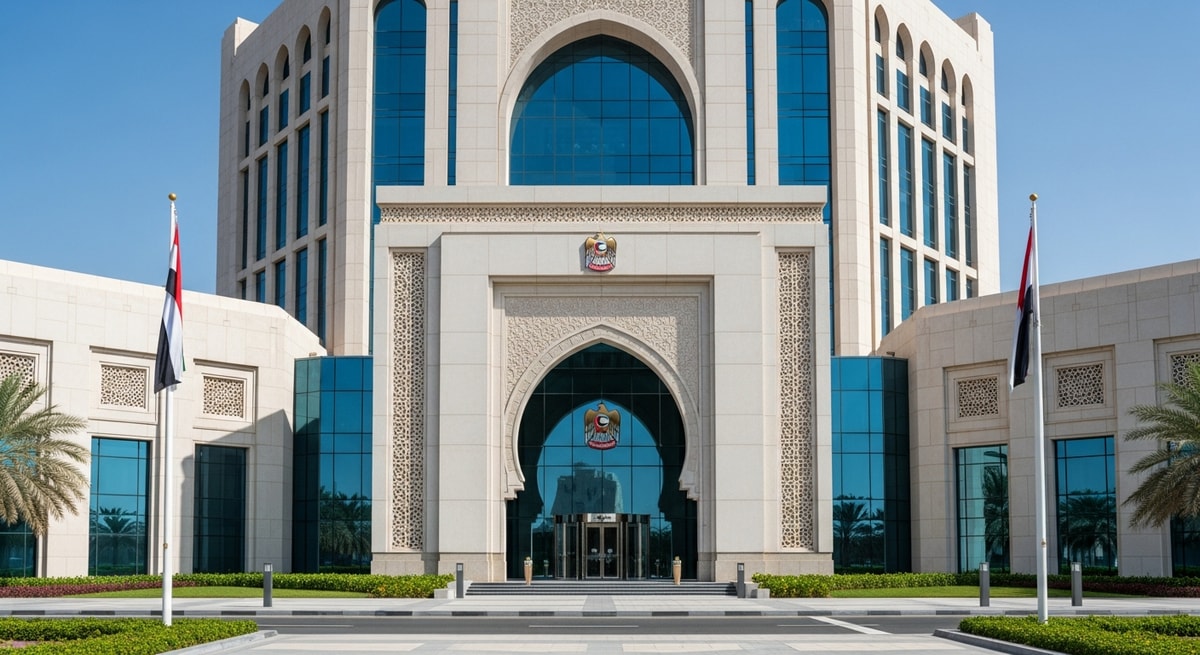
MOFAIC attestation is the final step in the UAE document legalization chain for international use
"Needed my UAE birth certificate and marriage contract translated from Arabic to English for a UK spouse visa application. UKVI accepted the translations without any issues. Very professional service with accurate Arabic legal terminology."
"Translated my UAE employment contract and salary certificate from Arabic to English for an Australian skilled migration visa. The Department of Home Affairs accepted everything on first submission. Fast 3-day turnaround."
"Arabic to English translation of my UAE good conduct certificate for a Canadian PR application. IRCC accepted the certified translation. Only 4 stars because I had to wait an extra day past the estimated delivery, but quality was excellent."
"DoVisa translated my UAE university degree and transcripts from Arabic to English for WES credential evaluation. The academic terminology was handled perfectly — my evaluation was completed without any clarification requests from WES."
"Russian to Arabic translation of my marriage certificate and birth certificate for UAE residence visa processing. DoVisa coordinated with an MOJ-licensed office and the translations were accepted by GDRFA immediately."
"Chinese academic transcripts translated to Arabic for Ministry of Education equivalency in the UAE. The translation was accurate and properly attested. Good service, though the MOJ attestation process added a few extra days to the timeline."
"UAE Family Book translated from Arabic to English for a USCIS immigration petition. The translator preserved all the family relationship details accurately. USCIS processed the petition without requesting any corrections."
"English to Arabic translation of a UK court order for a legal proceeding in Dubai. The final translation was accurate and accepted by the court, but the initial draft had a formatting issue with the Arabic date that needed correction."
"Hindi to Arabic translation of my marriage certificate for UAE residence visa. The translator handled both the Devanagari script and Arabic legal conventions perfectly. GDRFA accepted the translation with no questions."
"Corporate documents translated from English to Arabic for our Dubai free zone company setup — memorandum of association, board resolutions, and shareholder agreements. All translations were MOJ-attested and accepted by the free zone authority."
"UAE divorce certificate translated from Arabic to French for a legal proceeding in France. The Arabic legal terminology was handled accurately and the French court accepted the translation alongside the original. Good quality overall."
"Needed my UAE birth certificate and marriage contract translated from Arabic to English for a UK spouse visa application. UKVI accepted the translations without any issues. Very professional service with accurate Arabic legal terminology."
"Translated my UAE employment contract and salary certificate from Arabic to English for an Australian skilled migration visa. The Department of Home Affairs accepted everything on first submission. Fast 3-day turnaround."
"Arabic to English translation of my UAE good conduct certificate for a Canadian PR application. IRCC accepted the certified translation. Only 4 stars because I had to wait an extra day past the estimated delivery, but quality was excellent."
UAE Document Translation FAQs
What types of UAE documents can be translated?
We translate all types of UAE documents including birth certificates (شهادة ميلاد), marriage certificates (عقد زواج), divorce certificates, the UAE Family Book (خلاصة القيد), Emirates ID, residence permits, employment contracts, academic certificates, police clearances, trade licenses, powers of attorney, court judgments, and corporate documents. We handle both Arabic-to-English and English-to-Arabic translations, as well as Arabic paired with 100+ other languages.
Do I need an MOJ-certified translation for UAE government submissions?
Yes. For documents submitted to UAE courts, government ministries, and federal authorities, Arabic translations must be produced by a translator licensed and registered with the Ministry of Justice (MOJ) under Federal Decree-Law No. 22 of 2022. MOJ-certified translations bear an official stamp and carry full legal weight. DoVisa coordinates with MOJ-registered translation offices across Dubai, Abu Dhabi, and Sharjah to provide compliant translations for domestic use.
How long does UAE document translation take?
Standard certified translation is delivered within 4-6 business days. Express processing is available for 2-3 business days, and rush delivery within 24 hours for select single-page documents. If MOJ attestation is required for UAE domestic use, additional processing time of 2-5 business days should be expected for the attestation chain. We provide a complete timeline estimate at the time of your order.
Can UAE documents get an apostille?
No. The UAE is not a member of the Hague Apostille Convention. Documents intended for international use must undergo full attestation (legalization) through the Ministry of Justice and Ministry of Foreign Affairs and International Cooperation (MOFAIC). This multi-step process authenticates documents for recognition in other countries. DoVisa manages the complete attestation chain on your behalf, from notarization through MOFAIC final attestation.
What is the UAE document attestation process?
The UAE attestation chain involves three steps: (1) Notary Public — initial notarization at the relevant emirate court; (2) Ministry of Justice — authentication of the notary's stamp; (3) Ministry of Foreign Affairs and International Cooperation (MOFAIC) — final attestation for international recognition. Certain documents require intermediate steps through the Ministry of Education (academic certificates) or Ministry of Health and Prevention (medical documents). Since February 2025, MOFAIC uses the digital eDAS 2.0 system for electronic attestation with QR code verification.
Are your translations accepted by USCIS and other immigration authorities?
Yes. Our certified translations of UAE documents are accepted by USCIS (United States), UK Visas and Immigration (UKVI), IRCC (Canada), the Australian Department of Home Affairs, and immigration authorities in New Zealand, Japan, and other countries. Each translation includes a signed certification statement with the translator's credentials, confirming accuracy and completeness as required by these authorities.
Why is Arabic mandatory for UAE official documents?
Arabic is the official language of the UAE as established by the UAE Constitution. Under Federal Law No. 11 of 1992 (Civil Procedures Law), all documents submitted to UAE courts and government entities must be in Arabic. Foreign-language documents must be accompanied by a certified Arabic translation produced by an MOJ-licensed translator. This requirement applies to all government interactions including visa processing, court proceedings, business registration, and educational equivalency assessments.
How much does certified translation for UAE documents cost?
Our UAE document translation pricing follows a transparent per-page structure with volume discounts that apply automatically for larger projects. Pricing varies based on document type, language pair, and processing speed. MOJ attestation and MOFA attestation fees are quoted separately based on the specific attestation chain required. Upload your documents on our order page to receive an instant, detailed quote with no hidden fees.
Can you translate documents for UAE Golden Visa applications?
Yes. UAE Golden Visa applicants — including investors, entrepreneurs, specialized talents, and outstanding students — often need certified translations of academic certificates, professional credentials, patent documents, investment records, and corporate financials. The Federal Authority for Identity, Citizenship, Customs and Port Security (ICP) and GDRFA review these documents as part of the Golden Visa assessment. DoVisa provides translation packages tailored to each Golden Visa category.
What is the eDAS 2.0 system for UAE document attestation?
The eDAS 2.0 (Electronic Document Attestation System) is a digital platform launched by MOFAIC in February 2025 that replaces traditional physical attestation stamps with secure digital e-stamps and QR codes. The system uses AI to process attestations in approximately 3 minutes when all conditions are met. Digitally attested documents can be verified online at verify.mofa.gov.ae. All MOFAIC attestation applications must now be submitted through the online portal rather than in person.
Do you translate documents between Arabic and non-English languages?
Yes. While Arabic–English is the most common language pair for UAE documents, we also provide direct translations between Arabic and Hindi, Urdu, French, German, Chinese, Russian, Japanese, Korean, Spanish, Portuguese, and many other languages. Direct translation avoids the quality loss of translating through an intermediary language and ensures the most accurate result. This is particularly useful for UAE's diverse expatriate population.
Get Your UAE Documents Translated Today
Professional certified translations accepted by UAE authorities and international immigration agencies worldwide