Certified Indian Document Translation
Professional translations from Hindi, Tamil, Bengali, Telugu, Marathi, and all 22 scheduled languages. Accepted by USCIS, UK Home Office, Canada IRCC, and Australian immigration. Apostille through MEA and eSanad available.
TrustpilotSelect Languages
Drag & drop your documents here
or
PDF, JPEG, PNG, WebP — Max 10MB per file. Word documents: please save as PDF first.
Certified translators · Accepted by governments, courts & universities worldwide · View sample
Select a destination country to view pricing
How Indian Certified Translation Works
Submit Your Documents Securely
Upload clear scans of your Indian documents through our encrypted portal. We accept documents in all 22 scheduled languages and their respective scripts — Devanagari, Bengali, Tamil, Telugu, Kannada, Malayalam, Gujarati, Gurmukhi, Odia, and more. Our intake team identifies the language and script, verifies legibility of stamps and handwritten entries, and confirms completeness before translation begins.
Language-Specific Translator Assignment
Your documents are matched with a translator fluent in the specific Indian language and script. A Hindi birth certificate (जन्म प्रमाण पत्र) from Uttar Pradesh requires different expertise than a Tamil birth certificate from Tamil Nadu or a Bengali certificate from West Bengal. We maintain translators covering all 22 scheduled languages and their state-specific administrative terminology.
Translation with Certification
The assigned translator produces your certified translation with a formal statement of accuracy, their professional credentials, signature, and date. A second qualified linguist reviews the translation for terminology accuracy, proper transliteration of Indian names across scripts, and completeness. The certification statement confirms the translation faithfully represents the original Indian document.
Delivery with Full Documentation
Receive your certified translation as a high-resolution PDF for immediate use, with the original signed hard copy shipped via tracked international courier. For documents requiring apostille certification, DoVisa coordinates the process through the Ministry of External Affairs (MEA) and the eSanad electronic apostille platform at esanad.nic.in. Apostille services are available through Regional Passport Offices (RPOs) in 15 cities across India.
Indian Translation Service Specifications
Popular Language Pairs
We support all 22 Indian scheduled languages and 100+ international language pairs.
Common Documents
- Birth certificates (जन्म प्रमाण पत्र / Janma Pramaan Patra)
- Marriage certificates (विवाह प्रमाण पत्र / Vivah Pramaan Patra)
- Death certificates (मृत्यु प्रमाण पत्र / Mrityu Pramaan Patra)
- Academic mark sheets and degree certificates
- Police Clearance Certificates (PCC)
- Caste certificates (जाति प्रमाण पत्र / Jaati Pramaan Patra)
- Income certificates (आय प्रमाण पत्र / Aay Pramaan Patra)
- Residence certificates (निवास प्रमाण पत्र / Nivaas Pramaan Patra)
- Aadhaar card and PAN card documents
- Court orders and affidavits
Turnaround Time
Certification Details
Indian Translation Requirements & Regulatory Framework
Embassy Acceptance
Notarization Process
Apostille Information
Legal Framework
Common Scenarios for Indian Document Translation
US Immigration with Indian Documents
Indian nationals applying for US visas, green cards, or citizenship submit certified English translations of Hindi, Tamil, Bengali, Telugu, and other language documents to USCIS. Common documents include birth certificates, marriage certificates, Police Clearance Certificates (PCC), academic transcripts, and employment references. USCIS requires a translator's certificate of accuracy — DoVisa's certified translations meet this standard for all application types including family-based petitions (I-130), adjustment of status (I-485), and H-1B transfers.
UK Visa & Settlement Applications
The UK Home Office (UKVI) requires certified English translations of all non-English Indian documents for visa and settlement applications. Indian nationals commonly submit translated birth certificates, marriage certificates, academic qualifications, financial documents, and TB test results. Our translators handle documents in all Indian scripts and produce translations meeting UKVI requirements including translator credentials, signed accuracy statement, and contact details.
Canadian Express Entry & PR Applications
India is consistently among the top source countries for Canadian permanent residency. IRCC requires certified translations of academic credentials, employment references, police clearances, and civil documents. Educational Credential Assessments (ECA) through WES require translated mark sheets and degree certificates. DoVisa produces translations formatted specifically for IRCC and WES requirements, handling documents from all Indian states regardless of the language or script.
Academic Credential Evaluation
Indian academic documents — mark sheets, degree certificates, provisional certificates, and migration certificates — submitted to WES, ECE, NACES members, or UK ENIC require certified English translations when issued in a regional language. Indian universities across different states issue documents in Hindi, Tamil, Bengali, Marathi, and other scheduled languages. DoVisa's academic translators understand the Indian grading system, CGPA scales, and degree nomenclature across central and state universities.
Gulf Country Employment & Attestation
Millions of Indian workers in UAE, Saudi Arabia, Qatar, Kuwait, and other Gulf countries require translated and apostilled documents for employment visas, family visas, and professional licensing. Common documents include educational certificates, marriage certificates, and Police Clearance Certificates. DoVisa provides translations paired with MEA apostille through the eSanad platform, streamlining the documentation process for Gulf employment.
Cross-Border Family Law & Inheritance
International family law cases involving Indian documents — divorce decrees, custody orders, succession certificates, and property documents — require certified translations for foreign court proceedings. Indian family court orders may be issued in Hindi or the state's official language. DoVisa's legal translators handle complex Indian family law and property law terminology, producing translations accepted by courts in the US, UK, Canada, and Australia.
India's 22 Scheduled Languages and Translation Complexity
India's linguistic diversity creates unique translation challenges. The Eighth Schedule of the Constitution lists 22 scheduled languages: Assamese, Bengali, Bodo, Dogri, Gujarati, Hindi, Kannada, Kashmiri, Konkani, Maithili, Malayalam, Manipuri, Marathi, Nepali, Odia, Punjabi, Sanskrit, Santhali, Sindhi, Tamil, Telugu, and Urdu. These languages use over 10 distinct scripts — Devanagari, Bengali-Assamese, Tamil, Telugu, Kannada, Malayalam, Gujarati, Gurmukhi, Odia, Ol Chiki, and Perso-Arabic — making India one of the most script-diverse countries in the world.
Official documents are issued in the official language of the state where the event was registered. A birth certificate from Tamil Nadu is in Tamil script, from Maharashtra in Marathi (Devanagari), from West Bengal in Bengali script, and from Karnataka in Kannada script. Some states issue bilingual documents (regional language plus English), but this is not universal. The Official Languages Act, 1963 designates Hindi in Devanagari script as the official language of the Indian Union and English as the associate official language, but state-level documents follow their own language policies.
DoVisa maintains a network of translators covering all 22 scheduled languages and their respective scripts. Each translator is matched to documents based on the specific language, script, and state of origin. A Tamil document from Chennai requires different administrative terminology expertise than a Bengali document from Kolkata, even when both are translated into English. Our quality process includes script verification by native-language reviewers to catch transliteration errors that general linguists might miss — particularly important for Indian names, which may be rendered differently across scripts.
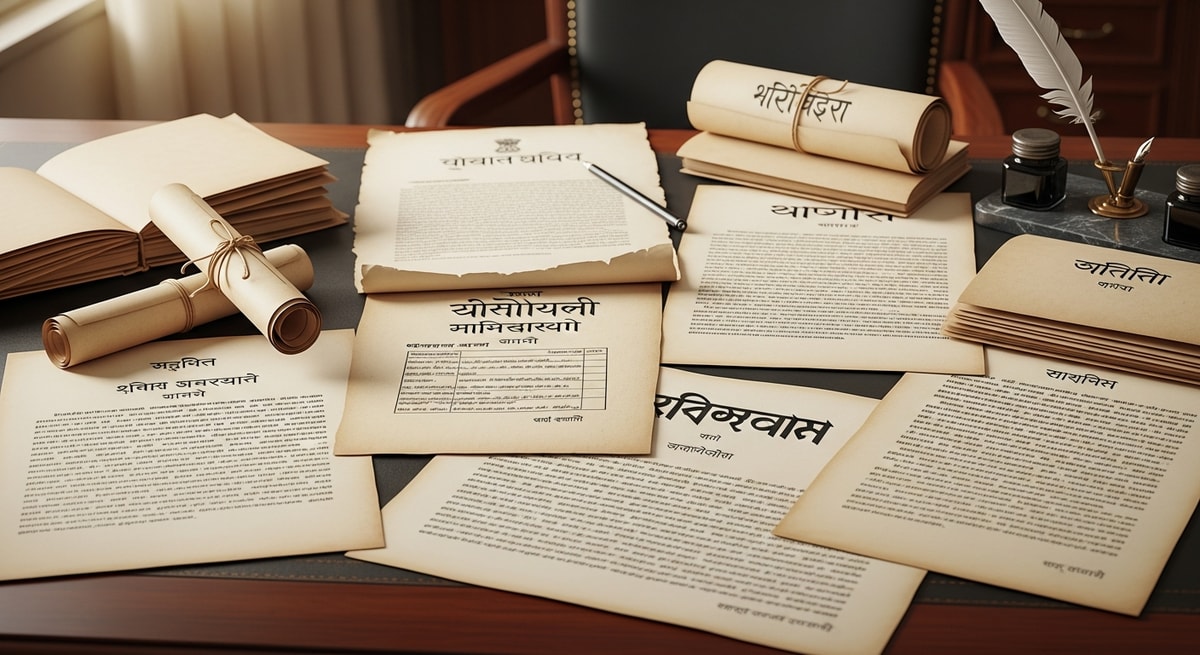
Indian documents arrive in 10+ distinct scripts, each requiring specialized translation expertise
MEA Apostille and the eSanad Electronic System
India acceded to the Hague Apostille Convention on 26 October 2004, with entry into force on 14 July 2005. The Ministry of External Affairs (MEA), through its Consular, Passport & Visa (CPV) Division, is the sole designated competent authority for apostille issuance. Indian apostilles follow a multi-step authentication chain: documents must first be pre-authenticated by the relevant state authority (Home Department for personal documents, Education Department for academic documents, Chamber of Commerce for commercial documents) before the MEA can issue the apostille.
In May 2017, the MEA launched the eSanad platform (esanad.nic.in) — India's electronic apostille and attestation system. eSanad provides contactless, paperless document verification and apostille issuance at a fee of Rs. 50 per document. The platform includes an e-Register that allows any person, organization, or agency worldwide to verify the authenticity of an MEA apostille online. eSanad is integrated with the National Academic Depository (NAD) for educational documents.
Apostille services are available through Regional Passport Offices (RPOs) in 15 cities across India: Ahmedabad, Bengaluru, Bhopal, Chennai, Chandigarh, Cochin, New Delhi, Guwahati, Hyderabad, Kolkata, Lucknow, Mumbai, Panaji, Raipur, and Thiruvananthapuram. This decentralization, initiated on 13 October 2016, eliminated the need to send all documents to New Delhi. DoVisa coordinates the complete apostille process including state-level pre-authentication and MEA apostille through the nearest RPO or the eSanad electronic system.
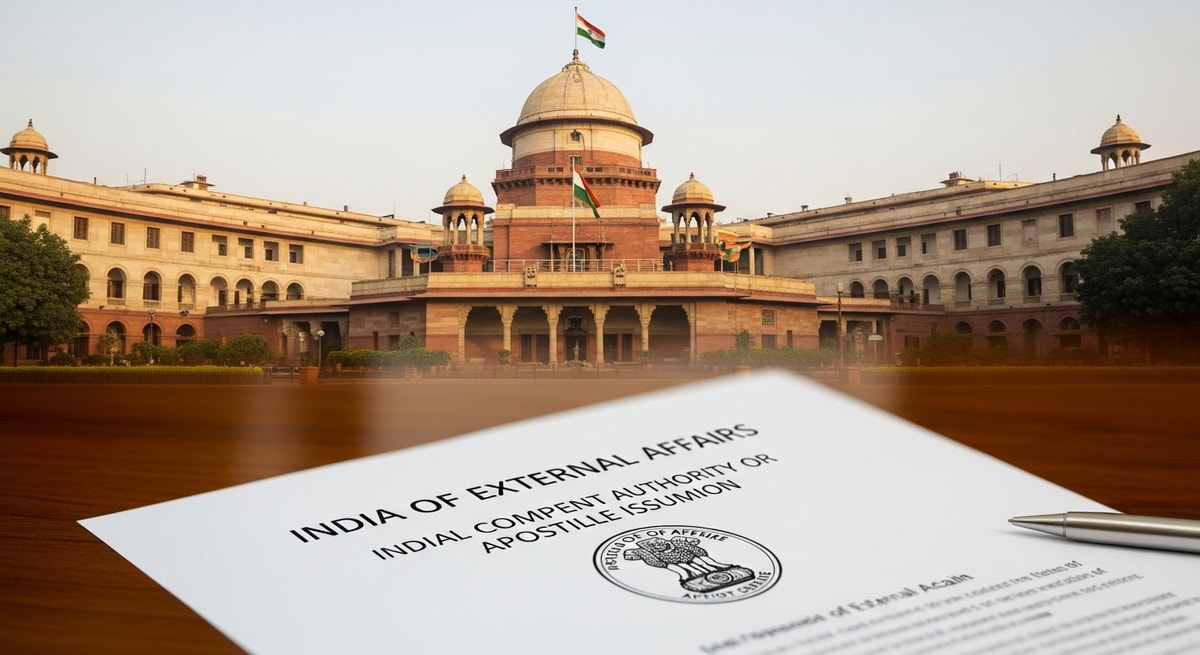
The MEA issues apostilles through 15 RPOs and the eSanad electronic platform launched in 2017
Notarization of Translations Under the Notaries Act, 1952
India does not maintain a sworn translator system like those found in France or Germany. Instead, translations are authenticated through notarization under the Notaries Act, 1952 (Act No. 53 of 1952). Section 8(h) of the Act explicitly authorizes notaries to 'translate, and verify the translation of, any document from one language into another.' Section 8(g) further empowers notaries to 'prepare, attest or authenticate any instrument intended to take effect in any country or place outside India.'
The Indian notarization process for translations involves a professional translator preparing the document, then appearing before a Notary Public to swear a declaration that the translation is true and complete. The notary verifies the translator's identity and witnesses the oath, applying their official signature and seal. Importantly, the notary attests the translator's identity and sworn declaration — not the translation's accuracy. Notaries in India are appointed by both the Central Government and State Governments and must have at least 10 years of experience as legal practitioners.
For international use of Indian documents, DoVisa's certified translations meet the requirements of major immigration authorities (USCIS, UK Home Office, IRCC, Australian DHA) without requiring Indian notarization. These authorities accept our translator's certificate of accuracy as sufficient authentication. For documents requiring the full MEA apostille chain, DoVisa can coordinate notarization through our network of Indian notaries as part of the pre-authentication process before MEA apostille issuance.

The Notaries Act 1952 authorizes Indian notaries to translate and verify translations for official use
"Hindi birth certificate and marriage certificate translated for my US green card application. DoVisa delivered both in 3 days. USCIS accepted everything without a single RFE. The translator handled all the Devanagari script perfectly."
"Tamil mark sheets and degree certificate from Anna University translated for WES credential evaluation. The translator captured all the academic terminology and grading scales accurately. WES processed my ECA without any clarifications needed."
"Bengali marriage certificate translated for my UK spouse visa. The Home Office accepted the translation without issues. Only giving 4 stars because standard delivery took the full 5 days, but the quality was excellent."
"Five documents translated from Hindi for my Canadian PR application — birth certificate, PCC, degree, transcripts, and employment references. IRCC accepted all translations on first submission. DoVisa made the Express Entry process much smoother."
"Telugu academic certificates from Osmania University translated with MEA apostille for a job in UAE. DoVisa handled the complete chain — translation, state authentication, and MEA apostille through eSanad. Everything was accepted by the UAE employer."
"Urdu marriage certificate and birth certificates translated for Australian partner visa. The translator handled the Perso-Arabic script expertly. Department of Home Affairs accepted the translations. Good quality and professional service."
"Kannada birth certificate from Karnataka translated for my UK Skilled Worker visa. The Home Office processed my application without any queries about the translation. Impressed that DoVisa has translators for all Indian languages."
"Gujarati academic documents translated for a US university application. The initial delivery had a minor transliteration error in my surname. DoVisa corrected it within hours after I flagged it. The corrected version was accepted by the university admissions office."
"Marathi divorce decree from Mumbai family court translated to English for a Canadian immigration case. The translator handled complex Indian family law terminology professionally. My immigration attorney confirmed the translation was accurate and complete."
"Malayalam degree certificate and transcripts from Kerala University translated for NMC registration in the UK. The NMC accepted the translations and processed my medical qualification recognition on schedule. Very specialized work done well."
"Punjabi birth certificate translated for my USCIS naturalization application. The translator correctly romanized all the Gurmukhi script names according to my passport spelling. USCIS accepted the translation at my N-400 interview without any questions."
"Needed an Indian Police Clearance Certificate translated from Hindi with apostille for a job in Germany. DoVisa coordinated the MEA apostille through eSanad and the translation together. Both were accepted by the German employer. Took about 10 days total."
"Hindi birth certificate and marriage certificate translated for my US green card application. DoVisa delivered both in 3 days. USCIS accepted everything without a single RFE. The translator handled all the Devanagari script perfectly."
"Tamil mark sheets and degree certificate from Anna University translated for WES credential evaluation. The translator captured all the academic terminology and grading scales accurately. WES processed my ECA without any clarifications needed."
"Bengali marriage certificate translated for my UK spouse visa. The Home Office accepted the translation without issues. Only giving 4 stars because standard delivery took the full 5 days, but the quality was excellent."
Indian Document Translation FAQs
Which Indian languages does DoVisa translate?
DoVisa translates documents in all 22 scheduled languages of the Indian Constitution: Assamese, Bengali, Bodo, Dogri, Gujarati, Hindi, Kannada, Kashmiri, Konkani, Maithili, Malayalam, Manipuri, Marathi, Nepali, Odia, Punjabi, Sanskrit, Santhali, Sindhi, Tamil, Telugu, and Urdu. We also handle documents in non-scheduled languages commonly found in official Indian records. Each language uses its own script — Devanagari, Bengali-Assamese, Tamil, Telugu, Kannada, Malayalam, Gujarati, Gurmukhi, Odia, Ol Chiki, and Perso-Arabic — and we maintain translators proficient in every script.
Is India a member of the Hague Apostille Convention?
Yes. India acceded to the Hague Apostille Convention on 26 October 2004, with entry into force on 14 July 2005. The Ministry of External Affairs (MEA), through its Consular, Passport & Visa (CPV) Division, is the sole designated competent authority for apostille issuance. Indian apostilles are recognized in all 125+ Convention member states. DoVisa coordinates the complete apostille process through the MEA and the eSanad electronic platform.
What is eSanad and how does it work?
eSanad (esanad.nic.in) is India's electronic apostille and attestation platform, launched by the MEA in May 2017. It provides contactless, paperless document verification and apostille issuance at a fee of Rs. 50 per document. The platform includes an e-Register that allows anyone worldwide to verify the authenticity of an MEA apostille online. eSanad is integrated with the National Academic Depository (NAD) for educational documents. DoVisa coordinates apostille issuance through eSanad for documents meeting the platform's requirements.
Why do Indian documents require state-level pre-authentication before apostille?
India's apostille process requires a two-step authentication chain. Before the MEA can issue an apostille, the document must first be pre-authenticated by the relevant state authority: the State Home Department for personal documents (birth, marriage, death certificates), the State Education Department for academic documents (degrees, transcripts), and the respective Chamber of Commerce for commercial documents. This state-level step verifies the document's authenticity at its source. DoVisa manages both steps — state pre-authentication and MEA apostille — as a coordinated service.
How much does certified Indian translation cost?
DoVisa's Indian translation pricing follows a transparent per-page structure with volume discounts that apply automatically for larger projects. Pricing varies based on document length, source language, and processing speed. Some Indian languages (particularly less common scheduled languages) may have different rates due to translator availability. Express and rush service options are available. MEA apostille processing is quoted separately. Upload your documents on our order page for an instant, detailed quote — no hidden fees.
My Indian document is bilingual — do I still need a translation?
Some Indian states issue bilingual documents (regional language plus English). If the English portion of your document is complete and legible, the receiving authority may accept it without additional translation — this depends on the specific authority. USCIS generally accepts the English portion of bilingual Indian documents if it contains all the required information. The UK Home Office has similar flexibility. However, if the English portion is incomplete, illegible, or does not include all required fields, a certified translation of the full document is necessary. DoVisa can review your bilingual document and advise whether a translation is needed.
How are Indian names transliterated in translations?
Indian names are transliterated from the source script (Devanagari, Tamil, Bengali, etc.) into the Latin alphabet. DoVisa follows the individual's passport spelling as the primary reference for name romanization. If no passport is available, we follow standard transliteration conventions for the specific script. Indian naming conventions vary significantly across regions — South Indian names may not have a traditional surname, Sikh names may include Singh or Kaur, and Bengali names may include prefixes like Das or Gupta. We match the romanization to existing official English-language documents wherever possible to maintain consistency across your records.
Can DoVisa translate old or handwritten Indian documents?
Yes. Many Indian civil documents, particularly those issued before digitalization, contain handwritten entries in regional scripts. Older birth certificates, marriage registers, and property documents may be partially or fully handwritten. Our translators are experienced with legacy Indian document formats across all states. For very old or degraded documents where portions are illegible, the translator notes any unreadable sections in the certification statement. We recommend uploading the highest-quality scan possible and contacting our support team if you have concerns about legibility.
What documents do I need for a US H-1B or green card application?
For US immigration, common Indian documents requiring certified translation include: birth certificate (जन्म प्रमाण पत्र), marriage certificate (विवाह प्रमाण पत्र), academic mark sheets and degree certificates, Police Clearance Certificate (PCC), and employment references. USCIS requires each translation to include a translator's certificate of accuracy with the translator's name, signature, address, and date. For H-1B transfers, translated academic credentials and employment documents are standard requirements. DoVisa's certified translations meet all USCIS requirements.
Do I need an apostille for Indian documents going to the UK?
The UK Home Office does not require apostilles for documents submitted with visa applications — certified translations are sufficient. However, for other official purposes in the UK, such as court proceedings, professional registration, or property transactions, an apostille may be requested by the receiving institution. Since the UK is a Hague Convention member, Indian apostilles are recognized. DoVisa advises on whether an apostille is necessary based on your specific use case and coordinates the MEA apostille process when required.
Where are the MEA apostille offices located in India?
Apostille services are available through Regional Passport Offices (RPOs) in 15 cities: Ahmedabad, Bengaluru, Bhopal, Chennai, Chandigarh, Cochin, New Delhi, Guwahati, Hyderabad, Kolkata, Lucknow, Mumbai, Panaji, Raipur, and Thiruvananthapuram. This decentralized system, expanded from the initial 5 cities in October 2016, eliminates the need to send all documents to New Delhi. Additionally, the eSanad platform (esanad.nic.in) enables electronic apostille processing. DoVisa coordinates submission through the RPO nearest to your document's state of origin.
Can DoVisa translate Indian documents for WES credential evaluation?
Yes. WES (World Education Services) requires certified English translations of all non-English academic documents for Educational Credential Assessments (ECA). Indian academic documents commonly submitted to WES include mark sheets (semester-wise and consolidated), degree certificates, provisional certificates, and migration certificates. These documents may be in Hindi, Tamil, Bengali, Marathi, or other scheduled languages depending on the university's state. DoVisa produces translations formatted for WES requirements, including proper rendering of Indian grading terminology, CGPA scales, and degree nomenclature.
Get Your Indian Certified Translation Today
Professional translations from all 22 Indian languages, accepted by USCIS, UK Home Office, Canada IRCC, and Australian immigration