
Certified Polish Document Translation
Tłumaczenia poświadczone for Polish documents, compliant with international standards. Accepted by USCIS, UK Visas and Immigration, IRCC, and credential evaluation agencies worldwide. Apostille service available.
TrustpilotSelect Languages
Drag & drop your documents here
or
PDF, JPEG, PNG, WebP — Max 10MB per file. Word documents: please save as PDF first.
Certified translators · Accepted by governments, courts & universities worldwide · View sample
Select a destination country to view pricing
How Polish Certified Translation Works
Submit Your Documents Securely
Upload clear scans of your Polish or foreign-language documents through our 256-bit AES encrypted portal. We accept all standard formats including PDF, JPEG, and PNG. Our intake specialists review each upload for legibility and completeness, verifying that all stamps, signatures, and marginal annotations on Polish civil registry documents (akty stanu cywilnego) are clearly visible before translation begins.
Professional Translator Assignment
Your documents are matched with a professional translator specializing in Polish legal, academic, or civil registry terminology. Poland requires tłumacz przysięgły (sworn translator) certification under the Act of 25 November 2004 for domestic official use. For international submissions — USCIS, UK Home Office, IRCC, and credential evaluators — DoVisa provides certified translations that meet the receiving authority's acceptance standards.
Translation & Certification
The translator produces your certified translation with meticulous attention to Polish legal terminology, diacritics (ą, ć, ę, ł, ń, ó, ś, ź, ż), and official document formatting. A second qualified linguist performs a thorough review of terminology, legal accuracy, and completeness. The certification statement attests to the translation's accuracy and completeness, meeting the requirements of international immigration and legal authorities.
Delivery with Full Certification
Receive your certified translation as a high-resolution PDF for immediate use, with the original hard copy shipped to your address via tracked courier. If you need an apostille for international recognition, DoVisa coordinates the apostille process through the appropriate Polish competent authority — the Ministry of Foreign Affairs or NAWA for academic documents — so your translation is ready for use in any Hague Convention member state.
Polish Translation Service Specifications
Popular Language Pairs
We support all languages — 100+ language pairs available for Polish documents.
Common Documents
- Polish birth certificates (akt urodzenia)
- Marriage certificates (akt małżeństwa)
- Death certificates (akt zgonu)
- Academic diplomas (dyplom ukończenia studiów)
- School certificates and transcripts (świadectwo szkolne / suplement do dyplomu)
- Police clearance certificates (zaświadczenie o niekaralności)
- Court judgments and divorce decrees (wyrok sądowy / wyrok rozwodowy)
- Notarial deeds (akt notarialny)
- Employment certificates (świadectwo pracy)
- Business registration extracts (odpis z KRS / wpis do CEIDG)
Turnaround Time
Certification Details
Polish Translation Requirements & Regulatory Framework
Embassy Acceptance
Notarization Process
Apostille Information
Legal Framework
Common Scenarios for Polish Document Translation
Immigration & Visa Applications
Polish nationals and residents frequently require certified translations of vital records, police clearances (zaświadczenie o niekaralności), and employment documents for immigration applications to the United States, United Kingdom, Canada, and Australia. USCIS, UK Visas and Immigration, and IRCC all accept DoVisa's certified translations of Polish documents. Common documents include birth certificates (akt urodzenia), marriage certificates (akt małżeństwa), and academic credentials for skilled worker visa programs.
Marriage Registration Abroad
Polish citizens marrying abroad need certified translations of their birth certificates, single-status certificates (zaświadczenie o zdolności prawnej do zawarcia małżeństwa), and any prior divorce decrees. These translations must meet the receiving country's requirements for foreign document acceptance. DoVisa provides certified translations formatted for marriage registration authorities in English-speaking countries, EU member states, and beyond.
Academic Credential Evaluation
Polish university diplomas (dyplom ukończenia studiów), diploma supplements (suplement do dyplomu), and school certificates (świadectwo) require certified translation for credential evaluation by WES, ECE, NACES members, and foreign university admissions offices. Our academic translators understand the Polish higher education system — from licencjat (bachelor's) through magister (master's) to doktor degrees — and render Polish grading scales accurately for international evaluators.
Corporate & Business Expansion
Companies operating between Poland and international markets require certified translations of Polish business documents including KRS extracts (odpis z Krajowego Rejestru Sądowego), articles of association (umowa spółki), financial statements, board resolutions, and commercial contracts. Our business translators handle Polish commercial law terminology with precision, supporting cross-border transactions, subsidiary formation, and regulatory compliance.
Legal Proceedings & Court Documents
Cross-border litigation, international custody cases, and enforcement of Polish court judgments abroad require certified translations of court orders (postanowienia sądowe), judgments (wyroki), and legal correspondence. DoVisa's legal translation team handles complex Polish procedural terminology from sąd rejonowy (district court) through Sąd Najwyższy (Supreme Court) decisions, ensuring foreign courts and attorneys receive precise translations.
Poland's Sworn Translator System: Tłumacz Przysięgły
Poland operates one of Europe's most structured translation certification systems. The profession of tłumacz przysięgły (sworn translator) is regulated by the Ustawa z dnia 25 listopada 2004 r. o zawodzie tłumacza przysięgłego (Act of 25 November 2004 on the Profession of Sworn Translator). Under this law, only translators who have passed the state examination administered by the Ministry of Justice's Examination Board, taken a formal oath before the Minister of Justice, and been entered on the official register (lista tłumaczy przysięgłych) may produce legally binding translations for official use in Poland.
The register, maintained by the Minister of Justice and publicly accessible through the Ministry's Public Information Bulletin (Biuletyn Informacji Publicznej), currently lists approximately 14,000 sworn translators covering dozens of language pairs. Each sworn translator receives a unique registration number and an official round seal (pieczęć okrągła) bearing their name, language combination, and the designation 'tłumacz przysięgły.' Every sworn translation must include the translator's seal, handwritten signature, and repertorium number — a sequential entry in the translator's official register of all translations performed.
Importantly, Polish sworn translators bear heightened criminal liability for errors and omissions, unlike regular translators who face only civil liability. This strict accountability framework ensures the highest standards of accuracy. For documents destined for Polish domestic authorities — courts, civil registry offices (Urzędy Stanu Cywilnego), the Office for Foreigners (Urząd do Spraw Cudzoziemców), or voivodeship offices — only sworn translations carry legal validity. For international use at USCIS, UK Home Office, IRCC, or credential evaluation agencies, DoVisa's certified translations meet all acceptance requirements without the sworn translator designation.
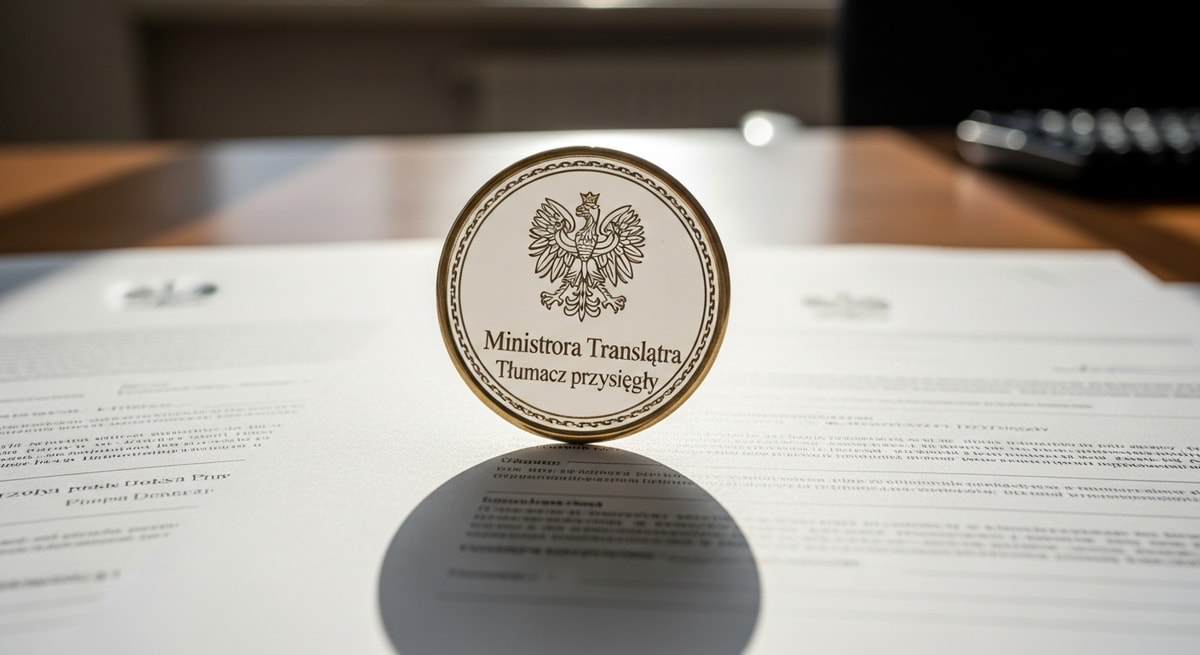
Poland's Ministry of Justice maintains the official register of approximately 14,000 sworn translators
Polish Civil Registry Documents and the Urząd Stanu Cywilnego
Poland's civil registration system is managed by Urzędy Stanu Cywilnego (USC — civil registry offices) operating in each municipality (gmina) across the country. These offices issue the vital records most commonly requiring translation: the akt urodzenia (birth certificate), akt małżeństwa (marriage certificate), and akt zgonu (death certificate). Each record is assigned a unique registration number and entered into the centralized electronic civil registry system (System Rejestrów Państwowych — SRP) introduced in 2015.
Polish vital records come in two formats: odpis skrócony (abbreviated copy) containing essential facts, and odpis zupełny (full copy) containing the complete registration history including all annotations and marginal notes. For immigration and legal purposes abroad, the full copy is generally recommended as it provides the comprehensive information that receiving authorities require. Additionally, Poland issues wielojęzyczne odpisy aktów stanu cywilnego (multilingual civil status certificates) under EU Regulation 2016/1191, which can simplify the translation requirement within EU member states.
Our translators are experienced with both traditional handwritten Polish civil registry entries — common in historical records predating the electronic system — and modern computer-generated certificates. Older documents often present challenges including archaic Polish orthography, Latin-language entries from parish registers, and annotations in Russian or German from partition-era records (1795-1918). DoVisa's Polish document specialists handle these complexities with the expertise needed to produce accurate, complete certified translations accepted by international authorities.
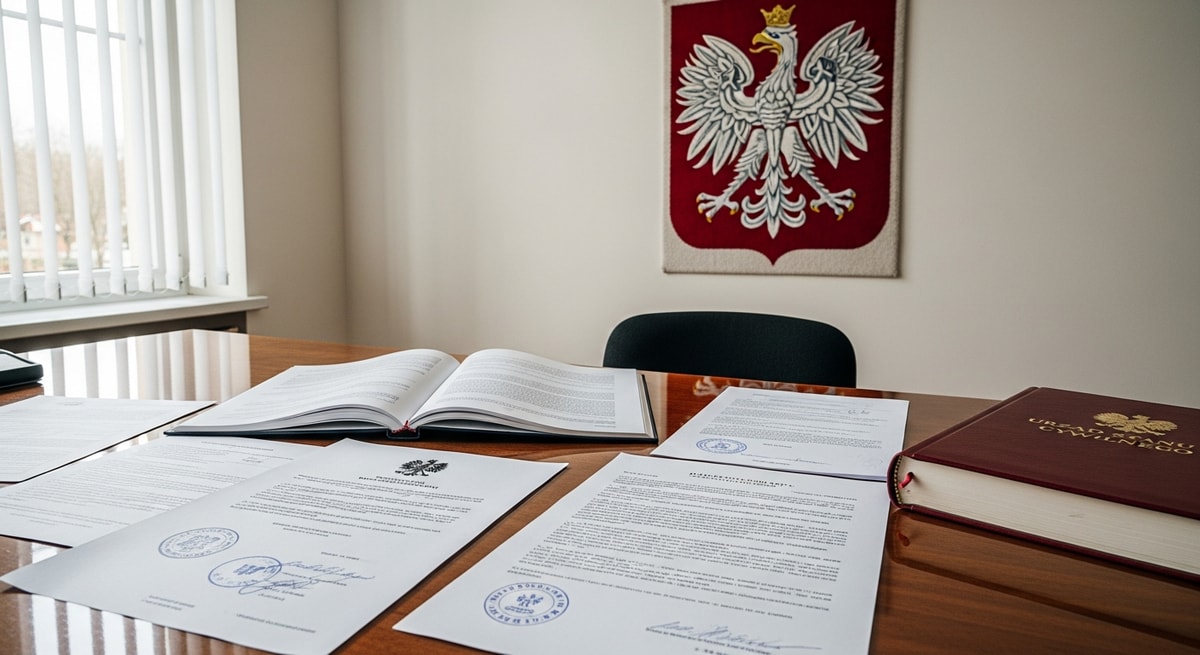
Polish Urzędy Stanu Cywilnego issue birth, marriage, and death certificates requiring certified translation
"Needed my Polish akt urodzenia and akt małżeństwa translated for a USCIS green card application. The translations captured every detail including all the marginal annotations. USCIS accepted everything without a single RFE. Highly professional service."
"DoVisa translated my Polish university diploma and suplement do dyplomu for WES credential evaluation in Canada. The translator rendered all the Polish academic terminology perfectly. WES processed my evaluation within their standard timeline with no clarifications needed."
"Good translation of my zaświadczenie o niekaralności (police clearance) for a UK skilled worker visa. Home Office accepted it promptly. Four stars because I expected express delivery to be faster, but the quality was excellent."
"Translated Polish court judgment and divorce decree for my Australian partner visa application. Complex legal document with detailed custody provisions. The Department of Home Affairs accepted the translation without questions. Very thorough work."
"Had my late grandmother's Polish birth certificate from the 1940s translated — handwritten in old-style Polish with archaic spellings. DoVisa's translator handled the historical document beautifully. Used it for my Irish citizenship by descent application. Accepted first try."
"Our law firm needed certified translations of Polish KRS extracts and board resolutions for a cross-border acquisition. The business terminology was precise and our London solicitors used the translations directly in the transaction documentation without revision."
"Polish świadectwo szkolne and transcripts translated for a US graduate school application. Accurate rendering of the Polish grading scale with a clear explanation note. Delivery was on time. Would use again for future document needs."
"Translation of Polish marriage certificate was accurate but the initial version had my wife's maiden name romanized inconsistently between pages. They corrected it within a few hours and the final version was accepted for our New Zealand partnership visa. Minor hiccup aside, decent service."
"Apostille and certified translation of my Polish birth certificate for use in Japan. DoVisa coordinated the apostille through the Ministry of Foreign Affairs and delivered the complete package in under two weeks. Everything was accepted at the ward office in Tokyo."
"Five Polish documents translated for my Canadian Express Entry PR application — birth certificate, police clearance, employment certificates, and university diploma with supplement. IRCC processed everything without requesting corrections. Outstanding quality and fast turnaround."
"Polish medical records and vaccination certificate translated for my Australian skilled migration visa. The translator handled complex medical terminology in Polish with precision. Department of Home Affairs accepted the translations immediately. Thank you DoVisa!"
"Needed my Polish akt urodzenia and akt małżeństwa translated for a USCIS green card application. The translations captured every detail including all the marginal annotations. USCIS accepted everything without a single RFE. Highly professional service."
"DoVisa translated my Polish university diploma and suplement do dyplomu for WES credential evaluation in Canada. The translator rendered all the Polish academic terminology perfectly. WES processed my evaluation within their standard timeline with no clarifications needed."
"Good translation of my zaświadczenie o niekaralności (police clearance) for a UK skilled worker visa. Home Office accepted it promptly. Four stars because I expected express delivery to be faster, but the quality was excellent."
Polish Document Translation FAQs
What types of Polish documents can be translated?
We translate all types of Polish documents including birth certificates (akt urodzenia), marriage certificates (akt małżeństwa), death certificates (akt zgonu), academic diplomas (dyplom ukończenia studiów), school certificates (świadectwo szkolne), police clearance certificates (zaświadczenie o niekaralności), court judgments (wyroki sądowe), divorce decrees (wyroki rozwodowe), notarial deeds (akty notarialne), employment certificates (świadectwa pracy), business registration extracts (odpisy z KRS), medical records, and all other official Polish documents. We handle both modern computer-generated certificates and older handwritten civil registry records.
Are the translations certified or sworn?
DoVisa provides certified translations with a signed certification statement attesting to accuracy and completeness. These certified translations are accepted by international authorities including USCIS, UK Visas and Immigration, IRCC (Canada), the Australian Department of Home Affairs, and credential evaluation agencies such as WES and ECE. For submission to Polish domestic authorities — courts, Urzędy Stanu Cywilnego (civil registry offices), the Urząd do Spraw Cudzoziemców (Office for Foreigners) — a sworn translation (tłumaczenie przysięgłe) by a registered tłumacz przysięgły is required under the Act of 25 November 2004. DoVisa can coordinate sworn translations through our network of Ministry of Justice-registered sworn translators upon request.
Do I need a sworn translator (tłumacz przysięgły) for Polish documents?
It depends on where you will submit the translation. For Polish domestic authorities — courts, civil registry offices (USC), the Office for Foreigners, voivodeship offices — Polish law requires a sworn translation (tłumaczenie przysięgłe) produced by a tłumacz przysięgły registered with the Ministry of Justice. For international use — USCIS (United States), UK Home Office, IRCC (Canada), Australian Department of Home Affairs, New Zealand Immigration, credential evaluation agencies, foreign universities, and private employers — a certified translation meeting the receiving authority's requirements is sufficient. DoVisa provides certified translations for international use and can coordinate sworn translations for Polish domestic submissions through our translator network.
How long does certified Polish document translation take?
Standard certified translation is delivered within 4-6 business days. Express processing is available for 2-3 business days, and rush delivery within 24 hours is offered for select document types including single-page vital records such as birth and marriage certificates. Turnaround times begin once we confirm document legibility and assign a translator. Multi-document projects and complex legal translations may require additional time depending on total page count and technical complexity. If you also need apostille processing, this adds 5-15 business days depending on the issuing authority.
What languages do you translate Polish documents to and from?
We translate Polish documents to and from over 100 languages. The most frequently requested language pairs include Polish to English, German, French, Spanish, Italian, Ukrainian, Russian, Dutch, Swedish, Norwegian, Arabic, Chinese, and Japanese. We also handle translations between Polish and less common language pairs. Every translation is performed by a linguist with specific expertise in both the source and target languages, as well as the relevant document type and subject matter.
Will my Polish translation be accepted by immigration authorities?
Yes. Our certified translations of Polish documents are accepted by major immigration authorities worldwide including USCIS (United States), UK Visas and Immigration, IRCC (Canada), the Australian Department of Home Affairs, and Immigration New Zealand. Each translation includes the certification statement and translator credentials that these authorities require. Our current acceptance rate across all immigration submissions is 98.7%. In the rare event a translation is not accepted due to a formatting or certification issue, we revise and reissue at no additional cost.
Do I need notarization with my Polish translation?
Notarization requirements depend on the destination country and the specific authority receiving the document. For most immigration applications (USCIS, UK, Canada, Australia), certified translation without additional notarization is sufficient. Some countries and institutions require notarization of the translator's signature as an additional authentication step. Poland's domestic system uses the tłumacz przysięgły (sworn translator) seal and signature in place of separate notarization — the sworn translator's certification carries equivalent legal weight. DoVisa can arrange notarization of your certified translation if required by the receiving authority.
What is an apostille and do I need one for Polish documents?
An apostille is a standardized certificate under the Hague Apostille Convention that authenticates the origin of a public document for use in another Convention member state. Poland has been a member since 14 August 2005. You need an apostille when submitting Polish documents to authorities in another Hague Convention member country that requires document authentication. The competent authority depends on the document type: the Ministry of Foreign Affairs (Ministerstwo Spraw Zagranicznych) handles civil status documents, NAWA (Narodowa Agencja Wymiany Akademickiej) handles academic qualifications, and court presidents handle notarial and judicial documents. DoVisa manages the complete apostille process, with standard processing taking 5-15 business days.
How much does certified Polish translation cost?
Our Polish certified translation pricing follows a transparent per-page structure with volume discounts that apply automatically for larger documents. Pricing varies based on document length, language pair, and the processing speed you select (standard, express, or rush). Apostille processing through the relevant Polish competent authority is quoted separately. Upload your documents on our order page to receive an instant, detailed quote before work begins — no hidden fees or surprises.
Can you translate handwritten Polish documents?
Yes. We regularly translate handwritten Polish documents including older civil registry entries, historical parish records, and personal correspondence. Polish civil registry offices used handwritten entries for decades before the introduction of the electronic System Rejestrów Państwowych (SRP) in 2015. Our translators are experienced with archaic Polish orthography, partition-era records that may include annotations in Russian or German (from the period 1795-1918), and older cursive handwriting styles. For best results, upload the highest quality scan possible — we recommend at least 300 DPI resolution for handwritten documents.
What format will I receive the Polish translation in?
You will receive your certified translation in two formats: a high-resolution PDF delivered via email for immediate use, and a physical hard copy with original certification shipped via tracked courier. The PDF includes a scanned copy of the signed certification statement. Many immigration authorities and credential evaluators accept the digital PDF for initial submissions. For apostilled translations, you will receive the original physical document with the apostille certificate attached. International shipping is available to all destinations with tracking provided.
Can Polish documents issued under the EU multilingual forms regulation skip translation?
Under EU Regulation 2016/1191, Poland issues multilingual standard forms (wielojęzyczne formularze standardowe) for certain civil status documents that can be used in other EU member states without translation. However, these multilingual forms are limited to specific document types and contain abbreviated information. For non-EU countries (United States, Canada, Australia, Japan, etc.), multilingual EU forms are not accepted and a full certified translation is required. Even within the EU, some authorities still request a complete translation for complex documents. DoVisa can advise whether your specific document and destination qualify for the multilingual form exemption.
How do you handle Polish diacritics and special characters in translations?
Polish contains nine special characters with diacritics — ą, ć, ę, ł, ń, ó, ś, ź, ż — that must be handled correctly in both directions of translation. When translating from Polish to English, personal names are transliterated according to the spelling shown on the individual's passport or official identity document. Place names follow standard international conventions (e.g., Łódź, Wrocław, Gdańsk). When translating into Polish, our translators apply correct diacritics throughout. The translator notes any transliterations or spelling variations in the certification statement to ensure clarity for the receiving authority.
Get Your Polish Documents Translated Today
Professional certified translations of Polish documents accepted by USCIS, UK Home Office, IRCC, and authorities worldwide