Certified Ukrainian Document Translation
Professional certified translations of Ukrainian Cyrillic documents for immigration, legal, and academic use. Accepted by USCIS, IRCC, UK Visas and Immigration, and embassies worldwide. Apostille coordination available.
TrustpilotSelect Languages
Drag & drop your documents here
or
PDF, JPEG, PNG, WebP — Max 10MB per file. Word documents: please save as PDF first.
Certified translators · Accepted by governments, courts & universities worldwide · View sample
Select a destination country to view pricing
How Ukrainian Certified Translation Works
Submit Your Documents Securely
Upload clear scans of your Ukrainian documents through our encrypted portal. We accept PDF, JPEG, and PNG formats. Our intake specialists review each upload for legibility, paying close attention to Cyrillic text clarity, handwritten entries common in older Ukrainian civil documents, and any stamps or seals from Ukrainian authorities such as the РАЦС (civil registry office) or the Ministry of Justice. If a rescan is needed, we contact you immediately before translation begins.
Translator Assignment
Your documents are matched with a certified translator who is a native Ukrainian speaker with expertise in the specific document type. Our Ukrainian translators are experienced with the full range of Ukrainian civil, legal, and academic documents, including documents issued during the Soviet era in Russian or bilingual Ukrainian-Russian formats. We verify each translator's qualifications and subject-matter expertise before every assignment to ensure accuracy.
Translation and Certification
The translator produces your certified translation from the Ukrainian Cyrillic original into your target language. Each translation includes a signed certification statement attesting to accuracy and completeness. A second qualified linguist reviews terminology, proper name transliteration, and formatting. For Ukrainian documents, we follow established transliteration standards to ensure names and place names are rendered consistently and correctly for immigration and legal authorities.
Delivery with Full Certification
Receive your certified translation as a high-resolution PDF for immediate use, with the original hard copy shipped via tracked international courier. For documents requiring an apostille, DoVisa coordinates with the appropriate Ukrainian competent authority, whether the Ministry of Justice for notarial and court documents, the Ministry of Education and Science for academic credentials, or the Ministry of Foreign Affairs for other official documents. Standard delivery takes 4-6 business days; express and rush options are available.
Ukrainian Translation Service Specifications
Popular Language Pairs
We support all languages — 100+ language pairs available for Ukrainian documents.
Common Documents
- Birth certificates (свідоцтво про народження)
- Marriage certificates (свідоцтво про шлюб)
- Divorce certificates (свідоцтво про розлучення)
- Death certificates (свідоцтво про смерть)
- Academic diplomas (диплом) and transcripts
- Secondary school certificates (атестат)
- Police clearance certificates (довідка про несудимість)
- Court decisions and judgments
- Notarial deeds and powers of attorney (довіреність)
- Military service records (військовий квиток)
Turnaround Time
Certification Details
Ukrainian Translation Requirements and Regulatory Framework
Embassy Acceptance
Notarization Process
Apostille Information
Legal Framework
Common Scenarios for Ukrainian Document Translation
Immigration and Refugee Applications
Ukrainian nationals applying for immigration, asylum, or temporary protected status in the United States, Canada, the United Kingdom, or EU member states require certified translations of birth certificates (свідоцтво про народження), marriage certificates, police clearance certificates (довідка про несудимість), and identity documents. USCIS, IRCC, and UK Visas and Immigration all require English translations of Ukrainian Cyrillic documents. DoVisa provides certified translations formatted to meet the specific requirements of each immigration authority, with consistent transliteration of Ukrainian names across all documents in a single application package.
Academic Credential Evaluation
Ukrainian diplomas (диплом), secondary school certificates (атестат), and academic transcripts require certified translation for evaluation by credential assessment agencies such as WES, ECE, and ICAS. Universities in the US, UK, Canada, and Australia also require translated academic records for admission applications. Our translators are familiar with the Ukrainian higher education system, including the Bologna Process qualifications framework adopted by Ukraine, and accurately render degree classifications, grading scales, and institutional names.
Marriage and Family Reunification
Couples involving a Ukrainian national often need certified translations of birth certificates, marriage certificates (свідоцтво про шлюб), divorce certificates (свідоцтво про розлучення), and single-status certificates for marriage registration or family reunification visa applications abroad. Each receiving country has specific formatting requirements, and DoVisa ensures translations meet the standards of the destination authority, whether a US county clerk, a UK register office, or a German Standesamt accepting documents from Ukrainian partners.
Legal Proceedings and Court Documents
Cross-border legal matters involving Ukraine require certified translations of court decisions, judgments, contracts, notarial deeds, and powers of attorney (довіреність). International family law cases, property disputes, and commercial litigation may involve Ukrainian court documents that must be accurately translated for foreign courts and legal counsel. Our legal translators handle complex Ukrainian juridical terminology and ensure that translated documents preserve the legal precision of the original Ukrainian text.
Business and Corporate Documentation
Foreign companies operating in Ukraine or Ukrainian businesses expanding internationally require certified translations of corporate registration extracts, tax certificates, financial statements, employment contracts, and commercial agreements. DoVisa translates documents issued by Ukrainian state registrars, the State Tax Service, and corporate regulatory bodies with accurate rendering of Ukrainian commercial and tax terminology for use in international business transactions, regulatory filings, and due diligence proceedings.
Translating Ukrainian Cyrillic Script: Challenges and Standards
Ukrainian uses the Cyrillic alphabet with 33 letters, several of which are unique to Ukrainian and absent from Russian Cyrillic. The letters ґ, є, і, and ї are distinctly Ukrainian, and their correct identification is essential for accurate translation and transliteration. Confusing Ukrainian and Russian Cyrillic characters is a common source of error in document translation, as the two scripts share many but not all letters, and identical-looking letters sometimes represent different sounds.
Transliteration of Ukrainian names into Latin script follows specific standards depending on the destination country and purpose. Ukraine's official romanization system was established by Resolution of the Cabinet of Ministers No. 55 of 2010, which provides the standard used in Ukrainian passports and official documents. However, immigration authorities in different countries may apply their own transliteration conventions, and many Ukrainian names have established legacy spellings from earlier transliteration systems or Russian-based romanization. DoVisa translators follow the destination country's preferred transliteration standard and note any discrepancies between the passport spelling and the document spelling, ensuring consistency across all translated documents in an application package.
Older Ukrainian documents, particularly those issued during the Soviet era, present additional challenges. Many were issued in Russian rather than Ukrainian, or in bilingual Russian-Ukrainian format. Some contain handwritten entries in cursive Cyrillic that require specialized reading skills. Soviet-era vital records often used different administrative terminology and institutional names that no longer exist in independent Ukraine. Our translators are experienced with documents spanning Ukraine's full modern history, from Soviet-era свідоцтва (certificates) to contemporary documents issued through the Diia digital governance platform.
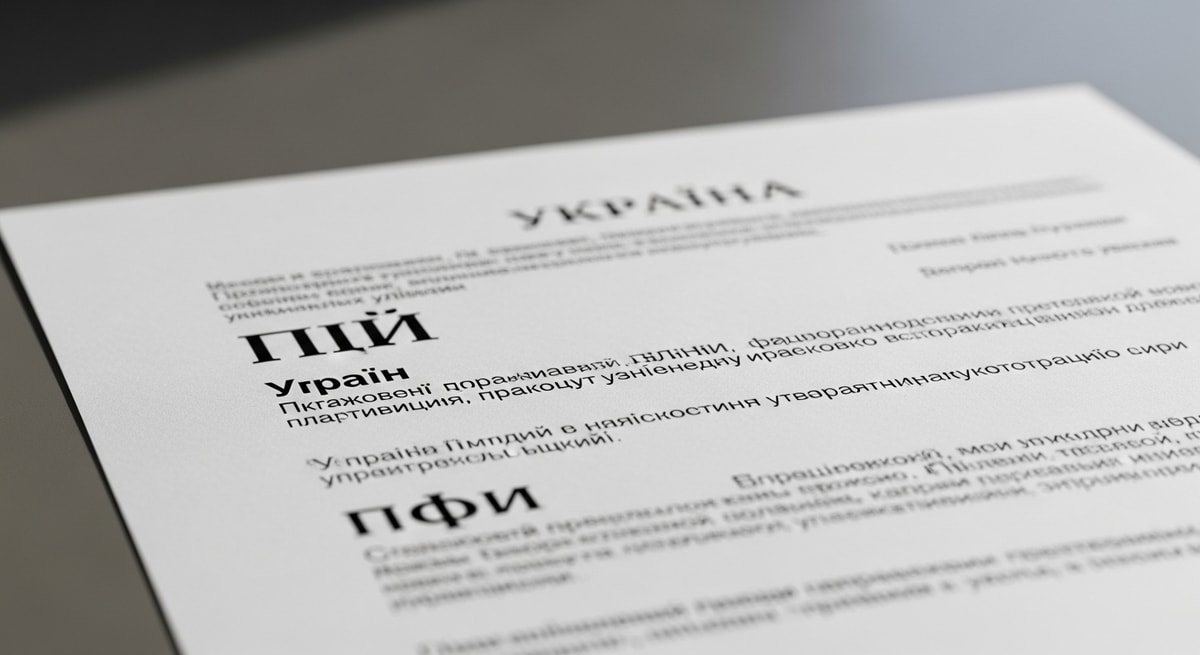
Ukrainian Cyrillic includes unique letters such as ґ, є, і, and ї that distinguish it from Russian
Ukraine's Notarial System and Document Authentication
Ukraine's approach to translation certification is rooted in its notarial system, governed by the Law of Ukraine On Notariat (Закон України Про нотаріат). Unlike countries such as Germany or France that maintain a formal sworn translator register, Ukraine relies on notaries to authenticate translations. Under Article 79 of the Law on Notariat, a qualified translator performs the translation and signs it in the presence of a notary. The notary verifies the translator's qualifications, confirms their identity, and certifies the authenticity of the translator's signature with the notary's official seal and signature.
This notarial certification (нотаріальне засвідчення перекладу) gives the translation legal force for use within Ukraine and before Ukrainian authorities. The notary does not independently verify the accuracy of the translation itself but rather attests that the translation was performed by a qualified specialist whose signature is authentic. For international use, DoVisa's certified translations with a signed certification statement are accepted by immigration authorities, courts, and institutions in the United States, United Kingdom, Canada, Australia, and many other countries without requiring Ukrainian notarial certification.
When Ukrainian notarial certification is specifically required, such as for documents to be used in Ukrainian court proceedings or submitted to Ukrainian state authorities, DoVisa coordinates with licensed notaries across Ukraine. The notarial certification can then be further authenticated with an apostille from the Ministry of Justice, as notarial documents fall under its competent authority designation. This creates a complete chain of authentication recognized in all Hague Convention member states.
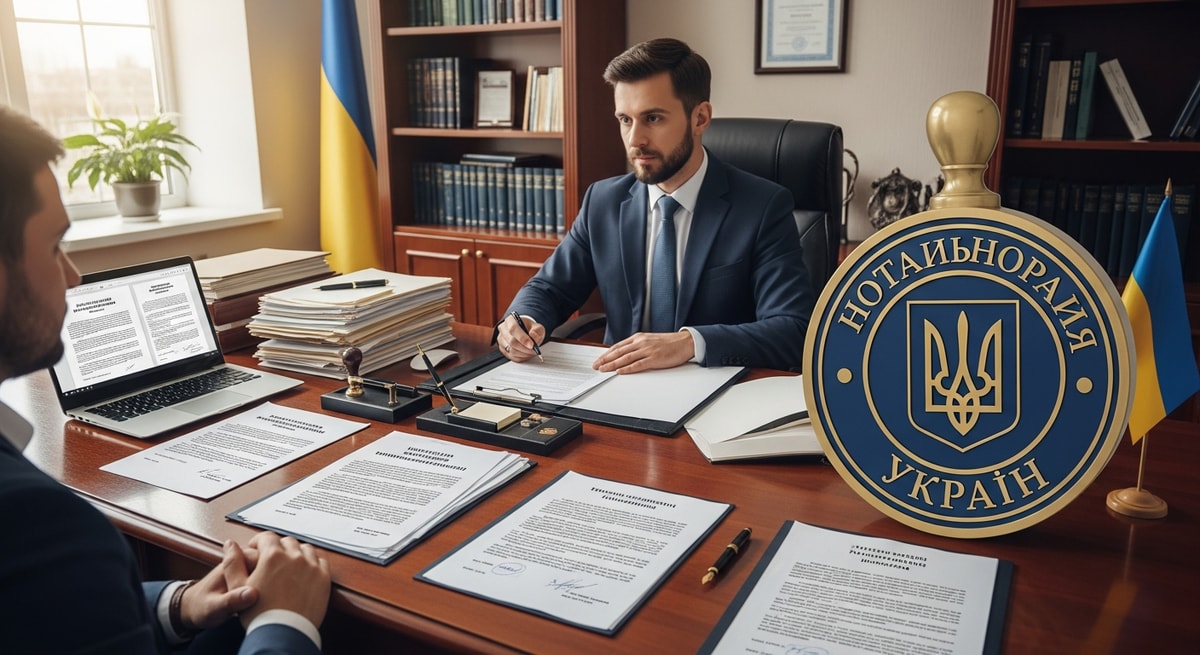
Ukrainian notaries certify translations under Article 79 of the Law on Notariat
Wartime Document Challenges: Translating Ukrainian Documents During Conflict
Since February 2022, the ongoing conflict in Ukraine has created unprecedented challenges for document procurement and translation. Many Ukrainians who have relocated to other countries urgently need translated documents for temporary protection status, asylum applications, employment authorization, and school enrollment for children. In many cases, original documents were left behind, lost, or damaged, requiring individuals to obtain duplicates or certified copies through Ukrainian consulates abroad or the Diia digital platform.
The Ukrainian government has responded by expanding digital document services. The Diia (Дія) mobile application and web portal now allow Ukrainian citizens to access digital versions of many civil documents, including birth and marriage certificates, from anywhere in the world. Documents obtained through Diia carry official status and can be translated and authenticated like physical originals. DoVisa accepts Diia-generated documents for translation and works with the specific formatting and QR verification codes these digital documents contain.
Immigration authorities in host countries have also adapted their requirements. USCIS introduced special filing procedures under Temporary Protected Status (TPS) for Ukrainian nationals. The UK Home Office created the Ukraine Family Scheme and Homes for Ukraine visa pathways with streamlined documentation requirements. IRCC in Canada established the Canada-Ukraine Authorization for Emergency Travel (CUAET). DoVisa translators are familiar with the documentation requirements for each of these programs and produce translations formatted to meet their specific standards, helping Ukrainian nationals navigate the administrative processes in their host countries efficiently.
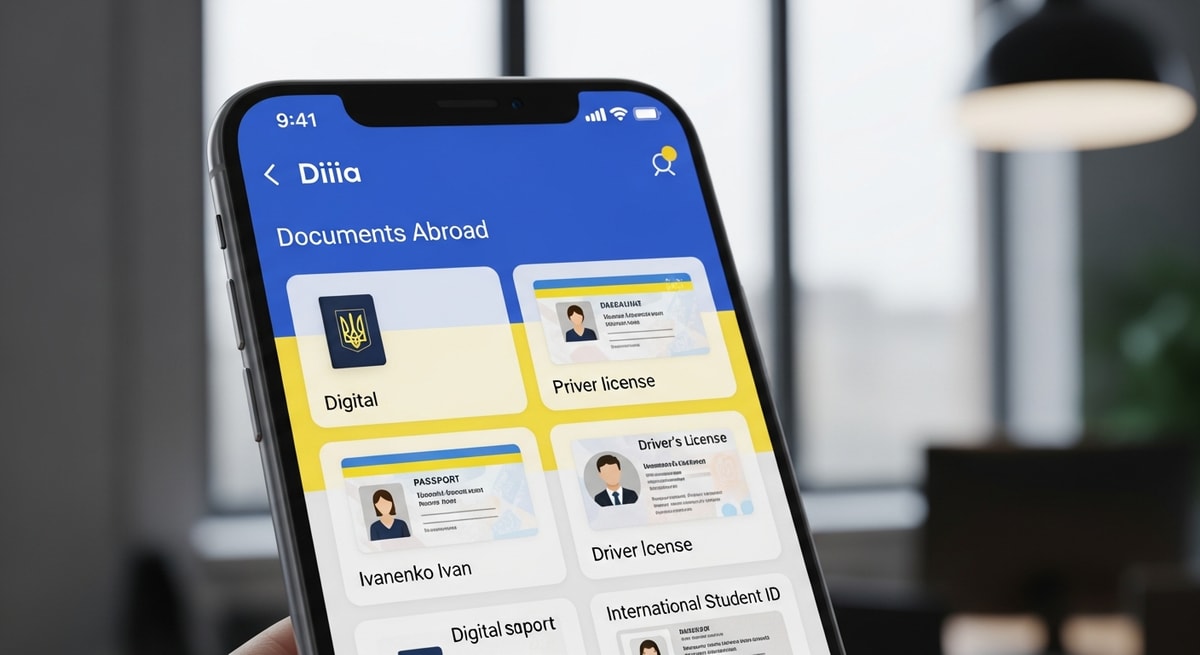
The Diia platform enables Ukrainian citizens to access official documents digitally from anywhere in the world
"Needed my Ukrainian свідоцтво про народження (birth certificate) translated to English for my USCIS green card application. The transliteration of my name matched my passport exactly, and USCIS accepted the translation without any RFE. Fast and professional service."
"DoVisa translated my Ukrainian university диплом and transcript for WES credential evaluation in Canada. The translator correctly rendered all Ukrainian academic terminology and the Bologna Process degree classification. WES processed my evaluation without questions."
"Had my Ukrainian marriage certificate translated for a UK spouse visa. The Home Office accepted it without issues. Good quality translation, though I wish express processing was a bit faster for the Ukrainian to English pair."
"Translated my довідка про несудимість (police clearance) and birth certificate from Ukrainian to English for my Australian skilled visa. The Department of Home Affairs accepted both translations immediately. DoVisa also coordinated the apostille through the Ministry of Justice."
"I needed translations of several Ukrainian court documents for a family law case in the United States. The legal translator handled complex Ukrainian juridical terminology with precision. My attorney in New York was impressed with the quality and accuracy."
"Ukrainian birth certificate and school атестат translated for a university application in Germany. Both translations were well done and accepted by the uni-assist evaluation service. Delivery was on time at 5 business days."
"DoVisa translated my Diia-generated Ukrainian documents for my TPS application in the United States. They handled the digital format perfectly including the QR codes. USCIS accepted everything. Lifesaver service for Ukrainians abroad."
"Ukrainian diploma translation was accurate overall, but there was a minor transliteration inconsistency with my patronymic between the diploma and birth certificate translations. They corrected it within a few hours after I flagged it. Final versions were perfect for IRCC."
"Needed my Ukrainian свідоцтво про шлюб (marriage certificate) and both spouses' birth certificates translated for our New Zealand partnership visa. Immigration New Zealand accepted all three translations without any follow-up. Excellent attention to detail."
"Our law firm used DoVisa for translating Ukrainian corporate registration documents and tax certificates for an international due diligence project. The commercial terminology was rendered accurately and the turnaround met our tight deadline."
"Translated my Soviet-era Ukrainian birth certificate from 1985 that was partly in Russian. The translator handled the bilingual document perfectly and noted the historical context. The Australian Department of Home Affairs accepted it for my partner visa."
"Needed my Ukrainian свідоцтво про народження (birth certificate) translated to English for my USCIS green card application. The transliteration of my name matched my passport exactly, and USCIS accepted the translation without any RFE. Fast and professional service."
"DoVisa translated my Ukrainian university диплом and transcript for WES credential evaluation in Canada. The translator correctly rendered all Ukrainian academic terminology and the Bologna Process degree classification. WES processed my evaluation without questions."
"Had my Ukrainian marriage certificate translated for a UK spouse visa. The Home Office accepted it without issues. Good quality translation, though I wish express processing was a bit faster for the Ukrainian to English pair."
Ukrainian Document Translation FAQs
What types of Ukrainian documents can be translated?
We translate all types of Ukrainian documents including birth certificates (свідоцтво про народження), marriage certificates (свідоцтво про шлюб), divorce certificates (свідоцтво про розлучення), death certificates, academic diplomas (диплом), secondary school certificates (атестат), police clearance certificates (довідка про несудимість), court decisions, notarial deeds, powers of attorney (довіреність), military service records (військовий квиток), corporate registration documents, and tax certificates. We also translate Soviet-era documents issued in Russian or bilingual Ukrainian-Russian format, as well as digital documents generated through the Diia platform.
Are your Ukrainian translations certified?
Yes. Every Ukrainian translation we produce includes a signed certification statement attesting to the accuracy and completeness of the translation. Our certified translations are accepted by USCIS, UK Visas and Immigration, IRCC (Canada), the Australian Department of Home Affairs, Immigration New Zealand, credential evaluation agencies (WES, ECE, ICAS), universities, courts, and embassies worldwide. For use within Ukraine or before Ukrainian authorities, a notarial certification (нотаріальне засвідчення перекладу) under Article 79 of the Law on Notariat may be required, which DoVisa can coordinate upon request.
How long does Ukrainian document translation take?
Standard certified translation of Ukrainian documents is delivered within 4-6 business days. Express processing is available for 2-3 business days, and rush delivery within 24 hours is available for select document types including single-page vital records such as birth and marriage certificates. Turnaround times may vary for longer documents, highly technical content, or if apostille coordination is included. You will receive an estimated delivery date when you place your order.
What languages do you translate Ukrainian documents to and from?
We translate Ukrainian documents to and from over 100 languages. The most common language pairs include Ukrainian to English, Ukrainian to German, Ukrainian to French, Ukrainian to Polish, Ukrainian to Spanish, Ukrainian to Italian, and Ukrainian to Turkish. We also handle translations from English, German, French, and other languages into Ukrainian. All translations are performed by native-speaking translators with expertise in the relevant document type and terminology.
Will my Ukrainian translation be accepted by USCIS?
Yes. Our certified translations of Ukrainian documents meet all USCIS requirements under 8 CFR 103.2(b)(3), which mandates that foreign-language documents be accompanied by a complete English translation and a certification statement from the translator attesting to accuracy. We format translations specifically for USCIS submissions and ensure consistent transliteration of Ukrainian names across all documents in your application package. Our current acceptance rate at immigration authorities is 98.7%, with the rare exceptions typically related to the underlying source document rather than translation quality.
Do I need notarization with my Ukrainian translation?
For most international purposes, our certified translation with a signed certification statement is sufficient. Notarization is not required by USCIS, UK Visas and Immigration, IRCC, or the Australian Department of Home Affairs. However, if you need the translation for use before Ukrainian domestic authorities, a notarial certification under the Law of Ukraine On Notariat is typically required. In this process, a translator signs the translation in the presence of a Ukrainian notary, who certifies the translator's signature. DoVisa can coordinate this notarial certification through our network of licensed Ukrainian notaries.
What is an apostille and do I need one for Ukrainian documents?
An apostille is a standardized certificate that authenticates the origin of a public document for international use under the Hague Apostille Convention. Ukraine has been a member since 2003, and apostilles are issued by six competent authorities depending on the document type: the Ministry of Justice, the Ministry of Education and Science, the Ministry of Internal Affairs, the Ministry of Foreign Affairs, the State Migration Service, and the State Tax Service. You may need an apostille if the receiving country requires authenticated documents. DoVisa identifies the correct competent authority, prepares the application, and manages the apostille process. Standard processing takes 5-10 business days.
How much does certified Ukrainian translation cost?
Our Ukrainian certified translation pricing follows a transparent per-page structure with volume discounts that apply automatically for larger documents. Pricing varies based on document length, language pair, and processing speed selected. Apostille coordination is quoted separately based on the competent authority involved. Upload your documents on our order page to receive an instant, detailed quote before any work begins. There are no hidden fees, and the quoted price includes the certified PDF delivery and hard-copy shipping.
Can you translate handwritten Ukrainian documents?
Yes. Many Ukrainian documents, particularly older civil records and Soviet-era certificates, contain handwritten entries in Cyrillic cursive. Our translators are experienced with reading handwritten Ukrainian and Russian Cyrillic, including the distinctive cursive forms that differ significantly from printed Cyrillic letters. If any handwritten portion is illegible, we flag it and consult with you before proceeding. We recommend uploading the highest-quality scan possible for handwritten documents, as image clarity directly affects translation accuracy and turnaround time.
What format will I receive my Ukrainian translation in?
You will receive your certified translation as a high-resolution PDF delivered to your email, suitable for electronic submissions to immigration authorities and other institutions. The PDF includes the full translation, the certification statement, and a copy of the source document for reference. A physical hard copy with original signatures is shipped via tracked international courier to your address. For apostilled documents, the physical original with the apostille certificate attached is shipped separately via tracked courier.
Can you translate Ukrainian documents issued through the Diia platform?
Yes. The Diia (Дія) digital governance platform allows Ukrainian citizens to access digital versions of civil documents including birth certificates, marriage certificates, and certificates of no criminal record. DoVisa accepts Diia-generated documents for translation. Our translators are familiar with the specific formatting, QR verification codes, and digital signatures these documents contain. We translate the full content of the digital document and note the digital authentication details in our certification. Diia documents carry official legal status and are treated equivalently to physical originals by immigration authorities worldwide.
How do you handle transliteration of Ukrainian names?
Ukrainian name transliteration follows specific standards that differ from Russian transliteration. We apply the official Ukrainian romanization system established by Resolution of the Cabinet of Ministers No. 55 of 2010, which is the standard used in Ukrainian passports. For immigration documents, we ensure that the transliterated name in the translation matches the spelling in the applicant's passport. When older documents use different transliteration conventions or Russian-based spellings, we note the discrepancy and provide the passport-consistent spelling. Consistency of name spelling across all documents is critical for immigration applications, and our quality review specifically checks for this.
Can you translate Soviet-era Ukrainian documents?
Yes. Documents issued in the Ukrainian SSR before 1991 often present unique challenges. Many were issued entirely in Russian, in bilingual Ukrainian-Russian format, or used Soviet-era administrative terminology and institutional names (such as ЗАГС rather than РАЦС for civil registry). Some contain handwritten entries, stamps from institutions that no longer exist, and references to Soviet administrative divisions. Our translators are experienced with the full range of Soviet-era Ukrainian documents and accurately render historical terminology while noting relevant context for the receiving authority.
Get Your Ukrainian Documents Translated Today
Professional certified translations of Ukrainian Cyrillic documents accepted worldwide