
Certified Vietnamese Document Translation
Professional certified translations of Vietnamese documents (Dịch thuật công chứng) by qualified translators, accepted by Vietnamese government agencies, embassies, courts, and international institutions. Compliant with Vietnam's 2024 Law on Notarization and consular legalization requirements.
TrustpilotSelect Languages
Drag & drop your documents here
or
PDF, JPEG, PNG, WebP — Max 10MB per file. Word documents: please save as PDF first.
Certified translators · Accepted by governments, courts & universities worldwide · View sample
Select a destination country to view pricing
How Vietnamese Certified Translation Works
Submit Your Documents Securely
Upload clear scans of your Vietnamese or foreign-language documents through our encrypted portal. We accept all standard formats including PDF, JPEG, and PNG. Our intake specialists review each upload for legibility and completeness, paying particular attention to Vietnamese diacritical marks and seal impressions that must be accurately captured. If a rescan is needed, we contact you immediately before translation begins.
Qualified Translator Assignment
Your documents are assigned to a professional translator with demonstrated expertise in Vietnamese legal, civil, and administrative terminology. Under Vietnam's 2024 Law on Notarization (Luật Công chứng 2024), translators performing certified translations must hold appropriate qualifications in the relevant foreign language. Our Vietnamese translators are experienced with the specific formatting conventions of Vietnamese public documents, including Giấy khai sinh (birth certificates), Giấy chứng nhận kết hôn (marriage certificates), and Bằng tốt nghiệp (diplomas).
Translation and Certification Review
The assigned translator produces your certified translation (bản dịch công chứng), preserving all Vietnamese diacritical marks and official terminology with precision. A second qualified linguist performs an independent review of legal accuracy, formatting, and completeness. For documents requiring notarial certification, the translator's signature is authenticated in accordance with Vietnamese law, ensuring the translation carries official validity for submission to government authorities and foreign institutions.
Delivery with Full Certification
Receive your certified translation as a high-resolution PDF for immediate use, along with the original stamped and signed hard copy shipped via tracked international courier. For documents intended for use in Vietnam, we can coordinate consular legalization through the Cục Lãnh sự (Consular Department) of the Ministry of Foreign Affairs. For Vietnamese documents intended for use abroad, we arrange authentication through the appropriate Vietnamese and foreign government channels as required by the destination country.
Vietnamese Translation Service Specifications
Popular Language Pairs
We support all languages — 100+ language pairs available for Vietnamese documents.
Common Documents
- Vietnamese birth certificates (Giấy khai sinh)
- Marriage certificates (Giấy chứng nhận kết hôn)
- Divorce judgments (Bản án ly hôn / Quyết định ly hôn)
- Academic diplomas and transcripts (Bằng tốt nghiệp / Bảng điểm)
- Criminal record certificates (Phiếu lý lịch tư pháp)
- Citizen identity cards (Căn cước công dân)
- Household registration books (Sổ hộ khẩu)
- Business registration certificates (Giấy chứng nhận đăng ký doanh nghiệp)
- Death certificates (Giấy chứng tử)
- Land use rights certificates (Giấy chứng nhận quyền sử dụng đất)
Turnaround Time
Certification Details
Vietnamese Translation Requirements and Regulatory Framework
Embassy Acceptance
Notarization Process
Apostille Information
Legal Framework
Common Scenarios for Vietnamese Document Translation
Immigration and Visa Applications Worldwide
Vietnamese nationals applying for immigration visas to the United States, Canada, Australia, the United Kingdom, Japan, or South Korea need certified English translations of their Giấy khai sinh (birth certificate), Giấy chứng nhận kết hôn (marriage certificate), Phiếu lý lịch tư pháp (criminal record certificate), Bằng tốt nghiệp (diplomas), and Bảng điểm (academic transcripts). Immigration authorities such as USCIS, IRCC, and the Australian Department of Home Affairs require translations that accurately render Vietnamese names with proper diacritical marks and that clearly present the issuing Vietnamese government agency. DoVisa provides translations formatted specifically for each destination country's immigration requirements.
Marriage Registration in Vietnam and Abroad
Foreign nationals marrying Vietnamese citizens must submit certified translations of their passport, birth certificate, single-status certificate (Giấy xác nhận tình trạng hôn nhân), and any prior divorce decrees to the local Ủy ban Nhân dân (People's Committee) or Sở Tư pháp (Department of Justice). Conversely, Vietnamese nationals marrying abroad need certified translations of their Vietnamese civil documents for the foreign marriage registration authority. Each jurisdiction has specific formatting expectations, and our translators are experienced with the requirements of both Vietnamese People's Committees and foreign civil registry offices across Asia, Europe, and North America.
University Admission and Credential Evaluation
Vietnamese students applying to universities in the United States, United Kingdom, Australia, Canada, Japan, or South Korea need certified translations of their Bằng tốt nghiệp Trung học phổ thông (high school diploma), Bằng cử nhân or Bằng thạc sĩ (bachelor's or master's degree), and Bảng điểm (academic transcripts). Credential evaluation services including WES, ECE, and NACES member organizations require translations that accurately present Vietnam's grading system and institutional naming conventions. Our academic translators understand the Vietnamese education system structure from phổ thông (general education) through đại học (university) and sau đại học (postgraduate) levels.
Business Formation and Corporate Documents
Foreign companies establishing a presence in Vietnam need certified Vietnamese translations of their articles of incorporation, board resolutions, powers of attorney, and financial statements for submission to the Sở Kế hoạch và Đầu tư (Department of Planning and Investment) and other regulatory bodies. Vietnamese companies expanding internationally need certified English translations of their Giấy chứng nhận đăng ký doanh nghiệp (business registration certificate), corporate charters (Điều lệ công ty), and tax registration documents. Our corporate translators are fluent in Vietnamese commercial and investment law terminology under the Luật Doanh nghiệp 2020 (Enterprise Law 2020) and the Luật Đầu tư 2020 (Investment Law 2020).
Family Reunification and Sponsorship
Vietnamese families separated by immigration require certified translations of birth certificates, marriage certificates, adoption documents (Giấy chứng nhận nuôi con nuôi), household registration books (Sổ hộ khẩu), and financial sponsorship declarations. USCIS Form I-130 petitions, Canadian family class sponsorship applications, and Australian partner visa applications all require certified English translations of these Vietnamese documents. Our translators handle the specific challenges of Vietnamese family documents, including multi-generational household registrations and documents issued by different levels of People's Committees across Vietnam's provinces.
Work Permits and Professional Licensing
Foreign professionals seeking work permits (Giấy phép lao động) in Vietnam must submit certified Vietnamese translations of their academic degrees, professional certificates, and employment history to the Sở Lao động, Thương binh và Xã hội (Department of Labour, Invalids and Social Affairs). Vietnamese professionals moving abroad need certified translations of their qualifications for professional licensing boards in their destination country. Our translators accurately render Vietnamese professional titles and institutional names, ensuring that foreign regulatory bodies can properly assess Vietnamese credentials.
Vietnam's Certified Translation System Under the 2024 Law
Vietnam's legal framework for certified translations underwent a fundamental transformation with the passage of the Luật Công chứng 2024 (Law on Notarization 2024), which took effect on July 1, 2025. Under the previous 2014 law, Vietnamese notaries (công chứng viên) could directly certify the accuracy of a translation, functioning as both authenticator and quality guarantor. The new framework separates these roles: professional translators bear personal legal responsibility for translation accuracy, while notaries or commune-level People's Committee officials authenticate the translator's signature rather than the translation content itself.
This reform, implemented through Decree 104/2025/NĐ-CP, establishes a more rigorous system for translation certification. Translators must demonstrate appropriate qualifications in the relevant foreign language, including a university-level degree in the language or documented equivalent competency. The translator produces the certified translation and signs it, then submits it to a notarial organization (văn phòng công chứng or phòng công chứng) or a commune-level Ủy ban Nhân dân for signature authentication (chứng thực chữ ký). This dual-layer process ensures both translation quality through professional accountability and document authenticity through official authentication.
DoVisa maintains a network of qualified translators across Vietnam who meet all requirements under the updated law. Our translators hold university degrees in their respective language specializations and have demonstrated expertise in legal, administrative, and technical terminology. For documents requiring official authentication within Vietnam, we coordinate the signature certification process through our partner notarial organizations in Hà Nội, Hồ Chí Minh City, Đà Nẵng, Hải Phòng, and Cần Thơ, ensuring that every certified translation meets the requirements of the receiving Vietnamese authority.
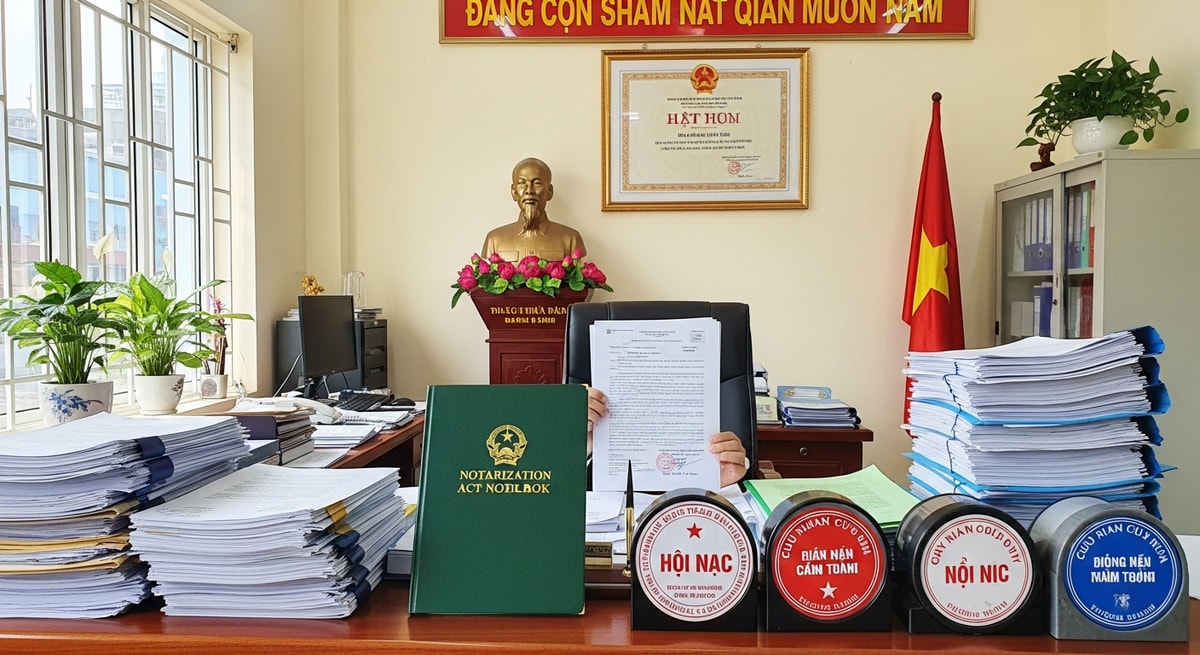
Vietnamese notarial organizations authenticate translator signatures under the 2024 Law on Notarization
Consular Legalization and Vietnam's Path to the Apostille Convention
Vietnam deposited its instrument of accession to the Hague Apostille Convention on December 31, 2025, marking a historic step in simplifying international document authentication. The Convention will enter into force for Vietnam on September 11, 2026. Until that date, the traditional consular legalization process remains the only pathway for authenticating documents between Vietnam and other countries. This process involves multiple steps and government agencies but ensures that documents carry full legal validity across international borders.
For Vietnamese documents going abroad, the process begins with notarial certification of the translation, followed by authentication at the Cục Lãnh sự (Consular Department) of Vietnam's Ministry of Foreign Affairs. The Consular Department operates at its headquarters in Hà Nội at 40 Trần Phú, Ba Đình District, and through the Sở Ngoại vụ Thành phố Hồ Chí Minh (Department of External Relations) at 184 bis Pasteur, Quận 1. Processing typically takes one business day for standard submissions, though documents exceeding ten pages may require up to five working days. The legalization fee is 30,000 VND per stamp. After Vietnamese authentication, the document must be legalized by the destination country's embassy or consulate in Vietnam.
For foreign documents coming into Vietnam, the reverse process applies: the document is first authenticated by the competent authority in the issuing country, then legalized by the Vietnamese embassy or consulate in that country. Upon arrival in Vietnam, the document must be translated into Vietnamese by a qualified translator, and the translation must be certified through the appropriate authentication procedure. DoVisa manages the complete legalization process in both directions, coordinating with Vietnamese government offices and foreign diplomatic missions to ensure all documents receive proper authentication. Once the Apostille Convention takes effect for Vietnam, we will transition to the streamlined apostille process, significantly reducing processing times and costs for our customers.
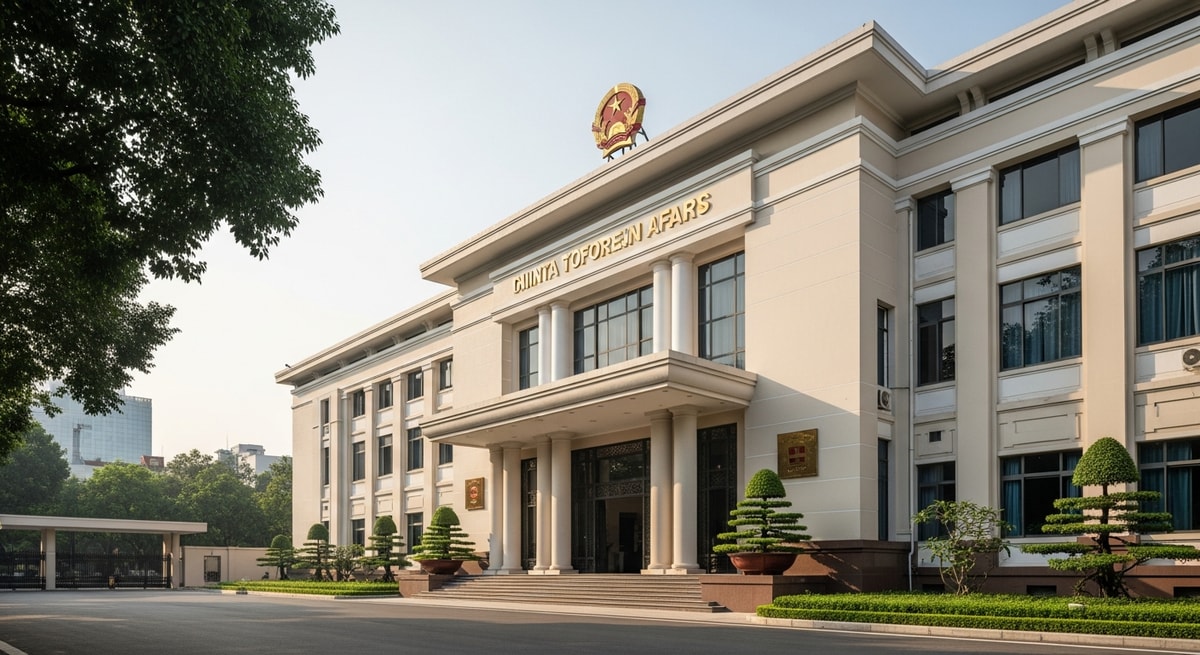
Vietnam's Consular Department handles document legalization until the Apostille Convention takes effect in September 2026
Navigating Vietnamese Document Requirements and Diacritical Accuracy
Vietnamese is written using the Latin alphabet with an extensive system of diacritical marks (dấu) that are essential to meaning. The Vietnamese writing system uses five tone marks (sắc, huyền, hỏi, ngã, nặng) and additional letter modifications (ă, â, đ, ê, ô, ơ, ư) that distinguish completely different words. For example, ma (ghost), má (mother/cheek), mà (but/that), mả (grave), mã (horse/code), and mạ (rice seedling) are six entirely different words. A single misplaced or missing diacritical mark in a translated name or legal term can render a document invalid or create legal ambiguity.
Vietnamese government documents follow specific formatting conventions that translators must understand and preserve. A Giấy khai sinh (birth certificate) issued by an Ủy ban Nhân dân contains the child's full name with exact diacritical marks, the parents' names, place of birth (including xã/phường, quận/huyện, tỉnh/thành phố administrative divisions), and registration details. A Phiếu lý lịch tư pháp (criminal record certificate) issued by the Sở Tư pháp contains the applicant's complete personal information and criminal record status. A Sổ hộ khẩu (household registration book), while being phased out in favor of digital records, remains a commonly translated document that lists all members of a household with their relationships and personal details.
DoVisa's Vietnamese translators are native speakers who understand the critical importance of diacritical accuracy. Every Vietnamese name, place name, and legal term in our translations carries the correct diacritical marks as they appear on the original document. We use standardized romanization for Vietnamese personal names in English translations, maintaining the original Vietnamese spelling with full diacritics alongside any simplified versions that the client or receiving authority may require. Our quality review process includes a dedicated diacritical accuracy check by a second native Vietnamese reviewer, ensuring that no tonal or letter modifications are omitted or incorrectly rendered in the final certified translation.
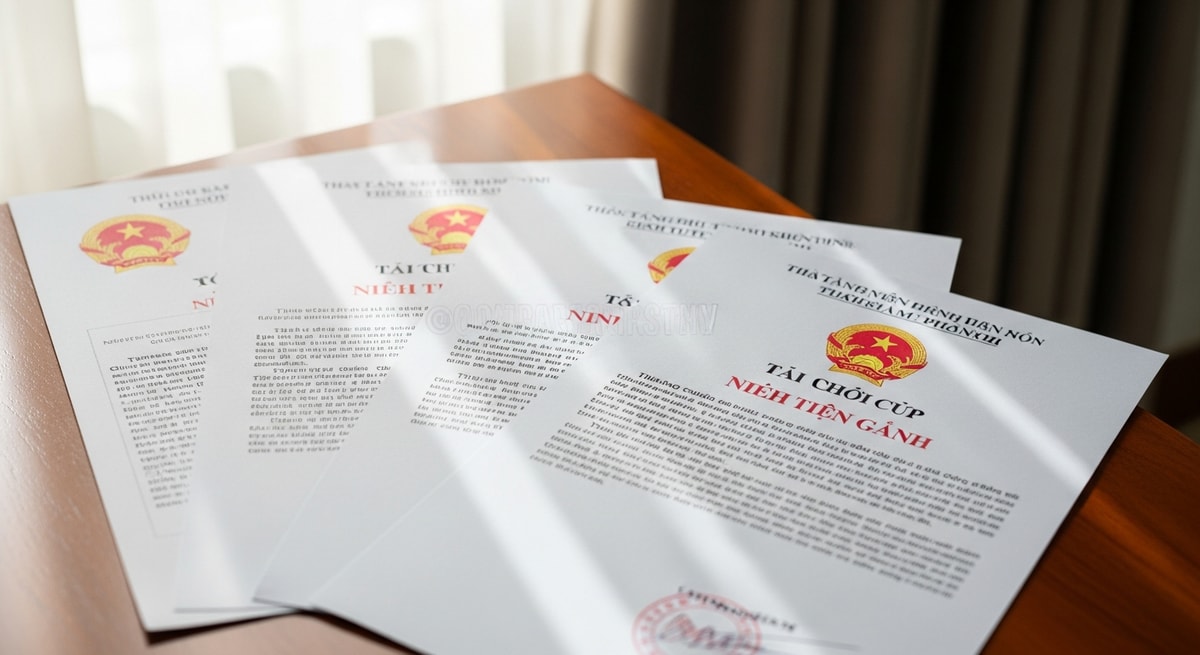
Vietnamese documents require meticulous diacritical accuracy in translation to maintain legal validity
"Needed my Vietnamese Bằng tốt nghiệp and Bảng điểm translated to English for WES credential evaluation in Canada. The translator captured all the Vietnamese academic terminology perfectly. WES processed my evaluation without any follow-up questions. Excellent service."
"DoVisa translated my husband's Vietnamese Giấy khai sinh and Giấy chứng nhận kết hôn for our USCIS I-130 petition. Every diacritical mark was perfect. USCIS approved the petition without any RFE. Highly recommend for immigration documents."
"Good translation of my Vietnamese police clearance for an Australian skilled visa application. The Department of Home Affairs accepted the translation. Would have given 5 stars but express delivery was not available for my specific document type."
"Our company needed Vietnamese business registration documents translated to English for a UK subsidiary setup. The translator handled the corporate charter terminology with precision. Our solicitors accepted everything without questions."
"Vietnamese-to-Japanese translation of my birth certificate and academic transcripts for a work visa in Tokyo. The translator understood both Vietnamese document formats and Japanese requirements. Immigration processed my application smoothly."
"Had my Vietnamese marriage certificate and wife's birth certificate translated for Canadian family sponsorship. IRCC accepted the translations with no issues. Good turnaround time at 4 business days. Solid service overall."
"Translated my Vietnamese nursing credentials and transcripts to English for nursing board registration in Australia. AHPRA accepted the translation and my qualifications were recognized. DoVisa made the process much easier than I expected."
"Vietnamese birth certificate translation was accurate but the initial version had a minor formatting issue with the administrative divisions. They corrected it quickly and the UK Home Office accepted the final version for my spouse visa."
"Five Vietnamese documents translated for my US green card application: birth certificate, marriage certificate, police clearance, diploma, and employment letter. All translations were accepted by USCIS without a single correction needed."
"Vietnamese-to-Korean translation of my academic transcripts and degree certificate for graduate school admission in Seoul. The university accepted the translations without any issues. Excellent attention to Vietnamese diacritical marks."
"Needed English translations of my Sổ hộ khẩu and various family documents for an immigration case. The translator handled the multi-generational household registration details well. Delivered on schedule and accepted by the immigration office."
"Needed my Vietnamese Bằng tốt nghiệp and Bảng điểm translated to English for WES credential evaluation in Canada. The translator captured all the Vietnamese academic terminology perfectly. WES processed my evaluation without any follow-up questions. Excellent service."
"DoVisa translated my husband's Vietnamese Giấy khai sinh and Giấy chứng nhận kết hôn for our USCIS I-130 petition. Every diacritical mark was perfect. USCIS approved the petition without any RFE. Highly recommend for immigration documents."
"Good translation of my Vietnamese police clearance for an Australian skilled visa application. The Department of Home Affairs accepted the translation. Would have given 5 stars but express delivery was not available for my specific document type."
Vietnamese Document Translation FAQs
What is a bản dịch công chứng and why is it required?
A bản dịch công chứng is a certified translation that has been authenticated through Vietnam's official notarization or signature certification process. Under the Luật Công chứng 2024 (Law on Notarization 2024), effective July 1, 2025, the translator produces the translation and takes personal responsibility for its accuracy, then the translator's signature is authenticated by a notarial organization or commune-level People's Committee. Vietnamese government agencies, courts, the Bộ Tư pháp (Ministry of Justice), Sở Tư pháp (provincial justice departments), and Ủy ban Nhân dân (People's Committees) require this certified translation for all foreign-language documents used in official proceedings. Without proper certification, a translation has no legal standing in Vietnam's administrative and judicial systems.
How did Vietnam's 2024 Law on Notarization change the translation certification process?
The Luật Công chứng 2024 fundamentally reformed how translations are certified in Vietnam. Under the previous 2014 law, notaries (công chứng viên) could directly certify that a translation was accurate and lawful, effectively vouching for the translation content. The 2024 law, implemented through Decree 104/2025/NĐ-CP effective July 1, 2025, separates these functions. Translators must now hold appropriate professional qualifications and bear personal legal responsibility for translation accuracy. The notary's role is limited to authenticating the translator's signature (chứng thực chữ ký), confirming the translator's identity rather than the translation's content. This dual-layer system strengthens accountability while maintaining official authentication.
How much does certified Vietnamese translation cost?
Our Vietnamese certified translation pricing follows a transparent per-page structure with volume discounts that apply automatically for larger document sets. Pricing varies based on document length, language pair, complexity, and the processing speed you select. Express and rush service options are available for time-sensitive projects. Consular legalization through the Cục Lãnh sự (Consular Department) of the Ministry of Foreign Affairs is quoted separately. Hard-copy shipping is included for domestic deliveries within Vietnam; international shipping is quoted based on destination. Upload your documents on our order page to receive an instant, detailed quote before work begins with no hidden fees.
Can Vietnam issue apostilles for document authentication?
Vietnam deposited its instrument of accession to the Hague Apostille Convention on December 31, 2025, but the Convention does not enter into force for Vietnam until September 11, 2026. Until that date, all international document authentication must go through the traditional consular legalization process. This involves authentication by the Cục Lãnh sự (Consular Department) of the Ministry of Foreign Affairs in Hà Nội or the Sở Ngoại vụ (Department of External Relations) in Hồ Chí Minh City, followed by legalization at the destination country's embassy. Once the Convention becomes operational, Vietnam's designated competent authorities will be able to issue apostilles, significantly simplifying the authentication process for use in the 125+ member states.
What documents are needed for a Vietnamese immigration application abroad?
The specific document requirements vary by destination country, but Vietnamese nationals typically need certified translations of: Giấy khai sinh (birth certificate), Giấy chứng nhận kết hôn (marriage certificate, if applicable), Phiếu lý lịch tư pháp (criminal record certificate issued by the Sở Tư pháp), Bằng tốt nghiệp and Bảng điểm (academic diploma and transcript), Hộ chiếu (passport biographical page), and in some cases, Giấy xác nhận tình trạng hôn nhân (single-status certificate) or employment documentation. USCIS, IRCC, the UK Home Office, and the Australian Department of Home Affairs each have specific formatting expectations. DoVisa offers country-specific immigration translation packages at bundled rates covering all standard documents.
How does consular legalization work for Vietnamese documents?
Consular legalization of Vietnamese documents for use abroad follows a multi-step process. First, the document is translated and certified by a qualified translator with proper signature authentication. The certified translation is then submitted to the Cục Lãnh sự (Consular Department) at 40 Trần Phú, Ba Đình, Hà Nội, or the Sở Ngoại vụ at 184 bis Pasteur, Quận 1, Hồ Chí Minh City, for authentication. Processing takes one business day for standard submissions (up to five days for documents over ten pages), with a fee of 30,000 VND per stamp. After Vietnamese authentication, the document must be legalized by the destination country's embassy or consulate in Vietnam. DoVisa handles this entire process from start to finish, including submission to the correct Vietnamese authority and coordination with the relevant foreign diplomatic mission.
Why are Vietnamese diacritical marks so important in translations?
Vietnamese uses the Latin alphabet supplemented by extensive diacritical marks (dấu) that fundamentally change word meanings. The language has five tone marks (sắc, huyền, hỏi, ngã, nặng) and modified letters (ă, â, đ, ê, ô, ơ, ư). A missing or incorrect diacritical mark can change a person's name, alter the meaning of a legal term, or render a place name unrecognizable. For example, the common surname Nguyễn written without diacritics as 'Nguyen' is acceptable in informal contexts, but official translations must preserve the exact marks as they appear on the original document. Immigration authorities may reject translations where names do not match the original Vietnamese documents precisely. DoVisa's native Vietnamese translators ensure every diacritical mark is correctly rendered.
Do I need original documents or are digital copies sufficient?
For the translation process itself, clear digital scans or photographs are sufficient. Our translators work from the digital copies you upload through our secure portal. However, certain Vietnamese authorities may require you to present the original document alongside the certified translation during in-person submissions. For consular legalization, the Cục Lãnh sự may need to verify the original document. We recommend keeping your originals safe and accessible even though the translation process only requires digital copies. For Vietnamese documents being translated for use abroad, we strongly recommend high-resolution color scans that clearly capture all stamps, seals, and diacritical marks on the original document.
Can DoVisa translate Vietnamese academic credentials for overseas university admission?
Yes, and Vietnamese academic documents require specialized knowledge of Vietnam's education system. Our translators accurately render credentials from all levels including Bằng tốt nghiệp Trung học phổ thông (high school diploma), Bằng cử nhân (bachelor's degree), Bằng thạc sĩ (master's degree), and Bằng tiến sĩ (doctoral degree). We properly translate Vietnamese grading scales, credit systems, and institutional names. For credential evaluation services such as WES, ECE, and NACES member organizations, we format translations to present the Vietnamese educational structure clearly, facilitating accurate equivalency assessments. Our translators understand the distinction between đại học (university) and cao đẳng (college) credentials and present them correctly for international recognition.
What is the Sổ hộ khẩu and can it still be translated?
The Sổ hộ khẩu (household registration book) was a foundational Vietnamese civil document that recorded all members of a household, their relationships, and personal details at a registered address. While Vietnam has been transitioning to a digital population database and the physical Sổ hộ khẩu has been officially phased out for most administrative purposes since January 1, 2023, many Vietnamese citizens still possess these books and they remain relevant for historical documentation, immigration cases requiring proof of family relationships, and legal proceedings. DoVisa translates Sổ hộ khẩu documents regularly for immigration applications where proof of family composition and address history is required by foreign authorities.
How long does the consular legalization process take?
The consular legalization timeline depends on the complexity of your documents and the responsiveness of the relevant embassies. Authentication by the Cục Lãnh sự (Consular Department) in Hà Nội or the Sở Ngoại vụ in Hồ Chí Minh City typically takes one business day for standard submissions of fewer than ten pages, and up to five business days for larger document sets. The subsequent embassy legalization step varies significantly by country: some embassies process within two to three days, while others may take one to two weeks. The total end-to-end process, including translation, Vietnamese authentication, and embassy legalization, typically ranges from 7 to 15 business days. DoVisa provides estimated timelines specific to your destination country before you place your order.
Are digital PDF translations accepted by Vietnamese authorities?
Vietnamese authorities generally require physical originals of certified translations bearing the translator's signature and the authentication stamp from the notarial organization or People's Committee. Digital PDF copies are useful for preliminary submissions, remote consultations, and personal records, but most Vietnamese government offices, courts, and People's Committees will request the authenticated hard-copy original during formal proceedings. DoVisa provides both a high-resolution certified PDF for your immediate digital needs and the physical authenticated original shipped via tracked courier. For documents going through consular legalization, the Cục Lãnh sự requires the physical document for stamp authentication.
Can DoVisa translate documents for a Vietnamese work permit application?
Yes, foreign professionals seeking a Giấy phép lao động (work permit) in Vietnam must submit certified Vietnamese translations of their academic degrees, professional certificates, health examination results, and criminal record certificates to the Sở Lao động, Thương binh và Xã hội (Department of Labour, Invalids and Social Affairs) in the province where they will work. Under the Bộ luật Lao động 2019 (Labor Code 2019) and its implementing decrees, these translations must be certified and, if the originals are foreign documents, they must have undergone consular legalization. DoVisa provides a work permit translation package covering all standard required documents, coordinated with the legalization process for a seamless application experience.
What if a Vietnamese government agency rejects my translation?
DoVisa offers an acceptance guarantee for all certified translations. If a Vietnamese Ủy ban Nhân dân, Sở Tư pháp, court, or any other Vietnamese authority rejects our translation due to a formatting, terminology, or certification issue, we will revise and reissue the translation at no additional cost within 24 hours. In our experience, rejections are extremely rare and typically relate to individual office preferences regarding formatting details rather than translation accuracy. When an issue occurs, our translators promptly adjust the document to meet the specific office's requirements. If a revision does not resolve the matter, we provide a full refund. Rejections based on problems with the original source document or missing documentation are outside this guarantee's scope.
Get Your Vietnamese Certified Translation Today
Professional certified translations by qualified Vietnamese translators, accepted by government agencies, embassies, courts, and institutions worldwide