Certified Egyptian Document Translation
Official Arabic translations accepted by Egypt's Ministry of Foreign Affairs, Ministry of Justice, courts, and embassies worldwide. Compliant with Egyptian legal and administrative standards, with full consular legalization support.
TrustpilotSelect Languages
Drag & drop your documents here
or
PDF, JPEG, PNG, WebP — Max 10MB per file. Word documents: please save as PDF first.
Certified translators · Accepted by governments, courts & universities worldwide · View sample
Select a destination country to view pricing
How Egyptian Certified Translation Works
Submit Your Documents Securely
Upload clear scans of your Egyptian or foreign-language documents through our encrypted portal. We accept all standard formats including PDF, JPEG, and PNG. Our intake specialists review each upload for legibility and completeness, identifying the document type and required language pair. If a rescan or additional pages are needed, we contact you immediately before translation begins.
Certified Translator Assignment
Your documents are matched with a certified Arabic translator (mutarjim mu'tamad) recognized by the Egyptian Ministry of Justice and authorized translation offices. Egyptian law requires that translations for official use be produced by translators whose credentials have been verified by judicial or ministerial authorities. We confirm each translator's active authorization before every assignment to ensure the legal validity of your translation.
Translation and Quality Review
The certified translator produces your official translation and affixes the authorized office seal, signature, and certification statement confirming accuracy and completeness. A second qualified linguist performs a thorough review of terminology, formatting, and legal accuracy. For documents requiring notarization, the translation is prepared for attestation at the Notarization Office (Maktab al-Tawthiq) and the Ministry of Foreign Affairs.
Delivery with Full Certification
Receive your certified translation as a high-resolution PDF for immediate use, with the original stamped and sealed hard copy shipped to your address via tracked international courier. For documents destined for use in Egypt, we coordinate the full consular legalization chain including Ministry of Foreign Affairs attestation and embassy authentication. Priority shipping within Egypt and express international delivery options are available.
Egyptian Translation Service Specifications
Popular Language Pairs
We support all languages — 100+ language pairs available for Egyptian documents.
Common Documents
- Egyptian birth certificates (Shahaadat Milaad / شهادة ميلاد)
- Marriage certificates (Aqd Zawaaj / عقد زواج)
- Divorce decrees (Hukm al-Talaaq / حكم الطلاق)
- Academic diplomas and transcripts (Shahaada / شهادة)
- Egyptian police clearance certificates (Saheefat al-Haalah al-Jinaa'iyyah / صحيفة الحالة الجنائية)
- National ID cards (Bitaaqat al-Raqm al-Qawmi / بطاقة الرقم القومي)
- Powers of attorney (Tawkeel / توكيل)
- Commercial register extracts (al-Sijill al-Tijaari / السجل التجاري)
- Court judgments and legal documents (Ahkaam Qadaa'iyyah / أحكام قضائية)
- Death certificates (Shahaadat Wafaah / شهادة وفاة)
Turnaround Time
Certification Details
Egyptian Translation Requirements and Regulatory Framework
Embassy Acceptance
Notarization Process
Apostille Information
Legal Framework
Common Scenarios for Egyptian Document Translation
Work Permits and Employment in Egypt
Foreign nationals seeking employment in Egypt must submit certified Arabic translations of their academic degrees, professional certificates, employment contracts, and police clearance certificates to the Ministry of Manpower (Wizaarat al-Quwaa al-Aamilah). The work permit application process requires all documents to be translated by an authorized office and legalized through the full consular chain. DoVisa provides translations formatted specifically for Egyptian work permit applications, including proper rendering of professional qualification equivalencies recognized by Egyptian licensing bodies.
Marriage Registration with Egyptian Authorities
Foreign nationals marrying in Egypt or Egyptians marrying abroad must submit certified translations of birth certificates, passport pages, single-status certificates (Shahaadat Adum Zawaaj), and any prior divorce decrees to the Civil Status Authority (al-Ahwaal al-Madaniyyah). Each civil status office requires translations bearing the authorized office seal and notarial attestation. Our translators ensure every translation meets the specific formatting expectations of Egyptian civil status offices, including proper Arabic equivalents for foreign civil status terminology.
University Admission and Academic Credential Evaluation
Egyptian universities and the Supreme Council of Universities (al-Majlis al-A'laa lil-Jaami'aat) require certified Arabic translations of foreign academic transcripts, diplomas, and secondary school certificates for admission and credential evaluation. The Ministry of Higher Education evaluates foreign qualifications using translated documents that must be legalized through the full consular chain. Our academic translators understand Egyptian grading conventions and use terminology that credential evaluators expect, facilitating smoother evaluation outcomes.
Business Establishment and Commercial Registration
Foreign entrepreneurs establishing a company in Egypt must provide certified Arabic translations of corporate formation documents, memoranda of association, shareholder agreements, and financial statements. These translations are submitted to the General Authority for Investment and Free Zones (GAFI) and the Commercial Registry (al-Sijill al-Tijaari). Our commercial translators are experienced with Egyptian commercial law terminology and the specific documentation requirements of the Investment Authority and the Companies Department.
Family Reunification and Immigration
Spouses, children, and parents of Egyptian residents applying for family reunification must present certified translations of birth certificates, marriage certificates, custody agreements, and financial support declarations. Egyptian consular sections worldwide require translations bearing the authorized office seal, and documents must proceed through the full legalization chain before being accepted by Egyptian immigration authorities. Our translations meet the strict requirements of Egyptian consular sections and the Passport and Immigration Authority (Maslahat al-Jawaazaat wal-Hijrah).
Egyptian Court Document Translation for International Cases
Cross-border litigation, international divorce proceedings, and custody cases require certified translations of Egyptian court judgments (Ahkaam), legal briefs, and official correspondence. Our legal translation team handles complex Egyptian procedural law terminology across all court levels, from the Courts of First Instance (Mahaakeem Ibtidaa'iyyah) through the Court of Cassation (Mahkamat al-Naqd), ensuring that foreign courts and attorneys receive accurate translations preserving the legal precision of the original Arabic judicial language.
The Egyptian Certified Translator System Explained
Egypt operates a structured translation certification system overseen by the Ministry of Justice and authorized by judicial authorities. Unlike countries with a single centralized sworn translator registry, Egypt's system involves authorized translation offices (Maktab Tarjamah Mu'tamad) that are licensed to produce certified translations bearing their official seal. Translators working within these offices must demonstrate advanced linguistic competence through university qualifications in translation, foreign languages, or a related discipline, along with knowledge of Egyptian legal and administrative terminology.
Each authorized translation office is issued an official seal (Khatm Rasmi) by the relevant authority. This seal, combined with the translator's signature and a certification statement affirming accuracy and completeness, gives the translation its legal standing before Egyptian authorities. The certification statement declares that the translation faithfully represents the content of the original document and has been produced by a qualified translator. Egyptian government offices, courts, and institutions require this formal certification for all translated documents submitted for official purposes.
For documents requiring additional authentication, the certified translation is presented to a Notary Public (Muwaththiq) at the Notarization Office (Maktab al-Tawthiq), where the translator takes an oath affirming the accuracy of the translation. The notary verifies the translator's identity and the authorized office seal, then affixes the notarial attestation. This notarized translation can then proceed through the Ministry of Foreign Affairs for further legalization. DoVisa maintains a network of authorized translation offices across Egypt's major cities, including Cairo, Alexandria, Giza, Sharm el-Sheikh, and Luxor, ensuring we can provide properly certified translations for any document type and language combination.
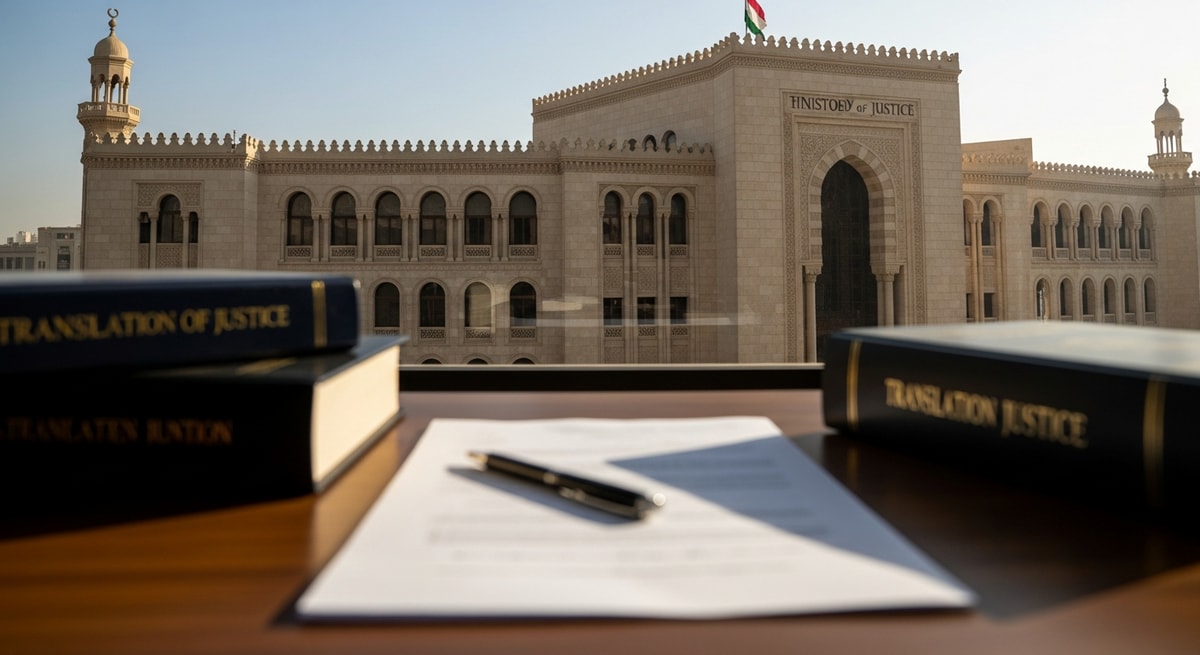
Egypt's Ministry of Justice oversees the authorization of translation offices for producing legally valid certified translations
Consular Legalization for Egyptian Documents
Because Egypt has not ratified the Hague Apostille Convention, documents originating from or destined for Egypt must undergo the full consular legalization (Tasdeek Qunsulee) process rather than the simplified apostille procedure. This multi-step authentication chain verifies the document's authenticity through a series of official attestations by government authorities in both the originating and receiving countries.
For Egyptian documents going abroad, the legalization chain typically follows these steps: first, the certified translation is produced by an authorized translation office with the official seal and certification. Next, the translation is notarized at the Notarization Office (Maktab al-Tawthiq). The notarized translation is then submitted to the Egyptian Ministry of Foreign Affairs (Wizaarat al-Khaarijiyyah), which verifies the notary's attestation and affixes its own authentication stamp. Finally, the document is presented to the embassy or consulate of the destination country in Cairo for their legalization stamp, completing the authentication chain.
For foreign documents coming into Egypt, the chain runs in reverse: the document is first notarized in the originating country, then authenticated by that country's ministry of foreign affairs, followed by legalization at the Egyptian embassy or consulate in that country, and finally attested by Egypt's Ministry of Foreign Affairs upon arrival. The complete process typically takes 6-9 business days at each embassy stage, though processing times vary by location. DoVisa manages the entire legalization chain in both directions, coordinating submissions, tracking progress, and delivering the fully legalized documents to your specified address.
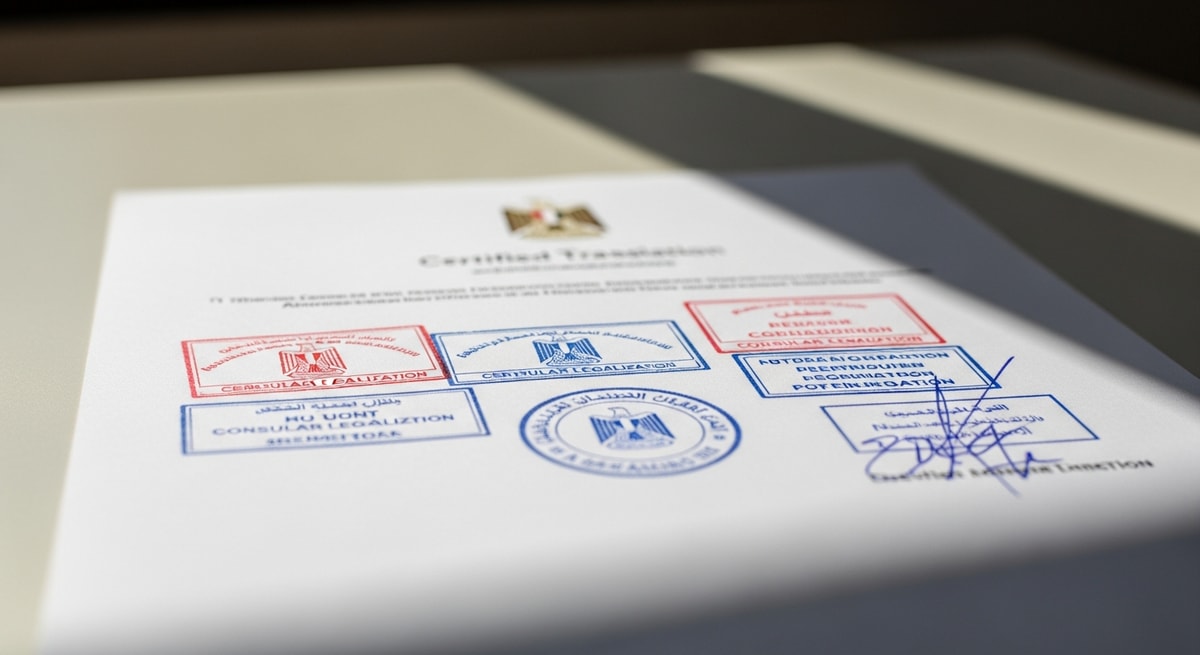
Egyptian consular legalization authenticates documents through a multi-step chain for international recognition
Navigating Egyptian Bureaucratic Document Requirements
Egypt's administrative system requires careful attention to documentation standards, with each government authority (Jiha Hukuumiyyah) maintaining specific requirements for translated documents. The Civil Status Authority (al-Ahwaal al-Madaniyyah) is one of the most documentation-intensive, requiring certified Arabic translations of all foreign vital records for marriage registrations, birth registrations, and name changes. Each civil status office may request different supporting documents depending on the nationality of the applicant, and all translations must bear the authorized office seal and notarial attestation.
The Ministry of Manpower (Wizaarat al-Quwaa al-Aamilah) handles work permits and employment authorization for foreign nationals. Document requirements for work permits include translated academic certificates, professional qualifications, employment contracts, and police clearance certificates. The ministry requires that all translations are produced by authorized offices and fully legalized through the consular chain. Processing expectations vary by nationality and employment sector, and our translators maintain familiarity with the ministry's current procedural requirements.
For academic credential recognition through the Supreme Council of Universities and the Ministry of Higher Education, foreign professionals and students must submit certified translations of their qualifications along with the complete legalization chain. Medical professionals apply to the Egyptian Medical Syndicate (Niqaabat al-Atibbaa'), engineers to the Egyptian Engineers Syndicate (Niqaabat al-Muhandiseen), and lawyers to the Egyptian Bar Association (Niqaabat al-Muhaamin). Each professional body has specific terminology expectations for translated credentials. Our specialized translators produce translations using the Arabic professional terminology that Egyptian evaluators and syndicates expect, significantly improving the likelihood of smooth credential recognition.
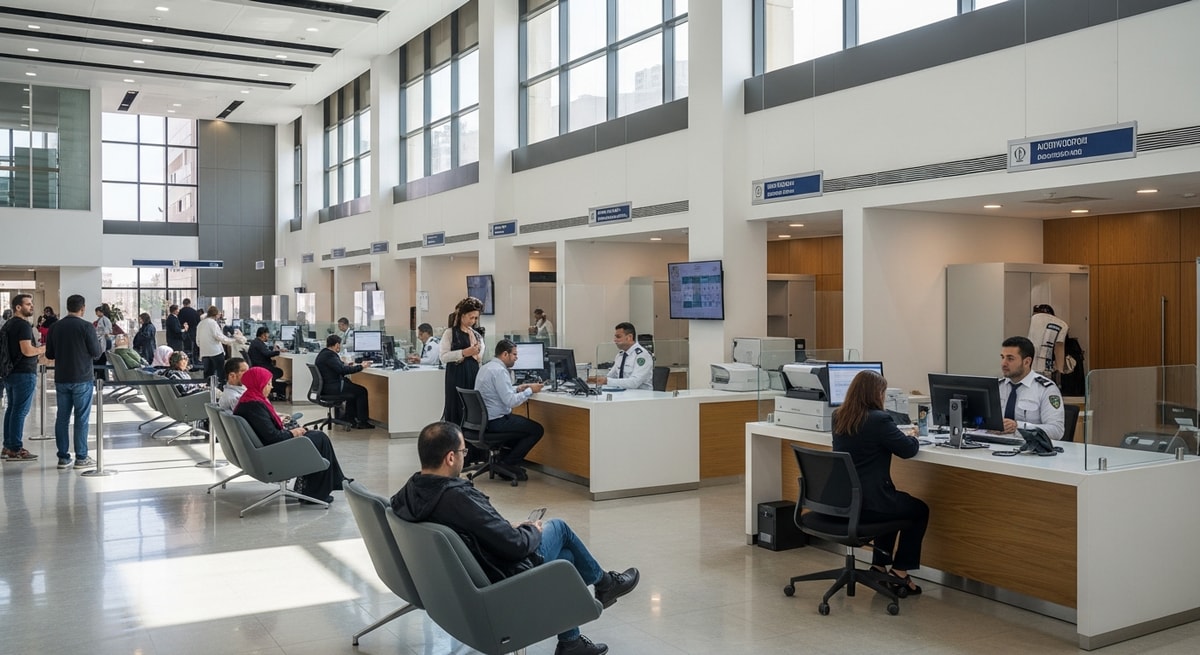
Egyptian government authorities require certified translations meeting precise formatting and authentication standards
"Needed my Egyptian engineering degree and transcripts translated to English for a professional license application in Canada. The translator captured all the academic terminology perfectly and PEO accepted everything without requesting any clarifications."
"DoVisa handled the translation and legalization of my UK marriage certificate into Arabic for registration at the Civil Status Authority in Cairo. The entire process from upload to receiving the fully legalized translation took 12 days. The office accepted everything immediately."
"Good translation of my Egyptian birth certificate and police clearance for an Australian skilled visa application. The Department of Home Affairs accepted both translations. Giving 4 stars because express service was unavailable for my specific language pair."
"Translated my Egyptian medical degree and internship certificate from Arabic to English for ECFMG certification in the United States. The translators understood complex medical terminology and the ECFMG processed my application without any issues. Outstanding quality."
"Moved to Cairo for work and needed my American university transcripts translated to Arabic with full consular legalization. DoVisa coordinated the entire chain from the US State Department through the Egyptian embassy. The Ministry of Higher Education accepted everything."
"Arabic to French translation of my Egyptian divorce decree for use in a French court. The translator handled complex family law terminology accurately and the tribunal accepted the translation. Delivery was within the promised timeframe."
"Egyptian commercial register extract and articles of association translated to English for setting up a subsidiary in Dubai. Our UAE lawyers confirmed the translations were thorough and properly formatted. The Ministry of Economy accepted them without revision."
"Translation of my Egyptian birth certificate was accurate but the initial version had a minor transliteration inconsistency with my father's name. They corrected it within a few hours and the final document was accepted by the German Standesamt, but the error should have been caught."
"Needed six documents translated from Arabic to English for my UK spouse visa including marriage certificate, birth certificates, and financial documents. The Home Office accepted every translation. Quick turnaround and the pricing was very reasonable for the volume."
"Egyptian nursing diploma translated to English for NMC registration in the UK. The NMC accepted the translation and my qualifications were recognized within standard processing time. DoVisa made the credential recognition process much smoother than I expected."
"Translation of Egyptian court judgment and legal correspondence from Arabic to English for a cross-border commercial dispute. The legal terminology was handled professionally and our London solicitors were satisfied with the accuracy. Good communication throughout."
"Needed my Egyptian engineering degree and transcripts translated to English for a professional license application in Canada. The translator captured all the academic terminology perfectly and PEO accepted everything without requesting any clarifications."
"DoVisa handled the translation and legalization of my UK marriage certificate into Arabic for registration at the Civil Status Authority in Cairo. The entire process from upload to receiving the fully legalized translation took 12 days. The office accepted everything immediately."
"Good translation of my Egyptian birth certificate and police clearance for an Australian skilled visa application. The Department of Home Affairs accepted both translations. Giving 4 stars because express service was unavailable for my specific language pair."
Egyptian Document Translation FAQs
What is a certified Arabic translation and why does it matter in Egypt?
A certified Arabic translation (Tarjamah Mu'tamadah) is a translation produced by a translator working under an authorized translation office (Maktab Tarjamah Mu'tamad) licensed by Egyptian judicial authorities. The translator affixes the authorized office seal, their signature, and a formal certification statement confirming accuracy and completeness. This certification gives the translation legal standing before Egyptian courts, government ministries, and institutions. Egyptian authorities, including the Civil Status Authority, Ministry of Foreign Affairs, Ministry of Manpower, and all courts, only accept translations bearing the seal of an authorized translation office. Translations produced without this formal certification are not considered legally valid for official purposes in Egypt.
Are all DoVisa Egyptian translators authorized by the Ministry of Justice?
Yes. Every translator in our Egyptian network works under an authorized translation office (Maktab Tarjamah Mu'tamad) that has been licensed by the relevant Egyptian judicial authority. Our translators hold university-level qualifications in translation, foreign languages, or related linguistic disciplines and have demonstrated expertise in Egyptian legal and administrative terminology. Before each project assignment, we verify the translator's current authorization status and the validity of the office seal. Our network covers all major Egyptian cities including Cairo, Alexandria, Giza, and Aswan, and provides coverage across more than 40 language pairs.
How much does certified Egyptian translation cost?
Our Egyptian certified translation pricing follows a transparent per-page structure with volume discounts that apply automatically for larger documents. Pricing varies based on document length, language pair, and the processing speed you select. Express and rush service options are available for time-sensitive projects. Consular legalization fees through the Egyptian Ministry of Foreign Affairs and relevant embassies are quoted separately based on the destination country. Shipping within Egypt is included at no extra charge; international shipping is quoted based on destination. Upload your documents on our order page to receive an instant, detailed quote before work begins.
Why does Egypt require consular legalization instead of an apostille?
Egypt is not a member of the Hague Apostille Convention (formally the Convention Abolishing the Requirement of Legalisation for Foreign Public Documents). As a result, the simplified apostille process that allows documents to be authenticated with a single certificate between member states is not available for Egyptian documents. Instead, Egypt uses the traditional consular legalization (Tasdeek Qunsulee) process, which involves a multi-step authentication chain through notaries, foreign affairs ministries, and embassies or consulates of both the originating and receiving countries. While this process takes longer than an apostille, it serves the same purpose of verifying document authenticity for cross-border use. DoVisa manages the complete legalization chain to minimize delays and ensure all steps are completed correctly.
How long does the consular legalization process take for Egyptian documents?
The consular legalization timeline depends on the specific embassies and government offices involved. Within Egypt, notarization at the Notarization Office typically takes 1-2 business days, and Ministry of Foreign Affairs attestation takes 2-3 business days. Embassy or consulate legalization by the destination country varies: 6-7 business days for personal documents, 8 business days for state-certified documents, and 9 business days for notarized company documents at most Egyptian embassies. The complete chain from certified translation to fully legalized document typically takes 10-15 business days. DoVisa tracks each step and provides regular status updates throughout the process.
What documents do I need translated for an Egyptian work permit?
The Egyptian work permit application through the Ministry of Manpower typically requires certified Arabic translations of: your university degree certificate and academic transcript; your professional qualifications or trade certificates; your employment contract with the Egyptian employer; a police clearance certificate (Saheefat al-Haalah al-Jinaa'iyyah) from your home country and any country where you have resided for extended periods; your passport biographical page; and in many cases, previous employment references or letters. All documents must be fully legalized through the consular chain before submission. DoVisa offers a work permit translation package covering all standard documents at a bundled rate.
Can I use an Egyptian certified translation in other Arab countries?
Egyptian certified translations are widely respected across the Arab world due to Egypt's prominent legal tradition and the quality of its authorized translation offices. However, each Arab country has its own specific requirements for foreign document acceptance. Gulf Cooperation Council (GCC) countries such as Saudi Arabia, the UAE, Kuwait, and Qatar generally require the full consular legalization chain even for Arabic-language documents originating from Egypt. Some countries may require re-certification by a locally authorized translator. For documents destined for use in another Arab country, DoVisa can advise on the specific authentication requirements and coordinate the appropriate legalization process for the destination country.
Do I need original documents or are copies sufficient?
For the translation process itself, clear digital scans or photographs are sufficient. Our translators work from the digital copies you upload through our secure portal. However, the receiving Egyptian authority may require you to present the original document alongside the certified translation during your in-person appointment. For the notarization and legalization process, original documents are typically required at certain steps in the chain. We recommend keeping your originals safe and accessible. Our certified translations are bound together with a copy of the source document and include the translator's certification statement, authorized office seal, and signature. For preliminary submissions and digital records, our high-resolution certified PDF scans are suitable.
How do you handle Arabic transliteration of names in translated documents?
Arabic names and terms in translated documents require careful transliteration to ensure consistency across all official paperwork. When translating from Arabic to English, our translators follow established transliteration conventions and cross-reference the spelling used in the individual's passport or other official English-language documents to maintain consistency. When translating into Arabic, foreign names are rendered using standard Arabic phonetic equivalents. The translator notes any transliteration decisions in the certification statement when relevant. For documents where name consistency is critical, such as immigration and civil status documents, we verify spellings against passport data you provide to prevent discrepancies that could cause delays at government offices.
Can DoVisa translate Egyptian court judgments and legal documents?
Yes, Egyptian court documents require specialized translation expertise. Our legal translators are experienced with the terminology used across all levels of the Egyptian judiciary, from Courts of First Instance (Mahaakeem Ibtidaa'iyyah) through Courts of Appeal (Mahaakeem al-Isti'naaf) to the Court of Cassation (Mahkamat al-Naqd). We handle family court rulings, commercial dispute judgments, criminal records, powers of attorney, and notarial deeds. For cross-border legal proceedings, our translators preserve the precise legal meaning of Arabic judicial language while producing translations that meet the procedural requirements of the receiving foreign court.
What if an Egyptian government office rejects my translation?
DoVisa offers an acceptance guarantee for all Egyptian certified translations. If a government ministry, civil status office, court, or other Egyptian authority rejects our translation due to a formatting, terminology, or certification issue, we will revise and reissue the translation at no additional cost within 24 hours. In our experience, rejections are extremely rare (under 1.3% of submissions) and typically relate to individual office preferences rather than translation errors. Some government offices may request specific supplementary information or alternative formatting. When this occurs, our translators promptly adjust the document to meet the particular office's expectations. If a revision does not resolve the issue, we provide a full refund.
Are digital PDF translations accepted by Egyptian authorities?
Egyptian authorities generally require the physical original of a certified translation bearing the authorized office seal and handwritten signature. Digital PDF copies are useful for preliminary submissions, pre-checks, and personal records, but most government offices will request the hard-copy original during your in-person appointment. This is particularly important for the notarization and legalization process, which requires physical documents at each stage. DoVisa includes free priority shipping within Egypt for all certified translations. For international customers, we ship via tracked courier. Our certified PDFs include high-resolution scans of the sealed and signed translation for your digital records while the physical originals are in transit.
Can I get translations for Egyptian naturalization applications?
Yes, the Egyptian naturalization process requires a comprehensive set of translated and legalized documents. The standard naturalization package typically includes: birth certificate, marriage certificate (if applicable), police clearance certificates from every country where you have resided, academic and professional certificates, proof of financial means, proof of residence in Egypt, and a medical fitness certificate. All documents must be translated by an authorized office, notarized, and legalized through the full consular chain. Each governorate's immigration department may have additional requirements. DoVisa offers a naturalization translation package at a bundled rate, and our project managers review your specific documentation list to ensure completeness before your scheduled appointment.
How do I verify an Egyptian certified translator's credentials?
Egyptian authorized translation offices are registered with the relevant judicial authorities and hold valid licenses to produce certified translations. You can verify an office's authorization by requesting to see their official license issued by the judicial authority, which includes the office name, license number, and authorized language pairs. Professional associations such as the Egyptian Translators and Linguists Association also maintain member directories. Every DoVisa certified translation includes the authorized office name, seal, and the translator's full name and signature, allowing you to verify credentials. We encourage transparency and are happy to provide verification information upon request.
Get Your Egyptian Certified Translation Today
Official Arabic translations by authorized translators, accepted by every Egyptian government ministry, court, and institution, with full consular legalization support