Certified Arabic Translation for Libyan Documents
Professional certified translations of Libyan Arabic documents accepted by USCIS, UK Visas and Immigration, IRCC, and authorities worldwide. Full consular legalization support available.
TrustpilotSelect Languages
Drag & drop your documents here
or
PDF, JPEG, PNG, WebP — Max 10MB per file. Word documents: please save as PDF first.
Certified translators · Accepted by governments, courts & universities worldwide · View sample
Select a destination country to view pricing
How Libyan Document Translation Works
Upload Your Libyan Documents Securely
Upload clear scans of your Libyan documents through our encrypted portal. We accept PDF, JPEG, and PNG formats. Our intake specialists are experienced with Libyan Arabic script and confirm that each upload is legible before translation begins. Documents may be in Modern Standard Arabic (الفصحى) or contain Libyan colloquial usage, and may include both Hijri (هجري) and Gregorian date formats — our team notes both for the receiving authority.
Certified Arabic Translator Assignment
Your Libyan documents are assigned to a translator with native-level Modern Standard Arabic proficiency and expertise in Libyan administrative and legal terminology. Our translators understand document formats used by Libyan civil registration offices (مكاتب الأحوال المدنية), courts, and the Ministry of Foreign Affairs and International Cooperation (وزارة الخارجية والتعاون الدولي). Each translator is selected based on familiarity with Libyan official document conventions and the requirements of the destination authority.
Translation, Certification & Quality Review
The translator produces a complete certified translation (ترجمة معتمدة) and affixes their signed certification statement attesting to accuracy and completeness. A second qualified linguist independently reviews the translation for terminology accuracy, Arabic name transliteration, and consistent formatting. Special attention is given to correct romanization of Arabic personal names and Hijri-to-Gregorian date conversions that appear on Libyan vital records.
Delivery with Full Certification
Your certified translation is delivered as a high-resolution digitally signed PDF. Physical copies with original translator signatures are dispatched via tracked international courier for documents requiring presentation as originals. For Libyan documents intended for international use, DoVisa can coordinate the consular legalization chain: notarization, authentication by the Libyan Ministry of Foreign Affairs and International Cooperation, and legalization by the destination country's embassy in Tripoli.
Libya Translation Service Specifications
Popular Language Pairs
We support all languages — 100+ language pairs available for Libyan documents.
Common Documents
- Birth certificates (شهادة الميلاد — Shahādat al-Mīlād)
- Marriage certificates (عقد الزواج — 'Aqd al-Zawāj)
- Death certificates (شهادة الوفاة — Shahādat al-Wafāt)
- Nationality certificates (شهادة الجنسية — Shahādat al-Jinsiyya)
- Libyan national identity cards (بطاقة الهوية الوطنية)
- Passports and travel documents
- Academic diplomas and university transcripts
- Police clearance certificates (شهادة حسن السيرة والسلوك)
- Court judgments and legal orders
- Commercial registration certificates
- Property deeds and real estate documents
- Medical records and health documentation
Turnaround Time
Certification Details
Libya Translation Requirements & Regulatory Framework
Embassy Acceptance
Notarization Process
Apostille Information
Legal Framework
Common Scenarios for Libyan Document Translation
Immigration & Visa Applications
Libyan nationals applying for immigration to the US, UK, Canada, Australia, and EU member states must submit certified Arabic-to-English translations of birth certificates, marriage certificates, police clearance certificates, and academic credentials. Our translations meet the specific formatting and certification requirements of USCIS, UK Visas and Immigration, and IRCC. We are experienced with document formats issued by Libyan civil registry offices across Tripoli, Benghazi, Misrata, and regional municipalities.
Academic Credential Evaluation
Libyan university graduates and students seeking enrollment or credential recognition abroad need certified translations of academic transcripts, diplomas, and secondary school leaving certificates issued in Arabic by institutions under the Ministry of Higher Education and Scientific Research (وزارة التعليم العالي والبحث العلمي). Our translators handle the grading systems and institutional terminology of Libyan universities including the University of Tripoli, University of Benghazi, and other higher education institutions.
Family & Marriage Documentation
Libyan marriage certificates (عقد الزواج), divorce decrees, and family record books (دفتر العائلة — daftar al-'ā'ila) are frequently required for family reunification visa applications and spousal immigration petitions. Islamic marriage contracts issued under Libyan civil registration may include Arabic religious text alongside administrative entries. Our translators accurately render both legal and religious elements of these documents, with correct transliteration of Arabic names for foreign immigration authorities.
Legal & Court Proceedings
Cross-border legal matters involving Libyan parties require certified translations of court judgments, inheritance deeds (وثيقة الإرث — wathīqat al-irth), property ownership documents, and powers of attorney. Libyan court documents use classical Arabic legal terminology that requires specialist legal translators. International arbitration panels and foreign courts handling Libyan-related cases accept our certified translations accompanied by the translator's professional declaration of competence and accuracy.
Business & Commercial Documents
Companies operating in or with Libya's oil, gas, and infrastructure sectors need translations of commercial registration certificates, contracts, tenders, and regulatory filings. Libya's National Oil Corporation (NOC) and related entities produce documentation in Arabic. For foreign businesses entering Libya and Libyan companies expanding internationally, we translate corporate governance documents, shareholder agreements, and trade licenses between Arabic and English, French, Italian, or other required languages.
Medical & Health Records
Libyan patients seeking healthcare abroad and foreign medical teams working in Libya require certified translations of medical records, diagnostic reports, hospital discharge summaries, and vaccination certificates. Libyan health records are issued in Arabic by hospitals and clinics under the Ministry of Health (وزارة الصحة). Our medical translators handle clinical terminology, pharmaceutical names, and diagnostic coding systems accurately for use by foreign healthcare providers and insurance authorities.
Arabic Script and Libyan Document Challenges
All official Libyan documents are written in Modern Standard Arabic (اللغة العربية الفصحى — al-lugha al-'arabiyya al-fuṣḥā), using the Arabic script read from right to left. This creates several translation challenges that require experienced specialists. First, Arabic is a highly inflected language where word roots carry multiple meanings depending on context; legal and administrative Arabic contains specialized vocabulary that differs significantly from everyday usage. Second, the transliteration of Arabic personal names into Latin script is not standardized — the same name may appear spelled differently across a family's documents, and a single individual's name may be romanized differently on a passport versus a birth certificate versus a residency permit. Our translators apply a consistent romanization scheme and note variations to prevent confusion with foreign immigration authorities.
Libyan vital records also frequently carry dual dating systems. The Hijri calendar (التقويم الهجري — al-taqwīm al-hijrī), an Islamic lunar calendar, was historically used for official records and may still appear alongside or instead of Gregorian dates on older documents. A birth certificate from the 1980s may display a Hijri year from the 1400s, which corresponds to Gregorian dates in the 1980s. Our translators provide both the original Hijri date and the Gregorian equivalent clearly labeled in the certified translation, ensuring that receiving authorities can verify dates accurately.
The Arabic names of Libyan administrative divisions — governorates (محافظات — muḥāfaẓāt), municipalities (بلديات — baladiyyāt), and districts — require accurate and consistent rendering. Libya's administrative geography has undergone several reorganizations, and documents from different periods may reference different administrative structures. Our Libyan translators maintain current and historical knowledge of these divisions, ensuring place names in your documents are rendered accurately and in a form that can be verified by foreign authorities.
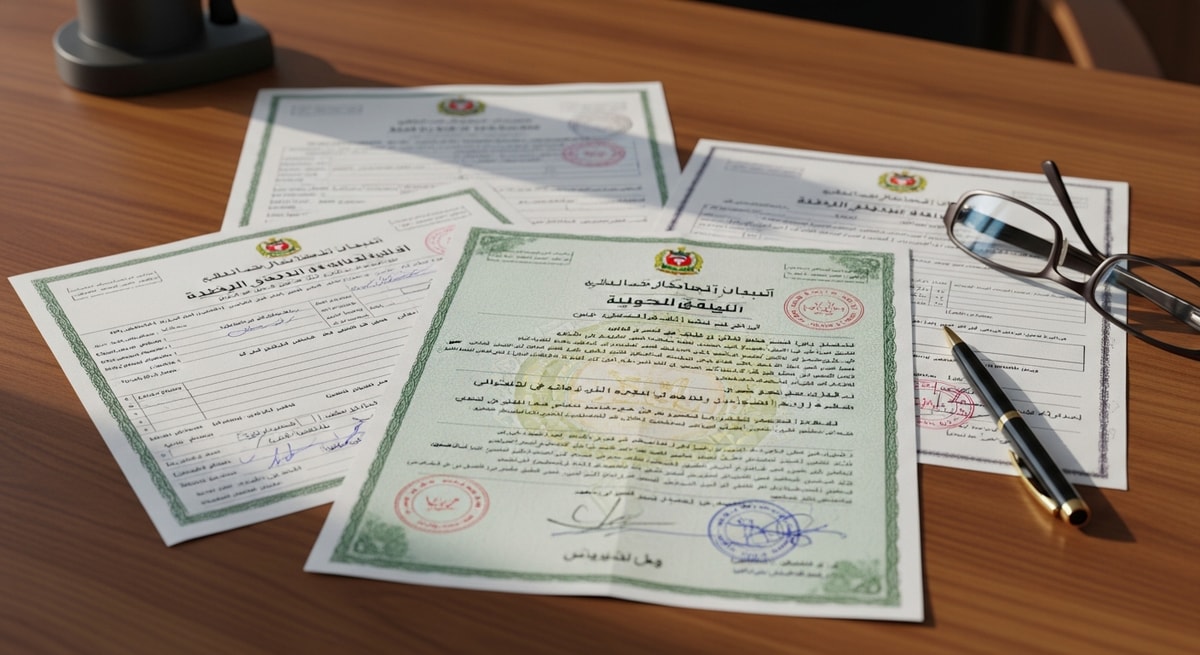
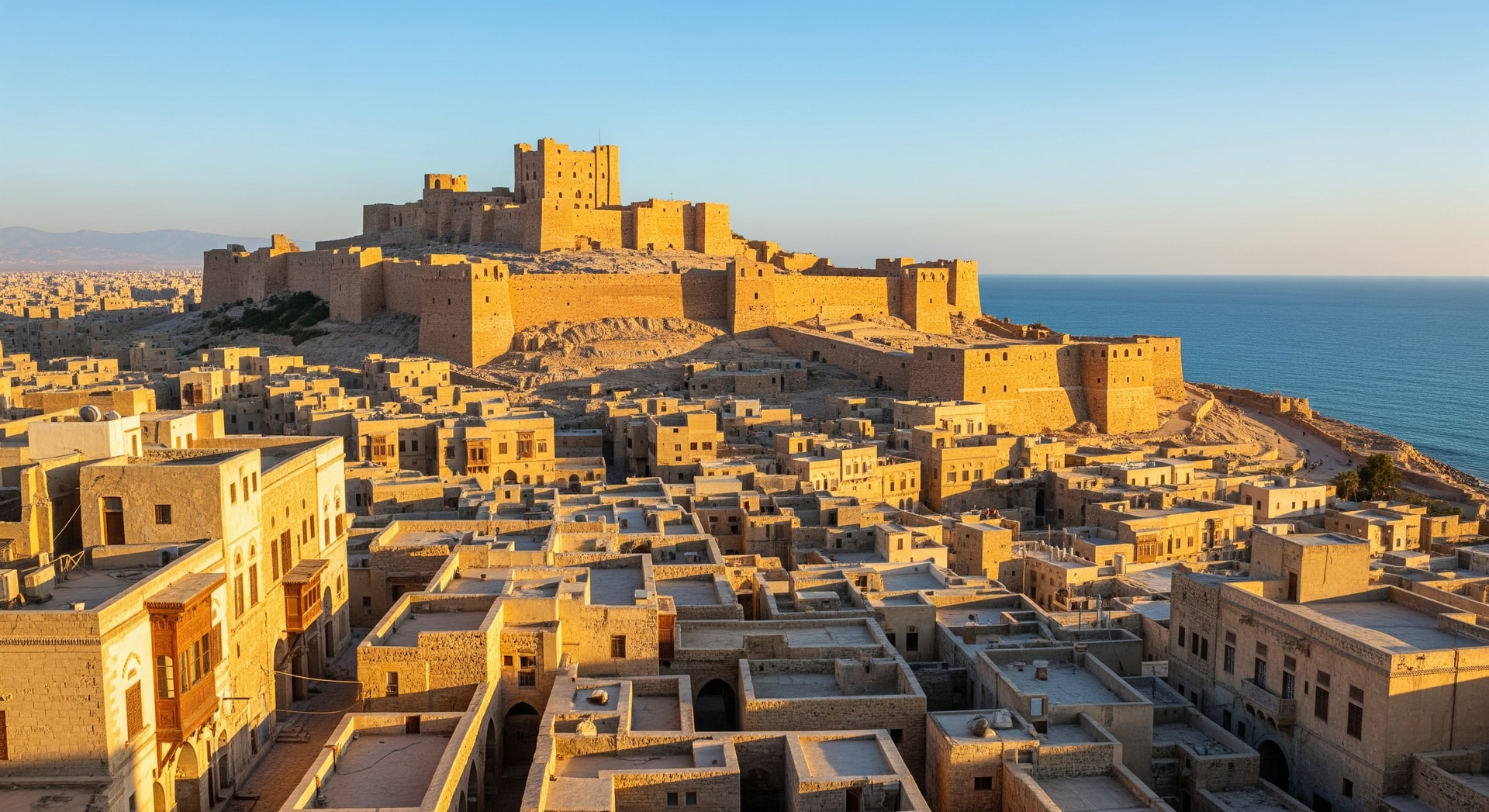
Libyan civil registration documents in Modern Standard Arabic require specialist translators familiar with Libyan administrative terminology
Consular Legalization: Getting Libyan Documents Accepted Abroad
Libya is not a member of the Hague Apostille Convention, which means the simplified one-step apostille process available in over 120 member countries does not apply to Libyan documents. Instead, all Libyan documents intended for international legal or administrative use must undergo a multi-step consular legalization chain that verifies the authenticity of each signature and seal through successive authorities.
The standard consular legalization chain for Libyan documents follows four stages. In the first stage, the document or certified translation must be notarized by a Libyan notary public (كاتب العدل — kātib al-'adl) at a Notarization Office (Maktab al-Tawthīq). The notary verifies the identity of signatories and attests the document. In the second stage, the notarized document is submitted to the Libyan Ministry of Justice for ministerial-level authentication. In the third stage, the Ministry of Justice-authenticated document proceeds to the Ministry of Foreign Affairs and International Cooperation (وزارة الخارجية والتعاون الدولي), which applies the state-level authentication stamp. In the fourth and final stage, the fully authenticated document is submitted to the embassy or consulate of the destination country in Libya for consular legalization, completing the chain.
This process typically requires 10-20 business days in total depending on each authority's current processing times and the destination embassy's workload. DoVisa coordinates the entire chain on your behalf, managing submissions to each authority, tracking progress, and providing regular status updates. We strongly recommend beginning the legalization process at least four weeks before any visa application or legal deadline.

Libya's Ministry of Foreign Affairs and International Cooperation is the key state authority in the consular legalization chain for Libyan documents
Libyan Civil Registration and Vital Records
Libya's civil registration system is administered by the National Information Authority (هيئة المعلومات الوطنية — Hay'at al-Ma'lūmāt al-Waṭaniyya), which maintains the national population registry and issues vital records. All births, marriages, deaths, and family registrations are recorded through municipal civil registry offices (مكاتب الأحوال المدنية) located across Libya's governorates. Understanding the structure and content of these records is essential for producing accurate translations that satisfy foreign immigration and legal authorities.
The Libyan birth certificate (شهادة الميلاد — shahādat al-mīlād) contains the child's full Arabic name, date and place of birth in both Hijri and Gregorian calendars, the father's full name and national identification number, the mother's full name, and the registration number. It is signed by the civil registry officer and stamped with the municipality's official seal. The family record book (دفتر العائلة — daftar al-'ā'ila) is a comprehensive family registration document unique to Libya and similar North African civil law systems; it records all family members' details and is often required by foreign embassies as part of family-based visa applications.
Libyan marriage certificates (عقد الزواج — 'aqd al-zawāj) are issued by civil registry offices following Islamic marriage registration requirements. They typically include the names of both spouses, their fathers' names, date of marriage in Hijri and Gregorian calendars, the mahr (المهر — dowry amount as required under Islamic law), and the names of witnesses. Some documents also reference the relevant provisions of Libya's Personal Status Law (قانون الأحوال الشخصية — Qānūn al-Aḥwāl al-Shakhṣiyya). Foreign immigration authorities frequently require these documents for spousal visa and family reunification applications, and our translators ensure all legal and religious elements are accurately rendered in the target language.
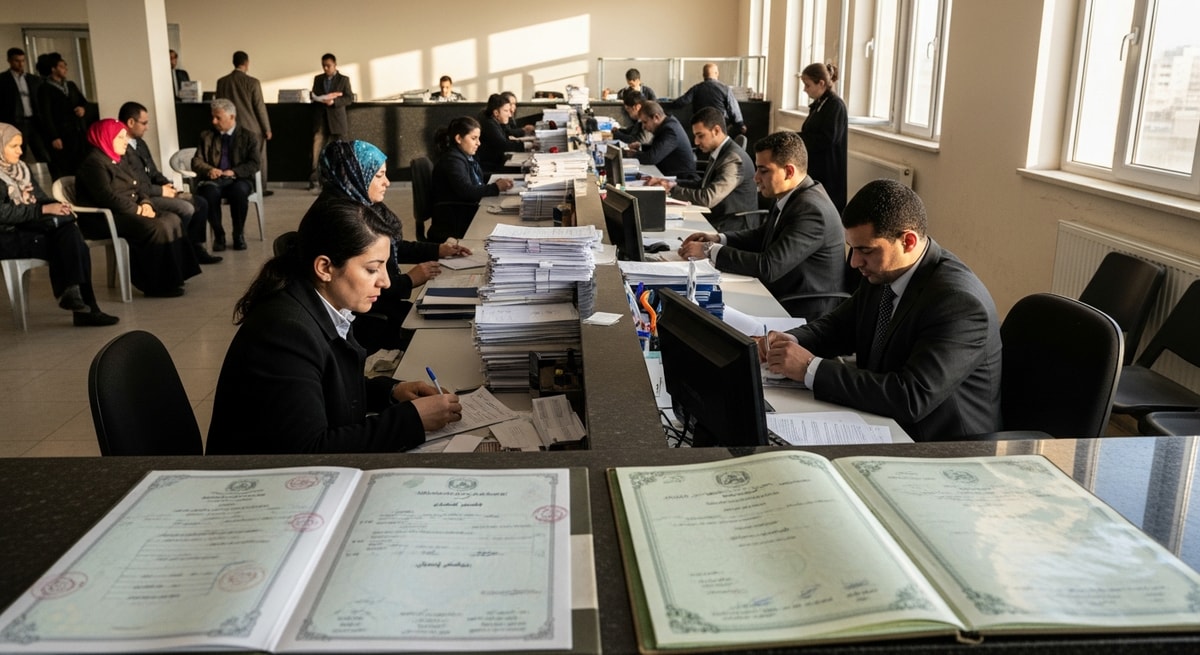
Libya's municipal civil registry offices issue vital records in Arabic that require certified translation for international immigration and legal purposes
"Needed my Libyan birth certificate translated into English for my US green card application. USCIS accepted the translation without any RFE. The Hijri-to-Gregorian date conversion was handled correctly and the Arabic name transliteration matched my passport. Excellent service."
"DoVisa translated my Libyan marriage certificate and family record book for a spousal visa application to Canada. IRCC accepted both documents on first submission. The translator correctly rendered all Arabic names and the mahr amount. Professional and thorough."
"Good translation of my University of Tripoli degree and academic transcripts for a credential evaluation in the UK. WES accepted the translations. Took 5 business days rather than the quoted 4, but the quality of the Arabic-English translation was very accurate for academic terminology."
"Translated my Libyan police clearance certificate for an Australian skilled visa application. The Department of Home Affairs accepted the translation immediately. The translator understood the specific wording of Libyan clearance certificates and the certification letter was properly formatted."
"Translation of my Libyan commercial registration was accurate, but there was initial confusion about the document version. After I sent a clearer scan the team reassigned the work and completed it correctly. The British High Commission accepted the final translation. Response time could be improved."
"Needed several Libyan documents translated for a Dutch residence permit application including birth certificate, marriage certificate, and university diploma. All three were accepted by the IND without issue. Arabic name transliteration was consistent across all documents, which was important."
"Translated my father's Libyan inheritance deed and property documents for estate proceedings in Italy. The legal Arabic terminology was well handled and our Italian lawyer confirmed the translations were accurate and usable in court. Good specialist knowledge of Libyan legal documents."
"My Libyan birth certificate had both Hijri and Gregorian dates and I was worried it might cause issues with USCIS. DoVisa's translator clearly labeled both dates and explained the calendar system in a translator's note. USCIS had no questions. Highly recommend for Libyan documents."
"Used DoVisa to translate Libyan medical records for continued care at a German hospital. The medical Arabic terminology was translated accurately into German and the clinic confirmed everything was clear and usable. Good turnaround time and professional presentation."
"Translated my Libyan secondary school certificate and university transcripts for a master's programme application in the UK. The university admissions office confirmed the translations were clear and the Libyan grading system was explained well. Very satisfied with the quality."
"Needed my Libyan birth certificate translated into English for my US green card application. USCIS accepted the translation without any RFE. The Hijri-to-Gregorian date conversion was handled correctly and the Arabic name transliteration matched my passport. Excellent service."
"DoVisa translated my Libyan marriage certificate and family record book for a spousal visa application to Canada. IRCC accepted both documents on first submission. The translator correctly rendered all Arabic names and the mahr amount. Professional and thorough."
"Good translation of my University of Tripoli degree and academic transcripts for a credential evaluation in the UK. WES accepted the translations. Took 5 business days rather than the quoted 4, but the quality of the Arabic-English translation was very accurate for academic terminology."
Libyan Document Translation FAQs
What types of Libyan documents can DoVisa translate?
DoVisa translates all categories of Libyan Arabic documents, including: birth certificates (شهادة الميلاد — shahādat al-mīlād) from Libyan civil registry offices; marriage certificates (عقد الزواج — 'aqd al-zawāj) and divorce decrees; family record books (دفتر العائلة — daftar al-'ā'ila); nationality certificates (شهادة الجنسية); national identity cards (بطاقة الهوية الوطنية); passports; academic transcripts and university degrees from Libyan higher education institutions; police clearance certificates (شهادة حسن السيرة والسلوك); court judgments and legal orders; commercial registration certificates and business documents; property and real estate documents including title deeds; medical records and health documentation; and inheritance deeds (وثيقة الإرث). We also translate documents from English or other languages into Arabic for submission to Libyan authorities.
Are your translations of Libyan documents certified?
Yes. Every translation produced by DoVisa includes a signed certification statement from the qualified translator affirming that the translation is accurate, complete, and a faithful rendering of the original Arabic document. The certification statement includes the translator's name, qualification details, contact information, and date of certification. This format meets the certification requirements of USCIS, UK Visas and Immigration, IRCC Canada, the Australian Department of Home Affairs, and most international immigration, legal, and academic institutions. If a specific authority requires a particular certification format, please let us know and we will accommodate that requirement.
Can Libyan documents get an apostille?
No. Libya is not a member of the Hague Apostille Convention (the 1961 Convention Abolishing the Requirement of Legalisation for Foreign Public Documents). Therefore, Libyan documents cannot receive an apostille. Instead, Libyan documents intended for international use must undergo full consular legalization: (1) notarization by a Libyan notary public (كاتب العدل), (2) authentication by the Libyan Ministry of Justice, (3) authentication by the Ministry of Foreign Affairs and International Cooperation (وزارة الخارجية والتعاون الدولي), and (4) legalization by the destination country's embassy or consulate in Libya. This process typically takes 10-20 business days. DoVisa can coordinate the entire legalization chain on your behalf.
How are Hijri (Islamic calendar) dates handled in translations?
Many Libyan official documents — particularly older birth certificates, marriage certificates, and court records — display dates in the Hijri calendar (التقويم الهجري — al-taqwīm al-hijrī), either alongside or instead of the Gregorian calendar date. The Hijri calendar is a lunar calendar approximately 11 days shorter than the solar Gregorian year, so dates do not correspond directly. Our translators convert all Hijri dates to their Gregorian equivalents and present both clearly in the certified translation, labeled as Hijri (H) and Gregorian (G) respectively. This dual-date presentation is the format accepted by USCIS, UK Visas and Immigration, and other major authorities. If the exact Gregorian date cannot be determined unambiguously from the Hijri date alone, we provide the range of possible Gregorian dates and note this in the certification.
How are Arabic names transliterated in Libyan document translations?
The transliteration of Arabic personal names from Arabic script into Latin script is one of the most critical aspects of Libyan document translation. There is no single official transliteration standard for Arabic names, which means the same name may appear spelled differently across a person's passport, birth certificate, and residence permit. Our translators apply a consistent and systematic romanization based on the applicant's existing documents — particularly the passport — as the primary reference. Where names appear differently across documents, we note the variation in the certification. For immigration applications, we strongly recommend providing all existing identity documents so our translators can match the transliteration already on file with the immigration authority.
Do I need notarization with my Libyan document translation?
For the majority of immigration, academic, and employment uses — including USCIS, IRCC, UK Visas and Immigration, and Australian Department of Home Affairs applications — notarization of the translation itself is not required. DoVisa's signed certified translation is sufficient. However, if your Libyan document also needs to be used before Libyan domestic courts or institutions, or if your application requires the complete consular legalization chain, notarization is part of that process. In some cases individual embassies or legal jurisdictions may require the translator's signature to be notarized. We recommend checking with the receiving authority in advance. If notarization of the translation is needed, DoVisa can coordinate that step through our network.
What is consular legalization and when do I need it for Libyan documents?
Consular legalization is the multi-step document authentication process required when a country is not a member of the Hague Apostille Convention. Since Libya is not a Convention member, Libyan documents intended for international legal recognition must go through the full legalization chain: notarization by a Libyan notary public → Ministry of Justice authentication → Ministry of Foreign Affairs and International Cooperation authentication → destination country embassy legalization. You need consular legalization when submitting a Libyan document to a foreign court, when a foreign government specifically requires a legalized document rather than a certified translation, or when establishing legal standing for the document in a foreign jurisdiction. For most standard immigration translation purposes, consular legalization of the underlying document may not be required — contact the receiving authority to confirm their specific requirements.
How long does translation of Libyan documents take?
Standard delivery is 4-6 business days for most Libyan document types. Express service (2-3 business days) is available for straightforward documents such as birth certificates and single-page records. Rush service (24 hours) is available for select document types. Libyan documents with handwritten entries, mixed Hijri-Gregorian dates, or complex legal terminology may require the full standard timeframe. For complete consular legalization through the Libyan Ministry of Justice and Ministry of Foreign Affairs, add approximately 10-20 business days for the government authentication stages. We recommend starting at least four weeks before any visa or legal deadline when legalization is also required.
Can you translate handwritten Libyan documents?
Yes. Many older Libyan documents, particularly those issued before widespread computerization, may be entirely or partially handwritten in Arabic. Our translators are experienced with Libyan Arabic handwriting styles, including the Ruq'ah and Naskh scripts commonly used in administrative documents. If a scan is too unclear to read reliably, our team will contact you within 2 hours of upload to request a clearer image or to advise whether the issuing authority can provide a replacement. Sections that are genuinely illegible are marked as [illegible] in the translation and noted in the certification, rather than guessing at the content. This honest approach protects you from rejection by immigration authorities who may spot discrepancies.
What format will I receive my Libyan document translation in?
Your certified translation is delivered as a high-resolution PDF with the translator's digital certification signature. For documents requiring a physical original — such as those being submitted in person to an embassy or court — we dispatch printed copies with the translator's original wet-ink signature via international tracked courier to your address in Libya or abroad. For consular legalization, physical originals are required at each stage of the authentication chain, and we manage physical document handling throughout the process. Digital delivery is available within the standard turnaround time; physical courier dispatch adds 3-5 business days for international delivery.
Do you translate documents for the Libyan diaspora community?
Yes. A significant portion of our Libyan translation work serves the Libyan diaspora in the United Kingdom, the United States, Canada, Germany, the Netherlands, Italy, and other countries. Common diaspora needs include translating Libyan birth and marriage certificates for immigration and family reunification applications, academic credentials for study or employment abroad, police clearance certificates for immigration background checks, and property and inheritance documents for managing Libyan assets from abroad. We also translate foreign documents into Arabic for Libyan nationals dealing with Libyan institutions or returning home. Our team understands the particular challenges Libyan diaspora members face with document access and works flexibly with photocopies and scanned documents.
How much does Libyan document translation cost?
DoVisa's Libyan translation pricing follows a per-page model with volume discounts that apply automatically for larger orders. Pricing depends on the language pair, document complexity, and selected processing speed. Express and rush options carry a processing surcharge. Consular legalization coordination is quoted separately based on the specific legalization chain required. Upload your documents on our order page for an instant, itemized quote before any payment is required. There are no hidden fees — the quote you receive covers the full certified translation service.
Are Libyan documents from regions outside Tripoli accepted?
Yes. We accept and translate Libyan documents issued by civil registry offices, courts, and government institutions across all of Libya's regions, including Tripoli, Benghazi, Misrata, Zawiya, Zliten, Sabha, and other municipalities. Libyan documents issued during different administrative periods may vary in format and terminology, and our translators are familiar with these variations. If your document was issued under a different administrative format or if the issuing office's seal or layout differs from current standards, we will note any relevant context in the certification. If you are uncertain whether your specific document can be translated, contact our support team before ordering.
Get Your Libyan Documents Translated Today
Certified Arabic-English translations of Libyan documents accepted by USCIS, IRCC, UK Visas and Immigration, and international authorities worldwide