Certified Arabic & French Document Translation for Tunisia
Professional certified translations for Tunisian civil documents, academic credentials, and legal papers. Arabic–English, French–English, and 100+ language pairs with apostille coordination.
TrustpilotSelect Languages
Drag & drop your documents here
or
PDF, JPEG, PNG, WebP — Max 10MB per file. Word documents: please save as PDF first.
Certified translators · Accepted by governments, courts & universities worldwide · View sample
Select a destination country to view pricing
How Tunisia Certified Translation Works
Submit Your Documents Securely
Upload clear scans of your Tunisian documents through our encrypted portal. We accept PDF, JPEG, and PNG formats. Our intake specialists review each upload for legibility and determine whether your Tunisian documents are in Arabic, French, or bilingual format — many Tunisian civil documents contain text in both official languages. We confirm whether you need certified translation for international use or a traduction assermentée for Tunisian domestic proceedings.
Qualified Translator Assignment
Your documents are matched with a translator experienced in Tunisian Arabic and French legal terminology. Tunisia's bilingual administrative system means many documents contain both Arabic and French text, requiring translators fluent in both languages. For documents intended for Tunisian domestic court proceedings, DoVisa can coordinate with sworn translators (traducteurs assermentés) registered with the Tunisian courts under Law No. 94-80 of 24 July 1994.
Translation & Quality Review
The translator produces your certified translation with attention to Tunisian legal conventions, bilingual document formatting, and the specific terminology used in Tunisian civil registry records (état civil). A second qualified linguist reviews terminology, formatting, and accuracy. Each translation includes the translator's signature, certification statement, and relevant credentials required by the receiving authority.
Delivery with Full Certification
Receive your certified translation as a high-resolution PDF for immediate use, with the original stamped hard copy shipped via tracked courier. For documents requiring apostille authentication, DoVisa coordinates the apostille process through Tunisia's designated competent authority — the Ministry of Foreign Affairs, Migration and Tunisians Abroad — for acceptance in all Hague Convention member states.
Tunisia Translation Service Specifications
Popular Language Pairs
We support all languages — 100+ language pairs available for Tunisia documents.
Common Documents
- Birth certificates (شهادة ولادة / Extrait de naissance)
- Marriage certificates (عقد زواج / Acte de mariage)
- Death certificates (شهادة وفاة / Acte de décès)
- National identity cards (بطاقة التعريف الوطنية / Carte d'identité nationale)
- Family record booklets (دفتر الحالة المدنية / Livret de famille)
- Academic transcripts and degree certificates
- Police clearance certificates (Bulletin n°3 du casier judiciaire)
- Court judgments and divorce decrees
- Powers of attorney (وكالة / Procuration)
- Commercial registration extracts (Registre du commerce)
Turnaround Time
Certification Details
Tunisia Translation Requirements & Regulatory Framework
Embassy Acceptance
Notarization Process
Apostille Information
Legal Framework
Common Scenarios for Tunisia Document Translation
Immigration & Visa Applications
Tunisian nationals emigrating to Europe, North America, or other destinations need certified translations of birth certificates (شهادة ولادة / extrait de naissance), marriage certificates, police clearances (Bulletin n°3), and family record booklets for visa applications with USCIS, IRCC, UK Visas and Immigration, and Schengen consulates. DoVisa provides certified translations with apostille coordination.
Academic Credential Evaluation
Tunisian students and professionals applying to European, North American, or Gulf universities need certified translations of academic transcripts, degree certificates, and professional qualifications. Tunisia's higher education system issues documents primarily in French and Arabic, and credential evaluation agencies like WES, ECE, and ENIC-NARIC accept our certified translations.
Marriage & Family Documentation
Foreign nationals marrying in Tunisia must provide certified Arabic translations of birth certificates and single-status certificates for municipal état civil offices. Tunisian marriage certificates being used abroad for spouse visa applications require certified translation with apostille authentication for international recognition across Hague Convention member states.
Business & Corporate Setup
Companies operating between Tunisia and international markets need translations of commercial registration extracts, board resolutions, financial statements, and contracts. Tunisia's strategic position between Europe and Africa generates significant cross-border business requiring bilingual Arabic-French document translation into English and other languages.
Legal Proceedings
Cross-border litigation, inheritance cases, and family law matters involving Tunisia require certified translations of court judgments, powers of attorney, notarial acts, and personal status documents. For Tunisian court submissions, sworn translations by a traducteur assermenté registered under Law No. 94-80 may be required — DoVisa coordinates this.
Tunisia's Bilingual Administration: Navigating Arabic and French Documents
Tunisia's administrative system is distinctively bilingual, a legacy of the French protectorate period (1881-1956). While Arabic is the official language under Article 1 of the 2014 Constitution, French continues to play a major role in government administration, higher education, commerce, and parts of the judicial system. This bilingual reality means that Tunisian civil documents frequently contain text in both Arabic and French, requiring translators proficient in both languages.
Civil registry documents — birth certificates (شهادة ولادة / extrait de naissance), marriage certificates (عقد زواج / acte de mariage), and death certificates — are issued by municipal état civil offices across Tunisia's 24 governorates. Modern certificates are typically printed in Arabic as the primary language, with French headers and field labels also appearing on many forms. Older certificates from the post-independence period may be primarily in French. The translator must accurately handle both language streams and clearly indicate in the translation which portions were originally in Arabic and which in French.
Tunisia's higher education system, inherited from the French model, issues academic transcripts and degree certificates primarily in French, with Arabic used for some fields. Professional qualifications, technical certifications, and medical records may also be predominantly in French. This bilingual complexity means that a single Tunisian document may require translation expertise in both Arabic and French — a combination that DoVisa's translator network is specifically equipped to handle.
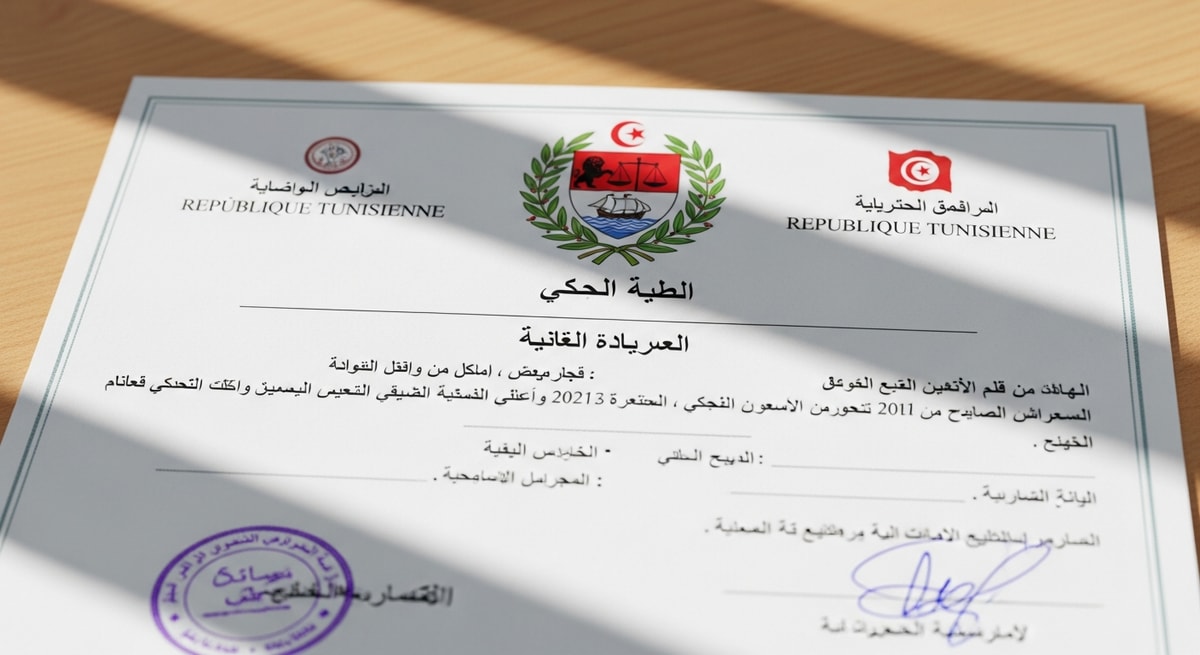
Tunisian civil documents frequently contain both Arabic and French text, requiring translators fluent in both languages
Apostille Authentication for Tunisian Documents
Tunisia became a Contracting Party to the Hague Apostille Convention on 30 March 2018, after depositing its instrument of accession on 30 November 2017. The designated competent authority for issuing apostilles is the Ministry of Foreign Affairs, Migration and Tunisians Abroad (Ministère des Affaires Étrangères, de la Migration et des Tunisiens à l'Étranger / وزارة الشؤون الخارجية والهجرة والتونسيين بالخارج).
Before Tunisia joined the Convention, Tunisian documents destined for use abroad required a lengthy multi-step legalization chain: authentication by the issuing authority, verification by the relevant ministry, attestation by the Ministry of Foreign Affairs, and finally legalization by the destination country's embassy in Tunis. The apostille replaces this entire chain with a single standardized certificate for use in any of the 129+ Convention member states.
The apostille is affixed directly to the document or attached as a separate sheet bearing the standard Hague format with 10 numbered fields. It confirms the origin of the public document — including the capacity of the signatory, the identity of the seal or stamp, and the authority that authenticated it. DoVisa coordinates the complete apostille process through the Ministry of Foreign Affairs on your behalf, from document preparation through final apostille issuance, ensuring your Tunisian documents are ready for international acceptance.
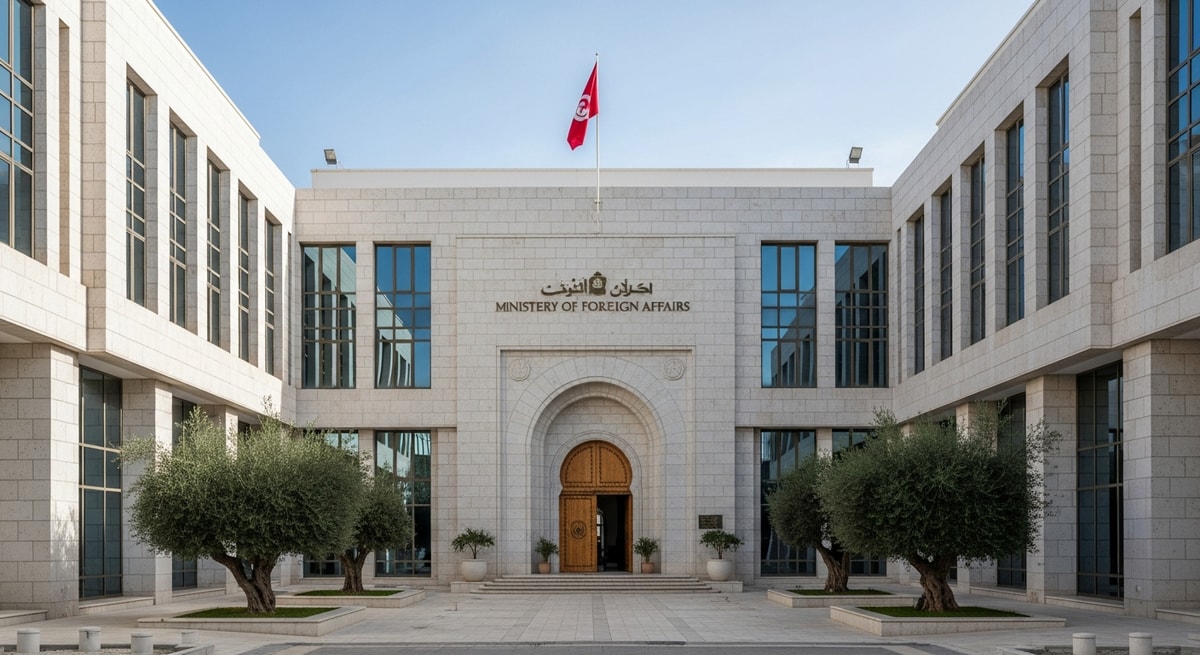
The Ministry of Foreign Affairs is Tunisia's sole competent authority for issuing apostilles since 30 March 2018
"Needed my Tunisian birth certificate and marriage certificate translated from Arabic to English for a USCIS immigration petition. Both documents were accepted without any RFE. The bilingual formatting was handled expertly."
"French to English translation of my Tunisian university degree and transcripts for WES credential evaluation. WES processed my evaluation without requesting corrections. Very accurate academic terminology."
"Arabic to English translation of my Tunisian police clearance (Bulletin n°3) for a Canadian PR application through IRCC. Good quality translation with accurate legal terminology. Took one extra day beyond the estimate."
"DoVisa translated my Tunisian family record booklet from Arabic to English for an Australian partner visa. The Department of Home Affairs accepted it on first submission. The bilingual Arabic-French document was handled perfectly."
"English to French translation of our company's articles of incorporation for registration with the Tunisian commercial registry. Our Tunisian legal counsel confirmed the terminology was accurate throughout."
"Translated my Tunisian marriage certificate for a UK spouse visa. UKVI accepted the certified translation without issues. The document had both Arabic and French sections, and both were rendered accurately."
"French to English translation of my wife's Tunisian academic transcripts for credential evaluation with NACES. The evaluation was completed without follow-up questions. Very professional formatting."
"Arabic to English translation of my Tunisian death certificate for a legal proceeding in the United States. The certified translation was accepted by the court immediately. Sensitive document handled professionally."
"Tunisian commercial registration extract and financial statements translated for a business partnership in Germany. The volume discount made the project affordable. Good quality corporate translation."
"Arabic to English translation of my Tunisian birth certificate for an immigration filing. The final translation was accurate, but the first draft had a minor transliteration error in my surname that needed correction."
"Tunisian birth certificate and police clearance translated for a USCIS green card petition. The translator accurately handled both the Arabic and French portions of the documents. Approved without any RFE."
"Needed my Tunisian birth certificate and marriage certificate translated from Arabic to English for a USCIS immigration petition. Both documents were accepted without any RFE. The bilingual formatting was handled expertly."
"French to English translation of my Tunisian university degree and transcripts for WES credential evaluation. WES processed my evaluation without requesting corrections. Very accurate academic terminology."
"Arabic to English translation of my Tunisian police clearance (Bulletin n°3) for a Canadian PR application through IRCC. Good quality translation with accurate legal terminology. Took one extra day beyond the estimate."
Tunisia Document Translation FAQs
What types of Tunisian documents can be translated?
We translate all types of Tunisian documents including birth certificates (شهادة ولادة / extrait de naissance), marriage certificates (عقد زواج / acte de mariage), death certificates, family record booklets (دفتر الحالة المدنية / livret de famille), national identity cards, police clearances (Bulletin n°3 du casier judiciaire), academic transcripts and degree certificates, court judgments, powers of attorney (وكالة / procuration), commercial registration extracts, and corporate documents. We handle Arabic-to-English, French-to-English, and translations involving 100+ other languages.
Are your Tunisia translations certified?
Yes. Every translation includes a signed certification statement attesting to accuracy and completeness. Our certified translations are accepted by USCIS, UK Visas and Immigration, IRCC (Canada), the Australian Department of Home Affairs, and credential evaluation agencies worldwide. For Tunisian domestic court proceedings and government submissions, a sworn translation (traduction assermentée) by a traducteur assermenté registered under Law No. 94-80 may be required — DoVisa can coordinate this through our network of Tunisian sworn translators.
Do I need a sworn translator (traducteur assermenté) for Tunisian documents?
It depends on where the translation will be used. For submission to Tunisian courts and certain government agencies, a traduction assermentée by a traducteur assermenté registered under Law No. 94-80 of 24 July 1994 is required. For international submissions — to USCIS, UK Visas and Immigration, IRCC (Canada), or the Australian Department of Home Affairs — DoVisa's standard certified translation is sufficient and fully accepted. DoVisa can coordinate sworn translations through our network of Tunisian traducteurs assermentés when needed for domestic proceedings.
How long does Tunisian document translation take?
Standard certified translation is delivered within 4-6 business days. Express processing is available for 2-3 business days, and rush delivery within 24 hours for select single-page documents. If apostille authentication is required, additional processing time should be expected. Bilingual Arabic-French documents may require slightly longer than single-language documents due to dual-language verification.
What languages do you translate Tunisian documents to and from?
We offer translations from Arabic and French — Tunisia's two primary administrative languages — into English, German, Italian, Spanish, Turkish, Chinese, Japanese, and 100+ other languages. Direct translation between Arabic and French is also available. We handle the bilingual nature of many Tunisian documents, accurately translating both the Arabic and French portions into the target language.
Will my translated Tunisian documents be accepted by immigration authorities?
Yes. Our certified translations of Tunisian documents are accepted by USCIS (United States), UK Visas and Immigration (UKVI), IRCC (Canada), the Australian Department of Home Affairs, and Schengen area immigration authorities. Each translation includes the translator's signed certification statement. For additional authentication, we coordinate apostille processing through Tunisia's Ministry of Foreign Affairs for acceptance in all 129+ Hague Convention member states.
Is Tunisia a member of the Hague Apostille Convention?
Yes. Tunisia became a Contracting Party to the Hague Apostille Convention on 30 March 2018. The designated competent authority is the Ministry of Foreign Affairs, Migration and Tunisians Abroad (Ministère des Affaires Étrangères, de la Migration et des Tunisiens à l'Étranger). Apostilled Tunisian documents are accepted in all 129+ Convention member states without further embassy legalization. DoVisa coordinates the complete apostille process on your behalf.
How much does certified translation for Tunisian documents cost?
Our Tunisia document translation pricing follows a transparent per-page structure with volume discounts that apply automatically for larger projects. Pricing varies based on document type, language pair, and processing speed. Apostille processing fees are quoted separately. Upload your documents on our order page to receive an instant, detailed quote with no hidden fees.
Can you translate handwritten Tunisian documents?
Yes. Many older Tunisian civil documents contain handwritten entries in both Arabic and French, particularly état civil records from municipal offices. Our translators are experienced in reading handwritten Arabic and French administrative text, including older formats predating digital record-keeping. For documents with compromised legibility, we note any unclear sections and provide our professional interpretation with appropriate qualifiers.
What format will I receive my translated Tunisian document in?
You will receive your certified translation as a high-resolution PDF delivered via email, suitable for immediate digital submission to immigration authorities and government portals. The PDF includes the translated document, the certification statement, and the translator's credentials. If you need a physical hard copy with original stamps and signatures, we ship via tracked international courier with delivery confirmation.
Do Tunisian documents come in Arabic or French?
Tunisian documents can be in Arabic, French, or bilingual (both languages). Modern civil registry documents (état civil) are typically issued primarily in Arabic with French headers and field labels. Academic documents from Tunisia's higher education system are often primarily in French. Older documents from the post-independence period may be entirely in French. Our translators handle all three scenarios and clearly identify which portions are in which source language in the certified translation.
Get Your Tunisian Documents Translated Today
Professional certified translations with apostille coordination — accepted by authorities worldwide