Peru landslide disruptions on the Panamericana Sur have blocked a vital southern highway after heavy rains destabilised slopes in Arequipa, prompting safety warnings and traffic controls.
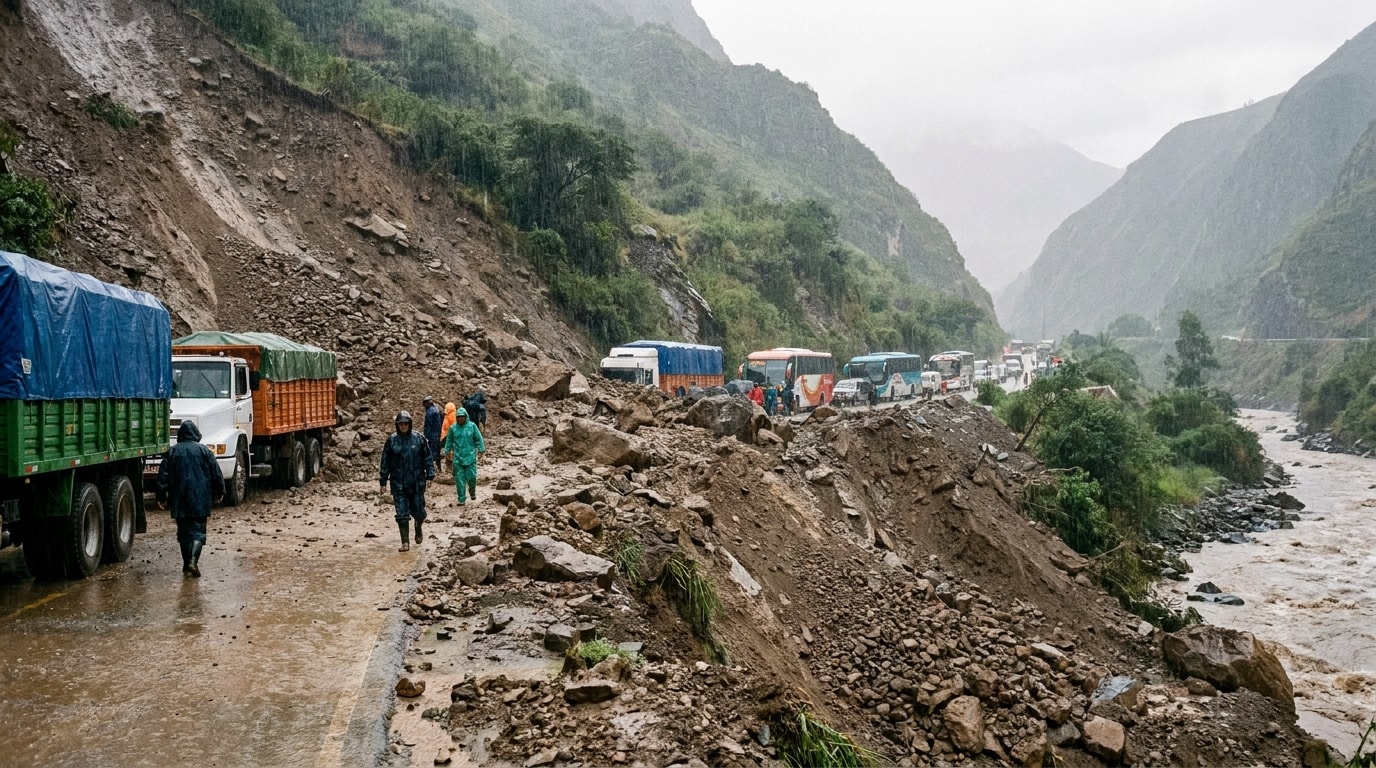
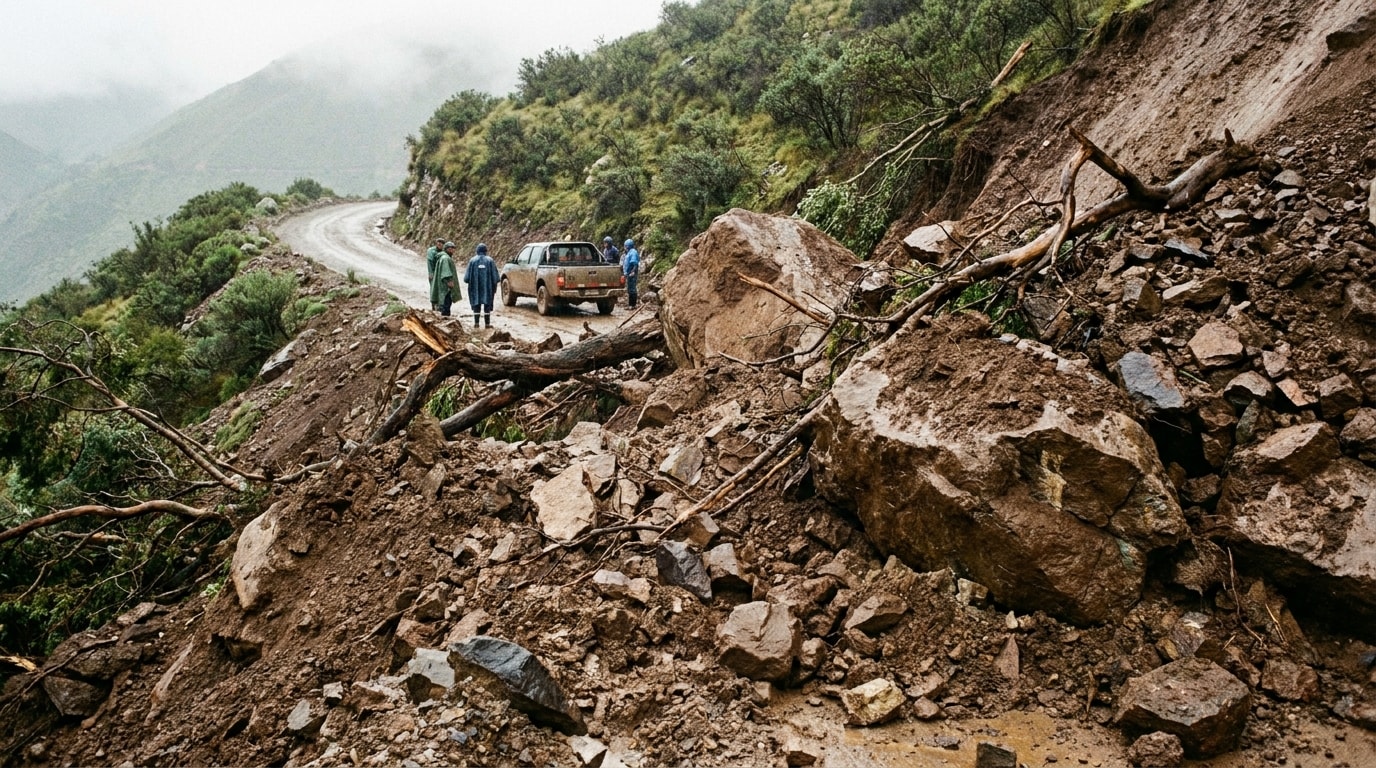
Heavy rains in Peru’s southern Arequipa region have triggered a major mudslide and rockslide onto the Panamericana Sur, creating serious travel delays, safety risks and freight disruption along one of the country’s key coastal corridors.
Heavy rain destabilises slopes in southern Peru
A major landslide has blocked part of Peru’s southern coastal highway after intense rainfall affected the Arequipa region, sending mud, rocks and natural debris onto a critical transport route. The disruption has drawn attention to the vulnerability of Peru’s mountainous and coastal corridors, where severe weather and unstable terrain can quickly affect national mobility.
The affected road is the Panamericana Sur, a major artery linking coastal cities with remote areas and supporting both passenger movement and commercial transport. According to the report, sustained downpours weakened slopes and elevated terrain beside the highway, leading to a large mudslide and rockslide that overwhelmed local drainage and protective infrastructure.
Although geological instability is not unusual in parts of southern Peru, the scale of debris on this occasion has underscored the pressure that Andean weather patterns can place on roads, drainage systems and defensive barriers. The incident has also renewed questions about how resilient key routes are during extreme seasonal conditions.
Authorities restrict access and urge caution
Travellers in or near the affected part of southern Peru are being advised to follow notices from local authorities and avoid unnecessary movement through high-risk areas. Transit police and civil protection agencies have been closing access points near the impact zone and diverting vehicles where alternatives are available, although route choices remain limited.
- Monitor official updates from Peru’s Ministry of Transport and Communications on clearance work and safety declarations.
- Carry potable water, non-perishable food and emergency medical supplies if essential road travel cannot be postponed.
- Avoid stopping near landslide areas because of the continuing risk of further rockfall or ground movement.
- Transport operators have been urged to suspend non-essential dispatches until debris removal and engineering checks are completed.
Passengers stranded and freight movements delayed
The closure has had immediate consequences for passengers, motorists and transport companies. Hundreds of people, including long-distance bus passengers, private drivers and commercial operators, have reportedly been stranded for extended periods. Some travellers have remained in vehicles for more than 12 hours, facing limited access to food, water and sanitation.
For commuters and intercity travellers, the disruption has meant severe delays, missed onward connections and heightened concerns about safety in isolated terrain. Emergency teams have been deployed to manage the situation, but the physical obstruction of the road has complicated evacuations and made alternative routing difficult for those caught near the debris field.
The economic effects are also significant. Blockages on the Panamericana Sur can halt thousands of cargo trucks carrying perishable goods, industrial materials and consumer products between southern ports and major urban centres. Traffic queues stretching for several kilometres have created losses for freight companies and delayed deliveries that depend on tight schedules.
Disaster response is improving, but prevention remains limited
The response to highway blockages in Peru has become more organised compared with earlier decades, when emergency action often depended on ad hoc equipment deployment only after disasters occurred. Those older approaches could leave southern communities cut off for several days.
More recent policy efforts have focused on faster coordination between regional governments and national disaster response agencies, especially to reduce the time needed to send heavy machinery to affected routes. At the same time, infrastructure specialists argue that preventive maintenance has not kept pace with climate-related deterioration.
Analysts have called for greater investment in real-time geological monitoring, stronger structural engineering and broader risk mapping. However, funding limits and bureaucratic delays continue to slow large-scale fortification of vulnerable routes.
For travellers and the transport industry, the incident is a reminder that southern Peru road journeys can change quickly during heavy rain. Checking official updates, postponing non-essential trips and preparing for long delays are essential until authorities confirm that the highway is safe to use.
Sources