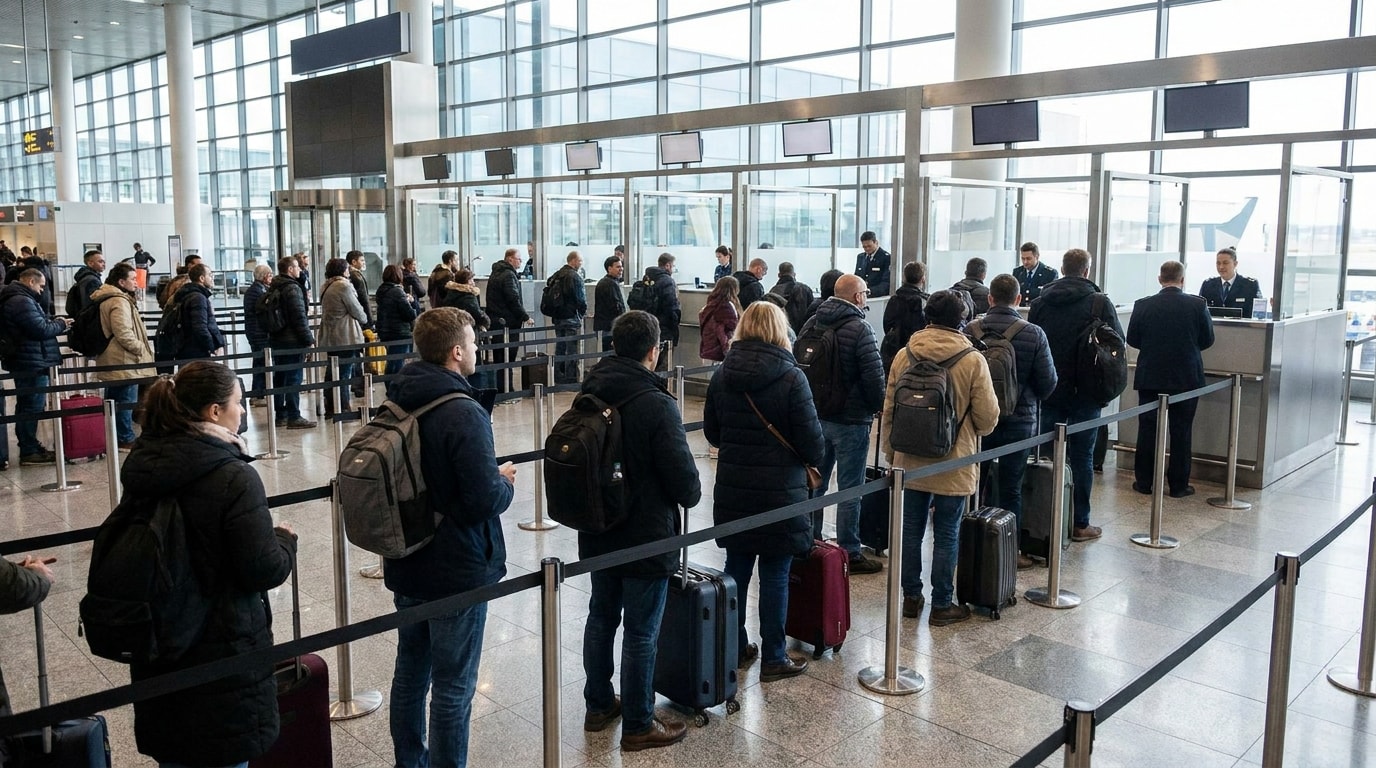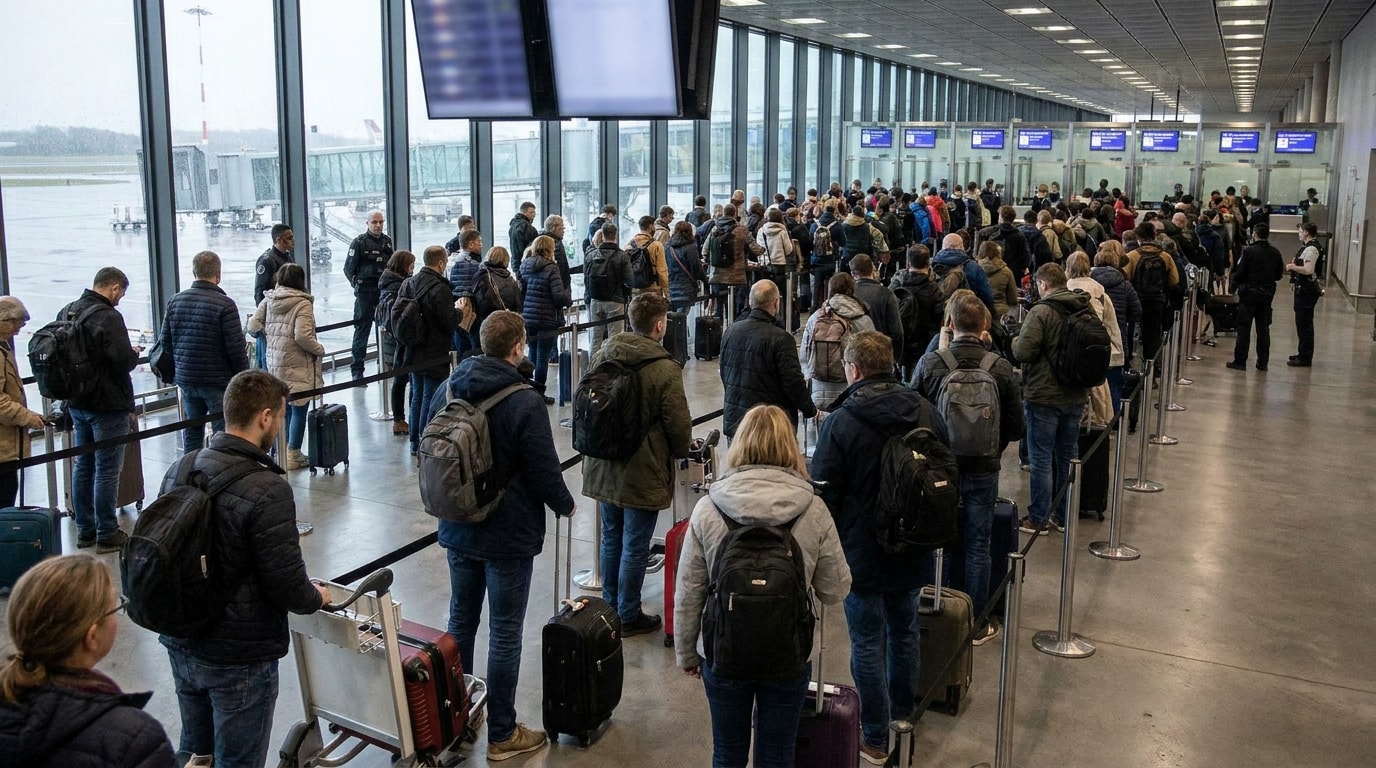
EES border checks remain a concern for Europe’s tourism industry more than a year after rollout began, with operators warning of queues, missed connections and capacity problems at airports.
More than 80 tourism organisations are urging EU institutions to restore temporary flexibility in EES biometric checks when Schengen border crossings become overwhelmed.
Tourism bodies say EES is still straining borders
Europe’s Entry/Exit System, known as EES, is continuing to draw criticism from the travel sector more than a year after its phased introduction began. The system was created to digitise checks at the Schengen Area’s external borders, improve security and replace passport stamping for eligible non-EU visitors, but industry groups say its day-to-day operation has not yet produced the smoother border experience that was promised.
In a statement issued on November 26, 2026, the European Tourism Manifesto called on EU institutions to tackle persistent operational problems linked to the system. The alliance includes more than 80 organisations across the travel and tourism sector, among them Airports Council International Europe, the International Air Transport Association, the European Tourism Association and the European Travel Agents’ and Tour Operators’ Associations.
How the Entry/Exit System applies to travellers
The EES was introduced in stages from October 12, 2025, and became fully operational on April 10, 2026. It records the entry and exit of non-EU nationals visiting the Schengen Area for short stays, whether they are visa-exempt or travelling with a short-stay Schengen visa.
The system covers travellers from visa-exempt countries including the United States, the United Kingdom, Canada and Australia, as well as those who require a Schengen visa for short visits. It captures passport details, a facial image and, depending on the traveller’s situation, fingerprints.

Airports report queues, missed connections and capacity issues
The tourism groups say problems became more pronounced after September 6, 2026, when transitional measures expired. Those measures had allowed biometric data collection to be paused temporarily during exceptionally busy periods.
Since then, several European airports have reported operational strain. Industry representatives have pointed to long border-control lines, passengers missing connecting flights and cases where travellers were kept on aircraft until terminals had enough space to receive them.
Regional airports are seen as especially exposed, particularly those that act as the main access points for popular island destinations. The statement also highlights concerns about assistance for travellers with disabilities, alongside shortages of staff, limited infrastructure and reliability problems with equipment used in border processing.
WTTC research warns of demand risks
The European Tourism Manifesto also pointed to research published in June by the World Travel & Tourism Council. The findings indicate that repeated delays could affect Europe’s attractiveness as a destination if border problems continue.
- 63% of international travellers said they would consider choosing a destination outside the Schengen Area if border delays became a regular issue.
- 33% said they would be much less likely to visit, or would cancel plans entirely, if they faced the prospect of waits of three hours or more at border control.
- 39% of British travellers said they would be far less likely to visit the Schengen Area if excessive delays became common.
The WTTC estimated that as many as 41 million international arrivals and $45.4 billion in tourism spending could be at risk if the operational challenges continue in the long term. These numbers represent potential exposure for the sector, not losses that have already occurred.
In October, the WTTC also urged Europe to make travel requirements simpler, including by improving how EES works and moving more quickly toward digital Schengen visas.
Industry seeks temporary biometric flexibility
The tourism alliance says its concerns are becoming more urgent because stricter enforcement of biometric registration requirements is expected from January 2027. With the year-end holiday travel period approaching, the organisations argue that European countries are unlikely to have enough staff and resources in place to resolve all remaining issues in time.
Their request is for the European Union to bring back the option for countries to temporarily suspend biometric data collection at border points until EES is functioning reliably across the Schengen Area. The proposal does not seek to scrap the system or remove border checks, but to give national authorities more room to respond when crossings are overloaded.
For now, the rules have not changed. The European Union has not announced new measures in response to the appeal, so travellers subject to EES must continue to follow the current entry process when arriving at Schengen external borders.
For travellers, the main practical message is to allow more time for Schengen arrivals and connections, especially during peak periods. For the industry, the debate underscores the need for digital border tools to work reliably before further systems, including ETIAS, add to Europe’s entry framework.
Sources