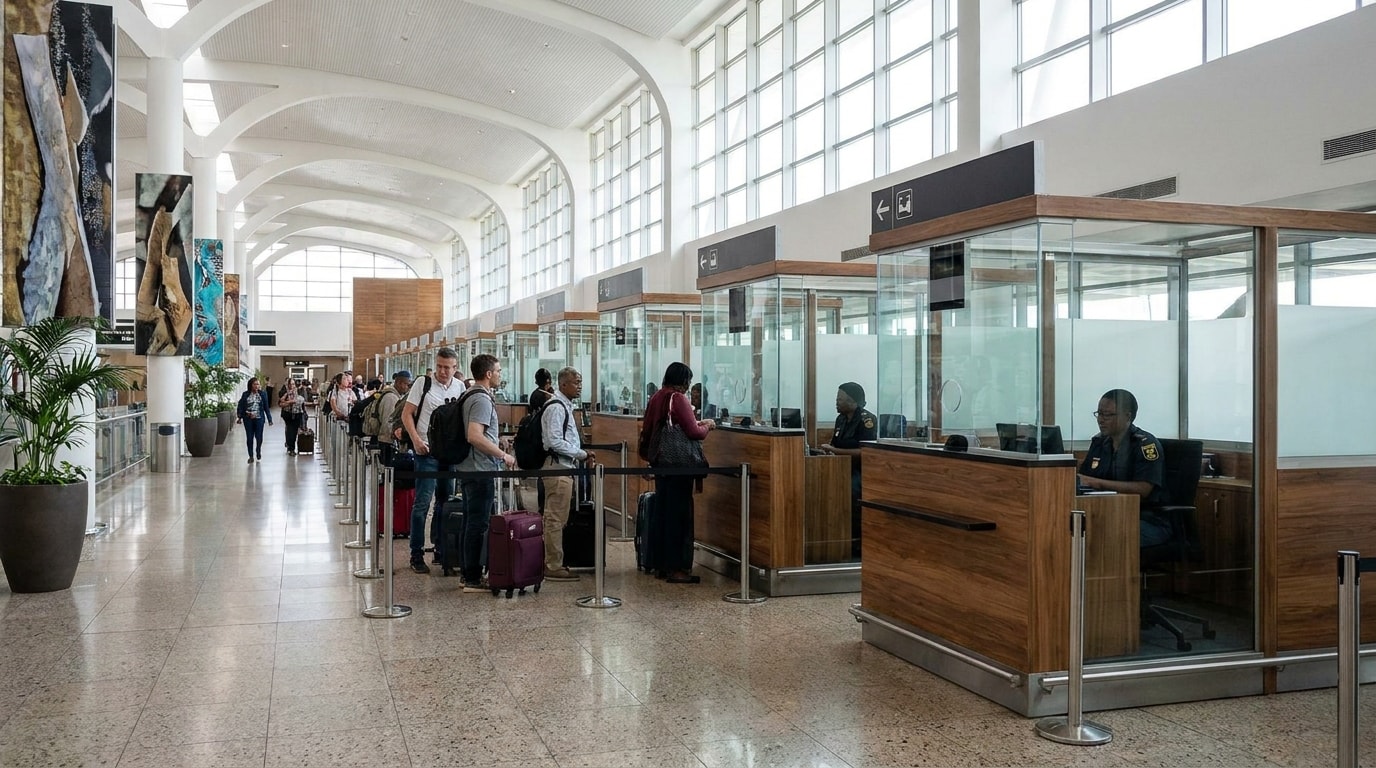
South Africa ETA access now covers 53 countries and territories, with the country preparing to deactivate its current e-Visa portal on December 1, 2026.
South Africa’s Electronic Travel Authorisation has expanded to 53 countries and territories, and the existing e-Visa platform is set to close on December 1, 2026. The ETA now supports applications for children and family or group submissions, while visa-exempt travellers, including US citizens on short tourist visits, are not required to apply.
ETA rollout moves toward replacing the e-Visa system
South Africa is advancing its shift to a new digital entry system, with South African Tourism confirming updated features and broader access for the Electronic Travel Authorisation program. The agency said the current e-Visa system will be discontinued on December 1, 2026, with relevant short-stay applications moving to the ETA platform.
The ETA was officially launched on August 12, 2026, by President Cyril Ramaphosa for nationals of China, India, Indonesia and Mexico. Access widened through August and September. On October 1, 2026, Home Affairs Minister Leon Schreiber confirmed the system could process short-stay applications from 53 countries and outlined plans for further expansion.
South African Tourism says the ETA now covers all markets previously included in the e-Visa program. The newer system uses an online process combining passport verification, facial recognition and automated background checks.
Eligible countries include former e-Visa markets
The Department of Home Affairs has not published a complete nationality list on the public pages of the ETA portal. However, an infographic released on October 19, 2026, by the South African Embassy in Caracas identified the countries and territories added during the rollout phases.
- Africa: Algeria, Cameroon, Comoros, Côte d’Ivoire, Democratic Republic of the Congo, Egypt, Ethiopia, Ghana, Guinea, Kenya, Liberia, Mali, Morocco, Niger, Nigeria, Senegal and Uganda.
- Americas: Colombia, Cuba, Mexico and the United States.
- Asia: Armenia, Bangladesh, China, Georgia, India, Indonesia, Iran, Israel, Japan, Malaysia, Oman, Pakistan, Palestine, Philippines, Saudi Arabia and Singapore.
- Europe: Albania, Belarus, Bulgaria, Croatia, France, Germany, Lithuania, Moldova, Netherlands, Romania, Russia, Serbia, Slovakia, Switzerland, Ukraine and the United Kingdom.
Inclusion on the list does not necessarily mean a traveller must obtain an ETA. The program includes both visa-required nationals and people who already qualify for visa-free short stays. For visa-exempt travellers, the ETA remains optional.

Families, children and groups gain new options
The platform now accepts applications for minors, after some earlier stages were limited to adults. It also supports biometric data collection and registration in the Home Affairs National Identification System, known as HANIS, for children aged seven and older. Families and groups can submit multiple applications from one account, avoiding separate account creation for each traveller.
Applications are submitted through the official ETA platform and require a smartphone. Travellers create an account, verify contact details, start an individual or multiple-person application, scan a QR code shown on the computer screen, use the phone to capture the passport, complete facial verification, add travel details, pay fees and submit the request.
Applicants cannot simply upload a passport image when applying by computer. The system uses phone-based document capture and facial recognition to check the passport’s authenticity and match it to the applicant. Since August 17, 2026, ETA applications have carried a 500 South African rand electronic processing fee, about US$30, with possible additional visa fees depending on nationality and circumstances.
Once approved, the ETA is linked to the traveller’s passport, can be stored digitally, including on a smartphone, and may permit multiple entries during its validity. It currently applies to arrivals at OR Tambo International Airport in Johannesburg, Cape Town International Airport, King Shaka International Airport in Durban and Lanseria International Airport near Johannesburg. Expansion to land and sea borders is planned.
US travellers remain visa-free for short tourism visits
US passport holders do not need an ETA for tourist visits of up to 90 days. They may apply voluntarily for possible faster border processing or to simplify some immigration procedures, including a possible stay extension. Those travelling without an ETA must still meet existing requirements, including having at least two blank passport pages and validity for 30 days beyond intended departure from South Africa.
South Africa plans further ETA expansion before the 2027 Cricket World Cup, which it will co-host with Zimbabwe and Namibia, although no additional eligible countries or dates have been announced. For travellers and tourism businesses, the main practical change is the move toward one digital platform while border officers retain final authority on admission.
Sources