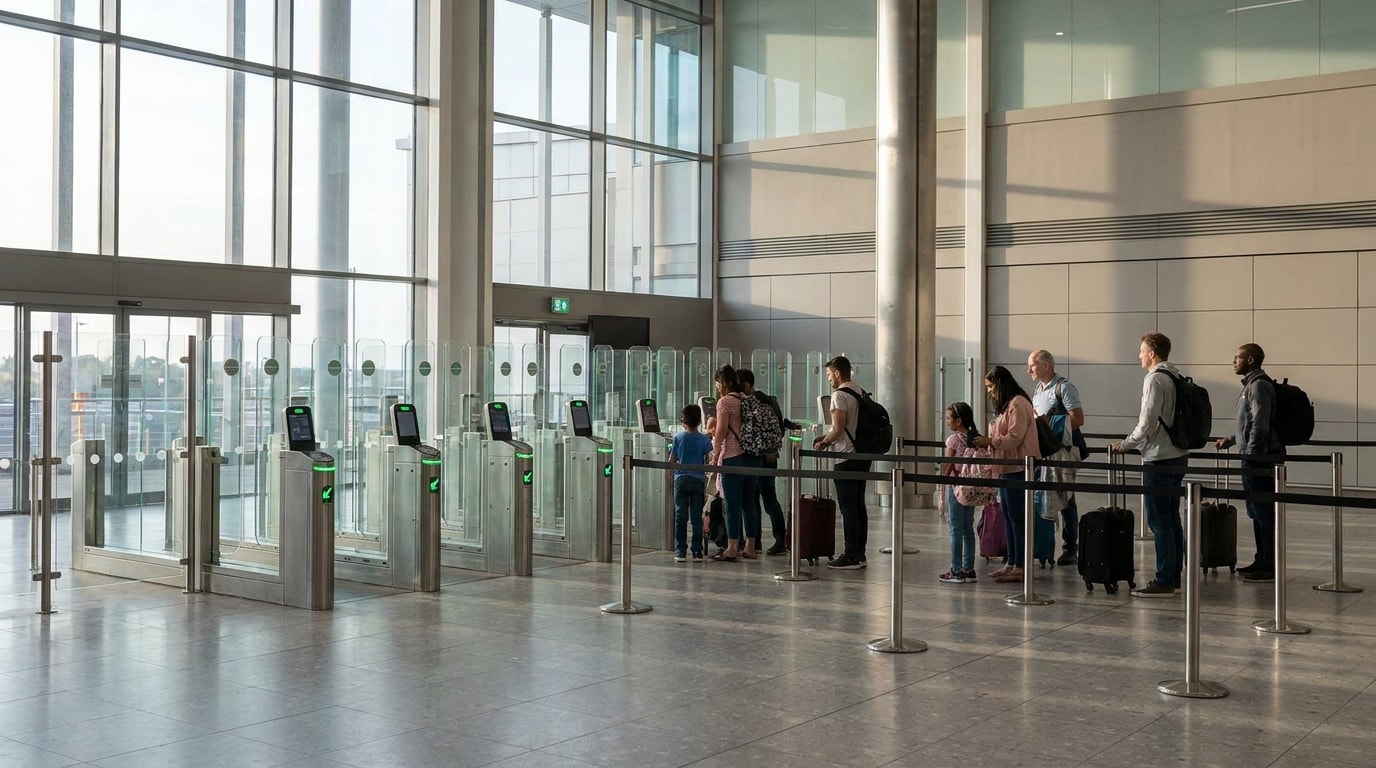
Cuba e-Visa applicants can now use a new official consular portal to request tourist, family and business exploration visas, with group submissions of up to 10 travellers.
Cuba has launched a new official consular portal for electronic visa applications, expanding online access beyond tourism to include family visits and business exploration visas.
New portal follows eVisaCuba disruption
Travellers who require a visa for Cuba now have a new online route for submitting applications. On Wednesday, November 4, 2026, Cuba’s Ministry of Tourism, through its office in Canada, announced the launch of a new official website for electronic visa requests.
The announcement came after the previous eVisaCuba portal remained unavailable on November 3, despite an initial plan to reopen it on November 2. Cuban authorities had been moving the country’s electronic visa system from “Evisa1” to a new version called “Evisa2” since October 29.
Initial checks by VisasNews found that the new platform was accessible, allowing users to open the application form, choose the relevant consular service and see the visa fees that apply.
Three visa types now available online
The service is available through Cuba’s official consular services portal, which is operated by the Ministry of Foreign Affairs. The platform offers interfaces in English, Spanish and French.
From the homepage, applicants can choose “Start” and then select the option for a digital visa application. The portal also includes a verification function, enabling travellers to check the status and validity of their visa.
A key change is the broader range of visa categories. Cuba’s Ministry of Tourism said the system now supports applications for tourist visas, family visas and business exploration visas. The earlier eVisaCuba system was mainly aimed at travellers applying for electronic tourist visas.

How the application process works
Testing by VisasNews showed that applicants must first enter a valid email address and complete an on-screen CAPTCHA. A verification message is then sent to the email address, allowing the user to confirm their identity and continue.
After verification, applicants select the country from which they are applying and the relevant Cuban consular office. For applications submitted from the United States, the system allows users to choose the United States and the Cuban Embassy in Washington, D.C. The portal then displays the embassy’s contact details, including its address at 2630 16th Street NW, Washington, D.C.
- Applicants can select a tourist visa, family visa or business exploration visa.
- They must enter personal details including nationality, passport number, first and last names, date of birth and sex.
- An email address must be entered and confirmed; the phone number field appears optional.
- Applicants must upload an image of their passport in PNG, JPG or JPEG format.
The new system also supports multiple requests in one application flow. After entering the first traveller’s information, a user can add up to nine more applications, for a total of 10 visa requests. The total amount due is calculated automatically based on the number of applications submitted, a feature that may help families and groups applying together.
Payment handled through consular offices
At the final stage, the portal shows an application summary, a breakdown of consular fees and the payment methods accepted by the selected consular office. Unlike many electronic visa systems, Cuba’s new platform does not provide direct online payment by credit or debit card.
Instead, applicants must pay the required fees through one of the methods set by the consular office and upload proof of payment to the platform as part of the application.
During VisasNews testing, a tourist visa application through the Cuban Embassy in Washington, D.C. showed a fee of $50 per application. For that office, the portal listed six payment methods: cash, bank transfer, money order, payment through a point-of-sale terminal, bank deposit and check.
The inclusion of a point-of-sale terminal does not mean applicants can pay by card directly on the website. They must follow the consular office’s payment instructions and provide proof through the online system. The arrangement reflects wider financial restrictions that have long affected Cuba’s access to international banking and payment processing. U.S. economic sanctions have contributed to the loss of banking relationships between foreign financial institutions and Cuban organisations, including some diplomatic and consular missions.
Travel agencies and D’Viajeros remain part of the process
The updated platform is also designed for travel industry use. According to an official user manual from Cuba’s Ministry of Foreign Affairs, the portal includes a restricted section for travel agencies that have agreements with Cuban consular offices. Registered agencies can manage electronic visa applications for clients, track cases, handle payments and administer related services.
The new visa portal does not replace Cuba’s D’Viajeros requirement. Travellers must still complete the electronic D’Viajeros form, which collects immigration, health and customs information required on arrival. The form must be submitted within 72 hours before travel and remains mandatory even for travellers who already hold a Cuban e-Visa.
For travellers, the main practical change is a broader and more centralised online visa process, though payment may still require close attention to consular instructions. For the travel industry, the agency section and multi-applicant function could make Cuba visa handling easier for families, groups and organised trips.
Sources