
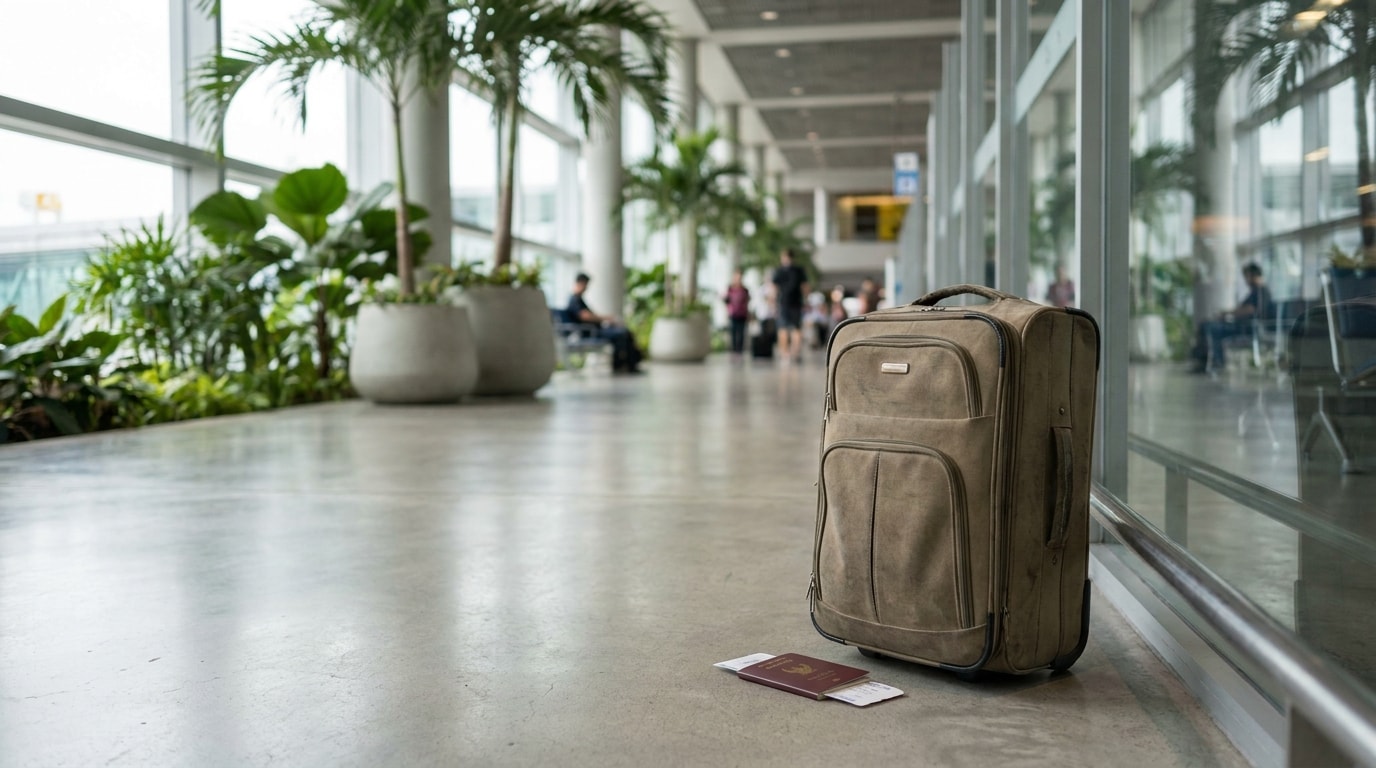
Thailand has made its visa-exemption rollback official. The Ministry of Interior notices ending the expanded 60-day exemption were published in the Royal Gazette on August 31, 2026, and the new framework takes effect on September 15, 2026.
From that date Thailand runs a one country, one category system. Nationals of 60 countries and territories keep visa-free tourism entry, but for 30 days instead of 60. Two countries drop to 15 days, three keep Visa on Arrival — and around 22 nationalities lose visa-free access altogether.
For a two-week holiday, nothing much changes. For anyone who planned a longer trip on the old 60-day stamp — a winter escape, a workcation, a training camp, a slow retirement scouting trip — the exemption no longer covers it, and a new land-border cap ends the border-run workaround.
The good news is that every one of those cases already has a visa built for it, and most cost less than people assume: a Tourist Visa restores a 60-day stay for 1,000 THB, and the DTV runs to 180 days per entry over five years. This guide gives the complete country lists, the entry conditions, official fees in Thai baht — and shows which route fits your trip. DoVisa can prepare any of them.
Find your nationality in one of the entry categories first, then check whether the permitted stay actually covers your trip. If it does not, jump straight to the longer-stay routes — choosing the right visa before departure is far cheaper than a refused extension or an overstay fine.
Check your Thailand entry option before you travel
From September 15, 2026 there are four possible answers for any passport: a 30-day exemption, a 15-day exemption, Visa on Arrival, or a visa obtained in advance. A separate group holds bilateral visa-waiver treaties with Thailand that this change does not touch.
Whichever applies, the Thailand Digital Arrival Card is an additional step. It is not a visa and does not extend your stay. The Immigration Bureau requires it from all non-Thai nationals and states it is compatible with all visa types, including visa-on-arrival and visa-exempt entries.
If your trip is longer than the exemption allows, or your purpose is not tourism, apply for the right visa before you fly rather than relying on a discretionary extension. DoVisa handles Thailand applications end to end — document check, submission and status updates — for the arrival card and every visa route below.
Thailand entry at a glance from September 15, 2026
30-day exemption: 60 countries and territories, tourism only, extendable once by up to 30 days at immigration discretion
15-day exemption: Mauritius and Seychelles
Visa on Arrival: Azerbaijan, Belarus and Serbia — 2,000 THB, stay not exceeding 15 days
Visa required in advance: around 22 nationalities that were visa-free until now
Everyone: a Digital Arrival Card submitted within 3 days before arrival, free on the official TDAC site
Proof of funds: 20,000 THB per person or 40,000 THB per family
What changes on September 15, 2026?
Thailand is ending the expanded 60-day exemption that began in July 2024 and covered 93 countries and territories. The repeal was published in the Royal Gazette in Volume 143, Special Issue 207, on August 31, 2026 in four consecutive Ministry of Interior notices, taking effect 15 days later on September 15, 2026.
From that date, holders of passports from 60 countries and territories are eligible for visa exemption for tourism with a permitted stay of up to 30 days, per the Tourism Authority of Thailand. The Royal Thai Embassy in Washington, D.C. lists the same date and the same 60 countries and territories.
For most travellers from Europe, North America, the Gulf, Northeast Asia and Oceania this is not a loss of visa-free access — it is a cut from 60 days to 30, plus a new limit on how often you can use it at a land border. For a smaller group, mostly in Latin America, the Caribbean, Central Asia and the Balkans, it is the end of visa-free travel to Thailand.

What the new framework does
Repeals the special 60-day exemption via the Ministry of Interior notice in the Royal Gazette
Takes effect September 15, 2026, 15 days after publication
Creates a 30-day tourism exemption for 60 countries and territories in document 128703
Creates a 15-day exemption for Mauritius and Seychelles in document 128705
Cuts Visa on Arrival from 31 countries to three in document 128704
Adds a land-border cap of generally two visa-exempt entries per calendar year, per the TAT Newsroom
Thailand has cancelled visa-free travel for everyone.
Nationals of 60 countries and territories keep visa-free entry for tourism from September 15, 2026. For them the change is the length of stay, not the existence of visa-free entry. For roughly 22 other nationalities, however, visa-free access does end.
30-day exemption, 15-day exemption and Visa on Arrival categories
The reform applies a one country or territory, one entry category approach, so no nationality appears on more than one list, as described on Thailand.go.th. The Royal Gazette notices lock those categories in.
- 30-day visa exemption: nationals of 60 countries and territories, for tourism, extendable once by up to 30 days at immigration discretion, per the TAT Newsroom
- 15-day visa exemption: Mauritius and Seychelles, according to the TAT Newsroom
- Visa on Arrival: Azerbaijan, Belarus and Serbia, at 2,000 THB for a stay not exceeding 15 days under the Ministry of Foreign Affairs Visa on Arrival rules
- Bilateral agreement holders: a separate group whose visa-free access comes from a treaty with Thailand rather than the unilateral exemption list, and is not affected by this change
- Everyone else: a visa obtained before travel, normally through the Thai e-Visa system
The full 30-day visa-exemption country list
These are the 60 countries and territories whose passport holders can enter for tourism without a visa for up to 30 days from September 15, 2026, per the Tourism Authority of Thailand. Grouped by region for readability; the entitlement is identical for every entry.
30-day visa-exempt countries and territories from September 15, 2026
- Europe (34): Austria, Belgium, Bulgaria, Croatia, Cyprus, Czech Republic, Denmark, Estonia, Finland, France, Georgia, Germany, Greece, Hungary, Iceland, Ireland, Italy, Latvia, Liechtenstein, Lithuania, Luxembourg, Malta, Netherlands, Norway, Poland, Portugal, Romania, Slovakia, Slovenia, Spain, Sweden, Switzerland, Ukraine, United Kingdom
- Middle East (8): Bahrain, Israel, Jordan, Kuwait, Oman, Qatar, Saudi Arabia, United Arab Emirates
- Asia (11): Bhutan, Brunei, India, Indonesia, Japan, Kyrgyzstan, Malaysia, Maldives, Philippines, Singapore, Taiwan
- Americas (2): Canada, United States
- Oceania (3): Australia, Fiji, New Zealand
- Africa (1): South Africa
- Also included: Türkiye
Kyrgyzstan is the one nationality that gained
Kyrgyzstan moves up from the old Visa on Arrival list to full 30-day visa-free entry under the new framework published by the Tourism Authority of Thailand. Every other change in the 2026 reform reduces an entitlement rather than expanding one.
Who loses visa-free access to Thailand entirely
This is the least-covered part of the reform and the one that matters most. The old scheme covered 93 countries at 60 days; the new one covers 60 at 30. Around 34 nationalities come off the unilateral exemption list, and only some land somewhere else.
Roughly a dozen keep visa-free access through a bilateral visa-waiver treaty, a separate instrument these notices do not repeal. Mauritius moves to the 15-day list. That leaves about 22 nationalities that now need a visa before travelling where previously they did not.
If your passport is on the list below, a trip you could once take on a boarding pass alone now needs an application, documents and processing time. Start your Thailand visa application with DoVisa rather than discovering the requirement at check-in.
Nationalities that now need a visa in advance
Albania, Andorra, Colombia, Cuba, Dominica, the Dominican Republic, Ecuador, Guatemala, Jamaica, Kazakhstan, Kosovo, Mexico, Monaco, Morocco, Panama, Papua New Guinea, San Marino, Sri Lanka, Tonga, Trinidad and Tobago, Uruguay and Uzbekistan appear on none of the new lists published by the Tourism Authority of Thailand. Kazakhstan, Mexico, Papua New Guinea and Uzbekistan lose twice: they were on both the old exemption list and the old Visa on Arrival list. Confirm your status with a Thai mission before booking.
Ten of the twenty-two are in Latin America and the Caribbean, making that the worst-affected region; Central Asia and the European microstates follow. The practical route is the Thai e-Visa system, available through all 94 Thai embassies and consulates-general since January 1, 2025.
Countries that keep visa-free entry through bilateral agreements
Several nationalities that leave the unilateral list still travel visa-free under a bilateral waiver treaty with Thailand. The Tourism Authority of Thailand confirms these continue alongside the new framework, at their own durations of 90, 30 or 14 days.
Bilateral visa-waiver arrangements that continue
- Up to 90 days by agreement: Brazil, Peru and South Korea
- Up to 30 days by agreement: Hong Kong, Laos, Macao, Mongolia, Russia and Vietnam
- Up to 14 days by agreement: Cambodia
- Moved to the 15-day exemption list: Mauritius
- Bilateral entitlements come from treaties, not from the exemption notices, so they are unaffected by the September 15, 2026 repeal — but always verify the current duration with a Thai mission, since agreements are amended independently
Some official pages still show superseded numbers
Earlier Cabinet stages produced 54 countries in May 2026 and 59 in July, and several Thai government pages still show them. The gazetted outcome is 60 at 30 days, 2 at 15 days and 3 on Visa on Arrival, per the TAT Newsroom and the Royal Thai Embassy in Washington, D.C. A page showing 54 or 59 predates publication.
Who needs a visa — and who only needs the Thailand Digital Arrival Card?
Separate the visa decision from the arrival-card requirement. A visa exemption lets you enter without applying for a visa first. The Thailand Digital Arrival Card is an online arrival-card submission that replaced the paper TM.6 for all international travellers, per the Thai Immigration Bureau FAQ.
The Immigration Bureau states that all travelers, including infants and children, are required to have a TDAC, that it applies by land, air, or sea, and that it works with visa-exempt and Visa on Arrival entries. Being visa-exempt does not remove the step, and holding a visa does not either.
You may need only the TDAC if your passport is on a visa-exempt list, your purpose is tourism and your stay fits the permitted period. You need a visa if you are staying longer, want repeated longer trips, qualify for a DTV route, are entering for retirement, or your nationality is no longer on any exemption list.
Do not mix up TDAC and a visa
Treat TDAC as a document-preparation step, not as permission to stay longer. The Immigration Bureau user guide describes it as an arrival-card submission, and the official channel is free of charge on the official Thailand Digital Arrival Card site.
If I complete TDAC, I have a Thai visa.
TDAC is not a visa. The Immigration Bureau describes it as an arrival-card submission, while visa eligibility and permitted stay are governed separately by Thailand’s visa-exemption, Visa on Arrival and visa rules on the TDAC user guide.
The narrow exemptions from TDAC
The exemptions are narrow. Airside transit is one: if you are not passing through immigration a TDAC is not required, but if you leave the airport it is. Technical landings and transit flights that do not clear immigration are excluded, and crew are exempt.
Diplomatic passport holders are not exempt if they are non-Thai nationals. If you are unsure whether your itinerary clears immigration, submit it anyway — it is free and takes a few minutes.
Eligibility and entry conditions for the new 30-day exemption
The exemption is a tourism entitlement with conditions attached, and those conditions are enforceable at the border even when they are rarely checked.
Two document points matter. The exemption applies only to holders of passports issued by listed countries; other travel documents are not accepted. Temporary, provisional and emergency passports are accepted, but must be valid for at least six months upon returning to the country of residence, per the Royal Thai Embassy in Washington, D.C.
Travellers must also have adequate cash of or equivalent to 20,000 Baht per person or 40,000 Baht per family, and the Tourism Authority of Thailand issued a proof-of-funds reminder in July 2026. It is an entry condition, so be prepared even if most travellers are not asked.
Tourism purpose matters
The new 30-day exemption is stated for tourism. The old 60-day scheme explicitly covered short-term business and urgent ad-hoc work; the replacement is narrower. If your trip involves work or business, confirm the correct route with a Thai mission rather than assuming the exemption stretches to cover it.
Before relying on the 30-day exemption, check that you have:
- A passport — not another travel document — from a listed 30-day country, per the Royal Thai Embassy
- A tourism purpose that fits the exemption
- A passport valid for at least six months, the standard rule stated by the MFA
- Cash of or equivalent to 20,000 THB per person or 40,000 THB per family
- A confirmed onward or return ticket
- A TDAC submitted before arrival, per the Immigration Bureau FAQ
- Fewer than two prior visa-exempt land entries this calendar year, per the TAT Newsroom
The new land-border limit on visa-exempt entries
This condition is new in 2026 and aimed at border runs. Travellers using the exemption may generally enter no more than twice per calendar year at land borders, per the Tourism Authority of Thailand. The same cap applies to the 15-day tier unless the Interior Minister grants an exception.
Nationals of Malaysia, Brunei, Indonesia and Singapore are reported as exempt from the cap, as are nationalities the Minister designates. Arrivals by air are not affected.
The consequence: repeated overland exits and re-entries to reset a visa-free stay no longer work. If you travel to Thailand often, a multiple-entry Tourist Visa or a DTV is the route that fits, and DoVisa can prepare either.
Passport validity, proof of funds and onward tickets
Use six months as your planning baseline. The Ministry of Foreign Affairs requires a passport valid for at least 6 months on its Issuance of Visa page, Thai missions apply the same standard to visa-exempt arrivals, and airlines enforce it at check-in regardless.
Two funds figures circulate because they belong to different schemes. Visa exemption: 20,000 THB per person or 40,000 THB per family. Visa on Arrival: 10,000 THB per person or 20,000 THB per family, plus a fully paid ticket usable within 15 days of entry. Plan against whichever applies to you.
Requirements and documents: TDAC, Tourist Visa, DTV and retirement visas
Your document list depends on whether you use visa-free entry or apply for a visa. Within the exemption, the only pre-arrival form is the TDAC, which asks for passport details, flight number and arrival date, address in Thailand, travel purpose, health declaration information and an email address, per the Immigration Bureau FAQ.
For longer stays, the e-Visa route is universal: Thai e-Visa has been available through all 94 Thai embassies and consulates-general since January 1, 2025. The official e-Visa manual describes the process as creating an account, filling in the form, uploading documents, paying the fee, waiting for processing and receiving the visa by email.
One detail catches people out: you apply to the mission with jurisdiction over where you live, not your nationality. That is also why fees differ between missions — the statutory fee is set in baht, but each mission charges the local-currency equivalent.

Core documents and entitlements by route
TDAC: passport, flight and arrival date, address in Thailand, travel purpose, health declaration and email, per the Immigration Bureau
Tourist Visa (TR): 1,000 THB per entry, 3-month validity, stay not exceeding 60 days, per the MFA
METV: 5,000 THB, 6-month validity, up to 60 days per visit, per the MFA
DTV: 10,000 THB, multiple entry, 5 years, 180 days per entry, financial evidence of 500,000 THB, per the DTV checklist
Non-Immigrant O (retirement): aged 50+ with 800,000 THB deposit or 65,000 THB monthly income, per the MFA checklist
Non-Immigrant O-A: 5,000 THB, 1-year multiple entry, same financial test, per the MFA O-A page
Common preparation points for every nationality
- Use the exact passport details shown in your passport when completing TDAC or e-Visa forms — name, passport number, nationality and date of birth cannot be edited after TDAC submission
- Watch for characters that look alike: the digit 0 versus the letter O is the single most common passport-number error on Thai forms, and several Thai missions warn about it explicitly
- Apply for an e-Visa well ahead: missions generally reject applications submitted more than 90 days before arrival and publish their own processing times
- Keep evidence of funds, accommodation and travel purpose accessible for border questions
- Fees are non-refundable once paid in the e-Visa system, and the Ministry of Foreign Affairs notes that visa fees may change without prior notice
Information needed for the Thailand Digital Arrival Card
TDAC is about accurate arrival data. Have your passport, travel details, first accommodation address and health declaration answers ready; the Immigration Bureau says it takes about 3-5 minutes per person, if all information is ready, on its FAQ.
Two things catch people out. The card is valid for one time use, so a trip with two Thailand entries needs two submissions. And your full name, passport number, nationality and date of birth cannot be corrected after submission; everything else can. You do not need to print it.
Have your first Thailand address ready
Prepare hotel or address details before you start the TDAC. The form asks for your address in Thailand and your travel purpose, not just passport and flight details, according to the Immigration Bureau FAQ. Self-service kiosks are available on arrival at Suvarnabhumi, Don Mueang, Phuket, Chiang Mai and Hat Yai airports, but relying on them means queuing when you could have finished it at home.
Extra documents for DTV, Tourist Visa and retirement routes
The Destination Thailand Visa has three eligibility routes in the MFA DTV checklist: DTV1 Workcation for digital nomads, remote workers, foreign talent and freelancers; DTV2 Thai soft power activities such as Muay Thai, Thai culinary training and medical treatment; and DTV3 for the spouse and children under 20 of a DTV holder.
All three need a bank statement of no less than 500,000 THB plus route-specific evidence — an employment certificate, contract or portfolio for workcation, or activity enrolment or a hospital appointment for soft power. Missions commonly also ask for proof of residence and police clearance.
Retirement routes are age and finance based: Non-Immigrant O requires applicants to be at least 50 with a deposit equivalent to 800,000 THB or monthly income of 65,000 THB, per the MFA retirement checklist. The O-A Long Stay route applies the same tests over a one-year multiple-entry visa and adds a medical certificate and health insurance, whose figure varies by mission.
These are document-heavy applications where one missing statement restarts the clock. DoVisa reviews the full pack before submission.
How to apply step by step before departure
Start with two questions: which entry category does my passport fall into, and how long is my trip? If you are visa-exempt and within the permitted window, your only pre-departure action is the TDAC. If either answer points to a visa, start earlier — e-Visa applications need document uploads and mission processing time.
Step-by-step checklist
- Confirm your entry category. Find your passport on the 30-day, 15-day or Visa on Arrival list, or none of them, using the TAT announcement and the Royal Thai Embassy list.
- Check passport validity. Six months is the standard requirement stated by the MFA and enforced by airlines at check-in.
- Compare trip length to entitlement. If the trip is longer than the exemption, choose a visa now rather than relying on a discretionary extension.
- Apply for the visa if you need one. Create an account, complete the form, upload documents, pay, wait for processing and receive the visa by email, per the e-Visa manual.
- Submit the TDAC in the correct window. Within 3 days before arrival, including the arrival date, per the Immigration Bureau FAQ.
- Carry entry-condition evidence. 20,000 THB per person or 40,000 THB per family and an onward ticket, per the Royal Thai Embassy.

Plan by total days, not just the entry date
Make the visa-length decision before buying a return flight. If your itinerary is clearly longer than 30 days, apply for a Tourist Visa, METV, DTV or retirement route rather than relying on an extension an officer can refuse. Compare the routes and apply before your dates are locked in.
When to submit the TDAC and how group submissions work
The window is short and specific: submit within 3 days in advance of arriving in Thailand, including the date of arrival, described elsewhere by the Immigration Bureau as up to 72 hours before entry, on its FAQ. Do not submit weeks early and assume it covers a later arrival.
Group submission allows a maximum of 10 entries per submission, and one adult may complete it for family, children or group travellers. Each traveller still needs their own accurate details.
The e-Visa process for travellers who need more than a visa-free stay
If your stay exceeds your exemption, or your nationality no longer has one, do not wait for the TDAC window to think about visas. Missions generally accept applications from about 90 days before arrival and reject anything earlier.
There is no single global processing time. Missions publish their own, commonly 5 to 15 working days from a complete application, some stating up to 14 working days from payment. Check the mission handling your file; payment is by credit card in the e-Visa system and is non-refundable.
Official fees and processing times
Thai visa fees are set in Thai baht centrally, but each of the 94 missions charges the local-currency equivalent and publishes only that figure. The table below uses the statutory THB amounts, which are identical for every nationality; convert to your currency and confirm the exact charge in the e-Visa system.
The Issuance of Visa page lists Transit at 800 Baht per entry, Tourist at 1,000 Baht per entry with 3-month or 6-month validity and a stay not exceeding 60 days, and Non-Immigrant at 2,000 Baht single entry and 5,000 Baht multiple, with the caveat that fees may change without prior notice.
The arrival card is the outlier: it is genuinely free on the official TDAC page, and Thai missions confirm that TDAC is free of charge. Any charge you pay is a service fee for preparing and submitting it, not a government fee.
Thailand entry options: official fees, stay and timing
| Option | Official fee | Validity / permitted stay | Notes |
|---|---|---|---|
| Thailand Digital Arrival Card (TDAC) | No government fee — free on the official TDAC page | Arrival-card submission, valid for one entry; not a visa | Submit within 3 days before arrival; takes 3-5 minutes |
| Visa exemption (30 days) | No fee | 30 days for tourism, extendable once by up to 30 days | Granted at the border; no application |
| Visa on Arrival | 2,000 THB under the MFA rules | Single entry, stay not exceeding 15 days | Issued at the checkpoint; Azerbaijan, Belarus and Serbia only |
| Tourist Visa single entry (TR) | 1,000 THB per entry on the MFA fee page | 3-month validity; stay not exceeding 60 days | Mission-specific e-Visa processing, commonly 5-15 working days |
| Tourist Visa multiple entry (METV) | 5,000 THB per the MFA METV announcement | 6-month validity; up to 60 days per visit | Financial evidence required; threshold set locally by each mission |
| Destination Thailand Visa (DTV) | 10,000 THB per the MFA DTV checklist | Multiple entry; 5-year validity; 180 days per entry | Requires bank statement of no less than 500,000 THB |
| Non-Immigrant O (retirement), single entry | 2,000 THB on the MFA fee page | 3-month validity; stay up to 90 days, extendable to one year at an Immigration office | Aged 50+ with 800,000 THB deposit or 65,000 THB monthly income |
| Non-Immigrant O-A Long Stay | 5,000 THB multiple entry on the MFA O-A page | 1-year multiple-entry validity | Adds a medical certificate and health insurance; insurance figure varies by mission |
| Extension of stay at an Immigration office | 1,900 THB, form TM.7 | Up to 30 additional days for a visa-exempt or tourist stay | Granted at the immigration officer’s discretion |
Fee figures on mission websites will not match the baht amounts
Every Thai mission charges the local-currency equivalent of the statutory baht fee, so a euro, pound or yen figure on an embassy page is the same fee at that mission’s rate. The MFA also notes fees may change without prior notice. Confirm the amount in the e-Visa system before paying — fees are non-refundable.
How DoVisa can handle your Thailand application
The fees above are what Thailand charges. What they do not cover is the part that goes wrong: a bank statement that does not span the right months, a passport number typed with a letter O instead of a zero, an arrival card submitted outside its window, or a DTV pack missing the one document the mission asks for last.
DoVisa handles Thailand applications end to end — arrival card, Tourist Visa, multiple-entry Tourist Visa, Destination Thailand Visa and the retirement routes — with a document check before submission and status updates until the visa is issued.
Start your Thailand application with DoVisa and have the requirements checked against your nationality, dates and purpose before you pay a government fee that is not refundable.
Validity, extensions, overstay and rules during your stay
The new exemption gives a shorter starting stay, but the extension mechanism survives. It can be extended for another period not exceeding 30 days, and extension of stay is solely at the discretion of the immigration officer, per the Royal Thai Embassy in Washington, D.C.
You apply at any Immigration office on form TM.7 with a photograph and a 1,900 THB fee. Do not treat it as automatic: you enter with the permission granted at the border, and the officer decides on any more. If your plan already depends on staying longer, a visa chosen before departure is the calmer route.
On the transition, foreign nationals entering before the measures take effect will be permitted to remain for the duration of their existing permitted stay, per Thailand.go.th. The rollback is not retroactive: a 60-day stamp issued on September 14, 2026 keeps its 60 days.
Extensions are discretionary
An extension of a visa-exempt stay can be for another period not exceeding 30 days, but it is solely at the discretion of the immigration officer under embassy guidance. Build your itinerary around the permission you actually receive at the border, not the one you hope to be granted later.
Keep your entry record if you arrive before the change
If you enter before September 15, 2026, keep evidence of your entry date and permitted-stay stamp. Thailand.go.th stated that pre-effective-date entries may remain for their existing permitted stay, and your stamp proves which framework you arrived under.
Everyone in Thailand on the old scheme must leave on September 15, 2026.
The government update stated that foreign nationals entering before the new measures take effect may remain for the duration of their existing permitted stay, according to Thailand.go.th. A 60-day stamp issued on September 14, 2026 runs its full course.
Extending a 30-day visa-exempt stay
Yes, but plan carefully. The stay can be extended by another period not exceeding 30 days at the officer’s discretion, taking a maximum visa-exempt stay to about 60 days from entry. Apply at any Immigration office before your current permission expires, with form TM.7, a photograph and a 1,900 THB fee.
If you know before departure that you want longer, compare a Tourist Visa: it gives up to 60 days per entry as of right and can itself be extended — a materially stronger position than arriving on an exemption and hoping.
What happens if you overstay
Overstaying is the risk that grows when a permitted stay is halved and travellers keep planning as though it had not been. The fine is 500 Baht per day, to a maximum of 20,000 Baht for overstays of 40 days or longer, per the Royal Thai Embassy overstay guidance.
Longer overstays carry re-entry bans. The same guidance describes an overstay of more than 90 days as a serious offence resulting in deportation and a ban, with the length depending on the overstay. None of it is worth risking to save a visa fee.
Staying longer than 30 days: Tourist Visa, METV, DTV and retirement options
If your trip exceeds 30 days, the right option depends on purpose, not just dates. A Tourist Visa gives a stay not exceeding 60 days per entry under the MFA fee and validity table — it restores exactly what the old exemption gave, for 1,000 THB.
A multiple-entry Tourist Visa at 5,000 THB with 6-month validity suits repeated trips, and is now the obvious answer for anyone who relied on repeated visa-free entries — especially at land borders, where the two-per-year cap bites.
The DTV is a different instrument: the MFA DTV checklist sets it at 10,000 THB for a multiple-entry visa valid 5 years with 180 days per entry, extendable once by up to a further 180 days, but document-heavy and restricted to three categories.
Retirement routes need applicants at least 50 with a deposit equivalent to 800,000 THB or monthly income of 65,000 THB. A ten-year O-X route also still exists for a restricted list of nationalities at 10,000 THB, with substantially higher thresholds.
None of these routes is exotic or hard to qualify for — the failure mode is almost always a document detail, not eligibility. DoVisa prepares and submits all of them: Tourist Visa, multiple-entry Tourist Visa, DTV and both retirement routes, with the pack checked before it goes to the mission.
Longer-stay options at a glance
| Route | Best for | Fee, validity and stay | Key notes |
|---|---|---|---|
| Tourist Visa (TR) | Tourism or leisure beyond the visa-exempt window | 1,000 THB; 3-month validity; stay not exceeding 60 days | The direct replacement for the stay the old 60-day exemption used to give |
| Tourist Visa multiple entry (METV) | Repeated tourism trips within six months | 5,000 THB; 6-month validity; up to 60 days per visit | The answer for anyone caught by the new two-per-year land-border cap |
| Destination Thailand Visa (DTV) | Remote workers, freelancers, Thai soft-power activities and their dependants | 10,000 THB; multiple entry; 5 years; 180 days per entry | Requires bank statement of no less than 500,000 THB plus category evidence |
| Non-Immigrant O (retirement) | Retirees aged 50 or above | 2,000 THB single entry; stay up to 90 days, extendable to one year in Thailand | 800,000 THB deposit or 65,000 THB monthly income |
| Non-Immigrant O-A Long Stay | Retirees aged 50 or above wanting a longer runway | 5,000 THB; 1-year multiple-entry validity | Adds a medical certificate and health insurance; insurance figure varies by mission |
| Non-Immigrant O-X Long Stay | Retirees from a restricted list of eligible nationalities | 10,000 THB; up to 5 years plus a 5-year extension | Requires around 3 million THB, or 1.8 million THB plus qualifying annual income |
Match purpose before price
If your only issue is a holiday longer than 30 days, a Tourist Visa at 1,000 THB solves it. If your purpose is remote work, soft-power activities, medical treatment or retirement, the route-specific requirements matter more than the fee — and the wrong category is what causes refusals. Check which route fits your case.
The Destination Thailand Visa is just a longer tourist visa.
The DTV has its own defined eligibility routes and evidence requirements. The Ministry of Foreign Affairs DTV checklist sets out DTV1 Workcation, DTV2 Thai soft power activities and DTV3 for spouses and children under 20, each requiring financial evidence of no less than 500,000 THB. It is not available simply because a trip is long.
Which option fits tourists, frequent visitors, remote workers and retirees?
For a short beach, city or family holiday, visa-free entry plus a TDAC is enough if you stay within your permitted period. For a single trip of five or six weeks, a Tourist Visa at 1,000 THB is the cheapest clean fix.
For frequent visitors — people crossing from Malaysia, Laos or Cambodia several times a year, or splitting time between Thailand and a nearby base — the multiple-entry Tourist Visa is now close to essential, because the land cap removes the pattern they relied on.
If you work remotely, train in Muay Thai, take a culinary course or come for medical treatment, check DTV evidence early: the 500,000 THB statement usually has to cover a defined recent period, which you cannot assemble the week before you fly. If you are retired and 50 or above, compare Non-Immigrant O against O-A on entry pattern and insurance, not on fee.
Practical travel tips and the 2024-2026 timeline
Thailand’s entry rules have changed several times in two years, so old screenshots and cached embassy pages are actively misleading. Several official Thai pages still carry superseded figures from earlier stages of this reform.
Practical tips before flying
- Check your nationality against the current category, not your last trip — 34 nationalities moved in 2026
- A page listing 54 or 59 visa-exempt countries predates the Royal Gazette; the figure is 60
- Watch the digit 0 versus the letter O in passport numbers — TDAC will not let you correct a passport number after submission
- Submit the TDAC within 3 days before arrival, per the Immigration Bureau FAQ — and a new one for each entry
- Do not assume an extension will be granted; it is at the officer’s discretion
- Carry proof of funds — 20,000 THB per person or 40,000 THB per family, per the TAT reminder
- If you enter by land, count your visa-exempt entries this year — the cap is generally two
Old 60-day guidance will mislead you
The 60-day materials from July 2024 are no longer the framework for arrivals from September 15, 2026. That document also covered short-term business and urgent ad-hoc work; the 2026 replacement is stated for tourism. Use the current notices and treat unchanged third-party pages with suspicion.
From the 2024 60-day scheme to the 2026 rollback
Thailand introduced the expanded 60-day exemption for 93 countries and territories on July 15, 2024, alongside a 31-country Visa on Arrival list. Thai e-Visa reached all 94 Thai missions worldwide on January 1, 2025, and the Thailand Digital Arrival Card replaced the paper TM.6 on May 1, 2025.
The Cabinet approved the revision on May 19, 2026 at 54 countries, updated it on July 14, 2026 at 59, and the four Ministry of Interior notices were published on August 31, 2026 at the final figures — 60 countries at 30 days, 2 at 15 days and 3 on Visa on Arrival — locking in the September 15, 2026 effective date.
For most travellers the change shows up in ordinary trip planning: the arrival hall, the first hotel address, the itinerary through Bangkok, Phuket and Chiang Mai.
Thailand country information for travellers
Thailand basics
Country code: TH
Capital: Bangkok
Currency: Thai baht (THB)
Official language: Thai
Time zone: UTC+7 / Indochina Time (ICT)
Major airports include Suvarnabhumi Airport (BKK), Don Mueang International Airport (DMK), Phuket International Airport (HKT), Chiang Mai International Airport (CNX), Hat Yai International Airport (HDY) and Mae Fah Luang-Chiang Rai International Airport (CEI), according to the Thailand Board of Investment
TDAC self-service kiosks are available on arrival at Suvarnabhumi, Don Mueang, Phuket, Chiang Mai and Hat Yai
Conclusion: what to do next
Find your passport in one of the three lists first. If you are among the 60 nationalities keeping visa-free entry, check your dates against 30 days rather than 60, and complete the TDAC within 3 days before arrival as required by the Immigration Bureau.
If your nationality has come off the list, or your trip is longer than the exemption allows, or you cross a land border more than twice a year, the exemption is no longer your route. A Tourist Visa restores a 60-day stay for 1,000 THB, a multiple-entry visa covers repeat trips, and the DTV and retirement routes cover longer stays.
Getting it wrong costs a refused boarding, a refusal at the border or an overstay fine — all dearer than applying properly. Check your requirements and start your Thailand application with DoVisa.
Frequently Asked Questions
Do I need a visa for Thailand from September 15, 2026?
Which countries are on Thailand’s 30-day visa-exemption list?
Which countries lost visa-free access to Thailand entirely?
What about countries with a bilateral visa agreement, like South Korea, Russia or Brazil?
When does Thailand’s 60-day visa exemption officially end?
If I enter Thailand before September 15, 2026, do I keep my 60-day stay?
Do I still need the Thailand Digital Arrival Card if I am visa-exempt?
When should I submit the TDAC, and what does it cost?
Do children need their own TDAC, and can I submit for my family?
Do I need a TDAC if I am only transiting?
Can I extend a 30-day visa-exempt stay in Thailand?
How much cash can Thai immigration ask visa-exempt travellers to show?
Is there a limit on how often I can use the exemption at a land border?
Tourist Visa, METV or DTV for a trip longer than 30 days?
What documents and proof of funds does the DTV need?
Non-Immigrant O or O-A for retirement?
What is the penalty for overstaying in Thailand?
Why do Thai visa fees differ between embassy websites?
Which Thailand visas can DoVisa help with?
Sources and further reading
- Royal Gazette document 128702: Ministry of Interior notice repealing the special 60-day visa-exemption measure — official
- Royal Gazette document 128703: Ministry of Interior notice listing 30-day visa-exempt countries and territories — official
- Royal Gazette document 128704: Ministry of Interior notice on the Visa on Arrival country list — official
- Royal Gazette document 128705: Ministry of Interior notice on the 15-day visa-exemption list — official
- Thailand introduces new 30-day and 15-day visa exemption rules from 15 September - TAT Newsroom — official
- New Visa Exemption and Visa on Arrival to Thailand - Royal Thai Embassy, Washington, D.C. — official
- Thailand entry: reminder on proof of funds for foreign visitors - TAT Newsroom — official
- Thai Cabinet approves updated visa measures pending Royal Gazette publication - THAILAND.GO.TH — official
- Cabinet Approves Revision of Thailand’s Visa Exemption and Visa on Arrival Schemes — official
- Thailand Digital Arrival Card FAQ - Immigration Bureau — official
- Thailand Digital Arrival Card User Guide - Immigration Bureau — official
- Official Thailand Digital Arrival Card (TDAC) – No Fees Required — official
- Thailand Digital Arrival Card (TDAC) to start on 1 May 2025 - THAILAND.GO.TH — official
- Thai E-Visa Official Website — official
- Thai e-Visa application manual (English) — official
- Kick-off of Thai e-Visa worldwide - Ministry of Foreign Affairs — official
- Issuance of Visa: types, fees and validity - Ministry of Foreign Affairs — official
- Multiple Entry Tourist Visa (METV) - Ministry of Foreign Affairs — official
- Destination Thailand Visa (DTV) checklist - Ministry of Foreign Affairs — official
- Non-Immigrant O (Retirement) checklist - Ministry of Foreign Affairs — official
- Non-Immigrant Visa O-A (Long Stay) - Ministry of Foreign Affairs — official
- Visa Exemption and Visa on Arrival, July 2024 (the superseded 93-country scheme) — official
- Advice on Thailand visa overstay regulations - Royal Thai Embassy, Washington, D.C. — official
- Airports - Thailand Board of Investment — official
- DoVisa Thailand visa and arrival card applications — secondary
Thailand
Capital: Bangkok
Currency: Thai baht (THB)
Language: Thai (official)
Timezone: UTC+7 / Indochina Time (ICT)
Processing: Varies by visa type
Quick Facts
- Main airports: Suvarnabhumi Airport (BKK), Don Mueang International Airport (DMK), Phuket International Airport (HKT)
- On 2024-07-15, Thailand introduced a 60-day visa exemption for 93 countries and territories for tourism, business engagements or urgent ad-hoc work, extendable by up to 30 days.
- From 2025-01-01, Thai e-Visa became available through all 94 Thai embassies and consulates-general worldwide.
- From 2025-05-01, Thailand required foreign visitors to use the Thailand Digital Arrival Card, replacing the paper TM.6 arrival card.
- From 2026-09-15, the visa exemption is reduced to 30 days for 60 countries and territories, with 15 days for Mauritius and Seychelles and Visa on Arrival for Azerbaijan, Belarus and Serbia.
Staying longer than 30 days?
Get the DoVisa app
Your visa, entry forms and travel documents in one place — also offline.







Comments(0)
Leave a Comment
No comments yet. Be the first to share your thoughts!