

Thailand is a major destination for planned medical treatment, from health screening and dental work to orthopaedic surgery and longer recovery stays. The visa route is not one-size-fits-all. As of August 2026, short planned treatment may fit the Tourist Visa (Medical Treatment), longer treatment may need a Non-Immigrant O Medical Treatment visa, and the Destination Thailand Visa can also cover medical treatment as a Thai soft-power activity if you meet its higher evidence requirements.
Your first step is not booking flights. It is getting a written appointment or treatment letter from the Thai hospital, checking which consular post handles your application, and building a realistic budget for visa fees, hospital charges, caregivers, accommodation and possible extensions. You also need to complete the Thailand Digital Arrival Card before entry. This guide explains the visa choices, documents, hospital checks and cost questions to settle before you travel.
Visa checker: match your treatment plan to the right Thailand visa
Choose your Thailand medical visa by working backwards from your treatment plan. A same-week health check is different from surgery plus physiotherapy. A patient travelling alone is different from a patient who needs a spouse, parent, adult child or friend to stay nearby.
Thailand’s official e-Visa system lists medical treatment as a visa category, and applicants use the online process to create an account, complete the form, upload documents, pay the fee, wait for processing and receive an e-Visa confirmation by email; the same official site says e-Visa applications are for applicants outside Thailand, not people already in Thailand Official Website of Thailand Electronic Visa.
Quick matching guide
- If your planned treatment and recovery are up to 60 days , check the Tourist Visa (Medical Treatment), often called TR-MT.
- If the medical plan is longer than 60 days , check the Non-Immigrant Type O Medical Treatment route.
- If you expect repeat treatment trips or a longer-entry structure, check whether the Destination Thailand Visa fits your case.
- If you are relying on a visa-exempt or visa-on-arrival entry for minor treatment, confirm that it matches your nationality, purpose and recovery timeline before travelling.
Start with the medical timeline
Do not choose only by visa fee. Choose by the appointment date, expected admission date, recovery period, follow-up schedule, whether you need a caregiver, and whether the hospital can issue letters for immigration if your recovery changes.
Medical travel to Thailand: what it is and who needs a visa
Medical travel means entering Thailand with a planned health purpose: consultation, diagnostics, surgery, rehabilitation, follow-up or another treatment arranged with a hospital or medical centre. The main evidence is usually a hospital letter confirming who you are, when you are expected, and why you are travelling.
For short treatment, the Royal Thai Embassy in Washington describes the Tourist Visa (Medical Treatment) as allowing a stay of up to 60 days from entry, with one possible extension of 30 days, giving up to 90 days total from entry if approved. For longer treatment, the same embassy lists Non-Immigrant Type O Medical Treatment as a 90-day single-entry visa intended for treatment longer than 60 days.
Medical visas are not only about the patient. The Royal Thai Embassy in London states that the O Medical Visa is issued to applicants who need medical treatment in Thailand, including accompanying persons, except for COVID-19 treatment on that embassy page, and allows up to 90 days from entry.
Thailand medical travel quick facts
Thai e-Visa medical applications are completed online while you are outside Thailand Official Thailand e-Visa
TR-MT can cover up to 60 days from entry
TR-MT may be extended once by 30 days if approved
Non-O Medical is listed as a 90-day single-entry visa at the Washington post
DTV includes medical treatment as a Thai soft-power activity and is valid for 5 years
TDAC is mandatory for all non-Thai nationals entering Thailand by air, land or sea Thailand Digital Arrival Card FAQ
If you are going to hospital, any tourist entry is automatically enough.
Eligibility for patients and accompanying caregivers
For patients, eligibility starts with a real appointment. The Washington Non-O Medical page requires a hospital or medical-centre appointment letter showing the applicant’s name, appointment date, purpose of visit and an authorised signature Royal Thai Embassy Washington. The DTV medical route also requires a hospital or medical-centre appointment letter Royal Thai Embassy Washington DTV.
Caregivers should not assume they can travel under the patient’s approval. Each traveller needs their own lawful basis to enter Thailand. The London embassy page says accompanying persons may be included under the O Medical Visa route, with the COVID-19 exception stated on that page Royal Thai Embassy London. For DTV, the Washington page lists eligible dependants as the spouse and children under 20 of DTV holders.
Inside Thailand, medical-extension rules recognise both patients and people taking care of a patient. The Immigration Bureau order allows no more than 90 days per permission for receiving treatment, rehabilitation or taking care of a patient, subject to evidence and discretion. Caregivers need physician confirmation and relationship evidence or embassy or consulate confirmation where required Immigration Bureau Order 777/2551.
Prepare caregiver evidence early
Ask the hospital to say clearly whether a caregiver is medically necessary, and ask the consular post what proof of relationship or support role it expects. A friend may need different evidence from a spouse, parent or child.
Documents to prepare before applying
Document rules vary by consular post, so use the post that serves your place of residence. The examples below come mainly from the Royal Thai Embassy in Washington and should be treated as a strong preparation checklist, not a guarantee that every embassy asks for identical wording.
For TR-MT at the Washington post, required uploads include a passport biodata page valid within 6 months from the travel date, a recent photo, proof of current location, flight itinerary into and out of Thailand, accommodation proof, and 3 months of bank statements showing at least USD 700 per month per person or USD 2,000 per family.
For Non-O Medical Treatment at the Washington post, required uploads include a passport biodata page valid within 6 months from the travel date, recent photo, current-location document, 3 months of bank statements with an ending balance of at least USD 4,000 each month, and the hospital appointment letter.
What the hospital letter should show
Applicant name Royal Thai Embassy Washington
Appointment date Royal Thai Embassy Washington
Purpose of visit Royal Thai Embassy Washington
Hospital or medical-centre details DTV medical requirements
Authorised signature Royal Thai Embassy Washington
If relevant, treatment period and recovery needs for later extension support Immigration Bureau Order 777/2551
Application document checklist
- Passport biodata page with the required validity for your post
- Recent photo meeting the e-Visa upload rules
- Proof of current location or residence
- Thai hospital or medical-centre appointment letter
- Bank statements meeting the visa route and consular-post threshold
- Flight itinerary and accommodation proof where required
- Extra status, work or study evidence if applying as a non-citizen resident through that post
- For minors under 20 , prepare documents such as birth certificate, parent documents, guardian IDs or passports, and notarised consent when required by the Washington post
Upload quality matters
The Washington embassy warns that missing documents, screenshots or unclear files can trigger requests for more documents and delay processing; materials issued outside Thailand and the United States must have certified English translations and notarisation by an Embassy or Ministry of Foreign Affairs Royal Thai Embassy Washington .
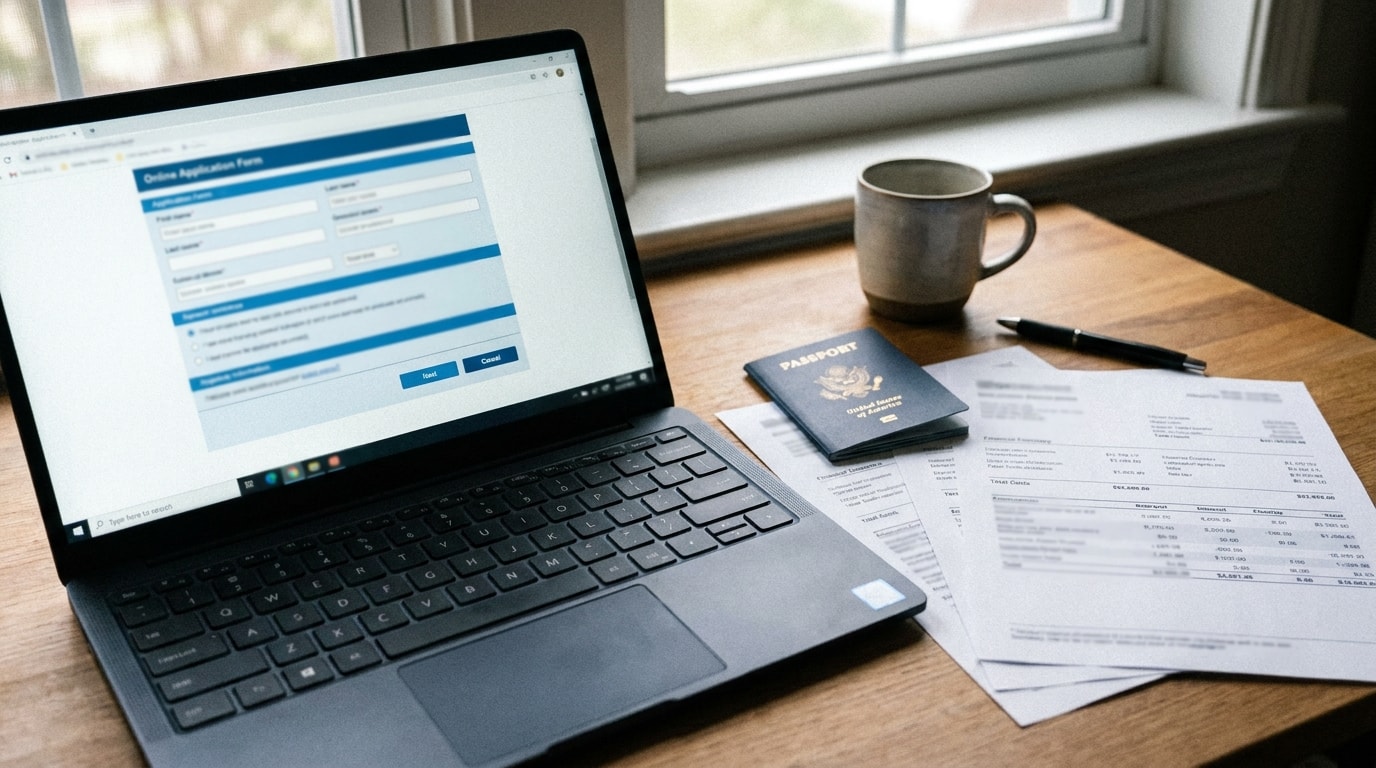
How to apply for a Thailand medical visa step by step
The official Thai e-Visa process is digital: create an account, complete the application, upload documents, pay the fee, wait for processing and receive the e-Visa confirmation by email Official Website of Thailand Electronic Visa. You should apply while outside Thailand, because the official e-Visa site says applications are not available to applicants currently in Thailand Official Website of Thailand Electronic Visa.
Step-by-step application flow
- Confirm the treatment plan. Get a written appointment or treatment letter from the Thai hospital before starting the visa form.
- Pick the visa route. Use TR-MT for a planned stay within its limit, Non-O Medical for longer planned treatment, or DTV if your case fits the DTV medical category and evidence level.
- Check the correct consular post. Fees, document wording and financial thresholds can vary by post and applicant residence.
- Prepare clean digital files. Use readable scans, not cropped screenshots, and translate or notarise documents where the post requires it.
- Create your e-Visa account. Complete the form with names and passport details exactly as shown in your passport.
- Upload evidence and pay. Keep the payment confirmation and application reference.
- Watch for document requests. The Washington TR-MT page says updated status is available within 3 to 5 business days from upload of requested documents.
- Travel with copies. Carry the e-Visa confirmation, hospital letter, accommodation details, insurance documents if any, and the TDAC confirmation.
Apply early, but not too early
The Washington TR-MT page recommends applying at least 30 days before departure , but not more than 90 days in advance because most visas are valid for 90 days from issuance . For Non-O Medical at the Washington post, request the visa at least 30 working days before intended travel if you have no valid visa or re-entry permit.
Visa fees, processing times and treatment cost examples
Budget in two parts: immigration costs and medical costs. Immigration fees are usually small compared with surgery, but delays can affect flights, hotel bookings and treatment dates.
At the Washington post, the TR-MT single-entry fee is USD 40 and non-refundable, the Non-Immigrant Type O Medical Treatment fee is USD 80 and non-refundable, and the DTV fee is USD 400. The Tourism Authority of Thailand lists the DTV general fee as 10,000 THB, with local consular fees varying by post and currency. The Munich consulate lists Tourist Visa (MT) Medical Treatment at 35 EUR single entry.
For hospital pricing, use public package pages only as examples. Bangkok Hospital Headquarter lists 2026 fly-in orthopaedic surgery packages from 281,000 to 745,000 THB, with examples including arthroscopic knee meniscus repair at 281,000 THB, total knee replacement one side excluding implant at 310,000 THB, direct anterior total hip arthroplasty one side excluding implant at 420,000 THB, and robotic total knee replacement including implant at 460,000–745,000 THB depending on package details.
Cost planning reminders
Washington TR-MT processing is typically approximately 21 business days
Thai extension-of-stay applications list a 1,900 THB fee
Visa on Arrival is listed at 2,000 THB but is for eligible nationalities and tourism, not the main planned-treatment route
Bangkok Hospital check-up examples include Essence Check-up at 5,500 THB and Superior Check-up at 13,500 THB
Bangkok Hospital also lists Vita-Beauty at 9,500 THB and Mineral Package at 13,800 THB
The Bangkok Hospital package pages state prices are valid until 31 Dec 2026 and can be amended without prior notice
Selected visa and hospital cost examples
| Item | Example cost or timing | Source note |
|---|---|---|
| TR-MT fee at Washington | USD 40, non-refundable | Royal Thai Embassy Washington, updated 30 Jun 2026 |
| Non-O Medical fee at Washington | USD 80, non-refundable | Royal Thai Embassy Washington, updated 1 Jul 2026 |
| DTV fee at Washington | USD 400 | Royal Thai Embassy Washington, updated 19 Mar 2026 |
| DTV general fee | 10,000 THB | Tourism Authority of Thailand |
| Thai extension application | 1,900 THB | Thai Immigration public service page |
| TR-MT processing at Washington | Typically approximately 21 business days | Royal Thai Embassy Washington |
| Orthopaedic package examples | 281,000–745,000 THB | Bangkok Hospital Headquarter 2026 package page |
| Health check examples | 5,500–13,800 THB | Bangkok Hospital Headquarter 2026 package page |
Validity, extensions and rules during your medical stay
Visa validity and permitted stay are not the same thing. The Washington TR-MT page describes a stay of up to 60 days from entry, with a possible 30-day extension, and also notes that most visas are valid for 90 days from issuance. The Non-O Medical route at Washington is a 90-day single-entry visa.
If you cannot fly home because of treatment, rehabilitation or a complication, do not wait until the final day. Thai Immigration’s public service page lists TM.7, passport copy, photo and the 1,900 THB application fee for extension applications. For medical treatment, it requires a confirmation and request letter for temporary stay issued by a physician of the treating hospital Thai Immigration.
The underlying medical-extension rules allow no more than 90 days per permission for receiving medical treatment, rehabilitation or taking care of a patient, with a physician’s confirmation or request letter explaining the illness, treatment period and why the illness impedes travel. Caregivers need physician confirmation and relationship evidence or embassy or consulate confirmation where required Immigration Bureau Order 777/2551.
Plan for a medical delay
An extension is not automatic. It depends on current immigration practice, your evidence, the hospital letter and officer discretion. Build a buffer into flights and accommodation, especially after surgery or treatment involving anaesthesia.
Ask the hospital before you need the letter
Before admission, ask the international patient office which documents it can issue for immigration, whether it can support a caregiver extension, and how much notice it needs to prepare a physician’s letter.
TR-MT vs Non-O Medical vs DTV and short-stay alternatives
The most practical way to compare Thailand medical visa options is by intended stay, repeat travel needs and financial evidence. The Royal Thai Consulate-General in Munich states that Tourist Visa (MT) Medical Treatment is for short-term treatment not longer than 60 days, while longer treatment may use Non-Immigrant O Medical Treatment with a maximum stay of 90 days.
DTV is different. The Washington page includes medical treatment under Thai soft-power related activities, gives a 5-year validity, and requires 3 months of bank statements showing at least 500,000 THB or USD 16,000 each month for medical-treatment applications at that post.
Thailand medical visa options compared
| Route | Typical medical use | Stay or validity stated in notes | Example evidence or fee |
|---|---|---|---|
| Tourist Visa (Medical Treatment) / TR-MT | Short planned treatment | Stay up to 60 days; possible 30-day extension at Washington | USD 700 per month per person or USD 2,000 per family for last 3 months at Washington; USD 40 fee at Washington |
| Non-Immigrant O Medical Treatment | Treatment longer than 60 days | 90-day single-entry visa at Washington; up to 90 days from entry at London | USD 4,000 ending balance each month for last 3 months at Washington; USD 80 fee at Washington |
| Destination Thailand Visa / DTV | Medical treatment as Thai soft-power activity; possible repeat-entry planning | 5-year validity at Washington | 500,000 THB or USD 16,000 each month for last 3 months at Washington; USD 400 fee at Washington |
| Visa on Arrival | Tourism for eligible nationalities, not the main planned-treatment route | Use depends on VOA eligibility and purpose | 2,000 THB listed by Tourism Authority of Thailand |
DTV has replaced every other medical visa option.
The notes do not support that. Current embassy pages still list TR-MT and Non-O Medical, while DTV also includes medical treatment. A Thai Medical Hub report says a 14 January 2026 meeting reviewed criteria for the one-year Medical Treatment Visa code Non-MT to align with DTV, but final implemented criteria were not confirmed in the researched sources.
Practical travel tips before flying for treatment
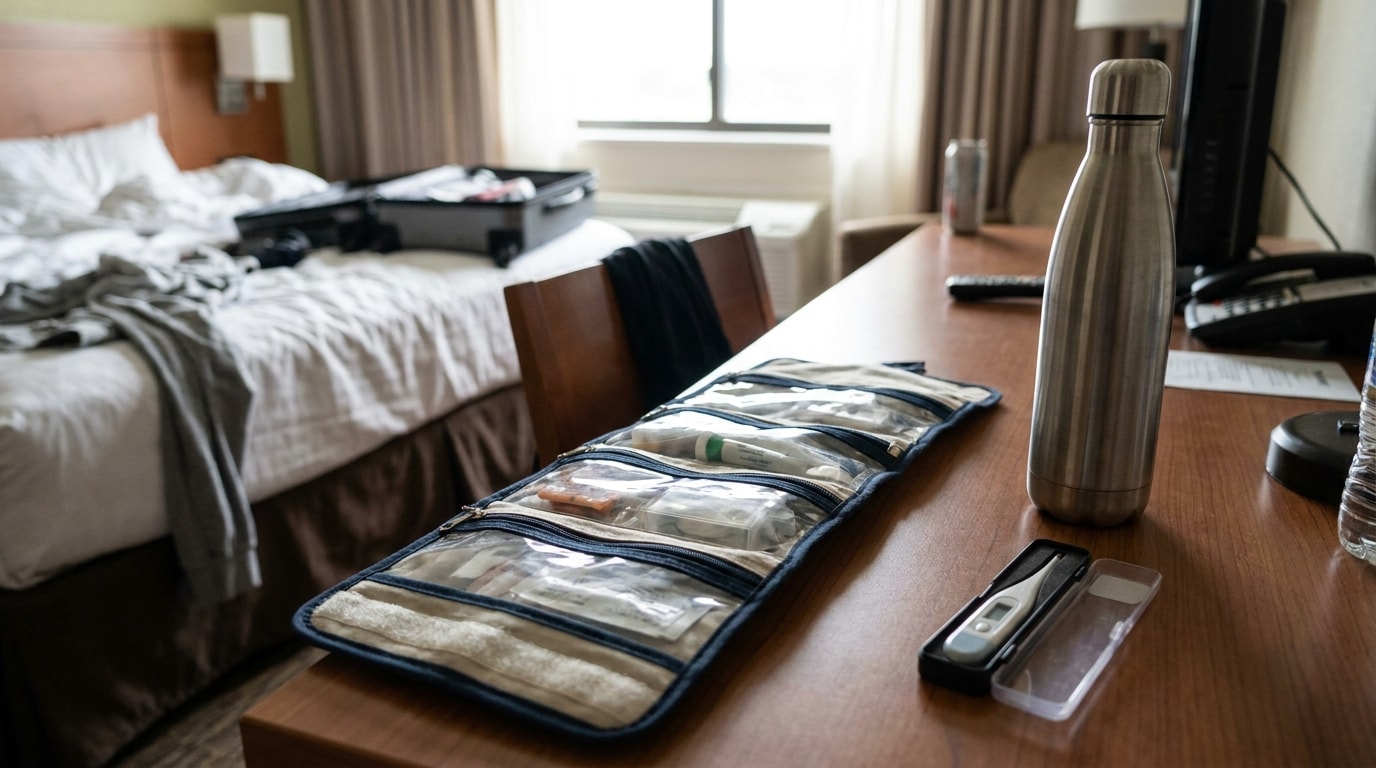
Medical travel has less room for improvisation than a holiday. You need documents for immigration, documents for hospital admission, and practical backup if your recovery changes.
Complete the Thailand Digital Arrival Card within 3 days before arrival, including the arrival date. The TDAC is mandatory for all non-Thai nationals entering Thailand by air, land or sea, and a new TDAC is needed for each entry Thailand Digital Arrival Card FAQ. The FAQ also says all non-Thai travellers, including infants and children, need TDAC before entering Thailand, while transit passengers who do not pass immigration do not need TDAC; those leaving the airport do Thailand Digital Arrival Card FAQ.
Before departure checklist
- Carry your passport, e-Visa confirmation, TDAC confirmation, hospital letter, treatment quote and accommodation details in hand luggage.
- Verify current hospital accreditation. JCI publishes a current list of accredited international organisations Joint Commission International .
- Check Thailand’s domestic HA accreditation route through the Healthcare Accreditation Institute, the public organisation responsible for setting standards and certifying hospital service quality in Thailand Healthcare Accreditation Institute .
- Use the UK government’s Thailand medical facilities guidance to identify English-speaking facilities and listed accreditation examples, including Bangkok Hospital Pattaya with JCI accreditation and Samitivej Sriracha Hospital with JCI/JCAHO/ISO listed GOV.UK .
- Ask for a written quote separating package inclusions, exclusions, implants, complications, room category, diagnostics, physician fees, medications, rehabilitation, follow-up and medevac or fit-to-fly needs Bangkok Hospital package terms .
- Follow hospital preparation instructions. Bumrungrad’s 2026 health screening page tells new patients to bring an original passport or ID and avoid food or drinks except water for at least 12 hours before health screening.
Get the cost breakdown in writing
Do not treat a package price as all-inclusive unless the hospital confirms it in writing. Public package pages show that prices can change, some examples exclude implants, and procedures depend on physician consideration Bangkok Hospital Headquarter .

Recent 2026 updates travellers should know
Several 2026 updates matter if you are comparing older medical-tourism advice with current embassy pages.
The Royal Thai Embassy in Washington updated its Non-Immigrant Type O Medical Treatment page on 1 July 2026, confirming the 90-day single-entry structure, USD 80 fee, USD 4,000-per-month financial evidence and hospital appointment letter requirement. It updated its Tourist Visa (Medical Treatment) page on 30 June 2026, listing the USD 40 fee, up to 60-day stay, possible 30-day extension and typical 21-business-day processing.
The Washington DTV page was updated on 19 March 2026, listing medical treatment, USD 400 fee, 5-year validity and 500,000 THB or USD 16,000 financial evidence. TDAC also remains active: the official release notes show Release Version 2026.08.00 dated 13 August 2026 for performance and stability changes.
Old blog posts are enough because Thailand medical visa rules rarely change.
You should check the live embassy page for your residence. In 2026 alone, the Washington TR-MT, Non-O Medical and DTV pages all show updates, and the official TDAC FAQ shows active 2026 release notes through 13 August 2026 .
Most medical travellers route through Bangkok, where many international hospitals and specialist departments are located. Your trip may include hospital visits, hotel recovery time and careful medication management, so plan the non-medical parts with the same discipline as the treatment itself.
FAQ: medical treatment in Thailand
Thailand country information for medical travellers
Thailand’s capital is Bangkok, the currency is the Thai baht (THB), the official language is Thai, and the timezone is UTC+07:00 / GMT+7. Major airports used by medical travellers include Suvarnabhumi Airport (BKK), Don Mueang International Airport (DMK), Phuket International Airport (HKT), Chiang Mai International Airport (CNX), Hat Yai International Airport (HDY), Mae Fah Luang-Chiang Rai International Airport (CEI), and U-Tapao Rayong-Pattaya International Airport (UTP).
Conclusion: next steps before you book flights
Before booking flights, confirm the treatment timeline with the hospital, choose the visa route that fits your planned stay, and check the live requirements at the consular post for your residence. Get the hospital letter, clean bank statements and caregiver evidence ready early. Verify accreditation through current JCI or HA sources, ask for a written cost breakdown, and complete TDAC within the required pre-arrival window. A well-prepared file reduces the chance of visa delays and gives you more flexibility if recovery takes longer than expected.
Frequently Asked Questions
Which visa should I choose if my operation and recovery are under 60 days?
If my doctor says I need more than 60 days in Thailand, should I apply for Non-O Medical Treatment or DTV?
Can my spouse, parent, adult child or friend come to Thailand as my caregiver?
What should the Thai hospital appointment letter include for a visa application?
Can I extend my stay in Thailand if complications mean I cannot fly home on time?
Do Thai hospitals provide immigration letters and fit-to-fly certificates?
How do I verify whether a Thai hospital is currently JCI-accredited or HA-accredited?
Are Thai hospital surgery package prices all-inclusive?
Do I still need travel or international health insurance if I am self-paying?
Do children and caregivers also need to complete the TDAC before arrival?
Can I apply for a Thai e-Visa after I have already arrived in Thailand?
How early should I apply for a Thailand medical visa?
Sources and further reading
- Official Website of Thailand Electronic Visa — official source
- Tourist Visa (Medical Treatment) - Royal Thai Embassy, Washington, D.C. — official source, published Updated 30 Jun 2026
- Non-O (Medical Treatment) - Royal Thai Embassy, Washington, D.C. — official source, published Updated 1 Jul 2026
- Medical Visa - Royal Thai Embassy, London — official source, published Updated 9 Apr 2024
- (TR5)(MT) Medical Treatment Visa - Royal Thai Consulate-General Munich — official source
- Destination Thailand Visa (DTV) - Royal Thai Embassy, Washington, D.C. — official source, published Updated 19 Mar 2026
- Passport & Visa - Tourism Authority of Thailand — official source, published 18 Jul 2024
- Immigration Bureau Order 777/2551 English Translation - Samut Prakan Immigration — official source, published 2009 English translation / policy dated 2008
- Public Services - Thai Immigration / VOA Bangkok Immigration — official source
- Public Handbook: Extension of Stay for Receiving Medical Treatment / Taking Care of Patient — official source, published 2025/2026 page indexed 9 months ago
- Thailand Digital Arrival Card FAQ - Immigration Bureau — official source, published Release notes through 13 Aug 2026
- Medical Treatment Visa Non-MT criteria meeting - Thai Medical Hub / DHSS — official source, published 14 Jan 2026
- Find JCI Accredited Organizations - Joint Commission International — official source
- Healthcare Accreditation Institute (Public Organization) — official source
- Healthcare and medical services in Thailand - GOV.UK — official source
- Overview - Thailand Film Office / Department of Tourism — official source
- AOT Business - Airports of Thailand — official source, published 2026
- Orthopedics Surgery Packages - Bangkok Hospital Headquarter — secondary source, published Price valid until 31 Dec 2026
- Health Check-up Packages - Bangkok Hospital Headquarter — secondary source, published Price valid until 31 Dec 2026
- Bumrungrad Hospital's Health Check-up Packages | Bangkok — secondary source, published Year 2026 page
Thailand
Capital: Bangkok
Currency: Thai baht (THB)
Language: Thai (official)
Timezone: UTC+07:00 / GMT+7
Processing: Typically approximately 21 business days.
Quick Facts
- Main airports: Suvarnabhumi Airport (BKK), Don Mueang International Airport (DMK), Phuket International Airport (HKT)
- Royal Thai Embassy Washington updated its Non-Immigrant Type O Medical Treatment page on 1 July 2026, confirming 90-day single-entry validity, USD 80 fee, USD 4,000-per-month financial evidence, and a hospital appointment letter requirement.
- Royal Thai Embassy Washington updated its Tourist Visa (Medical Treatment) page on 30 June 2026, listing USD 40 fee, up to 60-day stay, possible 30-day extension, and typical 21-business-day processing.
- The Department of Health Service Support / Thai Medical Hub reported a 14 January 2026 meeting to revise criteria for the one-year Medical Treatment Visa code Non-MT to align with the Destination Thailand Visa (DTV), aiming to reduce overlap and confusion and improve screening/monitoring.
Applying for Thailand?
Get the DoVisa app
Your visa, entry forms and travel documents in one place — also offline.







Comments(0)
Leave a Comment
No comments yet. Be the first to share your thoughts!