

China has added Vietnam and Kyrgyzstan to two limited visa-free entry routes, but the change is narrower than many headlines suggest. Effective August 20, 2026, Vietnamese and Kyrgyz ordinary-passport holders can use China’s 240-hour visa-free transit policy and Hainan Province’s 30-day visa-free entry policy if their itinerary meets the rules.
As of August 2026, this is not a blanket visa-free permission to enter any part of mainland China for any trip. The transit route is for A → mainland China → B travel with a confirmed onward ticket to a third country or region. The Hainan route is for Hainan-only stays through Hainan open ports.
This guide explains which route fits your trip, what documents to carry, how Hong Kong, Macao and Taiwan work in transit scenarios, and when you still need a standard China visa.
Visa checker: which China route fits your itinerary?
Start with the itinerary, not the passport headline. Vietnamese and Kyrgyz citizens are now included in these two China visa-free channels, but both are conditional. The fastest way to sort a booking is to ask where the traveller enters, where they go next, and whether they will stay inside the allowed area.
Use this practical decision tree before ticketing:
- Choose 240-hour visa-free transit if you are a Vietnamese or Kyrgyz ordinary-passport holder travelling A → mainland China → B, where B is a different third country or region, with a confirmed onward ticket and a stay within the permitted China region under the NIA announcement .
- Choose Hainan 30-day visa-free entry if the whole trip is inside Hainan Province, you enter via Hainan open ports, and you leave within the 30-day Hainan limit .
- Choose a standard China visa if you are making a non-transit mainland round trip outside Hainan, leaving the permitted area, staying longer than the visa-free window, or travelling for work, study or news reporting requiring prior approval under the NIA rules .
Quick routing test
If your China stop is simply Hanoi → Guangzhou → Hanoi or Bishkek → Beijing → Bishkek, do not treat it as 240-hour transit. The transit route needs a third country or region after mainland China under China’s visa-free transit policy .
What changed on August 20, 2026?

China’s National Immigration Administration announced that, from August 20, 2026, Vietnam and Kyrgyzstan are added to the countries eligible for the 240-hour visa-free transit policy and for Hainan’s 30-day visa-free entry policy. After the update, the transit policy covers 57 countries, and the Hainan policy covers 61 countries.
The update matters because Vietnamese and Kyrgyz ordinary-passport holders previously had to look mainly at standard China visa categories for many short trips. They now have two extra options, but each option is tied to a route and purpose. For transit, the core documents are ordinary passports and interline passenger tickets with confirmed dates and itineraries bound for a third country or region, as stated by the NIA. For Hainan, the stay must be inside Hainan Province and must not exceed the 30-day limit.
For travel agents, the change creates new sellable short-trip combinations: for example, Vietnam → Shanghai → Korea, Kyrgyzstan → Hainan → Kyrgyzstan, or Vietnam → Beijing → Hong Kong. The booking still needs to match the specific policy used.
August 2026 update at a glance
Effective date: August 20, 2026
Countries added: Vietnam and Kyrgyzstan
240-hour visa-free transit now covers 57 countries
Hainan’s regional visa-free entry now covers 61 countries
Transit route requires an onward ticket to a third country or region
Hainan route is limited to the administrative area of Hainan Province
Vietnamese and Kyrgyz citizens can now enter all of mainland China without a visa.
The update adds Vietnam and Kyrgyzstan to limited 240-hour transit and Hainan 30-day entry routes; Hainan’s official guidance identifies them as eligible for those routes but not for nationwide ordinary visa-free entry under the Hainan policy page .
Who is covered: Vietnamese and Kyrgyz ordinary-passport holders
The new eligibility is for nationals of Vietnam and Kyrgyzstan holding ordinary passports. The NIA announcement specifically says Vietnamese and Kyrgyz nationals using the transit route must hold ordinary passports and confirmed interline onward passenger tickets to a third country or region under the 2026 update.
Do not mix this with separate passport arrangements. For example, the Chinese Embassy in Kyrgyzstan notes that diplomatic and service-passport holders may benefit from a separate bilateral exemption of up to 30 days, but that is a different rule from the ordinary-passport update discussed here.
What it is not: no blanket visa-free access to all mainland China
The headline is easy to misunderstand. Vietnam and Kyrgyzstan have not been added to China’s nationwide unilateral ordinary visa-free list. Hainan’s official page explicitly separates Vietnam and Kyrgyzstan as countries eligible for the 240-hour transit and Hainan entry policies, but ineligible for nationwide visa-free entry on that policy page.
This means a Vietnamese family planning Hanoi → Beijing → Hanoi for a holiday outside Hainan should not rely on the new transit route. A Kyrgyz business traveller flying Bishkek → Shanghai → Bishkek for meetings should also check standard visa requirements unless the itinerary qualifies under another specific policy.
Do not use these routes for restricted purposes
Work, study and news reporting requiring prior approval still require the appropriate China visa before travel, even if the traveller is Vietnamese or Kyrgyz and the trip is short under the NIA announcement .
Route 1: China’s 240-hour visa-free transit
The 240-hour route is for travellers who are transiting mainland China on the way to somewhere else. Vietnamese and Kyrgyz ordinary-passport holders may enter through any of the 65 open ports of entry covered by the policy, including ports in Beijing and Shanghai, and stay within the designated areas for no more than 240 hours.
The timing is also traveller-friendly: China’s guidance says the 240-hour stay is calculated from 00:00 on the day after entry. That does not remove the need for a confirmed onward trip. Immigration will review the application on arrival, and Beijing’s official guidance states that approval is decided on-site by the immigration inspection authority at the port.
Think of it as a temporary-entry permission tied to a transit itinerary. It is not a way to create an open-ended China stopover or a domestic multi-city holiday without checking the permitted area rules.
240-hour transit essentials
Eligible from August 20, 2026 for Vietnam and Kyrgyzstan
Maximum stay: 240 hours
Entry through 65 open ports under the policy
Stay only in the designated areas
Clock starts at 00:00 on the day after entry
On-site immigration review is final at the port
Good uses of 240-hour transit
- Hanoi → Shanghai → Seoul, if Shanghai is an applicable port, the Seoul ticket is confirmed within the 240-hour window, and the stay remains within the permitted area.
- Hanoi → Beijing → Hong Kong, if the onward Hong Kong leg is confirmed and all other transit conditions are met; Hong Kong SAR is separately referenced in China’s exit-entry definitions with Macao SAR and Taiwan Region .
- Bishkek → Guangzhou → Singapore, if the port and regional stay rules are satisfied and the onward ticket is confirmed to a third country or region under the NIA transit requirements .
The A → mainland China → B rule and third-country or region requirement
The easiest way to understand China transit without visa is the A → mainland China → B rule. You arrive from one country or region and leave mainland China for a different third country or region. The NIA says Vietnamese and Kyrgyz travellers must hold interline passenger tickets with confirmed dates and itineraries bound for a third country or region to use the 240-hour route.
Hong Kong SAR, Macao SAR and Taiwan Region are important because China’s Exit and Entry Administration Law separately refers to those regions in exit-entry definitions for mainland China purposes. That supports their use as third regions in a qualifying mainland China transit itinerary, provided the traveller also meets the ticket, port and permitted-area rules.
A round trip through the same country counts as transit because there is a China stop in the middle.
Hanoi → Guangzhou → Hanoi does not fit the third-country or region transit concept; China’s transit rules are built around travelling onward to a different country or region under the NIA transit policy .
Simple agent test
For Vietnam and Kyrgyzstan travellers, write the route on one line before booking: origin country or region → mainland China port → onward country or region. If the first and last points are the same, look at Hainan’s route or a standard China visa instead.
65 approved ports and designated stay areas
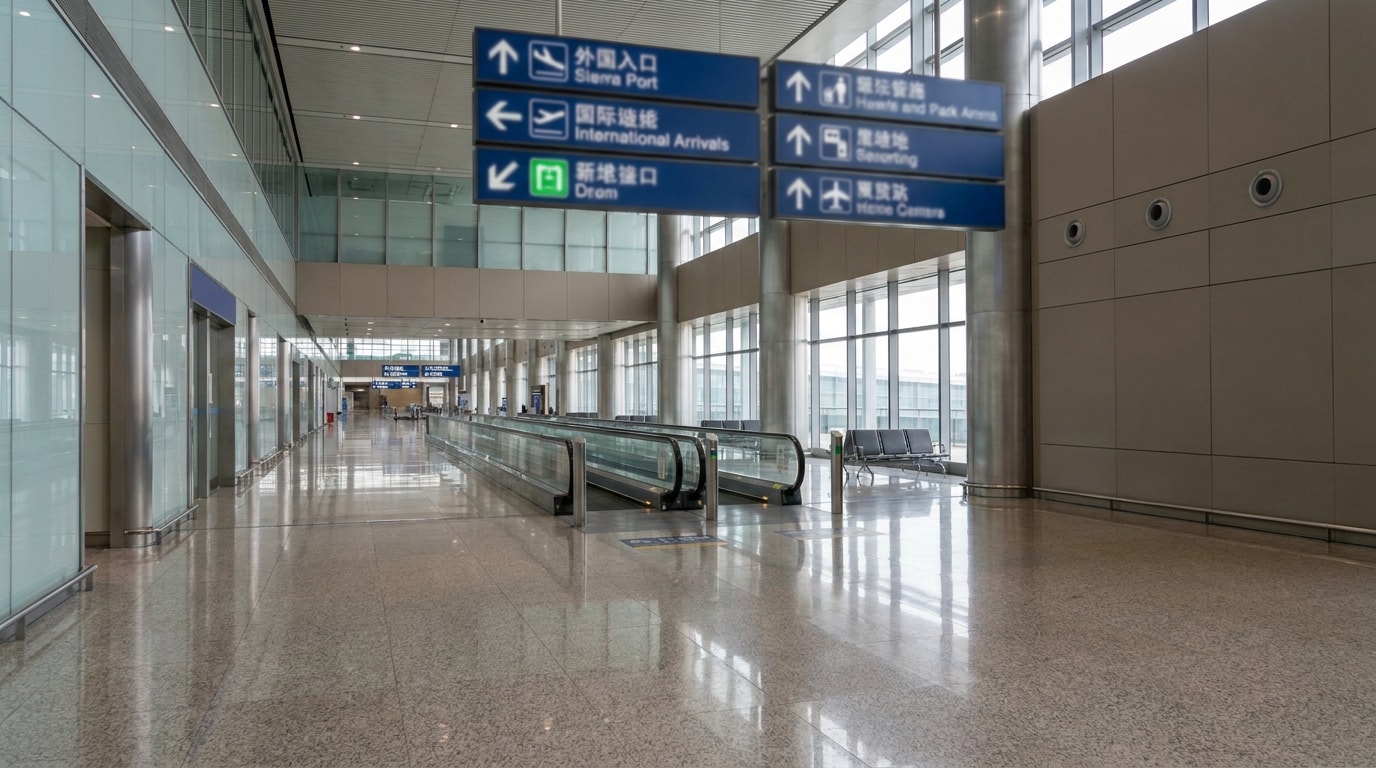
The 240-hour policy is not air-only, but it is port-specific. The latest NIA update for Vietnam and Kyrgyzstan says the route allows entry through 65 open ports of entry. Earlier NIA expansion measures added ferry, bridge/port and high-speed rail station ports in Guangdong, showing that land, sea and rail-style arrival points can matter only when they are included in the applicable policy list under the 2025 port expansion.
Where you may travel after arrival is a separate question. Tianjin’s official 240-hour guidance states that the policy covers 24 provincial-level areas, with some full-province or municipality stays and city-level limits in Heilongjiang, Shanxi, Jiangxi, Guangxi, Sichuan and Yunnan. That means a ticket through an eligible port is only half the check; the travel plan inside China must also fit the designated area.
Port eligibility is not automatic
Do not assume every airport, ferry terminal, cruise port, bridge crossing or high-speed rail station can be used. The policy allows entry through 65 open ports , so unusual routings should be checked against the latest port authority or NIA guidance before ticketing.
Route 2: Hainan’s 30-day visa-free entry policy
The second route is Hainan’s regional visa-free entry policy. It is different from 240-hour transit because it does not require a third-country onward destination. A Kyrgyz ordinary-passport holder may fly Bishkek → Haikou or Sanya → Bishkek and use the Hainan route if the stay is only in Hainan Province and all Hainan conditions are met under Hainan’s official guidance.
The NIA says Vietnamese and Kyrgyz ordinary-passport holders may enter Hainan Province via Hainan’s open ports and stay within Hainan Province for no more than 30 days. Hainan’s provincial page lists all open ports in Hainan for the 61-country policy, including Haikou Meilan International Airport, Sanya Phoenix International Airport and Qionghai Boao International Airport.
This route is useful for resort stays, family visits, exhibitions or medical treatment in Hainan. It is not a gateway for a later mainland China holiday unless the traveller obtains the proper visa before leaving Hainan.
Hainan 30-day entry essentials
Eligible for Vietnam and Kyrgyzstan from August 20, 2026
Maximum stay: 30 days
Scope: the administrative area of Hainan Province
Entry via Hainan open ports
Examples include Haikou Meilan, Sanya Phoenix and Qionghai Boao airports
No third-country onward destination is required for a Hainan-only round trip if Hainan conditions are met
Stay within Hainan Province and enter through Hainan open ports

The Hainan-only rule is the main trap. If you enter Hainan under the regional policy, your authorised activity scope is Hainan Province. Hainan’s guidance says travellers who need to leave Hainan for other parts of mainland China for legitimate reasons must apply for a visa in Hainan before leaving the province under the provincial policy.
So, a Sanya resort stay can fit. A Sanya stay followed by Guangzhou, Shenzhen, Beijing or Shanghai does not fit unless you obtain the appropriate visa before that mainland segment. Travel agents should keep Hainan-only and mainland multi-city products separate unless the visa plan is already confirmed.
Hainan is regional, not nationwide
Entering Hainan visa-free does not authorise onward travel to Guangzhou, Shenzhen, Beijing, Shanghai or other mainland areas. Hainan guidance requires applying for a visa in Hainan before leaving for other mainland areas when there is a legitimate reason .
Build a Hainan-only file
For Hainan packages, put the province boundary in the itinerary notes. The simplest compliant plan is international arrival into a Hainan open port, all hotels and activities inside Hainan, and departure from Hainan within the official 30-day limit.
Permitted short-term purposes in Hainan
The policies are meant for short-term visits, not for taking up a job or long-term course. Hainan guidance lists eligible short-term purposes including tourism, business, trade, visits and exchanges, family reunions, medical treatment, exhibitions and sports competitions, while making clear that employment and long-term study are not covered under the Hainan policy.
Examples of Hainan short-term purposes
- Tourism and holidays inside Hainan Province under Hainan guidance
- Business, trade, visits and exchanges inside Hainan under the same policy
- Family reunions, medical treatment, exhibitions and sports competitions in Hainan as listed by Hainan
Requirements and documents to carry
For 240-hour transit, documents matter because the decision is made at the port. Beijing’s official guidance says travellers should prepare an ordinary passport or international travel document, an onward interline ticket or proof of onward trip with confirmed date and seat, proof they can enter the onward destination, accommodation details, and completed arrival card or temporary entry information for the 240-hour process. The same guidance says the travel document should have at least three months of validity.
For Hainan, carry the documents that prove the Hainan-only trip: ordinary passport, Hainan arrival and departure details, hotel bookings or invitation details in Hainan, and evidence that the purpose is short-term. Hainan’s policy identifies the route as entry through Hainan open ports and a stay within Hainan Province for no more than 30 days.
If you are not eligible for either visa-free route, regular visa paperwork is different. For China visa applications filed in Vietnam, the Embassy guidance lists basic materials including a passport valid for more than six months with blank visa pages, the visa application form and photo, plus purpose-specific documents.
Carry these for 240-hour transit
Ordinary passport or international travel document under Beijing guidance
At least three months travel-document validity
Confirmed onward ticket or proof of onward trip with date and seat for the 240-hour route
Proof you can enter the onward destination if required
Accommodation details in the permitted China area for inspection
Arrival card or temporary entry information as requested at the port
Useful supporting documents
- Printed and digital copies of all flights, trains, ferries or cruise segments that show the A → mainland China → B route for 240-hour transit .
- Hotel bookings, host address or meeting invitation inside the permitted region, because accommodation details are part of the transit document check .
- For Hainan, documents showing arrival through Hainan open ports and the whole stay inside Hainan Province under the Hainan 30-day policy .
Travel-agent checklist before ticketing Vietnam/Kyrgyzstan itineraries
Agents should document the eligibility logic in the booking file. This protects the traveller from buying a route that looks visa-free online but fails at check-in or at the China port because it is a round trip, uses the wrong port, or leaves the permitted area.
Ticketing checklist
Before issuing, confirm ordinary-passport nationality, route type, eligible China port, onward ticket to a third country or region for 240-hour transit , Hainan-only stay for 30-day Hainan entry , accommodation details, onward-destination entry permission, and whether the purpose is work, study or journalism requiring a visa.
How to use the policies step by step
There is no pre-departure China visa application if your itinerary genuinely fits one of these visa-free routes. Instead, you prepare the correct itinerary and documents, then request temporary entry or use the Hainan open-port process when you arrive.
Step-by-step route check
- Step 1: Confirm the passport is an ordinary Vietnamese or Kyrgyz passport covered by the August 20, 2026 update.
- Step 2: Decide whether the trip is A → mainland China → B transit or a Hainan-only stay of no more than 30 days .
- Step 3: For transit, confirm the China arrival port is among the 65 open ports and the internal stay is inside the designated area.
- Step 4: For transit, book the onward ticket to a third country or region within the 240-hour limit and keep proof of confirmed date and seat.
- Step 5: For Hainan, keep the arrival, accommodation and departure plan within Hainan Province and through Hainan open ports under the 61-country Hainan policy .
- Step 6: If the trip involves work, study, news reporting, longer stays or mainland travel beyond the permitted region, apply for the right China visa before travel under the NIA requirement .
At departure and on arrival for 240-hour transit
At departure, be ready to show the route and documents clearly: passport, China arrival segment, confirmed onward ticket, and onward-destination entry permission where required. On arrival in China, apply for temporary entry at the immigration inspection authority. Beijing’s guidance states there is no pre-departure visa processing time for the 240-hour route because the decision is made on-site at the port.
Travellers approved for transit may depart from any applicable port under the policy, according to the same Beijing guidance on application requirements.
Make inspection easy
Keep the onward ticket, hotel details and onward-destination entry documents together. The key question is not only whether Vietnam or Kyrgyzstan is eligible; it is whether this particular traveller, port, ticket and stay area fit the 240-hour conditions.
At departure and on arrival for Hainan 30-day entry
For Hainan, the practical file is different. You should show that you are entering through Hainan open ports, staying within Hainan Province, and leaving within the 30-day policy window. You do not need to show a third-country onward destination for a Hainan-only round trip, because Hainan’s policy is regional entry rather than transit under provincial guidance.
If you later need to go elsewhere in mainland China, do not simply board a domestic flight. Hainan guidance says you must apply for a visa in Hainan before leaving the province for other mainland areas when there is a legitimate reason under the Hainan rules.
Fees and processing times: visa-free routes vs regular China visas
Eligible 240-hour transit and Hainan 30-day entry do not involve applying for a standard China visa before departure. The NIA announcement did not publish a separate temporary-entry fee for these visa-free routes in the August update. For transit, Beijing guidance describes an on-arrival application at the immigration inspection authority, with the final decision made on-site at the port.
Regular visas still have fees and processing timelines. In Vietnam, Embassy guidance lists regular service at 4 working days, express service at 3 working days and urgent service at 2 working days, with some applications taking longer. In Kyrgyzstan, the Chinese Embassy lists ordinary China visa processing at 4 working days.
Processing comparison
| Route | Pre-departure visa processing | Timing or decision point | Fee note |
|---|---|---|---|
| 240-hour transit | No regular visa application if eligible under port guidance | On-site inspection at the China port for temporary entry | No separate temporary-entry fee published in the NIA announcement |
| Hainan 30-day entry | No regular visa application if Hainan-only conditions are met under Hainan guidance | Entry through Hainan open ports for no more than 30 days | No standard visa fee if using the visa-free route under the NIA update |
| Regular China visa filed in Vietnam | Visa application required | Regular 4 working days , express 3 working days , urgent 2 working days | Visa fee plus service fee at the application centre under the fee schedule |
| Regular China visa filed in Kyrgyzstan | Visa application required | 4 working days | Embassy visa fee schedule applies for Kyrgyz citizens |
Regular visa fee examples for Vietnamese and Kyrgyz citizens
The fee tables below apply when a regular China visa is needed. Chinese missions extended temporary reductions through December 31, 2026 for Vietnamese citizens and through December 31, 2026 for Kyrgyz citizens.
Regular China visa fee examples
| Applicant nationality | Single entry | Double entry | Six-month multiple entry | One-year multiple entry | Other fees noted |
|---|---|---|---|---|---|
| Vietnamese citizens | USD 45 | USD 68 | USD 90 | USD 135 | Application service fee examples: regular VND 690,000 , express VND 1,040,000 , urgent VND 1,380,000 |
| Kyrgyz citizens | USD 60 | USD 90 | USD 120 | USD 180 | Group tourist visa: USD 48 per person ; Hong Kong visa USD 30 and Hong Kong entry permit USD 10 |
Validity, extensions and rules during the stay
Neither route should be treated like a flexible visa. The 240-hour route is tied to the port, onward ticket and designated stay area. The Hainan route is tied to Hainan Province and the 30-day regional limit.
If your plan changes, the safest assumption is that you need official permission before moving beyond the route’s limits. Hainan’s rules expressly say travellers must apply for a visa in Hainan before leaving Hainan for other mainland areas for legitimate reasons under the provincial policy. For transit travellers, the published condition is staying within designated areas for no more than 240 hours.
Rules to keep during the stay
- For 240-hour transit, keep your trip inside the designated stay area and leave within the official 240-hour window.
- For Hainan, remain inside the administrative area of Hainan Province and leave within the 30-day limit.
- For non-hotel accommodation, register with local public security organs within 24 hours ; hotels normally handle registration for hotel guests.
- Do not work, study long-term, or conduct news reporting requiring prior approval without the appropriate visa under the NIA announcement .
Once I am admitted visa-free, I can change the itinerary freely inside mainland China.
The 240-hour route requires staying within designated areas for no more than 240 hours under the NIA policy , while Hainan’s 30-day route is limited to Hainan Province under Hainan guidance .
Accommodation registration and staying inside the permitted area
China’s accommodation registration rule still applies to visa-free visitors. The Exit and Entry Administration Law states that foreigners staying in non-hotel accommodation must register with local public security organs within 24 hours. Hotels normally handle registration for hotel guests, but private stays with friends, relatives or hosts need extra attention.
This rule is especially important if the traveller is staying with family in Hainan or with a host during a business stopover. Registration does not expand the permitted area; it only records where you are staying.
Accommodation registration still applies
Private accommodation is not invisible. If you stay outside a hotel, register with local public security organs within 24 hours , and keep your address inside the permitted transit or Hainan area.
240-hour transit vs Hainan 30-day entry vs a standard China visa
The right choice depends on the trip design. If China is the middle point between two different countries or regions, the 240-hour route may work. If the whole holiday is in Hainan, the 30-day Hainan route may work. If China is the main destination outside Hainan, or the traveller needs a restricted purpose such as work, study or journalism requiring prior approval, use a standard visa.
Which route fits?
| Question | 240-hour transit | Hainan 30-day entry | Standard China visa |
|---|---|---|---|
| Who can use it after the update? | Vietnamese and Kyrgyz ordinary-passport holders added from August 20, 2026 | Vietnamese and Kyrgyz ordinary-passport holders added from August 20, 2026 | Travellers who meet the relevant visa category requirements |
| Route shape | A → mainland China → B with B as a third country or region under NIA rules | Hainan-only entry and stay through Hainan open ports under Hainan guidance | Mainland round trips, longer stays, restricted purposes or routes outside visa-free limits |
| Maximum stay | No more than 240 hours | No more than 30 days | Depends on the visa issued |
| Port rule | Use one of the 65 open ports and depart from an applicable port under port guidance | Use Hainan open ports, including examples such as Haikou Meilan, Sanya Phoenix and Qionghai Boao listed by Hainan | Use the entry permitted by the visa and border authorities |
| Where you may go | Designated areas only under the NIA policy | Hainan Province only under the Hainan policy | As permitted by the visa and Chinese law |
| Best for | Short stopovers with confirmed onward travel | Hainan holidays, visits, exhibitions or medical treatment inside Hainan as listed | Non-transit mainland trips, work, study, journalism, longer stays or complex routes requiring prior visa approval |
A standard China visa is no longer useful for Vietnamese and Kyrgyz travellers.
A standard visa is still needed for work, study, news reporting requiring prior approval, longer stays, non-transit mainland round trips outside Hainan, or travel beyond the permitted visa-free areas under the NIA update .
Scenario examples: Hanoi, Bishkek, Hong Kong, Macao and Taiwan
These examples show why route structure matters more than the word “visa-free”. Always re-check the exact China port and permitted area before booking.
Common scenarios
- Hanoi → Shanghai → Seoul: Can fit 240-hour transit if Shanghai is an applicable port, Seoul is the confirmed onward destination within 240 hours , and the stay remains in the permitted area.
- Hanoi → Beijing → Hong Kong: Can fit the third-region concept because Hong Kong SAR is separately referenced with Macao SAR and Taiwan Region in mainland China exit-entry definitions under Chinese law .
- Hanoi → Shanghai/Beijing/Guangzhou → Bishkek: Can qualify for a Vietnamese ordinary-passport holder if the China port is eligible, the onward Kyrgyzstan ticket is confirmed within 240 hours , and the stay remains within permitted regions.
- Hanoi → Guangzhou → Hanoi: Does not fit the transit concept because the onward destination is not a different third country or region under the transit policy .
- Bishkek → Haikou or Sanya → Bishkek: Can use Hainan’s 30-day entry policy if the Kyrgyz ordinary-passport holder stays only in Hainan Province.
- Sanya → Guangzhou after Hainan entry: Requires applying for a visa in Hainan before leaving for other mainland areas when there is a legitimate reason under Hainan guidance .
Do not forget onward-entry rules
For Hong Kong, Macao or Taiwan routings, check both sides of the journey: China’s transit condition and the traveller’s right to enter the onward region. Beijing guidance lists proof of onward-destination entry eligibility among documents for 240-hour transit .
Practical travel tips and recent China entry changes
China has been adjusting entry procedures and visa-free channels in stages. A State Council/Xinhua report on July 24, 2026 said authorities planned to further refine visa-free transit and entry programmes and upgrade digital entry services. At that time, NIA data cited 55 countries for 240-hour transit and 65 designated ports, before Vietnam and Kyrgyzstan were added in August.
For travellers, the practical takeaway is to keep documents organised and avoid “almost eligible” itineraries. If the route is close to the edge — a less common port, mixed ticketing, or a plan that crosses provincial boundaries — check official port information before purchase. The rules are useful, but they are still rules.
Prepare a border folder
If your itinerary is eligible, keep printed copies as well as phone copies. Include passport bio page, onward ticket, hotel or host address, onward-destination entry documents, and the policy route summary: 240-hour transit through 65 open ports or Hainan stay within 30 days .
Recent changes: ports, arrival cards, fees and fingerprints
Timeline to know
- August 20, 2026 : Vietnam and Kyrgyzstan added to 240-hour transit and Hainan 30-day entry, raising eligible-country counts to 57 and 61 .
- July 24, 2026 : China signalled further refinement of visa-free transit and entry programmes and digital entry services.
- December 29, 2025 : Chinese missions extended temporary visa-fee reductions through December 31, 2026 .
- December 22, 2025 : short-term visa applicants staying no longer than 180 days were exempted from fingerprint collection through December 31, 2026 , while D, J1, Q1, S1, X1 and Z applicants still require fingerprints.
- November 5, 2025 : NIA added five Guangdong ports, increasing applicable ports from 60 to 65 .
- November 20, 2025 : online Arrival Card filling became available through NIA official channels, while paper or on-site electronic completion remains available for travellers who cannot complete it online in advance.
Conclusion: next steps before you book
The August update is useful, but it is limited. Vietnamese and Kyrgyz ordinary-passport holders now have two extra China options: 240-hour transit through approved ports when travelling onward to a third country or region, and 30-day regional entry for Hainan-only stays. If your trip does not fit either route, plan for a standard visa.
Before you book
- Write your full route and check whether it is transit or a Hainan-only stay.
- For transit, confirm the third country or region, onward ticket, 65-port rule and designated stay area.
- For Hainan, keep every hotel and activity inside Hainan Province and leave within 30 days .
- Use a standard China visa for work, study, journalism, longer stays or non-qualifying mainland trips under the NIA announcement .


Frequently Asked Questions
Do Vietnamese citizens still need a China visa after the August 20, 2026 update?
Do Kyrgyz citizens get visa-free entry to all of mainland China in 2026?
Can a Vietnamese passport holder use 240-hour transit for Hanoi → Shanghai → Seoul?
Does Hanoi → China → Kyrgyzstan qualify for China’s 240-hour visa-free transit?
Does Hanoi → Guangzhou → Hanoi qualify for the 240-hour transit policy?
Do Hong Kong, Macao and Taiwan count as third destinations or regions for China transit without visa?
Can a Kyrgyz passport holder fly Bishkek → Haikou or Sanya → Bishkek and stay in Hainan for 30 days without a visa?
Can I enter China by land, bridge, ferry, cruise or high-speed rail under the 240-hour policy?
What documents should travellers carry for China’s 240-hour visa-free transit?
Can I visit Beijing and Shanghai on the same 240-hour transit stay?
Can I leave Hainan for Guangzhou, Shenzhen, Beijing or Shanghai during the 30-day Hainan visa-free stay?
When should Vietnamese or Kyrgyz citizens still apply for a standard China visa?
Sources and further reading
- Kyrgyzstan and Vietnam Added to Countries Eligible for 240-Hour Visa-Free Transit and 30-Day Visa-Free Entry for Hainan — official source, published 2026-08-20
- 国家移民管理局关于增加吉尔吉斯斯坦、越南为240小时过境免签和海南30天入境免签政策适用国家的公告 — official source, published 2026-08-20
- 过境免签政策 — official source, published 2026-08-20
- 外国人区域性入境免签政策 — official source, published 2026-08-20
- Visa-free entry policies of Hainan province — official source, published 2026-08-20
- Visa-Free Transit Policies — official source, published 2025-07-04
- Announcement on Implementing 10 New Measures to Support the Expansion of Opening-up and Serve High-quality Development — official source, published 2025-11-03
- What are the application requirements for 240-hour visa-free transit? What documents do I need to prepare? — official source, published 2025-02-26
- The 240-hour visa-free transit policy — official source, published 2025-01-09
- Exit and Entry Administration Law of the People’s Republic of China — official source
- China to refine visa-free policy, streamline entry procedures for foreign visitors — official source, published 2026-07-24
- China widens visa-free access in latest opening-up move — official source, published 2025-11-04
- 关于延长阶段性调减来华签证费政策的通知 — official source, published 2025-12-29
- 申请签证须知 — official source, published 2023-06-14
- Schedule of Fee — official source, published 2024-03-07
- On site handling and fees - Chinese Visa Application Service Center Da Nang — official source
- Уведомление о продлении временного снижения визовых сборов — official source, published 2025-12-29
- 普通签证办理须知 — official source, published 2025-06-27
- Notice on the Further Expansion of the Period and Scope of Exemption from Fingerprint Collection for Chinese Visa Applications — official source, published 2025-12-22
- Brief Information about Kyrgyzstan — official source

China
Capital: China: Beijing; Vietnam: Hanoi; Kyrgyzstan: Bishkek
Currency: China: renminbi/yuan (CNY); Vietnam: Vietnamese dong (VND); Kyrgyzstan: Kyrgyzstani som (KGS)
Language: China: Standard Chinese/Mandarin; Vietnam: Vietnamese; Kyrgyzstan: Kyrgyz is the state language and Russian is an official language
Timezone: China: UTC+8; Vietnam: UTC+7; Kyrgyzstan: UTC+6
Quick Facts
- Main airports: China/Hainan open-port examples for this topic: Haikou Meilan International Airport, Sanya Phoenix International Airport, Qionghai Boao International Airport, China 240-hour transit examples specifically named by NIA: ports in Beijing and Shanghai; Hainan’s applicable 240-hour airports include Haikou Meilan International Airport and Sanya Phoenix International Airport, Vietnam traveller departure hubs commonly relevant to China itineraries: Hanoi Noi Bai International Airport, Ho Chi Minh City Tan Son Nhat International Airport, Da Nang International Airport
- 2026-08-20: NIA added Vietnam and Kyrgyzstan to 240-hour visa-free transit and Hainan 30-day visa-free entry, raising the eligible-country counts to 57 and 61.
- 2026-07-24: China’s State Council/Xinhua report said authorities planned to further refine visa-free transit and entry programs and upgrade digital entry services; at that time NIA data cited 55 countries for 240-hour transit and 65 designated ports before the August Vietnam/Kyrgyzstan addition.
- 2025-12-29: Chinese missions extended the temporary reduction of China visa fees through 2026-12-31, including fee tables for Vietnam and Kyrgyzstan.
Applying for China?
Get the DoVisa app
Your visa, entry forms and travel documents in one place — also offline.







Comments(0)
Leave a Comment
No comments yet. Be the first to share your thoughts!