
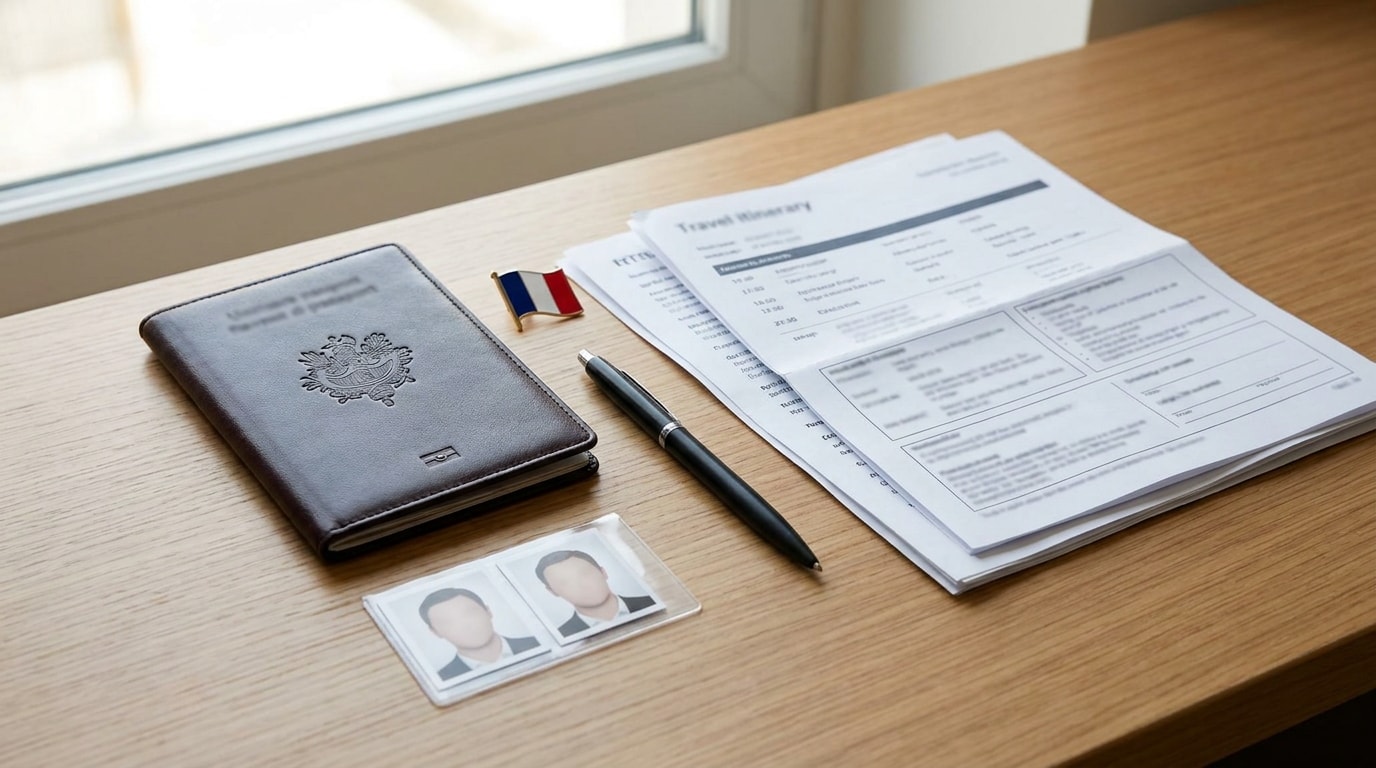
A Schengen visa photo looks simple, but it is checked against biometric standards. If the size, face crop, background, expression or print quality is wrong, your France visa file can be delayed while you replace it.
This guide explains the France Schengen photo rules for first-time applicants, including the common 35 x 45 mm format used on some France-Visas country pages and the general France-Visas FAQ rule that the photo must be 35–40 mm wide, recent, realistic and ICAO-compliant, according to France-Visas FAQ. Research is current as of August 2026.
You will also see how printed photos fit into the appointment, when biometrics may be reused, and how to fix the most common photo problems before submission.
What a Schengen visa photo is and who needs one
A Schengen visa photo is not just an ID picture for a paper form. For France, it is part of a biometric visa application file. France-Visas says the application file includes two recent ID photos in ICAO format, alongside the rest of your documents, on The process - France-Visas.
ICAO compliance matters because your photo has to be suitable for identity checks. The European Commission lists an ICAO-compliant photo among the normal Schengen application requirements, together with a valid passport, visa application form, medical insurance, supporting documents and fingerprints, in its Applying for a Schengen visa guidance.
Think of the photo as a controlled biometric image: it should show your current appearance, your full face, and no distractions. It is different from a social profile picture, a casual passport scan or a cropped holiday photo. Even if a picture looks clear to you, it can still fail if the face is too small, the background is busy, the mouth is open, the eyes are hidden, or the print has creases.
France Schengen photo basics
France-Visas requires two recent ID photos in ICAO format as part of the visa file: The process - France-Visas
The general France-Visas FAQ says the photo must be recent, realistic, 35–40 mm wide and ICAO-compliant : France-Visas FAQ
The face should measure 32–36 mm from chin to forehead , excluding hair: France-Visas FAQ
The face should take 70–80% of the photo : France-Visas FAQ
Photos must be no more than 6 months old : Schengen visa photograph instructions - France-Visas
Why the photo matters in the biometric visa process
France issues biometric visas. At submission, the service provider or consulate collects biometrics, including a photo and fingerprints, according to The process - France-Visas. Your printed photo and your appointment biometrics both support identity verification, so the image needs to be clear, current and technically usable.
EU Visa Code rules also require the photograph attached to each application to be entered into the Visa Information System and to meet ICAO technical standards, under Regulation (EC) No 810/2009. That is why small details such as shadows, red-eye, tinted lenses or face size are treated as document requirements, not preferences.
Who must provide photos for a France Schengen application
If you are applying for a France Schengen visa, you should expect to provide photos unless your local France-Visas checklist gives a specific exception. France-Visas states generally that the file requires two recent ID photos in ICAO format, in The process - France-Visas.
If this is your first biometric Schengen application and you are over 12 years of age, you must appear in person so that a photograph and 10 fingerprints can be collected, according to The process - France-Visas. Bring compliant printed photos even if you expect the centre to take another image at the appointment.
Eligibility: when France should process your application
Before you worry about the photo, make sure France is the correct Schengen country to handle your visa application. For France, you should submit your file to the French consulate or certified service provider in the country where you legally reside, according to France-Visas FAQ.
This matters because each application location can have its own checklist wording and appointment procedure. One France-Visas page may describe the photo as 35–40 mm wide, while some country-specific pages use the familiar 35 mm x 45 mm wording. If you apply through the wrong country or follow the wrong local checklist, you can create avoidable document problems.
Check the correct France application location first
Start with the France-Visas assistant and the checklist for your country of legal residence. Use that local checklist to confirm the number of printed photos and any appointment-specific handling before you print.
France as main destination or first entry for equal stays
If your trip covers several Schengen countries, France should process the application when France is your main destination. If your stays are equal, France should handle the file when it is your first Schengen entry, according to France-Visas FAQ.
For example, if you spend most of your trip in France but land first in another Schengen country, you should still normally follow the France route. Your visa photo then needs to match the France-Visas requirements and the checklist used by the French service provider where you legally reside.
Schengen visa photo requirements at a glance
The safest approach is to prepare a clean, recent, printed biometric photo that satisfies both the France-Visas general rules and your local checklist. France-Visas’ general FAQ says the photo must be recent, realistic, 35–40 mm wide and ICAO-compliant, and that the face should measure 32–36 mm from chin to forehead, excluding hair, corresponding to 70–80% of the photo, in France-Visas FAQ.
Some country-specific France-Visas pages state that applicants should provide two recent 35 mm x 45 mm photos, without borders, good quality, front-facing, eyes open, head uncovered, mouth closed, and on a light background such as light grey or light blue with no shadow, as shown on Vénézuéla - France-Visas. That is why you often hear “35 x 45 mm” for Schengen photos.
Quick specification checklist
General France-Visas width: 35–40 mm : France-Visas FAQ
Country-page format seen on some France-Visas pages: 35 mm x 45 mm : Vénézuéla - France-Visas
Face height: 32–36 mm from chin to forehead, excluding hair: France-Visas FAQ
Face proportion: 70–80% of the photo: France-Visas FAQ
Recency: no more than 6 months old : Schengen visa photograph instructions - France-Visas
Print: high-quality paper and high resolution: Schengen visa photograph instructions - France-Visas
France Schengen photo requirement summary
| Requirement | What to prepare |
|---|---|
| Photo format | Recent ICAO-format ID photos; France-Visas requires two recent ID photos : The process - France-Visas |
| Photo size | General FAQ: 35–40 mm wide ; some country pages: 35 mm x 45 mm : France-Visas FAQ |
| Face size | 32–36 mm from chin to forehead, excluding hair, or 70–80% of the photo: France-Visas FAQ |
| Age of photo | No more than 6 months old : Schengen visa photograph instructions - France-Visas |
| Background | Plain light-coloured background with uniform lighting: Schengen visa photograph instructions - France-Visas |
| Expression | Neutral expression, mouth closed: Schengen visa photograph instructions - France-Visas |
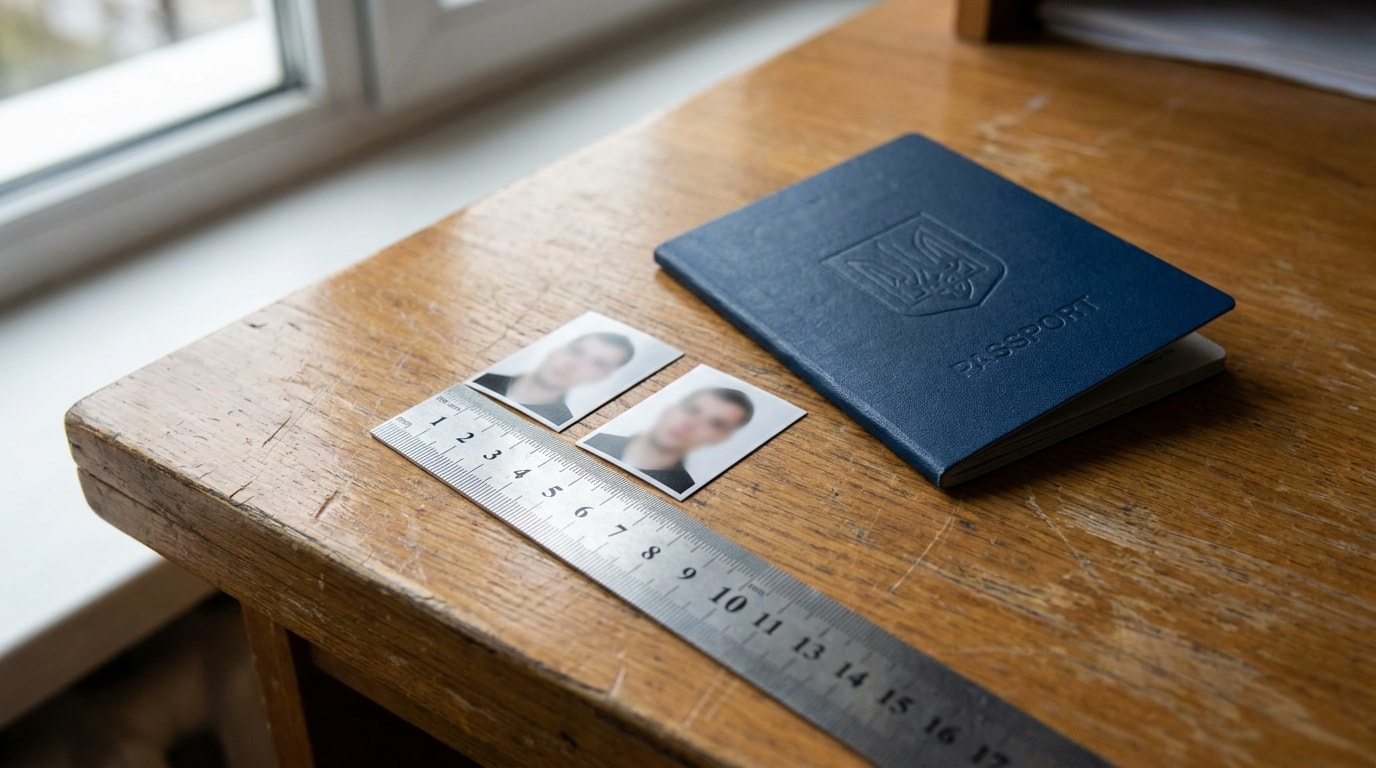
Photo size: 35 x 45 mm or 35–40 mm wide?
You may see two pieces of wording. France-Visas’ general FAQ says the visa photo must be 35–40 mm wide, recent, realistic and ICAO-compliant, according to France-Visas FAQ. Some country-specific France-Visas pages instead ask for two recent 35 mm x 45 mm photos, as shown on Vénézuéla - France-Visas.
In practice, a professionally produced Schengen-style 35 mm x 45 mm print is usually designed to sit within this framework, but you should not ignore your local checklist. If the centre asks for a specific printed size, follow that wording. If you are printing from a digital file, do not stretch or compress the image to force a size; it can distort the face and affect the 32–36 mm face-height rule from France-Visas FAQ.
Any passport-size photo will work for a France Schengen visa.
The photo must match France-Visas/ICAO biometric rules, including the general 35–40 mm width guidance and 32–36 mm face-height rule in France-Visas FAQ .
Face height, crop and the six-month recency rule
The crop must show a close-up of your head and the top of your shoulders, with the face taking 70–80% of the photograph, according to Schengen visa photograph instructions - France-Visas. France-Visas’ FAQ gives the face measurement as 32–36 mm from chin to forehead, excluding hair, in France-Visas FAQ.
Your photo also has to be current. France-Visas says photos must be no more than 6 months old, in Schengen visa photograph instructions - France-Visas. If you have changed your hairstyle, grown or removed facial hair, or otherwise look different, taking a new picture is safer than arguing that the older image is close enough.
Print quality: paper, resolution, creases and marks
France-Visas requires photos to be sharp, clear and high quality, without ink marks or creases, and printed on high-quality paper at high resolution, according to Schengen visa photograph instructions - France-Visas. A good facial pose will not rescue a damaged or badly printed image.
If you use a digital camera or phone, the official rule still points back to print quality. France-Visas says digital-camera photos must be high-quality colour photos printed on photo-quality paper, in Schengen visa photograph instructions - France-Visas.
Protect the print after you receive it
Do not staple, fold, write on or carry the photo loose in a pocket where it may crease. France-Visas marks creased and ink-marked photos as unacceptable in its official photo examples: Schengen visa photograph instructions - France-Visas .
Expression, background, glasses and headwear rules
The appearance rules are meant to make your face easy to compare with you at the appointment and at the border. France-Visas requires you to look directly at the camera, with natural skin tones and appropriate brightness and contrast, according to Schengen visa photograph instructions - France-Visas.
Your eyes must be open and clearly visible, with no hair across the eyes, under the same Schengen visa photograph instructions - France-Visas. The background must be plain and light-coloured, with uniform lighting and no shadows, flash reflection on the face or red-eye.
Glasses and headwear are common sources of confusion. France-Visas does not impose a simple “no glasses ever” rule in the notes reviewed here; instead, eyes must be clearly visible, lenses must not be tinted or reflect flash, and frames must not cover any part of the eyes. Head coverings are not permitted except for religious reasons, and the face from the bottom of the chin to the top of the forehead, plus both face edges, must be clearly shown, according to Schengen visa photograph instructions - France-Visas.
Appearance rules to check before printing
Look directly at the camera: Schengen visa photograph instructions - France-Visas
Use natural skin tones with appropriate brightness and contrast: Schengen visa photograph instructions - France-Visas
Keep eyes open and clearly visible, with no hair across the eyes: Schengen visa photograph instructions - France-Visas
Use a plain light-coloured background and uniform lighting: Schengen visa photograph instructions - France-Visas
Keep a neutral expression with the mouth closed: Schengen visa photograph instructions - France-Visas
Appear alone, with no chair backs, toys or other people visible: Schengen visa photograph instructions - France-Visas
Neutral expression, closed mouth and visible eyes
For France Schengen photos, keep your expression simple. France-Visas requires a neutral expression with the mouth closed, according to Schengen visa photograph instructions - France-Visas. A broad smile, open mouth or exaggerated expression can make the photo non-compliant even if the size is correct.
Your eyes are just as important. France-Visas requires eyes to be open and clearly visible, with no hair across the eyes, in Schengen visa photograph instructions - France-Visas. Before printing, check fringe, glare, eyelashes, frames and head angle. If one eye is partly hidden, retake the photo.
A small smile is always acceptable if you still look like yourself.
France-Visas requires a neutral expression with the mouth closed , according to Schengen visa photograph instructions - France-Visas .
Plain light background, shadows, glare and red-eye
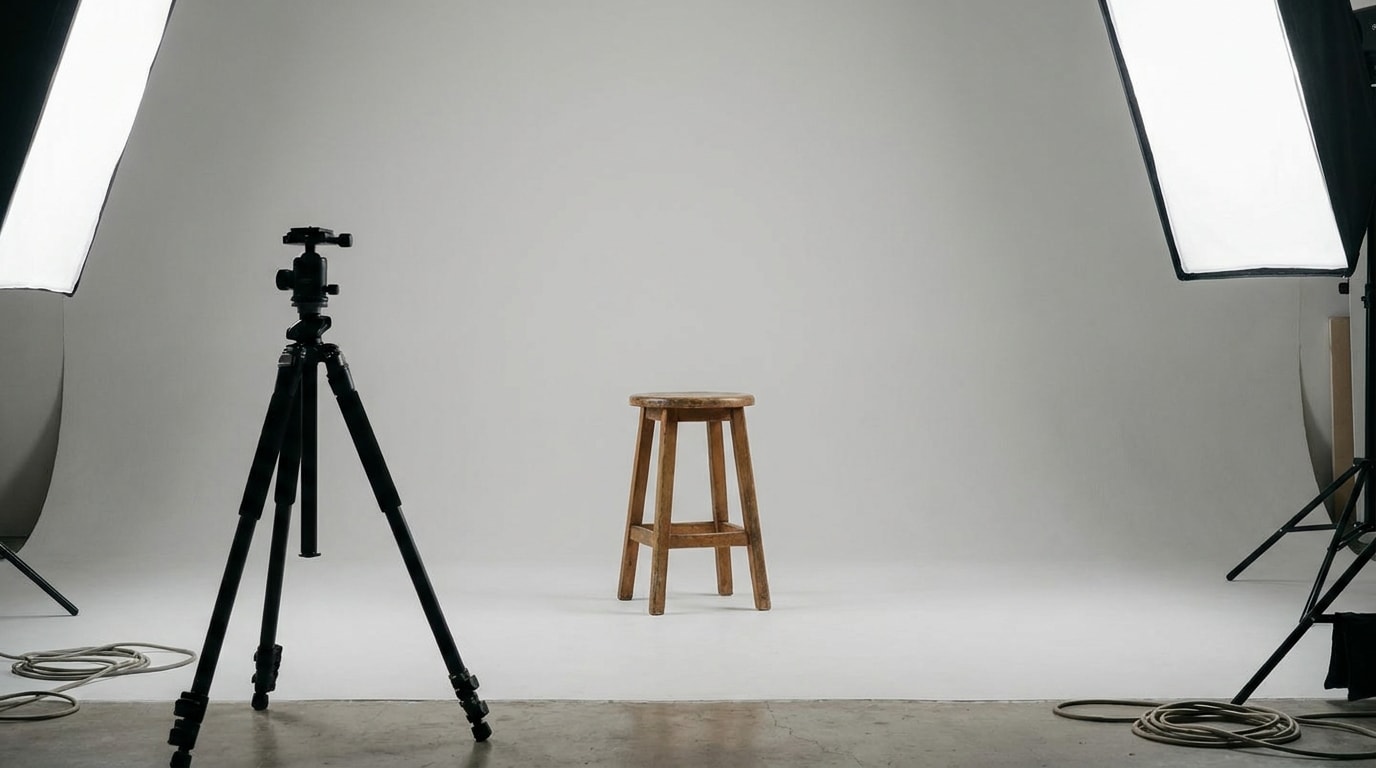
Use a plain, light-coloured background. France-Visas requires a plain light-coloured background and uniform lighting with no shadows, flash reflection on the face or red-eye, according to Schengen visa photograph instructions - France-Visas.
Some country-specific France-Visas wording mentions a light background such as light grey or light blue with no shadow, as shown on Vénézuéla - France-Visas. Avoid patterned walls, dark curtains, furniture, door frames and strong overhead light. If you can see a shadow behind your head, the photo is risky. If flash produces a bright spot on your face or glasses, retake it with softer lighting.
Fix lighting at the source
Do not rely on software to remove a busy background after the photo is taken. France-Visas examples reject busy backgrounds, shadows, flash reflection and red-eye: Schengen visa photograph instructions - France-Visas .
Glasses, tinted lenses, heavy frames and religious head coverings
If you wear glasses, check the result carefully. France-Visas requires the eyes to be clearly visible, with no flash reflection, no tinted lenses, and no frame covering any part of the eyes; it recommends avoiding heavy frames where possible, according to Schengen visa photograph instructions - France-Visas.
This means clear lenses may still fail if they reflect light or if the frame crosses your eyes. If you are unsure, take the photo without glasses, unless you have a specific reason to keep them on.
Head coverings are treated differently. France-Visas says head coverings are not permitted except for religious reasons, and the face from the bottom of the chin to the top of the forehead and both edges of the face must be clearly shown, according to Schengen visa photograph instructions - France-Visas. A hijab, turban or other religious covering should not cast shadows or hide the face outline.
Reduce avoidable glasses and headwear risks
If your glasses create glare or your frames sit across the eyes, retake the photo without glasses. If you wear religious head covering, adjust lighting so the face edges and chin-to-forehead area remain clear.
Digital photos, printed photos and biometrics at the appointment
Many France visa steps start online, but the photo requirement is still tied to the application file and the appointment. France-Visas says the file includes two recent ID photos in ICAO format, in The process - France-Visas. Its photograph instructions also say photos must be printed on high-quality paper and at high resolution, and that digital-camera photos must be high-quality colour photos printed on photo-quality paper, according to Schengen visa photograph instructions - France-Visas.
At the appointment, France’s process is biometric. All visas issued by France are biometric visas, and at submission the provider or consulate collects a photo and fingerprints, according to The process - France-Visas. This does not mean you can ignore the printed photo requirement. The appointment photo and fingerprints are part of biometric collection; the printed photos are part of the file unless your local checklist tells you otherwise.
Because the visa centre takes biometrics, I do not need to bring printed photos.
France-Visas says the visa file includes two recent ID photos in ICAO format , while biometrics are collected at submission: The process - France-Visas .
Does France accept a digital photo upload?
The research notes do not verify a single global France-Visas digital-upload specification for Schengen visa photos. The verified global rule is that France-Visas requires two recent ID photos in ICAO format in the file, according to The process - France-Visas, and that photos must be high-resolution prints on high-quality paper, according to Schengen visa photograph instructions - France-Visas.
If your local portal or visa centre offers a photo upload, scanning service or paid photo service, follow the local instructions. Still bring printed photo-quality pictures unless your checklist clearly says they are not required.
Prepare both file and print
Save the digital file, but print compliant copies on photo-quality paper. If the centre needs to scan, attach or replace a photo, you will not be dependent on a booth or printer at the appointment venue.
Photo and fingerprint collection, including the 59-month reuse rule
For a first application, visa applicants over 12 years of age must appear in person so that a photograph and 10 fingerprints can be collected, according to The process - France-Visas. Children and repeat applicants may have different practical handling, but you should follow the appointment instructions you receive.
France-Visas says biometrics may be reused if a previous biometric Schengen visa was issued less than 59 months before the new application, according to The process - France-Visas. Reuse of biometrics does not automatically remove the need for current printed photos in the application file, especially because photos must be no more than 6 months old under Schengen visa photograph instructions - France-Visas.
How to prepare and submit your visa photo step by step
Use this workflow before your France Schengen appointment. It is designed to catch the problems that appear in France-Visas’ official non-compliant examples, such as blur, pixelation, wrong crop, shadows, red-eye, tinted glasses, heavy frames, hats, covered faces, extra people and open mouths, according to Schengen visa photograph instructions - France-Visas.
- Open your local France-Visas checklist. Confirm the submission country, visa type and any local wording on printed photos.
- Use the right size framework. Prepare a Schengen-style print that fits the general 35–40 mm width rule and, where your local page states it, the 35 mm x 45 mm format.
- Check the face crop. The face should be 32–36 mm from chin to forehead and take 70–80% of the photo, under France-Visas FAQ .
- Take a fresh photo. France-Visas says the photo must be no more than 6 months old : Schengen visa photograph instructions - France-Visas .
- Use a plain light background. Avoid shadows, flash reflection and red-eye, as required by Schengen visa photograph instructions - France-Visas .
- Keep your face neutral. Mouth closed, eyes open, no hair across the eyes, and no other person or object visible.
- Print properly. Use high-resolution, photo-quality paper and reject any print with creases or marks.
- Carry spares safely. Keep the photos flat in a document sleeve with your passport and appointment paperwork.
Before your appointment: check the local France-Visas checklist
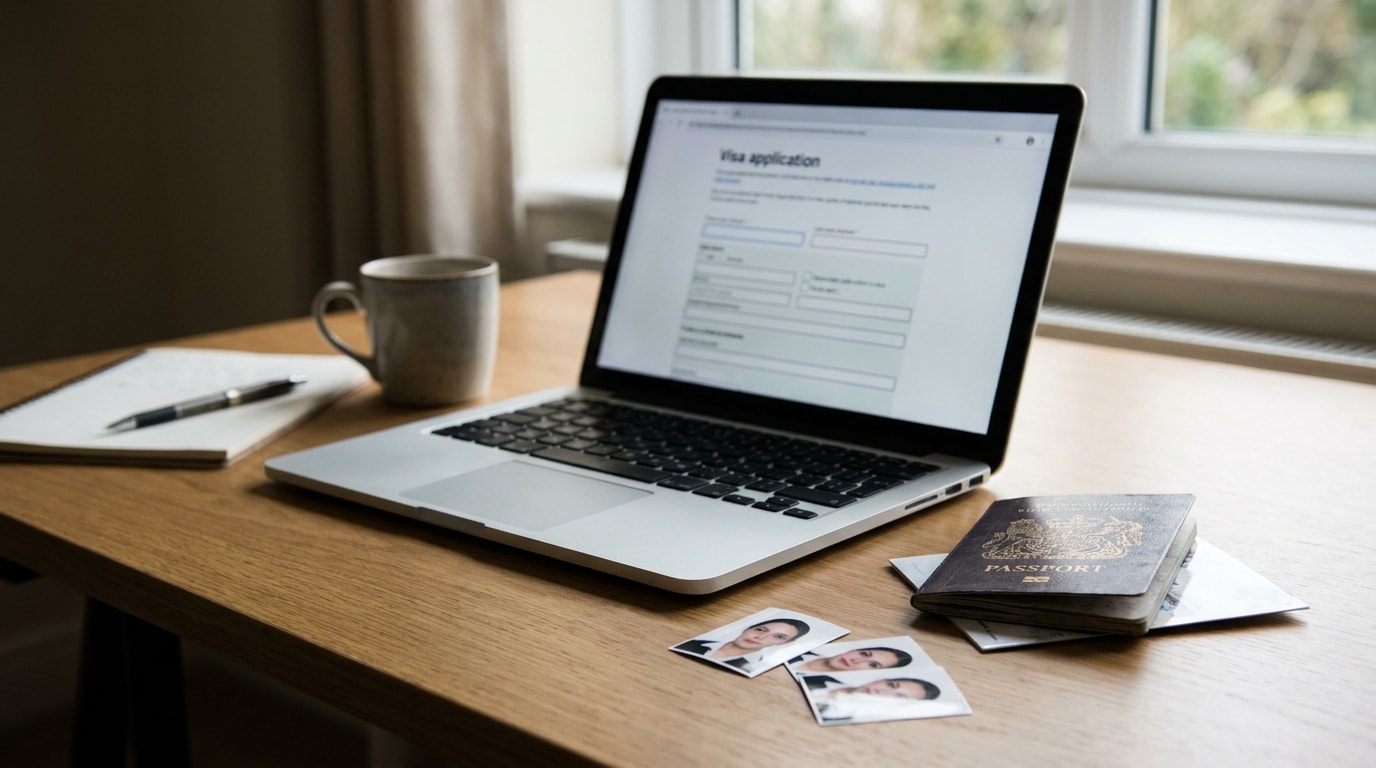
The global France-Visas process says your application file includes two recent ID photos in ICAO format, according to The process - France-Visas. But local pages can be more specific about size wording, appointment handling or how the photos should be attached.
Check the local checklist after you complete the France-Visas steps, not just a generic internet summary. Print the checklist if the appointment centre asks for it, and compare your photos against it the day before submission. If the local checklist says 35 mm x 45 mm, follow that local format, as some France-Visas country pages do on Vénézuéla - France-Visas.
Local checklist beats generic advice
If the checklist and a general guide differ, follow the official checklist for your country of legal residence and visa type. Bring extra compliant prints if allowed, but do not attach them in a way that damages the surface.
At the visa centre or consulate: what happens to your photo
At submission, the provider or consulate collects biometrics, including a photo and fingerprints, because all visas issued by France are biometric visas, according to The process - France-Visas. The staff may review your printed photos, scan them, attach them to the file, or ask for replacements depending on local procedure.
If a photo is refused at the counter, stay practical. Ask which requirement failed: size, face height, background, expression, glasses, print quality or recency. Then replace the photo against that exact reason rather than retaking another similar picture.
Why Schengen visa photos get rejected and how to fix them
France-Visas’ photo instructions do not publish a single rejection-rate statistic. The practical risk list comes from official examples of unacceptable photos. France-Visas marks blurred, ink-marked, creased, washed-out, pixelated, too-dark, too-light, too-close and too-far photos as unacceptable, according to Schengen visa photograph instructions - France-Visas.
It also marks busy backgrounds, off-centre faces, portrait-style poses, tilted eyes, hair across eyes, closed eyes, shadows, flash reflection, red-eye, tinted glasses, heavy frames, hats or caps, covered face, another person, open mouth and toys as unacceptable in the same Schengen visa photograph instructions - France-Visas.
Common rejection fixes
- Blur or pixelation: retake the photo at higher quality and print at high resolution on photo-quality paper.
- Face too small or too large: recrop so the face is 32–36 mm from chin to forehead and 70–80% of the photo.
- Old photo: replace it if it is more than 6 months old or no longer realistic.
- Shadows or red-eye: use uniform lighting and avoid direct flash.
- Glasses glare: adjust lighting or remove glasses if frames or reflections affect eye visibility.
- Open mouth or smile: retake with a neutral expression and mouth closed.
- Busy background: retake against a plain light-coloured background.
- Damaged print: reprint; do not submit photos with creases, ink marks or surface damage.
Retake rather than over-edit
Do not edit your face to solve a photo problem. The France-Visas FAQ says the photo must be realistic and ICAO-compliant: France-Visas FAQ . Retake the image instead of smoothing, reshaping or replacing features.
Blur, pixelation, wrong crop, exposure and damaged prints
Technical failures are often easy to miss on a phone screen. Zoom in before you print. If the eyelashes, hairline and face outline are not sharp, the photo may be blurred or pixelated. France-Visas examples reject blurred and pixelated photos, as well as photos that are too dark, too light or washed out, in Schengen visa photograph instructions - France-Visas.
Wrong crop is another technical problem. A photo can be sharp but still fail if your head is too close, too far, or not centred. Use the 32–36 mm face-height rule and 70–80% face proportion from France-Visas FAQ. Finally, reject any physical print with ink marks or creases, because France-Visas requires photos without marks or creases in Schengen visa photograph instructions - France-Visas.
Busy backgrounds, tilted heads, open mouth, extra people or objects
Pose failures happen when the photo looks more like a portrait than a biometric image. France-Visas examples reject busy backgrounds, not-centred faces, portrait-style poses, tilted eyes, hair across eyes, closed eyes, hats or caps, covered faces, another person, open mouth and toys, according to Schengen visa photograph instructions - France-Visas.
For adults, the fix is usually straightforward: sit upright, face the camera directly, remove distractions and keep the mouth closed. For children, the “applicant alone” rule still matters. France-Visas requires the applicant to appear alone with no chair backs, toys or other people visible, according to Schengen visa photograph instructions - France-Visas.
A photo booth or studio photo is automatically compliant.
France-Visas rejects examples with wrong crop, shadows, red-eye, tinted glasses, heavy frames, open mouth, extra people and damaged prints. Check the output against Schengen visa photograph instructions - France-Visas .
Fees, processing times and when to apply
A photo problem can cost you time, and timing matters for Schengen applications. France-Visas says the decision-making time is usually 15 days, but it may be extended up to 45 days in special cases if examination of the application warrants it, according to The process - France-Visas.
You also have a submission window. France-Visas FAQ says short-stay visa applications must be submitted at least two weeks before the planned visit and cannot be submitted more than 6 months before the planned visit, according to France-Visas FAQ. The European Commission gives the Schengen window as at least 15 days before the intended journey and no earlier than 6 months beforehand, in Applying for a Schengen visa.
France Schengen fees and timing snapshot
| Item | Official figure |
|---|---|
| Schengen visa / airport transit visa full rate | €90 : Visa Fees - France-Visas |
| Reduced rate for children aged 6 to 12 | €45 : Visa Fees - France-Visas |
| Free-of-charge categories listed by France-Visas | Children under 6 , foreign spouses of French nationals, and foreign family members of EU/EEA/Swiss nationals: Visa Fees - France-Visas |
| Outsourced provider service fee cap | Cannot exceed €45 per visa application file: The process - France-Visas |
| Usual decision time | Usually 15 days : The process - France-Visas |
| Possible extended examination | Up to 45 days in special cases: The process - France-Visas |
France Schengen visa fees and service fee cap
France-Visas’ fee table lists the Schengen visa and airport transit visa full rate at €90, and the reduced rate for children aged 6 to 12 at €45, according to Visa Fees - France-Visas. The same France-Visas fee table lists children under 6, foreign spouses of French nationals, and foreign family members of EU/EEA/Swiss nationals as free-of-charge categories for Schengen visa and airport transit visa fees.
The European Commission also lists Schengen visa fees of €90 for adults, €45 for children aged 6–12, €35 for applicants from Armenia, Azerbaijan and Belarus, and €67.50 for applicants from Cabo Verde, in Applying for a Schengen visa. Outsourced provider service fees vary by country, but France-Visas says they cannot exceed €45 per visa application file, according to The process - France-Visas.
Normal 15-day processing, possible 45-day extension and no expedite warning
Do not leave your photo until the last appointment slot before travel. France-Visas says visa application decision-making time is usually 15 days, and that this period may be extended up to 45 days in special cases if examination of the application warrants it, according to The process - France-Visas.
France-Visas’ United States page states that there is no expedite procedure for a visa and applicants should allow at least 15 days for processing, according to Etats-Unis d'Amérique - France-Visas. Even if you apply elsewhere, this is a useful warning: a rejected photo can be a timing problem, not just a document problem.
Do not rely on a last-minute fix
Build in time to retake photos before the appointment. The Schengen application window is at least 15 days before the intended journey and no earlier than 6 months beforehand under Applying for a Schengen visa - European Commission .
Validity, alternatives, travel tips and recent changes
Your photo is one part of a wider Schengen travel system. A France Schengen visa is for a short temporary visit, not for unlimited stays. The European Commission says a Schengen visa is for short temporary visits of up to 90 days in any 180-day period, according to Applying for a Schengen visa.
Your passport also matters. The European Commission says the passport must be valid at least 3 months after departure from the Schengen area; for multiple-entry visas, it must be valid at least 3 months after departure from the last country visited, in Applying for a Schengen visa.
Recent border changes also affect short-stay travellers. France Diplomatie states that EES was gradually implemented from 12 October 2025 and became fully operational from 10 April 2026 for Schengen external-border crossings by non-EU/non-Schengen short-stay travellers, in EES: The new European border Entry/Exit System goes live on 10 April 2026 - France Diplomatie.
Short-stay rule: up to 90 days in any 180-day period
Once your visa is issued, read the visa sticker and plan your stay carefully. The general Schengen short-stay rule is up to 90 days in any 180-day period, according to the European Commission’s Applying for a Schengen visa guidance.
A compliant photo helps your application file move forward, but it does not change the stay limit, the number of entries granted, or border checks. Keep your travel dates inside the authorised period and make sure your passport validity matches the European Commission’s 3 months after Schengen departure rule in Applying for a Schengen visa.
Schengen visa versus ETIAS and EES biometric checks
ETIAS and EES are not the same as a Schengen visa photo requirement. EES is a border system. France Diplomatie says EES collects travel-document data, entry/exit data and purpose, plus biometric data: a facial image and, except for children under 12, fingerprints, in EES: The new European border Entry/Exit System goes live on 10 April 2026 - France Diplomatie.
ETIAS is for visa-exempt travellers, not for people who need a Schengen visa. France Diplomatie says ETIAS is not a visa, is expected to be required from the last quarter of 2026 for nationals of visa-exempt countries travelling for short stays, and that no websites currently issue ETIAS authorisations, according to France Diplomatie. It also states that ETIAS authorisation will cost €20, be free for under-18s, over-70s and qualifying family members, and be issued within a maximum of 96 hours unless further inquiries are needed.
Visa, ETIAS and EES: what each one does
| System | What it means for you |
|---|---|
| France Schengen visa | For travellers who need a visa for short temporary visits of up to 90 days in any 180-day period : Applying for a Schengen visa - European Commission |
| ETIAS | Not a visa; expected from the last quarter of 2026 for visa-exempt short-stay travellers: France Diplomatie |
| EES | External-border system collecting travel data and biometrics, including facial image and fingerprints except for children under 12 : France Diplomatie |
Practical tips: what to carry at the border
A visa does not guarantee entry. France-Visas says border police may request your passport, proof of purpose of stay, means of subsistence, means of return and insurance certificate, according to France-Visas FAQ.
- Carry your passport with the visa sticker and check the authorised dates before travel.
- Keep proof of your purpose of stay, such as hotel or invitation documents, accessible.
- Carry evidence of means of subsistence and return arrangements, because France-Visas says border police may ask for them.
- Keep your insurance certificate with your travel documents, as France-Visas lists it among possible border checks.
Conclusion: next steps before you submit
Before you submit your France Schengen application, treat the photo as a required biometric document. France-Visas requires two recent ID photos in ICAO format, according to The process - France-Visas. The general France-Visas FAQ gives the 35–40 mm width rule and the 32–36 mm face-height rule, in France-Visas FAQ.
- Check your local France-Visas checklist before printing.
- Use a recent photo that is no more than 6 months old .
- Keep your face 32–36 mm high and around 70–80% of the image.
- Use a plain light background, neutral expression and visible eyes.
- Print on high-quality photo paper and protect the photos from creases or marks.
- Bring the required printed photos even if biometrics may be collected or reused at the appointment.
Frequently Asked Questions
What is the required Schengen visa photo size for France: 35 x 45 mm or 35–40 mm wide?
How recent must my Schengen visa photo be?
How large should my face be in the photo?
Can I wear glasses in my Schengen visa photo?
Can I wear a hijab or other religious head covering?
Can I smile in my Schengen visa photo?
Does France accept a digital visa photo upload, or do I need printed photos?
How many printed photos should I bring to my France Schengen visa appointment?
Why was my visa photo rejected for shadows, glare, background or face size?
Do I need new photos if my biometrics were taken for a previous Schengen visa less than 59 months ago?
Where should I apply if France is my main destination but I enter through another Schengen country?
How long before travel should I submit my France Schengen visa application?
Does a Schengen visa guarantee entry into France?
Is ETIAS the same as a Schengen visa?
Sources and further reading
- Schengen visa photograph instructions - France-Visas — official source
- Frequently asked questions - France-Visas — official source
- The process - France-Visas — official source
- Visa Fees - France-Visas — official source
- Vénézuéla - France-Visas — official source
- Applying for a Schengen visa - European Commission — official source, published 2025-12-02
- Schengen Visa Fee increased as of 11 June 2024 - European Commission — official source, published 2024-06-13
- Regulation (EC) No 810/2009 establishing a Community Code on Visas — official source, published 2009-07-13
- EES: The new European border Entry/Exit System goes live on 10 April 2026 - France Diplomatie — official source, published 2026-04-10
- Commission adopts Visa Strategy and new recommendation on attracting talent for innovation - European Commission — official source, published 2026-01-29
- France – EU country | European Union — official source
- Un système aérien au cœur du réseau mondial - Ministère de l'Intérieur — official source
- France Travel Facts - CIA World Factbook archive — official source, published 2024-05-01
France
Capital: Paris
Currency: Euro (EUR)
Language: French
Timezone: Metropolitan France: UTC+1 standard time / UTC+2 daylight saving time
Processing: Usually 15 days
Quick Facts
- Main airports: Paris-Charles de Gaulle (CDG), Paris-Orly (ORY), Nice Côte d'Azur (NCE)
- EES was gradually implemented from 12 October 2025 and became fully operational from 10 April 2026 for Schengen external-border crossings by non-EU/non-Schengen short-stay travellers.
- EES collects travel-document data, entry/exit data and purpose, plus biometric data: facial image and, except for children under 12, fingerprints.
- ETIAS is not a visa; France Diplomatie says it is expected to be required from the last quarter of 2026 for nationals of visa-exempt countries travelling for short stays, and no websites currently issue ETIAS authorisations.
Applying for France?
Get the DoVisa app
Your visa, entry forms and travel documents in one place — also offline.




Comments(0)
Leave a Comment
No comments yet. Be the first to share your thoughts!