Simple 4-step process with approval typically within 24-48 hours
1
Complete the online application
Fill out our streamlined application form with your personal details, travel dates, and intended activities in Nepal. Our system validates your information in real-time to ensure accuracy before submission. You will need to specify your entry point, accommodation details, and the duration of your planned stay in Nepal.
2
Upload required documents
Submit a clear scan of your passport bio page showing at least 6 months validity beyond your arrival date. Upload a recent passport-sized photograph with white background meeting Nepal immigration standards. Our document review team checks each submission for clarity and compliance with requirements.
3
Pay the visa fee securely
Complete your payment using our secure checkout with multiple payment options including credit cards and PayPal. Fees vary based on your chosen visa duration: 15 days, 30 days, or 90 days. Our payment system uses industry-standard encryption to protect your financial information throughout the transaction.
4
Receive your Nepal visa
Your approved visa confirmation arrives via email as a PDF document. Print the visa authorization letter to present at Nepal immigration upon arrival at Tribhuvan International Airport or land border crossings. Your visa sticker will be issued on arrival. Welcome to Nepal, the roof of the world!
Visa types needed for Nepal
Available visa products
Nepal Visa on Arrival - 15 days, Multiple entry Most Popular
Nepal Visa on Arrival - 30 days, Multiple entry
Nepal Visa on Arrival - 90 days, Multiple entry
Nepal Visa on Arrival - 15 days, Multiple entry
The Nepal Travel Form provides access to Everest Base Camp, Kathmandu's temples, and spiritual heritage. Valid for 15 Days with multiple entry, this visa allows stays up to 15 days. Perfect for streamlined entry.
Applicants must submit the following documents:
🛂 Passport: Valid for at least 6 months with blank pages
The Nepal Travel Form provides access to Everest Base Camp, Kathmandu's temples, and spiritual heritage. Valid for 30 Days with multiple entry, this visa allows stays up to 30 days. Perfect for streamlined entry.
Applicants must submit the following documents:
🛂 Passport: Valid for at least 6 months with blank pages
The Nepal Travel Form provides access to Everest Base Camp, Kathmandu's temples, and spiritual heritage. Valid for 90 Days with multiple entry, this visa allows stays up to 90 days. Perfect for streamlined entry.
Applicants must submit the following documents:
🛂 Passport: Valid for at least 6 months with blank pages
Nepal welcomes visitors from around the world with a straightforward visa-on-arrival system available at Tribhuvan International Airport in Kathmandu and major land border crossings. Citizens of most countries can obtain tourist visas upon arrival, though pre-applying online can save significant time at immigration queues.
Nepal offers three main tourist visa durations: 15-day visas are perfect for short treks like the Annapurna Base Camp circuit or cultural tours of the Kathmandu Valley. 30-day visas suit most travelers planning the classic Everest Base Camp trek or extended cultural exploration. 90-day visas cater to those embarking on longer expeditions, meditation retreats, or comprehensive Nepal experiences.
Indian citizens enjoy visa-free access to Nepal and can stay indefinitely with valid identification. Citizens of China can also obtain visas on arrival with the same fee structure as other nationalities. Nepal maintains diplomatic relations with most countries and rarely refuses tourist visa applications from legitimate travelers.
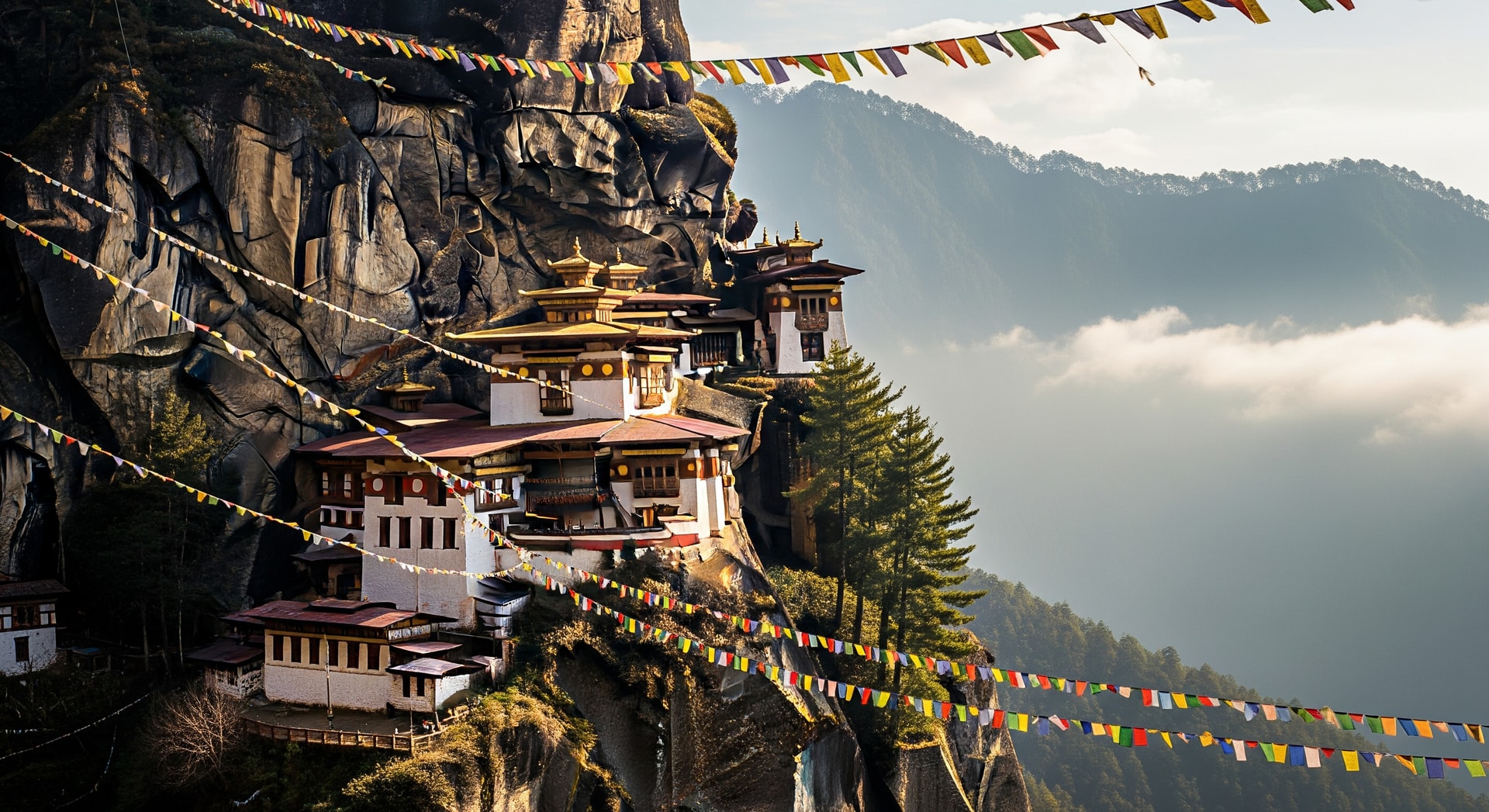
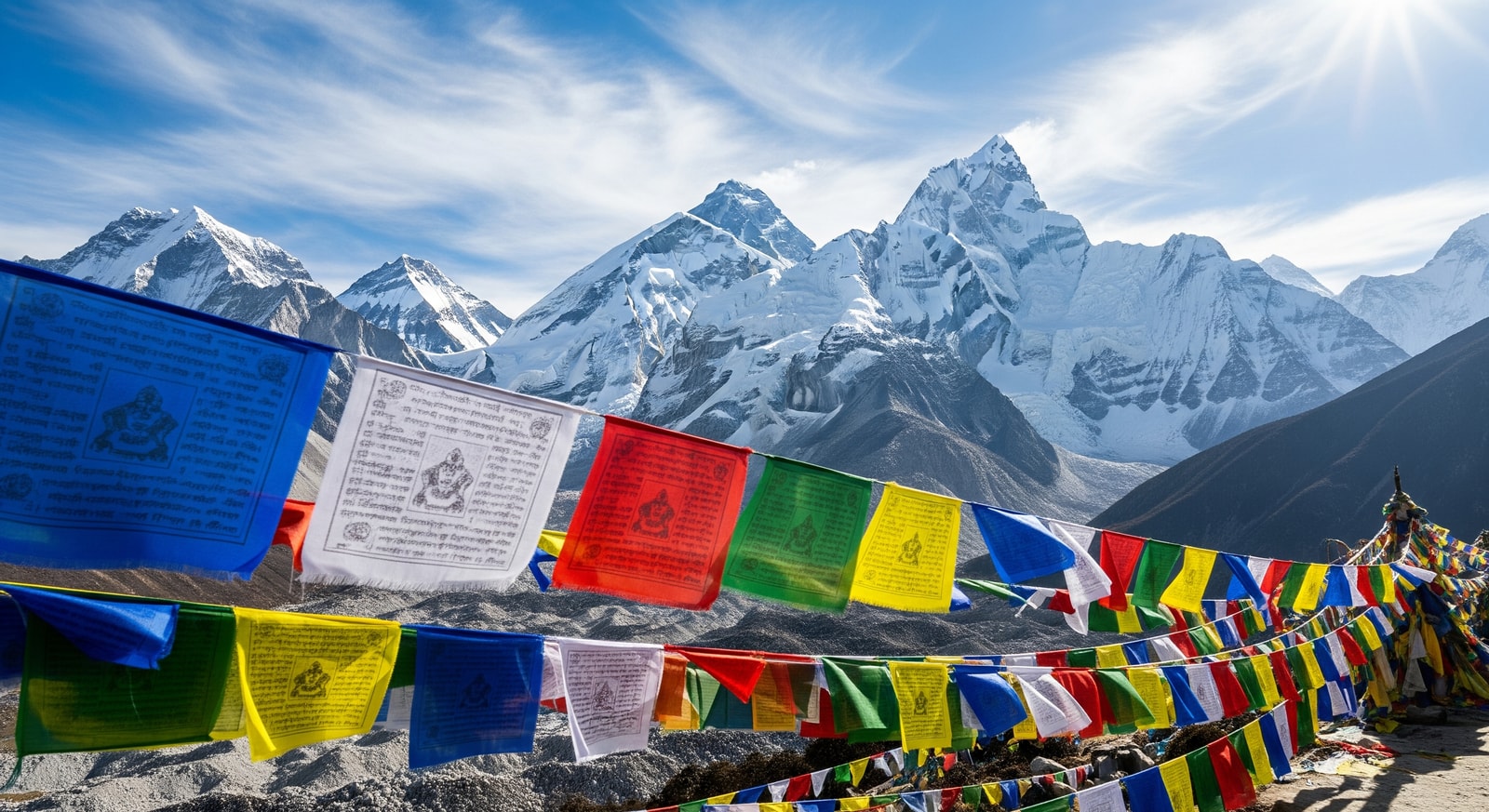
Prayer flags blessing travelers in the Himalayas
Visa Requirements
Essential Documents
All Nepal visa applicants must present a passport with at least 6 months validity beyond the intended arrival date and one blank page for the visa sticker. You will need a recent passport-sized photograph (35mm x 45mm) with a white background taken within the last 6 months.
Additional Requirements
While not always strictly checked, having these documents ready can smooth your entry process:
• Hotel booking confirmation or invitation letter from your host
• Return or onward flight ticket showing departure from Nepal
• Evidence of sufficient funds (approximately $50 per day)
• Travel insurance covering high-altitude trekking if applicable
Trekking Permits
Trekking in Nepal's restricted areas requires additional permits beyond your tourist visa. The TIMS (Trekkers Information Management System) card is mandatory for most popular trekking routes. Conservation area permits are needed for Annapurna, Sagarmatha (Everest), and Langtang regions.
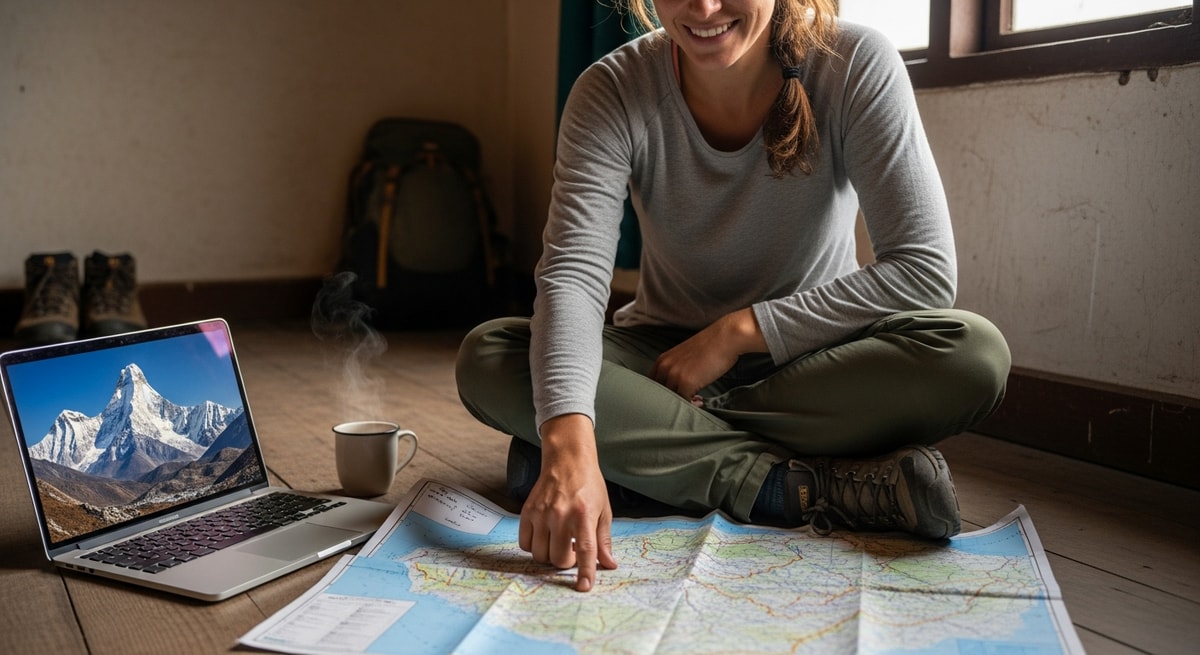
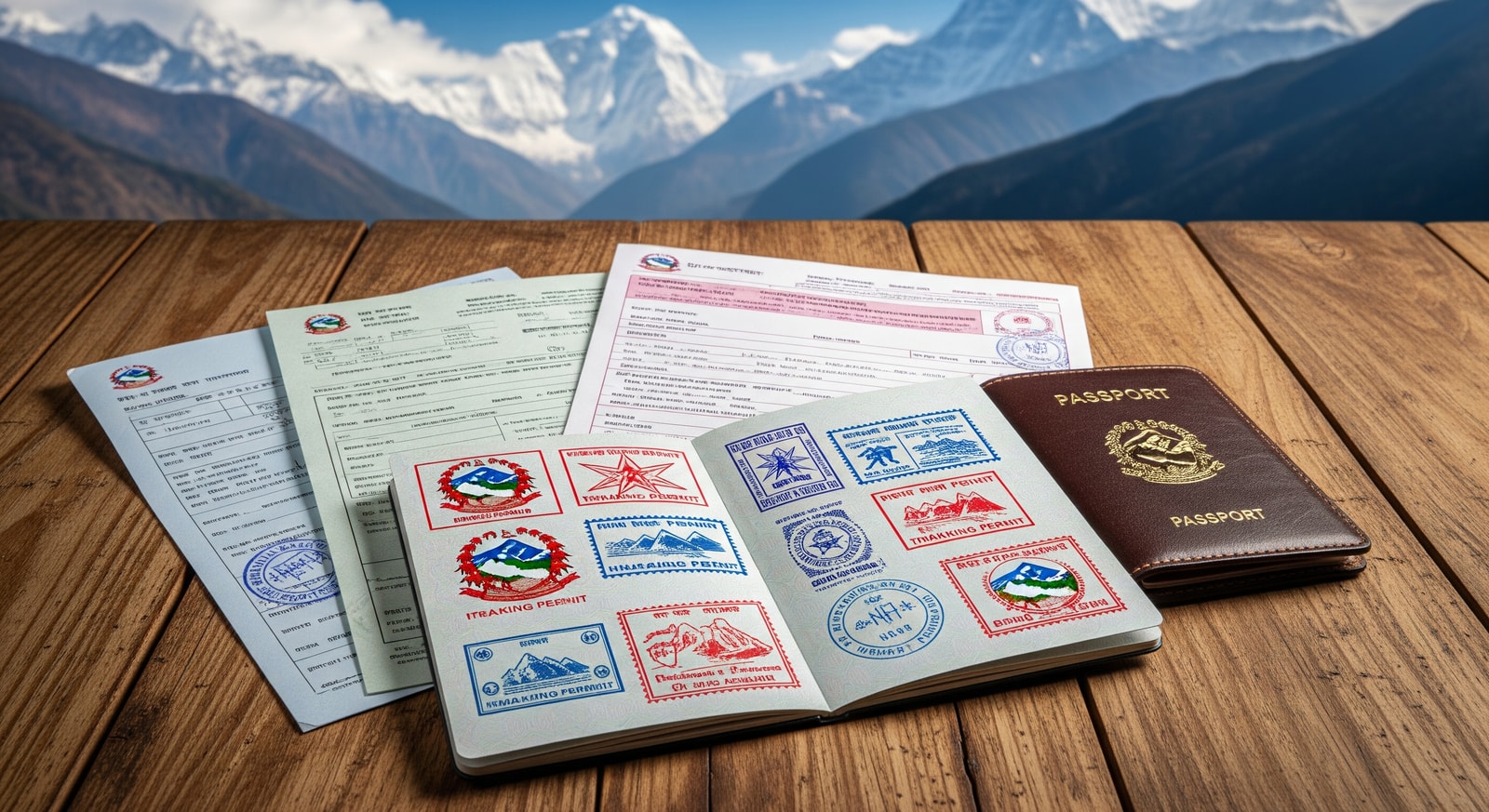
Prepare your documents before arriving in Nepal
Application Process
Online Pre-Application
Nepal's Department of Immigration offers an online visa application system at arrival.nepalimmigration.gov.np. Completing this form before arrival generates a submission receipt that expedites processing at immigration counters. Enter your personal details, travel information, and upload your photo to receive immediate confirmation.
Visa on Arrival Process
At Tribhuvan International Airport, proceed to the visa application area before immigration. Fill out the arrival card and visa form if you have not pre-applied online. Present your passport, photo, and visa fee in cash (USD preferred) or credit card. Fees are: 15 days ($30), 30 days ($50), and 90 days ($125).
Land Border Entry
Visa on arrival is available at major land borders including Kakarbhitta, Birgunj, Bhairahawa, Nepalgunj, Mahendranagar, and Kodari. The same documentation and fees apply. Border crossings may have limited hours, so plan your arrival accordingly, particularly if coming from India or Tibet.
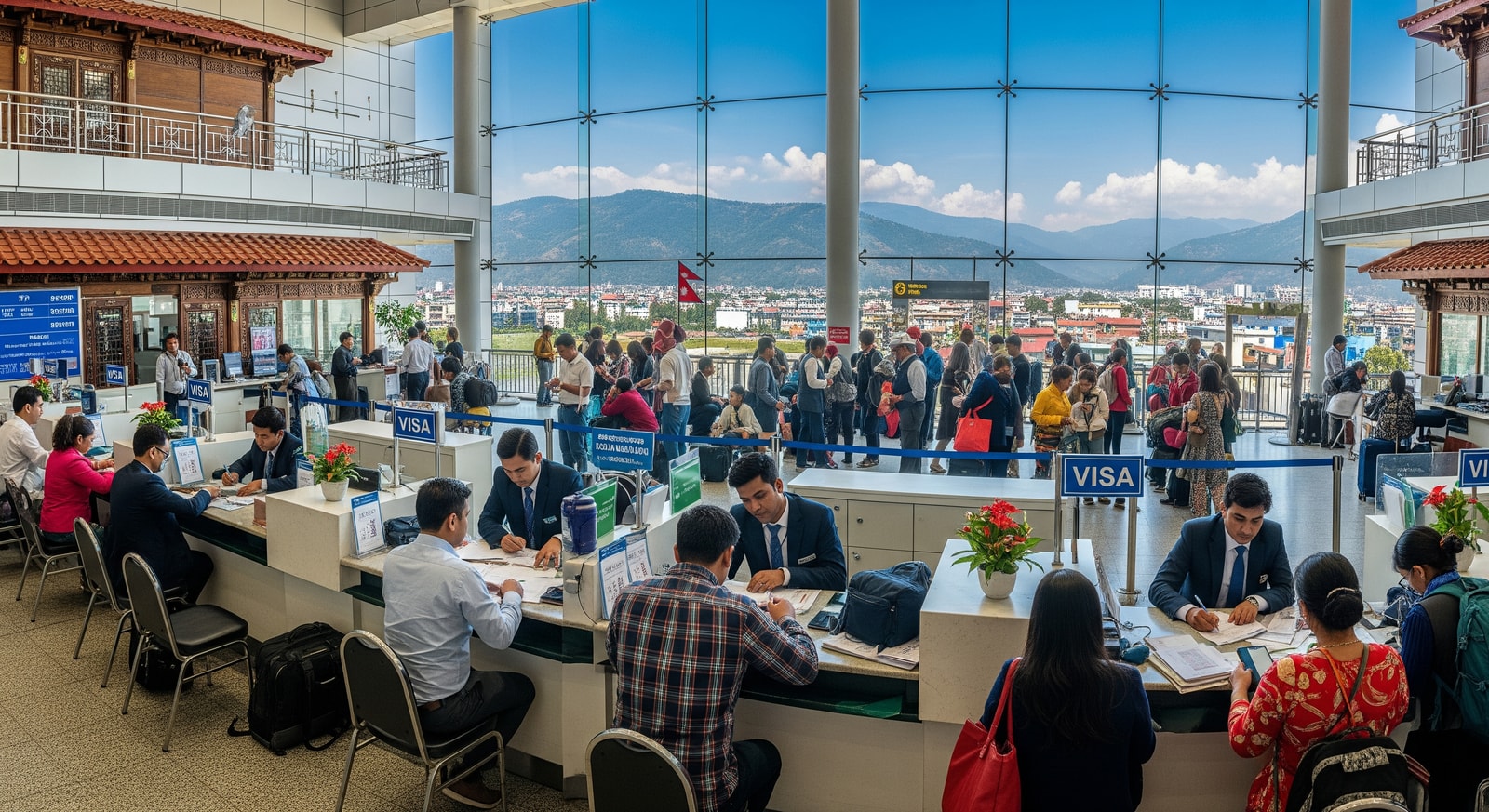
Visa processing at Kathmandu airport is straightforward
Travel Tips
Best Time to Visit
The peak trekking seasons are autumn (October-November) and spring (March-May) when skies are clear and temperatures moderate. Winter (December-February) offers fewer crowds but cold high-altitude conditions. The monsoon (June-September) brings rain but also lush landscapes and cultural festivals.
Health and Safety
Altitude sickness is a serious concern for trekkers ascending above 2,500 meters. Ascend gradually, stay hydrated, and consider carrying altitude medication. Travel insurance covering helicopter evacuation is essential for high-altitude treks. Tap water is not safe to drink; use filtered or bottled water throughout your stay.
Money Matters
The Nepali Rupee (NPR) is the local currency. ATMs are widely available in Kathmandu and Pokhara but scarce in trekking regions. Carry sufficient cash for treks. Major hotels and restaurants in cities accept credit cards, but small establishments prefer cash. US dollars are widely accepted for visa fees and can be exchanged easily.
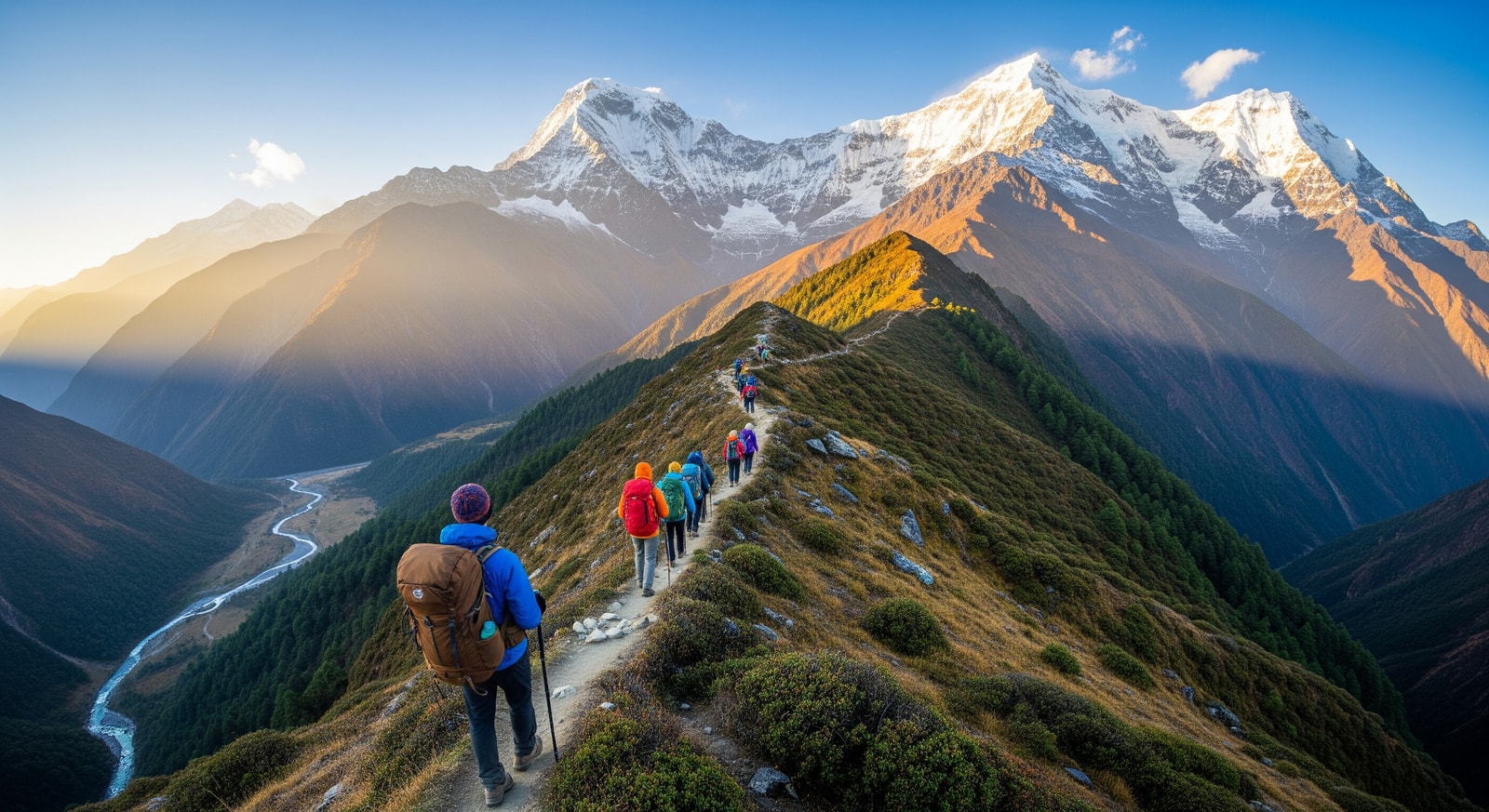
Proper preparation ensures a safe trekking experience
Why Choose DoVisa?
See the difference between applying yourself vs using our expert service
Travelers to Nepal rated this product 4.7 out of 5 based on 11 reviews.
4.7/ 5
Based on 11 verified reviews
Filter by rating
James T.Jan 15, 2026
"DoVisa made my Nepal visa process incredibly smooth. Pre-approved visa saved me an hour at Kathmandu airport. Already planning my return for Everest Base Camp!"
Sarah M.Jan 8, 2026
"First time trekking in Nepal and was confused about permits. DoVisa support explained everything clearly. Visa arrived same day. Highly recommend!"
Michael R.Dec 29, 2025
"Good service overall. Application was straightforward and visa was approved quickly. Would have liked more info about trekking permits but sorted it out."
Emma L.Dec 18, 2025
"Third Nepal trip, first time using DoVisa. So much easier than filling forms at the airport. Worth every penny for the convenience. Namaste!"
David K.Dec 5, 2025
"Applied for 90-day visa for extended meditation retreat in Pokhara. DoVisa handled everything perfectly. Customer service answered all my questions promptly."
Lisa W.Nov 22, 2025
"Visa approved in 24 hours as promised. The only minor issue was photo requirements were stricter than expected. Support helped me fix it quickly though."
Robert C.Nov 10, 2025
"Excellent experience from start to finish. Clear instructions, fast processing, and helpful support team. Nepal was amazing, thanks DoVisa!"
Jennifer H.Oct 28, 2025
"Business visa for meetings in Kathmandu sorted in just 2 days. Professional service and great communication throughout the process."
Thomas B.Oct 15, 2025
"Group booking for 4 friends doing Annapurna Circuit. DoVisa processed all our visas together efficiently. Made our planning so much easier!"
Amanda P.Sep 30, 2025
"Simple process and got my visa on time. Website could be a bit more mobile-friendly but otherwise no complaints. Would use again."
Chris N.Sep 18, 2025
"Applied late at night before my trip and still got approved in time. The expedited processing option saved my vacation. Thank you DoVisa!"
James T.Jan 15, 2026
"DoVisa made my Nepal visa process incredibly smooth. Pre-approved visa saved me an hour at Kathmandu airport. Already planning my return for Everest Base Camp!"
Sarah M.Jan 8, 2026
"First time trekking in Nepal and was confused about permits. DoVisa support explained everything clearly. Visa arrived same day. Highly recommend!"
Michael R.Dec 29, 2025
"Good service overall. Application was straightforward and visa was approved quickly. Would have liked more info about trekking permits but sorted it out."
Nepal Visa FAQs
What types of visas are available for Nepal?
Nepal offers several visa categories to accommodate different travel purposes. Tourist visas are most common, available in 15-day, 30-day, and 90-day durations with options for single or multiple entries. Business visas cater to those conducting commercial activities, attending conferences, or exploring trade opportunities. Student visas are issued to those enrolled in recognized Nepali educational institutions. Work visas require employer sponsorship. Transit visas allow up to 24 hours for travelers connecting through Nepal. Most tourists choose the standard tourist visa which permits sightseeing, trekking, and cultural activities.
Can I get a visa on arrival in Nepal?
Yes, Nepal offers visa on arrival for citizens of most countries at Tribhuvan International Airport in Kathmandu and major land border crossings. The process involves completing an arrival form, presenting your passport and photo, and paying the visa fee in cash (USD preferred) or by credit card. However, pre-applying online through Nepal's official immigration portal or through DoVisa can save significant time, especially during peak trekking seasons when immigration queues can stretch for hours. Pre-application generates a receipt that speeds processing upon arrival.
How much does a Nepal visa cost?
Nepal visa fees are standardized regardless of nationality. 15-day tourist visa: $30 USD (or equivalent in major currencies). 30-day tourist visa: $50 USD. 90-day tourist visa: $125 USD. Multiple entry visas of the same duration cost the same but allow unlimited entries during the validity period. Visa extensions within Nepal cost approximately $3 per day. Children under 10 years receive free visas. Payment at the airport can be made in USD, EUR, GBP, or by credit card. Exact change in USD is recommended for the smoothest transaction.
How long does Nepal visa processing take?
Visa processing times vary by application method. Visa on arrival at the airport typically takes 30-90 minutes depending on queue length and time of arrival. Online pre-application through Nepal's immigration portal provides immediate confirmation that speeds arrival processing to 10-15 minutes. Through DoVisa, most applications receive approval within 24-48 hours, providing certainty before your travel date. During peak trekking seasons (October-November and March-May), airport queues can be substantial, making pre-approval highly recommended.
What documents do I need for a Nepal visa?
The essential documents for a Nepal tourist visa include: a passport valid for at least 6 months beyond your arrival date with one blank page for the visa sticker; one recent passport-sized photograph (35mm x 45mm) with white background; a completed visa application form (available online or at arrival); and the visa fee. Supporting documents that may be requested include hotel booking confirmation, return flight tickets, and proof of sufficient funds. For business visas, add an invitation letter from your Nepali business contact. Trekking in restricted areas requires additional permits obtained separately.
Can I extend my Nepal visa?
Yes, Nepal tourist visas can be extended at the Department of Immigration in Kathmandu or the Immigration Office in Pokhara. Extensions cost approximately $3 USD per day and can be granted up to a maximum of 150 days per calendar year. Required documents include your passport, passport photo, completed extension form, and the fee in Nepali Rupees. Extensions are processed same-day for straightforward requests. You must apply before your current visa expires to avoid overstay penalties. Long-stay travelers should plan their visa strategy carefully considering the annual 150-day limit.
Do I need additional permits for trekking in Nepal?
Most popular trekking routes in Nepal require permits beyond your tourist visa. The TIMS card (Trekkers Information Management System) is mandatory for organized treks and costs $20 for those using agencies or $40 for independent trekkers. Conservation area permits are required for entering Annapurna, Sagarmatha (Everest), Langtang, and other protected regions, typically costing $20-35. Restricted area permits for destinations like Upper Mustang, Upper Dolpo, and Manaslu require special permits ranging from $50-500 depending on the area and duration. These permits are obtained in Kathmandu or through registered trekking agencies.
Which nationalities are exempt from Nepal visa requirements?
Indian citizens do not require a visa to enter Nepal and can stay indefinitely with valid identification (passport, voter ID, or government-issued ID). They can cross the open border freely at any designated checkpoint. All other nationalities require a visa, though the visa-on-arrival system makes access straightforward. Citizens of some countries with diplomatic restrictions may need to apply at a Nepali embassy in advance. Chinese citizens enjoy the same visa-on-arrival privileges as other nationalities with identical fees and processes.
What are the entry points for Nepal?
Nepal can be entered through one international airport and several land borders. Tribhuvan International Airport (KTM) in Kathmandu is the only international airport and handles most tourist arrivals. Major land border crossings open to foreigners include: Kakarbhitta (eastern Nepal, from India's Darjeeling area); Birgunj (central Nepal, from Raxaul, India); Bhairahawa/Sunauli (access to Lumbini, Buddha's birthplace); Nepalgunj (western Nepal); and Kodari/Tatopani (Tibet border, when open). Visa on arrival is available at all these points.
Is travel insurance required for Nepal?
While travel insurance is not technically mandatory for entry, it is strongly recommended and often practically essential. Most trekking agencies require proof of insurance covering high-altitude activities and emergency helicopter evacuation before allowing you to join treks. Standard travel insurance often excludes high-altitude trekking (above 4,000m), so ensure your policy specifically covers your planned maximum altitude. Emergency helicopter evacuations from the Everest or Annapurna regions can cost $5,000-10,000 USD without insurance. Medical facilities in trekking areas are basic, and serious conditions require evacuation to Kathmandu or abroad.
What is the best time to visit Nepal?
Nepal has distinct seasons affecting travel experiences. Autumn (October-November) offers the clearest skies, stable weather, and ideal trekking conditions, though it is also the busiest season with crowded trails and higher prices. Spring (March-May) brings warmer temperatures and blooming rhododendrons, with good visibility and fewer crowds than autumn. Winter (December-February) provides excellent mountain views and minimal crowds, but high passes may be closed and high-altitude trekking is cold. Monsoon (June-September) sees heavy rainfall making trekking challenging, though rain-shadow regions like Upper Mustang remain accessible and cultural activities in cities continue.
Can I work in Nepal with a tourist visa?
No, tourist visas strictly prohibit employment in Nepal. Working legally requires a work visa sponsored by a Nepali employer, which involves a formal application process through the Department of Immigration. Volunteer work in some contexts may be permitted on a tourist visa, but organized volunteer programs through established NGOs typically require separate volunteer visas. Teaching English or other subjects requires proper work authorization. Penalties for working illegally include fines, visa cancellation, and deportation. Business visas allow attending meetings and exploring opportunities but not active employment.
What happens if I overstay my Nepal visa?
Overstaying your Nepal visa incurs penalties and complications. Fines are approximately $5 USD per day for the first 30 days of overstay, increasing thereafter. Extended overstays may result in detention and deportation. You must settle all overstay fines at the Immigration Department before departure. Overstays can affect future visa applications to Nepal and potentially other countries. If circumstances prevent timely departure (illness, natural disasters), contact the Immigration Department immediately to request an emergency extension. Keeping your visa status current is always recommended to avoid unnecessary complications and expenses.
Is Nepal safe for travelers?
Nepal is generally considered safe for tourists, with violent crime against visitors being rare. The main safety concerns relate to natural hazards rather than crime: altitude sickness affects many trekkers and requires proper acclimatization; road conditions are challenging with accidents common on mountain routes; natural disasters including earthquakes and landslides occur periodically. Petty theft can occur in crowded areas of Kathmandu and tourist hotspots. Standard precautions apply: secure valuables, use registered guides for treks, follow altitude protocols, and purchase comprehensive travel insurance. Political demonstrations occasionally occur in cities but rarely affect tourists.
Do I need vaccinations to visit Nepal?
No vaccinations are legally required to enter Nepal unless arriving from a yellow fever endemic region. However, health authorities recommend several vaccinations for travelers: Hepatitis A and B (food and waterborne risks); Typhoid (common in the region); Japanese Encephalitis (for extended stays in rural areas); Rabies (for those working with animals or traveling to remote areas); and routine vaccinations (tetanus, measles, etc.). Consult a travel medicine specialist 4-6 weeks before departure for personalized advice based on your itinerary and health history.

 With DoVisa