
Bhutan flag

Get Your Bhutan Visa Online

Fast visa processing for tourism, cultural exploration, and Himalayan adventures in the world's happiest kingdom

4.6Trustpilot

Check Visa Requirements

See if you need a visa for Bhutan

Please select your passport
Where are you going?

How to Get Your Bhutan Visa

Simple 4-step process — most applications approved within 3-5 business days

1

Complete the online application

Fill out our streamlined application form with your personal details, travel dates, and planned itinerary. Our intelligent validation system guides you through each section, checking for common errors and ensuring your application meets the requirements of the Tourism Council of Bhutan and the Department of Immigration.

2

Upload required documents

Submit your passport scan (bio page clearly visible) and a recent passport-sized photograph meeting Bhutan's specifications. Our visa specialists review every document against Bhutan's immigration standards before submission, significantly reducing the risk of rejection or delays in processing your visa clearance.

3

We coordinate with Bhutan authorities

Your verified application is transmitted to Bhutan's immigration authorities through our licensed tour operator network. We monitor processing status in real-time and handle the mandatory Sustainable Development Fee payment coordination, keeping you informed via email and SMS at every stage.

4

Receive your visa approval

Your approved Bhutan visa clearance letter arrives via email. Print it clearly and present it upon arrival at Paro International Airport, where your visa stamp will be issued. Tashi Delek — welcome to the Kingdom of Bhutan, the last Shangri-La!
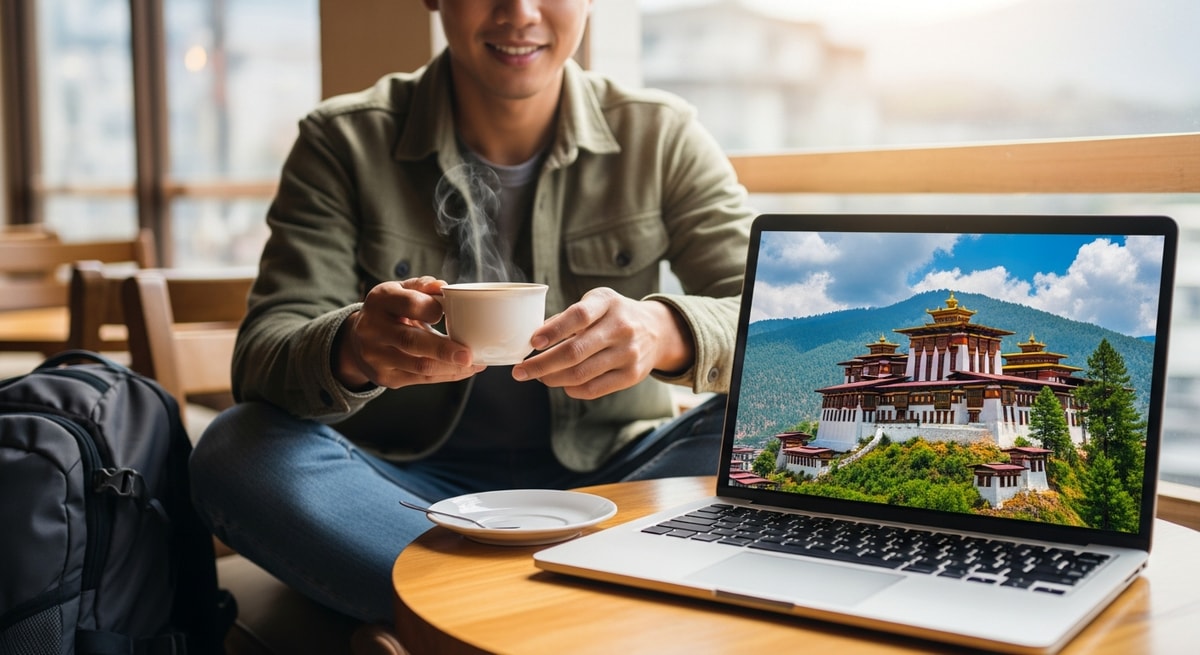
Traveler planning Bhutan trip with laptop showing Punakha Dzong while enjoying butter tea

Visa types needed for Bhutan

Available visa products
  • Bhutan eVisa - 90 days, Single entry Most Popular

Bhutan eVisa - 90 days, Single entry

The Bhutan eVisa provides access to ancient monasteries, stunning Himalayan landscapes, and Gross National Happiness. Valid for 90 Days with single entry, this visa allows stays up to 90 days. Perfect for tourism and business.

Applicants must submit the following documents:

  • 🛂 Passport: Valid for at least 6 months with blank pages
  • 📸 Digital Photo: Recent passport-style photograph
  • ✈️ Travel Details: Confirmed travel itinerary
  • 🏨 Accommodation: Hotel or host booking
  • 💳 Payment: Credit or debit card for fee
Important to know
  • Maximum stay: 90 days per visit
  • Print visa for presentation at immigration
0+Happy Travelers
0/7Expert Support
0%+Approval Rate
0Customer Rating

Bhutan Visa Requirements & Entry Information

Tourist Visa

Up to 30 days

For cultural tours, trekking, and exploring Bhutan's monasteries

Business Visa

Up to 30 days

For meetings, trade discussions, and commercial activities

Conference Visa

Event duration

For delegates attending official conferences and seminars

Student Visa

Course duration

For Buddhist studies and educational programs in Bhutan
Essential Requirements

  • 📘Passport valid 6+ months with 2 blank pages
  • 📷Passport photo 35x45mm, white background
  • 🏨Confirmed tour itinerary from licensed operator
  • ✈️Return flight booking or onward travel plans
  • 💰Sustainable Development Fee payment confirmation
  • 📄Travel insurance covering medical evacuation

Visa Policy

Bhutan maintains a unique tourism policy designed to preserve its pristine environment, ancient culture, and way of life. Unlike most countries, Bhutan operates a High Value, Low Impact tourism model that requires all international visitors (except citizens of India, Bangladesh, and Maldives) to obtain a visa through a licensed Bhutanese tour operator. All tourists must pay the Sustainable Development Fee (SDF) of $200 USD per night, which directly funds free healthcare, free education, poverty alleviation, and environmental conservation. This fee replaced the previous minimum daily package rate in 2022, giving travelers more flexibility in planning their trips. Bhutan visas are issued as clearance letters before travel, with the actual visa stamp placed in your passport upon arrival at Paro International Airport or one of the land border crossings with India. The visa process is straightforward when arranged through a licensed tour operator, and DoVisa coordinates this entire process on your behalf.
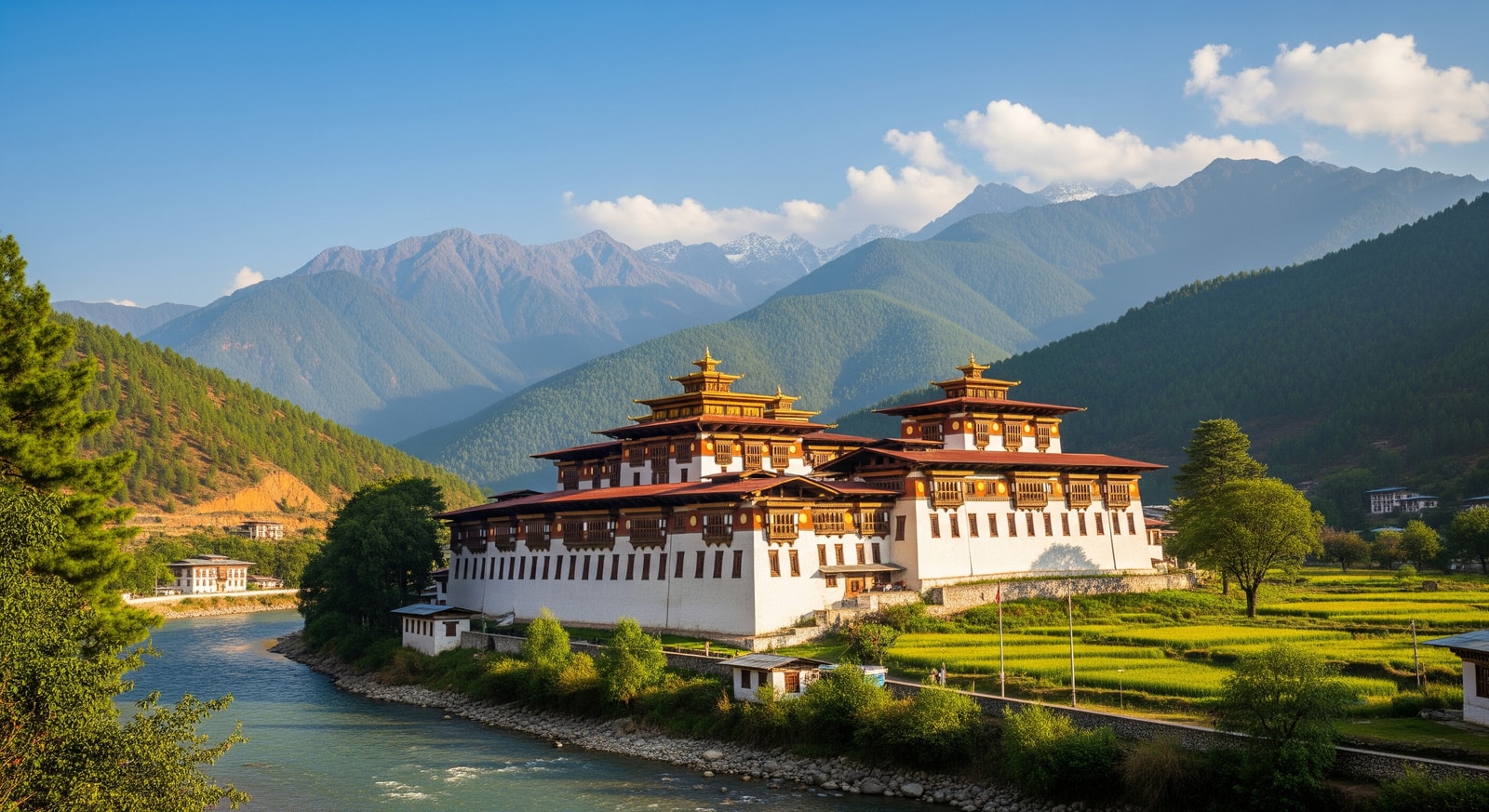
Rinpung Dzong fortress monastery in Paro Valley with traditional Bhutanese architecture and mountain backdrop
Paro Dzong — One of Bhutan's finest examples of traditional dzong architecture

Visa Requirements

Essential Documents All Bhutan visa applicants must provide these fundamental documents: Passport requirements: Your passport must be valid for at least 6 months beyond your intended departure date from Bhutan with minimum two blank pages for entry and exit stamps. Photograph specifications: Recent passport-sized photo (35x45mm) with white background, taken within the last 6 months, face clearly visible without glasses or head coverings (except for religious reasons). Tour arrangement: Confirmed booking with a licensed Bhutanese tour operator including detailed day-by-day itinerary, accommodation reservations, and guide arrangements. SDF payment: Proof of Sustainable Development Fee payment ($200 USD per night) processed through the Tourism Council of Bhutan's online system. Travel insurance: Comprehensive travel insurance covering medical emergencies and evacuation is strongly recommended given Bhutan's high-altitude terrain and limited medical facilities.
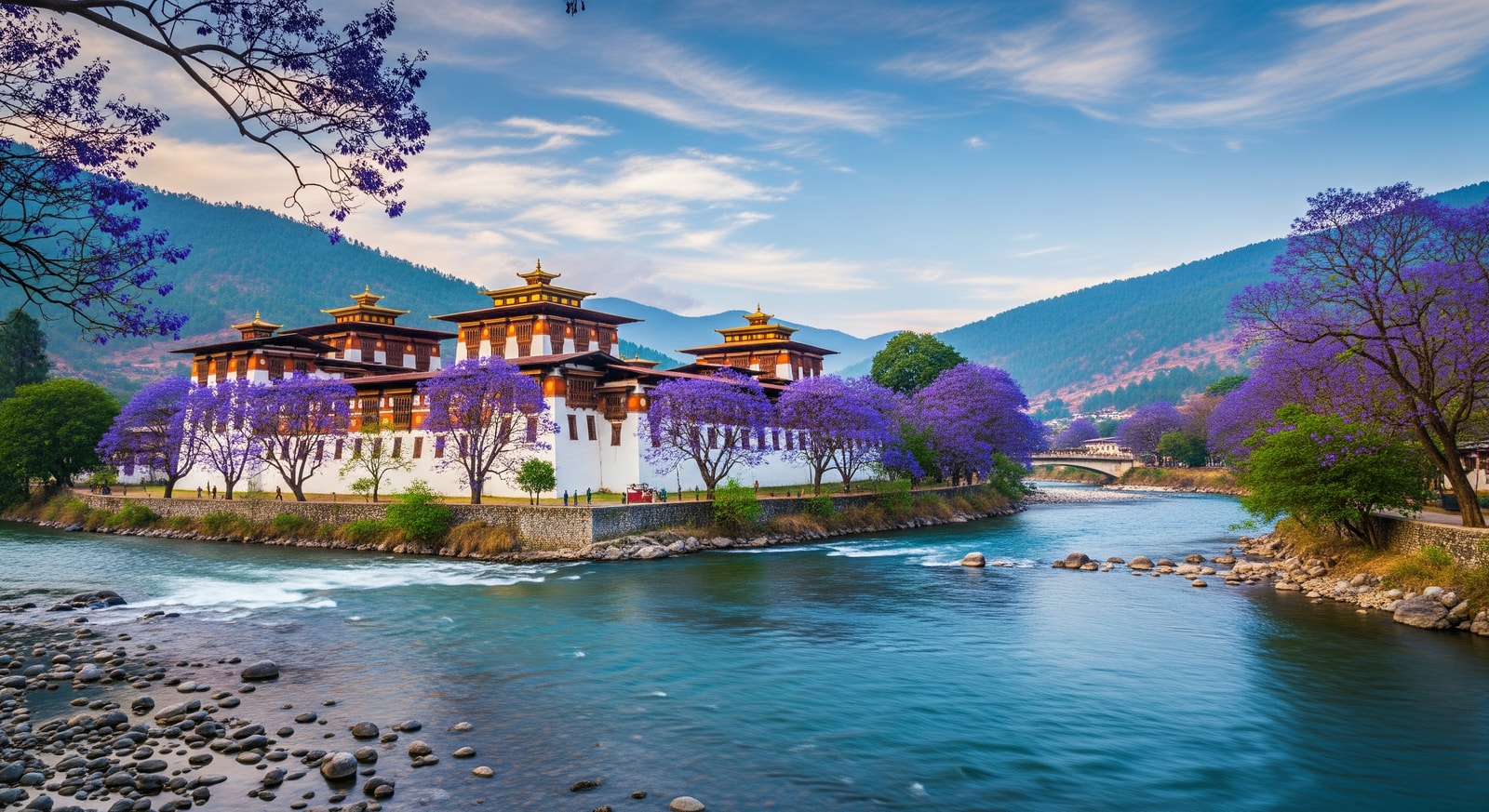
Majestic Punakha Dzong at the confluence of two rivers with jacaranda trees in bloom
Punakha Dzong — The Palace of Great Happiness and winter seat of Bhutan's religious leader

Application Process

How the Bhutan Visa Process Works Bhutan's visa process differs from most countries because all international tourists must book through a licensed Bhutanese tour operator. Here's how it works: Step 1 - Tour booking: Select your preferred itinerary and dates. You can choose from group tours or private custom itineraries. All tours must include licensed guide services. Step 2 - Document submission: Provide passport copies and photos. Your tour operator submits these to the Tourism Council of Bhutan along with your complete itinerary. Step 3 - SDF payment: Pay the Sustainable Development Fee through the official TCB portal. This must be completed before visa processing begins. Step 4 - Visa clearance: The Tourism Council processes your application (typically 3-5 business days) and issues a visa clearance letter. Step 5 - Arrival: Present your clearance letter at Paro Airport or the land border. Immigration stamps your visa directly into your passport. DoVisa handles steps 2-4 on your behalf, coordinating with our licensed Bhutanese partner operators to ensure smooth processing.
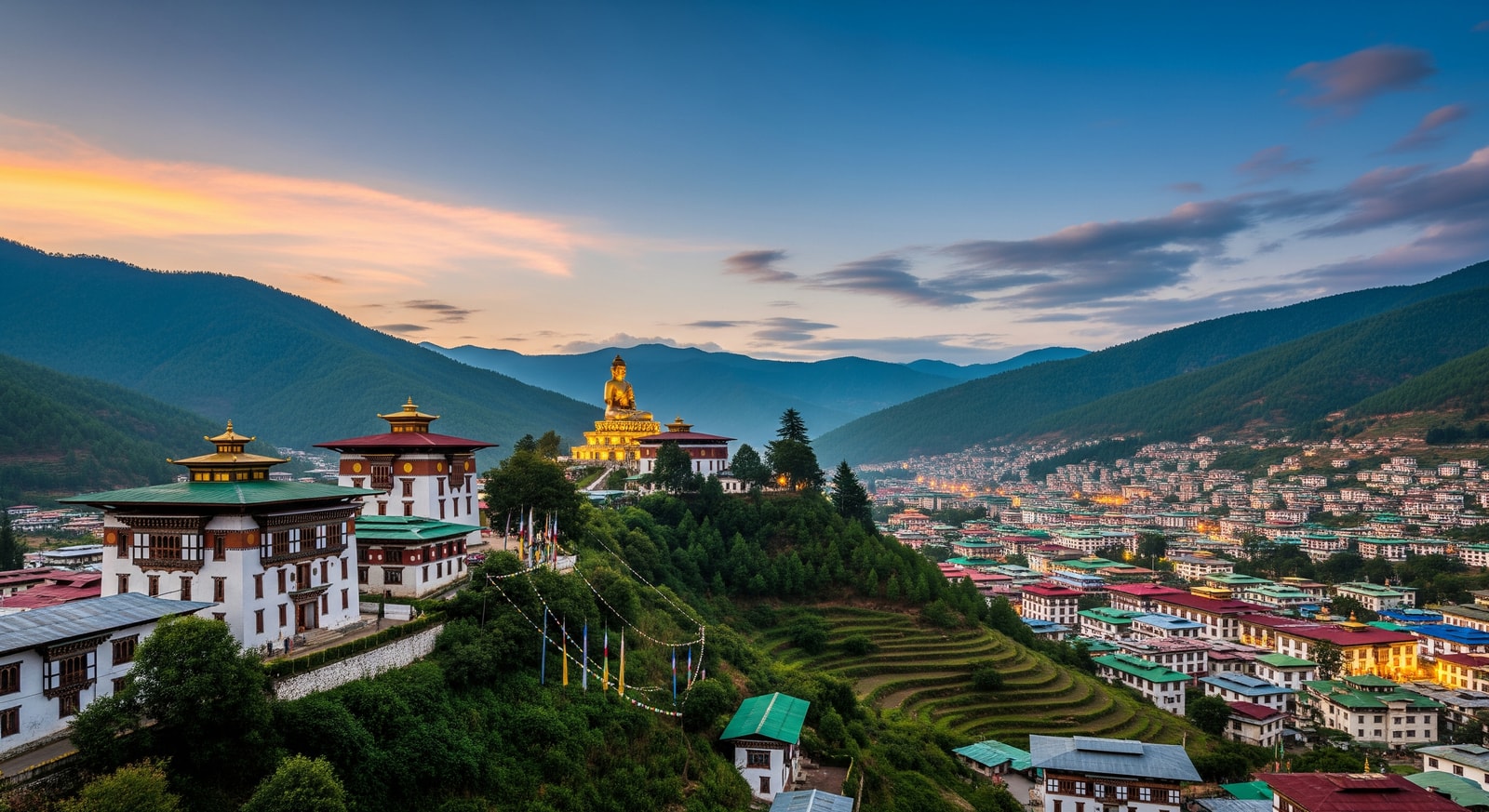
Thimphu cityscape with traditional Bhutanese buildings and the massive Buddha Dordenma statue overlooking the valley
Thimphu — Bhutan's capital city blending tradition with modernity

Travel Tips

Best Time to Visit Bhutan has distinct seasons that significantly impact your experience. Spring (March-May) brings rhododendrons in full bloom, pleasant temperatures, and clear mountain views — ideal for the famous Paro Tsechu festival. Autumn (September-November) offers crisp air, stunning Himalayan vistas, and harvest festivals including Thimphu Tsechu. Getting There Paro International Airport (PBH) is Bhutan's only international airport, served by Druk Air and Bhutan Airlines with connections through Bangkok, Delhi, Kathmandu, Singapore, and Kolkata. The dramatic landing approach through the Himalayan peaks is considered one of the world's most challenging and scenic. What to Expect Bhutan operates on Gross National Happiness principles rather than GDP. Expect a deeply spiritual atmosphere, pristine nature, traditional dress (gho for men, kira for women), and a pace of life focused on wellbeing. Altitude ranges from 200m to over 7,000m — acclimatize gradually and stay hydrated. Currency & Costs The Bhutanese Ngultrum (BTN) is pegged to the Indian Rupee, which is also accepted throughout the country. ATMs are available in Thimphu and Paro but limited elsewhere. Credit cards accepted at larger hotels and some shops.
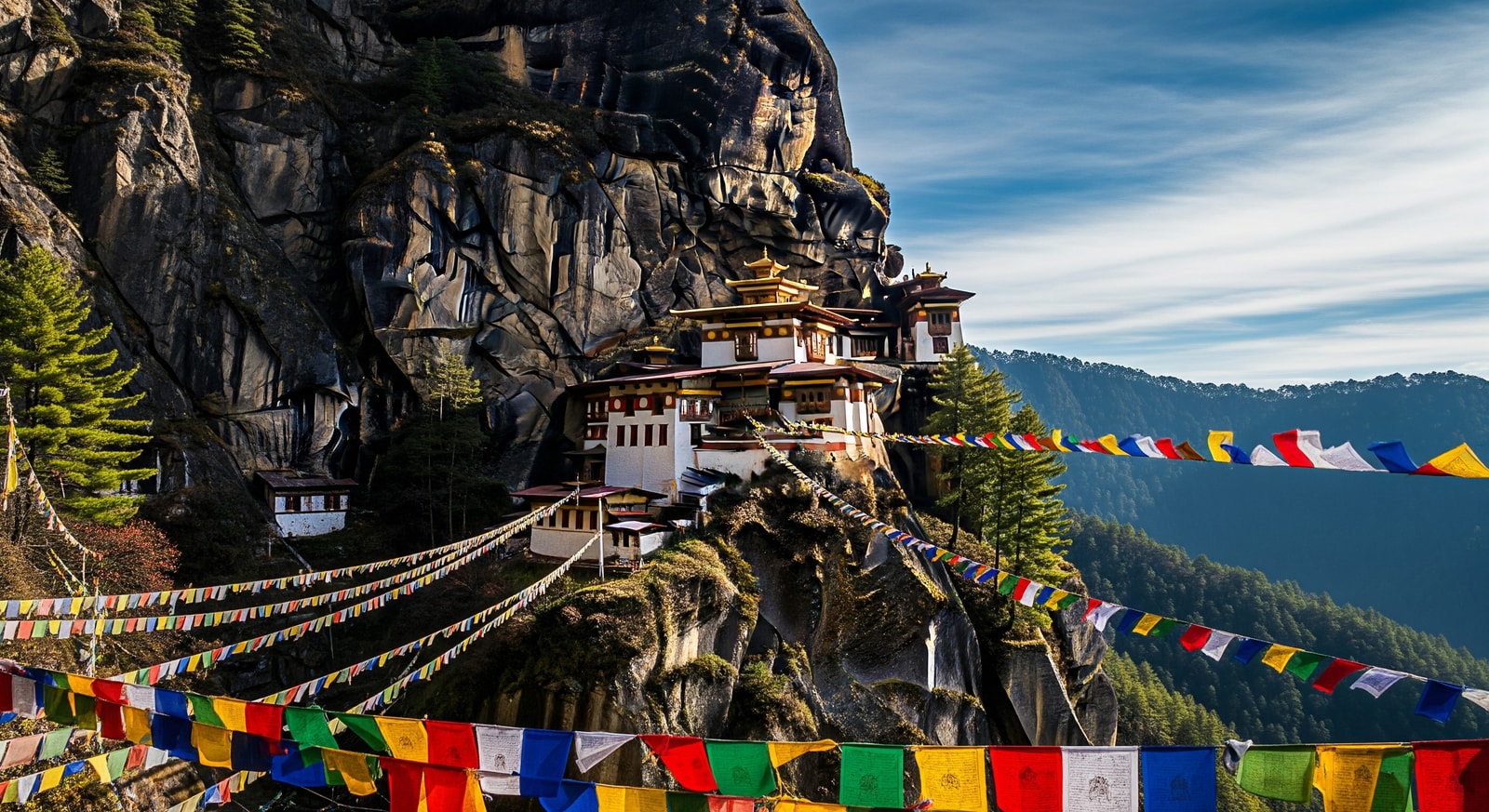
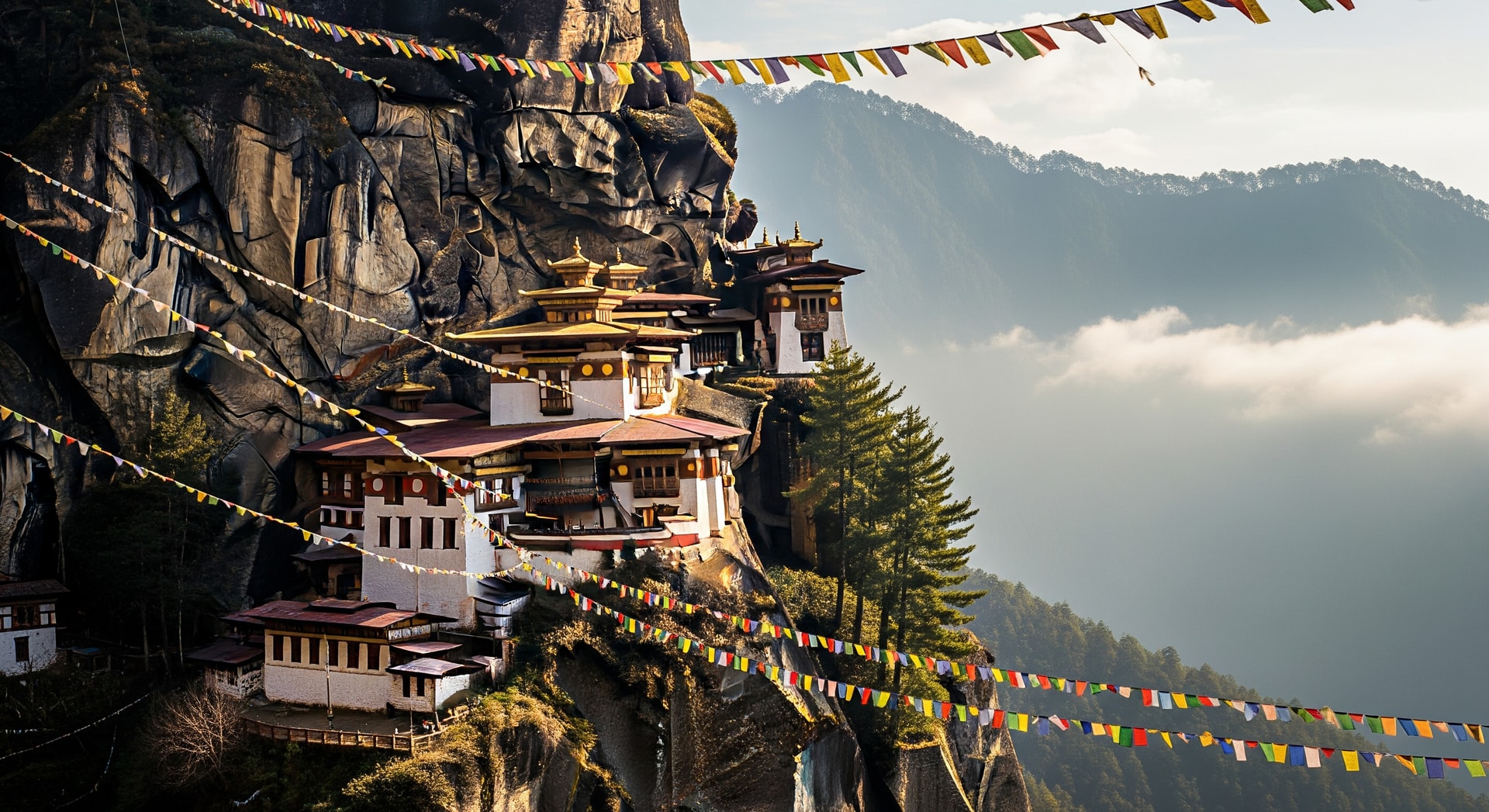
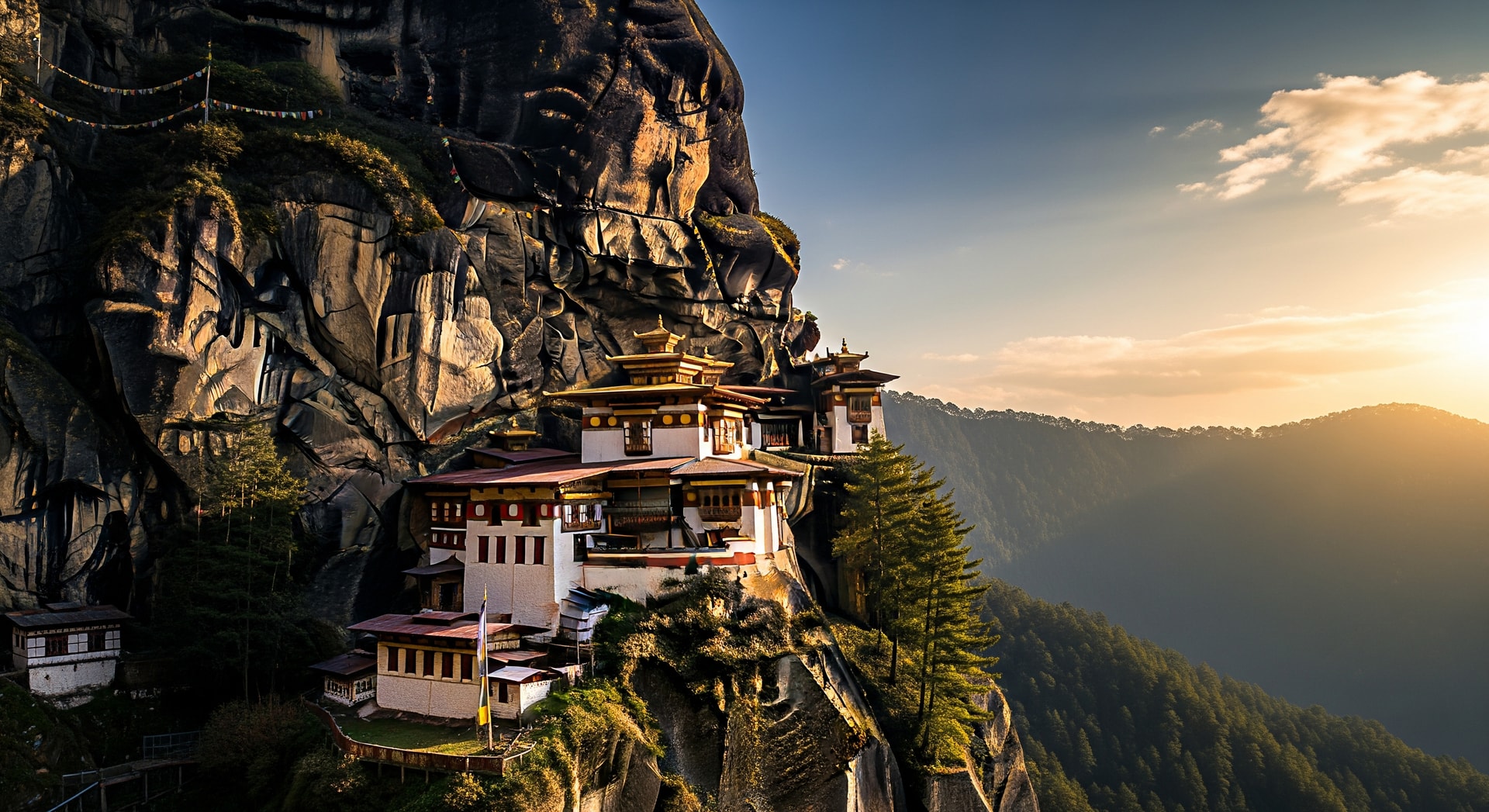
Iconic Tiger's Nest Monastery clinging to sheer cliff face with prayer flags fluttering in the wind
Tiger's Nest (Taktsang) — Bhutan's most sacred and iconic pilgrimage site

Why Choose DoVisa?

See the difference between applying yourself vs using our expert service

Feature
📋Applying Yourself
With DoVisa
Application reviewExpert review before submissionNo expert check100% reviewed by experts
Document validationCheck documents meet requirementsRisk of rejectionPre-checked for errors
Customer supportHelp when you have questionsGovernment offices only24/7 dedicated support
Form guidanceAssistance filling out formsComplex forms aloneStep-by-step guidance
Status trackingKnow where your application isManual checkingReal-time updates
Refund if deniedProtection if visa is rejectedNo refund possibleMoney-back guarantee

Check Your Requirements

See what you need for Bhutan

Please select your passport
Where are you going?
1,000+Visas processed
24/7Expert support
4.7Customer rating
98%Approval rate

Certified Customer Reviews

Travelers to Bhutan rated this product 4.7 out of 5 based on 11 reviews.

4.7/ 5
Based on 11 verified reviews

Filter by rating

Thomas R.Jan 15, 2026

"Bhutan was a life-changing experience! DoVisa made the complex visa process simple. They coordinated everything including the SDF payment. Tiger's Nest was breathtaking!"

Sarah M.Jan 8, 2026

"The Bhutan visa process seemed daunting at first, but DoVisa handled everything perfectly. Great communication throughout. Can't wait to return to the Land of the Thunder Dragon!"

James L.Dec 22, 2025

"Good service overall. The process took slightly longer than expected due to festival season, but DoVisa kept me informed. Bhutan exceeded all expectations."

Michelle K.Dec 10, 2025

"Excellent support for our honeymoon trip to Bhutan. DoVisa explained the SDF and helped us plan the perfect itinerary. Punakha Dzong was magical!"

David W.Nov 28, 2025

"Third trip to Bhutan and always use DoVisa. They know the system inside out. This time we did the Druk Path Trek — absolutely incredible views."

Emma T.Nov 15, 2025

"DoVisa made getting to Bhutan stress-free. The team answered all my questions about the unique visa requirements. Truly the happiest place on earth!"

Robert H.Nov 2, 2025

"Professional service. The SDF coordination was helpful since it can be confusing. Bhutan is expensive but worth every penny for the experience."

Lisa C.Oct 20, 2025

"Solo female traveler here — DoVisa connected me with an amazing guide and handled all the paperwork. Bhutan felt incredibly safe and welcoming."

Andrew P.Oct 5, 2025

"Business trip to Thimphu went smoothly thanks to DoVisa. They understood the business visa requirements and processed everything quickly."

Jennifer S.Sep 18, 2025

"The visa process for Bhutan is unique but DoVisa guided us through it well. Beautiful country with genuinely happy people. Highly recommend!"

Michael B.Aug 30, 2025

"Attended Paro Tsechu festival thanks to DoVisa's expert timing advice. The visa clearance came through perfectly. Once in a lifetime experience!"

Bhutan Visa FAQs

What is the Sustainable Development Fee for Bhutan?
The Sustainable Development Fee (SDF) is a mandatory charge of $200 USD per person per night for international tourists visiting Bhutan. This fee replaced the previous minimum daily package rate in September 2022. The SDF directly funds Bhutan's free healthcare and education systems, environmental conservation, infrastructure development, and poverty alleviation programs. Children under 6 are exempt, and children aged 6-12 receive a 50% discount. The SDF must be paid before your visa clearance is issued.
Do I need a tour operator to visit Bhutan?
Yes, all international tourists (except citizens of India, Bangladesh, and Maldives) must book their trip through a licensed Bhutanese tour operator. This is a government requirement designed to ensure sustainable tourism. You can choose between group tours with fixed itineraries and departure dates, or private customized tours designed around your interests. Both options require a licensed guide to accompany you throughout your stay. DoVisa partners with reputable licensed operators to coordinate your entire trip.
How long does Bhutan visa processing take?
Bhutan visa clearance typically takes 3-5 business days after all documents and the SDF payment are submitted. During peak seasons (March-May and September-November) and around major festivals like Paro Tsechu and Thimphu Tsechu, processing may take slightly longer due to higher volumes. We recommend starting the visa process at least 2-3 weeks before your intended travel date to ensure adequate buffer time for any questions or additional requirements.
Can I travel independently in Bhutan?
No, independent travel is not permitted for most international tourists. Bhutan's tourism policy requires visitors to be accompanied by a licensed guide at all times. However, this doesn't mean rigid group travel — you can book a private tour with your own guide and driver, customizing your itinerary completely. Only citizens of India, Bangladesh, and Maldives can travel independently without a guide, though they still need permits for certain regions.
What documents do I need for a Bhutan visa?
Required documents include: Valid passport with at least 6 months validity beyond departure date and two blank pages; passport-sized photograph (35x45mm, white background, taken within 6 months); confirmed tour booking with a licensed Bhutanese operator including detailed itinerary; SDF payment confirmation; and travel insurance is strongly recommended. Business visas require additional documentation including invitation letters from Bhutanese entities.
How do I enter Bhutan?
Bhutan has one international airport and several land border crossings with India. By air: Paro International Airport (PBH) is the only international airport, served by Druk Air and Bhutan Airlines with flights from Bangkok, Delhi, Kathmandu, Singapore, Kolkata, and other regional hubs. The approach is famously scenic and challenging. By land: Entry points at Phuentsholing (most popular), Gelephu, and Samdrup Jongkhar for travelers coming from India. All entry points issue visa stamps upon presenting your clearance letter.
What is the best time to visit Bhutan?
The best times are spring (March-May) and autumn (September-November). Spring offers blooming rhododendrons, pleasant temperatures (15-20°C), and the famous Paro Tsechu festival. Autumn provides crystal-clear Himalayan views, comfortable weather, and harvest festivals including Thimphu Tsechu. Summer (June-August) brings monsoon rains but lush landscapes and fewer tourists. Winter (December-February) is cold but offers clear skies, minimal crowds, and the Black-Necked Crane Festival in Gangtey Valley.
Can I extend my Bhutan visa?
Yes, visa extensions are possible through the Tourism Council of Bhutan. Extensions must be requested through your tour operator while you're still in Bhutan, before your current visa expires. Additional SDF payment is required for extended nights. Extensions are generally approved if you have continued tour arrangements and available accommodation. The process typically takes 1-2 business days.
Are Indian, Bangladeshi, and Maldivian citizens exempt from Bhutan visa?
Yes, citizens of India, Bangladesh, and Maldives do not require a visa to visit Bhutan. They can travel independently without a tour operator and are exempt from the Sustainable Development Fee. However, they must obtain a permit to enter Bhutan, available at the entry point with valid ID (passport or voter ID for Indians). Some restricted areas still require special permits regardless of nationality.
What currency should I bring to Bhutan?
Bhutan's currency is the Bhutanese Ngultrum (BTN), which is pegged 1:1 to the Indian Rupee. Indian Rupees are widely accepted throughout Bhutan (except 500 and 2000 rupee notes in some places). US Dollars can be exchanged at banks in Thimphu and Paro. ATMs are available in major towns but limited in rural areas. Credit cards are accepted at larger hotels and some shops in Thimphu and Paro. Carry sufficient cash for rural areas and small purchases.
What should I pack for Bhutan?
Essential items include: Layered clothing for temperature variations (can range from 15-25°C in valleys to below freezing at high passes); comfortable walking shoes with good grip for monastery visits and hikes; rain jacket regardless of season; sun protection (high altitude means intense UV); modest clothing (shoulders and knees covered for dzong visits); and a good camera for stunning landscapes. Altitude sickness medication is recommended for treks above 3,000m.
Is Bhutan safe for tourists?
Yes, Bhutan is one of the safest countries in the world for tourists. Violent crime is extremely rare, and the Buddhist culture promotes non-violence and respect. Your licensed guide accompanies you throughout, adding an extra layer of security and local knowledge. Health considerations: Altitude sickness is a risk above 3,000m — acclimatize gradually. Medical facilities are limited outside Thimphu, so comprehensive travel insurance with evacuation coverage is essential. Tap water should be avoided; drink bottled or purified water.
Can I work or volunteer in Bhutan?
Working in Bhutan requires a proper work permit and employment visa, which is a separate process from tourist visas and involves sponsorship from a Bhutanese employer. Volunteer tourism is not permitted under standard tourist visas. Bhutan's policy prioritizes employment for Bhutanese citizens. Long-term educational and research visas are available for those participating in official programs at Bhutanese institutions. Contact the relevant Bhutanese ministry for specific requirements.
What is the dress code for visiting dzongs and monasteries?
Bhutan has a modest dress code for religious and official sites. When visiting dzongs (fortress-monasteries) and temples: wear long pants or skirts covering the knees; tops with sleeves covering shoulders; no hats inside buildings; remove shoes when entering temples. Bhutanese traditional dress (gho for men, kira for women) is worn by locals and is not required for tourists but highly appreciated if worn. Your guide will advise on appropriate attire for each site.
How difficult is the Tiger's Nest hike?
The hike to Tiger's Nest (Taktsang Monastery) is moderately challenging. The trail covers approximately 5km round trip with an elevation gain of about 900 meters. Most people complete it in 4-6 hours including time to explore the monastery. The path is well-maintained with a cafeteria midway for rest. Tips: Start early to avoid crowds and afternoon clouds; bring water and snacks; wear sturdy shoes; take your time due to altitude (2,950m). Horses are available for the first half if needed.
What festivals should I try to attend in Bhutan?
Bhutan's tsechu festivals are spectacular religious celebrations featuring masked dances, elaborate costumes, and community gatherings. Key festivals include: Paro Tsechu (March/April) — the most famous, featuring the unfurling of a giant thangka; Thimphu Tsechu (September/October) — in the capital with elaborate ceremonies; Punakha Drubchen (February/March) — unique warrior dances; Black-Necked Crane Festival (November) in Gangtey Valley. Dates follow the lunar calendar and change annually. Book well in advance as accommodations fill quickly during festivals.
Friendly DoVisa customer support team member helping traveler with Bhutan visa application

Still have questions?

Our team is here to help 24/7

Ready to Discover the Land of the Thunder Dragon?

Experience Bhutan's sacred monasteries, stunning Himalayan landscapes, and the world's only carbon-negative country

Apply Now

Or apply via our mobile app
Download on App StoreGet it on Google Play