
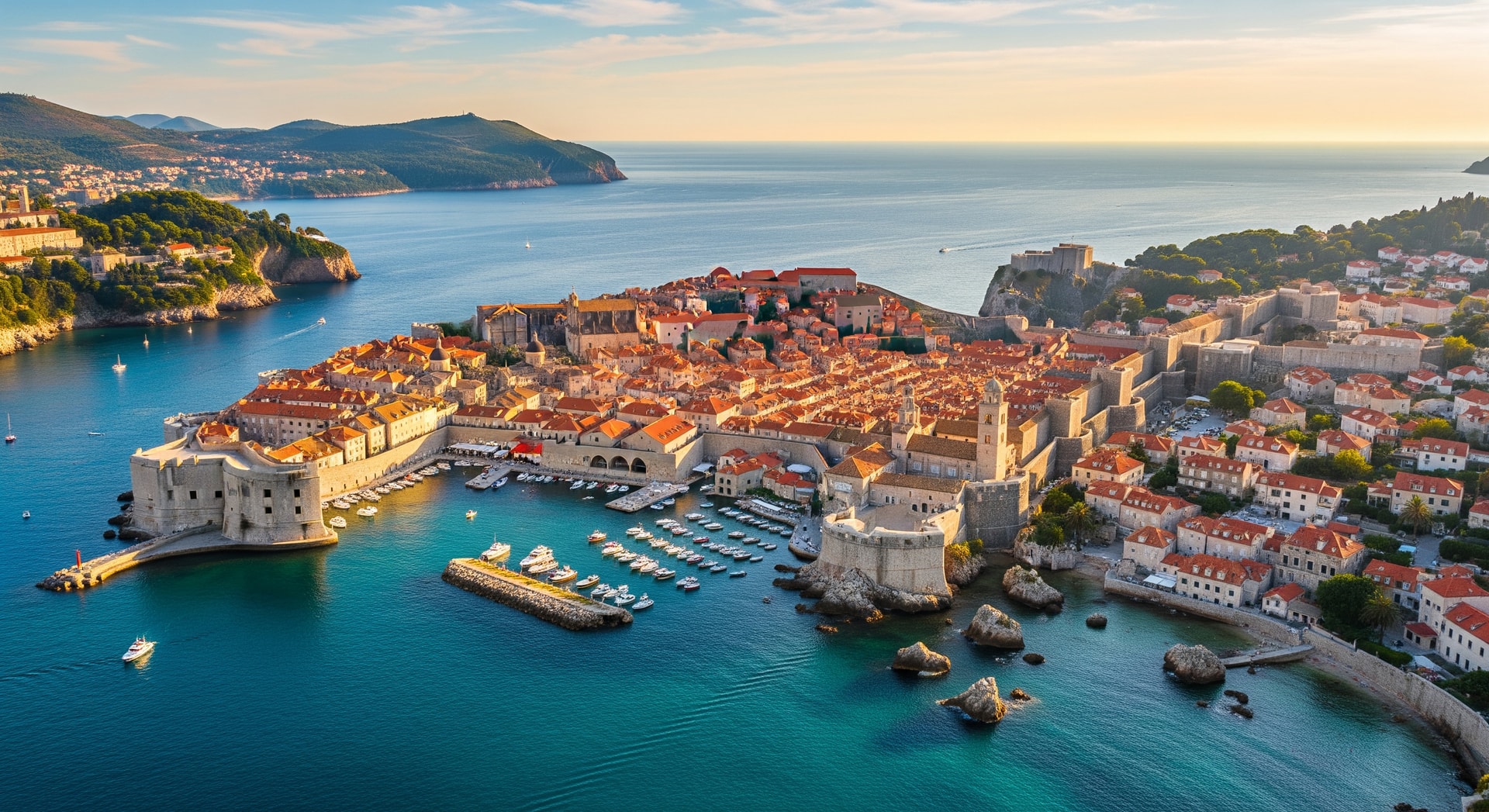
Croatia ETIAS Travel Authorisation
Croatia joined the Schengen area in 2023, and ETIAS will apply at its borders once the EU opens the system. No start date is confirmed. Pre-order now and we submit when it opens.
Croatia's Schengen Borders and What ETIAS Will Change
Croatia is one of the newest members of the Schengen area, and it joined in two stages. Checks on people at its land and sea borders with other Schengen countries were lifted on 1 January 2023, and checks at its airports followed on 26 March 2023. That sequence still shapes how you arrive. A flight from Zagreb to Vienna is now an internal Schengen journey, while a bus from Zagreb to Belgrade crosses an external Schengen border with full passport control.
Once ETIAS begins operating, visa-exempt travelers from outside the EU will need an approved travel authorisation before boarding a flight to Split, sailing into Dubrovnik, or driving across from Bosnia and Herzegovina. The European Commission is explicit that the system is not running yet and that no applications are being collected. EU sources have pointed to the last quarter of 2026, but that is not a confirmed date: the timetable has already moved more than once, and the EU's own travel information portal now says only that ETIAS is not in operation.
ETIAS is an authorisation, not a visa. It is set to be valid for three years or until your passport expires, whichever comes first, and to allow multiple entries for short stays of up to 90 days in any 180-day period. It never guarantees entry. At the border, officers of the Croatian border police still decide whether you may come in, and Croatia's coastline, islands and land frontiers with non-Schengen neighbors mean that decision can happen at an airport, a ferry terminal or a road crossing.
Who Needs ETIAS for Croatia?
Who Needs It
- Nationals of visa-exempt countries traveling to Croatia for tourism, business, family visits or transit
- Air passengers arriving at Zagreb (ZAG), Split (SPU), Dubrovnik (DBV), Zadar (ZAD), Pula (PUY) or Rijeka (RJK)
- Cruise and ferry passengers docking at Croatian seaports, including services from Ancona and Bari in Italy
- Anyone entering Croatia by road from Bosnia and Herzegovina, Serbia or Montenegro
- Applicants under 18 and over 70, who are exempt from the application fee but still have to apply
Who Is Exempt
- EU, EEA and Swiss citizens, who travel on their own free movement rights
- Holders of a valid Schengen visa, which already covers short stays in Croatia
- Holders of a residence permit or long-stay visa issued by Croatia or another Schengen country
- Nationals of countries that require a visa for Croatia, who apply for a Schengen visa instead
What Croatian Border Police Will Check
Passport Standards at the Croatian Border
The Croatian Ministry of the Interior states that a travel document must have been issued within the previous 10 years and must remain valid for at least three months beyond your intended date of departure. Check both dates before you book, because a passport that is still in date can fail the ten-year rule. The requirements are set out on the ministry's border checks page.
ETIAS Is Not Yet in Operation
Nobody can hold a Croatian ETIAS today. The European Commission confirms the system is currently not in operation and no applications for travel authorisations are collected at this point. The Commission has pointed to the last quarter of 2026, but no start date is confirmed and the timetable has already shifted more than once. The EU's own travel information portal now states only that ETIAS is not in operation. The Commission's ETIAS page is the authoritative statement.
Biometric Registration Under the EES
Separately from ETIAS, the Entry/Exit System records your name, travel document details, fingerprints and facial image each time you cross an external Schengen border, replacing passport stamps. It began operating progressively on 12 October 2025 and became fully operational on 10 April 2026. In Croatia this happens at airports, at seaports and at the road crossings with non-Schengen neighbors. See the Commission's EES overview.
Purpose of Your Visit and Means of Support
Border police may ask you to justify the purpose and conditions of your stay and to show evidence of sufficient funds for your visit and your return journey. Accommodation bookings, an onward ticket and a Croatian address are the usual proof. Overstaying the 90-day limit can lead to a ban from Schengen countries. Details are in the UK government's Croatia entry requirements guidance.
Guest Registration Through eVisitor
Croatia runs a national guest registration system called eVisitor. Hotels, apartment hosts, campsites and charter boat operators must register you within 24 hours of your arrival and deregister you within 24 hours of your departure, using your travel document details. The record reaches the local tourist board and the Ministry of the Interior. If you stay privately with friends or family, registration is still required. See gov.hr on tourist registration and deregistration.
Moving Around Croatia's Coast, Islands and Land Borders
Croatia's geography puts more border decisions in front of visitors than most Schengen countries. The coast runs for hundreds of miles, the islands are reached by ferry, and three neighbors sit outside the Schengen area.
- Ferries between Croatian ports and islands are domestic travel. Sailing from Split to Hvar or from Zadar toward the Kornati islands involves no border check, and Jadrolinija's international routes to Ancona and Bari stay inside Schengen because Italy is a member.
- Driving south to Dubrovnik no longer requires two Bosnian border stops. The Peljesac Bridge, opened in 2022, bypasses the Neum corridor and keeps the route inside Croatia.
- Day trips to Mostar, Kotor or Belgrade exit the Schengen area. Your return is a fresh entry, and each leg is recorded against your 90 days in any 180-day period.
- The busiest weeks are July and August, when Split, Dubrovnik and the Dalmatian islands are at their fullest. May, June, September and October are quieter and the ferry timetables still run.
- Plitvice Lakes and Krka national parks use timed entry in high season. Reserve a slot rather than arriving unannounced.
- Carry your passport instead of leaving it at your accommodation. You need it to board international ferries and police may ask for identification.
- The Dubrovnik Summer Festival takes over the walled city's squares and fortresses through July and August, so rooms inside the old town go early.
Frequently Asked Questions
Get Ready Before You Sail into Croatia
Pre-order today and we prepare your ETIAS application now, submit it as soon as the EU opens the system, and refund you in full if we cannot file it.
Pre-order ETIASCroatia visa requirements by nationality
Sources & References
- Border checks
- Aliens
- Tourist registration and deregistration
- Foreign travel advice: Croatia - entry requirements
- European Travel Information and Authorisation System (ETIAS)
- Entry/Exit System (EES)
- Schengen area
- Changes to border crossing between Slovenia and Croatia after 1 January 2023
- ETIAS - official EU travel information portal
- Croatia Full of Life - official tourism portal
Information last reviewed: Aug 30, 2026