US visa ban rules affecting immigrants from 75 countries, including Thailand, were invalidated by a federal judge who found the policy contrary to law.
A federal judge in New York has invalidated the Trump administration’s immigrant visa restrictions covering 75 countries, finding that the State Department policy exceeded the secretary of state’s authority and conflicted with US law.
Judge rejects legal basis for visa restrictions
A US federal judge has struck down a Trump administration policy that barred the issuance of immigrant visas to people from 75 countries, including Thailand. The ruling found that the measure was unlawful and went beyond the powers of Secretary of State Marco Rubio.
Judge Jeannette Vargas of the US District Court for the Southern District of New York issued the 61-page decision on Friday. She rejected the administration’s explanation that the measure was only a pause in processing and was aimed at preventing immigrants from relying on public benefits or becoming a financial burden on Americans.
According to the ruling, the policy had the opposite legal effect: US officials were directed to refuse visas to otherwise eligible applicants even when those applicants were likely to support themselves. Vargas found that this conflicted with a statute requiring officials to make individual assessments rather than applying a blanket rule.
Internal cable pointed to blanket denials
Evidence in the case included an internal State Department cable instructing consular officers to deny visas even when applicants submitted further proof showing they had overcome a public-charge refusal. Vargas concluded that such instructions could not be squared with the legal requirement to evaluate each applicant’s circumstances.
The State Department list was made up largely of non-European countries with substantial non-white populations. The affected countries spanned Africa, Latin America, the Caribbean, Eastern Europe, Southeast Asia and the Middle East. The list also included US allies such as Jordan and Egypt.
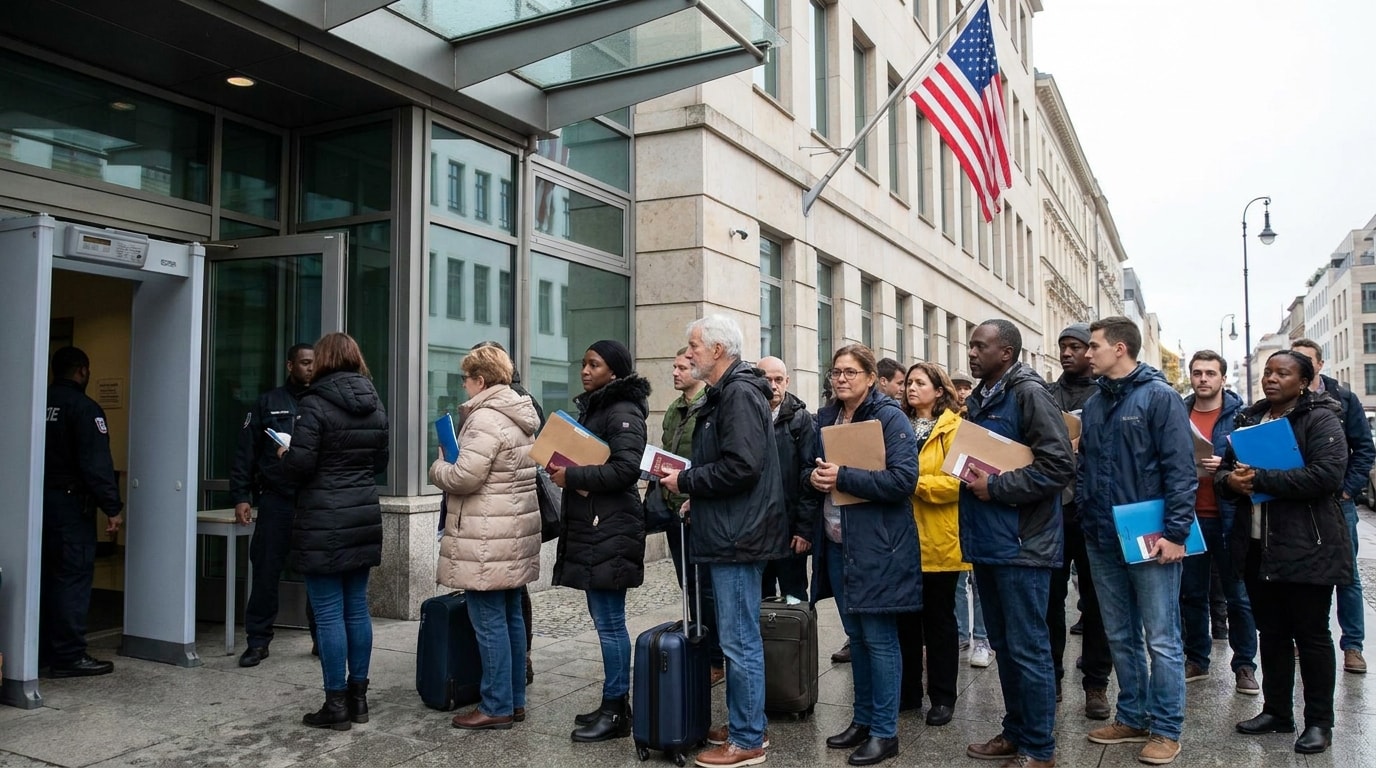
In Southeast Asia, the rule applied to immigration applicants from Cambodia, Laos and Myanmar as well as Thailand. The ruling also cancels any visa refusal that rested solely on the challenged policy, which took effect in January, creating the possibility that thousands of previously denied applications may have to be reconsidered.
Plaintiffs included families and professionals
The plaintiffs included six US citizens who said the visa ban prevented relatives in Ghana, Jamaica, Guatemala and Ethiopia from receiving visas to enter the United States. Other plaintiffs were five professionals from Colombia, among them an engineer, an architect and a Harvard-trained endocrinologist, who received denial notices referring to the Trump administration’s policy.
Vargas distinguished the case from the Supreme Court’s 2018 decision upholding the third version of President Donald Trump’s travel ban during his first term. That earlier case concerned the president’s broad authority to restrict entry into the United States by foreign nationals from several Muslim-majority countries, while the present case addressed the issuance of visas, she wrote.
Advocates welcome decision as administration weighs options
Joanna Cuevas Ingram, a senior staff attorney at the National Immigration Law Center, said:
Today’s decision is a significant victory for the hundreds of thousands of families across the world whose lives were thrown into chaos by this administration’s unlawful and discriminatory visa ban,
The National Immigration Law Center was one of the nonprofit groups and private firms representing the plaintiffs. The Justice Department and the White House did not immediately respond to requests for comment.
The administration may appeal Vargas’ ruling to the 2nd US Circuit Court of Appeals. Vargas was appointed by President Joe Biden.
For travellers and families awaiting immigrant visas, the ruling may reopen cases denied under the January policy and could reshape how US consular officers assess public-charge concerns for applicants from affected countries.
Sources