
Slovenia ETIAS Travel Authorisation
Slovenia is ringed by Schengen neighbors, so its ETIAS and biometric checks happen at just five external border points. Pre-order now and we submit as soon as the EU opens applications.
Why Slovenia's ETIAS Checks Happen in So Few Places
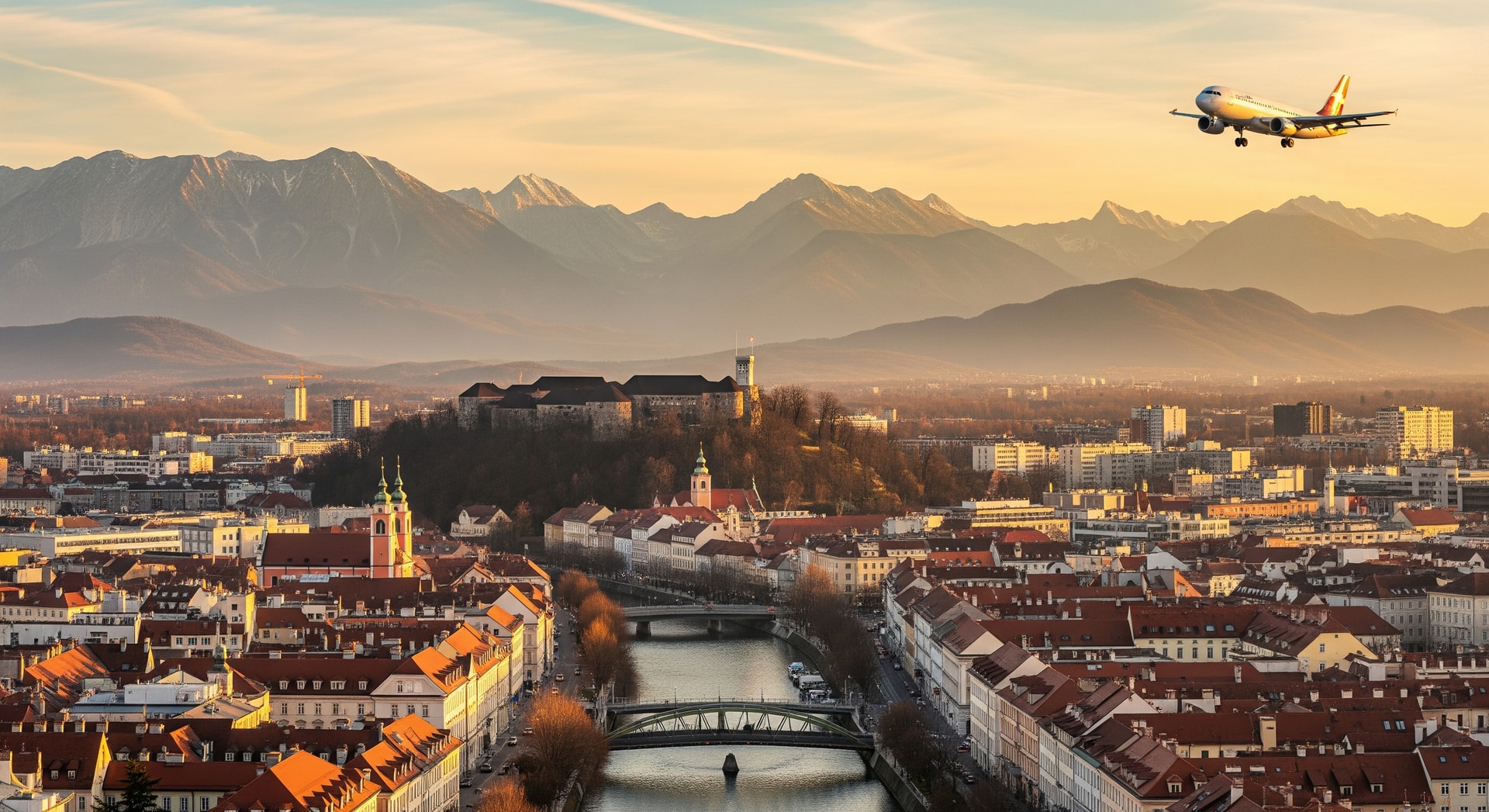
Slovenia is unusual among the 30 ETIAS countries. Italy, Austria, Hungary and Croatia surround it, and all four are Schengen members, so Slovenia has no external Schengen land border at all. Its external border consists of five crossing points: three airports at Ljubljana-Brnik, Maribor-Slivnica and Portoroz, and two seaports at Koper and Piran.
For a visa-exempt traveler this has a practical consequence. If you fly into Ljubljana, your ETIAS and your biometric registration are handled there. If you arrive by road from Trieste, Villach, Zagreb or Lendava, no check happens at the Slovenian line, because you entered the Schengen area somewhere else. Your authorisation still has to be valid, but the officer who looked at it may have been Italian, Austrian, Hungarian or Croatian. Slovenia's own border with Croatia stopped being an external one on 1 January 2023.
ETIAS itself is not running yet. The European Commission states plainly that the system is not in operation and that no applications are being collected, and the EU's own travel information portal now gives no target date at all. Treat any confident launch date you see elsewhere with caution, because the timetable has already moved more than once. When it does start, ETIAS will be an authorisation rather than a visa, valid for three years or until your passport expires, allowing multiple entries for stays of up to 90 days in any 180-day period, and never a guarantee of entry.
Who Needs ETIAS for Slovenia?
Who Needs It
- Nationals of visa-exempt countries flying into Ljubljana Joze Pucnik Airport (LJU), Maribor (MBX) or Portoroz (POW)
- Cruise and ferry passengers arriving at the Port of Koper or at Piran
- Visa-exempt travelers who enter the Schengen area elsewhere and continue to Slovenia by road or rail
- Tourists, business visitors and people visiting family for stays of up to 90 days in any 180-day period
- Applicants under 18 and over 70, who do not pay the application fee but still have to apply
Who Is Exempt
- EU, EEA and Swiss citizens exercising free movement rights
- Holders of a valid Schengen visa, which already covers short stays
- Holders of a residence permit or long-stay visa issued by Slovenia or another Schengen country
- Nationals who require a Schengen visa and apply for one instead
Slovenia's Five External Border Points and What Happens There
Passport Age and Validity
Your passport must have a date of issue less than 10 years before you arrive and must remain valid for at least three months after the day you plan to leave the Schengen area. Slovenian officers apply the standard Schengen rule, so a passport that is still in date can still be refused on the ten-year test. See the Slovenia entry requirements guidance.
ETIAS Has Not Launched
There is no way to obtain a Slovenian ETIAS today. The European Commission states the system is currently not in operation and no applications for travel authorisations are collected at this point, and no start date has been confirmed. The launch timetable has already moved more than once. Any site claiming to hand you a finished authorisation right now is misrepresenting what it can do. The only official EU information portal is travel-europe.europa.eu, which currently states only that the system is not in operation.
Where Your Biometrics Are Taken
The Entry/Exit System records fingerprints and a facial image at external Schengen borders. In Slovenia that means the airports at Ljubljana-Brnik, Maribor-Slivnica and Portoroz and the seaports of Koper and Piran. It started progressively on 12 October 2025 and became fully operational on 10 April 2026, at which point it became a mandatory part of border control for third-country nationals. See the Slovenian government notice.
Registering Where You Sleep
Slovenia requires visitors to be registered with the police within three days of arrival. Hotels, hostels, campsites and registered apartments handle this for you through the national tourism reporting system, so most travelers never notice it. If you stay in a private home that is not a registered accommodation provider, the registration still has to be made. Failure to register can result in a fine. See the official travel advice.
Onward Travel, Funds and Internal Border Checks
At the external border you may be asked to show a return or onward ticket and to prove you have enough money for your stay. Note that Italy and Austria have reintroduced temporary checks at their borders with Slovenia, and when arriving from Croatia or Hungary you should use crossings open to all passengers. Controls at the Slovenia-Croatia border were lifted on 1 January 2023, as described in the government announcement.
Getting the Most Out of a Short Stay in Slovenia
Slovenia packs the Julian Alps, karst caves, a short Adriatic coast and a compact capital into a country you can cross in a few hours, which makes it a common addition to a longer Schengen trip.
- Ljubljana Joze Pucnik Airport (LJU) is the main gateway, but many visitors fly into Venice, Trieste, Graz or Zagreb and drive in. If you do that, your Schengen entry check and your biometric registration happen abroad, not in Slovenia.
- Lake Bled and Postojna Cave absorb the largest share of day-trippers. Cave tours run on fixed departure times and sell out in summer, so reserve a slot rather than turning up.
- Triglav National Park covers the Julian Alps and the upper Soca Valley. Mountain huts generally open from late June to late September, and high passes can close outside that window.
- The coast is short. Piran, Portoroz, Izola and Koper sit within a few miles of one another, and Koper doubles as the cruise port and an external Schengen border point.
- The Ljubljana Festival runs from late June into September, filling the Krizanke open-air theatre and other city venues with concerts and opera.
- A motorway vignette is required to drive on Slovenian highways. Buy one before you join the motorway, including on short hops in from Italy or Austria.
- Carry your passport. Italy and Austria have reintroduced checks at their Slovenian borders, so you may be asked for it on a road you expected to be check-free.
Frequently Asked Questions
Be Ready Before Slovenia's Borders Switch On
Pre-order now and we prepare your ETIAS application, submit it as soon as the EU begins accepting them, and refund you in full if we cannot file it.
Pre-order ETIASSlovenia visa requirements by nationality
Sources & References
- Gradual introduction of the new Entry/Exit System (EES) at the external Schengen border
- Changes to border crossing between Slovenia and Croatia after 1 January 2023
- Foreign travel advice: Slovenia - entry requirements
- European Travel Information and Authorisation System (ETIAS)
- Entry/Exit System (EES)
- Schengen area
- ETIAS - official EU travel information portal
- I Feel Slovenia - official tourism portal
Information last reviewed: Aug 30, 2026