Simple 4-step process — most applications approved within 5-15 business days
1
Complete the online application
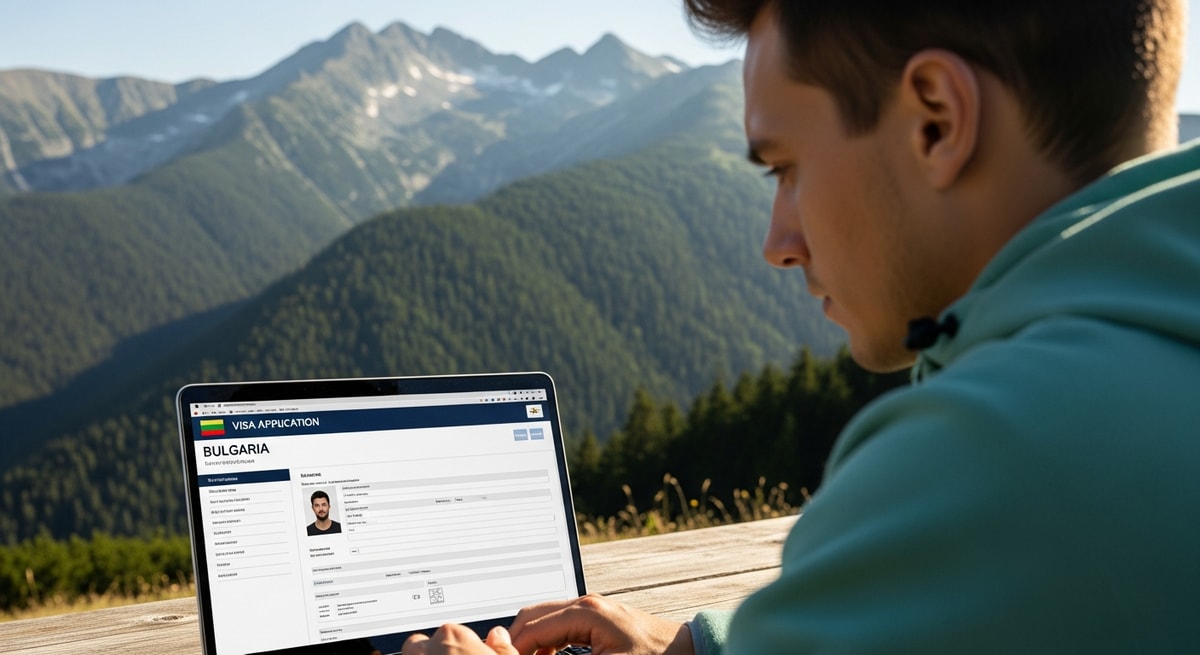
Fill out our comprehensive application form with your personal details, travel dates, and purpose of visit. Our smart validation system checks each field in real-time, ensuring accuracy and catching common errors before submission to Bulgarian consular authorities.
2
Upload your documents
Submit your passport scan (bio page clearly visible with at least 3 months validity beyond your planned stay), recent passport photograph meeting Bulgarian specifications, travel insurance, proof of accommodation, and financial documentation. Our specialists verify everything meets Bulgarian visa requirements.
3
We process your application
Your verified application is prepared and submitted through Bulgarian consular channels. We monitor processing status continuously and keep you informed via email and SMS notifications at every stage of the approval process.
4
Receive your Bulgaria visa
Once approved, your visa sticker will be affixed to your passport at the designated visa application center or embassy. Present your passport with the valid visa at Bulgarian immigration checkpoints. Dobra doshli — welcome to Bulgaria!
0+Happy Travelers
0/7Expert Support
0%+Approval Rate
0Customer Rating
Bulgaria Visa Requirements & Entry Information
Schengen/EU Entry
Up to 90 days
Visa-free for Schengen visa holders and EU citizens
Short-Stay Visa (C)
Up to 90 days
Tourism, business visits, and family reunions
Long-Stay Visa (D)
Up to 1 year
Work, study, or extended business purposes
Transit Visa
Up to 5 days
Airport or territorial transit through Bulgaria
Essential Requirements
📘Passport valid 3+ months beyond stay with 2 blank pages
📷Recent passport photo 35x45mm with white background
🏥Travel insurance with minimum 30,000 EUR coverage
🏨Hotel reservation or invitation letter from host
💰Proof of funds: 50 EUR per day of stay
✈️Round-trip flight reservation or travel itinerary
Visa-Free Entry & Schengen Recognition
Bulgaria offers accessible entry options for many international travelers, particularly those holding valid Schengen visas or residence permits. As an EU member state working toward full Schengen integration, Bulgaria maintains visa policies that facilitate tourism and business travel.
Schengen Visa Holders
Travelers with valid Schengen visas (multiple-entry) or Schengen residence permits can enter Bulgaria without obtaining a separate Bulgarian visa. This arrangement allows stays of up to 90 days within any 180-day period, making Bulgaria an excellent addition to European itineraries. The same applies to holders of Cyprus and Romania residence permits due to bilateral agreements.
EU/EEA Citizens
Citizens of European Union and European Economic Area countries enjoy freedom of movement and can enter Bulgaria with just a valid national ID card or passport. No visa is required regardless of the purpose or duration of stay, though registration with local authorities may be required for stays exceeding 90 days.
Visa-Free Nationalities
Bulgaria follows EU visa policy, granting visa-free access for short stays to citizens of over 60 countries including the United States, Canada, Australia, United Kingdom, Japan, and South Korea. These travelers may stay up to 90 days within a 180-day period for tourism, business meetings, or visiting family.
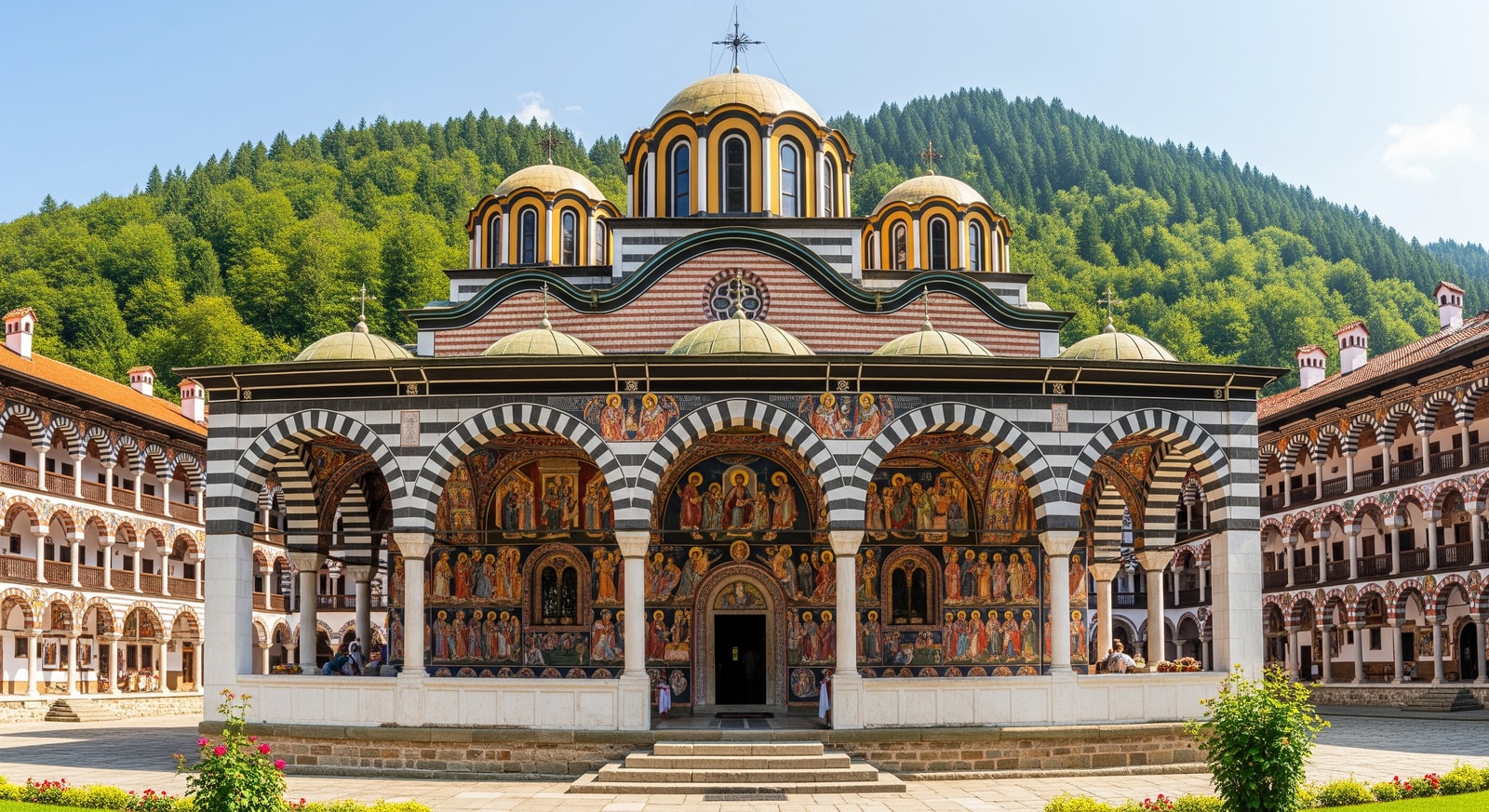
Rila Monastery — Bulgaria's most famous UNESCO World Heritage Site
Short-Stay & Long-Stay Visas
Short-Stay Visa (Type C)
The Type C visa is required for nationals who do not qualify for visa-free entry and wish to visit Bulgaria for up to 90 days. This visa covers various purposes:
• Tourism: Exploring Bulgaria's Black Sea resorts, mountain destinations, and historic cities
• Business: Attending meetings, conferences, negotiations, or establishing business contacts
• Family visits: Visiting relatives or friends residing in Bulgaria
• Cultural/Sports events: Participating in or attending organized events
Type C visas can be issued as single, double, or multiple-entry, with validity periods up to 5 years for frequent travelers with proven travel history.
Long-Stay Visa (Type D)
The Type D national visa is required for stays exceeding 90 days and serves as the entry document for those planning to reside in Bulgaria. Categories include:
• Employment: Workers with job offers from Bulgarian employers
• Education: Students enrolled in Bulgarian educational institutions
• Family reunification: Joining family members legally residing in Bulgaria
• Retirement: Pensioners with sufficient income and health insurance
• Investment: Entrepreneurs making qualifying investments in Bulgaria
Plovdiv Roman Theatre — One of the world's best-preserved ancient amphitheaters
Requirements & Application Process
Document Requirements
Bulgarian visa applications require comprehensive documentation. All applicants must provide:
• Valid passport: At least 3 months validity beyond intended stay with minimum 2 blank pages
• Application form: Completed and signed official Bulgarian visa application
• Passport photographs: Two recent photos (35x45mm, white background, taken within last 6 months)
• Travel insurance: Coverage of minimum 30,000 EUR valid for all Schengen states and Bulgaria
• Proof of accommodation: Hotel bookings, rental agreement, or notarized invitation from host
• Financial means: Bank statements showing 50 EUR per day of intended stay (minimum 500 EUR)
• Travel itinerary: Round-trip flight reservations and detailed travel plans
• Employment proof: Employment letter, business registration, or student enrollment confirmation
Visa Fees
Standard short-stay visa fees are approximately 80 EUR for adults and 40 EUR for children aged 6-12. Children under 6 and certain categories (students, researchers) may qualify for reduced fees or exemptions.
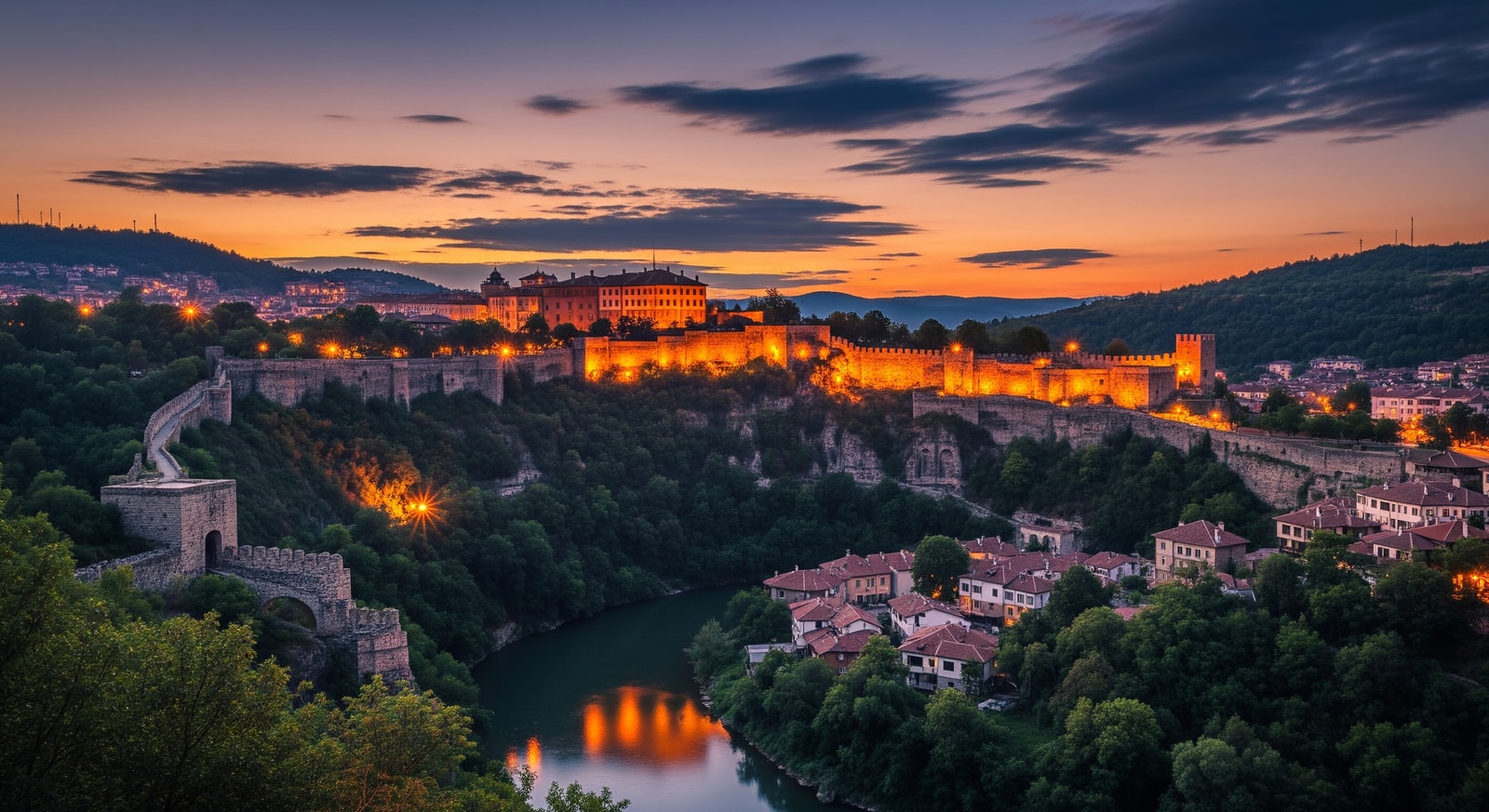
Tsarevets Fortress — Medieval capital of the Second Bulgarian Empire
Entry Points & Travel Information
International Airports
Bulgaria's main international gateways include Sofia Airport (SOF), the country's largest and busiest, serving most European and some intercontinental routes. Burgas Airport (BOJ) and Varna Airport (VAR) handle significant seasonal traffic during summer, serving Black Sea coastal resorts. Plovdiv Airport (PDV) offers limited international connections.
Land Border Crossings
Bulgaria shares borders with five countries: Romania (north), Serbia (west), North Macedonia (southwest), Greece (south), and Turkey (southeast). Major border crossings include Kapitan Andreevo (Turkey), Kulata (Greece), and Kalotina (Serbia). EU/EEA citizens can use e-gates at major crossings; others should expect passport control.
Processing Times
Standard visa processing takes 15 calendar days from application submission. During peak season (May-September) or for complex cases, processing may extend to 30-45 days. Express processing is available at some consulates for urgent travel needs.
Important Tips
• Apply at least 4-6 weeks before planned travel during peak season
• Ensure all documents are translated into Bulgarian or English by certified translators
• Book refundable flights and accommodation until visa approval
• Keep copies of all submitted documents for immigration verification
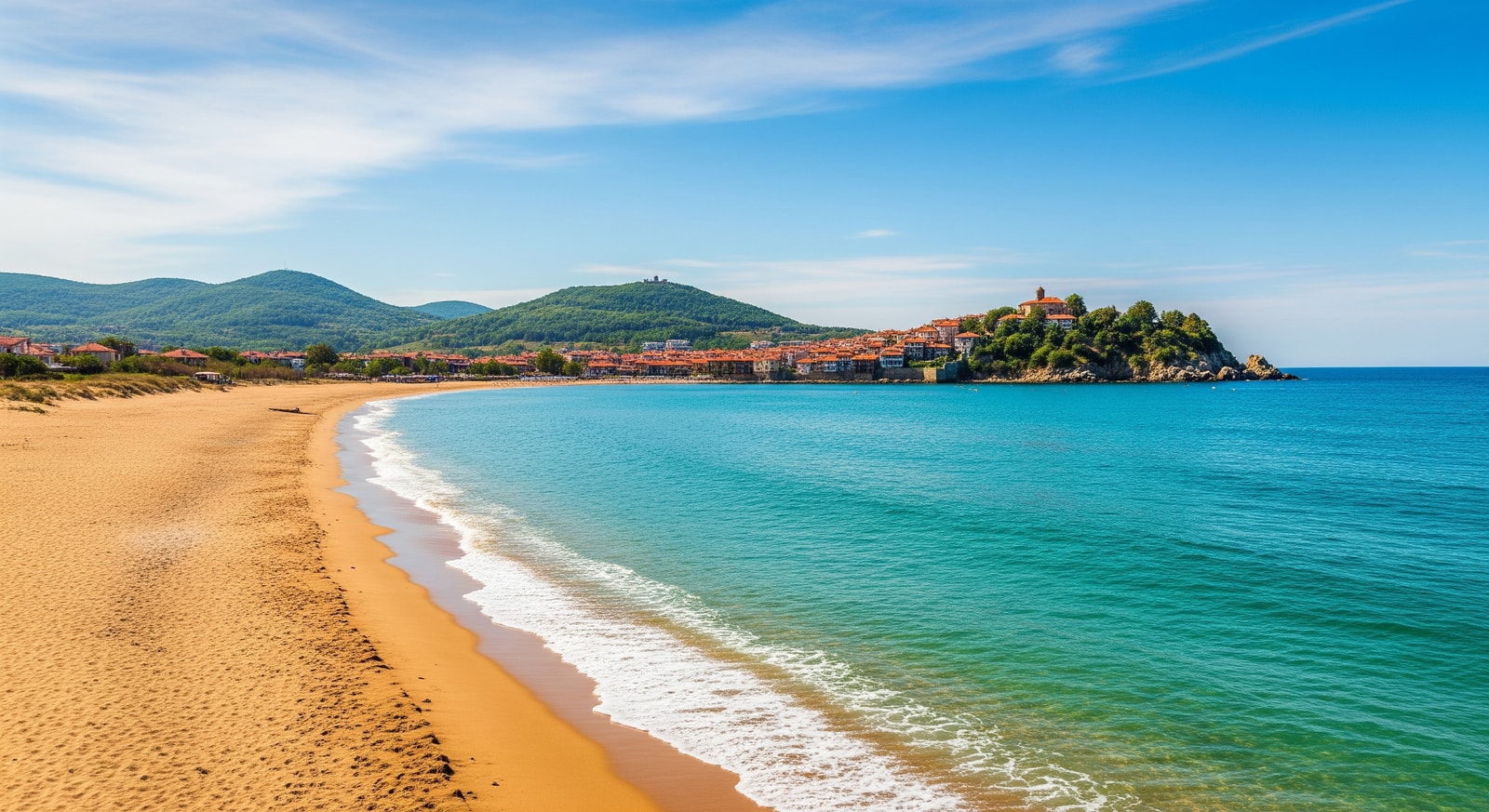
Bulgarian Riviera — Pristine Black Sea beaches and historic coastal towns
Why Choose DoVisa?
See the difference between applying yourself vs using our expert service
Travelers to Bulgaria rated this product 4.7 out of 5 based on 13 reviews.
4.7/ 5
Based on 13 verified reviews
Filter by rating
Elena K.Jan 18, 2026
"Excellent service! My Bulgarian visa was approved in just 10 days. The document checklist was incredibly helpful and support answered all my questions about Schengen recognition."
Mark T.Jan 12, 2026
"Used DoVisa for my business trip to Sofia. Very professional service and clear communication throughout the process. Will definitely use again!"
Priya S.Jan 5, 2026
"Good experience overall. Processing took a bit longer than expected but the team kept me informed. Visa approved without issues."
James W.Dec 29, 2025
"Straightforward process and helpful customer service. They caught a mistake in my application before submission which saved me a lot of hassle."
Sofia M.Dec 20, 2025
"Applied for a multiple-entry visa to visit family in Bulgaria. DoVisa made the complex paperwork manageable. Highly recommend!"
Ahmed R.Dec 14, 2025
"Reliable service. The website was easy to use and I appreciated the tracking feature. Would have liked faster email responses though."
Laura B.Dec 6, 2025
"Planning a Black Sea holiday and needed a visa quickly. DoVisa delivered exactly what they promised. Great service!"
Michael H.Nov 28, 2025
"Used the service for my ski trip to Bansko. Application was smooth but I wish there were more payment options. Visa approved on time."
Nina V.Nov 15, 2025
"DoVisa helped me understand that my Schengen visa was sufficient for Bulgaria. Saved me money and time. Excellent guidance!"
Carlos D.Oct 30, 2025
"Third time using DoVisa, always reliable. Bulgaria visa processed smoothly alongside my Romania trip planning."
Rachel N.Oct 18, 2025
"Good service for a fair price. The document upload system worked well and my visa arrived before my travel date."
Daniel F.Sep 25, 2025
"Applied for a long-stay visa for my studies in Plovdiv. DoVisa guided me through every step of the process!"
Hannah L.Aug 14, 2025
"Fantastic experience from start to finish. The team was knowledgeable about Bulgarian visa requirements and very responsive."
Bulgaria Visa FAQs
What types of visas are available for Bulgaria?
Bulgaria offers several visa categories to accommodate different travel purposes. Short-stay visas (Type C) allow stays up to 90 days within a 180-day period for tourism, business visits, family reunions, cultural events, or medical treatment. Long-stay visas (Type D) are required for stays exceeding 90 days, including employment, education, family reunification, retirement, or investment purposes. Transit visas permit passage through Bulgaria for up to 5 days. Additionally, Bulgaria recognizes valid Schengen visas and residence permits for short stays, meaning Schengen visa holders can enter Bulgaria without a separate Bulgarian visa.
Do I need a visa to visit Bulgaria?
Whether you need a visa depends on your nationality and the purpose and duration of your visit. EU/EEA citizens can enter Bulgaria freely with just a national ID card or passport. Visa-free nationalities including US, UK, Canadian, Australian, Japanese, and South Korean citizens can visit for up to 90 days without a visa. Schengen visa holders with valid multiple-entry Schengen visas or residence permits can also enter Bulgaria visa-free for short stays. Citizens of countries not on the visa-free list must apply for a Bulgarian visa before travel. Use our visa checker tool to determine your specific requirements based on your nationality.
Can I enter Bulgaria with a Schengen visa?
Yes, Bulgaria recognizes valid multiple-entry Schengen visas and Schengen residence permits for visa-free entry. If you hold a valid Schengen visa with remaining entries, you can enter Bulgaria for stays up to 90 days within any 180-day period. The same applies to holders of valid Cyprus and Romania visas or residence permits due to bilateral agreements. However, single-entry Schengen visas that have already been used cannot be used for Bulgaria entry. Also note that a Bulgarian visa does not grant access to the Schengen Area — if you plan to visit Schengen countries, you'll need a separate Schengen visa.
What documents are required for a Bulgaria visa application?
Bulgarian visa applications require comprehensive documentation. Essential documents include: valid passport (at least 3 months validity beyond your stay with 2 blank pages), completed visa application form, two recent passport photos (35x45mm, white background), travel medical insurance (minimum 30,000 EUR coverage), proof of accommodation (hotel bookings or invitation letter), proof of sufficient funds (50 EUR per day, minimum 500 EUR), round-trip flight reservations, and proof of employment or student status. Additional documents may be required depending on visa type — business visas require company invitation letters, student visas need enrollment confirmation, and family visit visas require proof of relationship and host's legal status in Bulgaria.
How long can I stay in Bulgaria with a tourist visa?
The standard short-stay visa (Type C) allows stays of up to 90 days within any 180-day period. This is calculated on a rolling basis, meaning you cannot simply exit and re-enter to reset your allowed stay. Multiple entries are possible if you have a multiple-entry visa, but total days in Bulgaria (plus any other non-Schengen EU countries recognizing your visa) cannot exceed 90 days in any 180-day window. For longer stays, you must apply for a long-stay visa (Type D), which can be valid for up to 1 year and is typically a prerequisite for obtaining a Bulgarian residence permit.
Can I extend my Bulgaria visa?
Short-stay visa extensions are possible but limited. Type C visa extensions may be granted in exceptional circumstances such as force majeure, humanitarian reasons, or serious personal reasons that prevent departure. Extensions are processed by the Migration Directorate of the Ministry of Interior and must be requested before your current visa expires. Total stay cannot exceed 90 days even with an extension. For longer stays, you should apply for a Type D long-stay visa from outside Bulgaria. If you hold a Type D visa, you can apply for a residence permit within Bulgaria, which would allow extended legal stay. Note that overstaying your visa can result in fines, deportation, and future entry bans.
Can I work in Bulgaria with a tourist visa?
No, tourist and short-stay visas explicitly prohibit employment in Bulgaria. Any form of paid work, including freelance activities for Bulgarian clients, requires a Type D work visa and subsequent work permit. The process typically involves: obtaining a job offer from a Bulgarian employer, the employer applying for work authorization, and then you applying for the Type D visa at a Bulgarian embassy. Digital nomads working remotely for non-Bulgarian employers exist in a legal gray area similar to other EU countries. Bulgaria has been considering a digital nomad visa program, but as of current regulations, long-term remote work requires proper visa authorization. Violating work restrictions can result in deportation and entry bans.
Do I need to print my Bulgaria visa?
Bulgarian visas are typically issued as visa stickers affixed directly to your passport, not as electronic documents you print yourself. During the application process, you'll submit your passport to the embassy, consulate, or visa application center, and it will be returned to you with the visa sticker attached upon approval. You must present your passport with the visible visa sticker at Bulgarian border control. Some documentation should be carried in printed form during travel, including your travel insurance certificate, accommodation confirmations, return flight itinerary, and proof of funds — immigration officers may request these at entry points.
How long does Bulgaria visa processing take?
Standard processing time for Bulgarian short-stay visas is 15 calendar days from the date of application submission. However, actual processing times can vary. During peak travel season (May through September) or holiday periods, processing may take up to 30 days. Complex cases requiring additional verification or consultation with Bulgarian authorities may take up to 45 days. Long-stay visa (Type D) applications typically require 30-45 days for processing. We recommend applying at least 4-6 weeks before travel to account for potential delays. Some Bulgarian embassies offer expedited processing for urgent cases at additional cost.
What if my Bulgaria visa application is rejected?
If your visa application is rejected, you'll receive a written notification stating the grounds for refusal. Common rejection reasons include: insufficient proof of funds, incomplete documentation, doubts about travel purpose, inadequate travel insurance, previous immigration violations, or concerns about return intentions. You have the right to appeal the decision within specified timeframes (typically 14-30 days depending on the issuing authority). Appeals are submitted in writing to the relevant Bulgarian diplomatic mission or the Ministry of Foreign Affairs. Alternatively, you can reapply with improved documentation addressing the stated concerns — there's no mandatory waiting period for reapplication. DoVisa offers guidance on strengthening reapplications and provides refunds for service fees if rejection results from our processing errors.
What is the best time to visit Bulgaria?
Bulgaria offers distinct experiences throughout the year. Summer (June-August) is ideal for Black Sea beach resorts like Sunny Beach, Golden Sands, and Nessebar, with temperatures reaching 28-35°C. Expect higher prices and crowds at coastal areas. Spring (April-May) and autumn (September-October) offer pleasant weather (15-25°C), fewer tourists, and ideal conditions for exploring Sofia, Plovdiv, and cultural sites like Rila Monastery. Rose Valley blooms in May-June during the famous Rose Festival. Winter (December-March) brings excellent skiing at Bansko, Borovets, and Pamporovo — Bulgaria offers some of Europe's most affordable ski resorts with good snow conditions. Year-round, Bulgaria's cities offer rich cultural experiences, excellent cuisine, and warm hospitality.
Do I need travel insurance for Bulgaria?
Yes, travel medical insurance is mandatory for Bulgaria visa applications. Your insurance must meet these requirements: minimum coverage of 30,000 EUR for medical emergencies and repatriation, validity throughout your entire stay in Bulgaria, and coverage for all EU member states (since Bulgaria follows Schengen-type requirements). The policy must cover emergency medical treatment, hospitalization, and emergency medical evacuation. For visa-free travelers, insurance isn't technically mandatory at entry, but it's strongly recommended — Bulgarian healthcare is affordable but costs add up for tourists without coverage. Ensure your policy covers your planned activities; standard policies may exclude adventure sports like skiing or hiking.
What are the main entry points into Bulgaria?
Bulgaria has several international entry points. By air: Sofia Airport (SOF) is the main hub with connections throughout Europe and beyond. Varna Airport (VAR) and Burgas Airport (BOJ) serve the Black Sea coast with heavy summer traffic. Plovdiv Airport (PDV) has limited international flights. By land: Major border crossings include Kapitan Andreevo and Lesovo (Turkey), Kulata and Ilinden (Greece), Kalotina and Vrashka Chuka (Serbia), Gyueshevo and Stanke Lisichkovo (North Macedonia), and Ruse, Vidin, and Silistra bridges (Romania). By sea: Varna and Burgas ports receive cruise ships and ferries. Border formalities vary by nationality — EU/EEA citizens can use e-gates at major crossings; others should expect passport control and possible document verification.
Is Bulgaria part of the Schengen Area?
Bulgaria is an EU member state since 2007 but is not yet a full Schengen member. However, Bulgaria has been approved for Schengen air and sea border controls as of March 2024, with land border integration expected to follow. Currently, this means: Schengen visa holders can enter Bulgaria for short stays (up to 90 days), but a Bulgarian visa does not grant access to Schengen countries. If you plan to visit both Bulgaria and Schengen countries, you'll need visas for both (unless your nationality is visa-exempt for both). When traveling between Bulgaria and Schengen states, expect border controls at airports. Full land border integration is anticipated, which will simplify travel once implemented.
What currency is used in Bulgaria and how much money should I bring?
Bulgaria uses the Bulgarian Lev (BGN), pegged to the Euro at approximately 1.96 BGN = 1 EUR. For visa purposes, you must demonstrate financial means of approximately 50 EUR (100 BGN) per day of your stay, with a minimum of 500 EUR. Daily budgets vary by travel style: budget travelers can manage on 50-80 BGN (25-40 EUR) per day for hostels and basic meals; mid-range travelers should budget 150-250 BGN (75-125 EUR) for comfortable hotels and restaurants; luxury experiences run 400+ BGN (200+ EUR) daily. Payment methods: Cards are widely accepted in cities and tourist areas, but carry cash for smaller establishments, rural areas, and markets. ATMs are readily available in all towns. Euros are occasionally accepted in tourist areas but at unfavorable rates.
Can I travel to neighboring countries with a Bulgaria visa?

A Bulgarian visa has limited use for regional travel. Bulgaria, Romania, and Cyprus have mutual recognition agreements — a valid Bulgarian visa allows entry to these countries for the same conditions (tourism, business, etc.) and within your 90-day limit. However, a Bulgarian visa does not permit entry to Schengen countries (Greece is Schengen; Serbia, North Macedonia, and Turkey have separate visa requirements). For multi-country Balkan trips, check visa requirements for each destination separately. If visiting Greece (Schengen) and Bulgaria, having a valid Schengen visa is more practical as it covers Greece and is accepted by Bulgaria. Plan your itinerary carefully to ensure you have appropriate authorization for each country you wish to visit.
Still have questions?
Our team is here to help 24/7
Get Visa Tips & Exclusive Deals
Join 1,000+ travelers. No spam, unsubscribe anytime.
Ready to Discover Bulgaria?
Ancient ruins, mountain adventures, and Black Sea beaches await your exploration