Certified Anguilla Document Translation
Professional certified translations of Anguillian documents accepted by USCIS, the UK Home Office, Canada IRCC, and immigration authorities worldwide. Birth certificates, marriage records, court documents, and corporate filings translated with full certification and apostille coordination.
TrustpilotSelect Languages
Drag & drop your documents here
or
PDF, JPEG, PNG, WebP — Max 10MB per file. Word documents: please save as PDF first.
Certified translators · Accepted by governments, courts & universities worldwide · View sample
Select a destination country to view pricing
How Anguilla Certified Translation Works
Submit Your Documents Securely
Upload clear scans of your Anguillian documents through our encrypted portal. We accept PDF, JPEG, and PNG formats. Our intake specialists review each upload for legibility before translation begins. Documents issued by the Anguilla Civil Registry, the Magistrate's Court, the Eastern Caribbean Supreme Court (Anguilla), the Financial Services Commission, and other Anguillian government bodies are all accepted. Most Anguillian documents are in English, but we handle documents containing legal terminology, official stamps, and handwritten entries in older registry records.
Professional Translator Assignment
Your documents are matched with a translator experienced in the specific document type. For Anguillian vital records — birth, marriage, and death certificates issued by the Civil Registry — we assign translators familiar with British Overseas Territory administrative conventions and the Eastern Caribbean legal framework. For documents requiring translation into languages other than English, such as Spanish, French, German, or Portuguese, translators with expertise in Anguillian legal and institutional terminology are selected.
Translation & Quality Review
The assigned translator produces your certified translation with a formal statement of accuracy, professional credentials, signature, and date. A second qualified linguist reviews the translation for terminology accuracy, proper rendering of Anguillian legal and administrative terms, and completeness. For English-language Anguillian documents being certified for use abroad, the certification statement confirms the document's content and authenticity. Every translation meets the standards required by USCIS, the UK Home Office, Canada IRCC, and Australian immigration authorities.
Delivery with Full Certification
Receive your certified translation as a high-resolution PDF for immediate use, with the original signed hard copy shipped via tracked international courier. For documents requiring apostille certification, DoVisa coordinates the process through the Registrar of the Eastern Caribbean Supreme Court (Anguilla), which is Anguilla's competent authority for issuing apostilles under the Hague Apostille Convention. Standard apostille processing typically takes 5-10 business days, producing a certificate recognized in all 125+ Convention member states.
Anguilla Translation Service Specifications
Popular Language Pairs
We support all languages — 100+ language pairs available for Anguilla documents.
Common Documents
- Birth certificates (Anguilla Civil Registry)
- Marriage certificates
- Death certificates
- Divorce decrees and court orders
- Police clearance certificates
- Passports and identity documents
- Academic transcripts and diplomas
- Company incorporation documents (Financial Services Commission)
- Powers of attorney
- Land registry documents
Turnaround Time
Certification Details
Anguilla Translation Requirements & Regulatory Framework
Embassy Acceptance
Notarization Process
Apostille Information
Legal Framework
Common Scenarios for Anguilla Document Translation
US Immigration with Anguillian Documents
Anguillians emigrating to the United States may require certified translations of birth certificates, marriage records, police clearances, and academic credentials for USCIS family-based petitions, adjustment of status, and naturalization applications. While Anguillian documents are in English, certified translations into other languages are needed when Anguillian nationals hold supporting documents from non-English-speaking countries. DoVisa ensures consistent formatting and certification across all submitted documents.
UK Visa & Settlement Applications
As a British Overseas Territory, Anguilla has strong ties to the United Kingdom, and the UK Home Office regularly processes applications involving Anguillian documents for family reunification, settlement, and British citizenship confirmation. While English-language documents may not require translation, certified copies with professional attestation can be requested. DoVisa provides certified translations for Anguillians submitting supporting non-English documents under UK visa routes.
Academic Credential Evaluation
Anguillian academic transcripts and diplomas submitted to credential evaluation services such as WES and NACES members in the United States, or UK ENIC in the United Kingdom, may require certified translations when applying to institutions outside English-speaking countries. Our translators are familiar with Anguilla's educational institutions and their qualifications, ensuring accurate rendering of academic terminology and grading systems.
Offshore Financial & Corporate Documents
Anguilla is a recognized offshore financial centre, and the Financial Services Commission (FSC) oversees a substantial registry of international business companies (IBCs), trusts, and foundations. Corporate documents — including certificates of incorporation, memoranda of association, articles, and trust deeds — frequently require certified translation for use with overseas partners, banks, regulatory bodies, and foreign courts. DoVisa handles Anguillian financial and corporate documentation with precision.
Family Reunification & Marriage Documentation
Anguillian families spread across the Caribbean diaspora, the US, UK, and Canada frequently require translated and certified documents for family-based immigration, spousal visa applications, and international marriage registrations. Commonly translated documents include birth certificates for dependent petitions, marriage certificates for spousal visas, and divorce decrees for remarriage eligibility. DoVisa ensures accurate certification and translation into the destination country's required language.
Legal Proceedings & Court Submissions
International legal proceedings involving Anguillian parties frequently require certified translations of court orders, powers of attorney, probate documents, and land registry records. Anguilla's legal system, operating under the Eastern Caribbean Supreme Court framework, produces documents that may need translation for use in foreign courts, international arbitration proceedings, and estate matters involving beneficiaries in non-English-speaking countries.
Anguilla's Civil Registry and Vital Records System
Anguilla's civil registration system operates under the Civil Registration Act, administered by the Anguilla Civil Registry. As a British Overseas Territory, Anguilla's vital records framework follows the model established under English common law, with compulsory registration of births, marriages, and deaths maintained in centralized registry records. Birth certificates issued by the Civil Registry record the child's full name, date and place of birth, and parents' details. Marriage certificates record both parties' details, the date and location of the ceremony, and the officiating officer's information.
Older Anguillian records — particularly those predating full digitization — may contain handwritten entries that present legibility challenges for translation. DoVisa's translators are experienced with archival Caribbean document formats, ensuring accurate rendering even from older registry entries. Police clearance certificates, issued by the Royal Anguilla Police Force (RAPF), are commonly requested documents for immigration applications and international employment. These certificates confirm criminal history status and are accepted by immigration authorities including USCIS, the UK Home Office, and Canada IRCC when accompanied by certified translation for non-English-speaking destinations.
For international use, Anguillian vital records can be authenticated with an apostille from the Registrar of the Eastern Caribbean Supreme Court (Anguilla). When these documents must be submitted to non-English-speaking countries, DoVisa provides certified translations that accurately render the Civil Registry's formatting conventions and institutional terminology into the required target language.
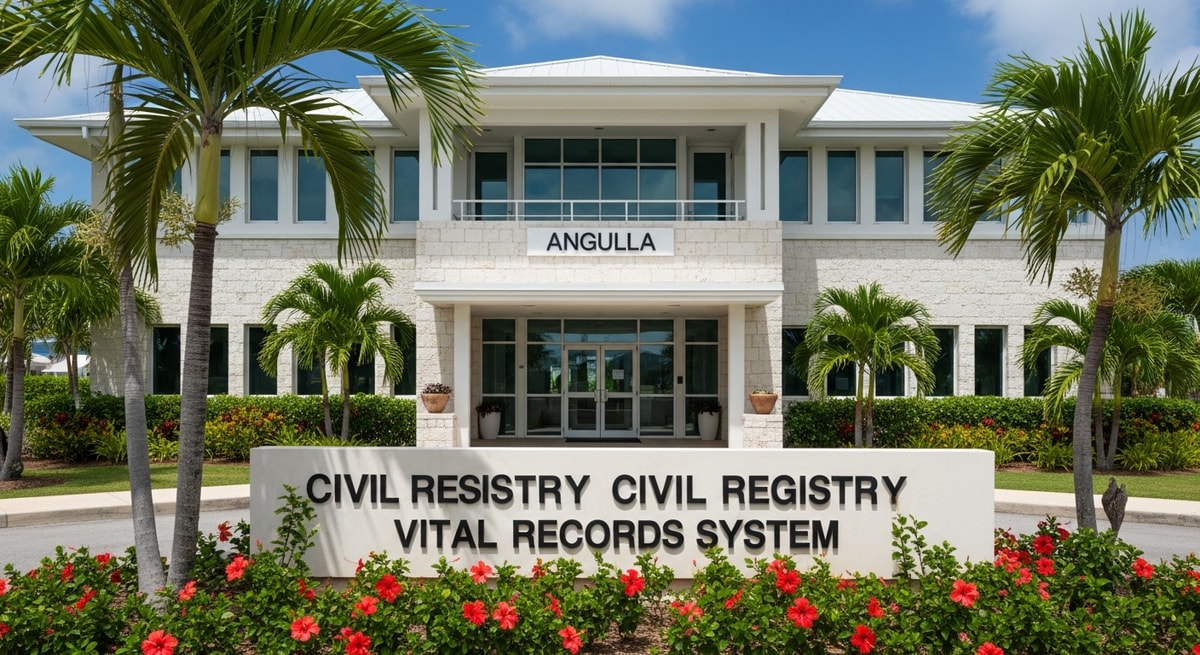
Anguilla's Civil Registry maintains vital records for birth, marriage, and death registration under British Overseas Territory law
Apostille Authentication in Anguilla: Eastern Caribbean Supreme Court
As a British Overseas Territory, Anguilla benefits from the United Kingdom's extension of the Hague Apostille Convention. The competent authority for issuing apostilles for Anguillian public documents is the Registrar of the Eastern Caribbean Supreme Court (Anguilla). The ECSC serves Anguilla as part of the Organisation of Eastern Caribbean States (OECS) superior court structure, covering both the High Court and Court of Appeal jurisdictions.
Apostilles can be affixed to a range of Anguillian public documents, including birth certificates, marriage certificates, death certificates, court orders, notarial acts, and official administrative documents. Documents bearing an ECSC-issued apostille are recognized in all 125+ Hague Convention member states without further consular legalization — a significant advantage for Anguillians who previously needed to complete a multi-step authentication chain through the UK Foreign, Commonwealth and Development Office (FCDO).
DoVisa coordinates the complete apostille process through the ECSC Registry on your behalf. For documents requiring both certified translation and apostille, we manage the entire workflow — from certified translation to apostille coordination and final delivery — ensuring you receive a fully authenticated document package ready for international submission. This is particularly valuable for Anguillian corporate documents from the Financial Services Commission registry, which are frequently required with apostille authentication for international transactions and regulatory submissions.
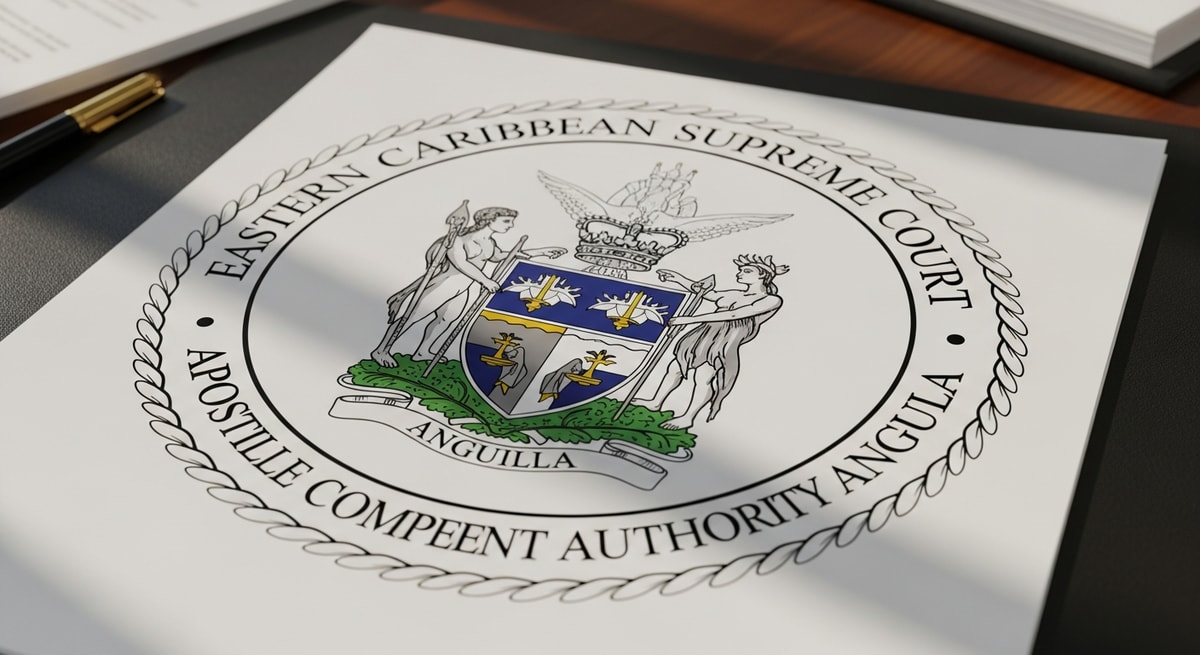
The Registrar of the Eastern Caribbean Supreme Court (Anguilla) is the competent authority for apostille issuance
"My Anguillian birth certificate needed translation into Spanish for a long-stay visa application. DoVisa delivered a clean, accurate certified translation in 4 days. The consulate accepted it without any follow-up queries."
"Needed my Anguilla Civil Registry marriage certificate translated into French for immigration to Canada. IRCC accepted the certified translation on first submission. Very smooth process from upload to delivery."
"Had Anguillian company incorporation documents from the FSC translated into German for a European business partner. The translation handled all the financial and legal terminology correctly. Turnaround was 5 days on standard service."
"Royal Anguilla Police Force clearance and birth certificate translated into Portuguese for my work visa in Brazil. DoVisa also coordinated the ECSC apostille. Everything arrived as a complete authenticated package. Excellent service."
"Birth certificate translation into Italian for a family reunification application. The initial draft had a minor spelling variation in my given name — DoVisa corrected it within hours after I flagged it. Italian authorities accepted the revised translation without issue."
"Anguillian divorce decree translated into Arabic for legal proceedings in the UAE. The certification met the UAE court's requirements. Professional handling of what could have been a complex document — very impressed."
"Academic transcripts from an Anguillian secondary school translated into Japanese for a graduate program application in Tokyo. The university admissions office accepted the certified translation. Good quality and reasonable turnaround."
"My Anguillian birth certificate needed translation into Spanish for a long-stay visa application. DoVisa delivered a clean, accurate certified translation in 4 days. The consulate accepted it without any follow-up queries."
"Needed my Anguilla Civil Registry marriage certificate translated into French for immigration to Canada. IRCC accepted the certified translation on first submission. Very smooth process from upload to delivery."
"Had Anguillian company incorporation documents from the FSC translated into German for a European business partner. The translation handled all the financial and legal terminology correctly. Turnaround was 5 days on standard service."
Anguilla Document Translation FAQs
What types of Anguillian documents can DoVisa translate?
DoVisa translates all types of Anguillian documents including birth certificates, marriage certificates, and death certificates issued by the Anguilla Civil Registry; divorce decrees and court orders from the Eastern Caribbean Supreme Court; police clearance certificates from the Royal Anguilla Police Force; academic transcripts and diplomas; company incorporation documents from the Financial Services Commission; powers of attorney; and land registry documents. All translations are certified for international use.
Are Anguillian document translations certified?
Yes. Every DoVisa translation includes a signed certification statement attesting to the accuracy and completeness of the translation, along with the translator's professional credentials, signature, contact details, and date. Anguilla follows the British common law tradition and does not require sworn translators. Our certified translations meet the requirements of USCIS, the UK Home Office, Canada IRCC, and the Australian Department of Home Affairs.
How long does Anguilla document translation take?
Standard certified translation is delivered within 4-6 business days. Express processing is available for 2-3 business days, and rush delivery within 24 hours is offered for select single-page documents such as birth certificates and marriage certificates. For documents also requiring apostille through the Eastern Caribbean Supreme Court Registry, please allow additional time for apostille processing, which typically takes 5-10 business days.
What languages can Anguillian documents be translated into?
DoVisa translates Anguillian documents from English into over 100 languages. Common language combinations include English to Spanish, French, German, Portuguese, Dutch, Italian, Arabic, Chinese, and Japanese. Since Anguilla's official language is English, most translation requests involve rendering English-language Anguillian documents into the target country's required language for immigration, academic, or business purposes.
Do Anguillian documents need translation for US or UK immigration?
Since Anguilla's official language is English, most Anguillian documents do not require translation for submission to USCIS or the UK Home Office. However, certified translations are required when submitting Anguillian documents to non-English-speaking authorities worldwide. Additionally, if an Anguillian applicant holds supporting documents in languages other than English, those documents will require certified English translation for US or UK immigration submission.
Do I need notarization with my Anguillian document translation?
It depends on the receiving authority. For USCIS, certified translation with a statement of accuracy is sufficient — notarization is not required. For the UK Home Office and Canada IRCC, professional certified translations meet the standard. Some foreign courts, private institutions, or specific government agencies may request notarization as an additional authentication step. Notarization in Anguilla is available through Notaries Public and Commissioners for Oaths. DoVisa can arrange notarization upon request.
Is Anguilla a member of the Hague Apostille Convention?
Yes. As a British Overseas Territory, Anguilla benefits from the United Kingdom's extension of the Hague Apostille Convention. The competent authority for issuing apostilles is the Registrar of the Eastern Caribbean Supreme Court (Anguilla). Anguillian documents bearing an ECSC apostille are recognized in all 125+ Convention member states without further consular legalization. DoVisa coordinates apostille processing through the ECSC Registry on your behalf.
How much does certified Anguillian document translation cost?
DoVisa's Anguillian document translation pricing follows a transparent per-page structure with volume discounts that apply automatically for larger projects. Pricing varies based on document length, the language pair, and the processing speed selected. Express and rush service options are available for time-sensitive projects. Apostille coordination through the ECSC Registry is quoted separately. Upload your documents to receive an instant, detailed quote with no hidden fees.
Can DoVisa translate handwritten Anguillian documents?
Yes. Older Anguillian vital records may contain handwritten entries in cursive script, particularly for births and marriages registered in earlier decades. Our translators are experienced with Caribbean archival document formats. For legibility, we recommend uploading the highest-quality scan possible. If any portion of a handwritten document is illegible, our team will flag it before translation begins and work with you to resolve the issue.
What format will I receive my Anguillian document translation in?
You will receive your certified translation as a high-resolution PDF delivered via email, suitable for immediate submission to immigration authorities, credential evaluation services, and other institutions. The PDF includes the full translation with the translator's certification statement, signature, and credentials. A physical hard copy with original wet signatures is shipped via tracked international courier for authorities that require original documents.
Can DoVisa help with Anguillian offshore company documents?
Yes. Anguilla is a well-established offshore financial centre, and the Financial Services Commission (FSC) maintains a substantial registry of international business companies, trusts, and foundations. DoVisa translates FSC-issued corporate documents — including certificates of incorporation, memoranda and articles of association, certificates of good standing, and trust deeds — into any required target language. We also coordinate apostille authentication through the ECSC Registry for corporate documents requiring international recognition.
Do Anguillian documents need apostille for international use?
An apostille is required when submitting Anguillian public documents to authorities in Hague Convention member states where those documents must be officially authenticated. Common scenarios include submitting Anguillian corporate documents to foreign registries, vital records to foreign courts, and official certificates to government agencies in Convention member countries. For countries not party to the Hague Convention, a traditional consular legalization process applies. DoVisa can advise which authentication path your destination country requires.
Are DoVisa translations accepted by WES and credential evaluation agencies?
Yes. DoVisa provides certified translations accepted by all major credential evaluation services including WES, NACES members in the United States, and UK ENIC in the United Kingdom. Anguillian academic documents submitted for credential evaluation — including transcripts, diplomas, and professional certifications — are translated with the precision and certification format required by these evaluation bodies.
Get Your Anguillian Documents Translated Today
Professional certified translations of Anguilla documents accepted by immigration and legal authorities worldwide