Zambia health declaration guidance now asks international travellers to complete a free online health self-assessment before arrival and carry an individual QR Health Pass for screening.
Zambia’s public health agency is advising international arrivals to complete a free online health declaration before entering the country, generating a QR Health Pass for inspection at airports, land borders and river crossings.
ZNPHI rolls out advance health self-assessment
Travellers heading to Zambia have a new pre-arrival health step to factor into their plans. On October 18, 2026, the Zambia National Public Health Institute, the national public health agency under the Ministry of Health, called on international travellers to submit an online health self-assessment before they reach the country.
The declaration is handled through POE Sentinel, a digital platform intended to reinforce health surveillance at Zambia’s points of entry. By collecting health information before arrival, the system is designed to help officials spot possible public health risks and speed up preliminary screening at the border.
After completing the form, travellers receive a digital health pass in the form of a QR code. Zambian authorities recommend having this QR Health Pass ready to show during arrival formalities.
Free form available in eight languages
The POE Sentinel declaration can be completed on a computer, tablet or smartphone. According to the ZNPHI, the service is free, requires no account registration and does not require travellers to download an app. The institute says the process takes less than two minutes.
The portal currently offers the questionnaire in eight languages: English, French, Spanish, Portuguese, Arabic, Chinese, Russian and Swahili. Users can choose their language when they access the platform.
- Travel details: intended Zambian entry point, expected arrival date, country of departure, transport mode and whether another country was visited in the previous 21 days.
- Personal details: name, date of birth, sex, nationality, passport or other travel document information, phone number, home address, accommodation in Zambia and emergency contact details. An email address is optional.
- Health information: whether the traveller currently feels ill or has symptoms, and whether they may have been exposed in the previous 21 days through contact with a sick person, animals, a healthcare facility or a disease outbreak area.
The arrival date field allows users to select today, tomorrow or another date, but the portal does not state a minimum advance filing period. Returning users can retrieve previously submitted information using a passport or identification document number, and a passport scanning function is also available. The form also permits travellers to add information for accompanying people.
QR code supports screening at the border
Once the declaration is submitted, POE Sentinel generates a secure QR code connected to the traveller’s health information. Health officials at border checkpoints can use the code to review the details needed for preliminary screening.
The programme works in three stages: the traveller’s online self-assessment, screening by an official at the point of entry and, if required, a further examination by a healthcare professional. The submitted information is also assessed for possible risks linked to 41 priority infectious diseases within Zambia’s national disease surveillance system.
Travellers who report symptoms or possible exposure to specified health risks may be directed to additional medical assessment. Official guidance says one person may complete declarations for family members travelling together, but every individual must have a separate health pass.
Land and river crossings are included
The electronic health declaration is not only for passengers landing at international airports. POE Sentinel also covers designated land and river border crossings, a point of particular importance for visitors moving between Southern African countries on the same trip.
Entry points covered by the system include Kenneth Kaunda International Airport in Lusaka, Livingstone, Kazungula at the Botswana border, Chirundu at the Zimbabwe border, Nakonde at the Tanzania border and Kasumbalesa at the border with the Democratic Republic of the Congo.
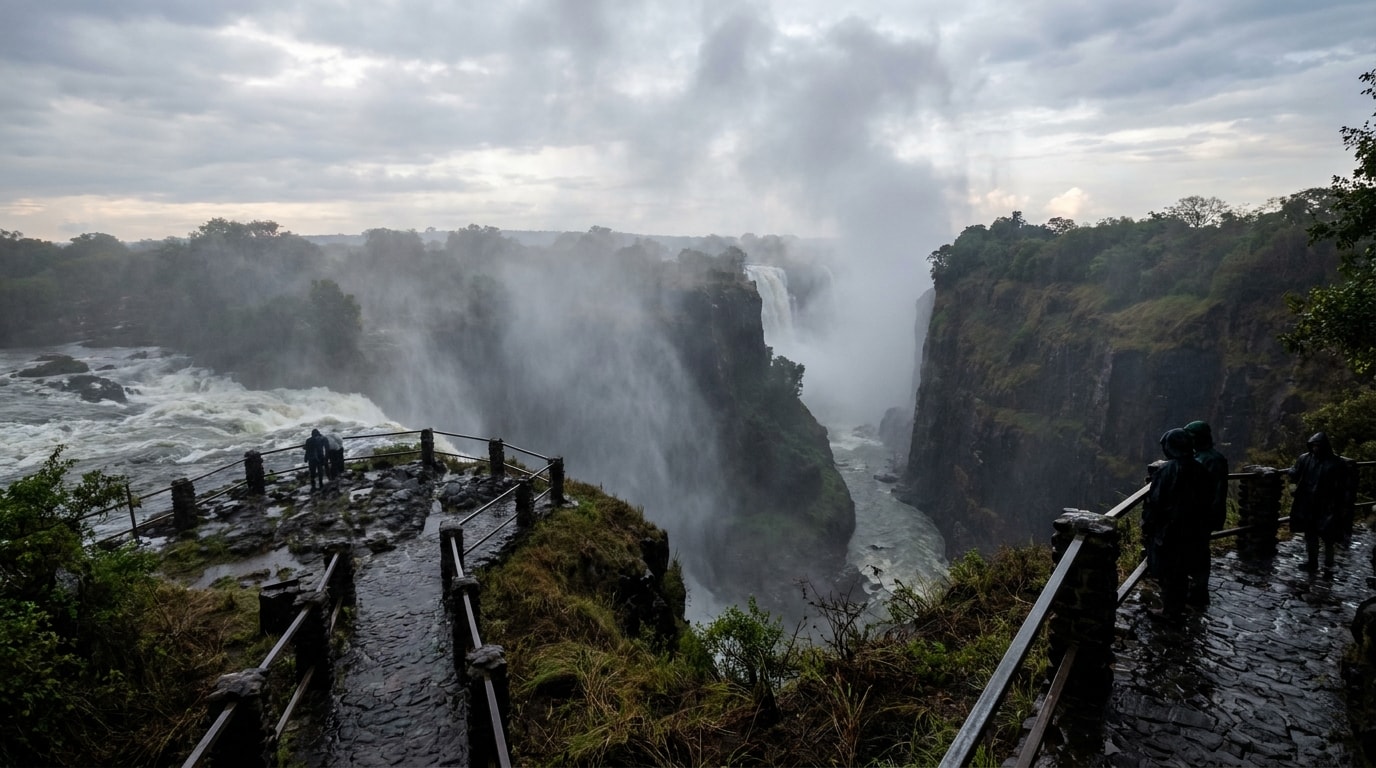
The advice is especially relevant around Victoria Falls, where travellers often cross between Zimbabwe and Zambia to visit both sides of the waterfalls, including day trips from Victoria Falls, Zimbabwe, to Livingstone, Zambia. It also affects travellers arriving from Botswana through Kazungula, including those coming from the Kasane area and Chobe National Park. Even visitors entering Zambia for only a few hours are advised to complete the form before crossing.
Health pass does not replace immigration documents
The ZNPHI is encouraging travellers to complete the questionnaire in advance, but the official information reviewed does not set out a mandatory deadline before departure or specific penalties for arriving without a QR code. Travellers who could not complete the form online may ask a health official for assistance on arrival, although this does not remove the need for health screening and may add processing time at the border.
POE Sentinel is separate from Zambia’s immigration rules. A QR Health Pass does not replace a visa where one is required, nor any other entry document. Citizens of the United States, United Kingdom, Canada, Australia and New Zealand are currently exempt from visas for tourist visits to Zambia, as are nationals of European Union countries and several other countries, but they remain subject to applicable health screening procedures. Travellers with other passports should verify the requirements for their nationality with the Zambia Department of Immigration.
For visitors, the practical message is to treat the health declaration as part of pre-trip preparation, especially when an itinerary includes Victoria Falls excursions or multiple regional border crossings. For Zambia, POE Sentinel adds digital verification to border health checks while supporting wider disease surveillance and public health preparedness.
Sources