Certified Uzbek & Russian Document Translation
Professional translation of Uzbek documents with apostille and e-Apostille coordination. Notary-certified under Law No. 343-I. Accepted by USCIS, UKVI, and authorities worldwide.
TrustpilotSelect Languages
Drag & drop your documents here
or
PDF, JPEG, PNG, WebP — Max 10MB per file. Word documents: please save as PDF first.
Certified translators · Accepted by governments, courts & universities worldwide · View sample
Select a destination country to view pricing
How Uzbek Certified Translation Works
Submit Your Documents Securely
Upload clear scans of your Uzbek documents through our encrypted portal. We accept PDF, JPEG, and PNG formats. Our intake specialists review each upload for legibility and identify the document type — whether it is a FHDYO civil status certificate, a Ministry of Higher Education academic credential, or a judicial document from the Supreme Court (Oliy sud).
Translator Assignment
Your documents are matched with a translator experienced in Uzbek administrative terminology, including the distinctive vocabulary of the Fuqarolik holati dalolatnomalarini yozish organlari (FHDYO) civil registry, the Davlat soliq qo'mitasi (State Tax Committee), and Uzbekistan's dual Latin-Cyrillic script system. Translators handle documents in both Uzbek and Russian.
Translation & Certification
The translator produces your certified translation with a signed certification statement. For Uzbek domestic submissions, DoVisa coordinates with notary-certified translators as required by Law No. 343-I (1996) on Notariat and Presidential Decree No. 3113 (2019) on translation services. Each translation accurately handles both Latin and Cyrillic Uzbek script variants.
Delivery with Full Certification
Receive your certified translation as a high-resolution PDF via email, suitable for immediate submission. Physical copies shipped via tracked courier. For apostille processing, DoVisa coordinates with the appropriate competent authority — the Ministry of Justice for FHDYO documents, the Ministry of Foreign Affairs for general documents, or the electronic apostille (e-Apostille) system established by Resolution No. 732.
Uzbekistan Translation Service Specifications
Popular Language Pairs
We support all languages — 100+ language pairs available for Uzbek documents including Uzbek and Russian paired with European, East Asian, and Middle Eastern languages.
Common Documents
- Birth certificates — tug'ilganlik haqidagi guvohnoma
- Marriage certificates — nikoh to'g'risidagi guvohnoma
- Death certificates — o'lim haqidagi guvohnoma
- Divorce certificates — nikohni bekor qilish haqidagi guvohnoma
- Police clearance certificates — ma'lumotnoma
- Academic diplomas and transcripts
- Employment contracts and references
- Powers of attorney — ishonchnoma
- Court judgments and legal documents
- Commercial registration extracts
Turnaround Time
Certification Details
Uzbekistan Translation Requirements & Regulatory Framework
Embassy Acceptance
Notarization Process
Apostille Information
Legal Framework
Common Scenarios for Uzbek Document Translation
Immigration & Visa Applications
Uzbek nationals applying for US diversity visas, Korean work visas (E-9), Turkish residence permits, or EU Blue Cards need certified English translations of birth certificates (tug'ilganlik haqidagi guvohnoma), police clearance certificates (ma'lumotnoma), and academic credentials. DoVisa's certified translations meet USCIS, UKVI, IRCC, and Korean Immigration requirements.
Marriage & Family Documents
Marriage certificates (nikoh to'g'risidagi guvohnoma), divorce records, and family status documents issued by the FHDYO civil registry need certified translation for spousal visa applications and family reunification proceedings. Uzbek names follow a patronymic structure — ota ismi (father's name) — requiring consistent transliteration across all documents.
Academic Credential Evaluation
Uzbek university diplomas, academic transcripts from the Ministry of Higher Education, and professional certificates require certified translation for WES, ECE, and credential evaluation agencies. DoVisa handles both Latin-script and Cyrillic-script Uzbek academic documents, accurately rendering the grading system for international evaluators.
Labor Migration Documents
Uzbekistan is a major source of labor migration to South Korea, Turkey, Russia, and the Gulf states. Workers need certified translations of employment records, professional qualifications, and medical certificates. DoVisa provides fast-turnaround translation and e-Apostille coordination for labor migration documentation.
Business & Corporate Documents
Companies operating in Uzbekistan's rapidly growing economy need certified translations of commercial registration extracts, tax certificates, corporate charters, and investment agreements. DoVisa handles the specialized legal and commercial terminology used in Uzbek business documents under the evolving regulatory framework.
Uzbekistan's Dual Script System: Latin and Cyrillic in Official Documents
Uzbekistan occupies a unique position among post-Soviet states with its ongoing script transition. Since independence in 1991, the government has promoted a shift from Cyrillic to Latin script for the Uzbek language. However, both scripts remain in active daily use — creating a documentary landscape unlike any other country.
Official documents may appear in Latin-script Uzbek, Cyrillic-script Uzbek, or Russian (Cyrillic), depending on when and where they were issued. Older civil registry records from the Soviet-era ZAGS system (now reorganized as FHDYO — Fuqarolik holati dalolatnomalarini yozish organlari) are typically in Russian. Documents issued after independence may be in either script variant of Uzbek, and some institutions still default to Cyrillic.
DoVisa's translators are proficient in all three documentary variants: Latin Uzbek, Cyrillic Uzbek, and Russian. This is critical for immigration applications where name consistency across documents is essential — the same name may appear as "Abdullayev" (Latin), "Абдуллаев" (Cyrillic Uzbek), or "Абдуллаев" (Russian), and translators must ensure uniform English rendering. We handle the patronymic naming convention (ota ismi) that is standard in Uzbek documents, preserving the full name chain: ism (given name), ota ismi (patronymic), familiya (surname).
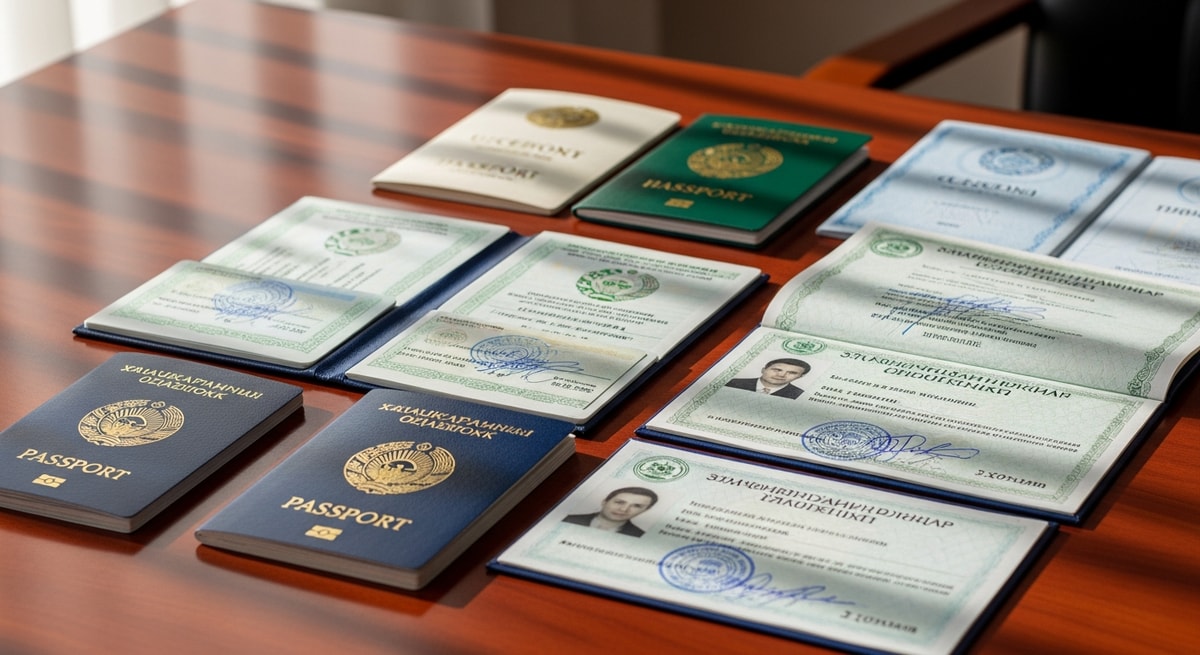
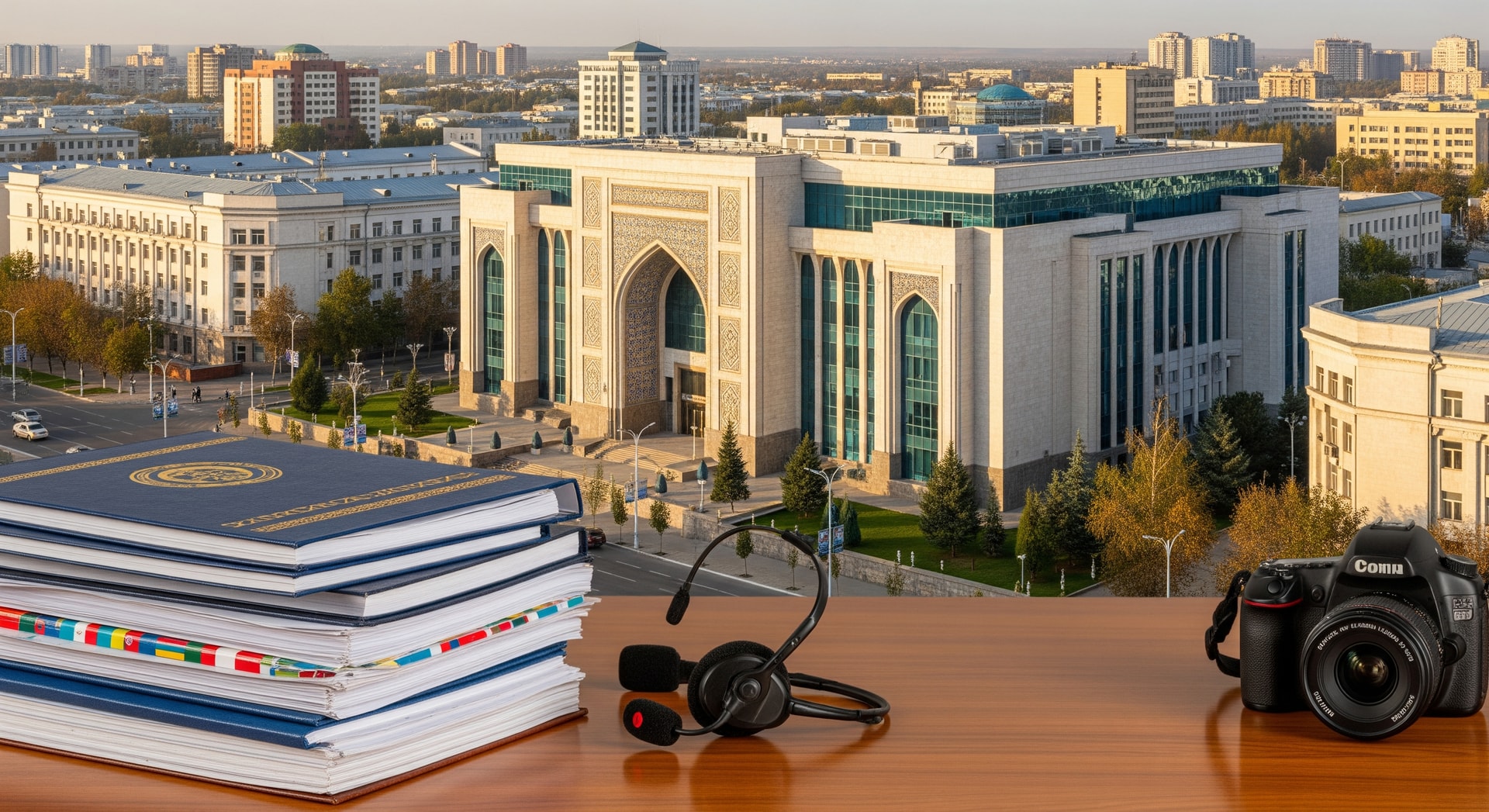
Uzbekistan's documents may appear in Latin Uzbek, Cyrillic Uzbek, or Russian — all three require specialized translation expertise
e-Apostille: Uzbekistan's Digital Authentication System
Uzbekistan became one of the few countries worldwide to offer electronic apostille (e-Apostille) when the system launched on 1 March 2022 under Resolution No. 732. The e-Apostille carries the same legal weight as a physical apostille and is recognized by all Hague Convention member states.
The e-Apostille system reflects Uzbekistan's broader digital governance push under the Digital Uzbekistan 2030 strategy. Five competent authorities can issue apostilles: the Ministry of Justice for FHDYO civil status documents, the Supreme Court (Oliy sud) for court documents, the Prosecutor General's Office (Bosh prokuratura) for prosecution documents, the State Testing Center for education documents, and the Ministry of Foreign Affairs (Tashqi ishlar vazirligi) for all other public documents.
For DoVisa clients, the e-Apostille option significantly reduces processing time — typically 1–3 business days compared to 3–7 business days for physical apostilles. The electronic certificate is delivered as a digitally signed PDF that can be verified online. DoVisa coordinates both e-Apostille and physical apostille processing depending on client needs and destination country requirements.

Uzbekistan's e-Apostille system launched in March 2022, offering faster digital authentication for international documents
"Uzbek birth certificate and police clearance translated from Cyrillic Uzbek to English for USCIS diversity visa. Both accepted without issues — the patronymic name transliteration was consistent across all documents."
"Latin-script Uzbek marriage certificate translated with e-Apostille for a UK spouse visa. The digital apostille was ready in two days. UKVI accepted everything on first submission."
"Academic transcript from Tashkent university translated for WES credential evaluation. Translator handled the mixed Latin and Cyrillic entries expertly. WES processed my evaluation without corrections."
"Russian-language employment records from an Uzbek company translated to English for Australian skilled migration. Department of Home Affairs accepted them. Good quality and professional formatting."
"FHDYO birth certificate and Ministry of Internal Affairs police clearance translated for Canadian PR. IRCC accepted both certified translations. Fast turnaround and accurate rendering of official stamps."
"Uzbek divorce decree translated to English with physical apostille from the Supreme Court. The legal terminology was accurately rendered. Submitted to a US family court without issues."
"Commercial registration and corporate documents translated from Uzbek to Korean for a business partnership. Korea Immigration accepted the apostilled translations. Excellent handling of commercial terminology."
"Birth certificates for my children translated from Uzbek for a New Zealand residence visa. Immigration NZ accepted both. The dual-script handling was done well, though express delivery took one day longer than quoted."
"Soviet-era Russian birth certificate translated for USCIS. The translator expertly handled the old ZAGS format. The e-Apostille coordination was a great bonus — much faster than physical processing."
"Uzbek medical certificate translated for a Turkish work permit. Final translation was accurate, but the initial draft used a different romanization of my patronymic than my passport. Corrected quickly after I flagged it."
"Uzbek birth certificate and police clearance translated from Cyrillic Uzbek to English for USCIS diversity visa. Both accepted without issues — the patronymic name transliteration was consistent across all documents."
"Latin-script Uzbek marriage certificate translated with e-Apostille for a UK spouse visa. The digital apostille was ready in two days. UKVI accepted everything on first submission."
"Academic transcript from Tashkent university translated for WES credential evaluation. Translator handled the mixed Latin and Cyrillic entries expertly. WES processed my evaluation without corrections."
Uzbekistan Document Translation FAQs
What types of Uzbek documents can be translated?
Are your Uzbekistan translations certified?
How long does Uzbek document translation take?
What languages do you translate Uzbek documents to and from?
Will my translated Uzbek documents be accepted by immigration authorities?
Do I need notarization with my Uzbek translation?
What is an apostille and does Uzbekistan offer e-Apostille?
How much does certified Uzbek document translation cost?
Can you translate documents in both Uzbek scripts?
What format will I receive my translated Uzbek document in?
Can you translate Soviet-era Uzbek documents?
What is the FHDYO and how does it affect my translation?
Get Your Uzbek Documents Translated Today
Professional certified translations with apostille and e-Apostille coordination — accepted worldwide