Certified Russian Document Translation
Professional certified translations of Russian documents with notarized certification compliant with the Fundamentals of Legislation on Notariat. Accepted by USCIS, IRCC, UK Visas, and authorities in 125+ Hague Convention countries.
TrustpilotSelect Languages
Drag & drop your documents here
or
PDF, JPEG, PNG, WebP — Max 10MB per file. Word documents: please save as PDF first.
Certified translators · Accepted by governments, courts & universities worldwide · View sample
Select a destination country to view pricing
How Russian Certified Translation Works
Submit Your Documents Securely
Upload clear scans of your Russian-language documents through our encrypted portal. We accept PDF, JPEG, and PNG formats. Our intake specialists review each upload for legibility — particularly important for Russian documents using Cyrillic script, where handwritten entries on older Soviet-era and early post-Soviet certificates can be challenging to read. We contact you immediately if a rescan is needed before translation begins.
Professional Translator Assignment
Your documents are matched with a qualified Russian-English translator holding a linguistics degree (diplom lingvista) or equivalent professional certification. In Russia's notarized translation system (notarial'nyy perevod), the translator must present their educational credentials to the notary before certification. Our translators are experienced with Russian civil registry documents, academic credentials, and legal terminology specific to the Russian Federation's administrative system.
Translation & Certification
The translator produces an accurate certified translation of your Russian document and signs the completed work. For documents requiring notarized certification under Russian law, the translator's signature is authenticated by a notary public in accordance with Article 81 of the Fundamentals of Legislation on Notariat (Osnovy zakonodatel'stva o notariate). A second qualified linguist reviews every translation for accuracy, proper Cyrillic-to-Latin transliteration, and correct rendering of Russian legal and administrative terminology.
Delivery with Full Certification
Receive your certified translation as a high-resolution PDF for immediate use with immigration authorities, universities, and employers worldwide. The original certified hard copy is shipped via tracked international courier. For documents requiring an apostille from the Russian Ministry of Justice (Ministerstvo yustitsii) or other competent authority, DoVisa coordinates the complete apostille process and delivers the authenticated package to your address.
Russian Translation Service Specifications
Popular Language Pairs
We support all languages — 100+ language pairs available for Russian Federation documents.
Common Documents
- Birth certificates (svidetel'stvo o rozhdenii / свидетельство о рождении)
- Marriage certificates (svidetel'stvo o brake / свидетельство о браке)
- Divorce certificates (svidetel'stvo o rastorzhenii braka / свидетельство о расторжении брака)
- Death certificates (svidetel'stvo o smerti / свидетельство о смерти)
- Academic diplomas (diplom / диплом) and transcripts (prilozhenie k diplomu / приложение к диплому)
- Secondary school certificates (attestat / аттестат)
- Police clearance certificates (spravka o nesudimosti / справка о несудимости)
- Internal passports (vnutrenniy pasport / внутренний паспорт)
- Employment record books (trudovaya knizhka / трудовая книжка)
- Court judgments and legal documents (sudebnoe reshenie / судебное решение)
Turnaround Time
Certification Details
Russian Translation Requirements & Regulatory Framework
Embassy Acceptance
Notarization Process
Apostille Information
Legal Framework
Common Scenarios for Russian Document Translation
US Immigration & USCIS Applications
Russian nationals applying for US visas, green cards, or naturalization must provide certified English translations of their Russian documents. USCIS requires translations of birth certificates (svidetel'stvo o rozhdenii), marriage certificates, divorce decrees, police clearance certificates (spravka o nesudimosti), military service records, and academic credentials. DoVisa's certified translations include the USCIS-required translator certification statement and are formatted to meet USCIS submission standards, reducing the risk of Requests for Evidence (RFEs).
Marriage Registration Abroad
Russians marrying abroad or foreign nationals presenting Russian marriage documents internationally need certified translations of vital records issued by ZAGS offices. Required documents typically include the birth certificate, single-status certificate (spravka o semeynom polozhenii), and any prior divorce certificates. Each document must be translated accurately with proper transliteration of Russian names from Cyrillic to Latin script, matching passport transliterations to avoid discrepancies that delay processing.
Academic Credential Evaluation
Russian academic documents — including the attestat (secondary school certificate), diplom (university degree), and prilozhenie k diplomu (transcript supplement) — require certified translation for evaluation by credential agencies such as WES, ECE, and NACES members. Our academic translators understand the Russian grading system, degree nomenclature (bakalavr, magistr, spetsialist), and the structural differences between Soviet-era and modern Russian educational credentials.
International Business & Corporate Filings
Foreign companies operating in Russia or Russian enterprises expanding internationally require certified translations of corporate documents including charter documents (ustav), extracts from the Unified State Register of Legal Entities (vypiska iz EGRYUL), shareholder resolutions (resheniya uchrediteley), powers of attorney (doverennost'), and financial statements. Our corporate translators are experienced with Russian commercial law terminology and produce translations that meet the requirements of international regulatory bodies and foreign courts.
Family Reunification & Dependent Visas
Family members of Russian nationals living abroad frequently need certified translations of birth certificates, adoption documents, custody agreements, and proof of relationship for visa and immigration applications. For UK family visas, Canadian family class sponsorship, and Australian partner visas, all Russian-language supporting documents must be accompanied by certified English translations. DoVisa ensures consistent name transliterations across all family documents to prevent processing delays.
Understanding Russia's Notarized Translation System
Russia's approach to certified translations differs fundamentally from the European sworn translator model. Rather than maintaining a registry of court-appointed translators, Russia relies on its notariat system — governed by the Fundamentals of Legislation on Notariat (Osnovy zakonodatel'stva o notariate, No. 4462-I of 1993) — to authenticate translations. Under Article 81, a notary public (notarius) certifies the authenticity of a translator's signature on a completed translation. The notary verifies the translator's identity and educational credentials, typically a linguistics degree (diplom lingvista), but does not evaluate the translation's substantive accuracy. This responsibility rests entirely with the translator.
The practical process works as follows: a qualified translator produces the translation, then appears before a notary and signs the document in the notary's presence. The notary affixes their official seal (pechat'), certification inscription (udostoveritel'naya nadpis'), and signature. The translation is physically bound to a copy of the source document using a thread-and-seal method (proshito i pronumerovano — stitched and numbered). This creates a unified document package that carries legal force for official proceedings.
For documents destined for use outside Russia, DoVisa's standard certified translation — with a signed certification statement attesting to accuracy and completeness — is accepted by immigration authorities in the United States, United Kingdom, Canada, Australia, and New Zealand, as well as by credential evaluation agencies and international courts. For documents intended for use within Russia, the full notarized translation process is required, and DoVisa can coordinate this through our network of translators and notaries operating across Russian cities including Moscow, Saint Petersburg, Yekaterinburg, and Novosibirsk.

Russian notaries certify translator signatures under the Fundamentals of Legislation on Notariat
Cyrillic Script and Russian Document Transliteration Challenges
Translating Russian documents presents unique challenges rooted in the Cyrillic writing system. Russian uses 33 letters, many without direct Latin equivalents, requiring careful transliteration according to established standards. Multiple transliteration systems exist — GOST, ISO 9, BGN/PCGN, and the system used by the Russian Ministry of Internal Affairs for passports (ICAO standard) — and inconsistencies between them cause frequent problems. A single Russian name may be transliterated differently on a passport, a birth certificate translation, and an academic transcript, creating discrepancies that immigration authorities flag during processing.
For example, the Russian letter "ё" (yo) is often written as "е" (ye) in everyday Russian documents, but the distinction matters in official translations. The soft sign "ь" and hard sign "ъ" have no sound equivalent in English and are handled differently across transliteration systems. Patronymics (otchestvo) — the middle name derived from the father's first name — appear on virtually all Russian official documents but have no Western equivalent, requiring translators to render them consistently. DoVisa's Russian translation team follows the ICAO/passport transliteration standard by default and cross-references the client's passport spelling to ensure name consistency across all translated documents.
Soviet-era documents pose additional challenges. Certificates issued before 1991 may use pre-reform orthography, reference defunct administrative divisions (oblasts and rayons that have been renamed or reorganized), and include handwritten entries in cursive Cyrillic that require specialist reading skills. Birth certificates from the Soviet period often list the place of birth using historical names — for example, Leningrad (now Saint Petersburg) or Sverdlovsk (now Yekaterinburg). Our translators note these historical names alongside their current equivalents to ensure clarity for receiving authorities.
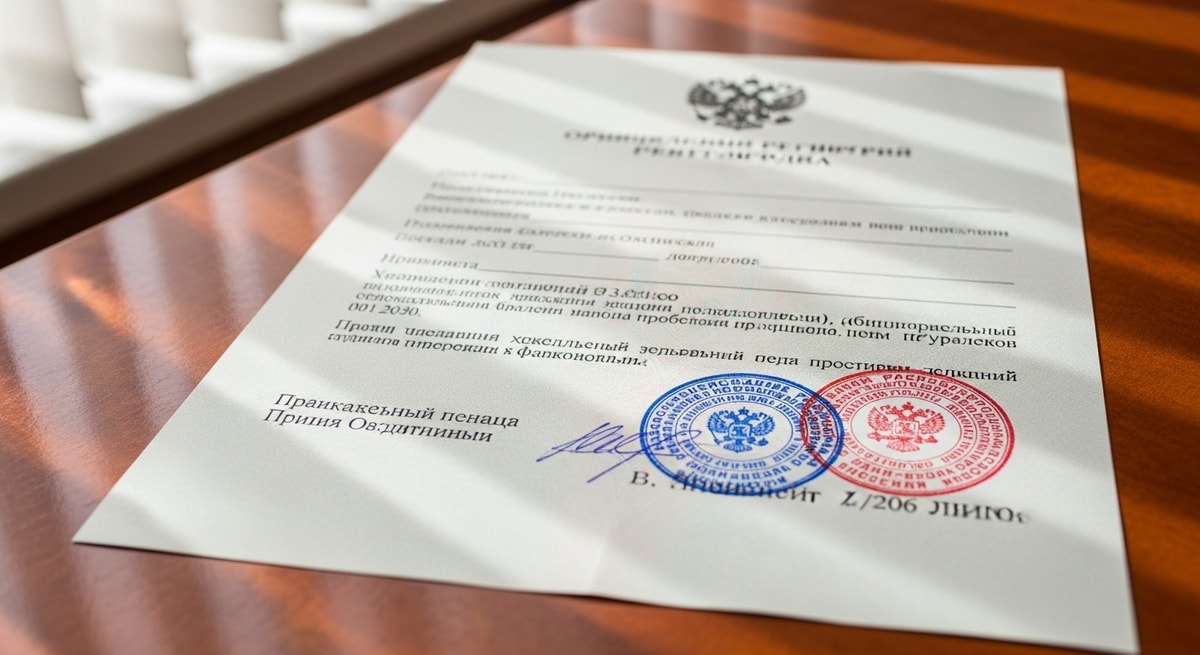
Russian Cyrillic documents require careful transliteration following consistent standards across all translated materials
Apostille and Authentication for Russian Documents
Russia has been a party to the Hague Apostille Convention since 1992, having succeeded to the treaty obligations of the Soviet Union. This means Russian public documents bearing an apostille are recognized for official use in all 125+ Convention member states without further consular legalization. However, Russia's apostille system is notably complex because multiple competent authorities issue apostilles depending on the document type.
The Ministry of Justice (Ministerstvo yustitsii Rossiyskoy Federatsii) apostilles notarized documents, including notarized translations, notarial deeds, and documents certified by notaries. Rosobrnadzor (the Federal Service for Supervision in Education and Science / Rosobrnadzor) is the sole authority for apostilling educational documents — diplomas, transcripts, and academic certificates. The Ministry of Defense handles military service records. ZAGS offices (civil registry) and executive bodies of federal subjects apostille vital records such as birth, marriage, and death certificates. The General Prosecutor's Office handles prosecutorial documents, and the Ministry of Internal Affairs apostilles police clearance certificates and related documents.
DoVisa manages the complete apostille process for Russian documents. We identify the correct competent authority based on your document type, prepare and submit the apostille application, and track processing through to delivery. Standard apostille processing takes 5-10 business days depending on the authority and current workload. For clients located outside Russia, we coordinate with local representatives to handle in-person submissions where required. The apostille is affixed directly to the document (or to the notarized translation, if the translation is being apostilled), creating a chain of authentication recognized internationally.
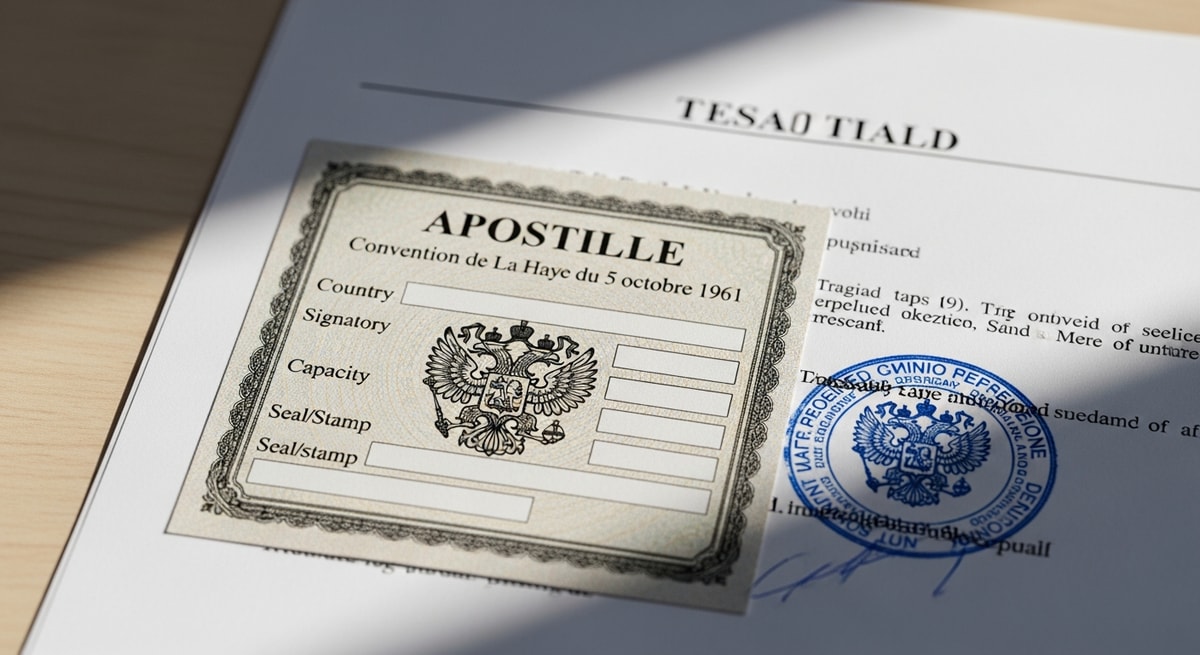
Russian apostilles are issued by multiple competent authorities depending on the document type
"Needed my Russian diplom and prilozhenie k diplomu translated for WES credential evaluation in Canada. The translator handled all the academic terminology perfectly, including Soviet-era degree classifications. WES processed my evaluation without any issues."
"DoVisa translated my svidetel'stvo o rozhdenii (birth certificate) and svidetel'stvo o brake (marriage certificate) for our UK spouse visa application. Both ZAGS documents were translated accurately with correct name transliterations matching my passport. The Home Office accepted everything."
"Good translation of my wife's Russian academic documents for an Australian skilled migration visa. The Department of Home Affairs accepted the translations. Would have preferred a slightly faster turnaround — took 5 business days — but quality was solid."
"Translated my Russian spravka o nesudimosti (police clearance) and birth certificate for USCIS as part of my green card application. The certified translations included proper USCIS-format certification statements. No RFE received — accepted on first submission."
"Our company needed Russian corporate documents translated — ustav, vypiska iz EGRYUL, and shareholder resolutions. DoVisa's corporate translators handled Russian commercial law terminology expertly. Our UK solicitors used the translations for Companies House filings without queries."
"Had my Russian trudovaya knizhka (employment record book) and university diplom translated for a Canadian Express Entry application. IRCC accepted the translations. The employment record book was complex with many handwritten entries but the translator managed well."
"Russian birth certificate and marriage certificate translated for New Zealand immigration. The translator ensured all Cyrillic name transliterations matched my wife's passport exactly, which was crucial for avoiding delays. Very professional service from start to finish."
"Translation of my Russian attestat (school certificate) was accurate, but there was an initial inconsistency in how my patronymic was transliterated between documents. DoVisa corrected it within a few hours and WES accepted the final versions, but the error caused some stress."
"Needed a certified translation of a Russian court judgment (sudebnoe reshenie) for legal proceedings in the United States. The translator captured the complex legal terminology and procedural language perfectly. Our American attorneys confirmed the translation was excellent quality."
"Russian divorce certificate and custody documents translated to English for an Australian partner visa. The Department of Home Affairs processed our application without requesting any clarifications on the translations. Good quality overall."
"Russian-to-Japanese translation of academic documents for university admission in Tokyo. The translator understood both the Russian educational system and Japanese institutional requirements. My Japanese university accepted the translations immediately. Highly recommend DoVisa."
"Needed my Russian diplom and prilozhenie k diplomu translated for WES credential evaluation in Canada. The translator handled all the academic terminology perfectly, including Soviet-era degree classifications. WES processed my evaluation without any issues."
"DoVisa translated my svidetel'stvo o rozhdenii (birth certificate) and svidetel'stvo o brake (marriage certificate) for our UK spouse visa application. Both ZAGS documents were translated accurately with correct name transliterations matching my passport. The Home Office accepted everything."
"Good translation of my wife's Russian academic documents for an Australian skilled migration visa. The Department of Home Affairs accepted the translations. Would have preferred a slightly faster turnaround — took 5 business days — but quality was solid."
Russian Document Translation FAQs
What types of Russian documents can DoVisa translate?
We translate all types of Russian documents including birth certificates (svidetel'stvo o rozhdenii), marriage certificates (svidetel'stvo o brake), divorce certificates, death certificates, academic diplomas (diplom) and transcripts (prilozhenie k diplomu), secondary school certificates (attestat), police clearance certificates (spravka o nesudimosti), internal passports, international passports, employment record books (trudovaya knizhka), court judgments, corporate charters (ustav), powers of attorney (doverennost'), medical records, military service documents, and property deeds. We handle both modern Russian Federation documents and Soviet-era certificates issued before 1991.
Are DoVisa translations of Russian documents certified?
Yes. Every DoVisa translation of a Russian document includes a signed certification statement in which the translator attests to the accuracy and completeness of the translation. This certified translation is accepted by USCIS, UK Visas and Immigration, IRCC (Canada), the Australian Department of Home Affairs, New Zealand Immigration, credential evaluation agencies (WES, ECE, NACES members), and international courts and institutions. For documents that need to be submitted to Russian domestic authorities, a notarized translation (notarial'nyy perevod) is required under Article 81 of the Fundamentals of Legislation on Notariat — DoVisa can coordinate this through our network of translators and notaries in Russia.
How long does certified Russian translation take?
Standard certified translation of Russian documents is delivered within 4-6 business days. Express processing is available for 2-3 business days, and rush delivery within 24 hours is offered for select single-page document types such as birth certificates, marriage certificates, and police clearance certificates. Complex documents like employment record books (trudovaya knizhka) with many pages of handwritten entries, or lengthy corporate charters, may require additional time. Apostille processing through the relevant Russian competent authority adds 5-10 business days to the timeline.
What languages can Russian documents be translated into?
DoVisa offers Russian document translation into 100+ languages. The most frequently requested language pairs for Russian documents include Russian to English, Russian to German, Russian to French, Russian to Spanish, Russian to Italian, Russian to Chinese, Russian to Arabic, Russian to Turkish, Russian to Japanese, and Russian to Korean. We also translate into Russian from all major languages for documents that need to be submitted to Russian authorities. Each translation is handled by a translator with specific expertise in the relevant language pair and document type.
Will my Russian document translation be accepted by USCIS?
Yes. USCIS requires that all foreign-language documents submitted with immigration petitions and applications be accompanied by a certified English translation. DoVisa's certified translations meet USCIS requirements, including the translator's certification statement attesting to accuracy and the translator's competence. Our translations are accepted for all USCIS application types including adjustment of status (I-485), immigrant visa petitions (I-130), naturalization (N-400), and employment-based petitions. Our current acceptance rate at immigration authorities is 98.7%, with the remaining cases typically related to missing source documents rather than translation quality.
Do I need a notarized translation for Russian documents?
It depends on where the translation will be used. For submission to international authorities such as USCIS, UK Visas and Immigration, IRCC, or the Australian Department of Home Affairs, a standard DoVisa certified translation is sufficient — notarization is not required. For submission to Russian domestic authorities — including courts, ZAGS offices (civil registry), the Ministry of Internal Affairs, or educational institutions — a notarized translation (notarial'nyy perevod) certified under Article 81 of the Fundamentals of Legislation on Notariat is required. DoVisa can provide both types of certification depending on your needs.
What is an apostille and do I need one for Russian documents?
An apostille is a standardized certificate issued under the Hague Apostille Convention that authenticates the origin of a public document for use in another Convention member state. Russia has been a party to the Convention since 1992. You need an apostille if your Russian document will be submitted to authorities in another Hague Convention member country. The apostille is issued by the relevant Russian competent authority: the Ministry of Justice for notarized documents, Rosobrnadzor for educational documents, ZAGS offices for vital records, the Ministry of Defense for military records, and the Ministry of Internal Affairs for police clearances. DoVisa handles the complete apostille process, including identifying the correct authority, preparing the application, and delivering the apostilled document.
How much does certified Russian translation cost?
Our Russian certified translation pricing follows a transparent per-page structure with volume discounts that apply automatically for larger documents. Pricing varies based on the number of pages, language pair, and processing speed selected (standard, express, or rush). Apostille processing through the relevant Russian competent authority is quoted separately. Upload your documents on our order page to receive an instant, detailed quote before work begins — no hidden fees or surcharges.
Can DoVisa translate handwritten Russian documents?
Yes. Many Russian documents — particularly Soviet-era birth certificates, employment record books (trudovaya knizhka), and older academic transcripts — contain handwritten entries in cursive Cyrillic. Reading handwritten Russian requires specialized skills, as cursive Cyrillic letters look significantly different from their printed forms. Our Russian translators are experienced with both modern and Soviet-era handwriting styles, including the distinctive penmanship conventions used by ZAGS registrars and Soviet-period administrators. For documents with particularly difficult handwriting, we may request a higher-resolution scan to ensure accuracy.
What format will I receive my Russian document translation in?
You will receive your certified translation as a high-resolution PDF delivered via email, suitable for electronic submissions to immigration portals, university application systems, and credential evaluation agencies. The original certified hard copy — bearing the translator's signature, certification statement, and any applicable notary or apostille stamps — is shipped via tracked international courier. For apostilled documents, the physical original includes the apostille certificate attached to the document. We recommend retaining both the digital and physical copies, as some authorities require the original hard copy during in-person appointments.
How do you handle Russian name transliterations in translations?
Consistent name transliteration is critical for Russian document translations. Our translators follow the ICAO transliteration standard used by the Russian Ministry of Internal Affairs for passport issuance, ensuring that names in translated documents match the client's passport spelling. We cross-reference the client's passport before finalizing any translation. Special attention is given to patronymics (otchestvo), which appear on virtually all Russian documents, and to letters like "ё" (yo), soft sign "ь", and the combinations "щ" (shch) and "ц" (ts), which are transliterated differently across competing standards. If discrepancies exist between existing translations, we flag them for the client before delivery.
Can Russian documents issued during the Soviet era be translated?
Yes. DoVisa regularly translates Soviet-era documents including birth certificates, marriage certificates, academic diplomas, and military records issued before 1991. These documents present unique challenges: they may reference the USSR or specific Soviet republics, use historical place names (e.g., Leningrad instead of Saint Petersburg, Sverdlovsk instead of Yekaterinburg), and include institutional names that no longer exist. Our translators preserve the original historical references while adding clarifying notes where needed. Soviet-era documents are still legally valid in Russia and internationally, and our certified translations are fully accepted by immigration authorities and credential evaluation agencies.
Does DoVisa translate Russian employment record books (trudovaya knizhka)?
Yes, and Russian trudovaya knizhka (employment record books) require particular expertise. These documents contain a chronological record of every employment position held, including dates, job titles, employer names, and reasons for leaving. Entries are typically handwritten in cursive Cyrillic by HR personnel from each employer. The books may span decades and contain entries from multiple organizations, including Soviet-era enterprises. Our translators are experienced with the standard phrasing, abbreviations, and formatting conventions used in trudovye knizhki, producing translations that clearly convey the employment history for immigration authorities and foreign employers.
Get Your Russian Documents Translated Today
Professional certified translations of Russian documents accepted by USCIS, IRCC, UK Visas, and 125+ countries worldwide