Certified Dutch Document Translation
Beëdigde vertalingen for international use, coordinated through sworn translators registered with Bureau Wbtv. Accepted by USCIS, IRCC, UK Visas and Immigration, and credential evaluation agencies worldwide.
TrustpilotSelect Languages
Drag & drop your documents here
or
PDF, JPEG, PNG, WebP — Max 10MB per file. Word documents: please save as PDF first.
Certified translators · Accepted by governments, courts & universities worldwide · View sample
Select a destination country to view pricing
How Netherlands Certified Translation Works
Submit Your Documents Securely
Upload clear scans of your Dutch or foreign-language documents through our encrypted portal. We accept PDF, JPEG, and PNG formats. Our intake specialists review each upload for legibility and completeness, verifying that all pages — including annexes and apostille stickers common on Dutch akten — are captured before translation begins.
Translator Assignment
Your documents are matched with a certified translator experienced in Dutch legal and administrative terminology. For submissions to Dutch domestic authorities, DoVisa can coordinate a beëdigd vertaler (sworn translator) registered in the Rbtv (Register beëdigde tolken en vertalers) maintained by Bureau Wbtv under the Wet beëdigde tolken en vertalers. We verify each translator's qualifications and active registration status before every assignment.
Translation & Certification
The translator produces your certified translation and affixes their signed certification statement attesting to the accuracy and completeness of the work. For sworn translations (beëdigde vertalingen), the beëdigd vertaler includes their official stamp, Wbtv registration number, and sworn declaration. A second qualified linguist reviews terminology, formatting, and accuracy before delivery.
Delivery with Full Certification
Receive your certified translation as a high-resolution PDF for immediate use, with the original signed hard copy shipped via tracked international courier. Dutch documents often require apostille authentication for international use — DoVisa can coordinate apostille processing through the competent Rechtbank (district court) and deliver the fully apostilled translation package to your address.
Netherlands Translation Service Specifications
Popular Language Pairs
We support all languages — 100+ language pairs available for Netherlands documents.
Common Documents
- Dutch birth certificates (geboorteakte)
- Marriage certificates (huwelijksakte)
- Death certificates (overlijdensakte)
- Divorce decrees (echtscheidingsbeschikking)
- Academic diplomas and transcripts (diploma / cijferlijst)
- Police clearance certificates (Verklaring Omtrent het Gedrag, VOG)
- Dutch driving licences (rijbewijs)
- Employment contracts and references (arbeidsovereenkomst)
- Notarial deeds (notariële akte)
- Chamber of Commerce extracts (uittreksel Kamer van Koophandel)
Turnaround Time
Certification Details
Netherlands Translation Requirements & Regulatory Framework
Embassy Acceptance
Notarization Process
Apostille Information
Legal Framework
Common Scenarios for Netherlands Document Translation
Immigration & Visa Applications
Dutch nationals and residents applying for visas, permanent residency, or citizenship abroad often need certified translations of their geboorteakte (birth certificate), huwelijksakte (marriage certificate), diplomas, and Verklaring Omtrent het Gedrag (police clearance). DoVisa provides translations formatted for USCIS, UK Visas and Immigration, IRCC, and other international immigration authorities, with apostille coordination through the competent Rechtbank when required by the destination country.
Marriage & Civil Partnerships
Foreign nationals marrying in the Netherlands or Dutch nationals marrying abroad require translated vital records. For marriages in the Netherlands, the gemeente (municipality) requires sworn translations of foreign birth certificates, divorce decrees, and certificates of no impediment (verklaring van huwelijksbevoegdheid). For Dutch nationals marrying abroad, the huwelijksakte and geboorteakte must be translated and apostilled for recognition by foreign authorities.
University Admissions & Credential Evaluation
International students applying to Dutch universities often need translations of academic transcripts and diplomas. Dutch graduates seeking recognition abroad require certified translations of their Dutch diplomas and cijferlijsten (transcripts) for credential evaluation services such as WES, ECE, and UK NARIC (now ENIC-NARIC). DoVisa's academic translators are experienced with Dutch higher education terminology including the bachelor-master structure and the European Diploma Supplement.
Corporate & Business Registration
International companies establishing Dutch subsidiaries or Dutch businesses expanding abroad need translations of corporate documents including Kamer van Koophandel (KvK) extracts, notariële akten (notarial deeds), shareholder agreements, and annual financial statements. DoVisa handles Dutch corporate terminology including BV (besloten vennootschap), NV (naamloze vennootschap), and VOF (vennootschap onder firma) structures with precision.
Family Reunification & Relocation
Families relocating to or from the Netherlands need certified translations of birth certificates, school records, medical histories, and custody agreements. Dutch nationals sponsoring family members for immigration to the US, UK, Canada, or Australia must provide translated and apostilled Dutch civil registry documents. DoVisa coordinates the full translation and apostille package for family reunification cases across all major destination countries.
Legal Proceedings & Court Documents
Cross-border litigation, international divorce cases, and inheritance disputes involving Dutch parties require certified translations of Dutch court judgments (vonnissen), notarial deeds, and legal correspondence. DoVisa's legal translators handle Dutch procedural law terminology from Rechtbank through Hoge Raad decisions, ensuring foreign courts and attorneys receive translations that preserve the legal precision of the original Dutch judicial language.
The Dutch Sworn Translator System Under the Wbtv
The Netherlands operates a comprehensive sworn translator system governed by the Wet beëdigde tolken en vertalers (Wbtv), which entered into force on 1 January 2009. This law replaced the previous informal system with a structured framework administered by Bureau Wbtv, an agency operating under the Raad voor Rechtsbijstand (Legal Aid Council) and commissioned by the Minister of Justice and Security. The Wbtv established the Rbtv (Register beëdigde tolken en vertalers), a public register of all sworn interpreters and translators authorized to work in the Netherlands.
To become a beëdigd vertaler (sworn translator), candidates must first apply to Bureau Wbtv and demonstrate their linguistic competence at the required level (C1 proficiency in both source and target languages). They must also obtain a Verklaring Omtrent het Gedrag (VOG) — a certificate of conduct issued by the Ministry of Justice and Security. Once registered in the Rbtv, the translator is then sworn in before a Dutch district court (Rechtbank), after which they are authorized to produce legally valid sworn translations bearing their official stamp and Wbtv registration number.
Registration in the Rbtv is valid for 5 years and must be renewed by demonstrating completion of ongoing professional development requirements (permanente educatie, PE). This ensures that sworn translators maintain current knowledge of legal terminology, translation standards, and developments in their language pairs. The public Rbtv register is searchable online at bureauwbtv.nl, allowing anyone to verify a translator's active registration status, language combinations, and Wbtv number. Dutch courts, the IND, municipalities, and other government agencies are required to use Rbtv-registered translators for official proceedings.
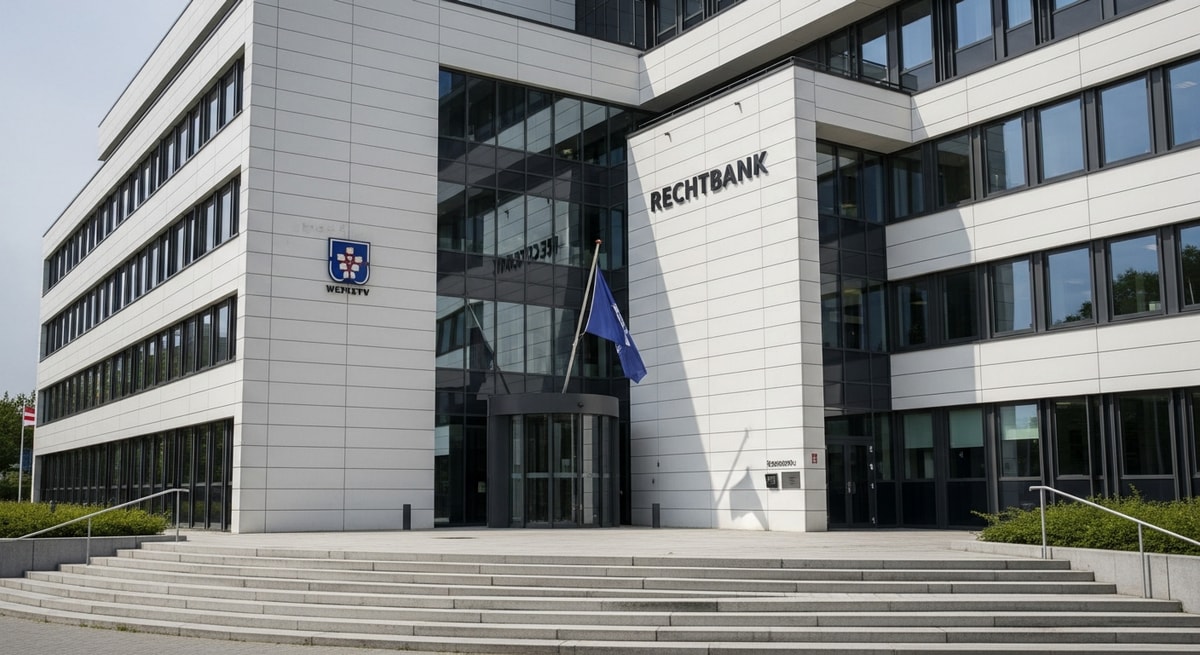
Dutch Rechtbanken swear in translators registered with Bureau Wbtv, authorizing them to produce legally valid sworn translations
Apostille Authentication for Dutch Documents
The Netherlands holds a unique position in the Hague Apostille Convention as both a founding signatory and the depositary state — the Convention was concluded at The Hague on 5 October 1961, and the Ministry of Foreign Affairs of the Kingdom of the Netherlands serves as the official repository for all instruments of ratification and accession. The Netherlands signed the Convention on 30 November 1962, ratified it on 9 August 1965, and the Convention entered into force for the Netherlands on 8 October 1965.
The competent authorities for issuing apostilles in the Netherlands are the Rechtbanken (district courts). Unlike many countries that designate a single central authority, the Netherlands allows applicants to request an apostille from any district court regardless of where the document was issued or where the applicant resides. Apostilles take the form of a printed sticker bearing an official seal, a hologram, and a handwritten signature of a court official. The apostille certifies the authenticity of the signature, the capacity of the signatory, and the identity of the seal or stamp on the document.
For certified translations, the apostille process requires the translation to first be produced by a sworn translator, after which the Rechtbank verifies the translator's registration and stamp before issuing the apostille. DoVisa manages the entire apostille chain — from sworn translation through Rechtbank submission and tracked delivery. Standard apostille processing takes 5-10 business days depending on the court's workload. Note that some Dutch documents, such as diplomas from educational institutions, may require prior legalization by the issuing institution or DUO (Dienst Uitvoering Onderwijs) before an apostille can be affixed by the Rechtbank.
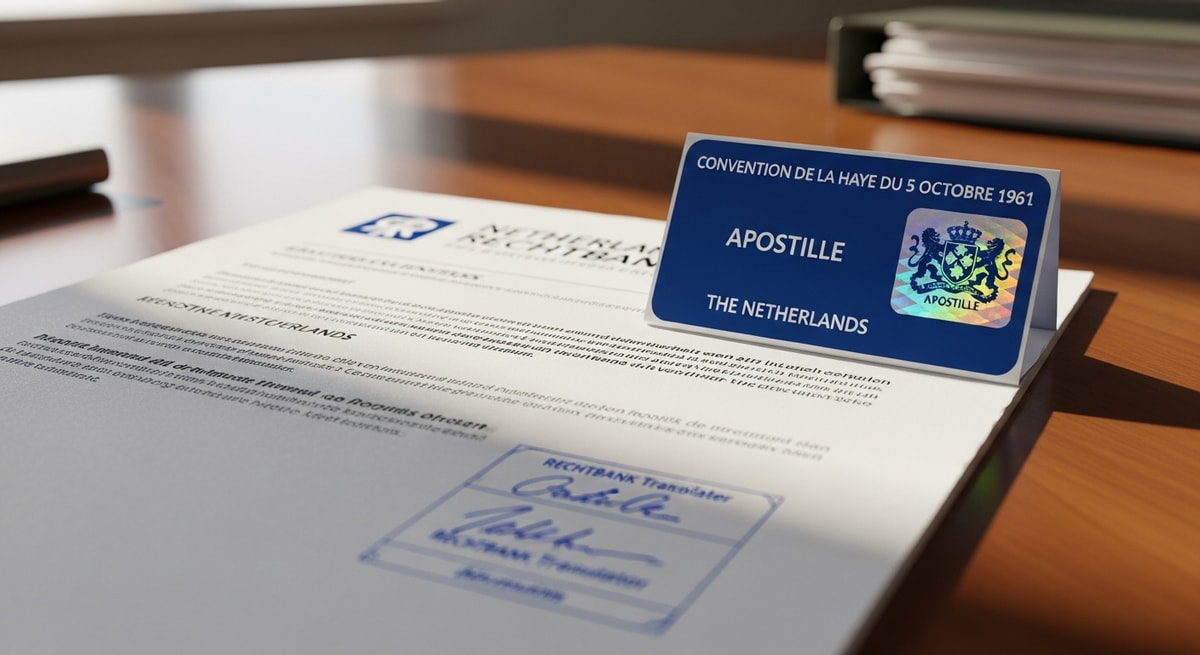
Dutch Rechtbanken issue apostille stickers with holograms authenticating sworn translations for international use in 125+ countries
Navigating the Dutch Civil Registry and Municipal Documents
The Dutch civil registration system (Burgerlijke Stand) is managed at the municipal level by each of the Netherlands' approximately 342 gemeenten (municipalities). Every gemeente maintains registers of births (geboorteakten), marriages (huwelijksakten), registered partnerships (geregistreerd partnerschap), and deaths (overlijdensakten). This decentralized system means that vital records must be requested from the specific gemeente where the event was registered, and the format and supporting documentation can vary slightly between municipalities.
When Dutch vital records are needed for international use, the process typically involves three steps: (1) requesting an official extract or certified copy (afschrift or uittreksel) from the relevant gemeente, (2) having the document translated by a certified or sworn translator, and (3) obtaining an apostille from any Rechtbank. For immigration purposes in countries like the United States, UK, Canada, and Australia, a certified translation is generally sufficient. For use within the Netherlands or in countries that require sworn translations, a beëdigde vertaling by an Rbtv-registered translator is necessary.
Dutch documents present specific translation challenges. The echtscheidingsbeschikking (divorce decree) is issued by the court rather than the gemeente, requiring different apostille procedures. Historical documents may use older Dutch spelling conventions or contain annotations (kantmeldingen) added after the original registration. Documents from the province of Fryslân (Friesland) may contain Frysk (West Frisian) terminology, as Frisian is a co-official language of the Netherlands. DoVisa's translators are experienced with all variations of Dutch civil registry documents, including multilingual international extracts issued under CIEC conventions and older handwritten records from the colonial era.
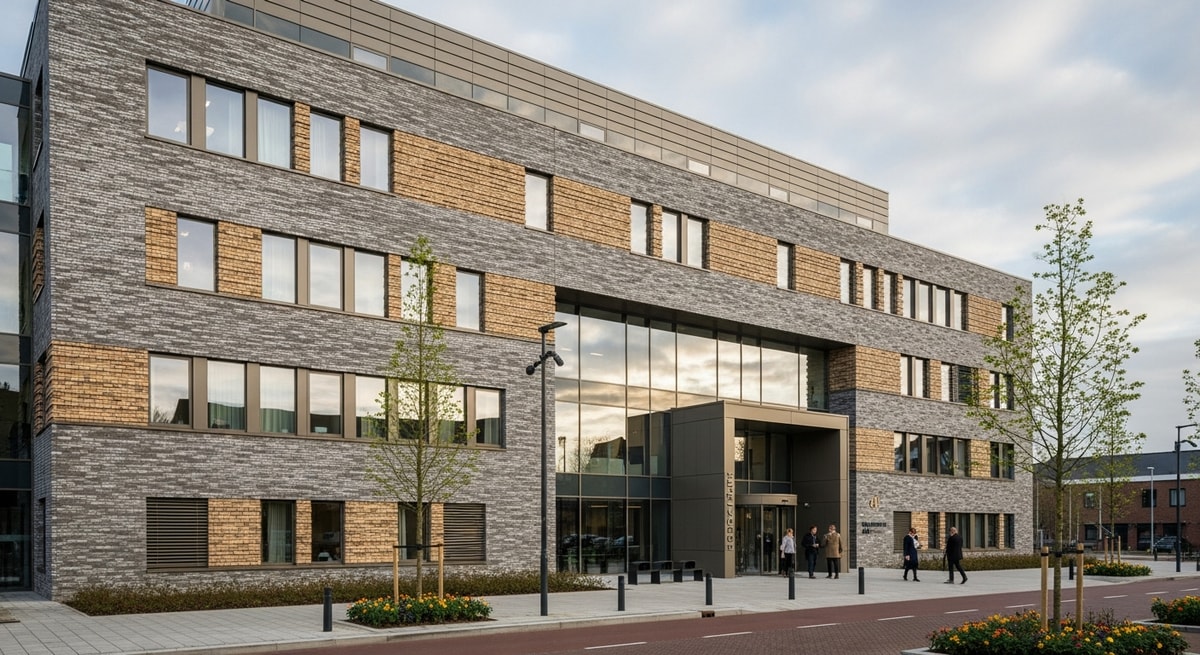
Dutch gemeenten maintain the Burgerlijke Stand civil registry, issuing geboorteakten, huwelijksakten, and other vital records
"Needed my Dutch geboorteakte and huwelijksakte translated to English for a US green card application. USCIS accepted both translations without any issues. The translator captured all the Dutch civil registry terminology perfectly. Very professional service."
"DoVisa translated my Dutch university diploma and cijferlijst for WES credential evaluation in Canada. WES processed my evaluation within standard time and accepted everything. The academic terminology was handled accurately."
"Good translation of my Dutch echtscheidingsbeschikking (divorce decree) for a UK spouse visa application. UK Visas and Immigration accepted the translation without follow-up questions. Would have liked slightly faster delivery but the quality was excellent."
"Our company needed Dutch notariële akten and KvK extracts translated to English for a subsidiary registration in London. Our UK solicitors at Companies House accepted everything on first submission. Corporate terminology was precise and professional."
"Translated my Dutch Verklaring Omtrent het Gedrag and geboorteakte for an Australian skilled worker visa. The Department of Home Affairs accepted both documents. Quick turnaround and clear formatting. Highly recommended."
"Had my Dutch medical records translated to English for a specialist referral in the United States. The medical terminology was handled well and the hospital accepted the translations. Pricing was fair for the volume of pages."
"Dutch-to-Chinese translation of my geboorteakte for marriage registration in Beijing. The translator understood both Dutch civil registry documents and Chinese requirements. The Chinese authorities accepted it with the apostille attached."
"Translation of my Dutch rijbewijs and arbeidsovereenkomst for IRCC in Canada was accurate but the initial delivery had a minor name spelling inconsistency between documents. They corrected it within a few hours and IRCC accepted everything, but it should have been caught in review."
"Needed urgent translation of a Dutch court judgment for a cross-border legal case in Germany. DoVisa delivered within 48 hours with express service. The legal terminology was impeccable and our German lawyers were impressed with the precision."
"Dutch diploma and transcript translated for ECE credential evaluation in the US. The evaluation went through smoothly. DoVisa understood the Dutch grading system and European Diploma Supplement format perfectly. Great academic translation service."
"Translated three Dutch birth certificates for a family immigration case with the Australian Department of Home Affairs. All translations were accepted. Good quality and reasonable turnaround time for the standard service tier."
"DoVisa translated my Dutch huwelijksakte and geboorteakten for a family reunification visa in New Zealand. Immigration New Zealand accepted all documents without requesting any revisions. The apostille coordination was seamless."
"Needed my Dutch geboorteakte and huwelijksakte translated to English for a US green card application. USCIS accepted both translations without any issues. The translator captured all the Dutch civil registry terminology perfectly. Very professional service."
"DoVisa translated my Dutch university diploma and cijferlijst for WES credential evaluation in Canada. WES processed my evaluation within standard time and accepted everything. The academic terminology was handled accurately."
"Good translation of my Dutch echtscheidingsbeschikking (divorce decree) for a UK spouse visa application. UK Visas and Immigration accepted the translation without follow-up questions. Would have liked slightly faster delivery but the quality was excellent."
Netherlands Document Translation FAQs
What types of Netherlands documents can be translated?
We translate all types of Netherlands documents including birth certificates (geboorteakte), marriage certificates (huwelijksakte), death certificates (overlijdensakte), divorce decrees (echtscheidingsbeschikking), academic diplomas and transcripts (diploma / cijferlijst), police clearance certificates (Verklaring Omtrent het Gedrag, VOG), employment contracts, notarial deeds (notariële akte), court judgments (vonnissen), and corporate documents including Kamer van Koophandel extracts. We also translate documents in Frysk (West Frisian), the co-official language of the province of Fryslân.
Do I need a sworn translator for Netherlands documents?
It depends on where you will submit the translation. For submission to Dutch domestic authorities — including the IND (Immigratie- en Naturalisatiedienst), gemeenten (municipalities), and Dutch courts (rechtbanken) — a sworn translation (beëdigde vertaling) by a translator registered in the Rbtv is required under the Wet beëdigde tolken en vertalers (Wbtv). For submission to international authorities such as USCIS, UK Visas and Immigration, IRCC (Canada), and the Australian Department of Home Affairs, a certified translation is generally sufficient. DoVisa provides certified translations for international use and can coordinate sworn translations through our network of Rbtv-registered translators when Dutch domestic submission is required.
How long does Netherlands document translation take?
Standard certified translation of Netherlands documents is delivered within 4-6 business days. Express processing is available for 2-3 business days, and rush delivery within 24 hours is available for select document types including single-page vital records. If you also need an apostille from a Rechtbank, standard apostille processing adds 5-10 business days. Processing times may vary based on document complexity, language pair, and current court workload for apostille requests.
What languages do you translate Netherlands documents to and from?
We translate Netherlands documents to and from 100+ languages. The most common language pairs include Dutch to English, Dutch to German, Dutch to French, Dutch to Spanish, Dutch to Arabic, Dutch to Turkish, Dutch to Polish, and Dutch to Portuguese. We also translate from Frysk (West Frisian), the co-official language of the province of Fryslân. For less common language pairs, our network of professional translators covers virtually every language combination needed for immigration, legal, academic, and business purposes.
Will the translation be accepted by immigration authorities?
Our certified translations of Netherlands documents are accepted by major international immigration authorities including USCIS (United States), UK Visas and Immigration, IRCC (Canada), the Australian Department of Home Affairs, and Immigration New Zealand. For the Dutch IND (Immigratie- en Naturalisatiedienst), a sworn translation by an Rbtv-registered translator is required — DoVisa can coordinate this upon request. We recommend checking the specific requirements of your destination country's immigration authority, as some may require apostille authentication in addition to the certified translation.
Do I need notarization with my Netherlands translation?
For most international submissions, a certified translation with a signed certification statement is sufficient without additional notarization. However, some destination countries or specific authorities may require the translator's signature to be notarized by a Dutch notaris before an apostille can be affixed. The Netherlands' system primarily relies on sworn translator certification under the Wbtv rather than separate notarization. DoVisa assesses each case individually and coordinates any required notarization or authentication steps as part of our service.
What is an apostille and do I need one for Netherlands documents?
An apostille is a standardized certificate that authenticates a document's origin for use in another country that is a member of the Hague Apostille Convention. The Netherlands is a founding signatory and the depositary state of this convention, with entry into force on 8 October 1965. Apostilles for Dutch documents are issued by any Rechtbank (district court) in the Netherlands. You need an apostille when your translated Dutch document will be submitted to authorities in another Convention member country. For non-member countries, consular legalization through the relevant embassy is required instead. DoVisa handles the complete apostille process including Rechtbank submission and tracked delivery.
How much does certified translation of Netherlands documents cost?
Our Netherlands document translation pricing follows a transparent per-page structure with volume discounts that apply automatically for larger documents. Pricing varies based on document length, language pair, and the processing speed you select. Express and rush service options are available for time-sensitive projects. Apostille processing through a Rechtbank and sworn translation coordination are quoted separately. Upload your documents on our order page to receive an instant, detailed quote before work begins — no hidden fees.
Can you translate handwritten Netherlands documents?
Yes, we translate handwritten Netherlands documents including older civil registry records, personal letters, historical legal documents, and annotations (kantmeldingen) added to official records. Older Dutch handwriting styles can be challenging to read, particularly documents from before the mid-20th century that may use archaic Dutch spelling conventions or the Kurrent script common in some historical records. Our translators experienced with Dutch archival documents can decipher these handwriting styles. For heavily deteriorated or difficult-to-read documents, we may request the highest quality scan possible to ensure accurate translation.
What format will I receive the Netherlands translation in?
You receive your certified translation in two formats: a high-resolution PDF delivered via email for immediate use, and the original signed hard copy shipped via tracked international courier. The PDF includes scans of the translator's certification statement, signature, and stamp. For sworn translations (beëdigde vertalingen), the hard copy includes the translator's official stamp and Wbtv registration number. If an apostille is ordered, the physical apostille sticker is affixed to the hard copy document. German, UK, US, Canadian, and Australian immigration authorities typically accept the PDF for initial submissions, with the hard copy required for in-person appointments.
What is the Wbtv and how does it affect my translation?
The Wbtv (Wet beëdigde tolken en vertalers) is the Dutch Act on Sworn Interpreters and Translators, in force since 1 January 2009. It established Bureau Wbtv and the Rbtv (Register beëdigde tolken en vertalers) as the official framework for regulating sworn translators in the Netherlands. Under the Wbtv, Dutch government agencies — including the IND, courts, and municipalities — are required to use translators registered in the Rbtv for official proceedings. If your translation will be submitted to a Dutch domestic authority, it must be produced by an Rbtv-registered translator. For international use, a certified translation without Rbtv registration is generally accepted.
Can you translate documents from the province of Fryslân in Frisian?
Yes, we translate documents containing Frysk (West Frisian), which is a co-official language of the Netherlands alongside Dutch in the province of Fryslân. Some civil registry documents, court records, and municipal correspondence from Fryslân may be issued partially or entirely in Frisian. Our translators with Frisian language expertise handle these documents accurately, including proper rendering of Frisian place names, terminology, and personal names that differ from their Dutch equivalents.
How do I get a Dutch document apostilled through DoVisa?
DoVisa manages the complete apostille process for Dutch documents. After your certified or sworn translation is completed, we submit the document to a Rechtbank (district court) for apostille issuance. Any Rechtbank in the Netherlands can issue an apostille regardless of where the document originated. The apostille takes the form of a printed sticker with an official seal, hologram, and handwritten signature. Standard processing takes 5-10 business days. Some documents, such as educational diplomas, may require prior legalization by the issuing institution or DUO (Dienst Uitvoering Onderwijs) before the Rechtbank can affix an apostille. DoVisa coordinates all prerequisite steps and delivers the fully apostilled document to your address via tracked courier.
Get Your Netherlands Documents Translated Today
Professional certified translations of Dutch documents accepted by international authorities worldwide