
Certified Belgian Document Translation
Professional Dutch, French, and German translations from Belgium accepted by USCIS, UK Home Office, Canada IRCC, and Australian immigration. Certified translations of geboorteakten, huwelijksakten, diplomas, and uittreksels uit het strafregister for international use.
TrustpilotSelect Languages
Drag & drop your documents here
or
PDF, JPEG, PNG, WebP — Max 10MB per file. Word documents: please save as PDF first.
Certified translators · Accepted by governments, courts & universities worldwide · View sample
Select a destination country to view pricing
How Belgian Certified Translation Works
Submit Your Documents Securely
Upload clear scans of your Belgian or foreign-language documents through our encrypted portal. We accept PDF, JPEG, and PNG formats. Belgium issues documents in Dutch, French, or German depending on the linguistic region (Flanders, Wallonia, Brussels-Capital, or the German-speaking Community). Our intake specialists verify all text is legible, including documents with diacritics (é, è, ê, ë, ï, ä, ö, ü) and official stamps.
Professional Translator Assignment
Your documents are matched with a translator experienced in Belgian administrative terminology across all three official languages. For Belgian civil status documents (akten van de burgerlijke stand / actes d'état civil), we assign translators who understand Belgium's trilingual system and the specific terminology used by municipal administrations in Flanders, Wallonia, and Brussels. Each translator's credentials are verified before every assignment.
Translation with Certification
The assigned translator produces your certified translation with a formal statement of accuracy, their professional credentials, signature, and date. A second qualified linguist reviews the translation for terminology accuracy, proper rendering of Belgian legal terms and proper nouns across Dutch, French, and German, and completeness. The certification statement confirms the translation faithfully represents the original Belgian document.
Delivery with Full Documentation
Receive your certified translation as a high-resolution PDF for immediate use, with the original signed hard copy shipped via tracked international courier. For documents requiring apostille certification, DoVisa coordinates the process through the FPS Foreign Affairs (FOD Buitenlandse Zaken / SPF Affaires étrangères). Since May 2018, Belgian apostilles are issued exclusively in electronic format (e-Apostille) through the eLegalisation platform.
Belgian Translation Service Specifications
Popular Language Pairs
We support all languages — 100+ language pairs available for Belgian documents in Dutch, French, and German.
Common Documents
- Birth certificates (geboorteakte / acte de naissance / Geburtsurkunde)
- Marriage certificates (huwelijksakte / acte de mariage / Heiratsurkunde)
- Divorce decrees (echtscheidingsvonnis / jugement de divorce / Scheidungsurteil)
- Death certificates (overlijdensakte / acte de décès / Sterbeurkunde)
- Criminal record extracts (uittreksel uit het strafregister / extrait de casier judiciaire)
- Academic diplomas and transcripts (diploma / diplôme / Diplom)
- Driver's licenses (rijbewijs / permis de conduire / Führerschein)
- Certificates of good conduct (getuigschrift van goed zedelijk gedrag / certificat de bonne conduite)
- Residence certificates (verblijfsattest / attestation de résidence)
- Notarial deeds (notariële akte / acte notarié)
Turnaround Time
Certification Details
Belgian Translation Requirements & Regulatory Framework
Embassy Acceptance
Notarization Process
Apostille Information
Legal Framework
Common Scenarios for Belgian Document Translation
US Immigration with Belgian Documents
Belgian nationals and residents applying for US visas, green cards, or citizenship must submit certified English translations of all non-English documents to USCIS. Belgian documents may be in Dutch, French, or German depending on the issuing region. Common documents include the geboorteakte / acte de naissance (birth certificate), huwelijksakte / acte de mariage (marriage certificate), uittreksel uit het strafregister / extrait de casier judiciaire (criminal record extract), and academic diplomas. USCIS requires a translator's certificate of accuracy — DoVisa's certified translations meet this standard.
UK Visa Applications with Belgian Documents
The UK Home Office (UKVI) requires professional certified translations of all non-English documents for visa and settlement applications. Belgian Dutch, French, and German documents are among the most common European documents submitted. Our translators produce translations with full credentials, signed statement of accuracy, contact details, and date — meeting all UKVI requirements for settlement, work, and family visas.
Canadian Immigration & Express Entry
Canada IRCC accepts certified translations for Express Entry, Provincial Nominee Programs, family sponsorship, and citizenship applications. Belgian French-language documents may be accepted directly by some IRCC processing centers since French is an official Canadian language, but Dutch- and German-language documents always require English or French translation. DoVisa handles translations from all three Belgian languages for Canadian immigration purposes.
Academic Credential Evaluation
Belgian diplomas, transcripts (puntenbriefje / bulletin), and attestations submitted to credential evaluation services such as WES, ECE, and NACES members in the United States, or UK ENIC in the United Kingdom, require certified English translations. Our translators are familiar with Belgium's higher education system, including universities, hogescholen / hautes écoles, and the Bologna Process credit system. We translate academic terminology accurately for international credential evaluators.
International Family Law Proceedings
Cross-border divorce, child custody, and inheritance cases involving Belgian documents require certified translations of echtscheidingsvonnissen / jugements de divorce, schikkingsakten, and notariële akten. Belgian family court documents use specialized legal terminology in Dutch, French, or German. DoVisa's legal translators handle complex Belgian civil procedure terminology for use in US, UK, Canadian, and Australian courts.
Belgium's Sworn Translator System: The Becq Law
Belgium operates a beëdigd vertaler / traducteur juré (sworn translator) system that was comprehensively reformed by the Law of 10 April 2014, commonly known as the Becq law after its parliamentary sponsor. This legislation introduced Articles 555/6–555/16 into the Code judiciaire (Judicial Code), establishing a formal National Register of sworn translators, interpreters, and translator-interpreters — known as the NR BVT (Nationaal Register van beëdigde vertalers, tolken en vertalers-tolken) in Dutch and RN TIJ (Registre national des traducteurs, interprètes et traducteurs-interprètes jurés) in French.
The register is maintained by the SPF Justice / FOD Justitie and is publicly searchable through the JustSearch platform at justsearch.just.fgov.be. To be registered, a candidate must hold a recognized degree or demonstrate sufficient professional experience, complete a mandatory training programme in law and Belgian legal institutions, pass a background check, and take a formal oath before the court. Each registered translator receives a unique VTI number (Vertalers-Tolken-Identificatienummer). A major modernization occurred on 1 December 2022, when digital signatures replaced physical stamps. A sworn translator's digital signature now legally authenticates a translation without requiring separate court validation.
DoVisa provides certified translations for international use. These are accepted by USCIS, the UK Home Office, Canada IRCC, and Australian DHA — authorities that do not require the Belgian sworn translator system. For documents being submitted to Belgian domestic authorities such as gemeentebesturen (municipal administrations), courts, or the Dienst Vreemdelingenzaken / Office des étrangers, a beëdigde vertaling by a registered sworn translator with a valid VTI number is required.

The Belgian Judicial Code governs the National Register of sworn translators maintained by the FOD Justitie
Belgium's Trilingual Civil Status System
Belgium's unique trilingual administrative system means that civil status documents are issued in Dutch, French, or German depending on the linguistic region where the event was registered. Flanders (Vlaanderen) issues documents in Dutch, Wallonia (Wallonië / Wallonie) in French, the Brussels-Capital Region in Dutch or French (bilingual), and the German-speaking Community (Deutschsprachige Gemeinschaft) in German. This trilingual reality means a single Belgian family may hold documents in multiple languages.
The most commonly translated Belgian civil status documents include the geboorteakte / acte de naissance / Geburtsurkunde (birth certificate), the huwelijksakte / acte de mariage / Heiratsurkunde (marriage certificate), the overlijdensakte / acte de décès / Sterbeurkunde (death certificate), and the uittreksel uit het strafregister / extrait de casier judiciaire (criminal record extract). Belgium also participates in the EU multilingual forms system, issuing meertalige uittreksels / extraits plurilingues under ICCS conventions, which simplify cross-border use within the EU but are not accepted by non-EU immigration authorities such as USCIS or the UK Home Office.
Belgian civil status records can be consulted and requested through the Just-on-web platform (justonweb.be), which is available in Dutch, French, German, and English. DoVisa translators maintain specialized expertise in Belgian civil status terminology across all three official languages, ensuring accurate translations whether your document originates from a Vlaamse gemeente, a commune wallonne, or a deutschsprachige Gemeinde.
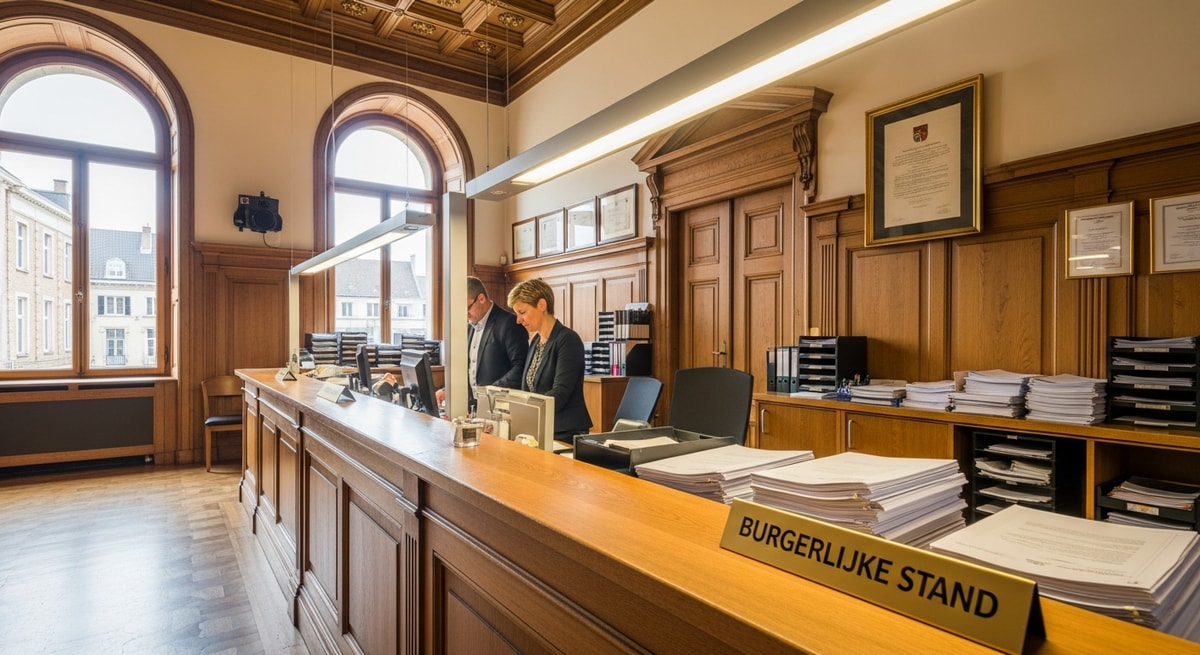
Belgian municipal administrations issue civil status documents in Dutch, French, or German depending on the linguistic region
Belgium's e-Apostille System: eLegalisation Since 2018
Belgium was an early adopter of electronic apostille technology. Since 1 May 2018, all Belgian apostilles are issued exclusively in electronic format through the eLegalisation platform (elegalisation.diplomatie.be), operated by the FPS Foreign Affairs (FOD Buitenlandse Zaken / SPF Affaires étrangères). Paper apostilles are no longer issued. Belgium ratified the Hague Apostille Convention on 11 December 1975, with entry into force on 9 February 1976, making it one of the earlier European adopters of the Convention.
The eLegalisation platform is accessible to accredited partners of the FPS Foreign Affairs, including municipalities, notaries, and other federal public services. These partners submit applications electronically and the e-Apostille is delivered directly to the applicant by email, typically within 48 hours. Citizens with a valid and activated Belgian eID (elektronische identiteitskaart / carte d'identité électronique) can also request legalization of digital copies of attestations and civil status documents directly through the platform. For paper documents, the applicant must first visit the Legalisation Service at Karmelietenstraat / Rue des Petits Carmes 27, 1000 Brussels.
DoVisa coordinates the complete Belgian e-Apostille process, handling document preparation, submission through the eLegalisation platform, and delivery of the authenticated document. Belgian e-Apostilles are recognized by all 125+ Hague Convention member states, making them essential for using Belgian documents in countries that require apostille authentication. Contact us at elegalisation@diplobel.fed.be for specific questions about the Belgian e-Apostille system, or let DoVisa manage the entire process on your behalf.
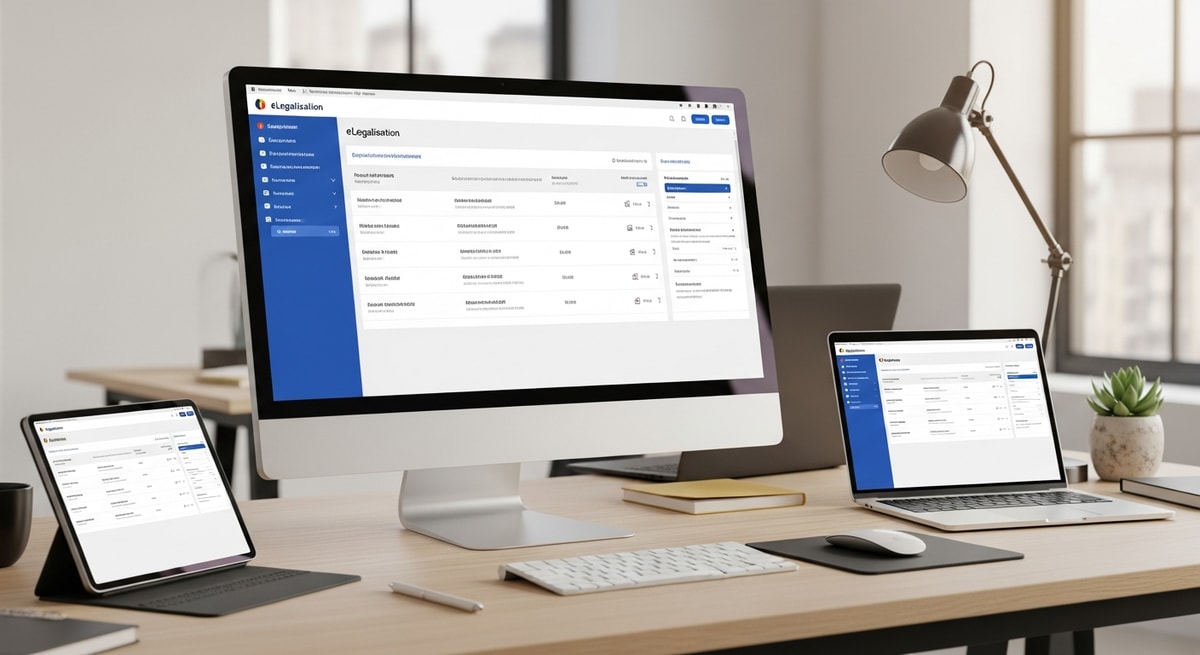
Belgium's eLegalisation platform has issued all apostilles exclusively in electronic format since May 2018
"Needed my Flemish geboorteakte and diploma translated to English for a USCIS green card application. DoVisa delivered both in 4 days. The translator handled all the Dutch administrative terminology perfectly. USCIS accepted everything on first submission — no RFE."
"French-language acte de mariage from a Brussels commune translated for a UK spouse visa. The Home Office accepted it immediately. Very professional service and the translator clearly understood Belgian French civil status documents."
"Belgian uittreksel uit het strafregister translated from Dutch to English for an Australian skilled visa. Department of Home Affairs accepted the translation. Good quality, though standard delivery took the full 6 days. Would use again."
"Had my Walloon birth certificate and Belgian diploma translated for WES credential evaluation in Canada. The translator understood the Belgian higher education system and ECTS credits. WES processed my evaluation without any follow-up questions."
"Belgian echtscheidingsvonnis from the rechtbank van eerste aanleg translated for a family-based US immigration petition. Complex legal terminology in Dutch but the translator handled it with precision. My immigration attorney confirmed the quality."
"French-language Belgian criminal record extract and birth certificate translated for Immigration New Zealand. Both accepted without issues. Fair pricing and professional handling. The only reason for 4 stars is I wished express service had been slightly faster."
"Translated four documents from Dutch — geboorteakte, huwelijksakte, diploma, and werkgeversattest — for an Australian partner visa. All four accepted by the Department of Home Affairs. The translator navigated the Flemish administrative language very well."
"Belgian acte de naissance from Brussels translated for a Canadian Express Entry application. The initial version had a small error in the spelling of a commune name. DoVisa corrected it within a few hours and IRCC accepted the revised translation without problems."
"Belgian notariële akte translated from Dutch to English for a property-related legal matter in the UK. The translator handled complex Belgian notarial terminology professionally. My British solicitor confirmed the translation was accurate and clear."
"Belgian academic transcript translated from French for a graduate school application in the United States. DoVisa captured all the grading terminology and credit details accurately. The university admissions office processed it without requesting clarifications."
"German-language Geburtsurkunde from the Deutschsprachige Gemeinschaft translated for USCIS. It is rare to find a service that handles documents from Belgium's German-speaking community. DoVisa did an excellent job. Accepted on first submission."
"Needed my Flemish geboorteakte and diploma translated to English for a USCIS green card application. DoVisa delivered both in 4 days. The translator handled all the Dutch administrative terminology perfectly. USCIS accepted everything on first submission — no RFE."
"French-language acte de mariage from a Brussels commune translated for a UK spouse visa. The Home Office accepted it immediately. Very professional service and the translator clearly understood Belgian French civil status documents."
"Belgian uittreksel uit het strafregister translated from Dutch to English for an Australian skilled visa. Department of Home Affairs accepted the translation. Good quality, though standard delivery took the full 6 days. Would use again."
Belgian Document Translation FAQs
What types of Belgian documents can be translated?
We translate all types of Belgian documents across all three official languages (Dutch, French, and German), including geboorteakten / actes de naissance (birth certificates), huwelijksakten / actes de mariage (marriage certificates), uittreksels uit het strafregister / extraits de casier judiciaire (criminal record extracts), academic diploma's / diplômes, rijbewijzen / permis de conduire (driver's licenses), notariële akten / actes notariés (notarial deeds), verblijfsattesten / attestations de résidence (residence certificates), and more. All translations are certified and accepted by international government agencies.
Do I need a sworn translator for Belgian documents?
It depends on the destination. Belgium has a beëdigd vertaler / traducteur juré (sworn translator) system established under the Law of 10 April 2014. For submission to Belgian domestic authorities such as gemeentebesturen, courts, or the Dienst Vreemdelingenzaken / Office des étrangers, a sworn translation by a registered translator with a VTI number is required. However, for submission to international authorities including USCIS (US), UK Home Office, IRCC (Canada), and Australian DHA, DoVisa's certified translations are sufficient and fully accepted. These countries do not require the Belgian sworn translator system.
How long does Belgian document translation take?
Standard certified translation is delivered within 4-6 business days. Express processing is available for 2-3 business days, and rush delivery within 24 hours for single-page vital records (birth, marriage, death certificates) with orders placed before 10:00 CET. Belgian e-Apostille processing through the FPS Foreign Affairs eLegalisation platform typically adds approximately 48 hours to the overall timeline.
What languages do you translate Belgian documents to and from?
We translate Belgian documents from all three official languages — Dutch, French, and German — into English and 100+ other languages. We also translate documents from any language into Dutch, French, or German for use in Belgium. The most common language pairs for Belgian documents are Dutch-to-English, French-to-English, and German-to-English. Our translators understand the specific administrative vocabulary used in each Belgian linguistic region: Flanders, Wallonia, Brussels-Capital, and the German-speaking Community.
Will my translated Belgian documents be accepted by USCIS?
Yes. USCIS requires certified translations with a translator's certificate of accuracy for all non-English documents. DoVisa's certified translations meet this standard for all immigration application types including family-based petitions, adjustment of status, employment-based visas, and naturalization. USCIS does not require a Belgian beëdigde vertaling / traduction jurée. Our certified translations are also accepted by the UK Home Office, Canada IRCC, Australian DHA, and New Zealand Immigration.
Do I need notarization with my Belgian translation?
For most immigration applications to the US, UK, Canada, and Australia, notarization is not required — a certified translation with a translator's certificate of accuracy is sufficient. However, some specific legal proceedings, real estate transactions, and corporate filings may require notarized translations. If your translation needs to be used in a Hague Convention member state, an apostille (rather than notarization) is the standard authentication method. DoVisa can advise on the specific requirements for your destination and purpose.
Is Belgium a member of the Hague Apostille Convention?
Yes. Belgium ratified the Hague Apostille Convention on 11 December 1975, with entry into force on 9 February 1976. The competent authority is the Legalisation Service of the FPS Foreign Affairs (FOD Buitenlandse Zaken / SPF Affaires étrangères). Since 1 May 2018, all Belgian apostilles are issued exclusively as e-Apostilles through the eLegalisation platform. Belgian documents bearing an e-Apostille are recognized in all 125+ Convention member states without further legalization.
How much does certified Belgian translation cost?
DoVisa's Belgian translation pricing follows a transparent per-page structure with volume discounts that apply automatically for larger projects. Pricing varies based on document length, source language (Dutch, French, or German), target language, and processing speed. Express and rush service options are available for time-sensitive projects. E-Apostille processing through the FPS Foreign Affairs eLegalisation platform is quoted separately. Upload your documents on our order page to receive an instant, detailed quote — no hidden fees.
Can you translate handwritten Belgian documents?
Yes. We regularly translate handwritten Belgian documents, including older civil status records, notarial deeds, and court documents. Belgian handwriting can be particularly challenging due to the three official languages and regional variations in administrative scripts. For best results, provide the highest resolution scan possible. Our translators are experienced with Belgian administrative handwriting in Dutch, French, and German. If any portion is illegible, we will flag it and consult with you before finalizing the translation.
What format will I receive my Belgian translation in?
You receive your certified translation in two formats: a high-resolution PDF delivered via email for immediate use, and a signed hard copy shipped via tracked international courier. The PDF includes the full translation, certification statement, translator credentials, and signature. For documents with an e-Apostille from the Belgian FPS Foreign Affairs, the electronic apostille certificate is delivered as a separate PDF. Both digital and physical copies are accepted by USCIS, UK Home Office, IRCC, and Australian DHA.
What is the Belgian eLegalisation platform?
The eLegalisation platform (elegalisation.diplomatie.be) is Belgium's official digital system for issuing apostilles and legalizations, operated by the FPS Foreign Affairs. Since 1 May 2018, all Belgian apostilles are issued exclusively through this platform in electronic format. Accredited partners such as municipalities, notaries, and federal services submit applications digitally. Citizens with a valid Belgian eID can also request legalization of digital documents directly. E-Apostilles are typically delivered by email within 48 hours. DoVisa handles the entire eLegalisation process on your behalf.
My Belgian document is in Dutch — can you still translate it?
Absolutely. Dutch is one of Belgium's three official languages, spoken primarily in Flanders (the northern region) and as one of two official languages in Brussels-Capital. Our translators are experienced with Belgian Dutch (Flemish) administrative terminology, which differs in some respects from Netherlands Dutch. We handle all types of Flemish documents including geboorteakten, huwelijksakten, diploma's, and judicial documents from Flemish courts. The same applies for French-language documents from Wallonia and Brussels, and German-language documents from the Deutschsprachige Gemeinschaft.
Get Your Belgian Documents Translated Today
Professional certified translations of Belgian documents in Dutch, French, and German — accepted by USCIS, UK Home Office, Canada IRCC, and Australian immigration