Certified Arabic & French Document Translation for Lebanon
Professional certified translations of Lebanese documents for immigration, legal proceedings, and international use. Arabic-English, French-English, and 100+ language pairs with full legal certification and consular legalization coordination.
TrustpilotSelect Languages
Drag & drop your documents here
or
PDF, JPEG, PNG, WebP — Max 10MB per file. Word documents: please save as PDF first.
Certified translators · Accepted by governments, courts & universities worldwide · View sample
Select a destination country to view pricing
How Lebanon Certified Translation Works
Submit Your Documents Securely
Upload clear scans of your Arabic, French, or multilingual Lebanese documents through our encrypted portal. We accept PDF, JPEG, and PNG formats. Our intake specialists review each upload for legibility and confirm whether your documents require a sworn translator (ترجمان محلف) registered with the Lebanese Ministry of Justice for domestic use, or a standard certified translation for international submission — such as immigration filings with USCIS, UK Visas and Immigration, or IRCC.
Professional Translator Assignment
Your documents are matched with a qualified translator experienced in Arabic and French legal and administrative terminology. For documents intended for Lebanese domestic government submission, we coordinate with sworn translators (ترجمان محلف) registered under Legislative Decree No. 65 of 1982 to ensure the translation carries the required official stamp and certification. For Lebanese documents going abroad, our certified translators provide translations accepted by USCIS, UKVI, IRCC, and immigration authorities worldwide.
Translation & Quality Review
The translator produces your certified translation with full attention to Arabic and French legal conventions, Lebanese naming structures, and the bilingual formatting common in Lebanese official documents. A second qualified linguist reviews terminology, date accuracy, and legal precision. Each translation includes the translator's signature, certification statement, and relevant stamps required by the receiving authority — ensuring compliance with both Lebanese and international standards.
Delivery with Full Certification
Receive your certified translation as a high-resolution PDF for immediate use, with the original stamped hard copy shipped via tracked courier. Since Lebanon is not a member of the Hague Apostille Convention, documents intended for international use require consular legalization. DoVisa coordinates the full authentication chain — including Ministry of Foreign Affairs and Emigrants attestation and destination embassy legalization — on your behalf.
Lebanon Translation Service Specifications
Popular Language Pairs
We support all languages — 100+ language pairs available for Lebanon documents.
Common Documents
- Individual civil extract (إخراج قيد فردي — Ikhrāj Qayd Fardī)
- Family civil extract (إخراج قيد عائلي — Ikhrāj Qayd ʿĀʾilī)
- Birth certificates (شهادة ولادة — Shahādat Wilādah)
- Marriage certificates (عقد زواج — ʿAqd Zawāj)
- Death certificates (شهادة وفاة — Shahādat Wafāh)
- Academic transcripts and diplomas (كشف علامات / شهادة جامعية)
- Police clearance certificates (سجل عدلي — Sijill ʿAdlī)
- Powers of attorney (وكالة — Wakālah)
- Lebanese national identity card (بطاقة هوية — Biṭāqat Hawiyyah)
- Commercial registration extracts (سجل تجاري — Sijill Tijārī)
Turnaround Time
Certification Details
Lebanon Translation Requirements & Regulatory Framework
Embassy Acceptance
Notarization Process
Apostille Information
Legal Framework
Common Scenarios for Lebanon Document Translation
Immigration & Visa Applications
Lebanese nationals and residents emigrating abroad need certified translations of individual civil extracts (إخراج قيد فردي), family civil extracts (إخراج قيد عائلي), marriage certificates (عقد زواج), and police clearances (سجل عدلي) for visa applications with USCIS, UK Visas and Immigration, IRCC, and other immigration authorities. DoVisa provides certified translations with consular legalization coordination for seamless international acceptance.
Employment & Work Permits
Professionals relocating to Lebanon or Lebanese workers seeking employment in the Gulf states, Europe, or North America require certified translations of educational certificates, professional qualifications, and experience letters. Lebanese professionals heading to GCC countries frequently need Arabic-to-English and Arabic-to-French translations of their credentials for work permit processing. Foreign professionals in Lebanon need sworn Arabic translations of their qualifications for the Ministry of Labour.
Marriage & Family Documentation
Lebanon's confessional system means marriage is administered by 18 different religious communities, each with their own courts and documentation formats. Foreign nationals marrying in Lebanon must provide certified Arabic translations of civil status extracts, single-status certificates, and passport pages for the relevant religious court. Lebanese family documents used abroad for spouse visa or family reunification applications need certified translation with consular legalization through the Ministry of Foreign Affairs and Emigrants.
Academic Credential Evaluation
Students and professionals seeking credential equivalency need certified translations of academic transcripts (كشف علامات), diplomas, and degree certificates. Many Lebanese academic documents are issued in Arabic and French. Graduates applying to international universities require certified English translations for agencies like WES, ECE, and NACES members. Foreign students enrolling in Lebanese universities must provide Arabic translations of their academic records for the Ministry of Education and Higher Education (وزارة التربية والتعليم العالي).
Business & Corporate Setup
Foreign investors establishing businesses in Lebanon need certified Arabic translations of articles of incorporation, board resolutions, financial statements, and commercial registration extracts. The Commercial Register at the Ministry of Justice requires all corporate documents in Arabic for registration. Lebanese companies expanding internationally need certified English or French translations of their commercial registration extracts (سجل تجاري) and corporate documents for foreign registration.
Court & Legal Proceedings
Cross-border litigation, contract disputes, and personal status cases in Lebanese courts require sworn Arabic translations of all foreign-language evidence from a registered ترجمان محلّف. Lebanese court judgments, notarial deeds, and legal documents being submitted to foreign courts require certified translation with consular legalization through the Ministry of Foreign Affairs and Emigrants. DoVisa handles Arabic and French legal terminology for documents ranging from commercial contracts to family law orders.
Consular Legalization: Getting Lebanese Documents Accepted Abroad
Since Lebanon is not a member of the Hague Apostille Convention, Lebanese documents destined for use in another country cannot receive a simple apostille. Instead, they must undergo a multi-step consular legalization process to be recognized as authentic by foreign authorities.
The legalization chain for Lebanese documents typically follows these steps: first, the document is authenticated by the issuing authority in Lebanon — for example, the General Directorate of Civil Status (المديرية العامة للأحوال الشخصية) for vital records, the Ministry of Education and Higher Education for academic documents, or the relevant court for legal documents. Second, the document is attested by the Ministry of Foreign Affairs and Emigrants (وزارة الخارجية والمغتربين), which verifies the authenticity of the issuing authority's seal. Third, the document is legalized by the embassy or consulate of the destination country located in Beirut. This final step confirms the document for acceptance in the target country.
The entire consular legalization process typically takes 10-20 business days, depending on the destination country's embassy processing times. Some embassies in Beirut offer expedited processing for an additional fee. DoVisa manages this complete chain on your behalf — from obtaining the initial Lebanese authentication through the final embassy legalization — ensuring your documents meet all requirements for international acceptance. For the reverse direction — foreign documents being used in Lebanon — the process mirrors itself, with authentication in the country of origin followed by legalization at the Lebanese embassy or consulate abroad.
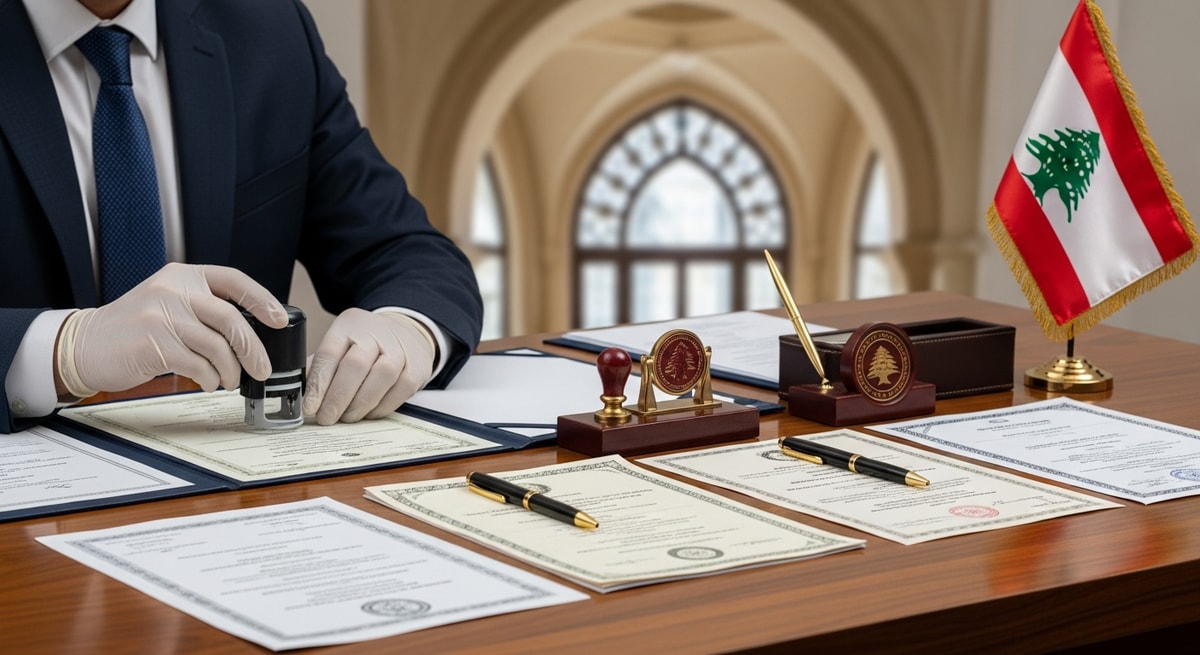
The Ministry of Foreign Affairs and Emigrants attests Lebanese documents as part of the consular legalization chain for international use
Lebanon's Civil Registration System: The Nufous and Vital Records
Lebanon's vital records are managed by the General Directorate of Civil Status (المديرية العامة للأحوال الشخصية / DGCS), which operates under the Ministry of Interior and Municipalities (وزارة الداخلية والبلديات). This directorate oversees 52 regional registry offices and is responsible for maintaining the civil register, known colloquially as the Nufous (النفوس) — the population registry that records births, deaths, marriages, divorces, and family relationships for all Lebanese citizens.
The two most commonly translated Lebanese civil documents are the individual civil extract (إخراج قيد فردي / Ikhrāj Qayd Fardī) and the family civil extract (إخراج قيد عائلي / Ikhrāj Qayd ʿĀʾilī). The individual extract contains the person's full name, father's and mother's names, date and place of birth, religion, marital status, and registration district. The family extract is a comprehensive document listing all family members — spouses, children, and parents — with their biographical details. Both documents are essential for immigration applications, inheritance proceedings, and international legal matters.
Lebanon's confessional political system directly impacts its civil registration. Marriage, divorce, and personal status matters are governed by 18 recognized religious communities, each maintaining their own courts and documentation practices — from Sunni and Shia Sharia courts to Maronite, Greek Orthodox, and Druze religious tribunals. This means a complete Lebanese marriage translation may involve both the religious court marriage certificate and the civil registry record, each with distinct formatting and terminology. Our translators are experienced with documentation from all Lebanese confessional communities.
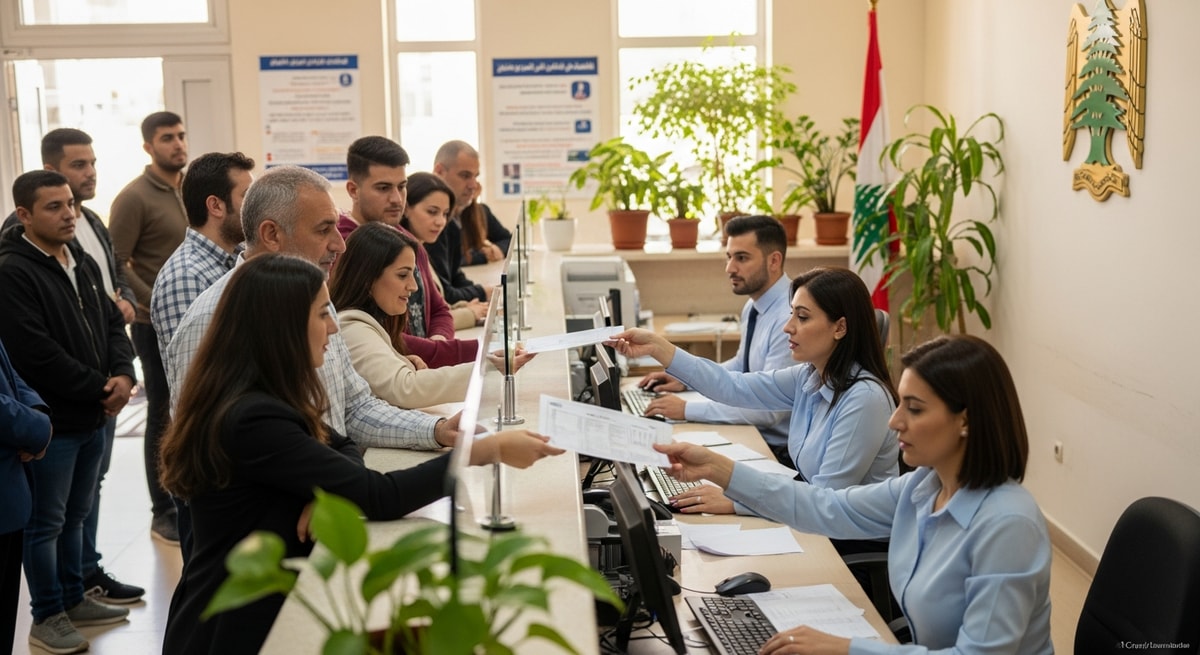
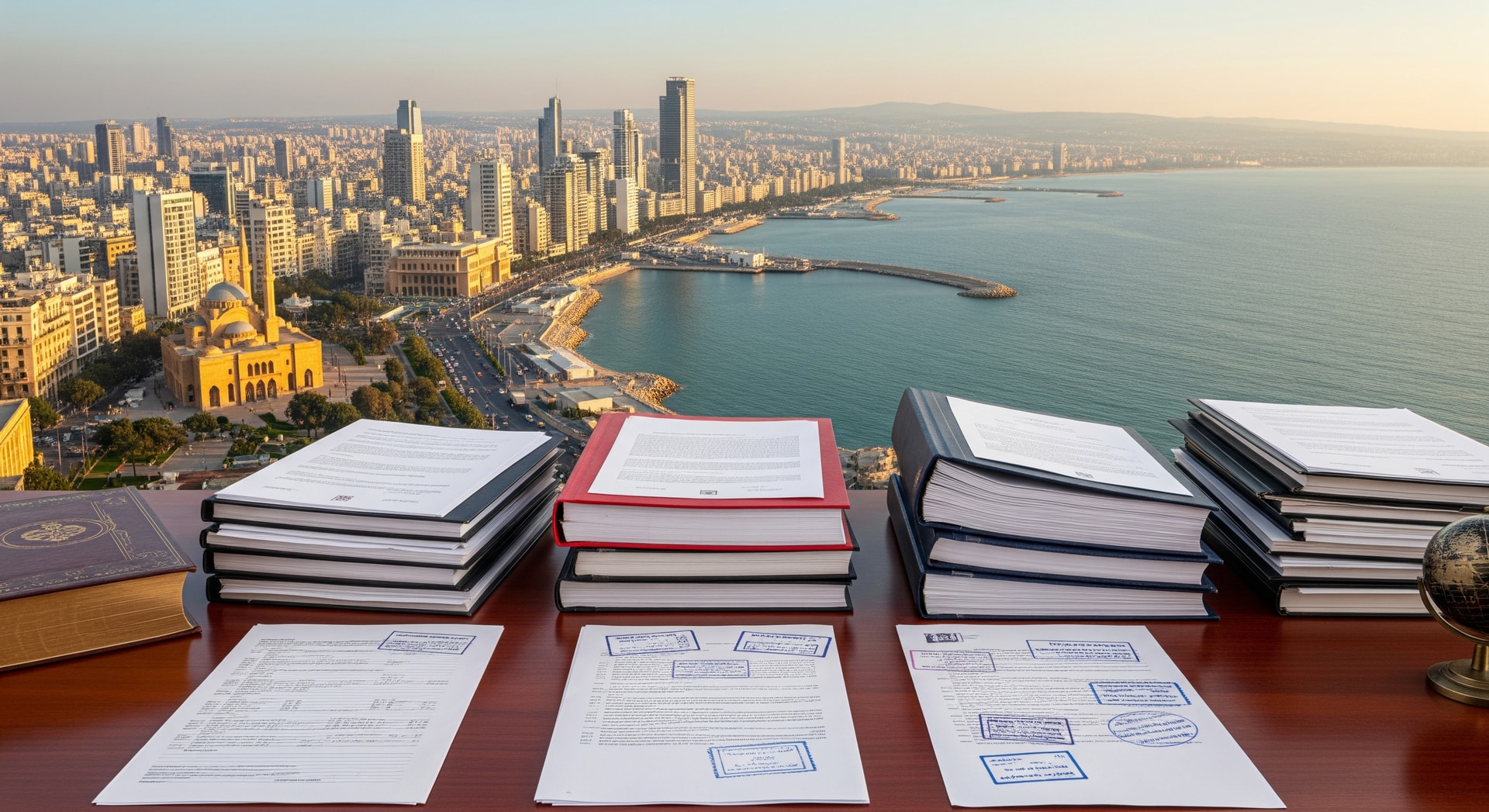
The General Directorate of Civil Status (DGCS) manages all vital records including the individual and family civil extracts
Bilingual Arabic-French Documents: Navigating Lebanon's Linguistic Heritage
Lebanon's unique linguistic landscape presents specific challenges for document translation. While Arabic is the sole official language under the Constitution, French holds a deeply embedded role in Lebanese legal, administrative, educational, and commercial life — a legacy of the French Mandate period (1920-1943). Many Lebanese official documents are issued in Arabic only, but significant categories of documents — particularly academic transcripts, commercial contracts, notarial deeds, and certain court documents — appear in bilingual Arabic-French format or in French alone.
Lebanese universities frequently issue transcripts and diplomas in both Arabic and French, and in some cases English as well. The Lebanese Bar Association and many professional licensing bodies issue certificates in French. Commercial registration extracts from the Commercial Register (السجل التجاري) are often bilingual. This bilingual reality means that translating Lebanese documents into English requires translators with native-level proficiency in both Arabic and French, as key legal terms, institutional names, and formatting conventions may differ between the Arabic and French versions of the same document.
Our translators are experienced with Lebanon's bilingual documentation conventions and understand how to reconcile discrepancies that occasionally arise between the Arabic and French portions of a single document — such as variations in name transliteration, differences in institutional titles, or formatting inconsistencies between language versions. When translating bilingual Lebanese documents, we provide a unified English translation that captures the complete content from both language versions, with annotations where the source languages diverge.
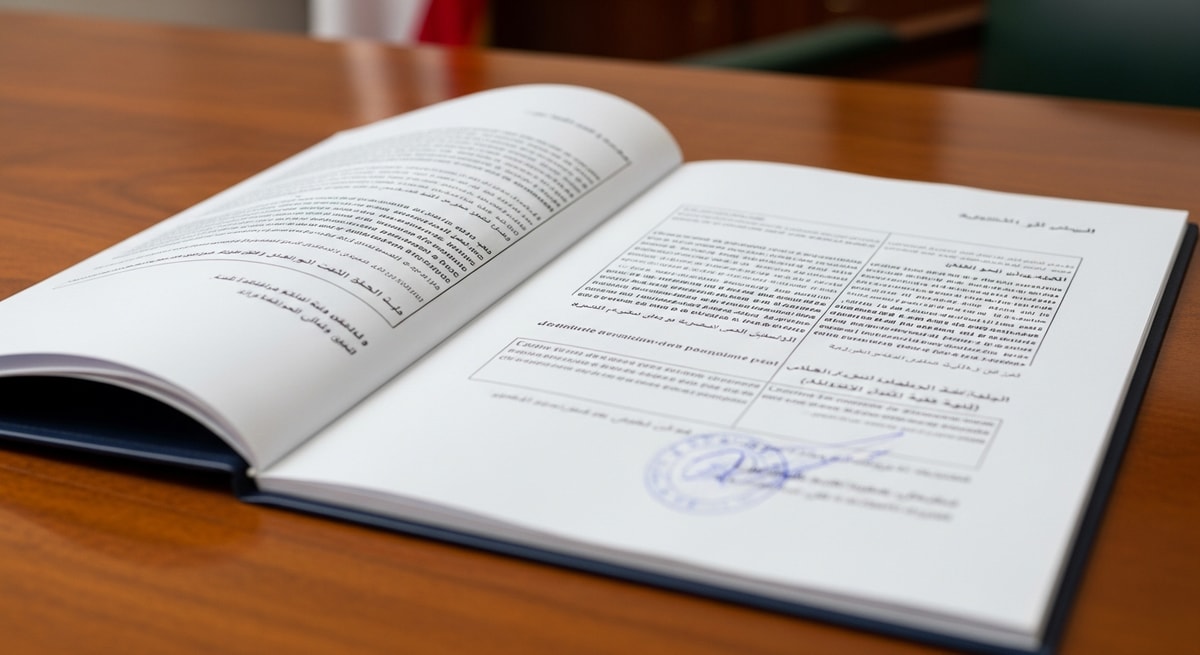
Many Lebanese official documents are issued in bilingual Arabic-French format, requiring translators proficient in both languages
"DoVisa translated my Lebanese individual civil extract (إخراج قيد فردي) from Arabic to English for a USCIS family petition. The translation captured all the details perfectly, including the confessional registration district. Accepted without any issues."
"Needed my Lebanese university diploma translated from French to English for a WES credential evaluation. The bilingual format was handled expertly — both the Arabic and French sections were accurately translated. WES processed my evaluation promptly."
"Arabic to English translation of my Lebanese family civil extract for a Canadian PR application through IRCC. The multi-page document listing all family members was translated accurately. Good quality overall, though express processing took an extra day."
"DoVisa translated my Lebanese police clearance certificate (سجل عدلي) from Arabic to English for an Australian skilled migration visa. The Department of Home Affairs accepted it on first submission. Thorough and professional service."
"Birth certificate and marriage certificate translated from Arabic to English for a UK spouse visa application. UKVI accepted both certified translations without question. The Arabic naming conventions were handled flawlessly across both documents."
"Corporate documents translated from French and Arabic to English for our company's expansion into Canada — articles of incorporation, board resolutions, and commercial registration extract. All translations were properly certified. Reliable service with clear communication."
"French to English translation of my Lebanese law degree and bar association certificate for credential evaluation with ECE. The legal terminology was translated precisely and ECE completed my evaluation without requesting corrections. Impressed with the quality."
"Needed my Lebanese death certificate translated from Arabic to English for a legal proceeding in the United States. Sensitive document handled with complete professionalism and discretion. The certified translation was accepted by the court immediately."
"DoVisa coordinated the consular legalization of my Lebanese academic transcripts along with the certified translation. The full Ministry of Foreign Affairs attestation and embassy legalization took about 15 business days. Solid service overall."
"Arabic to English translation of my Lebanese power of attorney for use in a New Zealand legal matter. The final translation was accurate, but the first draft had a minor formatting error in the notarial seal section that needed correction before delivery."
"Birth certificates for my two children translated from Arabic to English for a USCIS green card petition. The translator accurately preserved the Lebanese naming structure and the confessional details. Consistent formatting across both documents."
"Lebanese commercial registration extract translated from Arabic and French to English for a business partnership filing in the UK. The bilingual source document was handled seamlessly, producing a unified English translation. Very professional."
"DoVisa translated my Lebanese individual civil extract (إخراج قيد فردي) from Arabic to English for a USCIS family petition. The translation captured all the details perfectly, including the confessional registration district. Accepted without any issues."
"Needed my Lebanese university diploma translated from French to English for a WES credential evaluation. The bilingual format was handled expertly — both the Arabic and French sections were accurately translated. WES processed my evaluation promptly."
"Arabic to English translation of my Lebanese family civil extract for a Canadian PR application through IRCC. The multi-page document listing all family members was translated accurately. Good quality overall, though express processing took an extra day."
Lebanon Document Translation FAQs
What types of Lebanese documents can be translated?
We translate all types of Lebanese documents including individual civil extracts (إخراج قيد فردي), family civil extracts (إخراج قيد عائلي), birth certificates (شهادة ولادة), marriage certificates (عقد زواج), death certificates (شهادة وفاة), academic transcripts (كشف علامات), police clearances (سجل عدلي), national identity cards (بطاقة هوية), powers of attorney (وكالة), court judgments, and corporate documents. We handle Arabic-to-English, French-to-English, and 100+ other language pairs for Lebanese documents.
Are your Lebanon translations certified?
Yes. Every translation includes a signed certification statement attesting to accuracy and completeness, with the translator's credentials and contact details. For documents intended for Lebanese domestic use — courts, government ministries, or the General Directorate of Civil Status — a sworn translation (ترجمة محلّفة) by a registered ترجمان محلّف is required. DoVisa coordinates with sworn translators registered under Legislative Decree No. 65 of 1982. For international use, our certified translations are accepted by USCIS, UK Visas and Immigration, IRCC, the Australian Department of Home Affairs, and credential evaluation agencies worldwide.
How long does Lebanon document translation take?
Standard certified translation is delivered within 4-6 business days. Express processing is available for 2-3 business days, and rush delivery within 24 hours for select single-page documents. If consular legalization is included, additional time of 10-20 business days should be expected for the full Ministry of Foreign Affairs and Emigrants attestation and embassy legalization process. We provide a complete timeline estimate at the time of your order.
What languages do you translate Lebanese documents to and from?
Lebanon's bilingual heritage means many documents are issued in Arabic, French, or both. We provide direct translations between Arabic and English, French and English, Arabic and French, and all combinations with German, Spanish, Portuguese, Chinese, Dutch, Swedish, Japanese, Korean, and many other languages. Direct translation avoids quality loss from translating through an intermediary language — particularly important for bilingual Arabic-French Lebanese documents.
Will my translated Lebanese documents be accepted by immigration authorities?
Yes. Our certified translations of Lebanese documents are accepted by USCIS (United States), UK Visas and Immigration (UKVI), IRCC (Canada), the Australian Department of Home Affairs, and immigration authorities in New Zealand, Japan, and other countries. Each translation includes the translator's signed certification statement confirming accuracy and completeness as required by these authorities. For additional authentication, we can coordinate consular legalization through the Lebanese Ministry of Foreign Affairs and Emigrants and the destination country's embassy.
Do I need a sworn translator for Lebanese documents?
It depends on the destination. For documents submitted to Lebanese courts, government ministries, and the General Directorate of Civil Status, translations must be produced by a sworn translator (ترجمان محلّف) registered with the Ministry of Justice under Legislative Decree No. 65 of 1982. These sworn translators hold an official stamp and are listed on the Ministry of Justice registry. For international submissions to authorities like USCIS, UKVI, IRCC, or the Australian Department of Home Affairs, DoVisa's standard certified translation is accepted without requiring a Lebanese sworn translator. DoVisa can coordinate sworn translations upon request when needed for Lebanese domestic use.
Do I need notarization with my Lebanon translation?
For documents submitted to Lebanese courts and government agencies, a sworn translation by a registered ترجمان محلّف is required — this functions as Lebanon's equivalent of notarized translation, carrying the translator's official stamp and legal certification. A notary public (كاتب عدل) may provide additional attestation when required for specific legal proceedings. For international submissions to authorities like USCIS or UKVI, our standard certified translation is typically sufficient without additional Lebanese notarization.
Can Lebanese documents get an apostille?
No. Lebanon is not a member of the Hague Apostille Convention. Lebanese documents cannot receive an apostille. Instead, documents intended for international use must undergo consular legalization: (1) authentication by the issuing Lebanese authority, (2) attestation by the Ministry of Foreign Affairs and Emigrants (وزارة الخارجية والمغتربين), and (3) legalization by the destination country's embassy or consulate in Beirut. This process typically takes 10-20 business days. DoVisa manages the complete legalization chain on your behalf, from document preparation through final embassy legalization.
How much does certified translation for Lebanese documents cost?
Our Lebanese document translation pricing follows a transparent per-page structure with volume discounts that apply automatically for larger projects. Pricing varies based on document type, language pair, and processing speed selected. Consular legalization processing and express delivery surcharges are quoted separately. Upload your documents on our order page to receive an instant, detailed quote with no hidden fees.
Can you translate handwritten Lebanese documents?
Yes. Many older Lebanese documents — particularly handwritten court records, Ottoman-era registers, traditional marriage contracts from religious courts, and historical civil records — use Arabic handwriting styles that require specialized expertise to decipher. Our Arabic translators are experienced in reading both modern printed and handwritten Lebanese documents, including documents that combine typed text with handwritten annotations, marginal notes, and official stamps. If a document's legibility is compromised, we will notify you before proceeding and suggest solutions such as higher-resolution scanning.
What format will I receive my translated Lebanese document in?
You will receive your certified translation as a high-resolution PDF delivered via email, suitable for immediate digital submission to immigration authorities, credential evaluation agencies, and most government portals. The PDF includes the translated document, the certification statement, and the translator's credentials. If you need a physical hard copy with original stamps and signatures — for example, for court submission in Lebanon or for consular legalization processing — we ship via tracked international courier with delivery confirmation.
How does Lebanon's confessional system affect document translation?
Lebanon has 18 recognized religious communities, each maintaining their own personal status courts and documentation practices for marriage, divorce, inheritance, and family matters. This means marriage certificates, divorce decrees, and personal status documents vary significantly in format and terminology depending on the religious community — from Sunni and Shia Sharia courts to Maronite, Greek Orthodox, Armenian, Druze, and other religious tribunals. Our translators are familiar with documentation from all Lebanese confessional communities, ensuring accurate translation of community-specific terminology, religious legal references, and formatting conventions.
Can you translate bilingual Arabic-French Lebanese documents?
Yes. Many Lebanese official documents — including academic transcripts, commercial registration extracts, notarial deeds, and professional certificates — are issued in bilingual Arabic-French format. Our translators are proficient in both Arabic and French, allowing us to produce a unified English translation that captures the complete content from both language versions. When the Arabic and French portions contain minor discrepancies — such as variations in name transliteration or institutional titles — we note these differences and provide a consistent English translation with appropriate annotations.
Do I still need embassy legalization for Lebanese documents?
Yes. Since Lebanon is not a member of the Hague Apostille Convention, Lebanese documents intended for use abroad require consular legalization through the destination country's embassy or consulate in Beirut, following attestation by the Ministry of Foreign Affairs and Emigrants. This applies for all destination countries. Similarly, foreign documents being used in Lebanon require legalization by the Lebanese embassy in the country of origin. DoVisa manages both directions of the legalization process and will advise on the correct authentication path for your specific destination.
Get Your Lebanese Documents Translated Today
Professional certified translations with consular legalization coordination — accepted by authorities worldwide