

Certified Latin & Italian Vatican Document Translation
Expert translation of pontifical degrees, canonical certificates, and Vatican civil documents. Authenticated by the Secretariat of State and accepted by universities, governments, and ecclesiastical bodies worldwide.
TrustpilotSelect Languages
Drag & drop your documents here
or
PDF, JPEG, PNG, WebP — Max 10MB per file. Word documents: please save as PDF first.
Certified translators · Accepted by governments, courts & universities worldwide · View sample
Select a destination country to view pricing
How Holy See Document Translation Works
Submit Your Vatican Documents Securely
Upload clear scans of your Vatican or Holy See documents through our encrypted portal. We accept pontifical degrees (Diploma Pontificium), canonical certificates issued in Latin, Italian-language civil records from the Governorate of Vatican City State, and correspondence bearing the seal of the Secretariat of State (Segreteria di Stato). Our intake team reviews each upload within 2 hours for legibility.
Specialist Translator Assignment
Your documents are matched with a translator holding expertise in both ecclesiastical Latin (Latin ecclesiasticum) and modern Italian legal terminology. Vatican documents require understanding of canon law (Codex Iuris Canonici), pontifical university degree formats, and the specific administrative language of Holy See institutions such as the Roman Curia and the Governorate of Vatican City State.
Translation & Certification
The translator produces a complete certified translation with a signed declaration of accuracy covering both the Latin or Italian source text and any institutional seals, stamps, or official designations. Pontifical university degrees are translated with their full institutional titles and faculty designations. All canonical terminology, such as Licentia, Baccalaureatus, or Doctoratus, is rendered with appropriate equivalents and explanatory notes.
Delivery with Full Certification
Your certified translation is delivered as a high-resolution PDF with the translator's signed certification statement. Physical copies with original signatures are dispatched via tracked international courier. For documents requiring the consular legalization chain — authentication by the Secretariat of State followed by further legalization through apostolic nunciatures or Italian diplomatic missions — we coordinate the full process and provide status updates at each stage.
Holy See Translation Service Specifications
Popular Language Pairs
We support all languages — 100+ language pairs available for Holy See and Vatican City documents.
Common Documents
- Pontifical university degrees — Diploma Pontificium (Baccalaureatus, Licentia, Doctoratus)
- Pontifical faculty certificates and academic transcripts
- Holy Order ordination documents and certificates
- Canonical marriage certificates from the Vatican civil registry
- Birth certificates issued by the Governorate of Vatican City State
- Papal appointments and rescripts (Rescripta Apostolica)
- Letters of good standing and dimissorial letters
- Declarations of nullity (annulment decrees) from the Roman Rota
- Certificates of canon law studies
- Correspondence bearing the apostolic seal
Turnaround Time
Certification Details
Holy See Translation Requirements & Regulatory Framework
Embassy Acceptance
Notarization Process
Apostille Information
Legal Framework
Common Scenarios for Holy See Document Translation
Pontifical Degree Recognition for Academic Careers
Graduates of pontifical universities such as the Pontificia Università Gregoriana, the Pontificia Università della Santa Croce, or the Pontificia Università Lateranense often need their degrees — issued in Latin — translated for recognition at secular universities, employment applications, and professional licensing bodies. Our translators render the full degree title, faculty designation, and academic honors into English and other target languages with explanatory context for evaluating bodies.
Catholic Clergy Ordination & Assignment Documents
Priests, deacons, and religious ordained by the Holy See may require certified translations of their ordination certificates, dimissorial letters, exeat letters, and letters of good standing when transferring between dioceses in different countries. These documents, typically issued in Latin, must be accurately rendered for local bishops, diocesan offices, and canon law proceedings in non-Latin-speaking jurisdictions.
Annulment Decrees from the Roman Rota
Declarations of nullity (annulments) issued by the <strong>Tribunal of the Roman Rota</strong> (Tribunale della Rota Romana) may need to be translated for civil law purposes in the country of residence or for canonical marriage proceedings in a different diocese. These complex canonical documents require translators who understand both ecclesiastical Latin terminology and the procedural language of canon law marriage tribunals.
Vatican Civil Registry Documents for Immigration
Persons born, baptized, or married within Vatican City may have vital records issued by the Governorate of Vatican City State. These rare civil documents — birth certificates, marriage certificates from the Vatican civil registry — may be required for immigration applications, nationality claims, or estate proceedings in other countries. Our translators handle the distinctive formatting and Italian-language conventions of Vatican civil registry documents.
Canonical Certificates for Church Employment
Individuals seeking positions in Catholic educational institutions, hospitals, or diocesan offices abroad may need translations of their canonical certificates, including baptism certificates with updated notations, confirmation certificates, and declarations of ecclesial standing. These documents are used to verify sacramental status and canonical suitability for positions requiring Catholic in good standing status in different countries.
Ecclesiastical Latin: The Language of Vatican Documents
Latin remains the official language of the Holy See for all ecclesiastical documents, making Vatican document translation a highly specialized field. Unlike classical Latin or the Latin of ancient texts, Latin ecclesiasticum (ecclesiastical Latin) has evolved over two millennia of Church use and incorporates specific technical vocabulary drawn from Roman law, scholastic philosophy, and the administrative language of the Roman Curia. Pontifical degrees, for example, use precise terminology distinguishing academic levels: Baccalaureatus (first degree), Licentia (second degree, roughly equivalent to a Master's with canonical teaching permissions), and Doctoratus (doctorate). Each has specific canonical implications beyond the academic achievement they represent.
The Roman Curia — the administrative apparatus of the Holy See — issues documents in Latin across its many dicasteries, including the Dicastery for Divine Worship and the Discipline of the Sacraments, the Dicastery for the Clergy, and the Dicastery for Eastern Churches. Each dicastery has developed its own formulaic Latin for different document types, from rescripts (Rescripta Apostolica) granting ecclesiastical permissions to decrees (Decreta) establishing canonical facts. Our translators are trained in this specialized vocabulary and understand the canonical significance of terms that may appear identical in translation but carry distinct ecclesiastical meanings.
Pontifical universities, which operate under the apostolic constitution Veritatis Gaudium (2018), issue their degrees in Latin with institutional seals. The Pontificia Università Gregoriana, founded in 1551, and other pontifical faculties in Rome issue thousands of degrees annually that require translation for secular academic recognition. Our translators maintain current reference materials for all major pontifical institutions, ensuring consistent and accurate translation of their specific terminology, faculty names, and degree designations.
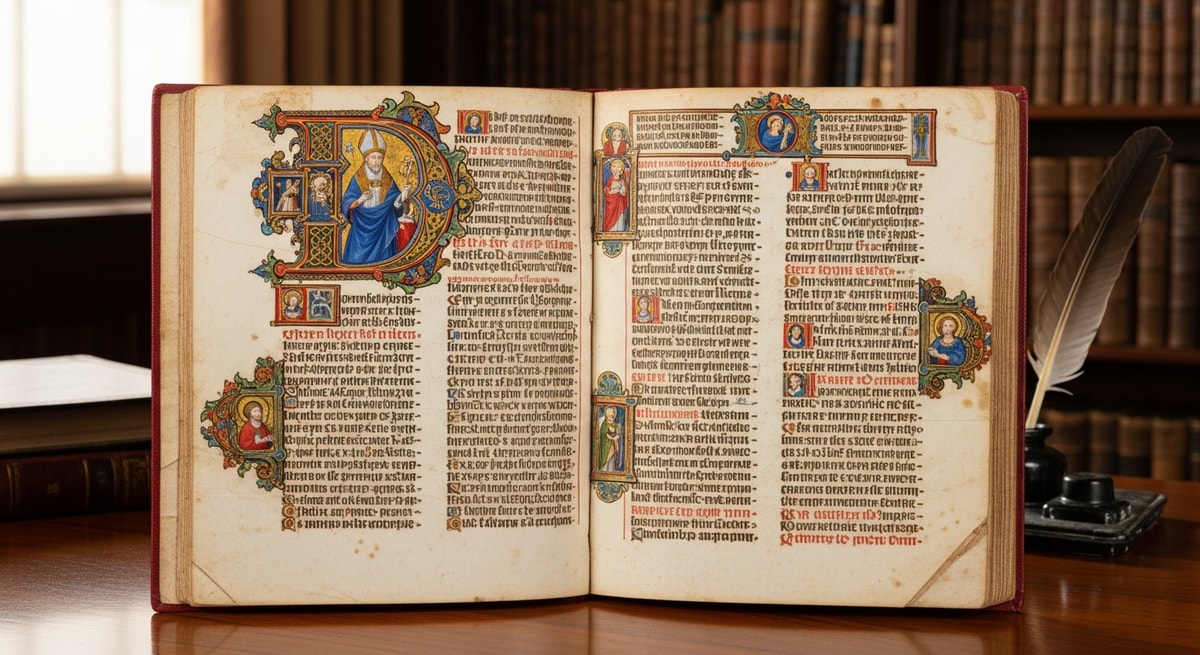
Latin ecclesiasticum — the language of Vatican official documents — requires specialist translators with canon law expertise
Consular Legalization for Vatican Documents
The Holy See occupies a unique position in international law: it is a sovereign subject of international law with its own diplomatic relations, yet it is not a member of the Hague Apostille Convention. This means that Vatican City State documents do not benefit from the simplified apostille procedure used by the Convention's 125+ member states. Instead, documents issued by the Holy See or the Governorate of Vatican City State intended for international use must undergo consular legalization.
The legalization chain for Holy See documents operates differently from most other states. Because the Holy See maintains apostolic nunciatures (diplomatic missions equivalent to embassies) in most countries rather than conventional embassies, document legalization may proceed through: (1) authentication by the Segreteria di Stato (Secretariat of State), which is the Holy See's equivalent of a Foreign Ministry; and (2) further legalization either through the apostolic nuncio in the destination country or, for practical purposes, through Italian diplomatic missions, given Italy's special relationship with the Holy See under the Lateran Treaty of 1929. The specific path depends on the destination country's requirements and its diplomatic relationship with the Holy See.
In practice, many international institutions — particularly universities, credential evaluation agencies, and immigration authorities in English-speaking countries — accept certified translations of Vatican documents without requiring the full legalization chain. USCIS, UK Visas and Immigration, and IRCC (Canada) routinely accept certified translations of pontifical degrees and canonical certificates for immigration and credential recognition purposes. DoVisa's certified translations with signed translator declarations satisfy these requirements directly, without the need for the Secretariat of State authentication in most cases. Where the full legalization chain is required, we coordinate the process with an estimated total timeline of 10-20 business days.
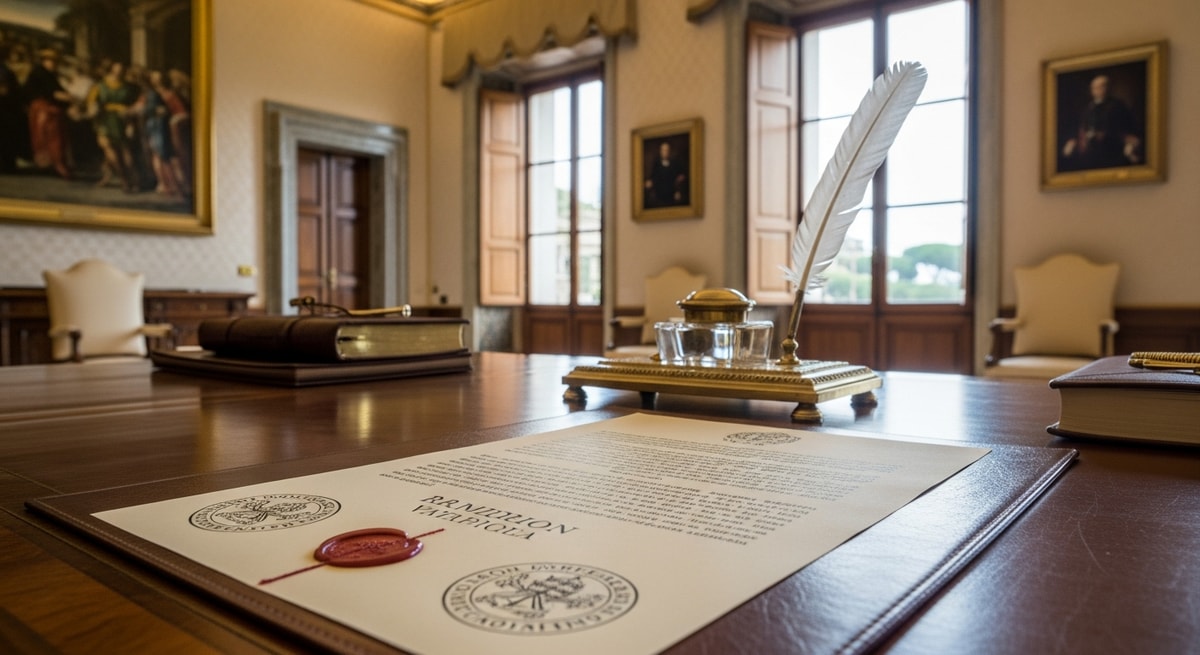
The Segreteria di Stato is the Holy See's primary authority for document authentication for international purposes
"Needed my ordination certificate from the Diocese of Rome translated from Latin to English for assignment to a parish in the US. The ecclesiastical Latin was handled perfectly. The translator understood the canonical terminology and the receiving diocese accepted the document immediately."
"My Baccalaureatus degree from the Pontificia Università Gregoriana needed translation for a credential evaluation with WES Canada. DoVisa translated all the Latin text including the faculty seal and IRCC accepted it with my immigration application. Excellent Latin expertise."
"Translation of my Licentia in Sacred Theology for a university position application in the UK. The translator included clear explanatory notes about the degree level equivalent which the UK university HR department appreciated. Process took 5 days, as quoted. Very professional."
"Translated canonical certificates and letters of good standing from Latin for transfer to a religious institute in Australia. The Australian authorities accepted all documents. The translator handled the Curial Latin formulas precisely and the certification met AITSL requirements."
"My Doctoratus in Canon Law from the Pontificia Università Lateranense translated to English for a faculty position in the United States. The academic credential evaluation agency accepted the translation and recognized the degree. Fast turnaround and great quality."
"Translation of a Roman Rota annulment decree for civil purposes. The initial draft had one canonical term rendered ambiguously, but the team revised it within 24 hours after I flagged it. Final result was accurate and the Italian civil registrar accepted the document."
"Needed my pontifical diploma from the Angelicum translated to English for a teaching position in the US. DoVisa correctly identified all the faculty and degree titles in Latin and the university's HR department confirmed it matched their requirements. Very satisfied."
"Certified translation of Vatican civil birth certificate for my grandmother's estate proceedings in France. The Italian text was translated correctly with all the civil registry details. The French notaire accepted it without any additional authentication requirements."
"DoVisa translated my Papal appointment rescript from Latin to English for my bishop in Canada. The translation of the Rescriptum Apostolicum was word-perfect and the diocesan chancery confirmed it met their canonical record requirements. Highly professional service."
"My certificate of canon law studies needed translation for a teaching position at a Catholic university in the US. The translator understood all the Roman Curia terminology and the university's academic affairs office accepted the translation immediately. Recommended."
"Needed my ordination certificate from the Diocese of Rome translated from Latin to English for assignment to a parish in the US. The ecclesiastical Latin was handled perfectly. The translator understood the canonical terminology and the receiving diocese accepted the document immediately."
"My Baccalaureatus degree from the Pontificia Università Gregoriana needed translation for a credential evaluation with WES Canada. DoVisa translated all the Latin text including the faculty seal and IRCC accepted it with my immigration application. Excellent Latin expertise."
"Translation of my Licentia in Sacred Theology for a university position application in the UK. The translator included clear explanatory notes about the degree level equivalent which the UK university HR department appreciated. Process took 5 days, as quoted. Very professional."
Holy See Document Translation FAQs
What types of Holy See and Vatican City documents can be translated?
DoVisa translates all official documents issued by Holy See institutions and the Vatican City State civil administration, including: pontifical university degrees (Baccalaureatus, Licentia, Doctoratus) issued in Latin by institutions such as the Pontificia Università Gregoriana, the Pontificia Università della Santa Croce, the Pontificia Università Lateranense, and the Pontificio Istituto Biblico; canonical certificates issued by Roman Curia dicasteries; ordination certificates and letters of good standing for clergy; Roman Rota annulment decrees; civil documents from the Governorate of Vatican City State such as birth and marriage certificates; and apostolic rescripts and papal appointments. All translations are certified and include the translator's declaration of accuracy.
Are Holy See documents in Latin or Italian?
Both languages are used, depending on the document type and issuing authority. Ecclesiastical documents — including pontifical degrees, canonical decrees, curial correspondence, ordination certificates, and most documents issuing from Roman Curia dicasteries — are issued in Latin (Latin ecclesiasticum). Civil documents issued by the Governorate of Vatican City State (Governatorato dello Stato della Città del Vaticano) — such as civil birth and marriage certificates registered in the Vatican civil registry — are issued in Italian. Some documents, particularly those for international audiences, may contain elements of both languages. DoVisa's translators are proficient in both ecclesiastical Latin and Italian administrative language, covering all document types.
How long does translation of Vatican documents take?
Standard certified translation is completed within 4-6 business days. Express service delivers within 2-3 business days, and rush delivery within 24 hours is available for select document types. Pontifical degrees and Roman Rota decrees, which involve specialized canonical Latin, are processed within the standard 4-6 business day window. For documents also requiring authentication by the Secretariat of State or the full legalization chain, add approximately 10-20 business days for the authentication process. We recommend starting the process well in advance of any academic enrollment or immigration deadline.
Can Holy See documents get an apostille?
No. The Holy See is not a Contracting Party to the Hague Apostille Convention (Convention of 5 October 1961). While the Holy See joined the 1954 Hague Convention on Civil Procedure, it has not acceded to the 1961 Apostille Convention. As a result, Vatican City State documents cannot receive an apostille. Documents intended for international use must instead undergo consular legalization: authentication by the Segreteria di Stato (Secretariat of State), followed by legalization through an apostolic nunciature or Italian diplomatic mission in the destination country. In many cases, however, certified translations are accepted by international institutions — including USCIS, IRCC (Canada), and UK Visas and Immigration — without requiring the full legalization chain.
Will a translated pontifical degree be accepted for academic credential evaluation?
Yes. Certified translations of pontifical university degrees are regularly accepted by major credential evaluation agencies in the US, Canada, Australia, and the UK. WES (World Education Services), ECE (Educational Credential Evaluators), and other NACES member agencies routinely evaluate pontifical degrees when provided with a certified translation. Our translators understand the specific equivalency questions these agencies ask — the difference between a Baccalaureatus, Licentia, and Doctoratus in the pontifical system — and structure translations to make degree-level information clear for evaluators unfamiliar with the Roman academic system. Our translations include contextual notes on the pontifical university system when appropriate.
Do I need notarization for my Holy See translation?
For most immigration, academic, and credential evaluation purposes, DoVisa's certified translation with a signed translator declaration is sufficient without additional notarization. USCIS, IRCC, and UK Visas and Immigration all accept certified translations without notarization for standard applications. However, certain use cases may require additional authentication steps: documents submitted to Italian domestic authorities may require notarization under Italian law; court proceedings may require additional attestation depending on the jurisdiction; and some countries require the complete consular legalization chain regardless of the document type. If you are unsure what level of authentication your destination authority requires, contact us and we will advise based on the specific authority and country.
What languages can Holy See documents be translated into?
We translate Holy See and Vatican City documents from Latin and Italian into English, French, German, Spanish, Portuguese, and all other major languages. We also translate documents into Latin and Italian — for example, translating foreign academic credentials into Italian for submission to Vatican institutions, or translating canonical correspondence from a diocesan language into Latin for Roman Curia submissions. Over 100 language pairs are supported. Contact us for translations involving less common target languages.
Can you translate Roman Rota annulment decrees?
Yes. The Tribunal of the Roman Rota (Tribunale della Rota Romana) issues its judgments and decrees in Latin, using specialized canon law procedural terminology. These declarations of nullity may be needed for: civil law purposes in the holder's country of residence (some civil jurisdictions recognize canonical annulments); remarriage in a different diocese; or documentation for canonical proceedings in another country. Our translators are familiar with the procedural Latin of the Roman Rota and understand the difference between a first-instance sentence, an appellate decree, and a formal declaration of nullity. We translate the full document including the canonical grounds cited (e.g., Canon 1095 of the Codex Iuris Canonici) and the court's operative decree.
How do I authenticate Vatican documents for use abroad?
The authentication path for Holy See documents depends on the destination authority's requirements. Many international institutions — particularly in the US, UK, Canada, and Australia — accept DoVisa's certified translation directly for immigration, academic, and employment purposes. For cases requiring official authentication: (1) the document must first be authenticated by the Segreteria di Stato (Secretariat of State), which is the Holy See's Ministry of Foreign Affairs equivalent; (2) further legalization is then obtained through the apostolic nunciature in the destination country or through Italian diplomatic missions given Italy's special relationship with the Holy See. This full legalization process typically takes 10-20 business days. DoVisa can coordinate the entire chain on your behalf.
What is ecclesiastical Latin and how does it differ from classical Latin?
Ecclesiastical Latin (Latin ecclesiasticum) is the form of Latin used in Catholic Church documents, liturgy, and administration. It differs from classical Latin in pronunciation, vocabulary, and some grammatical conventions. Ecclesiastical Latin incorporates: Greek and Hebrew loanwords for theological concepts (e.g., baptismus, eucharistia, diaconus); specialized canonical and legal terminology derived from Roman law; medieval Latin vocabulary and constructions not found in classical texts; and formulaic phrases specific to curial documents and canonical procedures. Our translators are trained specifically in ecclesiastical Latin and canon law terminology, distinguishing them from classicists who may be unfamiliar with the administrative and theological vocabulary of Vatican documents.
How much does Holy See document translation cost?
DoVisa uses a per-page pricing model with volume discounts that apply automatically as document volume increases. Pricing varies based on the source language (Latin requires more specialist time than Italian), document complexity, and chosen processing speed. Rush service carries a surcharge. Consular legalization through the Secretariat of State is quoted separately from translation. Upload your documents on our order page for an instant, transparent quote — no hidden fees and no commitment until you confirm the order.
Can you translate handwritten Vatican or canonical documents?
Yes, though legibility affects what can be translated. Many older canonical documents — including older ordination records, pre-digital parish registers, and historical Holy See correspondence — are handwritten in ecclesiastical Latin using varying scripts including Gothic, humanist, and modern cursive hands. Our translators with paleographic training can work with legible handwritten documents. Where any portion is illegible, we mark it clearly as [illegible] in the translation and note it in the certification statement rather than guessing. If a scan is too unclear to translate reliably, we contact you within 2 hours to discuss options.
What format will I receive my translation in?
Translations are delivered as a high-resolution PDF with the certified translator's declaration appended. The PDF includes both a clean English (or target language) rendering of the document and, where helpful for evaluators, notes on specific terminology or degree equivalencies. For applications requiring physical documents with original signatures — such as some court submissions or authentication steps — we dispatch a hard copy via international tracked courier to your address. If you require both digital and physical delivery, select this option during checkout. Our standard digital delivery satisfies the requirements of USCIS, IRCC, UK Visas and Immigration, and most credential evaluation agencies.
Get Your Holy See Documents Translated Today
Expert Latin and Italian translation for pontifical degrees, canonical certificates, and Vatican civil documents — accepted by international universities, immigration authorities, and ecclesiastical bodies worldwide