Certified Cuban Document Translation
Professional Spanish translations of Cuban documents accepted by USCIS, the UK Home Office, Canada IRCC, and Australian immigration. Certified translations of certificaciones de nacimiento, certificaciones de matrimonio, títulos universitarios, and certificaciones de antecedentes penales for international use.
TrustpilotSelect Languages
Drag & drop your documents here
or
PDF, JPEG, PNG, WebP — Max 10MB per file. Word documents: please save as PDF first.
Certified translators · Accepted by governments, courts & universities worldwide · View sample
Select a destination country to view pricing
How Cuban Certified Translation Works
Submit Your Documents Securely
Upload clear scans of your Cuban or foreign-language documents through our encrypted portal. We accept PDF, JPEG, and PNG formats. For Cuban documents containing official stamps (sellos), handwritten annotations, and Spanish diacritics (á, é, í, ó, ú, ñ), our intake team verifies that all text is legible before translation begins. Documents issued by the Registro del Estado Civil, the Ministerio de Justicia (MINJUS), the Ministerio de Educación Superior (MES), or any Cuban consultoría jurídica are all accepted.
Professional Translator Assignment
Your documents are matched with a Spanish language specialist experienced in Cuban document types. For Cuban civil registry documents (certificaciones del Registro del Estado Civil), we assign translators with expertise in Cuba's vital records system governed by Ley No. 51 del Registro del Estado Civil and the terminology used across the four registry sections: nacimientos, matrimonios, defunciones, and ciudadanía. For certificaciones de antecedentes penales and academic títulos, translators with knowledge of Cuban government formatting conventions are selected.
Translation with Certification
The assigned translator produces your certified translation with a formal statement of accuracy, professional credentials, signature, and date. A second qualified linguist reviews the translation for terminology accuracy, proper rendering of Cuban legal terms and proper nouns, and completeness. The certification statement confirms the translation faithfully represents the original Cuban document. This is distinct from Cuba's domestic ESTI (Equipo de Servicios de Traductores e Intérpretes) system — our certified translations are designed for international use at USCIS, UK Home Office, IRCC, and similar authorities.
Delivery with Full Documentation
Receive your certified translation as a high-resolution PDF for immediate use, with the original signed hard copy shipped via tracked international courier. Since Cuba is not a member of the Hague Apostille Convention, documents intended for use abroad require consular legalization rather than apostille. DoVisa can coordinate legalization through the Ministerio de Justicia (MINJUS) — which assumed responsibility for document legalization from MINREX in February 2025 — followed by authentication at the destination country's embassy or consulate in Havana.
Cuba Translation Service Specifications
Popular Language Pairs
We support all languages — 100+ language pairs available for Cuban documents.
Common Documents
- Birth certificates (certificación de nacimiento)
- Marriage certificates (certificación de matrimonio)
- Death certificates (certificación de defunción)
- Divorce certificates (certificación de divorcio)
- Criminal record certificates (certificación de antecedentes penales)
- Academic degrees (título universitario)
- Academic transcripts (certificación de calificaciones)
- Medical certificates (certificado médico)
- Powers of attorney (poder notarial)
- Court judgments (sentencias judiciales)
- Single status certificates (certificación de soltería)
Turnaround Time
Certification Details
Cuba Translation Requirements & Regulatory Framework
Embassy Acceptance
Notarization Process
Apostille Information
Legal Framework
Common Scenarios for Cuban Document Translation
US Immigration with Cuban Documents
Cuban nationals form one of the largest Caribbean immigrant communities in the United States, with over 2.4 million US residents of Cuban origin. USCIS requires certified English translations of all Spanish-language documents for asylum applications, adjustment of status under the Cuban Adjustment Act, family-based petitions, and naturalization. Common documents include the certificación de nacimiento (birth certificate), certificación de matrimonio (marriage certificate), certificación de antecedentes penales (criminal record certificate), and academic títulos universitarios. DoVisa's certified translations meet all USCIS requirements without requiring a Cuban ESTI-produced translation.
Canadian Immigration & Family Sponsorship
Canada IRCC accepts certified translations for Express Entry, Provincial Nominee Programs, family sponsorship, and citizenship applications. Cuban nationals frequently need translations of their certificaciones del Registro del Estado Civil, academic credentials, and professional qualifications for Canadian immigration. Common documents include the certificación de nacimiento, certificación de calificaciones (academic transcripts), and certificación de antecedentes penales. DoVisa handles both Spanish-to-English and Spanish-to-French translations for Canadian immigration purposes.
Academic Credential Evaluation
Cuban títulos universitarios, certificaciones de calificaciones, and constancias de estudios submitted to credential evaluation services such as WES, ECE, and NACES members in the United States, or UK ENIC in the United Kingdom, require certified English translations. Our academic translators are familiar with the Cuban higher education system including institutions regulated by the Ministerio de Educación Superior (MES) and the distinction between títulos de licenciatura, maestría, and doctorado awarded by Cuban universities.
UK Visa Applications with Cuban Documents
The UK Home Office (UKVI) requires professional certified translations of all non-English documents for visa and settlement applications. Cuban documents commonly submitted include birth certificates, marriage certificates, divorce records, police clearance certificates, and employment references. Our translators produce translations with the translator's credentials, signed statement of accuracy, contact details, and date — meeting all UKVI requirements for Cuban document submissions.
Family Reunification & Marriage Documentation
The Cuban diaspora frequently requires translated documents for family-based immigration petitions, spousal visa applications, and international marriage registrations. Commonly translated documents include certificaciones de nacimiento for dependents, certificaciones de matrimonio for spousal petitions, certificaciones de divorcio for remarriage eligibility, and sentencias judiciales for custody matters. DoVisa ensures accurate rendering of Cuban civil registry terminology for submission to USCIS, the UK Home Office, IRCC, and other immigration authorities.
Cuba's Civil Registry System: Registro del Estado Civil Under MINJUS
Cuba's civil registry system — the Registro del Estado Civil — operates under the Ministerio de Justicia (MINJUS) and is governed by Ley No. 51 del Registro del Estado Civil, enacted on 15 July 1985. The registry is organized into four sections: nacimientos (births), matrimonios (marriages), defunciones (deaths), and ciudadanía (citizenship), each maintained at municipal-level offices across Cuba's 168 municipalities in 15 provinces and the special municipality Isla de la Juventud.
The certificación de nacimiento (birth certificate) is the foundational identity document in Cuba, required for virtually every official procedure. Cuban birth certificates include the full names of both parents, the place and date of birth, and the Registro del Estado Civil office where the registration was recorded. Certificates can be issued in two formats: certificaciones en extracto (extract certificates containing essential data) or certificaciones literales (literal certificates that are faithful copies of the original entry). For immigration purposes, authorities such as USCIS typically require the literal certification.
Since September 2022, the MINJUS has offered online certificate requests through the portal certificaciones.minjus.gob.cu, allowing Cubans both on the island and abroad to request certificaciones de nacimiento, matrimonio, defunción, soltería (single status), capacidad legal (legal capacity), and ciudadanía certificates electronically. This modernization has simplified the process of obtaining certified copies for translation and international use, though processing times can vary significantly depending on the province and current demand.
DoVisa's translators maintain specialized expertise in Cuban civil registry terminology, the Registro del Estado Civil document formats from different time periods, and the specific rendering conventions expected by USCIS, the UK Home Office, IRCC, and Australian immigration authorities.
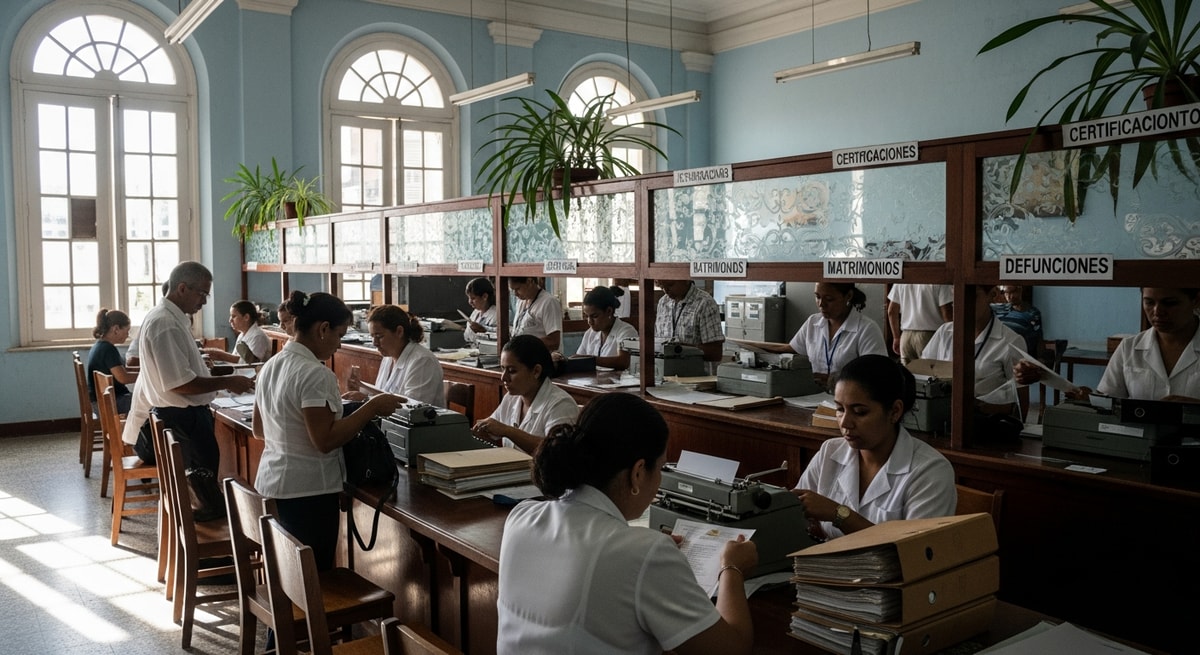
The Registro del Estado Civil operates under MINJUS across Cuba's 168 municipalities and 15 provinces
Consular Legalization: Getting Cuban Documents Accepted Abroad
Since Cuba is not a member of the Hague Apostille Convention, Cuban documents intended for international use must undergo consular legalization — a multi-step authentication process that replaces the simplified apostille procedure available in Convention member states. In March 2024, Cuban authorities announced they were studying accession to the Convention, but as of February 2026 no formal instrument has been deposited with the Netherlands, and the Convention is not in force for Cuba.
The legalization process underwent a significant structural change in February 2025 when the Ministerio de Justicia (MINJUS) assumed document legalization responsibilities from the Ministerio de Relaciones Exteriores (MINREX), formalized through Acuerdo 10034 del Consejo de Ministros (adopted 30 December 2024, published in the Official Gazette on 3 February 2025). MINJUS now oversees the complete legalization chain, integrating registry entities, consultorías jurídicas (legal consultancies), and the new legalization unit into a single administrative framework.
The consular legalization process for Cuban documents follows these steps: (1) obtain the certified document from the issuing authority (e.g., the Registro del Estado Civil for vital records, or the Ministerio de Educación Superior for academic credentials), (2) authenticate the document through MINJUS legalization, and (3) legalize at the destination country's embassy or consulate in Havana. Processing times at MINJUS can be lengthy — the ministry processed over 860,000 legalization requests in 2024 and received over 600,000 in just the first half of 2025, leading to significant backlogs.
For documents being submitted to USCIS, the UK Home Office, IRCC, or Australian DHA, consular legalization is generally not required — these authorities accept certified translations of Cuban documents without additional authentication. Consular legalization is primarily needed when submitting Cuban documents to countries that require full chain-of-custody authentication.
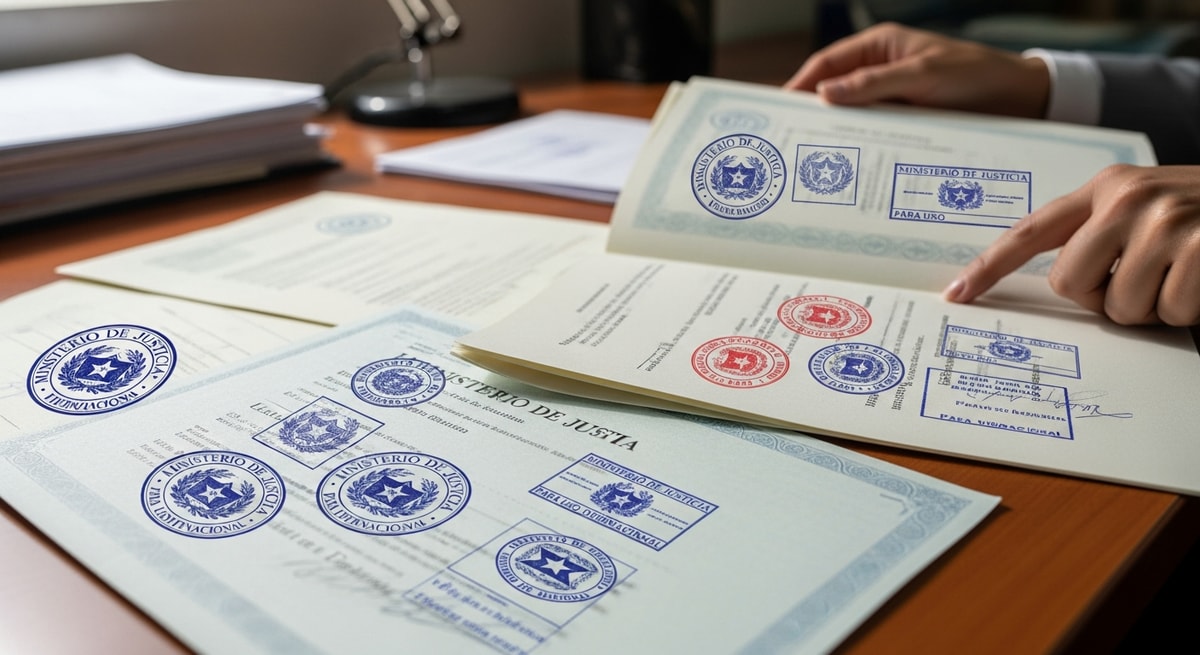
MINJUS assumed document legalization from MINREX in February 2025, processing over 860,000 requests annually
ESTI and Cuba's National Translation System
Cuba's official translation infrastructure centers on the Equipo de Servicios de Traductores e Intérpretes (ESTI), the state translation body founded in 1973 and historically subordinate to the Ministerio de Relaciones Exteriores (MINREX). ESTI provides translation and interpretation services in 18 languages including Spanish, English, French, German, Russian, Arabic, Chinese, Portuguese, Italian, and Vietnamese — reflecting Cuba's extensive international diplomatic relationships.
In 2019, Decreto No. 365 created the Sistema Nacional de Traducción e Interpretación — a comprehensive national framework integrating ESTI, the Asociación Cubana de Traductores e Intérpretes (ACTI), certified translators and interpreters, and relevant government bodies. This decree formalized the certification process for translators and introduced the figure of the traductor e intérprete certificado por cuenta propia (certified self-employed translator), allowing qualified professionals to operate independently while meeting state standards.
Translator certification under the Sistema Nacional requires candidates to be university graduates, pass written examinations administered by ESTI in coordination with the Ministerio de Justicia and the Tribunal Supremo Popular (for judicial and legal specializations), and be at least 18 years of age. The three-hour translation examination is convened annually. Specialized certifications are available for traductores e intérpretes jurídicos o judiciales (legal and judicial translators and interpreters), who can produce translations with full legal validity before Cuban courts and government authorities.
DoVisa provides certified translations for international use — accepted by USCIS, UK Home Office, IRCC, and Australian DHA — which are distinct from ESTI-produced translations required for Cuban domestic proceedings. For clients needing translations accepted by Cuban domestic authorities, DoVisa can coordinate with ESTI-certified professionals upon request.
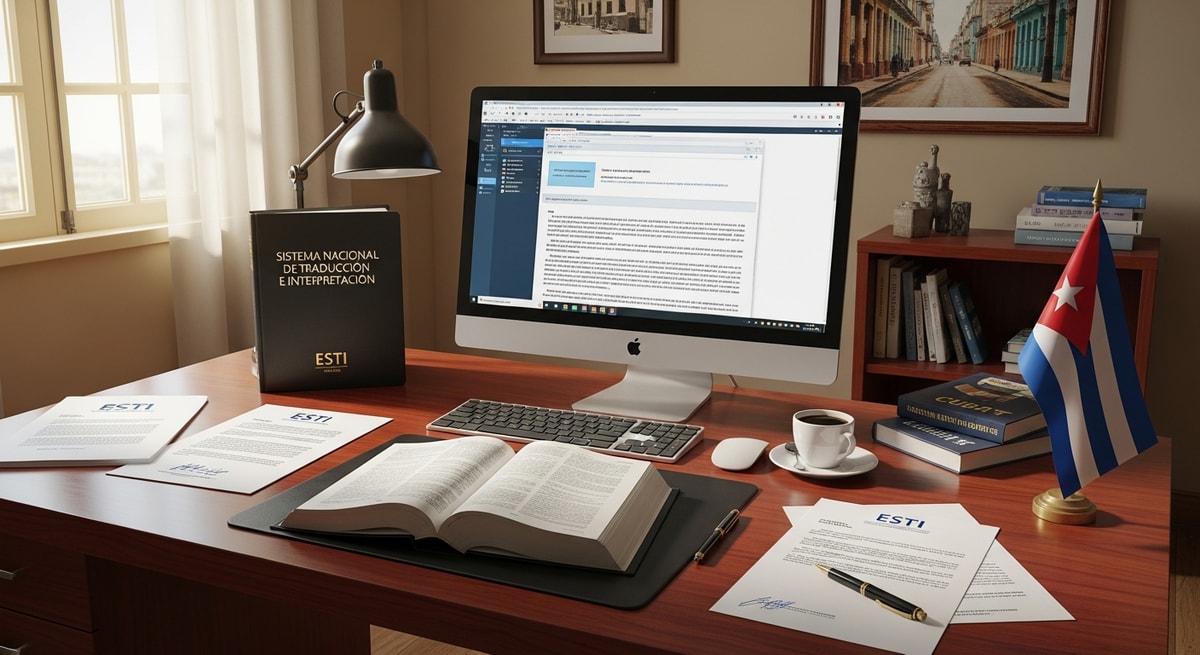
ESTI has been Cuba's official translation body since 1973, now part of the Sistema Nacional established by Decreto No. 365 de 2019
"Needed my Cuban certificación de nacimiento and certificación de matrimonio translated for a USCIS adjustment of status application under the Cuban Adjustment Act. DoVisa delivered both within 4 days. My immigration attorney confirmed USCIS accepted everything without an RFE."
"Cuban título universitario and certificación de calificaciones translated to English for WES credential evaluation. The translator understood the Cuban higher education system and rendered the degree classifications accurately. WES processed my evaluation without issues."
"Birth certificate and certificación de antecedentes penales translated for my UK spouse visa application. The Home Office accepted both translations. Delivery took the full 6 business days on standard service, which was a bit slow, but the translation quality was very good."
"Translated my certificación de divorcio and certificación de nacimiento for a Canadian family sponsorship application. IRCC accepted both documents on first submission. The Cuban legal terminology was rendered precisely. Highly recommend for Cuban documents."
"Three documents translated for an Australian partner visa: Cuban birth certificate, marriage certificate, and police clearance. The Department of Home Affairs accepted all three certified translations. Very professional service and clear communication throughout."
"Cuban university transcript and degree certificate translated for a graduate program application at a UK university. The translator captured the Cuban grading scales and program details accurately. UK ENIC accepted the documents for credential evaluation. Solid service."
"Needed my certificación de antecedentes penales and certificación de nacimiento translated for a USCIS naturalization application. Both translations were accepted at my citizenship interview. The translator was clearly experienced with Cuban government documents."
"Cuban certificación de matrimonio translated for a New Zealand partner visa. There was a small date formatting inconsistency — the translator initially used a different format than the original. DoVisa corrected it within hours. Immigration NZ accepted the final version."
"Moved from Havana to Miami and needed four documents translated: certificación de nacimiento, certificación de matrimonio, certificación de antecedentes penales, and título universitario. USCIS accepted all four for my adjustment of status application. Fast turnaround."
"Cuban poder notarial and employment reference letter translated to English for a business matter in the United States. My US attorney confirmed the translations were accurate and complete. The upload process was easy and pricing was fair."
"USCIS required translations of my children's Cuban birth certificates for a family-based petition. DoVisa translated two certificaciones de nacimiento with all the Registro del Estado Civil details rendered perfectly. The immigration officer accepted them at our interview."
"Needed my Cuban certificación de nacimiento and certificación de matrimonio translated for a USCIS adjustment of status application under the Cuban Adjustment Act. DoVisa delivered both within 4 days. My immigration attorney confirmed USCIS accepted everything without an RFE."
"Cuban título universitario and certificación de calificaciones translated to English for WES credential evaluation. The translator understood the Cuban higher education system and rendered the degree classifications accurately. WES processed my evaluation without issues."
"Birth certificate and certificación de antecedentes penales translated for my UK spouse visa application. The Home Office accepted both translations. Delivery took the full 6 business days on standard service, which was a bit slow, but the translation quality was very good."
Cuban Document Translation FAQs
What types of Cuban documents can DoVisa translate?
DoVisa translates all types of Cuban documents including certificaciones de nacimiento (birth certificates), certificaciones de matrimonio (marriage certificates), certificaciones de defunción (death certificates), certificaciones de divorcio (divorce certificates), certificaciones de antecedentes penales (criminal record certificates), títulos universitarios (academic degrees), certificaciones de calificaciones (academic transcripts), certificados médicos (medical certificates), poderes notariales (powers of attorney), sentencias judiciales (court judgments), and certificaciones de soltería (single status certificates). All translations are certified and accepted by international government agencies.
Are DoVisa translations the same as ESTI official translations?
No. DoVisa provides certified translations for international use, which are distinct from translations produced by Cuba's Equipo de Servicios de Traductores e Intérpretes (ESTI). ESTI is the state translation body founded in 1973, now part of the Sistema Nacional de Traducción e Interpretación established by Decreto No. 365 de 2019. ESTI-certified translators produce translations with full legal validity before Cuban domestic authorities, including courts and government agencies. DoVisa's certified translations are designed for a different purpose: they are accepted by USCIS, UK Home Office, IRCC, and Australian DHA — authorities that do not require an ESTI-produced translation. If you need a translation for Cuban domestic proceedings, DoVisa can coordinate with ESTI-certified professionals upon request.
How long does Cuban document translation take?
Standard certified translation is delivered within 4-6 business days. Express processing is available for 2-3 business days, and rush delivery within 24 hours is offered for select single-page documents such as certificaciones de nacimiento, certificaciones de matrimonio, and certificaciones de defunción. Processing time depends on document length, complexity, and the language pair. Orders placed before 10:00 EST are eligible for same-day rush service on qualifying documents.
What languages can Cuban documents be translated to?
DoVisa translates Cuban documents from Spanish to English and over 100 additional language pairs. Popular language combinations for Cuban documents include Spanish to English, Spanish to French (for Canadian immigration), Spanish to German, Spanish to Portuguese, Spanish to Russian, Spanish to Italian, Spanish to Japanese, Spanish to Korean, and Spanish to Chinese. We also translate from any language into Spanish for foreign nationals with documents to submit in Cuba.
Will USCIS and the UK Home Office accept DoVisa Cuban translations?
Yes. USCIS requires certified translations with a translator's certificate of accuracy — DoVisa's certified translations meet this standard for all immigration application types including Cuban Adjustment Act applications, family-based petitions, adjustment of status, asylum cases, and naturalization. The UK Home Office (UKVI) requires professional translations with the translator's credentials, a signed statement of accuracy, contact details, and date — our translations include all required elements. Neither USCIS nor UKVI requires a Cuban ESTI-produced translation. Our certified Cuban translations are also accepted by Canada IRCC, Australian DHA, and New Zealand Immigration.
Do I need notarization with my Cuban document translation?
It depends on the receiving authority. For USCIS, certified translation with a statement of accuracy is sufficient — notarization is not required. For UK UKVI and Canada IRCC, professional certified translations meet the standard without notarization. Some private institutions, state agencies, or foreign courts may request notarization as an additional authentication step. DoVisa can arrange notarization upon request. For documents destined for countries that are not covered by a bilateral agreement with Cuba, consular legalization through the Ministerio de Justicia (MINJUS) may be required.
Can Cuban documents get an apostille?
No. Cuba is not a member of the Hague Apostille Convention. In March 2024, Cuban authorities announced they were studying accession to the Convention, but as of February 2026 Cuba has not deposited an instrument of accession and the Convention is not in force. Instead of apostille, Cuban documents intended for international use require consular legalization: (1) authentication by the Ministerio de Justicia (MINJUS), which assumed legalization responsibilities from MINREX in February 2025, followed by (2) legalization at the destination country's embassy or consulate in Havana. This process can take several weeks to months depending on document volume and current backlogs at MINJUS.
How much does certified Cuban document translation cost?
DoVisa's Cuban document translation pricing follows a transparent per-page structure with volume discounts that apply automatically for larger projects. Pricing varies based on document length, language pair, and processing speed. Express and rush service options are available for time-sensitive projects. Consular legalization through MINJUS is quoted separately. Upload your documents on our order page to receive an instant, detailed quote — no hidden fees.
Can DoVisa translate handwritten Cuban documents?
Yes. Many older Cuban documents, particularly certificaciones del Registro del Estado Civil issued before the modernization of the civil registry system, contain handwritten entries. Our translators are experienced with handwritten Spanish scripts and the formatting conventions used in Cuban civil registry offices across different time periods. For legibility purposes, we recommend uploading the highest-quality scan possible. If any portion of a handwritten document is illegible, our team will flag it before translation begins and work with you to resolve the issue.
What format will I receive my Cuban document translation in?
You will receive your certified translation as a high-resolution PDF delivered via email, suitable for immediate submission to immigration authorities, credential evaluation services, and other institutions. The PDF includes the full translation, the translator's certification statement, signature, and credentials. A physical hard copy with original wet signatures is shipped via tracked international courier for authorities that require original documents. Both digital and physical copies are included in the standard service.
What is a certificación de antecedentes penales and how is it translated?
The certificación de antecedentes penales is Cuba's official criminal record certificate, issued by the Dirección de Identificación, Inmigración y Extranjería of the Ministerio del Interior (MININT). It certifies whether the applicant has any registered criminal records in Cuba. For immigration purposes, USCIS, the UK Home Office, and IRCC all require certified translations of the certificación de antecedentes penales when Cuban nationals apply for visas or residency. DoVisa's translators include appropriate contextual notes explaining the document's purpose and the issuing authority for receiving immigration officers.
How does the Cuban consular legalization process work for birth certificates?
Cuban birth certificates (certificaciones de nacimiento) are issued by Registro del Estado Civil offices across Cuba's 168 municipalities. Since Cuba is not a member of the Hague Apostille Convention, legalization requires authentication through the Ministerio de Justicia (MINJUS) — which assumed legalization from MINREX in February 2025 — followed by legalization at the destination country's embassy or consulate in Havana. Processing times at MINJUS can vary from several weeks to months due to high demand. For submission to USCIS, the UK Home Office, IRCC, or Australian DHA, consular legalization is generally not required — certified translation alone is sufficient.
Can I request Cuban civil registry documents online?
Yes. Since September 2022, the Ministerio de Justicia (MINJUS) has offered online certificate requests through the portal certificaciones.minjus.gob.cu. Cubans both on the island and abroad can request certificaciones de nacimiento, matrimonio, defunción, soltería, capacidad legal, and ciudadanía electronically from any province. However, processing times can vary significantly depending on the province, current demand, and logistical conditions. Once you receive your certified copy, upload it to DoVisa for professional translation.
Get Your Cuban Documents Translated Today
Professional translations of Cuban documents accepted by USCIS, UK Home Office, Canada IRCC, and Australian immigration