
Certified Bolivian Document Translation
Traducciones certificadas of Bolivian documents accepted by USCIS, UK Home Office, IRCC Canada, and Australian DHA. For use within Bolivia, DoVisa coordinates with licensed peritos traductores upon request.
TrustpilotSelect Languages
Drag & drop your documents here
or
PDF, JPEG, PNG, WebP — Max 10MB per file. Word documents: please save as PDF first.
Certified translators · Accepted by governments, courts & universities worldwide · View sample
Select a destination country to view pricing
How Bolivian Certified Translation Works
Submit Your Documents Securely
Upload clear scans or photographs of your Bolivian or foreign-language documents through our encrypted portal. We accept PDF, JPEG, and PNG formats. Our intake specialists review each upload for legibility and completeness, verifying that key details such as the SERECI seal, notarial stamps, Tribunal Departamental de Justicia markings, and apostille annotations are visible before translation begins.
Professional Translator Assignment
Your documents are matched with a qualified translator who specializes in Bolivian legal and civil documents, including Spanish, Quechua, and Aymara language pairs. For translations intended for use abroad (immigration, academic evaluation, legal proceedings), our certified translators produce translations accepted by USCIS, IRCC, UK NARIC, and other international bodies. If your translation requires a perito traductor for domestic Bolivian use, DoVisa coordinates assignment through our network of court-appointed sworn translators registered with the Tribunal Departamental de Justicia.
Translation and Quality Review
Your translator produces the certified translation with careful attention to Bolivian legal terminology, proper rendering of names with Spanish diacritics and indigenous language elements, and accurate conversion of Bolivian civil status terminology into the target language. A second qualified linguist performs a thorough review of terminology, formatting, and legal accuracy. Every translation includes a signed certification statement attesting to completeness and fidelity to the source document.
Delivery with Full Certification
Receive your certified translation as a high-resolution PDF for immediate use with immigration applications and online submissions. Hard copies with original signatures and stamps are shipped via tracked international courier to your address in Bolivia or worldwide. For documents requiring apostille authentication through the Ministerio de Relaciones Exteriores (Cancilleria), DoVisa can coordinate the complete apostille process, including submission to the competent authority at Calle Ingavi No. 1058 in La Paz.
Bolivian Translation Service Specifications
Popular Language Pairs
We support all languages — 100+ language pairs available for Bolivian documents, including indigenous language pairs such as Quechua and Aymara.
Common Documents
- Bolivian birth certificates (Certificado de Nacimiento)
- Marriage certificates (Certificado de Matrimonio)
- Death certificates (Certificado de Defuncion)
- National identity card (Cedula de Identidad / C.I.)
- High school diploma (Titulo de Bachiller)
- University degree (Titulo Profesional)
- Police clearance certificate (Certificado de Antecedentes Penales / REJAP)
- Notarial deeds and powers of attorney (Escritura Publica / Poder Notarial)
- Bolivian passport (Pasaporte boliviano)
- Military service record (Libreta de Servicio Militar)
Turnaround Time
Certification Details
Bolivian Translation Requirements and Regulatory Framework
Embassy Acceptance
Notarization Process
Apostille Information
Legal Framework
Common Scenarios for Bolivian Document Translation
US Immigration and USCIS Applications
Bolivian nationals applying for US visas, green cards, adjustment of status, or naturalization must submit certified English translations of their Certificado de Nacimiento, Certificado de Matrimonio, academic credentials, Certificado de Antecedentes Penales (REJAP), and Cedula de Identidad. USCIS requires that translations include a signed certification statement from a competent translator. DoVisa provides translations formatted specifically for USCIS requirements, including proper I-130, I-485, and N-400 supporting documentation.
Canadian Immigration and Express Entry
Bolivians applying through Canada's Express Entry system, Provincial Nominee Programs, or family sponsorship streams must provide certified English or French translations of their Bolivian birth certificates, marriage certificates, police clearances, academic transcripts, and employment references. IRCC requires that translations be produced by a certified translator and include a sworn declaration. DoVisa's translations meet IRCC's strict formatting and certification requirements for permanent residence applications.
Academic Credential Evaluation
Bolivian graduates seeking credential evaluation through WES (World Education Services), ECE (Educational Credential Evaluators), or other NACES member organizations need certified English translations of their Titulo de Bachiller, Titulo Profesional, academic transcripts, and related documents. Our academic translators understand the Bolivian higher education system, including the distinction between universities under the Comite Ejecutivo de la Universidad Boliviana (CEUB) and private universities supervised by the Ministerio de Educacion.
Marriage Registration Abroad
Bolivians marrying abroad or registering a Bolivian marriage in a foreign country need certified translations of their Certificado de Nacimiento, Certificado de Matrimonio, and sometimes a certificado de solteria (single-status certificate). Requirements vary by destination: UK registrars require translations for marriage licence applications, Australian registry offices need certified translations for marriage validity recognition, and European civil registry offices have specific formatting expectations. DoVisa provides translations tailored to each destination country's civil registry requirements.
Legal Proceedings and Court Documents
Bolivian court documents including sentencias (judgments), autos (judicial orders), and proceedings from Bolivian courts at all levels require certified translation for international legal matters. Bolivia's unique dual legal system — which includes both ordinary courts and indigenous justice under the jurisdiccion indigena originaria campesina recognized by the 2009 Constitution — produces documents that require specialized translation expertise. DoVisa handles complex Bolivian legal terminology for use in foreign courts and arbitration proceedings.
Business and Corporate Document Translation
Bolivian companies expanding internationally or foreign businesses operating in Bolivia require translations of corporate documents including the Testimonio de Constitucion (certificate of incorporation), Matricula de Comercio (commercial registry), shareholder agreements, and financial statements. Our corporate translators are experienced with Bolivian commercial law terminology from the Codigo de Comercio and produce translations suitable for foreign corporate registries, banking institutions, and regulatory authorities.
Bolivia's Perito Traductor System and the Organo Judicial
Bolivia operates a regulated sworn translation system through the Organo Judicial, the judicial branch established by the Ley del Organo Judicial (Ley No. 025 of June 24, 2010). Sworn translators in Bolivia are known as peritos traductores and are appointed by the Tribunal Departamental de Justicia in each of Bolivia's nine departments: La Paz, Cochabamba, Santa Cruz, Oruro, Potosi, Chuquisaca, Tarija, Beni, and Pando. This departmental structure means that the registry of authorized sworn translators varies by region, with the largest concentrations in La Paz, Santa Cruz, and Cochabamba.
Unlike countries where translator certification is administered by a university or professional body, Bolivia's perito traductor system is directly embedded within the judicial branch. Candidates must demonstrate professional competence in the relevant language pair and take a formal oath before the judicial authority. Once appointed, a perito traductor is authorized to produce official translations that carry legal validity before all Bolivian courts, government institutions, and administrative bodies. An official Bolivian translation bears the perito traductor's handwritten signature, personal stamp, and registration number with the Tribunal Departamental de Justicia.
For translations intended for use abroad, international immigration authorities such as USCIS, IRCC, UKVI, and the Australian DHA apply their own certification standards and do not require Bolivian perito traductor credentials. DoVisa provides both pathways: internationally certified translations that meet foreign government standards, and coordination with registered peritos traductores for documents requiring domestic Bolivian legal validity. This dual-service approach ensures that Bolivian nationals and foreign residents alike receive translations that are accepted wherever they need to be submitted.
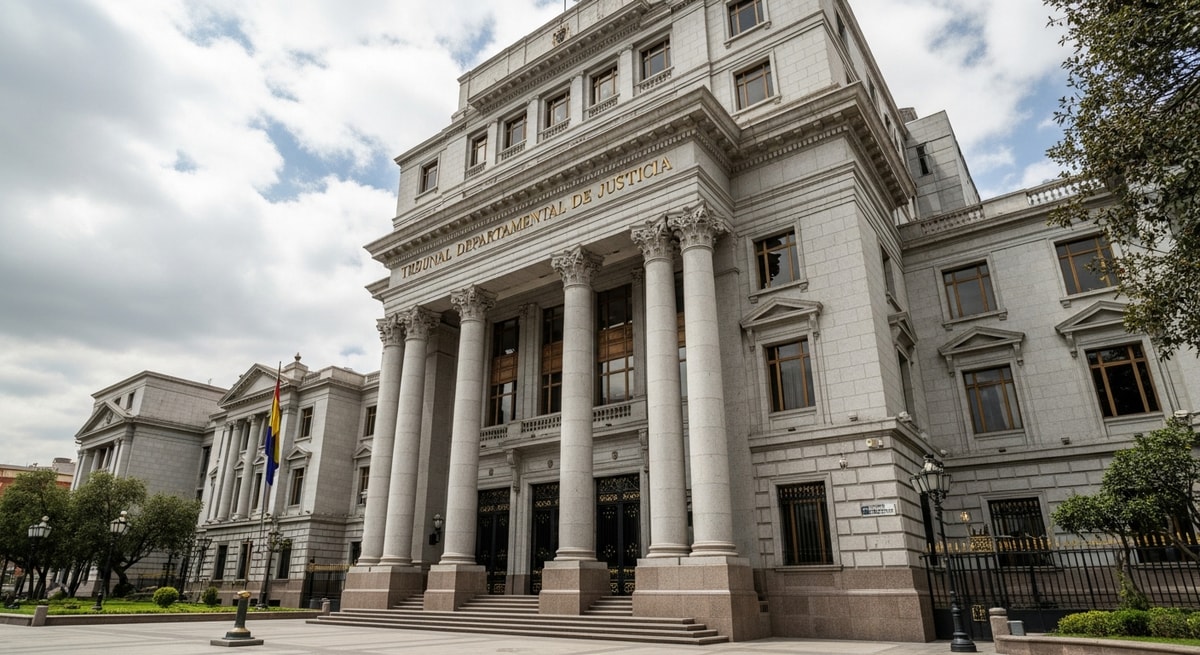
The Tribunal Departamental de Justicia oversees the appointment of peritos traductores in each Bolivian department
Navigating Bolivia's Civil Registry and Identity Documents
Bolivia's civil documentation system is administered by the SERECI (Servicio de Registro Civico), which operates under the Organo Electoral Plurinacional and the Tribunal Supremo Electoral. Understanding the Bolivian document ecosystem is essential for accurate translation, as Bolivia's unique status as a Plurinational State (Estado Plurinacional de Bolivia) with 37 official languages creates document formats and terminology distinct from other Latin American countries.
The Certificado de Nacimiento is Bolivia's foundational civil document, issued by SERECI and required for virtually all legal proceedings. It contains the individual's full name, date and place of birth, parents' names, and a unique registration number. The Cedula de Identidad (C.I.) is the national identity card issued by SEGIP (Servicio General de Identificacion Personal), which operates under the Ministerio de Gobierno. The C.I. serves as the primary identification document for civil, political, administrative, and judicial acts. SEGIP has modernized the identity document system, introducing biometric identity cards that include fingerprint data.
The Certificado de Matrimonio documents marriages performed in Bolivia, whether civil or religious. The Certificado de Defuncion records deaths and is issued by SERECI. Academic documents follow a distinct path: the Titulo de Bachiller (high school diploma) is issued by the educational institution and legalized by the Ministerio de Educacion through the LEGAS digital legalization system. University degrees (Titulo Profesional) from public universities are issued under the authority of the Comite Ejecutivo de la Universidad Boliviana (CEUB), while private university degrees require additional Ministerio de Educacion validation. The Certificado de Antecedentes Penales, commonly known as the REJAP certificate, is issued by the Registro de Antecedentes Penales and is frequently required for immigration applications abroad. Our translators maintain thorough familiarity with all Bolivian document types, their legal significance, and the precise terminology that international authorities expect to see in translations.
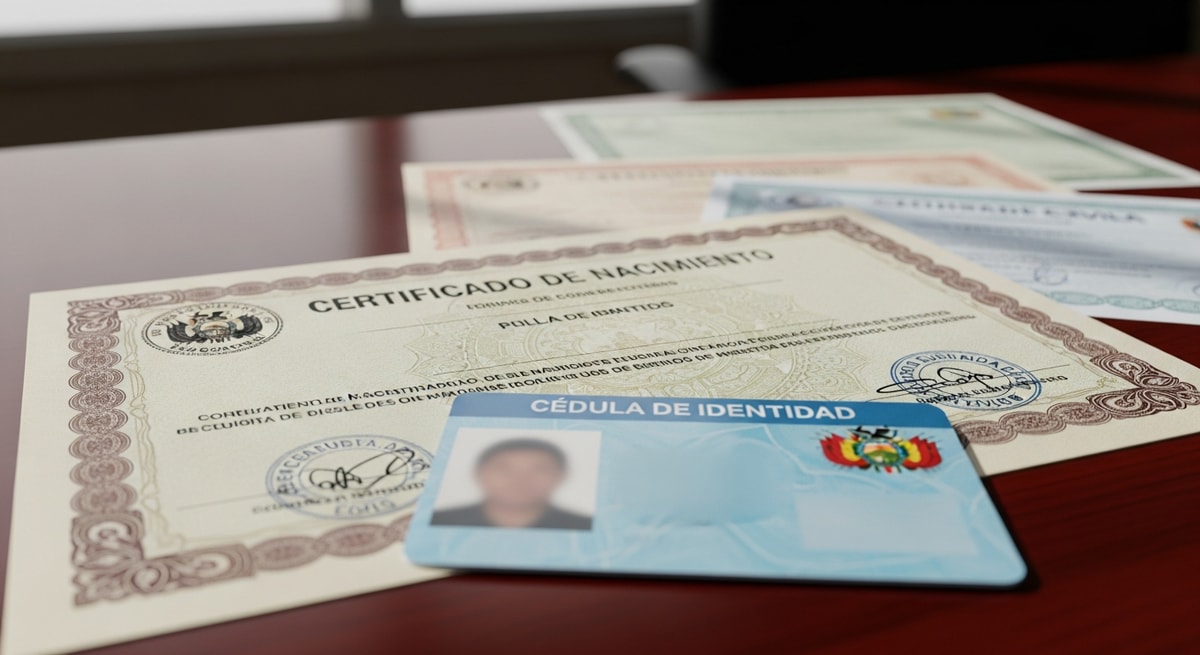
Bolivian civil documents issued by SERECI and SEGIP require specialized translation expertise
Apostille Authentication for Bolivian Documents
Bolivia acceded to the Hague Apostille Convention on September 6, 2017, with the convention entering into force on May 7, 2018. The Ministerio de Relaciones Exteriores (Cancilleria), located at Calle Ingavi No. 1058 in La Paz, is Bolivia's sole competent authority for issuing apostilles. This relatively recent accession means that Bolivia's apostille system is still maturing, and understanding its specific procedures is important for document authentication.
Bolivia issues apostilles in digital PDF format as part of its standard processing workflow. Each apostille includes a verification code that can be checked online at apostilla.rree.gob.bo, allowing receiving authorities in any Apostille Convention member state to instantly verify authenticity. It is important to note that while Bolivia's apostilles are issued digitally, this is the standard apostille process rather than a separate e-Apostille service — Bolivia does not offer a distinct electronic apostille program.
Bolivian documents commonly requiring apostille for international use include the Certificado de Nacimiento, Certificado de Matrimonio, Certificado de Defuncion, academic diplomas and transcripts legalized through the LEGAS system of the Ministerio de Educacion, Certificados de Antecedentes Penales (REJAP), notarial documents, and court decisions. For official translations by peritos traductores, the apostille authenticates the translation's official status for international use. For documents destined for countries that are not members of the Apostille Convention, a full consular legalization process through the Cancilleria and the destination country's embassy in Bolivia is required. DoVisa manages the complete apostille application process, including submission to the Cancilleria, verification tracking, and delivery of the authenticated document to your address in Bolivia or internationally.
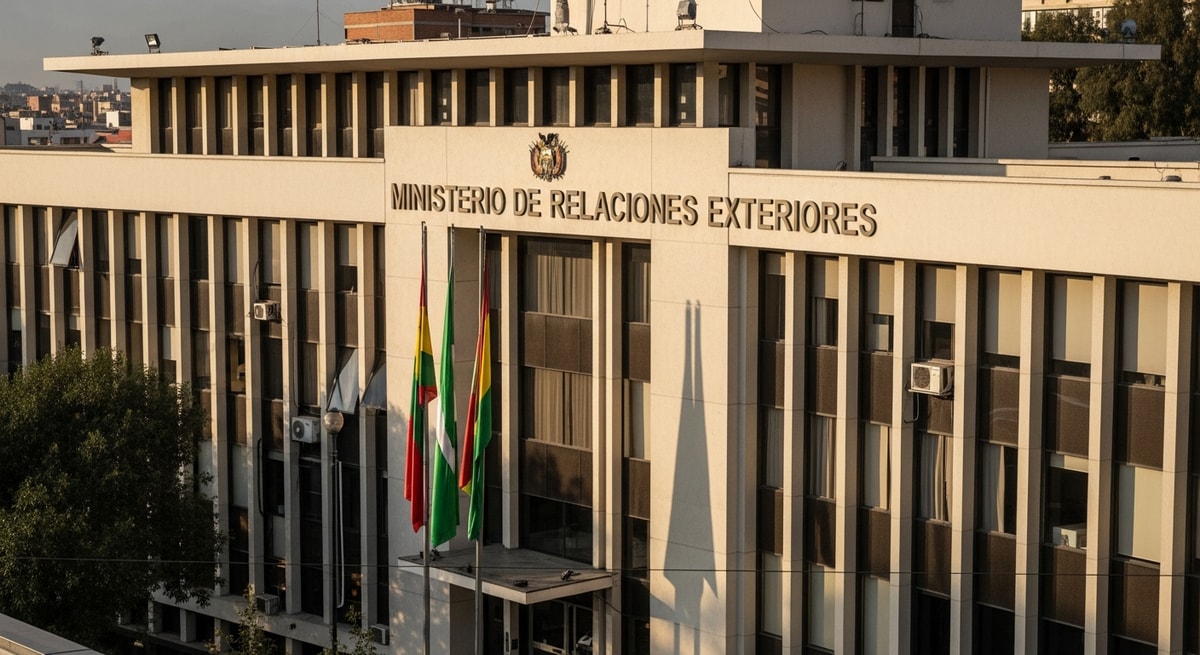
The Cancilleria at Calle Ingavi No. 1058, La Paz, is Bolivia's sole competent authority for apostille issuance
"Needed my Bolivian Certificado de Nacimiento and Certificado de Matrimonio translated for a USCIS I-130 petition. Both translations were accepted without any RFE. The translator handled all the SERECI formatting perfectly."
"DoVisa translated my Bolivian university Titulo Profesional and transcripts for WES credential evaluation. WES processed my evaluation with no requests for corrections. Excellent handling of CEUB academic terminology."
"Good translation of my Bolivian birth certificate and REJAP police clearance for a Canadian Express Entry application. IRCC processed everything smoothly. Standard delivery took the full 6 days but the quality was solid."
"Translated my Bolivian Certificado de Nacimiento and Cedula de Identidad for an Australian partner visa. The Department of Home Affairs accepted both translations on first submission. Very professional service."
"Our company needed the Testimonio de Constitucion and Matricula de Comercio translated for a business partnership with a US firm. The translations were impeccable and our American attorneys accepted them immediately."
"Used DoVisa for translating my Bolivian Titulo de Bachiller and academic transcripts for graduate school in New Zealand. Immigration New Zealand accepted the translations without issues. Good quality overall."
"DoVisa handled the translation of my complete USCIS naturalization package from Bolivia — birth certificate, marriage certificate, police clearance, and diploma. USCIS accepted everything without a single RFE. Highly recommend."
"Bolivian birth certificate translation was accurate but the initial version had a minor formatting issue with the SERECI registration number. They corrected it within a few hours after I flagged it. The corrected version was accepted by IRCC."
"Needed my Bolivian divorce decree and custody agreement translated for a UK family visa. The translators handled the complex Bolivian legal terminology well. UK Visas and Immigration processed everything without questions."
"Moved from Santa Cruz to Toronto and needed my Bolivian police clearance and academic credentials translated for my permanent residence application. IRCC accepted everything on first submission. Smooth process and fair pricing."
"Needed my Bolivian Certificado de Nacimiento and Certificado de Matrimonio translated for a USCIS I-130 petition. Both translations were accepted without any RFE. The translator handled all the SERECI formatting perfectly."
"DoVisa translated my Bolivian university Titulo Profesional and transcripts for WES credential evaluation. WES processed my evaluation with no requests for corrections. Excellent handling of CEUB academic terminology."
"Good translation of my Bolivian birth certificate and REJAP police clearance for a Canadian Express Entry application. IRCC processed everything smoothly. Standard delivery took the full 6 days but the quality was solid."
Bolivian Document Translation FAQs
What types of Bolivian documents can be translated?
We translate all types of Bolivian documents including Certificados de Nacimiento (birth certificates), Certificados de Matrimonio (marriage certificates), Certificados de Defuncion (death certificates), Cedulas de Identidad (national ID cards), Titulos de Bachiller (high school diplomas), Titulos Profesionales (university degrees), Certificados de Antecedentes Penales (REJAP police clearances), notarial deeds, powers of attorney, court documents, corporate registrations, and all other official Bolivian documents. All translations include a signed certification statement.
Do I need a perito traductor for Bolivian documents?
It depends on where the translation will be used. For submissions to Bolivian domestic authorities — including Bolivian courts, the SERECI, SEGIP, Migracion Bolivia, or any government institution within Bolivia — the law requires a sworn translation produced by a perito traductor registered with the Tribunal Departamental de Justicia. However, if you are translating Bolivian documents for use abroad (for USCIS, IRCC, UK Home Office, Australian DHA, or New Zealand Immigration), these international authorities do not require Bolivian perito traductor credentials. They accept certified translations from qualified translators meeting their own standards. DoVisa provides both options: internationally certified translations for foreign use, and perito traductor coordination for domestic Bolivian requirements.
Are DoVisa translations accepted by USCIS for Bolivian documents?
Yes. Our certified translations of Bolivian documents are fully compliant with USCIS requirements as specified in 8 CFR 103.2(b)(3). Every translation includes a signed certification statement in which the translator attests to their competence and to the translation's completeness and accuracy. We have extensive experience translating Bolivian Certificados de Nacimiento, Cedulas de Identidad, Certificados de Antecedentes Penales (REJAP), academic credentials, and other documents for I-130, I-485, I-140, N-400, and other USCIS forms.
How long does Bolivian document translation take?
Standard delivery for Bolivian document translation is 4-6 business days from receipt of legible source documents. Express 2-3 business day service is available for documents up to 5 pages. Rush 24-hour service is available for single-page vital records (birth, marriage, death certificates) with orders placed before 10:00 EST. Turnaround for larger projects (academic transcripts with multiple pages, corporate document packages) is quoted individually based on volume. Apostille processing through the Cancilleria adds additional processing time to the total timeline.
What languages do you translate Bolivian documents to and from?
DoVisa supports 100+ language pairs for Bolivian document translation. The most commonly requested target languages for Bolivian documents are English (for US, UK, Canada, Australia, and New Zealand immigration), Portuguese (for Brazil), French (for Canadian Quebec immigration), German (for German immigration and credential recognition), and Italian. We also support Bolivian indigenous language pairs including Quechua and Aymara to English and other major languages. All language pairs receive the same certification, quality review, and acceptance guarantee.
Will my Bolivian translation be accepted by immigration authorities?
Yes. Our certified translations of Bolivian documents are accepted by all major international immigration authorities including USCIS (United States), IRCC (Canada), UK Visas and Immigration, the Australian Department of Home Affairs, and New Zealand Immigration. Each translation includes a signed certification statement that meets the specific requirements of these agencies. Our current acceptance rate at international agencies is 97.8%, with rare rejections typically relating to individual case officer preferences rather than translation quality.
Do I need notarization with my Bolivian translation?
Whether notarization is required depends on the destination authority. USCIS does not require notarization — a signed certification statement is sufficient. IRCC (Canada) requires a sworn declaration but not notarization in most cases. Some European countries and certain legal proceedings may require notarization of the translation. For documents intended for use within Bolivia, the perito traductor's official stamp and signature serve the equivalent function of notarization. DoVisa can arrange notarization of your translation if required by the receiving authority, and our project managers advise you on the specific requirements for your destination.
What is an apostille and do I need one for Bolivian documents?
An apostille is a certificate of authentication issued under the Hague Apostille Convention that verifies the origin of a public document for international use. Bolivia has been a member of the Apostille Convention since May 7, 2018. The Ministerio de Relaciones Exteriores (Cancilleria) at Calle Ingavi No. 1058, La Paz, is Bolivia's sole competent authority for issuing apostilles. Whether you need an apostille depends on the destination country's requirements. For immigration applications to USCIS and IRCC, apostilles are generally not required on supporting documents. For legal proceedings in other Apostille Convention member countries, an apostille may be required. DoVisa can coordinate the complete apostille process through the Cancilleria.
How much does certified Bolivian translation cost?
Our Bolivian certified translation pricing follows a transparent per-page structure with volume discounts that apply automatically for larger document sets. Pricing varies based on document length, language pair, and the processing speed you select. Express and rush service options are available for time-sensitive immigration deadlines. Apostille processing through the Cancilleria is quoted separately. Upload your documents on our order page to receive an instant, detailed quote before work begins — no hidden fees or surprise charges.
Can you translate handwritten Bolivian documents?
Yes. Many older Bolivian civil documents, particularly Certificados de Nacimiento and Certificados de Matrimonio issued before the digital modernization of the SERECI system, are handwritten. Our translators are experienced with both handwritten and typed Bolivian documents, including older formats that may feature faded ink, cursive script, and regional spelling variations. We request that you provide the highest quality scan possible for handwritten documents. If any portion is illegible, our translators will note this in the translation with a clear annotation, and we may request a clearer image before finalizing the translation.
What format will I receive the Bolivian translation in?
Every certified translation is delivered as a high-resolution PDF via email for immediate use with online immigration applications and electronic submissions. USCIS, IRCC, UKVI, and the Australian DHA all accept digital PDF copies for initial filing. Physical hard copies with original wet-ink signatures and certification stamps are also available and shipped via tracked international courier to your address in Bolivia or anywhere in the world. Hard copies are recommended for in-person interviews, biometrics appointments, and authorities that require original documents.
Can DoVisa translate Bolivian documents written in Quechua or Aymara?
Yes. Bolivia's Constitucion Politica del Estado (2009) recognizes 37 official languages, making it the country with the most official languages in the world. While the vast majority of Bolivian government documents are issued in Spanish, some documents — particularly those from rural municipalities and indigenous communities — may contain text in Quechua, Aymara, Guarani, or other indigenous languages. DoVisa has translators qualified in Quechua and Aymara language pairs and can handle bilingual or multilingual Bolivian documents that combine Spanish with indigenous language content.
What if the immigration authority rejects my Bolivian translation?
DoVisa offers an acceptance guarantee for all certified translations submitted to recognized immigration authorities. If USCIS, IRCC, UK Visas and Immigration, the Australian DHA, New Zealand Immigration, or any other major immigration authority rejects our translation due to a formatting, terminology, or certification issue, we will revise and reissue the translation at no additional cost within 24 hours. Our acceptance rate at international agencies is 97.8%. If a revision does not resolve the issue, we provide a full refund. Rejections based on the content of the original document or missing source documents are outside this guarantee's scope.
Get Your Bolivian Documents Translated Today
Certified translations of Bolivian documents accepted by USCIS, IRCC, UK Home Office, and immigration authorities worldwide