Certified Western Sahara Document Translation
Professional certified translations of Western Sahara documents in Arabic, Hassaniya Arabic, and Spanish, accepted by international immigration authorities, embassies, universities, and credential evaluation agencies worldwide.
TrustpilotSelect Languages
Drag & drop your documents here
or
PDF, JPEG, PNG, WebP — Max 10MB per file. Word documents: please save as PDF first.
Certified translators · Accepted by governments, courts & universities worldwide · View sample
Select a destination country to view pricing
How Western Sahara Certified Translation Works
Submit Your Documents Securely
Upload clear scans of your Western Sahara documents through our encrypted portal. We accept PDF, JPEG, and PNG formats. Our intake specialists review each upload for legibility. Documents from Western Sahara are typically issued by Moroccan government authorities, which administer most of the territory, or by administrative bodies in the Moroccan-controlled cities of Laâyoune, Dakhla, and Smara.
Translator Assignment
Your documents are matched with a certified Arabic-English translator specializing in Moroccan Arabic (Darija) and Modern Standard Arabic, with expertise in Hassaniya Arabic — the regional Saharan dialect spoken in Western Sahara, Mauritania, and parts of Morocco and Algeria. Our translators handle all Arabic script variants found in official documents from the region.
Translation & Certification
The translator produces a complete certified translation accompanied by a signed certification statement attesting to accuracy and completeness. Our certified Arabic-to-English translations are accepted by USCIS, IRCC Canada, the UK Home Office, EU immigration authorities, and credential evaluation agencies worldwide for personal and professional applications.
Delivery with Full Certification
Receive your certified translation as a high-resolution PDF via email, with a physical signed copy shipped by tracked courier if required. Documents issued by Moroccan authorities in Western Sahara may be authenticated through Moroccan official channels. DoVisa advises on the correct authentication pathway for each document type given Western Sahara's unique administrative situation.
Western Sahara Translation Service Specifications
Popular Language Pairs
We support all languages — 100+ language pairs available for Western Sahara and Moroccan-issued documents.
Common Documents
- Birth certificates issued by Moroccan civil registry authorities in Laâyoune, Dakhla, or Smara
- Marriage certificates from Moroccan-administered civil registries in Western Sahara
- Death certificates from Moroccan-administered registries
- Moroccan national identity documents (Carte Nationale d'Identité)
- Moroccan passports issued to Western Sahara residents
- Police clearance certificates from Moroccan police authorities in Western Sahara
- Academic diplomas and transcripts from universities in Morocco serving Western Sahara students
- Employment references and professional qualification certificates
- Residency and property documents issued by Moroccan authorities
- Sahrawi civil status documents from Moroccan administrative registers
- Historical Spanish colonial-era records from the Spanish Sahara period
- UNHCR and humanitarian organization documents from Sahrawi refugee camps in Algeria
Turnaround Time
Certification Details
Western Sahara Translation Requirements & Regulatory Framework
Embassy Acceptance
Notarization Process
Apostille Information
Legal Framework
Common Scenarios for Western Sahara Document Translation
Arabic Document Translation for Immigration
Sahrawi individuals and families from Western Sahara applying for visas or residency in Spain, France, the UK, Canada, or the United States need certified Arabic-to-English or Arabic-to-Spanish translations of birth certificates, marriage certificates, and police clearance certificates issued by Moroccan authorities in Laâyoune, Dakhla, or Smara. Our translations are accepted by USCIS, IRCC Canada, and EU immigration authorities.
Spanish Colonial-Era Document Translation
The Spanish colonial period (1884-1976) generated extensive administrative, civil registry, and ecclesiastical records in Spanish. Western Sahara residents and diaspora descendants seeking to document colonial-era births, marriages, or property for immigration, genealogy, or Spanish nationality claims frequently need certified translation of these Spanish Sahara-era documents.
Sahrawi Refugee Community Documentation
The Sahrawi refugee camps in the Tindouf region of Algeria host approximately 100,000-170,000 people who fled or were expelled during the 1975-1976 conflict. Refugees seeking resettlement in Spain, France, or other European countries, or reunification with family in the diaspora, require certified translations of UNHCR documents, SADR-issued papers, and Algerian-issued documents.
Education & Academic Credentials
Western Sahara students studying at Moroccan universities (primarily in Marrakech, Rabat, and Casablanca) or through Sahrawi scholarship programs in Cuba, Spain, or Algeria need certified translations of academic transcripts and diplomas for employment and further education abroad. We translate Arabic-medium and Spanish-medium academic records.
Business & Commercial Documentation
Companies operating in Western Sahara's phosphate, fisheries, and emerging renewable energy sectors need certified translations of commercial contracts, regulatory licenses, and corporate documents issued by Moroccan authorities for use with international partners, investors, and regulatory bodies outside Morocco.
Western Sahara's Disputed Status and Document Landscape
Western Sahara is listed by the United Nations as a Non-Self-Governing Territory — the world's most populous territory with this status. Its legal and administrative situation is unique and significantly affects how documents from the region are treated by international authorities.
Morocco administers approximately 80% of the territory, including all major population centers: Laâyoune (El-Aaiún), the largest city and de facto capital; Dakhla; and Smara. In these areas, civil registration and government services follow Moroccan administrative frameworks — birth certificates, marriage certificates, national identity cards, and other official documents are issued by Moroccan state authorities. These documents carry Moroccan public document status and can, in principle, be processed through Moroccan authentication channels for international use.
The Sahrawi Arab Democratic Republic (SADR), proclaimed by the Polisario Front in 1976 and recognized by approximately 46 countries (primarily in Africa and Latin America), administers a smaller Free Zone in the eastern part of the territory and the Sahrawi refugee camps in the Tindouf province of western Algeria. Documents issued by SADR authorities — birth certificates, travel documents, and community records — are recognized only in SADR-recognizing countries and present significant challenges for international authentication.
For immigration and legal purposes, most Western countries treat Western Sahara documents according to the administrative authority that issued them: Moroccan-issued documents follow Moroccan authentication procedures; documents from the Sahrawi refugee camps may require individual assessment by the receiving authority. DoVisa's certified translations include contextual information about the issuing authority to assist receiving agencies in correctly evaluating the document's status.
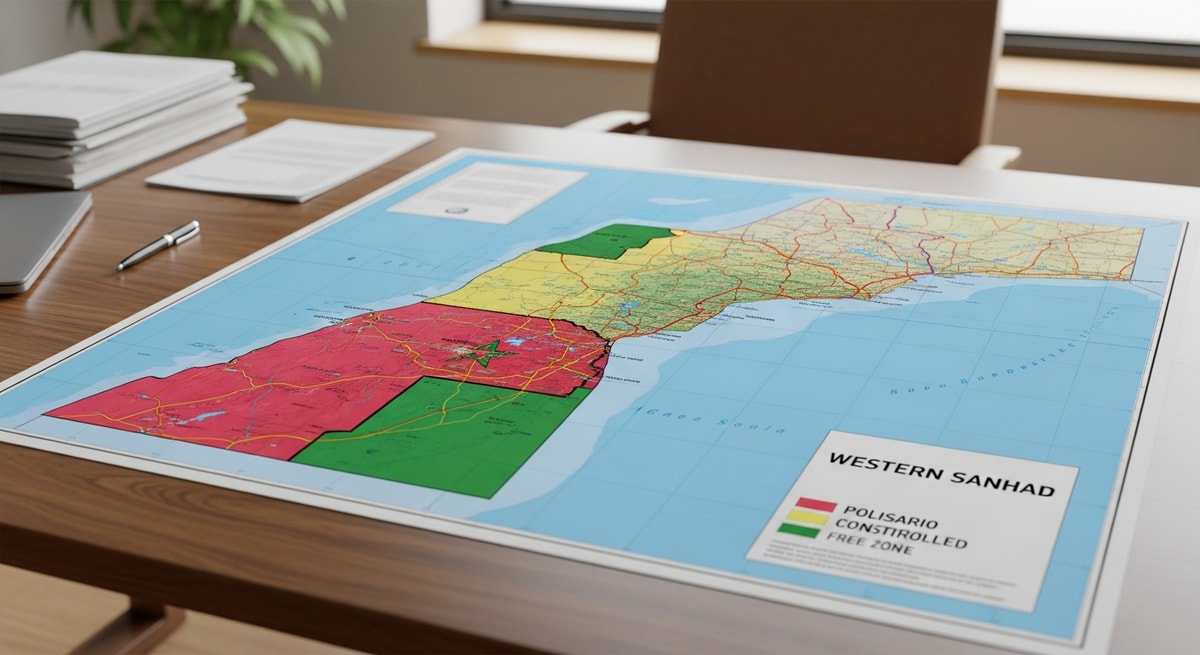
Western Sahara's disputed status means documents may be issued by either Moroccan authorities or SADR bodies — each requiring different authentication approaches
Hassaniya Arabic: Language of the Sahrawi People
Hassaniya Arabic (also spelled Ḥassāniyya or Hassani) is the primary vernacular dialect spoken by the Sahrawi people of Western Sahara, as well as by Mauritanians and communities in southern Morocco, Algeria, and Mali. It belongs to the Maghrebi Arabic dialect group but has distinct features influenced by Berber (Amazigh) languages and the Bedouin Arabic of the historical Beni Hassan tribe.
Hassaniya Arabic differs substantially from Moroccan Darija (the everyday Arabic of northern Morocco) and from Modern Standard Arabic (الفصحى, al-fuṣḥā). Official documents in Western Sahara are typically written in Modern Standard Arabic or in Moroccan Darija (as Moroccan government documents), while community correspondence, oral history transcriptions, and informal records may be in Hassaniya Arabic. Translating Hassaniya Arabic accurately requires specialist expertise beyond general Arabic language competence.
The Spanish colonial period (1884-1976) also left a legacy of Spanish-language documents — civil registry records maintained by Spain's colonial administration are in Spanish and may be archived in Spain's Archivo General de la Administración (AGA) in Alcalá de Henares. Sahrawi individuals and their descendants seeking Spanish nationality documentation or genealogical records frequently require translations of these Spanish Sahara-era colonial records. DoVisa covers both the Arabic and Spanish documentary heritage of Western Sahara with specialist translation expertise.
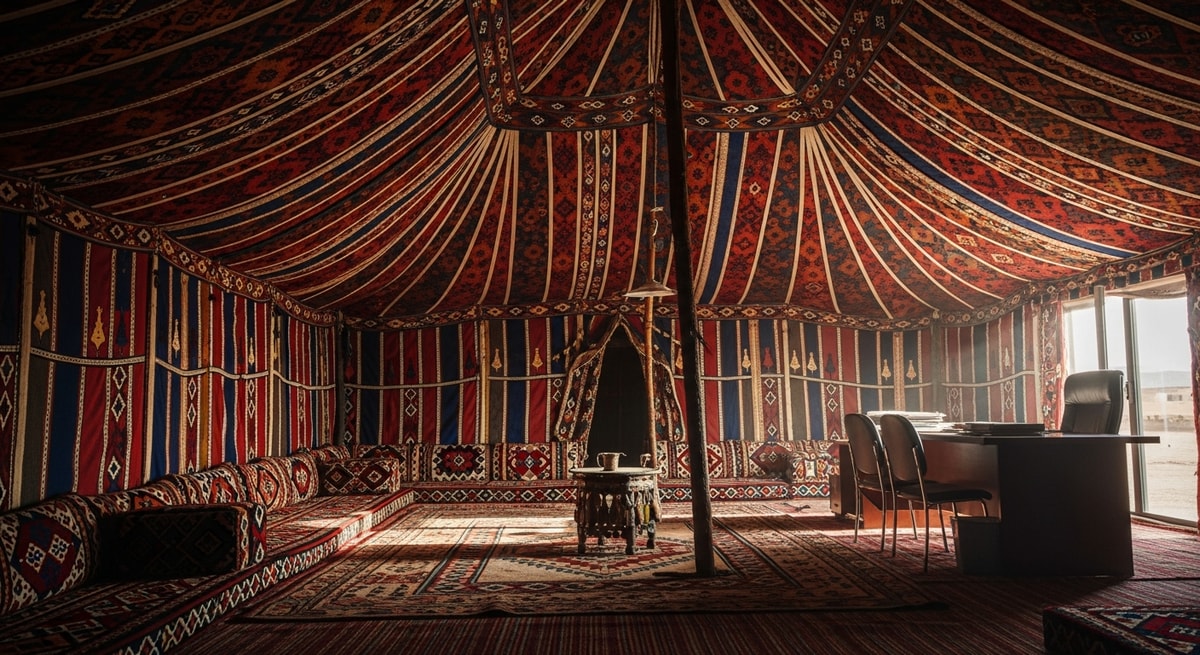
Hassaniya Arabic is the vernacular language of the Sahrawi people — distinct from both Standard Arabic and Moroccan Darija — requiring specialist translation expertise
"Arabic birth certificate from Laâyoune translated to English for a UK visa application. The UK Home Office accepted the certified translation on first submission. DoVisa's knowledge of Moroccan-issued Western Sahara documents was evident."
"Spanish Sahara era colonial birth record translated to Arabic and English for a Spanish nationality application. The translation was precise and the Spanish consulate confirmed its quality. Highly recommended for historical document translation."
"Marriage certificate from the Moroccan civil registry in Dakhla translated to French for a French residency application. Accepted by the French prefecture. The Moroccan Arabic administrative terminology was correctly rendered throughout."
"Hassaniya Arabic family document translated to English for a UNHCR refugee documentation application. The translator correctly identified and translated the Hassaniya dialect features that differ from Standard Arabic. Excellent specialist knowledge."
"The translation of an older Spanish Sahara document required an extra day due to historical formatting. DoVisa communicated proactively and the final translation to English was accepted by USCIS for our family petition without any issues."
"University transcripts from a Moroccan university for a student from Smara, translated to English for a Canadian credential evaluation. WES accepted the certified translation and the academic evaluation proceeded smoothly. Thank you DoVisa."
"Police clearance from Moroccan authorities in Laâyoune translated for an Australian work visa. Accepted by the Department of Home Affairs. The translation was delivered within 5 days and the quality was very professional."
"Employment contract translated from Arabic to Spanish for a business arrangement with a Spanish company. The legal terminology was translated accurately and the Spanish counterparty confirmed the quality. Good professional service."
"Arabic birth certificate from Laâyoune translated to English for a UK visa application. The UK Home Office accepted the certified translation on first submission. DoVisa's knowledge of Moroccan-issued Western Sahara documents was evident."
"Spanish Sahara era colonial birth record translated to Arabic and English for a Spanish nationality application. The translation was precise and the Spanish consulate confirmed its quality. Highly recommended for historical document translation."
"Marriage certificate from the Moroccan civil registry in Dakhla translated to French for a French residency application. Accepted by the French prefecture. The Moroccan Arabic administrative terminology was correctly rendered throughout."
Western Sahara Document Translation FAQs
What types of Western Sahara documents can DoVisa translate?
Can Western Sahara documents get an apostille?
How are Western Sahara documents authenticated for international use?
What is Hassaniya Arabic?
Who issues documents in Western Sahara?
How long does Western Sahara document translation take?
Are DoVisa's Western Sahara translations accepted by USCIS?
Can you translate Spanish colonial-era records from Spanish Sahara?
What languages do you translate Western Sahara documents into?
Do I need notarization with my Western Sahara translation?
How much does certified translation of Western Sahara documents cost?
What format will I receive my translation in?
Get Your Western Sahara Documents Translated Today
Certified Arabic, Hassaniya Arabic, and Spanish translations accepted by USCIS, UK Home Office, IRCC Canada, and international authorities worldwide