Certified French Document Translation for Senegal
Professional certified translations for Senegalese documents, apostille coordination, and international use. French–English and 100+ language pairs with full legal certification.
TrustpilotSelect Languages
Drag & drop your documents here
or
PDF, JPEG, PNG, WebP — Max 10MB per file. Word documents: please save as PDF first.
Certified translators · Accepted by governments, courts & universities worldwide · View sample
Select a destination country to view pricing
How Senegal Certified Translation Works
Submit Your Documents Securely
Upload clear scans of your Senegalese documents through our encrypted portal. We accept PDF, JPEG, and PNG formats. Our intake specialists review each upload for legibility and confirm whether your documents require a traducteur assermenté (sworn translator) translation for Senegalese domestic use or standard certified translation for international submissions — such as immigration filings with USCIS, UKVI, or IRCC.
Professional Translator Assignment
Your documents are matched with a qualified translator experienced in Senegalese French legal and administrative terminology. For documents intended for Senegalese domestic authorities, we coordinate with traducteurs assermentés accredited by the Ministry of Justice. For Senegalese documents going abroad, our certified translators provide translations accepted by USCIS, UKVI, IRCC, and authorities worldwide.
Translation & Quality Review
The translator produces your certified translation with full attention to Senegalese legal conventions, French administrative terminology, and état civil formatting. A second qualified linguist reviews terminology, formatting, and accuracy. Each translation includes the translator's signature, certification statement, and relevant stamps required by the receiving authority.
Delivery with Full Certification
Receive your certified translation as a high-resolution PDF for immediate use, with the original stamped hard copy shipped via tracked courier. For documents requiring an apostille, DoVisa coordinates with the Senegalese Ministry of Foreign Affairs — the designated competent authority since the Apostille Convention entered into force for Senegal on March 23, 2023 — for seamless international acceptance across all 129+ Convention member states.
Senegal Translation Service Specifications
Popular Language Pairs
We support all languages — 100+ language pairs available for Senegal documents.
Common Documents
- Birth certificates (acte de naissance / extrait de naissance)
- Marriage certificates (acte de mariage / certificat de mariage)
- Death certificates (acte de décès)
- National identity card (carte nationale d'identité)
- Academic diplomas and transcripts (diplôme / relevé de notes)
- Police clearance certificates (casier judiciaire / bulletin n°3)
- Powers of attorney (procuration)
- Single-status certificates (certificat de célibat)
- Divorce judgments (jugement de divorce)
- Commercial registration extracts (registre du commerce)
Turnaround Time
Certification Details
Senegal Translation Requirements & Regulatory Framework
Embassy Acceptance
Notarization Process
Apostille Information
Legal Framework
Common Scenarios for Senegal Document Translation
Immigration & Visa Applications
Senegalese nationals emigrating abroad need certified translations of birth certificates (acte de naissance), marriage certificates, police clearances (casier judiciaire), and national identity cards for visa applications with USCIS, UK Visas and Immigration, IRCC, and other immigration authorities. DoVisa provides certified translations with apostille coordination for seamless acceptance across 129+ Convention member states.
Academic Credential Evaluation
Senegalese students and professionals seeking credential equivalency abroad must submit certified translations of academic transcripts (relevé de notes), university diplomas (diplôme), and degree certificates to evaluation agencies such as WES, ECE, and NACES members. Senegalese universities follow the French LMD (Licence-Master-Doctorat) system, and our translators accurately render the grading conventions and academic terminology.
Marriage & Family Documentation
Senegalese nationals marrying abroad or processing family reunification must provide certified translations of birth certificates, single-status certificates (certificat de célibat), and divorce judgments. Senegal's dual legal system — where Muslims may choose between customary and civil law for family matters — creates distinctive document formats that require careful translation.
Business & OHADA Filings
Companies conducting business in Senegal or involving Senegalese entities need certified translations of commercial registration extracts (registre du commerce), corporate bylaws, financial statements, and OHADA uniform act documents. As a member of the OHADA framework, Senegal's business law follows standardized provisions that our translators handle with expertise.
French Residency & Citizenship
Senegalese nationals applying for French residency or citizenship — given the strong historical and linguistic ties between the two countries — require certified translations of vital records and supporting documents into French. While Senegalese documents are already in French, supplementary documents in Wolof or other national languages require sworn translation for French administrative authorities.
Senegal's Multilingual Landscape: French, Wolof, and National Languages
Senegal presents a unique linguistic landscape where French serves as the sole official language for government, law, and education, yet Wolof is the lingua franca spoken by approximately 80% of the population. This creates a distinctive documentary environment: all official government documents — birth certificates, court judgments, academic diplomas — are issued in French, but supplementary documents, informal records, and some local administrative records may contain Wolof text or annotations.
Beyond French and Wolof, Senegal recognizes six national languages: Wolof, Serer, Mandinka, Pulaar (Fula), Diola (Jola), and Soninke. Wolof was initially written in a modified Arabic script called Wolofal, but since 1974, the official Wolof orthography has used the Latin alphabet with specific characters and conventions. Documents containing Wolof text — particularly from rural areas or religious institutions — may appear in either script, and our translators can handle both forms.
For translation purposes, the vast majority of Senegalese documents requiring certified translation are in French, following the conventions of French administrative language inherited from the colonial period. However, personal names, place names, and certain legal terms may reflect Wolof, Serer, or other national language conventions. Our translators are familiar with Senegalese naming patterns, regional administrative terminology, and the specific French legal vocabulary used in Senegalese official documents — which can differ subtly from metropolitan French usage.
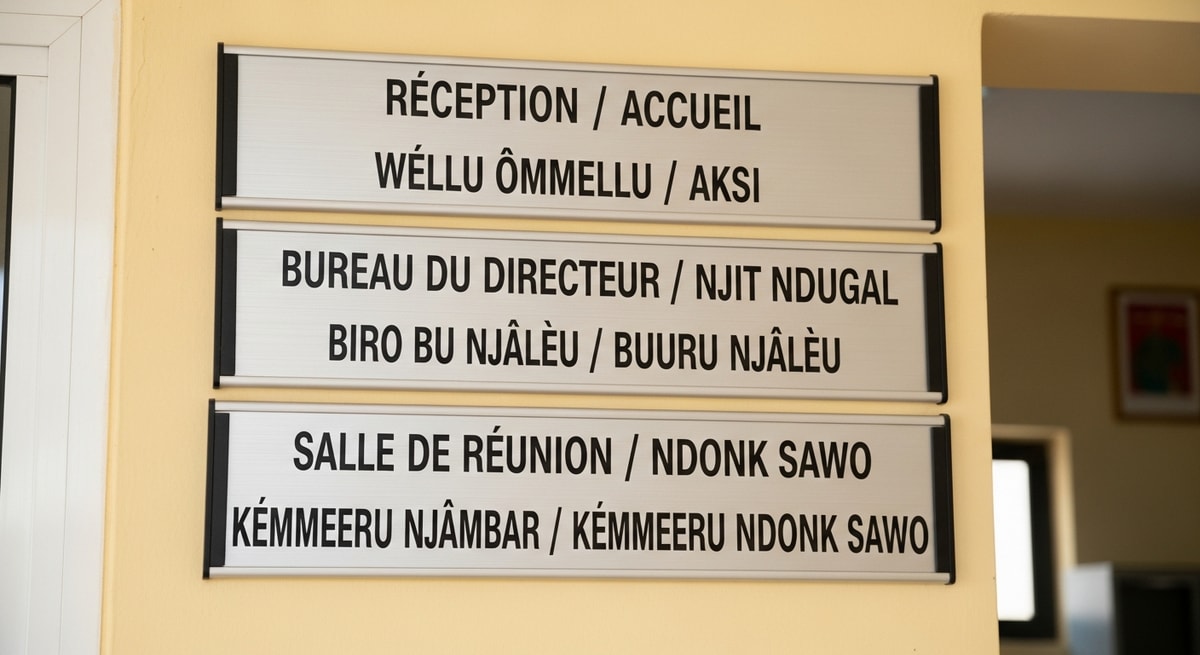
Senegal's official documents are in French, but the Wolof language is spoken by 80% of the population as a lingua franca
Senegal's New Apostille Capability: From Embassy Legalization to Simplified Authentication
Senegal's accession to the Hague Apostille Convention, which entered into force on March 23, 2023, represents a significant shift in how Senegalese documents are authenticated for international use. Prior to this date, Senegalese documents destined for use abroad required a lengthy multi-step embassy legalization chain: authentication by the issuing authority, certification by the Ministry of Foreign Affairs, and legalization by the destination country's embassy in Dakar — a process that could take weeks and involve significant fees.
Under the Apostille Convention, this chain is replaced by a single apostille certificate issued by the Ministère de l'Intégration Africaine et des Affaires Étrangères at its offices at 5, Avenue Carde, Dakar. The apostille is a standardized certificate that authenticates the document's origin and the authority of the signatory, and is recognized by all 129+ Convention member states without further embassy legalization.
Since Senegal's membership is relatively recent, awareness of the apostille option is still growing. DoVisa helps bridge this transition — we prepare your Senegalese documents with the correct certified translation, coordinate the apostille through the Ministry of Foreign Affairs, and provide explanatory documentation when needed. For the few countries that are not Convention members, the traditional embassy legalization chain still applies, and DoVisa manages that process as well.
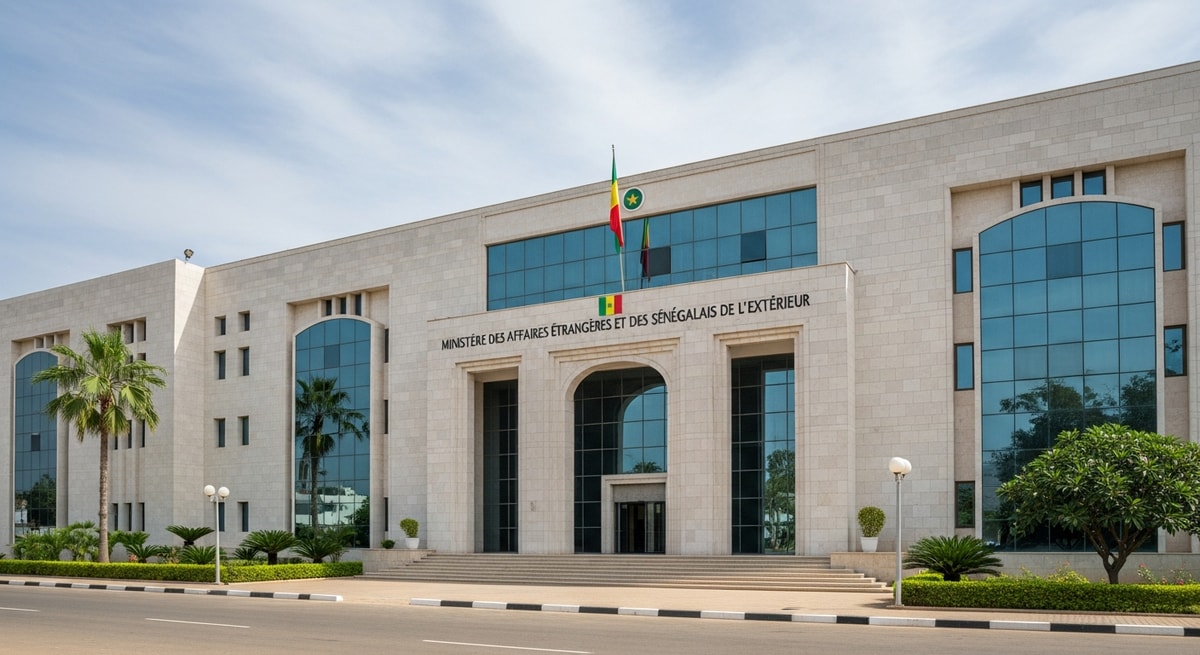
The Ministry of African Integration and Foreign Affairs at 5, Avenue Carde, Dakar is Senegal's competent authority for apostilles since March 2023
"Senegalese birth certificate translated from French to English for my USCIS immigration petition. The translation was accepted without any issues — the translator captured all the état civil formatting perfectly."
"French to English translation of my Senegalese university diploma and transcripts for WES credential evaluation. The LMD grading system was accurately rendered and WES processed my evaluation without corrections."
"Translated my Senegalese marriage certificate for a Canadian spousal sponsorship through IRCC. The certified translation was accepted and our application is progressing. Good quality, delivery took one extra day."
"DoVisa translated my Senegalese police clearance (casier judiciaire) and birth certificate for an Australian skilled migration visa. The Department of Home Affairs accepted everything on first submission. Very professional."
"French to English translation of my Senegalese academic transcripts for ECE credential evaluation. The translator accurately captured the French academic terminology specific to Senegalese universities. ECE completed my evaluation promptly."
"Senegalese divorce judgment translated from French to English for a legal proceeding in the United Kingdom. The translator handled the French legal terminology well. I wished the turnaround was slightly faster for express delivery."
"Birth certificates for my two children translated from French to English for USCIS green card petitions. The translator correctly handled the Senegalese naming conventions with the patronymic format. USCIS approved without an RFE."
"Senegalese single-status certificate (certificat de célibat) translated for a marriage registration in New Zealand. Immigration New Zealand accepted the certified translation immediately. Excellent attention to detail."
"French to English translation of my Senegalese power of attorney for use in a US legal matter. The final translation was accurate, but the first draft had a minor error in one of the Wolof names. It was corrected promptly before delivery."
"Senegalese commercial registration extracts translated for a business partnership in the United States. The translator handled the OHADA-standard legal terminology well. Good, reliable service for corporate documents."
"Senegalese national identity card and birth certificate translated from French to English for a UK Skilled Worker visa. UKVI accepted the certified translations without any questions. Fast and professional service."
"Senegalese birth certificate translated from French to English for my USCIS immigration petition. The translation was accepted without any issues — the translator captured all the état civil formatting perfectly."
"French to English translation of my Senegalese university diploma and transcripts for WES credential evaluation. The LMD grading system was accurately rendered and WES processed my evaluation without corrections."
"Translated my Senegalese marriage certificate for a Canadian spousal sponsorship through IRCC. The certified translation was accepted and our application is progressing. Good quality, delivery took one extra day."
Senegal Document Translation FAQs
What types of Senegalese documents can be translated?
We translate all types of Senegalese documents including birth certificates (acte de naissance), marriage certificates (acte de mariage), death certificates (acte de décès), national identity cards (carte nationale d'identité), academic diplomas and transcripts (diplôme, relevé de notes), police clearances (casier judiciaire, bulletin n°3), powers of attorney (procuration), single-status certificates (certificat de célibat), divorce judgments (jugement de divorce), and commercial registration extracts. We handle French-to-English and 100+ other language pairs.
Are your Senegalese document translations certified?
Yes. Every translation includes a signed certification statement attesting to accuracy and completeness, with the translator's credentials and contact details. Our certified translations are accepted by USCIS, UK Visas and Immigration, IRCC (Canada), the Australian Department of Home Affairs, and credential evaluation agencies worldwide. For submission to Senegalese domestic authorities, a translation by a traducteur assermenté (sworn translator) accredited by the Ministry of Justice is required — DoVisa can coordinate this upon request.
How long does Senegalese document translation take?
Standard certified translation is delivered within 4-6 business days. Express processing is available for 2-3 business days, and rush delivery within 24 hours for select single-page documents. If apostille processing is included, additional time of 5-10 business days should be expected for the apostille issuance through the Ministry of Foreign Affairs in Dakar.
What languages do you translate Senegalese documents to and from?
While French–English is the most common language pair for Senegalese documents, we provide direct translations between French and Arabic, Spanish, Portuguese, German, Italian, Chinese, Turkish, and many other languages. We also translate from Wolof to English and French for documents containing Wolof text. Direct translation avoids quality loss from translating through an intermediary language.
Will my translated Senegalese documents be accepted by immigration authorities?
Yes. Our certified translations of Senegalese documents are accepted by USCIS (United States), UK Visas and Immigration (UKVI), IRCC (Canada), the Australian Department of Home Affairs, and immigration authorities in New Zealand, France, and other countries. Each translation includes the translator's signed certification statement confirming accuracy and completeness. For additional authentication, we can coordinate an apostille — recognized in all 129+ Hague Convention member states.
Do I need a sworn translator (traducteur assermenté) for Senegalese documents?
For documents submitted to Senegalese domestic authorities — including courts, the Ministry of Justice, and government ministries — translations must be produced by a traducteur assermenté (sworn translator) accredited by the Ministry of Justice. The sworn translator's official seal and signature give the translation legal standing in Senegal. For international submissions to authorities like USCIS, UKVI, or IRCC, our standard certified translation is accepted. DoVisa can coordinate with accredited sworn translators when a sworn translation is required.
What is an apostille and can Senegalese documents get one?
An apostille is a standardized international certificate that authenticates the origin of a public document. The Hague Apostille Convention entered into force for Senegal on March 23, 2023. The Ministère de l'Intégration Africaine et des Affaires Étrangères (Ministry of African Integration and Foreign Affairs) at 5, Avenue Carde, Dakar is the designated competent authority. Apostilled Senegalese documents are accepted in all 129+ Convention member states without further embassy legalization. DoVisa coordinates the complete apostille process on your behalf.
How much does certified translation for Senegalese documents cost?
Our Senegalese document translation pricing follows a transparent per-page structure with volume discounts that apply automatically for larger projects. Pricing varies based on document type, language pair, and processing speed selected. Apostille processing fees are quoted separately. Upload your documents on our order page to receive an instant, detailed quote with no hidden fees.
Can you translate handwritten Senegalese documents?
Yes. Some older Senegalese documents — particularly handwritten état civil registry entries and traditional marriage certificates — contain handwritten French text. Our French translators are experienced in reading both modern printed and handwritten Senegalese documents, including documents with official stamps and annotations. If a document's legibility is compromised, we will notify you before proceeding.
What format will I receive my translated Senegalese document in?
You will receive your certified translation as a high-resolution PDF delivered via email, suitable for immediate digital submission to immigration authorities, credential evaluation agencies, and most government portals. If you need a physical hard copy with original stamps and signatures — for court submission or apostille processing — we ship via tracked international courier with delivery confirmation.
Can you translate Wolof documents?
Yes. While most Senegalese official documents are in French, some supplementary documents, local administrative records, and religious certificates may contain Wolof text. Wolof has been written in the Latin alphabet since 1974 (when the official orthography was standardized), but older documents may use the Arabic-based Wolofal script. Our translators can handle documents in both Wolof scripts, ensuring accurate translation for international use.
What is OHADA and does it affect Senegalese business document translation?
OHADA (Organisation pour l'Harmonisation en Afrique du Droit des Affaires) is a framework that harmonizes business law across 17 West and Central African states, including Senegal. OHADA uniform acts govern commercial registration, company law, secured transactions, and arbitration. Senegalese business documents — including commercial registration extracts and corporate filings — follow OHADA standards. Our translators are familiar with OHADA legal terminology and accurately render these documents for international business transactions.
Get Your Senegalese Documents Translated Today
Professional certified translations with apostille coordination — accepted by authorities worldwide