
Certified Singapore Document Translation
Professional certified translations in English, Chinese, Malay, and Tamil accepted by ICA, MOM, Singapore courts, and all government agencies. Apostille and notarization services through the Singapore Academy of Law.
TrustpilotSelect Languages
Drag & drop your documents here
or
PDF, JPEG, PNG, WebP — Max 10MB per file. Word documents: please save as PDF first.
Certified translators · Accepted by governments, courts & universities worldwide · View sample
Select a destination country to view pricing
How Singapore Certified Translation Works
Submit Your Documents Securely
Upload clear scans of your Singapore or foreign-language documents through our encrypted portal. We accept PDF, JPEG, and PNG formats. Our intake specialists review every upload for legibility and completeness, flagging any issues such as partially obscured text or missing pages before translation begins. Singapore documents often include multilingual content in English, Chinese, Malay, or Tamil, and our team verifies all language components are captured.
Translator Assignment
Your documents are matched with a certified translator who specializes in the relevant language pair and document type. For Singapore documents containing Chinese characters (simplified or traditional), Malay text, or Tamil script, we assign translators with native-level fluency and subject-matter expertise. Our translators understand Singapore's multilingual administrative system and the specific terminology used by agencies such as the Immigration and Checkpoints Authority (ICA) and the Ministry of Manpower (MOM).
Translation & Certification
The translator produces your certified translation and affixes their signed certification statement attesting to the accuracy and completeness of the work. A second qualified linguist performs a quality review covering terminology, formatting, and fidelity to the original document. For submissions to ICA requiring notarization, we coordinate with a Singapore Notary Public appointed by the Singapore Academy of Law (SAL) to notarize the certified translation before delivery.
Delivery with Full Certification
Receive your certified translation as a high-resolution PDF delivered via email for immediate use. The original hard copy with wet-ink certification is shipped via tracked courier to your Singapore or international address. For documents requiring an apostille, we coordinate submission to the Singapore Academy of Law, Singapore's sole Competent Authority under the Hague Apostille Convention, and deliver the apostilled document directly to you.
Singapore Translation Service Specifications
Popular Language Pairs
We support all languages — 100+ language pairs available for Singapore documents.
Common Documents
- Birth certificates (出生证明书 / Sijil Kelahiran / பிறப்புச் சான்றிதழ்)
- Marriage certificates (结婚证书 / Sijil Perkahwinan / திருமண சான்றிதழ்)
- NRIC and identity documents
- Academic transcripts and diplomas (GCE O-Level, A-Level, polytechnic, university)
- Employment passes and work permit documents
- Police clearance certificates (Certificate of Clearance)
- Divorce decrees and family court orders
- ACRA business profiles and certificates of incorporation
- Powers of attorney and notarial deeds
- Medical reports and healthcare records
Turnaround Time
Certification Details
Singapore Translation Requirements & Regulatory Framework
Embassy Acceptance
Notarization Process
Apostille Information
Legal Framework
Common Scenarios for Singapore Document Translation
Permanent Residence & Citizenship Applications
ICA permanent residence (PR) and citizenship applications require certified and notarized English translations of all non-English supporting documents, including birth certificates, marriage certificates, academic qualifications, and employment records. Documents in Chinese, Malay, Tamil, and other languages must be translated by a qualified translator and notarized by a Singapore Notary Public appointed by SAL. DoVisa provides end-to-end translation and notarization packages specifically formatted for ICA submission requirements.
Employment Pass & Work Permit Processing
The Ministry of Manpower (MOM) requires English translations of foreign academic certificates, professional qualifications, and employment references for Employment Pass (EP), S Pass, and Work Permit applications. Employers sponsoring foreign workers must submit translated documents through the EP Online system. Our translators are familiar with MOM's document formatting expectations and produce translations that facilitate smooth processing of work authorization applications.
Marriage Registration at ROM
Foreign nationals marrying in Singapore must submit certified translations of their birth certificates, divorce decrees (if applicable), and single-status declarations to the Registry of Marriages (ROM) or the Registry of Muslim Marriages (ROMM). Documents in languages other than English require professional translation. Our translators handle documents from across Southeast Asia, East Asia, and South Asia — the most common origins for marriage registration in Singapore.
University Admission & Academic Credential Evaluation
Singapore's universities — including the National University of Singapore (NUS), Nanyang Technological University (NTU), and Singapore Management University (SMU) — require certified English translations of foreign academic transcripts, diplomas, and secondary school certificates. Students applying from China, India, Indonesia, Vietnam, and other non-English-speaking countries need professionally translated academic records. DoVisa delivers translations formatted for university admissions offices with accurate rendering of grading systems and degree nomenclature.
Corporate & ACRA Filings
Foreign companies registering in Singapore through ACRA or establishing subsidiaries must provide certified English translations of their articles of incorporation, board resolutions, shareholder agreements, and financial statements. Singapore's position as a regional business hub means ACRA regularly processes corporate documents from across Asia. Our corporate translators handle Chinese, Japanese, Korean, and Southeast Asian business documents with precision in commercial and legal terminology.
Singapore's Multilingual System and Translation Challenges
Singapore is one of the world's most linguistically diverse nations, with four official languages: English, Chinese (Mandarin), Malay, and Tamil. English serves as the language of administration, law, business, and education, while Malay is the national language used in the national anthem and military commands. This multilingual framework, established at independence in 1965, creates a unique translation environment where documents frequently contain content in multiple languages simultaneously.
Singapore's Chinese community, comprising approximately 74% of the population, produces documents in both simplified Chinese characters and traditional Chinese characters. Birth certificates and identity documents may include ethnic names rendered in Chinese characters (中文名) alongside English transliterations. The official romanization system for Chinese names in Singapore is Hanyu Pinyin, though many older documents use dialect-based romanizations (Hokkien, Teochew, Cantonese) that do not follow standard Pinyin conventions. Translators must correctly identify and transliterate these variant romanizations, as inconsistencies between a document's name spelling and the person's passport can cause delays with ICA or MOM.
The Malay language in Singapore uses the Latin alphabet (Rumi script), making it accessible for translation, though legal and administrative Malay contains formal terminology distinct from conversational usage. Documents from Singapore's Malay-Muslim community, including marriage certificates issued under the Administration of Muslim Law Act (AMLA) and processed through the Registry of Muslim Marriages (ROMM), require translators familiar with both Islamic legal terminology and Singapore's specific administrative vocabulary. Tamil documents use the Tamil script (தமிழ் எழுத்துமுறை), which requires specialized typesetting and careful transliteration of names according to established conventions. Our translation team includes native speakers of all four of Singapore's official languages, ensuring accurate handling of each linguistic system.
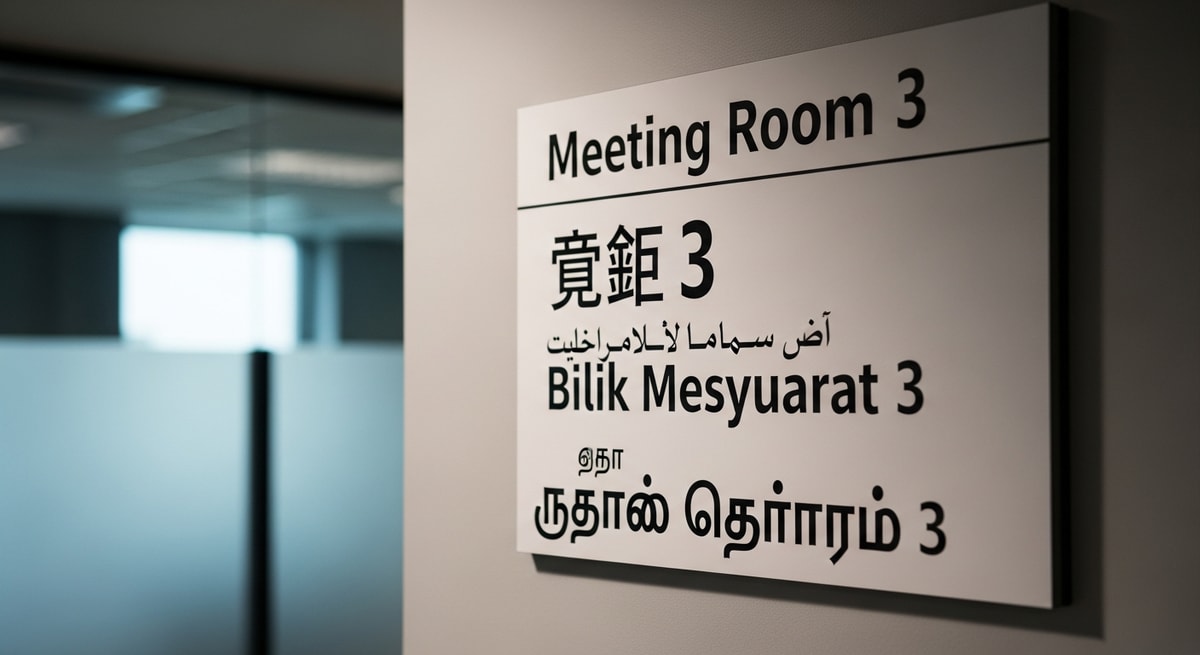
Singapore's four official languages create unique translation requirements for government and legal documents
ICA Document Requirements for PR and Citizenship
The Immigration and Checkpoints Authority (ICA) is Singapore's primary agency for immigration matters, processing permanent residence (PR) applications, citizenship applications, and long-term visit passes (LTVP). Since January 2016, ICA has required that all translated documents submitted for PR and citizenship applications be notarized by a Singapore Notary Public. This requirement applies to birth certificates, marriage certificates, divorce decrees, academic qualifications, employment records, and any other supporting documents not originally in English.
The ICA notarization requirement is more stringent than what many other Singapore agencies demand. While the Ministry of Manpower (MOM) and most courts accept certified translations without notarization, ICA specifically requires that a Notary Public appointed by the Singapore Academy of Law (SAL) verify the translator's identity, witness their signature on the certification statement, and affix a notarial seal to the document. The Notary Public must also sight the original physical document. This process adds a layer of authentication that ICA considers essential for the integrity of immigration decisions.
Common documents requiring translation and notarization for ICA include Chinese birth certificates (出生证明书) from mainland China, Malaysian identity documents in Malay, Indian academic certificates in Hindi or Tamil, and Indonesian documents in Bahasa Indonesia. DoVisa manages the complete ICA submission workflow: we produce the certified translation, coordinate an appointment with a SAL-appointed Notary Public, present the original document for verification, and deliver the notarized translation ready for ICA submission. Our current acceptance rate at ICA for notarized translations is over 98%, reflecting our familiarity with ICA's specific formatting and certification expectations.
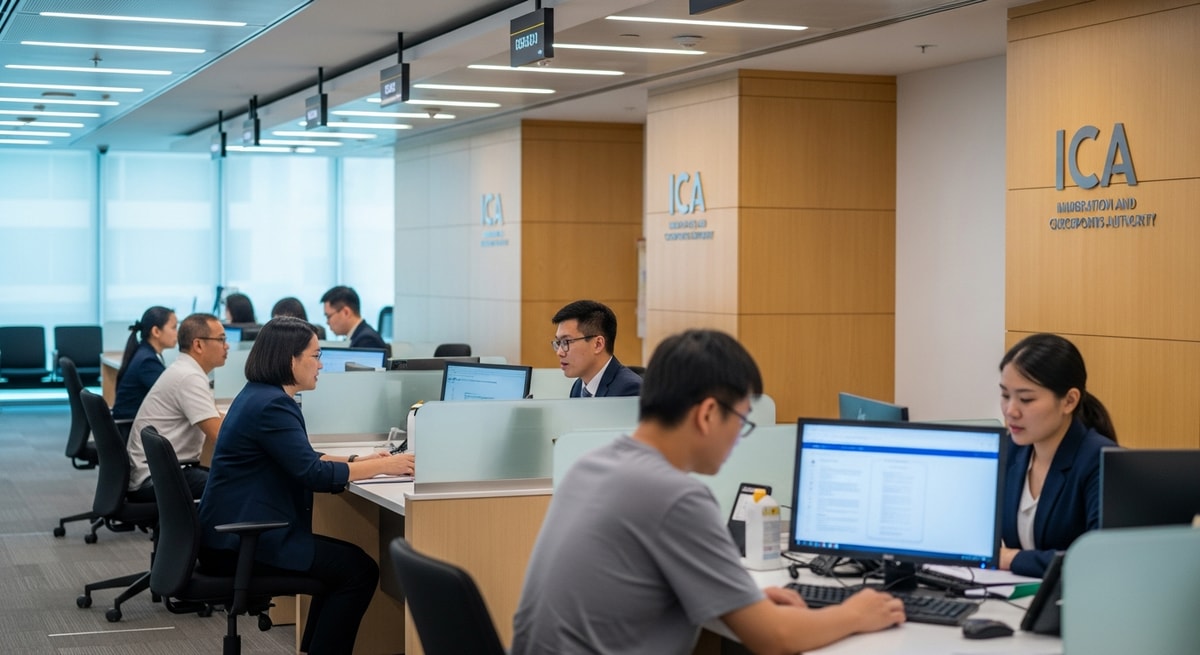
ICA requires notarized translations from a SAL-appointed Notary Public for all PR and citizenship applications
Apostille Services Under Singapore's Apostille Act 2020
Singapore acceded to the Hague Apostille Convention on 16 September 2021, implementing its obligations through the Apostille Act 2020, which was passed by Parliament in November 2020. Before accession, Singapore documents destined for overseas use required a multi-step consular legalization process involving authentication by the Ministry of Foreign Affairs (MFA) followed by legalization at the destination country's embassy. The Apostille Convention replaced this cumbersome process with a single-step apostille issued by the designated Competent Authority.
The Singapore Academy of Law (SAL) was designated as Singapore's sole Competent Authority for issuing apostilles. SAL issues apostille certificates for both public documents (government-issued certificates, court orders, ACRA filings) and private documents that have first been notarized by a Singapore Notary Public. For certified translations, the apostille is affixed to the notarized translation, creating a complete chain of authentication: translator certification, notarial verification, and apostille authentication. This apostilled document is then recognized in all 125+ Hague Convention member states without further legalization.
In 2025, SAL launched an e-Apostille system in collaboration with the Infocomm Media Development Authority (IMDA), making Singapore one of the first countries to offer digital apostille authentication. The first phase covers documents issued by ACRA, such as Business Profiles and Certificates of Incorporation. Users can upload documents to the SAL Legalisation Portal for digital verification, and the e-Apostille is emailed within minutes. The cost is S$10.70 per document inclusive of GST, the same as physical authentication. SAL plans to expand e-Apostille coverage to documents from other public agencies. DoVisa coordinates both physical and electronic apostille processing through SAL, with standard apostille turnaround of 5-10 business days for physical apostilles.
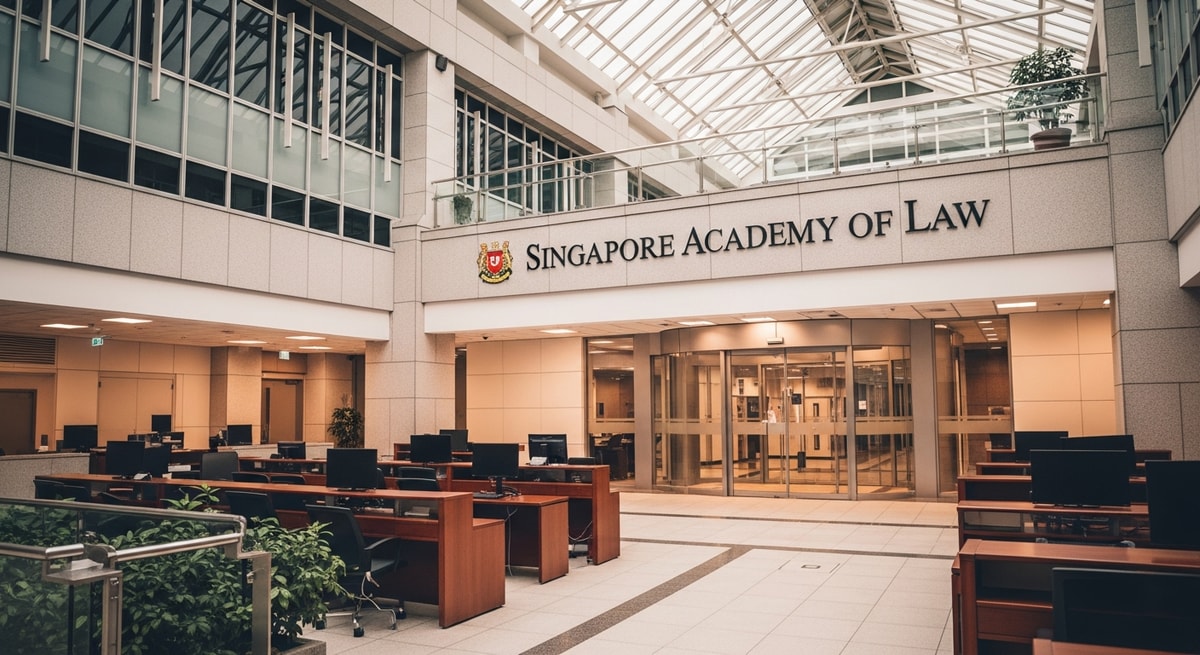
The Singapore Academy of Law issues apostilles and e-Apostilles for international document authentication
"Translated my parents' Chinese birth certificates from mainland China for their Singapore PR application. DoVisa handled both the certified translation and notarization through a SAL-appointed Notary Public. ICA accepted everything without any queries. Excellent service."
"Needed my Tamil academic transcripts from India translated to English for a job application with a Singapore MNC. The translator accurately rendered all the degree nomenclature and grading details. MOM processed my Employment Pass without requesting any additional documentation."
"Good translation of my Malaysian Sijil Perkahwinan (marriage certificate) and birth certificates in Malay for my wife's LTVP application. ICA accepted the notarized translations. Would have preferred faster turnaround but standard delivery was within the quoted timeframe."
"DoVisa translated my Singapore marriage certificate and ACRA business profile into Japanese for a corporate registration in Tokyo. They also coordinated the apostille through SAL. The Japanese registry office accepted everything on first submission. Very professional."
"Had my Singapore police clearance certificate and university degree translated into Hindi for submission to the Indian Embassy. The translations were accurate and the embassy processed my application promptly. Great attention to detail with the Hindi script."
"Translated my Chinese degree certificate and academic transcripts for NUS graduate school admission. The translator correctly handled the simplified Chinese characters and the university's specific grading terminology. NUS admissions accepted the translations immediately."
"Translation of my Chinese birth certificate was accurate but the initial version had a minor romanization inconsistency with my NRIC name spelling. DoVisa corrected it within a few hours and the revised version was accepted by ICA. Just wish it had been caught during the first review."
"Needed Malay-to-English translations of my family's birth and marriage certificates for a Singapore citizenship application. DoVisa produced perfectly formatted translations and arranged notarization with a Notary Public near my office. ICA processed our application smoothly."
"Our company needed ACRA incorporation documents and board resolutions translated from English to Korean for our Seoul subsidiary registration. The legal and corporate terminology was handled well. The apostille from SAL was processed without issues."
"Translated my Tamil marriage certificate and husband's birth certificate for our Singapore PR application. The Tamil script was rendered accurately and the notarized translations met all ICA requirements. Received our PR approval three months later. Thank you DoVisa!"
"Rush translation of my Chinese divorce decree for a time-sensitive ICA submission. DoVisa delivered the certified and notarized translation within 24 hours. The translator accurately captured all the court terminology from the mainland Chinese legal system. Highly recommend for urgent needs."
"Translated my parents' Chinese birth certificates from mainland China for their Singapore PR application. DoVisa handled both the certified translation and notarization through a SAL-appointed Notary Public. ICA accepted everything without any queries. Excellent service."
"Needed my Tamil academic transcripts from India translated to English for a job application with a Singapore MNC. The translator accurately rendered all the degree nomenclature and grading details. MOM processed my Employment Pass without requesting any additional documentation."
"Good translation of my Malaysian Sijil Perkahwinan (marriage certificate) and birth certificates in Malay for my wife's LTVP application. ICA accepted the notarized translations. Would have preferred faster turnaround but standard delivery was within the quoted timeframe."
Singapore Document Translation FAQs
What types of Singapore documents can be translated?
We translate all types of Singapore documents including birth certificates, marriage certificates, divorce decrees, NRIC-related documents, academic transcripts and diplomas (GCE O-Level, A-Level, polytechnic, and university certificates), police clearance certificates, ACRA business profiles and certificates of incorporation, employment records, medical reports, powers of attorney, and court orders. We also translate foreign-language documents into English for submission to Singapore government agencies such as ICA, MOM, and ACRA. All translations include a signed certification statement attesting to accuracy and completeness.
Are the translations certified and accepted by ICA?
Yes. Our translations include a signed certification statement from a qualified translator confirming the translation is accurate and complete. For ICA permanent residence and citizenship applications, we additionally arrange notarization by a Singapore Notary Public appointed by the Singapore Academy of Law (SAL), as required by ICA since January 2016. Our notarized translations are accepted by ICA for PR applications, citizenship applications, and Long-Term Visit Pass (LTVP) processing. For other agencies such as MOM, MOE, and ACRA, certified translations without notarization are generally sufficient.
How long does certified translation take?
Standard certified translation is delivered within 4-6 business days from the time we receive your clear document scans. Express processing is available for 2-3 business day delivery, and rush service delivers select document types within 24 hours. If notarization is required (for ICA submissions), allow an additional 1-2 business days for scheduling with a SAL-appointed Notary Public. Apostille processing through the Singapore Academy of Law typically adds 5-10 business days to the total timeline.
What languages do you translate to and from?
We translate to and from all four of Singapore's official languages — English, Chinese (Mandarin), Malay, and Tamil — as well as 100+ additional languages. The most common language pairs for Singapore documents include Chinese-to-English, Malay-to-English, Tamil-to-English, and English to Japanese, Korean, Thai, Hindi, Indonesian, and Vietnamese. We handle both simplified and traditional Chinese characters, and our Chinese translators are experienced with Singapore's Hanyu Pinyin romanization system as well as dialect-based name romanizations commonly found on older documents.
Will the translation be accepted by immigration authorities?
Yes. Our certified translations are accepted by Singapore's Immigration and Checkpoints Authority (ICA) and the Ministry of Manpower (MOM) for all immigration-related applications. For ICA submissions (PR, citizenship, LTVP), we provide notarized translations as required. Our translations are also accepted by immigration authorities in other countries — including USCIS (United States), UK Visas and Immigration, IRCC (Canada), and the Australian Department of Home Affairs — for applications involving Singapore-issued documents. Our current acceptance rate across Singapore government agencies is 98.5%.
Do I need notarization with my translation?
For ICA submissions (permanent residence and citizenship applications), yes — since January 2016, ICA requires all translated documents to be notarized by a Singapore Notary Public appointed by the Singapore Academy of Law. The Notary Public must sight the original physical document and witness the translator's certification before affixing the notarial seal. For other agencies such as the Ministry of Manpower (MOM), Ministry of Education (MOE), Land Transport Authority (LTA), ACRA, and most courts, a certified translation without notarization is typically sufficient. DoVisa can advise on the specific requirements for your receiving authority and arrange notarization when needed.
What is an apostille and do I need one for Singapore documents?
An apostille is an international authentication certificate issued under the Hague Apostille Convention, which Singapore joined on 16 September 2021 through the Apostille Act 2020. The Singapore Academy of Law (SAL) is Singapore's sole Competent Authority for issuing apostilles. You need an apostille if your Singapore document (or certified translation) will be used in another Hague Convention member state — the apostille replaces the old multi-step consular legalization process. For documents staying within Singapore, no apostille is needed. DoVisa coordinates the complete apostille process through SAL, with standard processing taking 5-10 business days.
How much does certified translation cost?
Our Singapore certified translation pricing follows a transparent per-page structure with volume discounts that apply automatically for larger documents. Pricing varies based on document length, language pair, and the processing speed you select (standard, express, or rush). Notarization by a Singapore Notary Public and apostille processing through SAL are quoted as separate add-on services. Upload your documents on our order page to receive an instant, detailed quote before any work begins — there are no hidden fees. We accept payment in Singapore dollars (SGD) and 30+ other currencies.
Can you translate handwritten documents?
Yes, we translate handwritten documents including older Singapore civil registry records, personal letters, and handwritten legal declarations. Handwritten Chinese documents require translators experienced with both simplified and traditional character forms, as well as cursive variations. Handwritten Malay documents in Jawi script (Arabic-based script historically used for Malay) are handled by our specialized Jawi-literate translators. For best results, provide the highest quality scan possible — clear, well-lit photographs or 300+ DPI scans. Our intake team will contact you if any portion of the handwriting is illegible before translation begins.
What format will I receive the translation in?
You will receive your certified translation as a high-resolution PDF delivered via email, suitable for digital submissions and personal records. The original hard copy with the translator's wet-ink signature and certification statement is shipped via tracked courier to your Singapore or international address. For ICA submissions requiring notarization, the notarized hard copy with the Notary Public's seal is the document you present to ICA. If an apostille is requested, the physical apostille certificate from SAL is attached to the hard copy. We retain encrypted copies of all translations for 12 months in case you need a reprint.
Can Singapore documents get an e-Apostille?
Yes, but currently with limited scope. In 2025, the Singapore Academy of Law launched an e-Apostille system in collaboration with IMDA. The first phase covers documents issued by ACRA, including Business Profiles and Certificates of Incorporation. Users can submit these documents through the SAL Legalisation Portal and receive a digital apostille via email within minutes. SAL has announced plans to expand e-Apostille coverage to documents from other public agencies. For document types not yet covered by e-Apostille, the standard physical apostille process through SAL remains available. DoVisa can advise on whether your specific document qualifies for e-Apostille processing.
Do I need to provide original documents or are copies sufficient?
For the translation process, clear digital scans or high-quality photographs are sufficient — our translators work from digital copies uploaded through our secure portal. However, for notarization (required for ICA submissions), the Singapore Notary Public must sight the original physical document in person before notarizing the translation. This is a legal requirement under the Notaries Public Act. DoVisa coordinates the notarization appointment and can arrange for original documents to be presented on your behalf where authorized. For apostille processing, SAL requires the notarized document in physical form. We recommend keeping your originals safe and accessible throughout the process.
How do you handle Chinese names with different romanization systems?
Singapore's Chinese community uses multiple romanization systems, which can create inconsistencies between documents. Official documents issued after 1980 typically use Hanyu Pinyin, but many Singaporeans' NRIC and passport names follow older dialect-based romanizations — for example, a Hokkien rendering like 'Tan' instead of the Pinyin 'Chen' for the surname 陈, or 'Goh' instead of 'Wu' for 吴. Our translators carefully match the romanization used on the applicant's NRIC or passport to ensure consistency across translated documents. Any discrepancy between the document's name and the applicant's official identification is flagged and noted in the translator's certification to prevent issues with ICA or other agencies.
Get Your Singapore Documents Translated Today
Professional certified translations accepted by ICA, MOM, courts, and universities across Singapore