Certified Spanish Translation for Honduras
Professional document translation from Spanish to English and 100+ languages. Accepted by USCIS, UK Home Office, IRCC, and Australian immigration. Apostille coordination through the SRECI.
TrustpilotSelect Languages
Drag & drop your documents here
or
PDF, JPEG, PNG, WebP — Max 10MB per file. Word documents: please save as PDF first.
Certified translators · Accepted by governments, courts & universities worldwide · View sample
Select a destination country to view pricing
How Honduran Certified Translation Works
Submit Your Documents Securely
Upload clear scans of your Honduran documents through our encrypted portal. We accept PDF, JPEG, and PNG formats. Our intake specialists review each upload for legibility — particularly important for older handwritten civil registry entries recorded in libros de actas at municipal offices across Honduras.
Translator Assignment
Your documents are matched with a translator experienced in Honduran document conventions, including the formatting used by the Registro Nacional de las Personas (RNP), the Corte Suprema de Justicia (CSJ), and the Secretaría de Educación. Each translator is familiar with Honduran civil registry terminology and legal vocabulary.
Translation & Certification
The translator produces your certified translation with a signed certification statement attesting to accuracy and completeness. Each translation preserves the original document's structure, formatting, and official annotations. The certification meets the requirements of USCIS, the UK Home Office, IRCC, and the Australian Department of Home Affairs.
Delivery with Full Certification
Receive your certified translation as a high-resolution PDF via email, suitable for immediate submission to immigration authorities. Physical copies with original signatures are shipped via tracked international courier. For documents requiring apostille, DoVisa coordinates the process through the Secretaría de Relaciones Exteriores y Cooperación Internacional (SRECI).
Honduras Translation Service Specifications
Popular Language Pairs
We support all languages — 100+ language pairs available for Honduran documents.
Common Documents
- Birth certificates — Acta de Nacimiento
- Marriage certificates — Acta de Matrimonio
- Death certificates — Acta de Defunción
- Criminal background checks — Constancia de Antecedentes Penales (UNAP/CSJ)
- Academic transcripts — Certificados de Estudios
- University degrees — Títulos Universitarios
- Divorce decrees — Sentencias de Divorcio
- National identity cards — Tarjeta de Identidad
- Employment references — Constancias Laborales
- Powers of attorney — Poderes de Representación
Turnaround Time
Certification Details
Honduras Document Requirements
Embassy Acceptance
Notarization Process
Apostille Information
Legal Framework
Common Use Cases for Honduran Document Translation
Immigration to the United States
Honduras is one of the largest source countries for US immigration through family-based petitions, TPS, asylum, and diversity visa lottery. USCIS requires certified English translations of all Honduran civil documents including actas de nacimiento, constancias de antecedentes penales from the Corte Suprema de Justicia, and academic credentials for employment-based petitions.
Marriage & Family Reunification
Couples with Honduran documents seeking marriage registration abroad or sponsoring family members for immigration need certified translations of actas de matrimonio, actas de nacimiento, actas de defunción, and sentencias de divorcio. These civil registry documents from the RNP require accurate translation of legal terminology and official annotations.
Academic Credential Evaluation
Honduran students and professionals applying to universities or seeking credential evaluation through WES, ECE, or NACES member agencies need certified translations of títulos universitarios from UNAH and other institutions, certificados de estudios, and constancias de estudios. Proper translation of Honduras's grading system ensures accurate credential assessment.
Work & Employment Abroad
Honduran professionals relocating internationally need certified translations of constancias laborales, cartas de recomendación, contratos de trabajo, and professional licenses. These documents are required by employers, professional licensing bodies, and immigration authorities processing work permits and skilled worker visas.
Legal Proceedings
Honduran court documents including sentencias judiciales, poderes de representación, and other legal instruments from the Corte Suprema de Justicia need certified translation for cross-border legal matters, inheritance proceedings, and international litigation. Accurate preservation of Honduran legal terminology is essential.
Business & Corporate Documentation
Companies conducting cross-border operations between Honduras and international markets require certified translations of commercial registration documents, corporate bylaws, board resolutions, and tax compliance certificates for regulatory filings and due diligence processes.
Honduran Immigration Documents for US-Bound Immigrants
Honduras is one of the largest source countries for immigration to the United States, particularly through family-based petitions, Temporary Protected Status (TPS), asylum claims, and the diversity visa lottery. Honduran nationals navigating the US immigration system must provide certified English translations of all Spanish-language documents submitted to USCIS (United States Citizenship and Immigration Services).
The most commonly translated Honduran document for US immigration is the acta de nacimiento (birth certificate), issued by municipal civil registries under the oversight of the Registro Nacional de las Personas (RNP). USCIS requires that birth certificates clearly identify the applicant's full name, date and place of birth, and both parents' names. Older Honduran birth certificates may be handwritten and recorded in large bound ledger books (libros de actas), presenting legibility challenges that require experienced translators familiar with Honduran civil registry conventions.
The constancia de antecedentes penales (criminal background check), issued by the Unidad de Antecedentes Penales (UNAP) under the Corte Suprema de Justicia (CSJ), is another critical document for USCIS applications. This certificate confirms whether the applicant has a criminal record in Honduras and is required for adjustment of status, consular processing, and naturalization applications. The document must be recent — typically issued within 6 months of submission.
For family-based immigration petitions, USCIS frequently requires actas de matrimonio (marriage certificates), actas de defunción (death certificates to prove termination of prior marriages), and sentencias de divorcio (divorce decrees). Academic documents such as certificados de estudios and títulos universitarios are required for employment-based petitions and credential evaluation through WES, ECE, or other NACES-member agencies.
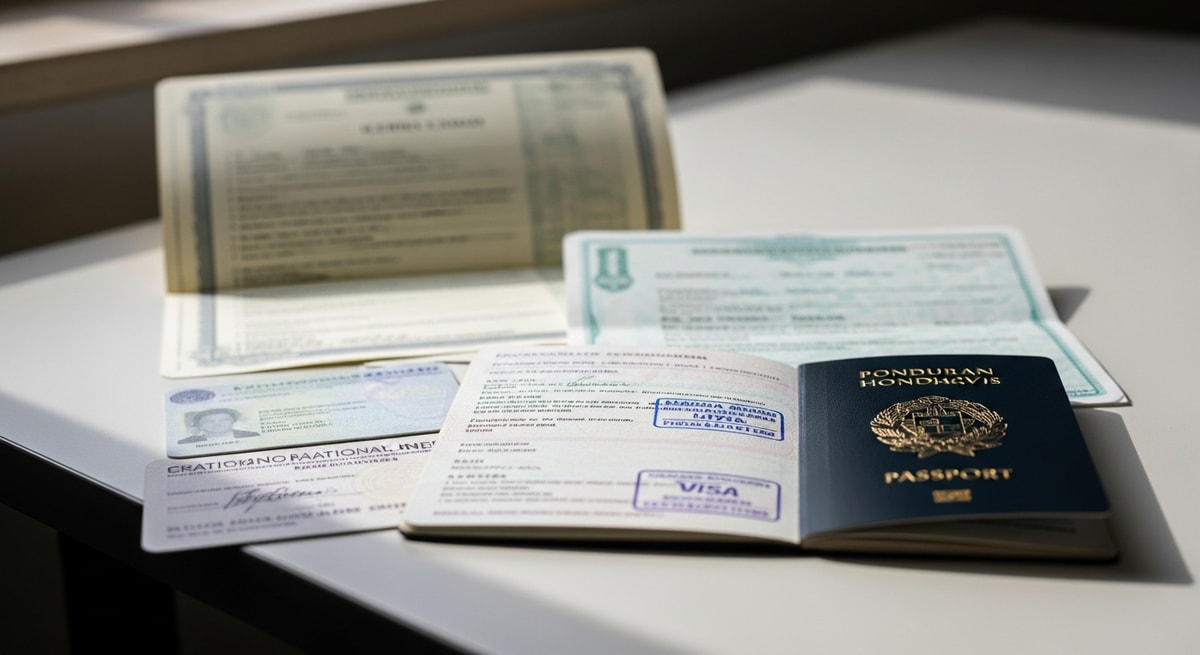
Honduran nationals submit certified translations of birth certificates, police clearances, and academic credentials to USCIS for immigration applications
Honduras Civil Registry System: Registro Nacional de las Personas
Honduras's civil registration system is administered by the Registro Nacional de las Personas (RNP), the national civil registry authority responsible for recording births, marriages, deaths, and other vital events across the country. The RNP was established to centralize and modernize a system that had historically been managed at the municipal level, with each of Honduras's 298 municipalities maintaining its own civil registry office.
The acta de nacimiento (birth certificate) is the foundational identity document in Honduras. It records the child's full name, date and place of birth, parents' full names and nationalities, and the registration details. Historically, Honduran birth certificates were recorded by hand in large bound ledger books (libros de actas) at municipal civil registry offices. Many older documents still exist only in this handwritten format, which can present translation challenges due to variations in handwriting quality, ink degradation, and inconsistent formatting across different municipalities.
The tarjeta de identidad (national identity card) is issued by the RNP to all Honduran citizens upon reaching the age of 18. This card serves as the primary identification document for voting, banking, and government transactions within Honduras. The acta de matrimonio (marriage certificate) is issued by the municipal civil registry where the marriage was performed. Religious marriages in Honduras must also be registered with the civil registry to have legal effect.
The acta de defunción (death certificate) is likewise registered at the municipal level and is required for inheritance proceedings, insurance claims, and immigration applications where proof of a spouse's or parent's death is necessary. DoVisa's translators are thoroughly familiar with Honduran civil registry document formats, including both the older handwritten entries and the newer computerized records issued by the RNP.
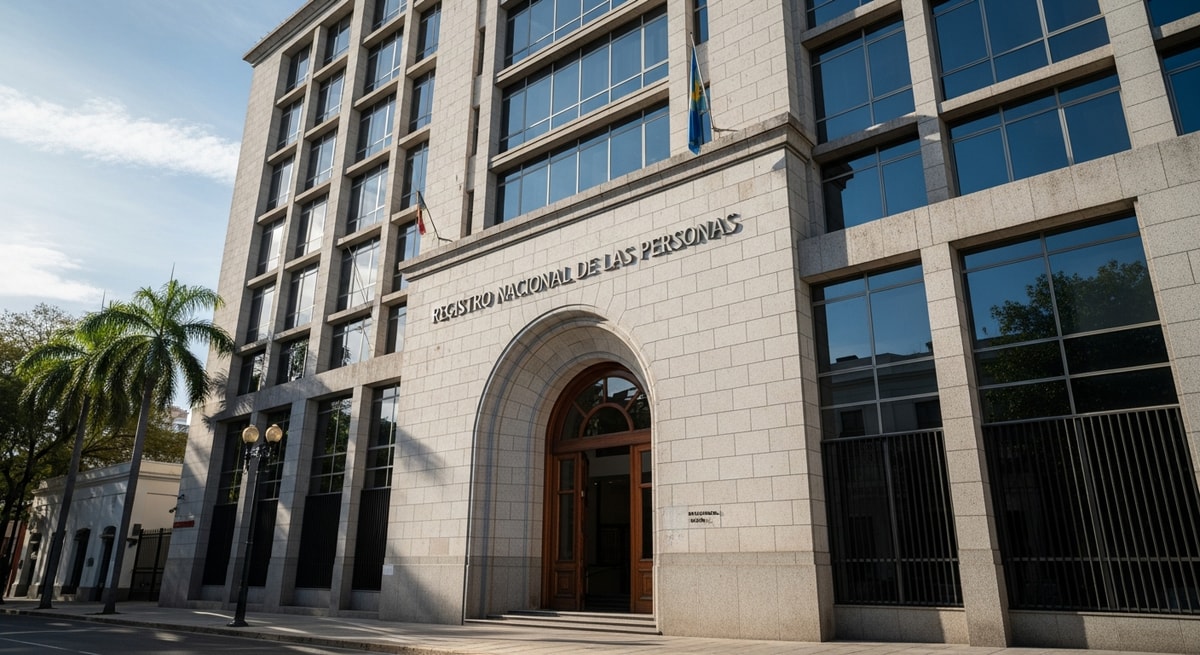
The Registro Nacional de las Personas (RNP) oversees civil registration across Honduras's 298 municipalities
"Needed my acta de nacimiento and constancia de antecedentes penales translated for a USCIS adjustment of status application. DoVisa delivered both in 4 days and my immigration attorney confirmed they met all USCIS requirements. Accepted without any RFE."
"Honduran birth certificate and marriage certificate translated for my Canadian PR application through Express Entry. IRCC accepted both translations on first submission. The translator handled all the Honduran civil registry terminology accurately."
"Translated my título universitario from UNAH and certificado de estudios for WES credential evaluation in the US. WES processed my evaluation without any follow-up questions. The academic terminology was rendered perfectly."
"Honduran acta de nacimiento translated for a UK spouse visa application. The Home Office accepted the translation without issues. Took the full 6 business days on standard delivery, but quality was solid."
"Three documents translated for my USCIS TPS renewal: birth certificate, police clearance from UNAP, and employment reference. All three accepted at my biometrics appointment. Fast turnaround and professional service."
"Needed my Honduran acta de matrimonio and acta de defunción translated for a USCIS family petition. The translator handled the older handwritten civil registry entries expertly. My immigration lawyer said the translations were excellent."
"Honduran certificado de estudios and constancia laboral translated for an Australian skilled worker visa. The Department of Home Affairs accepted both. Good quality and communication throughout the process."
"Translated my constancia de antecedentes penales from the Corte Suprema de Justicia for a USCIS naturalization application. The immigration officer at my interview accepted it immediately. Clear, professional translation."
"Honduran birth certificate and divorce decree translated for a Canadian family sponsorship application. IRCC accepted both translations with my application package. The legal terminology from the Honduran court was translated precisely."
"Honduran acta de nacimiento translated for a USCIS petition. There was a minor spelling discrepancy in a place name that I caught during review. DoVisa corrected it within a few hours and USCIS accepted the final version."
"Needed five Honduran documents translated for my US green card: birth certificate, marriage certificate, police clearance, employment letters, and academic transcript. USCIS accepted all five. DoVisa made the entire process painless."
"Needed my acta de nacimiento and constancia de antecedentes penales translated for a USCIS adjustment of status application. DoVisa delivered both in 4 days and my immigration attorney confirmed they met all USCIS requirements. Accepted without any RFE."
"Honduran birth certificate and marriage certificate translated for my Canadian PR application through Express Entry. IRCC accepted both translations on first submission. The translator handled all the Honduran civil registry terminology accurately."
"Translated my título universitario from UNAH and certificado de estudios for WES credential evaluation in the US. WES processed my evaluation without any follow-up questions. The academic terminology was rendered perfectly."
Honduran Document Translation FAQs
What types of Honduran documents can DoVisa translate?
DoVisa translates all types of Honduran documents including actas de nacimiento (birth certificates), actas de matrimonio (marriage certificates), actas de defunción (death certificates), constancias de antecedentes penales (criminal background checks from the Corte Suprema de Justicia), certificados de estudios (academic transcripts), títulos universitarios (university degrees), tarjetas de identidad (national identity cards), sentencias de divorcio (divorce decrees), constancias laborales (employment references), and constancias de bautismo (baptismal certificates). All translations are certified and accepted by international government agencies.
Are DoVisa Honduran translations certified?
Yes. Every DoVisa translation of a Honduran document includes a formal certification statement with the translator's signature, credentials, and a declaration attesting to the accuracy and completeness of the translation. Honduras does not operate a formal sworn translator (traductor jurado) system. The Secretaría de Relaciones Exteriores y Cooperación Internacional (SRECI) certifies translations through its Unidad de Legalización, Certificación y Traducción. DoVisa's certified translations are designed for international use and are accepted by USCIS, the UK Home Office, IRCC, and Australian DHA.
How long does Honduran document translation take?
Standard certified translation is delivered within 4-6 business days. Express processing is available for 2-3 business days, and rush delivery within 24 hours is offered for select single-page documents such as actas de nacimiento and actas de matrimonio. Processing time depends on document length, complexity, and the language pair. Handwritten documents from older Honduran civil registries may require additional time for legibility verification.
What languages can Honduran documents be translated to?
DoVisa translates Honduran documents from Spanish to English and over 100 additional language pairs. Popular combinations for Honduran documents include Spanish to English (for US, UK, Canada, and Australia immigration), Spanish to French (for Canadian immigration), Spanish to German, Spanish to Portuguese, Spanish to Japanese, and Spanish to Korean. We also translate documents from any language into Spanish for Honduran nationals who need foreign documents translated.
Will USCIS accept DoVisa translations of Honduran documents?
Yes. USCIS requires certified translations with a translator's certificate of accuracy for all non-English documents — DoVisa's certified translations meet this standard for all immigration application types including family-based petitions, adjustment of status, asylum, TPS, and naturalization. Our Honduran translations are also accepted by the UK Home Office (UKVI), Canada IRCC, the Australian Department of Home Affairs, and New Zealand Immigration. Our current acceptance rate across all international authorities is 98.7%.
Do I need notarization with my Honduran document translation?
It depends on the receiving authority. For USCIS, a certified translation with a statement of accuracy is sufficient — notarization is not required. For UK UKVI and Canada IRCC, professional certified translations meet the standard without notarization. Some private institutions, state agencies, or foreign courts may request notarization as an additional authentication step. DoVisa can arrange notarization upon request.
Is Honduras a member of the Hague Apostille Convention?
Yes. Honduras acceded to the Hague Apostille Convention on 20 January 2004, with entry into force on 30 September 2004. The competent authority for issuing apostilles is the Secretaría de Estado en el Despacho de Relaciones Exteriores, specifically the Unidad de Legalización, Certificación y Traducción. Honduran documents bearing an apostille are recognized in all 125+ Convention member states without further legalization. DoVisa coordinates the complete apostille process through the SRECI on your behalf.
How much does certified Honduran document translation cost?
DoVisa's Honduran document translation pricing follows a transparent per-page structure with volume discounts that apply automatically for larger projects. Pricing varies based on document length, language pair, and processing speed. Express and rush service options are available for time-sensitive projects. Apostille processing through the SRECI is quoted separately. Upload your documents on our order page to receive an instant, detailed quote — no hidden fees.
Can DoVisa translate handwritten Honduran documents?
Yes. Many older Honduran documents, particularly actas de nacimiento and actas de matrimonio issued before the modernization of civil registries, contain handwritten entries recorded in bound ledger books (libros de actas). Our translators are experienced with handwritten Spanish scripts and the formatting conventions used in Honduran municipal civil registries across different time periods. For legibility purposes, we recommend uploading the highest-quality scan possible. If any portion of a handwritten document is illegible, our team will flag it before translation begins and work with you to resolve the issue.
What is a constancia de antecedentes penales and how is it translated?
The constancia de antecedentes penales is Honduras's official criminal background check, issued by the Unidad de Antecedentes Penales (UNAP) under the Corte Suprema de Justicia (CSJ). This certificate confirms whether the applicant has a criminal record in Honduras and is required by USCIS, the UK Home Office, and other immigration authorities. The document typically states either that no criminal record exists or lists any convictions. DoVisa's translators are familiar with the standard Honduran police clearance format and the legal terminology used by the CSJ. The certificate must usually be issued within 6 months of submission to immigration authorities.
How does the apostille process work for Honduran documents?
All Honduran documents requiring an apostille are processed through a single competent authority: the Secretaría de Relaciones Exteriores y Cooperación Internacional (SRECI), specifically the Unidad de Legalización, Certificación y Traducción. This applies to all document types — vital records from municipal registries, court documents from the Corte Suprema de Justicia, academic credentials, and other official documents. The apostille certifies the authenticity of the document's signature and seal for international use in all Hague Convention member states. DoVisa coordinates the entire process including submission, tracking, and delivery.
What format will I receive my Honduran document translation in?
You will receive your certified translation as a high-resolution PDF delivered via email, suitable for immediate submission to immigration authorities, credential evaluation services, and other institutions. The PDF includes the full translation, the translator's certification statement, signature, and credentials. A physical hard copy with original wet signatures is shipped via tracked international courier for authorities that require original documents. Both digital and physical copies are included in the standard service.
Get Your Honduran Documents Translated Today
Professional translations of Honduran documents accepted by USCIS, UK Home Office, Canada IRCC, and Australian immigration