Certified Pashto & Dari Document Translation for Afghanistan
Professional translation of Afghan documents with consular legalization coordination. Perso-Arabic script expertise for tazkira, court documents, and academic credentials. Accepted by USCIS, UKVI, IRCC, and authorities worldwide.
TrustpilotSelect Languages
Drag & drop your documents here
or
PDF, JPEG, PNG, WebP — Max 10MB per file. Word documents: please save as PDF first.
Certified translators · Accepted by governments, courts & universities worldwide · View sample
Select a destination country to view pricing
How Afghanistan Certified Translation Works
Submit Your Documents Securely
Upload clear scans of your Afghan documents through our encrypted portal. We accept PDF, JPEG, and PNG formats. Our intake specialists review each upload for legibility and identify the document type — whether it is a tazkira (تذکره) national ID card, a birth certificate (کارت ولادت), a marriage certificate (نکاح خط), or academic credentials from Afghan institutions.
Translator Assignment
Your documents are matched with a certified translator experienced in Afghanistan's dual official languages. Afghan documents use Perso-Arabic script with distinct Pashto (44 letters) and Dari (32 letters) alphabets. Translators are familiar with Afghan administrative terminology, Islamic legal vocabulary from Sharia courts, and calendar systems including Solar Hijri and Lunar Hijri dates that appear in historical and contemporary documents.
Translation & Certification
The translator produces your certified translation with a signed certification statement attesting to accuracy and completeness. For Afghan documents requiring international use, translations must meet the standards of the destination country's immigration authority. Each translation accurately handles Perso-Arabic script content, including right-to-left text direction, diacritical marks, and date conversion from Solar or Lunar Hijri to Gregorian calendars.
Delivery with Full Certification
Receive your certified translation as a high-resolution PDF via email, suitable for immediate submission to USCIS, UKVI, IRCC, or other authorities. Physical copies shipped via tracked courier. Afghanistan is not a member of the Hague Apostille Convention, so documents require consular legalization through the Ministry of Foreign Affairs and the destination country's embassy. DoVisa coordinates this multi-step authentication process when required.
Afghanistan Translation Service Specifications
Popular Language Pairs
We support all languages — 100+ language pairs available for Afghanistan documents including Pashto and Dari paired with European, Middle Eastern, and South Asian languages.
Common Documents
- Tazkira — تذکره (national identity card)
- Birth certificates — کارت ولادت (kart-e-tawalod)
- Marriage certificates — نکاح خط (nekah khat) / شرعی وثیقه خط (sharaie waseqa khat)
- Death certificates — سند فوت
- Police clearance certificates
- Academic diplomas and transcripts — دوره عالی (secondary education)
- University degrees and grade reports
- Divorce letters — طلاق نامه
- Nationality certificates — تابعیت
- Court judgments and legal documents
Turnaround Time
Certification Details
Afghanistan Translation Requirements & Regulatory Framework
Embassy Acceptance
Notarization Process
Apostille Information
Legal Framework
Common Scenarios for Afghanistan Document Translation
Immigration & Refugee Applications
Afghan nationals and refugees applying for asylum, resettlement, or family reunification in the US, UK, Canada, Germany, or Australia need certified English translations of tazkira cards, birth certificates (kart-e-tawalod), marriage certificates (nekah khat), and police clearance. DoVisa's certified translations meet all USCIS, UKVI, IRCC, and Australian DHA requirements for Afghan documents.
Academic Credential Evaluation
Afghan secondary education certificates (دوره عالی / baccalaureate) and university degrees require certified translation for WES, ECE, IQAS, and other credential evaluation agencies. Transcripts listing courses and grades from Afghan universities must be accurately translated with proper conversion of Hijri calendar dates to Gregorian dates for international recognition.
Family Reunification & Spousal Visas
Marriage certificates issued by Afghan courts — including both nekah khat (نکاح خط) and sharaie waseqa khat (شرعی وثیقه خط) formats — require certified translation for spousal visa applications and family reunification proceedings. Certificates from Sharia Courts may include Jawi-influenced Arabic script requiring specialized translation expertise.
Identity Verification & Civil Status
The Afghan tazkira (تذکره) national identity card serves as the primary identification document. Both paper and electronic (e-tazkira) versions require certified translation for immigration, driver's license applications, and official registration abroad. Tazkira cards linked to Afghanistan's national database include biometric data and unique identification numbers.
Legal Proceedings & Court Documents
Afghan court judgments, divorce letters (طلاق نامه), custody orders, and legal deeds require certified translation for international legal proceedings. Documents from Afghanistan's dual court system — civil courts and Sharia courts — contain distinctive terminology requiring translators familiar with both Islamic legal tradition and Afghan civil law.
Afghanistan's Tazkira System: National Identity and Civil Registration
Afghanistan's primary identification system revolves around the tazkira (تذکره), a national identity card that serves functions similar to birth certificates, identity cards, and citizenship documents in other countries. The tazkira system predates modern civil registration and remains the cornerstone of Afghan identity documentation.
Two types of tazkira exist: paper tazkira (the older legacy format) and e-tazkira (the electronic biometric version introduced in recent years). The e-tazkira includes fingerprint data, facial recognition, and a unique National Identification Number (NIP) linked to a centralized database. Registration costs 100 AFN for paper format and 300 AFN for electronic format. Both formats are accepted internationally when accompanied by certified English translation.
For births occurring in hospitals, the Ministry of Public Health issues trilingual birth certificates (Pashto, Dari, English) listing the child's information. For non-hospital births, families must present vaccination cards, parent's tazkira, and photos to local civil registration offices. Birth registration must occur before the child turns 5 years old. For international immigration and visa applications, these birth certificates require certified translation by qualified translators familiar with Afghanistan's naming conventions and calendar systems.
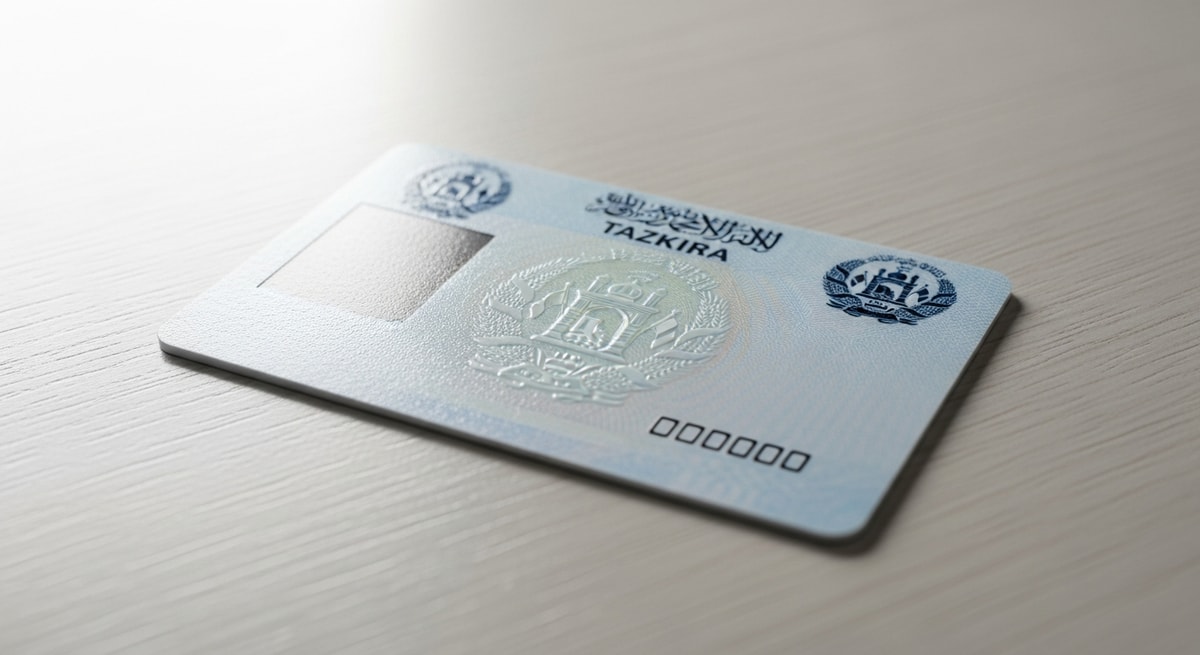
The tazkira is Afghanistan's national identity card — essential for all official transactions and international documentation
Pashto and Dari: Navigating Afghanistan's Dual-Script Perso-Arabic Languages
Afghanistan's two official languages — Pashto (spoken by Pashtuns) and Dari (Afghan Persian) — both use Perso-Arabic script written right-to-left, but with significant differences. Pashto uses a modified alphabet with 44 letters, including 13 unique characters introduced by the 16th-century scholar Bayazid Pir Roshan. Dari uses the standard Persian alphabet of 32 letters. Both employ diacritical marks that change pronunciation and meaning.
Afghan documents may be in Pashto, Dari, or a combination of both, depending on the issuing region and authority. Government documents from Kabul and western provinces tend toward Dari, while documents from southern and eastern provinces often use Pashto. Islamic legal documents — marriage certificates from Sharia Courts, divorce letters, inheritance deeds — frequently include Arabic-language religious formulae alongside Pashto or Dari text.
Translation challenges include: (1) accurately rendering proper names with correct transliteration, (2) converting Hijri calendar dates (Solar Hijri historically, Lunar Hijri since 2022) to Gregorian equivalents, (3) handling right-to-left text flow and diacritics, and (4) distinguishing between Pashto and Dari vocabulary when both languages appear. DoVisa's translators are proficient in both Afghan languages and familiar with regional dialectal variations and administrative terminology.
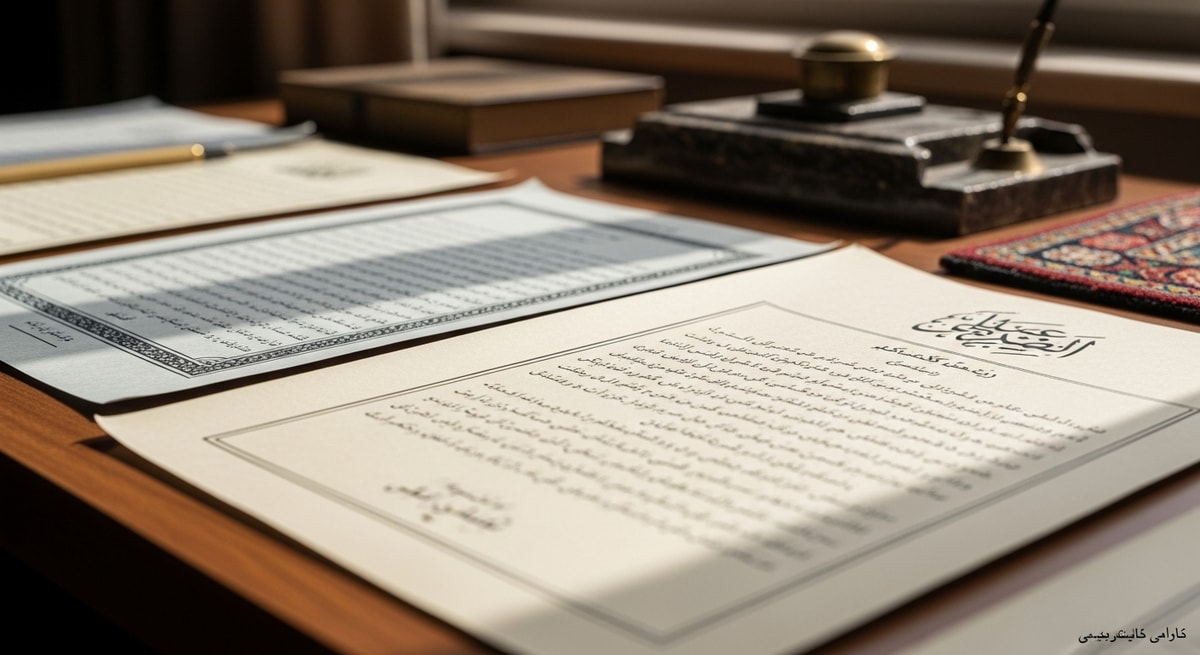
Afghan documents use Pashto (44-letter) and Dari (32-letter) Perso-Arabic scripts — both requiring specialized translation expertise
"Tazkira and birth certificate (kart-e-tawalod) translated from Dari to English for USCIS asylum application. Both accepted without issues — the Solar Hijri date conversion was handled perfectly."
"Marriage certificate (nekah khat) from Kabul court translated for UK spouse visa. UKVI accepted the certified translation on first submission. Excellent handling of the Arabic legal terminology."
"University transcript and diploma from Kabul University translated for WES credential evaluation. The translator accurately converted the Dari academic terminology and Hijri calendar dates. WES processed my evaluation without corrections."
"Afghan police clearance certificate and tazkira translated for Canadian permanent residence application. IRCC accepted both documents. Fast turnaround and professional formatting."
"Birth certificates for my children translated from Pashto to English for resettlement in Australia. Department of Home Affairs accepted all documents. The Perso-Arabic script was accurately rendered with proper transliteration."
"Academic credentials from an Afghan teacher training college translated for German university admission. The translation included accurate conversion of the دوره عالی (secondary education certificate) terminology. University accepted immediately."
"Divorce letter (طلاق نامه) from Kabul Sharia Court translated for family law proceedings in the UK. Good handling of Islamic legal terminology, though one Arabic phrase required minor clarification — corrected quickly."
"Afghan national ID (e-tazkira) and marriage certificate translated for New Zealand skilled migration visa. Immigration NZ accepted both documents promptly. Excellent service and clear formatting."
"Older paper tazkira from 1990s translated for US green card application. The handwritten Dari entries were accurately transcribed and translated. USCIS accepted the certified translation."
"Employment reference letter from Afghan ministry translated for job application in Canada. Final translation was accurate, but the initial draft had a minor inconsistency in romanizing a Dari ministry name. Revised version corrected immediately."
"Court judgment from Afghan civil court translated for international arbitration proceeding. The translator expertly handled the mix of Dari and Arabic legal terminology. Accepted by the arbitration panel without objection."
"Tazkira and birth certificate (kart-e-tawalod) translated from Dari to English for USCIS asylum application. Both accepted without issues — the Solar Hijri date conversion was handled perfectly."
"Marriage certificate (nekah khat) from Kabul court translated for UK spouse visa. UKVI accepted the certified translation on first submission. Excellent handling of the Arabic legal terminology."
"University transcript and diploma from Kabul University translated for WES credential evaluation. The translator accurately converted the Dari academic terminology and Hijri calendar dates. WES processed my evaluation without corrections."
Afghanistan Document Translation FAQs
What types of Afghanistan documents can be translated?
Are your Afghanistan translations certified?
How long does Afghanistan document translation take?
What languages do you translate Afghanistan documents to and from?
Will my translated Afghanistan documents be accepted by immigration authorities?
Do I need notarization with my Afghanistan translation?
Can Afghanistan documents get an apostille?
How much does certified Afghanistan document translation cost?
Can you translate documents written in Pashto script?
What format will I receive my translated Afghanistan document in?
What is a tazkira and how does it differ from a birth certificate?
How do you handle Solar Hijri and Lunar Hijri calendar dates in Afghan documents?
What is the difference between nekah khat and sharaie waseqa khat marriage certificates?
Get Your Afghanistan Documents Translated Today
Professional certified translations of Afghan Pashto and Dari documents — accepted by USCIS, UKVI, IRCC, and immigration authorities worldwide