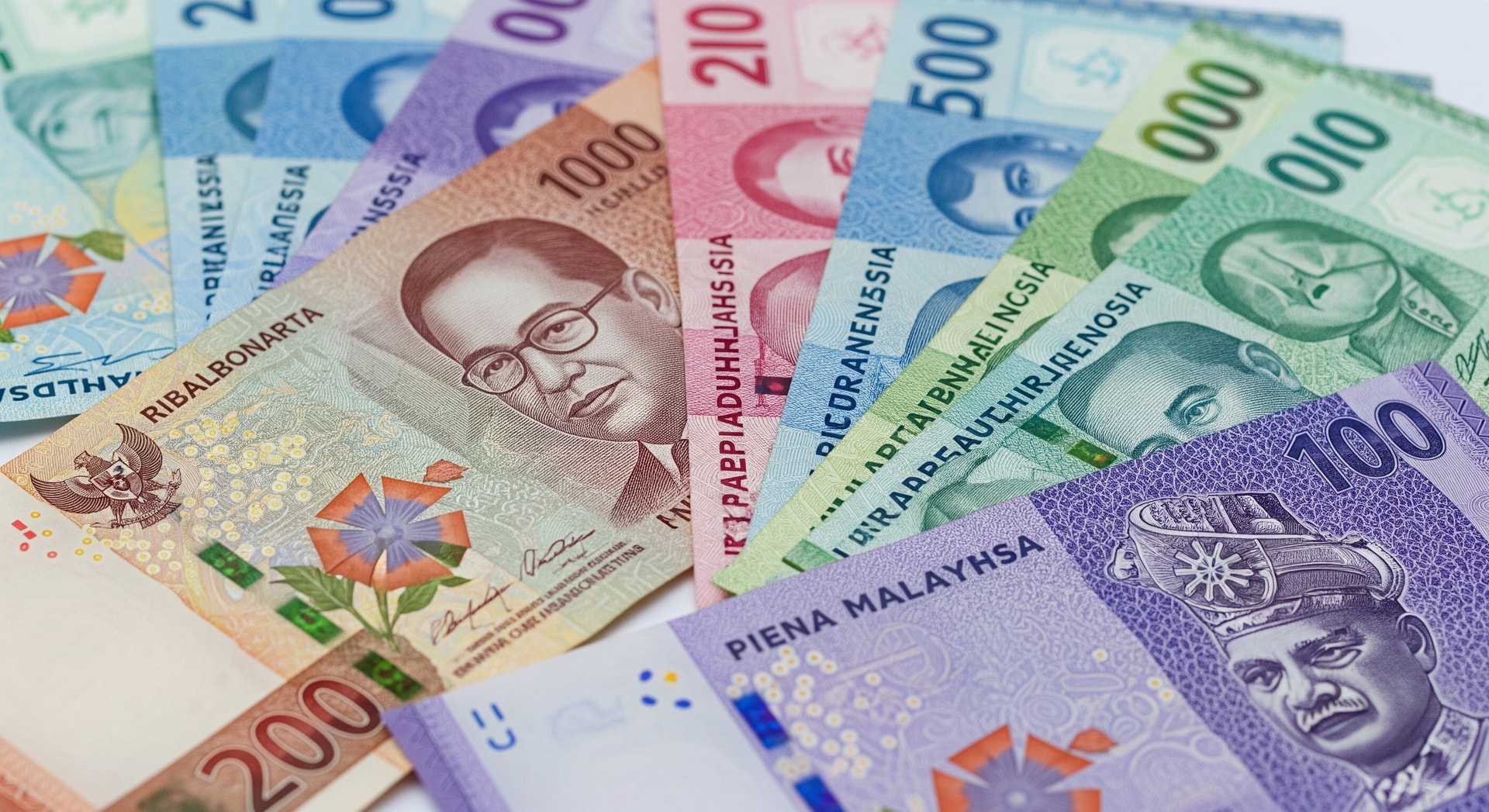
Southeast Asia currency fluctuations in early 2026 are creating volatility across the region — from the rupiah and peso to the ringgit and dong — with direct implications for travelers and local economies.
Summary: Southeast Asia currency fluctuations in early 2026 reflect a widening north–south monetary policy split. Indonesia and the Philippines saw weakening currencies, while Singapore and Malaysia held firmer, creating ripple effects for travelers, importers and exporters.
A sharp divergence in central bank approaches across Southeast Asia has translated into volatile exchange-rate moves in early 2026. The primary driver has been a policy contrast: some economies tightened or held rates to protect price stability, while others continued easing to bolster growth. These Southeast Asia currency fluctuations are already affecting tourism costs, business margins and household budgets across the region.
A pronounced north–south policy divide
In early 2026, countries in the north of the region — led by Singapore and Malaysia — were largely maintaining or tightening monetary settings to guard against inflation. By contrast, several southern economies, including Indonesia and the Philippines, continued to cut rates to support fragile growth. That split prompted capital to seek higher yields, amplifying currency moves as investors rotated funds between markets.
Indonesia: Rupiah under siege
The Indonesian rupiah was one of the most pressured currencies, having weakened by about 0.91 per cent between the start of 2026 and mid‑January. Bank Indonesia held its benchmark seven‑day reverse repurchase rate at 4.75 per cent — a level unchanged since September 2025 — aiming to stabilise the currency, support the 2026–2027 inflation target and encourage growth. Still, foreign capital outflows, expectations of further easing and a rising fiscal deficit left the rupiah vulnerable.
Philippines: Peso faces growth and tariff headwinds
The Philippine peso depreciated by roughly 0.53 per cent early in 2026. Bangko Sentral ng Pilipinas delivered five rate cuts in 2025, bringing the policy rate to a three‑year low of 4.5 per cent. Policymakers signalled that further easing was unlikely as inflation remained within target, but slow domestic growth and potential U.S. tariff threats continued to weigh on the peso.
Thailand: Baht balances tourism support and uncertainty
Thailand’s baht showed relative strength early in January, appreciating by about 0.83 per cent. Authorities set a medium‑term headline inflation target of 1–3 per cent and aimed to guide inflation back into that range while avoiding deflation. Tourism revenue continued to cushion the economy, though analysts warned the baht could be sensitive to external shocks; some forecasts placed the baht near 31.7 per U.S. dollar by late 2026.
Malaysia, Singapore and Vietnam: different strengths
Malaysia’s ringgit was relatively resilient, weakening by about 0.09 per cent at the start of 2026 while Bank Negara kept the overnight policy rate at 2.75 per cent. The electrical and electronics sector and tourist spending supported the currency. The Singapore dollar remained one of the stronger performers thanks to MAS’s disciplined S$NEER policy band; it was modestly weaker by about 0.03 per cent but benefited from AI‑led tech investment and FDI. Vietnam’s dong strengthened around 0.10 per cent, supported by robust exports of electronics, computers and phone components.
- Indonesia (IDR): Depreciated about 0.91% — pressured by rate cuts, capital outflows and fiscal strain
- Philippines (PHP): Depreciated about 0.53% — slow growth and tariff risks weighing on the currency
- Thailand (THB): Strengthened about 0.83% — tourism helps offset export weakness
- Vietnam (VND): Strengthened about 0.10% — buoyed by electronics and manufacturing exports
- Malaysia (MYR): Weakened about 0.09% — supported by tech exports and FDI
- Singapore (SGD): Modestly weaker by 0.03% — policy band and strong financial flows underpin the currency
Macro drivers: tariffs, tech cycles and commodity prices
Beyond policy settings, broader forces have been decisive. Threats of higher U.S. tariffs created uncertainty for export‑dependent economies. At the same time, surging investment in AI‑related hardware boosted tech exports for Malaysia and Singapore. Commodity price swings — especially oil — acted as a tailwind for producers and a headwind for importers. Shifts in global interest‑rate expectations also prompted capital flows that amplified currency moves.
Implications for travelers, businesses and households
Movements in exchange rates translate quickly into real‑world impacts. For travelers, a stronger Singapore dollar means higher costs for hotels and dining, while a weaker rupiah or peso can make destinations cheaper but less predictable. Importers face higher input prices when local currencies weaken, squeezing margins, whereas exporters may see benefits if tariffs and demand remain favourable. Households can feel pressure through more expensive fuel, electronics and food imports.
Why this matters: So what? Travelers should monitor exchange‑rate trends when budgeting trips across Southeast Asia and consider booking key services in advance or using hedged payment options. Businesses must weigh currency risk in contracts and supply chains. Policymakers face the challenge of balancing growth and price stability amid external shocks. Ultimately, the early‑2026 currency episode underscores that monetary choices and global forces can quickly change travel costs and economic outlooks across the region.
Sources