Certified CNMI Document Translation Services
Professional certified translations of Commonwealth of the Northern Mariana Islands documents in Chamorro, Carolinian, and English, accepted by USCIS, US federal agencies, and international authorities.
TrustpilotSelect Languages
Drag & drop your documents here
or
PDF, JPEG, PNG, WebP — Max 10MB per file. Word documents: please save as PDF first.
Certified translators · Accepted by governments, courts & universities worldwide · View sample
Select a destination country to view pricing
How Northern Mariana Islands Certified Translation Works
Submit Your Documents Securely
Upload clear scans of your CNMI documents through our encrypted portal. We accept PDF, JPEG, and PNG formats. Our intake specialists review each upload for legibility, ensuring stamps and seals from the CNMI Office of the Registrar of Vital Statistics and other government agencies are clearly visible before translation begins.
Translator Assignment
Your documents are matched with a certified translator expert in Chamorro, Carolinian, and English. CNMI documents reflect the islands' unique trilingual heritage — official records may contain Chamorro terminology, Carolinian names, and English administrative language. Our translators handle all three languages with equal accuracy.
Translation & Certification
The translator produces a complete certified translation with a signed certification statement attesting to accuracy and completeness. Our certified translations comply with USCIS requirements under 8 CFR 103.2 and are accepted by US federal agencies, international embassies, and credential evaluation organizations worldwide.
Delivery with Full Certification
Receive your certified translation as a high-resolution PDF via email, with a physical signed copy shipped by tracked courier if required. For documents needing apostille, DoVisa coordinates the full process through the <strong>Office of the Lieutenant Governor of the Commonwealth of the Northern Mariana Islands</strong>, the designated apostille competent authority.
Northern Mariana Islands Translation Service Specifications
Popular Language Pairs
We support all languages — 100+ language pairs available for Northern Mariana Islands documents.
Common Documents
- Birth certificates from the CNMI Office of the Registrar of Vital Statistics
- Marriage certificates from the CNMI Vital Statistics Office or Commonwealth Superior Court
- Death certificates from the Vital Statistics Section
- Police clearance certificates from the CNMI Department of Public Safety
- Academic transcripts and diplomas from Northern Marianas College
- US passports and CNMI identification documents
- Court orders and judicial documents from the Commonwealth Superior Court
- Catholic Church baptism and marriage registers with Chamorro and Carolinian names
- Employment references and professional qualifications
- Military records and documentation from CNMI-based US military installations
- Immigration documents including CNMI-only Transitional Worker permits
- Property and land title documents
Turnaround Time
Certification Details
Northern Mariana Islands Translation Requirements & Regulatory Framework
Embassy Acceptance
Notarization Process
Apostille Information
Legal Framework
Common Scenarios for Northern Mariana Islands Document Translation
USCIS & US Federal Immigration
CNMI residents and US nationals filing USCIS immigration petitions need certified translations of Chamorro and Carolinian-language documents, church records, and bilingual vital records. The CNMI's unique CW-1 transitional worker category also creates specific document translation needs for foreign workers transitioning to US federal immigration status.
Education & Academic Credentials
Students from Northern Marianas College or applying to the CNMI's public schools from abroad require certified translations of transcripts and diplomas. Our translators understand the CNMI educational system and terminology, producing translations accepted by WES and international university admissions offices.
Business & Commercial Translation
The CNMI's proximity to Japan, Korea, and the Philippines makes it an important hub for Pacific business. Companies investing in the CNMI or CNMI-based businesses entering Asian markets need certified translations of corporate documents, joint venture agreements, regulatory filings, and business licenses.
Marriage & Family Records
CNMI residents sponsoring family members for US immigration or foreign nationals marrying CNMI US citizens need certified translations of birth certificates, marriage certificates, and family documents. Catholic Church records with Chamorro and Carolinian names are frequently requested for genealogy and family reunification purposes.
Legal & Court Proceedings
Attorneys and parties in cross-border legal proceedings require certified translations of CNMI court orders, property documents, and affidavits. Our translations are accepted by the Commonwealth Superior Court, US District Court for the NMI, and international legal institutions across the Pacific region.
Chamorro and Carolinian: The CNMI's Indigenous Languages
The Commonwealth of the Northern Mariana Islands has three official languages: Chamorro, Carolinian, and English. This trilingual status reflects the islands' complex history of Chamorro indigenous settlement, Carolinian migration from the Caroline Islands in the 18th and 19th centuries, Spanish colonization, German administration, Japanese administration, and US trusteeship. Each era has left traces in official documents, place names, and personal naming conventions.
Chamorro is an Austronesian language, closely related to the Chamorro spoken in Guam, with centuries of Spanish-influence vocabulary. Carolinian (also called Refaluwasch) is a distinct Micronesian language spoken primarily on Saipan and the smaller northern islands, belonging to the Chuukic branch of the Micronesian language family. Both languages use the Latin script but have distinct phonological systems and vocabulary that require specialist translators.
Official CNMI documents from the Vital Statistics Office are issued primarily in English, but personal names, clan affiliations, place of birth, and village names often reflect Chamorro or Carolinian forms. Historical documents — church registers, Japanese-era records, and Trust Territory of the Pacific Islands administrative records — may contain significant non-English content requiring expert translation for legal, immigration, and genealogy purposes.
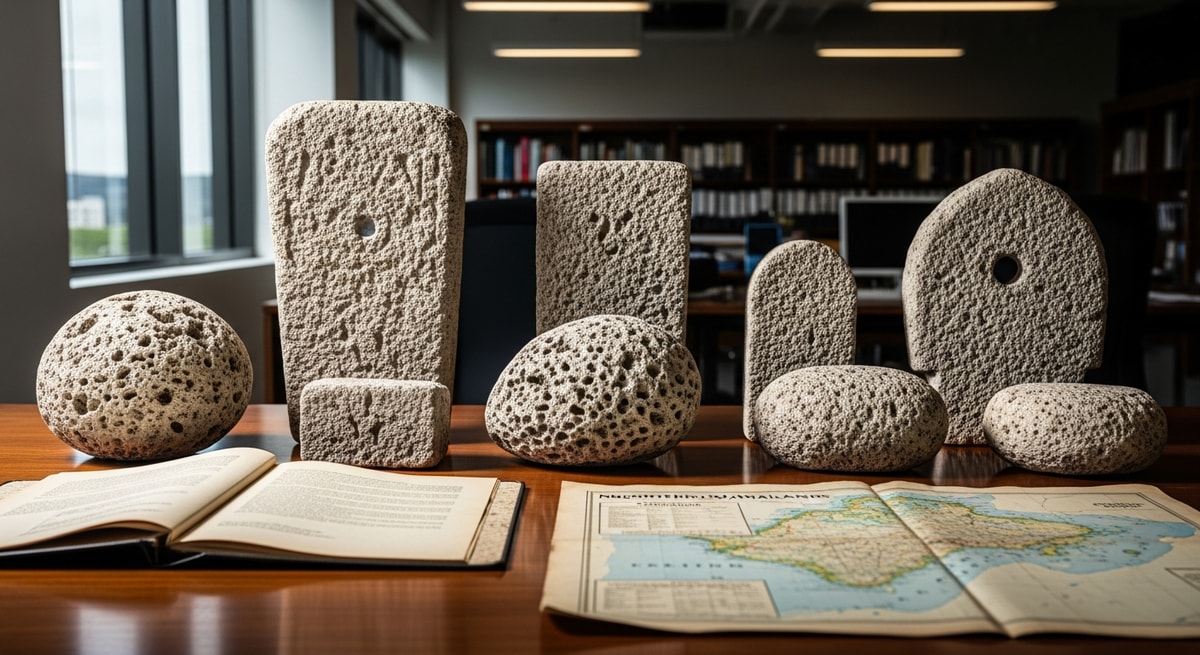
The CNMI's trilingual official language environment — Chamorro, Carolinian, and English — reflects centuries of diverse cultural history
CNMI Documents: Unique Features and Translation Challenges
CNMI documents present unique challenges not found in other US territories. The islands' administrative history spans four different colonial powers — Spain (1668-1899), Germany (1899-1914), Japan (1914-1944), and the US Trust Territory of the Pacific Islands (1947-1978) before the current Commonwealth status — leaving a complex documentary heritage that requires specialist expertise.
Japanese-era vital records (1914-1944) are particularly common among older CNMI residents and their descendants. These documents are written in Japanese kanji and kana scripts, with Chamorro and Carolinian names rendered in Japanese phonetic approximations (katakana). Translating these records accurately requires both Japanese language expertise and knowledge of the original Chamorro or Carolinian names being represented.
The CNMI also has a unique immigration framework: unlike other US territories, the CNMI maintained its own immigration system until 2009, when US federal immigration law was extended to the islands under the Consolidated Natural Resources Act of 2008. This transition created a class of long-term foreign workers under the CW-1 CNMI-Only Transitional Worker visa, whose documents may span multiple immigration regimes and require certified translation for status adjustment applications to USCIS.
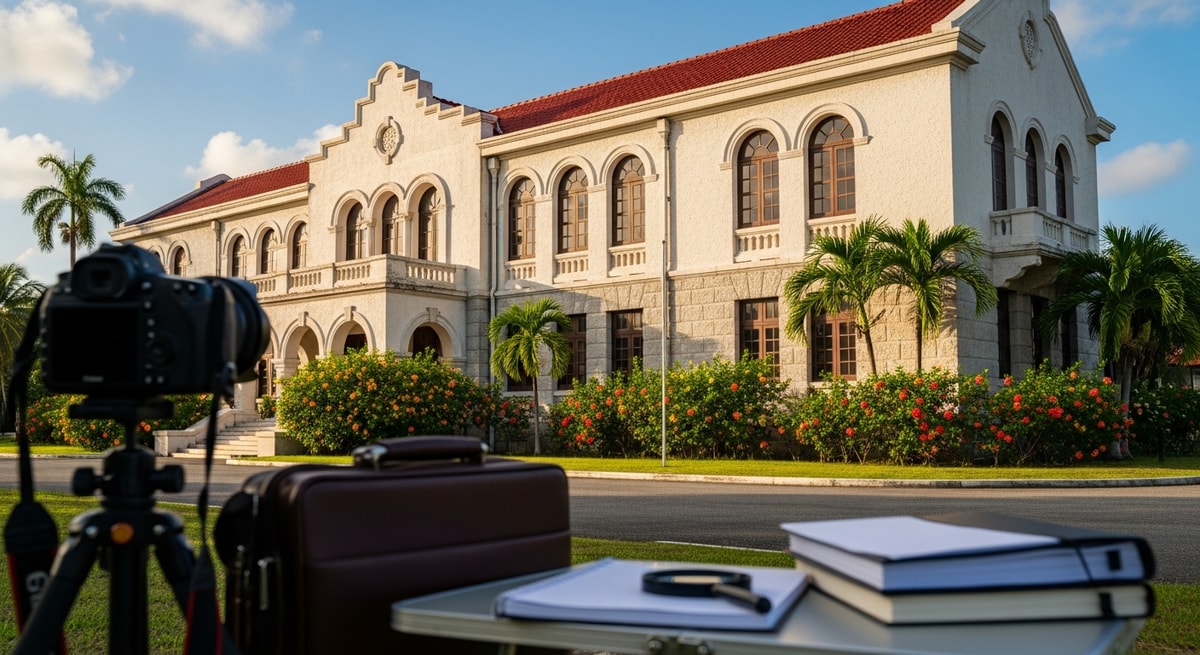
CNMI documents may reflect Spanish, German, Japanese, or US administrative eras — each requiring specialist translation expertise
"Needed my CNMI birth certificate translated for a USCIS adjustment of status application. DoVisa produced a certified translation that USCIS accepted without any request for evidence. Excellent specialist knowledge of CNMI documents."
"Japanese-era vital record from Saipan translated to English for a family immigration petition. The translator correctly identified the original Chamorro name behind the Japanese katakana rendering. Outstanding expertise."
"Northern Marianas College transcripts translated for a graduate school application in Australia. The translation was accurate and the Australian university accepted it without requesting further documentation. Good service."
"Police clearance certificate from the CNMI Department of Public Safety translated for a Korea work visa. The Korean embassy accepted the certified translation on first submission. Quick turnaround and professional quality."
"The translation was correct but took an additional day due to the complexity of a Japanese-era document. DoVisa kept me informed and the final certified translation was accepted by USCIS without issues. Would use again."
"Church marriage register from Saipan translated and apostilled for a legal proceeding in Japan. DoVisa handled the full process including the Lieutenant Governor's apostille. Completed in under 3 weeks. Very efficient."
"CW-1 transitional worker documents translated for a USCIS status adjustment. DoVisa's translator understood the CNMI immigration framework and produced a translation that USCIS accepted immediately. Highly recommended."
"Multiple family documents including birth certificates with Carolinian names translated for a family reunification petition. IRCC Canada accepted all translated documents. Translator demonstrated solid knowledge of Carolinian naming conventions."
"Needed my CNMI birth certificate translated for a USCIS adjustment of status application. DoVisa produced a certified translation that USCIS accepted without any request for evidence. Excellent specialist knowledge of CNMI documents."
"Japanese-era vital record from Saipan translated to English for a family immigration petition. The translator correctly identified the original Chamorro name behind the Japanese katakana rendering. Outstanding expertise."
"Northern Marianas College transcripts translated for a graduate school application in Australia. The translation was accurate and the Australian university accepted it without requesting further documentation. Good service."
Northern Mariana Islands Document Translation FAQs
What types of CNMI documents can DoVisa translate?
Are DoVisa's CNMI translations accepted by USCIS?
How long does CNMI document translation take?
Can you translate Japanese-era CNMI records?
Does the CNMI participate in the Hague Apostille Convention?
Is electronic apostille (e-apostille) available for CNMI documents?
What is the difference between CNMI and Guam documents?
Do I need notarization with my CNMI translation?
What is the CW-1 visa and why does it affect translation needs?
How much does certified translation of CNMI documents cost?
Can you translate Carolinian-language documents?
What format will I receive my translation in?
Get Your CNMI Documents Translated Today
Certified translations of Chamorro, Carolinian, and English documents accepted by USCIS and international authorities