
Certified Portuguese Document Translation for Guinea-Bissau
Professional certified translations for Guinea-Bissau documents — certidões de nascimento, diplomas, and legal records. Portuguese–English and 100+ language pairs. Accepted by embassies and immigration authorities worldwide.
TrustpilotSelect Languages
Drag & drop your documents here
or
PDF, JPEG, PNG, WebP — Max 10MB per file. Word documents: please save as PDF first.
Certified translators · Accepted by governments, courts & universities worldwide · View sample
Select a destination country to view pricing
How Guinea-Bissau Certified Translation Works
Upload Your Guinea-Bissau Documents
Scan or photograph your Guinea-Bissau documents and upload them securely through our encrypted portal. We accept PDF, JPEG, and PNG formats. Our intake team reviews each upload within 2 hours to confirm legibility, identify the issuing authority — such as the Conservatória do Registo Civil (Civil Registry Office) or the Ministério da Educação Nacional — and confirm the document type for accurate translator assignment.
Expert Translator Assignment
Your documents are matched with a qualified translator with native-level proficiency in Portuguese as used in Guinea-Bissau, including familiarity with Crioulo (Guinea-Bissau Creole) annotations that may appear in community documents. Our translators understand the specific administrative and legal terminology of Guinea-Bissau's civil registration system and government institutions, ensuring accurate rendering of official document names and formatting.
Translation & Quality Review
The translator produces a complete certified translation with full attention to Guinea-Bissau's Portuguese legal conventions and document formats. A second qualified linguist cross-checks the translation for accuracy, consistent spelling of Guinea-Bissau place names and personal names, and proper formatting. Special care is taken with diacritics and the specific terminology of Guinea-Bissau's estado civil system inherited from the Portuguese colonial administrative tradition.
Delivery with Full Certification
Receive your certified translation as a high-resolution PDF for immediate digital submission. For documents requiring the Guinea-Bissau consular legalization chain — authentication by the Ministério dos Negócios Estrangeiros followed by embassy legalization — DoVisa coordinates the full process on your behalf. Hard copies with original translator stamps are dispatched via tracked international courier to your address in Guinea-Bissau or abroad.
Guinea-Bissau Translation Service Specifications
Popular Language Pairs
We support all languages — 100+ language pairs available for Guinea-Bissau documents.
Common Documents
- Birth certificates (certidão de nascimento)
- Marriage certificates (certidão de casamento)
- Death certificates (certidão de óbito)
- Academic diplomas and transcripts (diploma / certificado de habilitações)
- Police clearance certificates (certificado de registo criminal)
- National identity cards (bilhete de identidade)
- Passports (passaporte)
- Powers of attorney (procuração)
- Divorce decrees (sentença de divórcio)
- Single-status certificates (certificado de solteiro)
- Company registration documents
- Court orders and judgments (sentenças e acórdãos)
Turnaround Time
Certification Details
Guinea-Bissau Translation Requirements & Regulatory Framework
Embassy Acceptance
Notarization Process
Apostille Information
Legal Framework
Common Scenarios for Guinea-Bissau Document Translation
Immigration & Visa Applications
Guinea-Bissau nationals emigrating to Europe, North America, or elsewhere need certified translations of their certidão de nascimento, certidão de casamento, certificado de registo criminal, and other documents for visa applications with USCIS, UK Visas and Immigration, IRCC, and Schengen area embassies. DoVisa provides certified Portuguese-to-English and Portuguese-to-French translations with full consular legalization support for seamless international acceptance.
Academic Credential Evaluation
Guinea-Bissau students and professionals seeking university admission or credential recognition abroad must submit certified translations of academic diplomas (diploma), secondary school certificates (certificado de habilitações), and university transcripts to evaluation agencies such as WES, ECE, and NACES members. Our translators accurately render the Guinea-Bissau education system's grading conventions and institutional terminology for international evaluators.
Marriage & Family Documentation
Guinea-Bissau nationals marrying abroad or processing family reunification visas must provide certified translations of birth certificates (certidão de nascimento), single-status certificates (certificado de solteiro), and divorce decrees (sentença de divórcio). Guinea-Bissau's civil registration system reflects both the Portuguese legal tradition and local customary practices, creating document formats that require translation expertise specific to the country.
Cross-Border Business & ECOWAS Trade
Companies conducting business between Guinea-Bissau and other ECOWAS member states or international partners frequently need certified translations of commercial registration documents, contracts, financial statements, and corporate resolutions. Guinea-Bissau's Portuguese-language legal environment is distinct from neighboring Francophone West African nations, and our translators bridge the language gap for cross-border commercial activities in the region.
Legal Proceedings & Court Documents
Cross-border legal matters involving Guinea-Bissau require certified translations of court orders, judgments (sentenças), powers of attorney (procurações), and affidavits. Diaspora community members managing estates, property, or family legal matters from abroad frequently require translations of Guinea-Bissau court documents for proceedings in their country of residence. Our legal translators handle the specialized Portuguese civil law terminology of the Guinea-Bissau judicial system.
CPLP Lusophone Community Documentation
As a member of the Community of Portuguese Language Countries (CPLP), Guinea-Bissau nationals benefit from simplified documentation pathways to Portugal, Brazil, Cape Verde, Mozambique, and other Lusophone states. Despite the shared language, certified translations are still required when documents contain Crioulo annotations or when receiving authorities in other CPLP countries request a formally certified translation for administrative purposes.
Guinea-Bissau's Language Landscape: Portuguese, Crioulo, and National Languages
Guinea-Bissau's official language is Portuguese, inherited from over five centuries of Portuguese colonial presence that ended with independence on September 24, 1973 (formally recognized in 1974). All government documents, judicial proceedings, and official communications are in Portuguese. Yet in daily life, the true lingua franca is Crioulo (also spelled Kriolu or Kriol) — a Portuguese-based creole language spoken by approximately 60% of the population as a first or second language. Crioulo is the language of the marketplace, informal community life, and increasingly of urban culture, though it lacks formal official status.
Beyond Crioulo, Guinea-Bissau is home to more than 20 distinct ethnic and linguistic communities. The main national languages include Fula (Pulaar), spoken by the Fula community across the northeast and central regions; Mandinka, spoken primarily in the east along the Gambia River basin; Balanta, spoken by the largest single ethnic group; and Papel, Manjak, and Bijagó among others. These languages are not used in official documents but may appear in community-level records, customary agreements, and religious certificates.
For translation purposes, virtually all Guinea-Bissau documents requiring certified translation are in Portuguese. However, translators must be alert to Crioulo loanwords and annotations that sometimes appear in older handwritten documents, community certificates, or marginalia added by local administrators. Personal names in Guinea-Bissau documents often reflect ethnic language origins — a Fula name such as Mamadú Djaló or a Mandinka name such as Mussa Camará must be rendered with precise spelling in translations. Our translators understand the full linguistic landscape of Guinea-Bissau and produce translations that accurately reflect the original document in all its cultural and linguistic complexity.
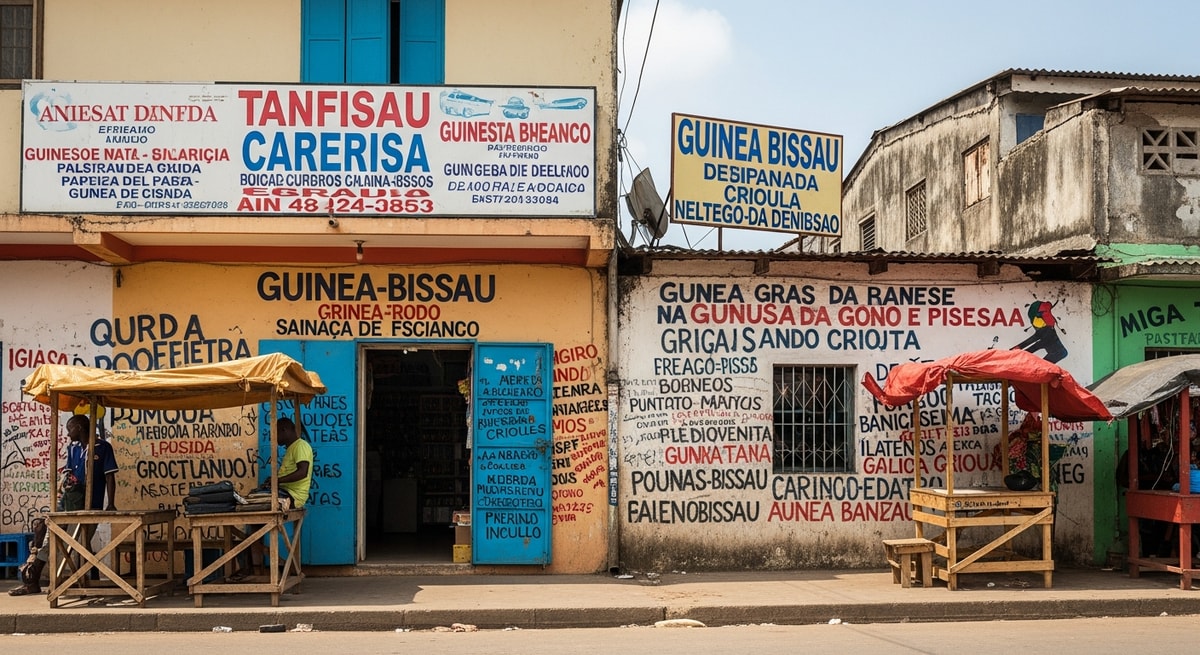
Portuguese is Guinea-Bissau's official language, but Crioulo is the spoken lingua franca — both appear in documents requiring certified translation
Consular Legalization: Authenticating Guinea-Bissau Documents for International Use
Guinea-Bissau is not a member of the Hague Apostille Convention, which means that Guinea-Bissau public documents cannot receive the simplified apostille certificate used by the convention's 129+ member states. Instead, documents intended for international use must undergo a full consular legalization chain — a multi-step authentication process that verifies the document's authenticity and the authority of the official who signed it.
The consular legalization process for Guinea-Bissau documents follows a standard sequence. First, the document must be verified at its point of origin — for civil registry documents, this means obtaining an authenticated copy from the Conservatória do Registo Civil; for academic documents, from the Ministério da Educação Nacional; for judicial documents, from the relevant court registry. Second, the document is submitted to the Ministério dos Negócios Estrangeiros (Ministry of Foreign Affairs) in Bissau for authentication — the Ministry verifies the issuing official's signature and institutional seal. Third, the authenticated document is presented to the embassy or consulate of the destination country in Guinea-Bissau (or the Guinea-Bissau embassy in the destination country) for final legalization.
This process typically takes 10-20 business days in total, depending on the destination country's embassy processing schedule and the responsiveness of the issuing authority. DoVisa manages the full legalization chain on your behalf, coordinating with our in-country partners in Bissau and the destination embassy. For certified translations that will enter the legalization chain, we ensure the translation is formatted correctly for Ministry of Foreign Affairs authentication and provide the original signed hard copy required at each stage.
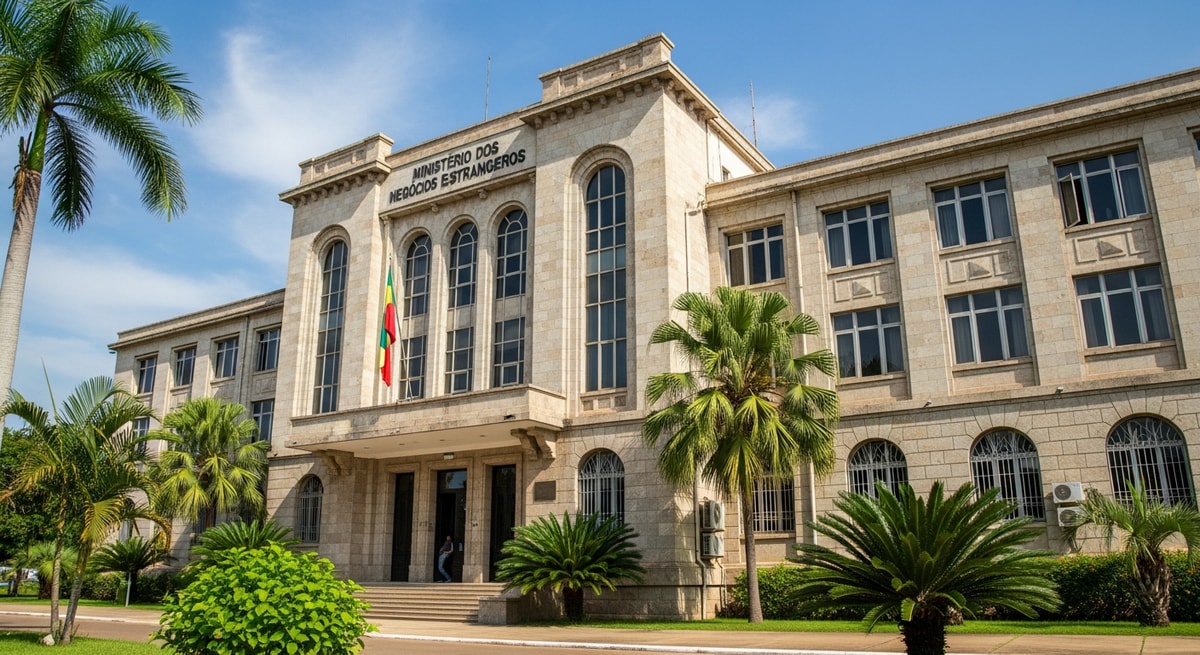
The Ministério dos Negócios Estrangeiros (Ministry of Foreign Affairs) in Bissau is the competent authority in the consular legalization chain for Guinea-Bissau documents
Guinea-Bissau Civil Registration: Certidões and the Estado Civil System
Guinea-Bissau's civil registration system — known as the estado civil — was established under Portuguese rule and continues to follow the framework of the Código do Registo Civil (Civil Registry Code). Vital records, including births (nascimentos), marriages (casamentos), and deaths (óbitos), are registered at the Conservatória do Registo Civil and maintained in bound registers (livros de registo). Certified copies of these records — known as certidões — are issued on request and bear the seal and signature of the civil registrar (conservador).
In practice, Guinea-Bissau's civil registration system has historically faced capacity challenges, which means that a significant portion of the population — particularly in rural areas — has not had births or marriages formally registered. For diaspora members and those with older records, delayed registration procedures allow retroactive registration of previously unregistered births, producing certidões that are legally valid but may carry a delayed registration annotation (registo tardio). Our translators understand the distinction between timely and delayed registrations and render this information accurately in certified translations.
Academic documents are issued by institutions under the oversight of the Ministério da Educação Nacional (Ministry of National Education). The secondary school leaving certificate (certificado de habilitações do ensino secundário) and university diplomas follow Portuguese-derived academic conventions. Our translators handle the full spectrum of Guinea-Bissau education documents — from primary school completion certificates to university diplomas — with knowledge of the grading scales and institutional formats used at each level.
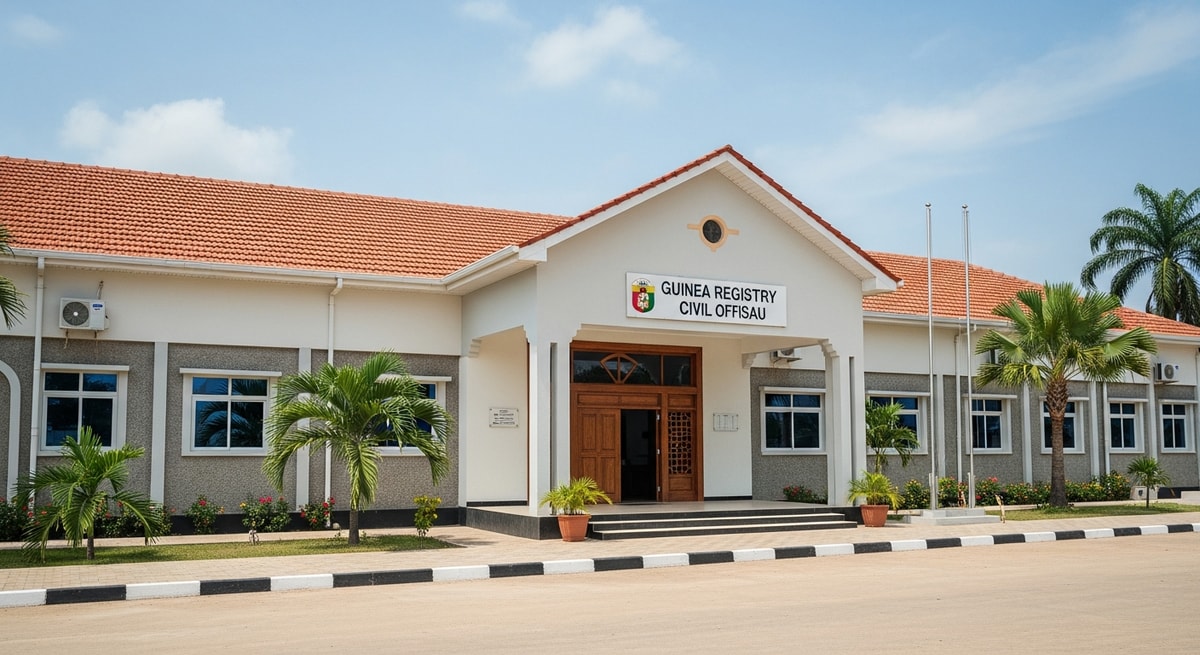
Guinea-Bissau's Conservatória do Registo Civil issues certidões — certified copies of civil registration records — required as the starting point for international legalization
"My Guinea-Bissau certidão de nascimento was translated from Portuguese to English for my USCIS green card application. The translator captured all the civil registry formatting correctly and USCIS accepted the translation without any request for evidence."
"Needed my secondary school certificate and university diploma from Bissau translated for a WES credential evaluation. The academic terminology was handled accurately and WES processed my evaluation without any corrections. Fast delivery."
"DoVisa translated my Guinea-Bissau certidão de casamento for a Canadian spousal sponsorship through IRCC. The certified translation was accepted and our application is progressing. Delivery was one day later than quoted but quality was very good."
"Translated my Guinea-Bissau birth certificate and police clearance from Portuguese to English for my UK Skilled Worker visa. UK Visas and Immigration accepted both documents on first submission. The translator handled the civil registry format and government stamps perfectly."
"Our company needed Portuguese to French translation of Guinea-Bissau commercial registration documents for a cross-border business deal with a Senegalese partner. The commercial law references were rendered precisely. Very professional work."
"My Guinea-Bissau birth certificate translation had an initial error in my father's name spelling — a common Fula name that was transliterated incorrectly. DoVisa corrected and reissued the translation the next day and the embassy accepted it, but the initial mistake caused a short delay."
"Translated my Guinea-Bissau procuração from Portuguese to English for use in a US legal matter. The legal terminology was accurate and precise, and my US attorney confirmed the translation was suitable for court submission. Highly recommended."
"My Guinea-Bissau academic transcripts needed translating for a master's degree application in Portugal. The grading scale was accurately explained in the translation and the university admissions office accepted it without any issues. Excellent service."
"Translation of my Guinea-Bissau sentença de divórcio was mostly accurate but had a small error in one of the court reference numbers that needed correcting. The DoVisa team fixed it promptly and the Australian Department of Home Affairs accepted the corrected version."
"Living in the US and needed multiple Guinea-Bissau family documents translated for a family reunification visa — birth certificates for three children and our marriage certificate. DoVisa handled everything professionally and USCIS accepted all translations. Great service."
"Certified translation of my Guinea-Bissau certificado de registo criminal for an employment background check in the United Kingdom. The translation was accepted by my employer's HR department. Process was smooth and the certified format met all UK requirements."
"My Guinea-Bissau certidão de nascimento was translated from Portuguese to English for my USCIS green card application. The translator captured all the civil registry formatting correctly and USCIS accepted the translation without any request for evidence."
"Needed my secondary school certificate and university diploma from Bissau translated for a WES credential evaluation. The academic terminology was handled accurately and WES processed my evaluation without any corrections. Fast delivery."
"DoVisa translated my Guinea-Bissau certidão de casamento for a Canadian spousal sponsorship through IRCC. The certified translation was accepted and our application is progressing. Delivery was one day later than quoted but quality was very good."
Guinea-Bissau Document Translation FAQs
What types of Guinea-Bissau documents can be translated?
We translate all types of Guinea-Bissau official documents including birth certificates (certidão de nascimento), marriage certificates (certidão de casamento), death certificates (certidão de óbito), academic diplomas and transcripts (diploma, certificado de habilitações), police clearance certificates (certificado de registo criminal), national identity cards (bilhete de identidade), passports, powers of attorney (procuração), divorce decrees (sentença de divórcio), single-status certificates (certificado de solteiro), company registration documents, and court orders. We handle documents from the Conservatória do Registo Civil, the Ministério da Educação Nacional, and all Guinea-Bissau government authorities.
Are your Guinea-Bissau document translations certified?
Yes. Every translation includes a signed certification statement attesting to the accuracy and completeness of the translation, together with the translator's credentials and contact details. Our certified translations are accepted by USCIS, UK Visas and Immigration, IRCC (Canada), the Australian Department of Home Affairs, and credential evaluation agencies such as WES and ECE. The certification format meets the requirements of immigration authorities in the United States, United Kingdom, Canada, Australia, New Zealand, and most other destination countries.
How long does Guinea-Bissau document translation take?
Standard certified translation is delivered within 4-6 business days. Express processing is available for 2-3 business days, and rush delivery within 24 hours for select single-page vital records such as birth and marriage certificates. If consular legalization through the Ministério dos Negócios Estrangeiros is also required, add 10-20 business days for the complete authentication chain, depending on the destination embassy's processing schedule.
What languages do you translate Guinea-Bissau documents to and from?
Portuguese–English is the most common language pair for Guinea-Bissau documents, but we also provide certified translations between Portuguese and French, Spanish, Arabic, German, Italian, Chinese, and many other languages — all without routing through an intermediary language. For documents containing Crioulo (Guinea-Bissau Creole), Fula (Pulaar), or Mandinka text or annotations, our translators have the specialist knowledge to handle these accurately alongside the primary Portuguese content.
Can Guinea-Bissau documents get an apostille?
No. Guinea-Bissau is not a member of the Hague Apostille Convention, so Guinea-Bissau documents cannot receive an apostille. Instead, documents intended for use abroad require a full consular legalization chain: (1) authentication at the issuing authority or a Notário (Notary Public), (2) authentication by the Ministério dos Negócios Estrangeiros (Ministry of Foreign Affairs) in Bissau, and (3) legalization by the destination country's embassy or consulate. This process typically takes 10-20 business days. DoVisa manages the complete legalization chain on your behalf.
Will my translated Guinea-Bissau documents be accepted by immigration authorities?
Yes. Our certified translations of Guinea-Bissau documents are accepted by USCIS (United States), UK Visas and Immigration, IRCC (Canada), the Australian Department of Home Affairs, and immigration authorities in New Zealand, Ireland, and throughout Europe. Each translation includes the translator's signed certification statement confirming accuracy and completeness, meeting the requirements of all major immigration authorities. Our current acceptance rate for Guinea-Bissau translations is 97.8%. If a translation is rejected due to a quality or format issue, we revise and reissue it at no additional charge.
Do I need notarization for my Guinea-Bissau document translation?
For most immigration, academic, and professional credential submissions, DoVisa's standard certified translation with the translator's signed declaration is sufficient — no separate notarization is required. However, for documents submitted to Guinea-Bissau courts or for use in the consular legalization chain, a notarial attestation by a Notário (Notary Public) authorized under Guinea-Bissau law may be required to verify the translator's identity and signature. DoVisa can coordinate notarial attestation through our partner network when a specific receiving authority requires it.
What is the consular legalization process for Guinea-Bissau documents?
Because Guinea-Bissau is not a member of the Hague Apostille Convention, documents require consular legalization for international recognition. The process involves three steps: (1) verification at the issuing authority — such as the Conservatória do Registo Civil for civil documents, or the Ministério da Educação Nacional for academic documents; (2) authentication by the Ministério dos Negócios Estrangeiros in Bissau; and (3) legalization by the embassy or consulate of the destination country. The total process takes 10-20 business days. DoVisa manages every step on your behalf, including coordination with our in-country partners in Bissau and the destination embassy.
Can you translate Guinea-Bissau documents with handwritten text?
Yes. Many Guinea-Bissau civil registry documents — particularly older birth certificates and marriage certificates from rural registry offices — contain handwritten entries in the civil registrar's handwriting. Our Portuguese translators are experienced with Guinea-Bissau handwriting conventions and the standard formats used by the Conservatória do Registo Civil. If any section of a document is illegible, we clearly mark it as [ilegível] in the translation and note it in the translator's certification rather than guessing. If a scan is too unclear to translate reliably, we contact you within 2 hours to request a clearer image.
How much does certified translation for Guinea-Bissau documents cost?
DoVisa's pricing for Guinea-Bissau document translations follows a transparent per-page structure with volume discounts that apply automatically for larger projects. Pricing varies based on document type, language pair, and processing speed selected. Consular legalization fees are quoted separately and depend on the specific authentication steps required. Upload your documents on our order page to receive an instant, detailed quote — no hidden fees or commitments required.
What format will I receive my translated Guinea-Bissau document in?
You will receive your certified translation as a high-resolution PDF delivered via email, suitable for immediate digital submission to USCIS, immigration portals, university admission systems, and most government portals. If you require a physical hard copy with the translator's original signature and stamp — for court submission, embassy presentation, or the consular legalization chain — we print and ship via tracked international courier with delivery confirmation to any address worldwide.
Can you handle Guinea-Bissau documents with Crioulo or Fula annotations?
Yes. While all official Guinea-Bissau documents are in Portuguese, some community-level records, traditional certificates, and older handwritten documents may contain Crioulo (Kriolu) words or phrases, or personal names derived from Fula, Mandinka, Balanta, or other national languages. Our translators are familiar with these linguistic elements and translate them accurately into the target language, including explanatory notes where a Crioulo or national language term does not have a direct equivalent. This contextual expertise ensures that translations are both linguistically accurate and culturally appropriate.
What quality guarantees does DoVisa offer for Guinea-Bissau translations?
DoVisa provides an acceptance guarantee for all Guinea-Bissau document translations. If a government agency, immigration authority, university, or other institution rejects our translation due to a quality or formatting issue, we revise and reissue the translation at no additional cost within 24 hours. Every translation undergoes a dual-review process — the primary translator completes the certified translation and an independent second linguist verifies accuracy, terminology, and formatting before delivery. Our current acceptance rate for Guinea-Bissau translations is 97.8%.
Get Your Guinea-Bissau Documents Translated Today
Certified Portuguese translations with full legalization support — accepted by immigration authorities and institutions worldwide