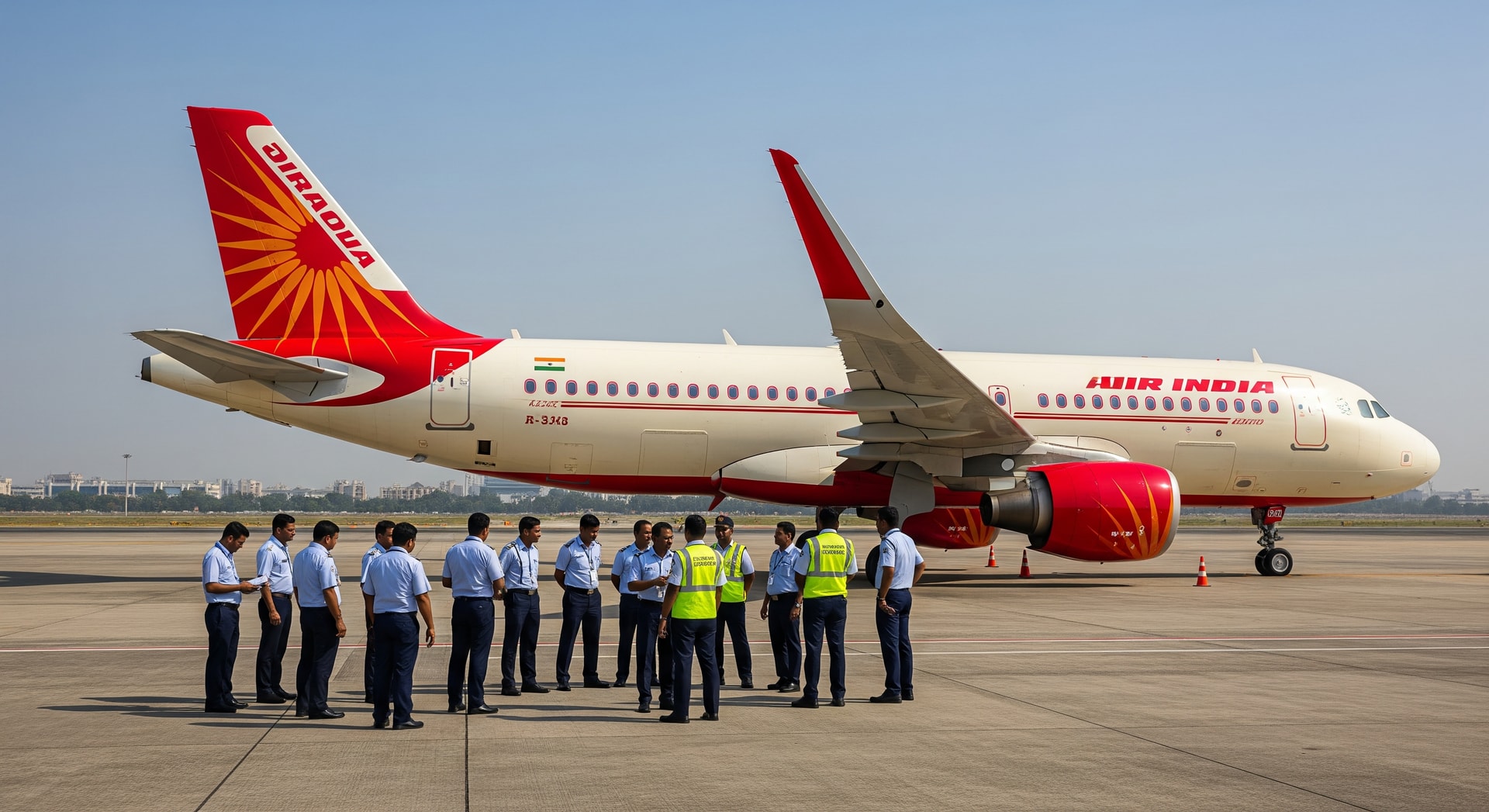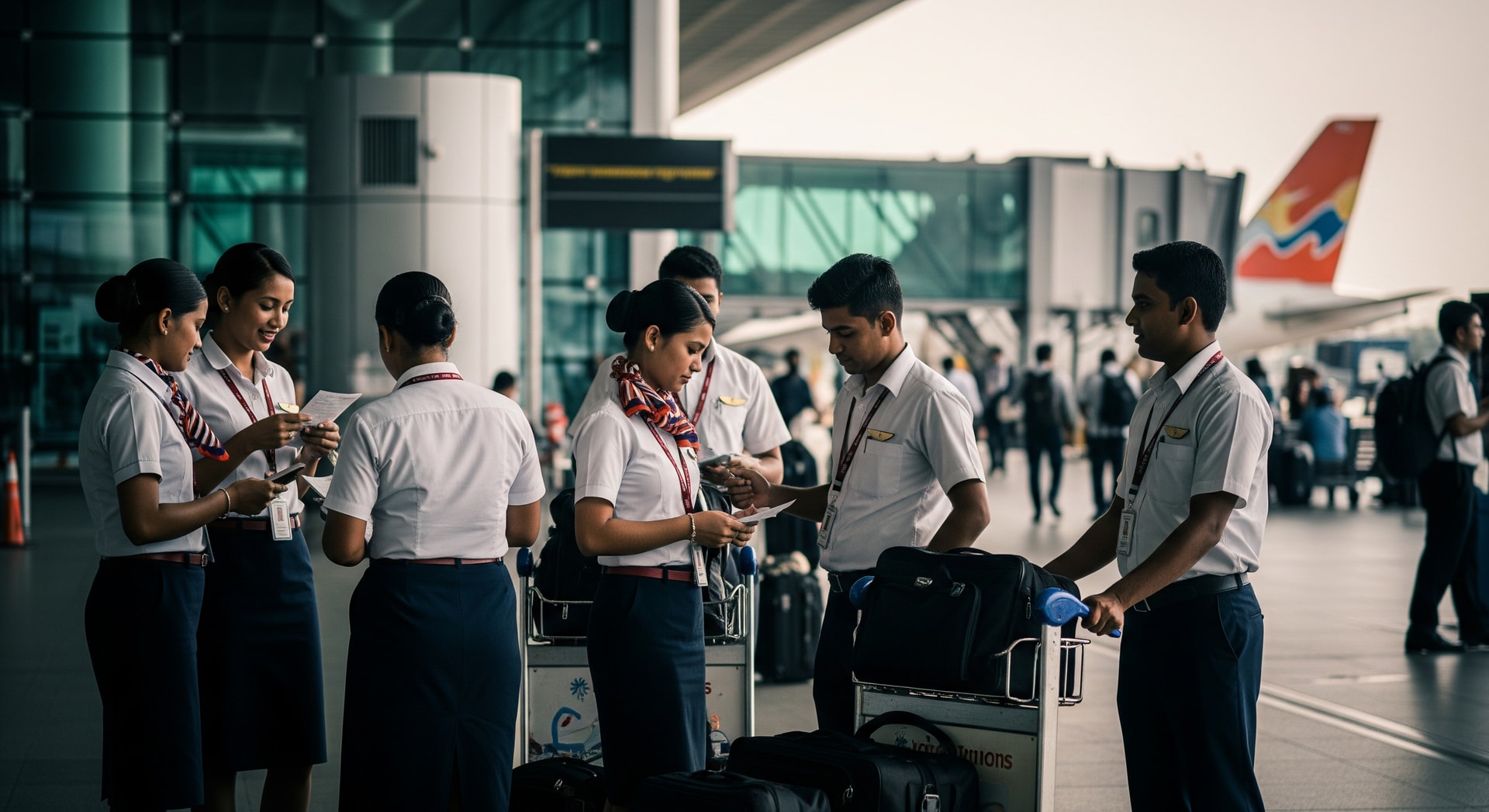
India's leading carriers have raised concerns over the DGCA cabin crew rest proposal, saying it could limit operational flexibility across dense domestic and long-haul networks.
Summary: IndiGo, Air India and SpiceJet — via the Federation of Indian Airlines — have submitted feedback to the DGCA on the draft Civil Aviation Requirements for cabin crew duty and rest, warning that rigid caps could impede operations on high-density domestic and mixed long-haul networks.
India’s carriers have formally pushed back on the Directorate General of Civil Aviation (DGCA) draft framework known as the Civil Aviation Requirements on Cabin Crew Flight Duty Time Limitations, with concerns that the DGCA cabin crew rest proposal could be overly restrictive when applied across India’s busy domestic and international networks.
Regulatory overhaul aims to strengthen fatigue management
The draft requirements, published by the DGCA in October 2025, are framed as a comprehensive update to existing duty and rest standards for cabin crew. Regulators say the goal is to enhance fatigue risk management and align India’s oversight with evolving global benchmarks as the country’s aviation market expands rapidly.
Carriers call for calibration and flexibility
IndiGo (6E), Air India (AI) and SpiceJet (SG) submitted industry feedback via the Federation of Indian Airlines (FIA). The submission argues that a uniform, rigid set of limits may not reflect the varied operational models in India, where high-frequency short-haul services and long-haul flights coexist.
- FIA says the draft appears more restrictive than comparable international norms
- Operators urge differentiation between short-haul, long-haul and mixed-fleet operations
- Concerns that a single standard could reduce roster flexibility and operational efficiency
Flight duty period vs flight time: the technical dispute
A core recommendation from the FIA is that the flight duty period — encompassing reporting time, pre-flight duties, boarding, ground delays and post‑flight tasks — should remain the primary metric for regulating cabin crew schedules rather than only airborne flight time. Airlines argue this gives a more complete picture of crew workload and fatigue risk.
The submission also questions rigid cumulative caps and proposals that link allowable duty directly to the number of landings, cautioning such rules may oversimplify fatigue modelling by assuming identical demands for every landing regardless of context.

Accommodation standards and rest quality
The draft CAR includes prescriptive requirements for crew accommodation and rooming during layovers. Airlines say emphasis should be on ensuring effective rest and circadian alignment rather than mandating specific room allocations, noting that shared accommodation has been used internationally under defined conditions without clear evidence of reduced rest quality.
Operational reliability risks on dense networks
Industry representatives warn that strict duty caps could force operators to add crew or change schedules, potentially affecting reliability on high-utilisation routes and at major hubs such as Mumbai and Delhi. Given India’s rapid growth and tight turnarounds, even small disruptions can ripple across networks.
- May necessitate larger crew rosters or additional reserve crews
- Could require schedule rework and reduce aircraft utilisation
- Industry cites recent pilot duty-time changes that contributed to disruptions at IndiGo in early December 2025
Calls for evidence-based policy and collaboration
The Federation of Indian Airlines stresses that support for safety objectives is unequivocal, but urges the DGCA to adopt an evidence-based, harmonised approach that recognises operational diversity. The group recommends deeper consultation to refine the draft CAR so safety enhancements do not unduly compromise network resilience.
The DGCA’s review of industry submissions will be watched closely across the Asia‑Pacific region as India remains one of the world’s fastest-growing aviation markets. Any final rule set that emerges could influence approaches to crew fatigue management in similar markets.
Why this matters: For airlines, the balance struck in the DGCA cabin crew rest proposal will affect crew rostering, operating costs and schedule reliability on some of the busiest domestic and international services. For travellers, the outcome could influence flight frequency, punctuality and service continuity during peak periods. In short: a prescriptive, one-size-fits-all rule may improve certain fatigue safeguards but risks higher costs and operational disruption unless calibrated to India’s varied network profiles.
Sources