
Simple 4-step process — most applications processed within 10-15 business days
1
Complete the online application
Fill out our comprehensive Schengen visa application form with your travel plans, personal details, and accommodation information. Our intelligent system validates every field in real-time, ensuring your application meets all requirements set by the French consulate and Schengen authorities before submission.
2
Upload required documents
Submit your passport scan, recent photographs meeting Schengen specifications (35x45mm, white background), proof of accommodation, travel insurance, flight reservations, and financial documents. Our document specialists review every submission to ensure compliance with French visa requirements.
3
Attend biometric appointment
Book your appointment at the nearest French visa application center (VFS Global or TLScontact) to provide biometric data (fingerprints and photo). First-time Schengen applicants must attend in person; returning visitors may be exempt if biometrics are still valid.
4
Receive your France visa
Once approved, your Schengen visa sticker is affixed to your passport. Collect it from the application center or receive it via courier. Welcome to France — Bienvenue! Your journey through one of Europe's most celebrated destinations begins.

0+Happy Travelers
0/7Expert Support
0%+Approval Rate
0Customer Rating
France Visa Requirements & Entry Information
Short-Stay Tourist Visa
Up to 90 days
Schengen C visa for tourism within 180-day period
Business Visa
Up to 90 days
For meetings, conferences, and commercial activities
Transit Visa
Up to 5 days
For airport transit through French territory
Long-Stay Visa
Over 90 days
D visa for extended stays, study, or work purposes
Essential Requirements
📘Passport valid 3+ months beyond stay with 2 blank pages
📷Photo: 35x45mm, white background, recent (within 6 months)
🏥Travel insurance with €30,000 minimum medical coverage
🏨Confirmed hotel bookings or host invitation letter
💰Proof of sufficient funds (€120/day recommended)
✈️Round-trip flight reservation or detailed itinerary
Schengen Visa for France

France is part of the Schengen Area, a zone of 27 European countries that have abolished passport and immigration controls at their common borders. A French Schengen visa allows you to travel not only throughout France but also to other Schengen member states including Germany, Italy, Spain, and the Netherlands.
The Short-Stay Schengen Visa (Type C) is the most common visa for tourists visiting France. It permits stays of up to 90 days within any 180-day period and can be issued as single-entry, double-entry, or multiple-entry depending on your travel history and profile. First-time applicants typically receive single or double-entry visas, while frequent travelers may qualify for multiple-entry visas valid for 1, 3, or even 5 years.
Citizens of many countries including the United States, Canada, Australia, United Kingdom, Japan, and South Korea can enter France visa-free for tourism stays up to 90 days. However, the upcoming ETIAS authorization (European Travel Information and Authorisation System) will require visa-exempt travelers to obtain pre-travel authorization starting in 2025.
The Eiffel Tower — France's most iconic landmark welcoming millions of visitors annually
Business & Long-Stay Visas
Business Visa (Short-Stay)
France's business visa allows professionals to attend meetings, conferences, trade fairs, and conduct commercial negotiations. While the visa category is the same as the tourist visa (Schengen Type C), you'll need additional documentation including an invitation letter from your French business partner, proof of your company's registration, and a detailed itinerary of planned business activities. Business visitors cannot engage in paid employment or long-term commercial operations.
Long-Stay Visa (Type D)
For stays exceeding 90 days, you'll need a French national long-stay visa. This includes visas for students enrolling in French educational institutions, employees with job offers from French companies, family reunification for those joining family members in France, and talent passport visas for highly skilled professionals, researchers, and artists. Long-stay visa holders typically apply for a residence permit (titre de séjour) upon arrival in France.
Working Holiday Visa
France offers working holiday visas to young adults (typically 18-30) from countries with bilateral agreements including Australia, Canada, Japan, South Korea, and New Zealand. This visa allows a 12-month stay with the right to work.
La Défense — France's largest business district and European financial hub
Documentation & Requirements
Essential Documents for France Visa
All France visa applicants must prepare a comprehensive documentation package:
• Passport: Valid for at least 3 months beyond your planned departure from the Schengen area, with at least two blank pages for stamps
• Photographs: Two recent passport-size photos (35x45mm), white background, taken within the last 6 months
• Travel insurance: Coverage of minimum €30,000 for medical emergencies and repatriation, valid throughout the Schengen area
• Accommodation proof: Hotel reservations, rental agreement, or attestation d'accueil (official invitation) from a French host
• Financial documents: Bank statements for the last 3 months showing sufficient funds (approximately €120 per day of stay), employment letter, or proof of pension/income
• Travel itinerary: Round-trip flight reservations and detailed travel plans within France and the Schengen area
Biometric Requirements
All visa applicants aged 12 and above must provide biometric data (ten fingerprints and a digital photograph) at a visa application center. Biometrics are stored in the Visa Information System (VIS) for 5 years, so returning applicants may be exempt from providing new biometrics if previously registered.
Château de Chambord — Explore France's royal heritage in the Loire Valley
Processing & Travel Tips
Processing Times & Where to Apply
France visa applications are processed through VFS Global or TLScontact centers worldwide. Standard processing takes 10-15 business days, though decisions can take up to 45 days during peak seasons. We strongly recommend applying at least 4-6 weeks before your intended travel date. Rush processing is not available for Schengen visas.
Major Entry Points
France has numerous international airports and entry points. Paris Charles de Gaulle (CDG) is the busiest hub, followed by Paris Orly (ORY), Nice Côte d'Azur (NCE), Lyon-Saint Exupéry (LYS), and Marseille Provence (MRS). High-speed TGV trains connect France to neighboring countries, and the Eurostar links Paris to London through the Channel Tunnel.
Best Time to Visit
France is a year-round destination. Spring (April-June) and fall (September-October) offer pleasant weather, fewer crowds, and lower prices. Summer (July-August) brings warm weather perfect for the French Riviera and beach towns, but expect peak crowds and prices. Winter is ideal for ski resorts in the Alps and Pyrenees, Christmas markets, and experiencing Paris without summer crowds. The lavender fields of Provence bloom spectacularly in June and July.
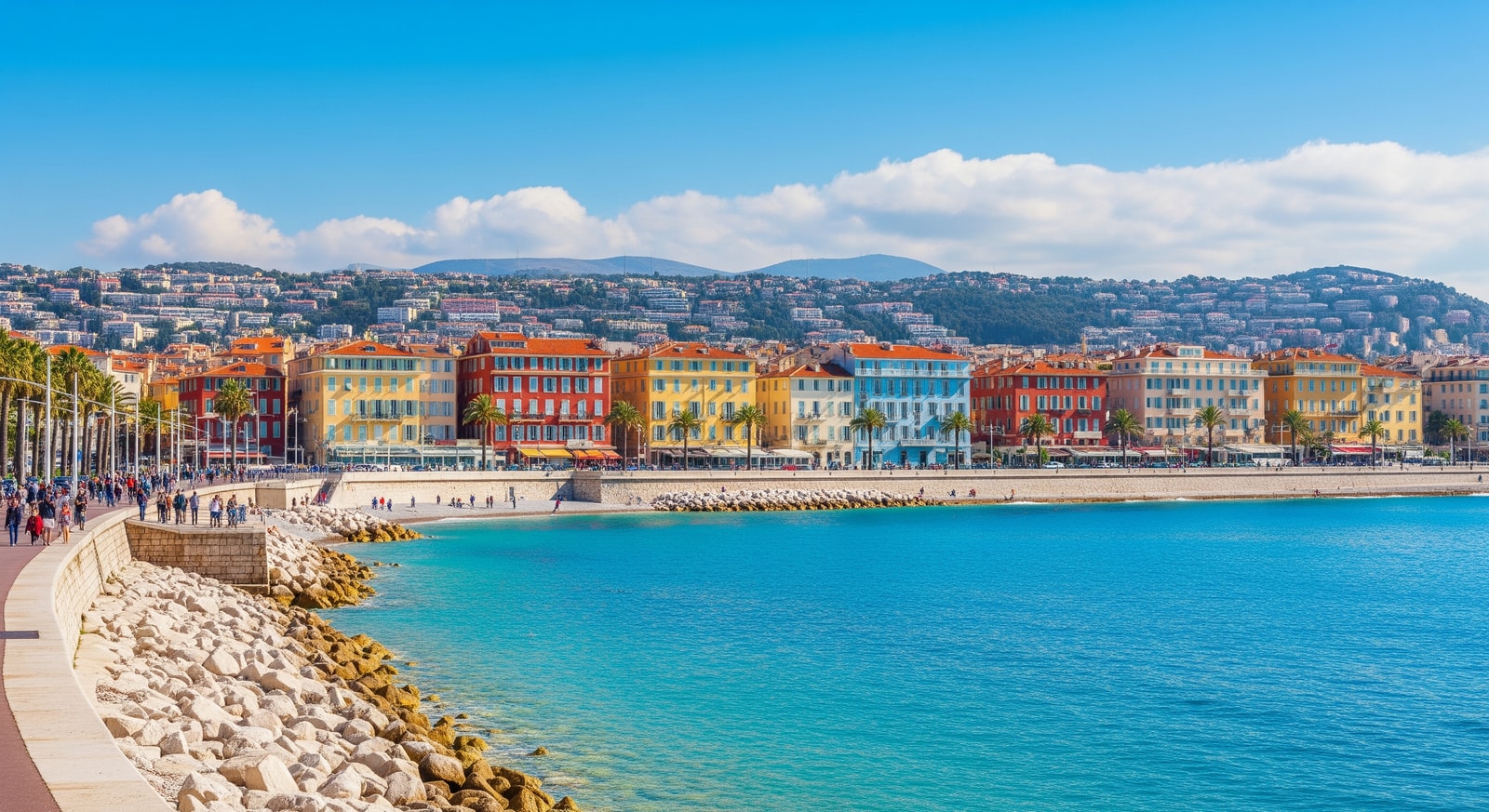
Nice and the French Riviera — Mediterranean paradise on the Côte d'Azur
Why Choose DoVisa?
See the difference between applying yourself vs using our expert service
Travelers to France rated this product 4.8 out of 5 based on 8 reviews.
4.8/ 5
Based on 8 verified reviews
Filter by rating
Sophie M.Jan 15, 2026
"First time applying for a Schengen visa and DoVisa made it straightforward. The document checklist was thorough and their review caught a missing bank statement. Got my France visa in 12 days!"
James H.Jan 8, 2026
"Business visa for meetings in Paris sorted quickly. DoVisa helped with the invitation letter format and all supporting documents. Highly professional service."
Priya K.Dec 29, 2025
"Good service overall. The biometric appointment was a bit confusing at first but DoVisa support clarified everything. Visa approved for my honeymoon to Paris and Provence!"
Michael R.Dec 18, 2025
"Third time using DoVisa for Schengen visas. They know the French consulate requirements inside out. Got a 2-year multiple entry this time. Excellent!"
Elena V.Nov 30, 2025
"The travel insurance requirement was confusing but DoVisa recommended a policy that met all Schengen criteria. Visa arrived in 10 days. Paris here I come!"
Robert C.Oct 22, 2025
"Decent experience. Processing took slightly longer than expected at 18 days but DoVisa kept me informed throughout. Visa was approved without issues."
Aisha B.Sep 14, 2025
"Family trip to France for four people. DoVisa helped organize all our documents and we got all visas approved together. The Loire Valley castles were amazing!"
Thomas L.Aug 5, 2025
"Wine tour through Bordeaux and Burgundy required detailed itinerary documentation. DoVisa guidance was invaluable. Five-star service for planning my dream trip!"
France Visa FAQs
What types of visas are available for France?
France offers several visa categories through the Schengen system. The Short-Stay Schengen Visa (Type C) is most common for tourists and business travelers, allowing stays up to 90 days within a 180-day period. The Transit Visa (Type A) is for airport transit without entering French territory. The Long-Stay Visa (Type D) is required for stays exceeding 90 days, including student visas for studying at French institutions, work visas for employment, family reunification visas, and talent passport visas for skilled professionals. France also offers Working Holiday Visas for young adults from partner countries. Your visa type depends on your purpose of travel, intended length of stay, and nationality.
What is a Schengen visa and how does it work for France?
A Schengen visa is a short-stay visa that allows travel throughout the 27 Schengen Area countries including France, Germany, Italy, Spain, Portugal, Netherlands, Belgium, Austria, Switzerland, and more. With a French Schengen visa, you can stay up to 90 days within any 180-day period across the entire Schengen zone. The 90/180 rule is calculated on a rolling basis — at any given day, you must not have spent more than 90 days in the Schengen area during the previous 180 days. You should apply to France if it's your main destination or where you'll spend the most nights. If visiting multiple countries equally, apply to your first point of entry.
Who needs a visa to visit France?
Visa requirements depend on your nationality. Citizens of visa-exempt countries including the United States, Canada, United Kingdom, Australia, New Zealand, Japan, South Korea, Brazil, and most EU/EEA nations can visit France without a visa for up to 90 days. Citizens of most other countries require a Schengen visa before travel. Starting in 2025, visa-exempt travelers will also need ETIAS authorization (European Travel Information and Authorisation System), an online pre-travel requirement similar to the US ESTA. Check your specific nationality requirements as they vary significantly. Business travelers from visa-exempt countries can conduct short-term business activities without a visa but cannot work.
What documents are required for a France visa?
France visa applications require comprehensive documentation: Valid passport (3+ months validity beyond your stay, 2 blank pages); Completed application form signed and dated; Two passport photos (35x45mm, white background, recent); Travel insurance with €30,000 minimum medical coverage valid across Schengen; Proof of accommodation (hotel bookings, rental agreement, or attestation d'accueil from French host); Flight reservations showing entry and exit from Schengen area; Financial proof (bank statements for 3 months showing approximately €120 per day); Employment verification (employer letter, business registration, or pension/income proof); Travel itinerary detailing your plans. Additional documents may be required based on your specific circumstances and purpose of travel.
How long can I stay in France with a tourist visa?
A France tourist visa (Schengen Type C) allows stays of up to 90 days within any 180-day period. This is calculated on a rolling basis across the entire Schengen area — time spent in any Schengen country counts toward your 90 days. For example, if you spend 30 days in France and 30 days in Italy, you have 30 days remaining for the Schengen area before you must exit for at least 90 days. Your visa may be issued as single-entry, double-entry, or multiple-entry with validity from a few months to 5 years, but regardless of visa validity, the 90/180-day rule always applies. For stays longer than 90 days, you need a Long-Stay Visa (Type D).
Can I extend my France visa while in the country?
Schengen visa extensions are rarely granted and only in exceptional circumstances such as force majeure (natural disasters, medical emergencies), serious humanitarian reasons, or important personal reasons that could not have been foreseen. You cannot extend a visa simply because you want to stay longer or haven't finished sightseeing. If you need more time, you must exit the Schengen area before your 90 days expire and wait until you've accumulated enough days outside before returning. Overstaying your visa has serious consequences including fines, deportation, entry bans of up to 5 years, and difficulties obtaining future visas to any Schengen country. For planned extended stays, apply for a Long-Stay Visa before traveling.
Can I work in France with a tourist visa?
No, tourist visas and visa-free entries explicitly prohibit any form of employment or paid work in France. This includes remote work for a French employer, freelance assignments, internships (even unpaid ones in some cases), and any activity that would normally require compensation. Business activities like attending meetings, conferences, trade fairs, and negotiations are permitted, but you cannot receive payment from a French entity. To work legally in France, you need a work visa (Type D) sponsored by a French employer, a talent passport for highly skilled professionals, or a working holiday visa if you're from an eligible country. Violation of work restrictions can result in deportation and future visa denials.
Do I need to print my France visa?
Unlike electronic visas used in some countries, a France Schengen visa is a physical sticker affixed to your passport. It cannot be printed at home. After your application is approved, you'll collect your passport with the visa sticker from the visa application center (VFS Global or TLScontact) either in person or via courier delivery. The sticker shows your visa validity dates, number of entries permitted, and duration of stay. Always check the visa sticker carefully upon receipt for any errors in your name, passport number, or validity dates — mistakes must be corrected before travel. Keep your passport safe as the visa cannot be reissued without a new application.
How long does France visa processing take?
Standard processing time for a France Schengen visa is 10-15 business days from your biometric appointment, though decisions may take up to 45 calendar days in complex cases or during peak seasons (summer and Christmas holidays). Unlike some visa systems, rush or express processing is not available for Schengen visas. We recommend applying at least 4-6 weeks before your planned travel to allow buffer time for any additional documentation requests. You can submit applications up to 6 months before travel (3 months for certain nationalities). Processing times vary by consulate workload, your nationality, and completeness of your application. DoVisa helps ensure your documentation is complete to minimize delays.
What if my France visa application is rejected?
If your visa is rejected, you'll receive a written notification explaining the reason(s). Common rejection reasons include insufficient financial proof, inadequate travel insurance, unclear travel purpose, missing documents, previous immigration violations, or inability to demonstrate intent to return home. You have the right to appeal the decision within a specified timeframe (usually 2 months for France), though appeals can take several months to process. Alternatively, you can submit a new application addressing the cited deficiencies — there's no waiting period to reapply, though submitting the same application without improvements will likely result in another rejection. DoVisa offers pre-submission reviews to identify and address potential issues before they cause rejections.
What is the attestation d'accueil for France?
The attestation d'accueil (certificate of accommodation) is an official document required when staying with friends or family in France rather than at hotels. Your French host must request this document from their local mairie (town hall), providing proof of their residence, identity, and ability to host you. The process involves a fee of approximately €30 and may include a home inspection. The original attestation must be sent to you for inclusion in your visa application — copies are not accepted. If staying at hotels, rental properties, or through Airbnb, you don't need an attestation d'accueil; booking confirmations suffice. The attestation is valid for up to 3 months.
What are the travel insurance requirements for France?
Travel insurance is mandatory for all France Schengen visa applications. Your policy must meet these minimum requirements: €30,000 coverage (approximately $33,000) for medical emergencies, hospitalization, and emergency medical repatriation; valid throughout the entire Schengen area, not just France; coverage dates must span your entire intended stay plus a few buffer days; and the policy must be issued by a reputable insurance company recognized in Europe. Many standard travel insurance policies don't meet Schengen requirements, so verify carefully. DoVisa can recommend compliant insurance providers. Keep proof of insurance with you during travel as border officials may request it.
What is the best time to visit France?
France is a year-round destination with distinct seasonal appeals. Spring (April-June) offers mild weather, blooming gardens, and fewer crowds — ideal for Paris, the Loire Valley, and wine regions. Summer (July-August) brings warm weather perfect for the French Riviera, beaches, and outdoor activities, but expect peak prices and crowds, especially in Paris. Autumn (September-October) is excellent for wine harvest festivals in Burgundy and Bordeaux, pleasant temperatures, and beautiful foliage. Winter (November-March) features ski season in the Alps and Pyrenees, magical Christmas markets, and fewer tourists at major attractions. Paris is enchanting year-round. Provence's lavender fields peak in late June to early July.
Which airports can I enter France through?
France has numerous international entry points. Paris Charles de Gaulle (CDG) is the main international hub handling most intercontinental flights. Paris Orly (ORY) serves European and domestic routes. Major regional airports include Nice Côte d'Azur (NCE) for the Riviera, Lyon-Saint Exupéry (LYS) for eastern France, Marseille Provence (MRS) for the south, Toulouse-Blagnac (TLS) for the southwest, and Bordeaux-Mérignac (BOD) for wine country. You can also enter via high-speed TGV trains from neighboring countries or the Eurostar from London through the Channel Tunnel. As a Schengen country, you can also enter France overland from any other Schengen country without additional border controls.
Do I need vaccinations to travel to France?
France has no mandatory vaccination requirements for most travelers. However, routine vaccinations should be up to date, including measles-mumps-rubella (MMR), diphtheria-tetanus-pertussis, varicella (chickenpox), polio, and annual flu shot. The CDC recommends Hepatitis A and B vaccinations for all travelers and Rabies vaccination for those planning outdoor activities or extended stays in rural areas. France has excellent healthcare facilities, but EU health insurance cards (EHIC/GHIC) only apply to EU/EEA residents. All other visitors should carry comprehensive travel insurance. COVID-19 requirements have largely been lifted but check current regulations before travel as they can change.
Can I travel to other European countries with a France visa?

Yes, a French Schengen visa allows travel throughout all 27 Schengen Area countries: Austria, Belgium, Croatia, Czech Republic, Denmark, Estonia, Finland, France, Germany, Greece, Hungary, Iceland, Italy, Latvia, Liechtenstein, Lithuania, Luxembourg, Malta, Netherlands, Norway, Poland, Portugal, Slovakia, Slovenia, Spain, Sweden, and Switzerland. Your total stay across all these countries combined cannot exceed 90 days within any 180-day period. Note that some European countries are not in Schengen (UK, Ireland, Bulgaria, Romania, Cyprus) and may require separate visas. When applying for a Schengen visa, apply to the country that is your main destination or first point of entry if visiting multiple countries equally.
Still have questions?
Our team is here to help 24/7
Get Visa Tips & Exclusive Deals
Join 1,000+ travelers. No spam, unsubscribe anytime.
Ready to Discover France?
From the Eiffel Tower to the lavender fields of Provence — romance and culture await